对等关税

Search documents
美国“对等关税” 引发全球市场震荡
Zheng Quan Shi Bao· 2025-12-29 18:50
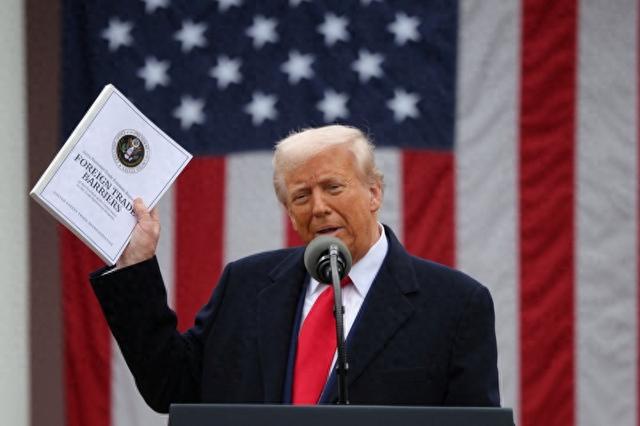
美国总统特朗普4月2日在白宫签署两项关于所谓"对等关税"的行政令,宣布美国对贸易伙伴设立10% 的"最低基准关税",并对某些贸易伙伴征收更高关税。"对等关税"政策引发全球贸易和资本市场动荡。 美国总统特朗普4月2日在白宫签署两项关于所谓"对等关税"的行政令。 ...


“关税后果”之年? 关税余震与供应链威胁夹击 2026年全球贸易注定不平静
Zhi Tong Cai Jing· 2025-12-25 15:10
全球贸易体系正结束过去一个世纪以来最具变革性且最戏剧性的一年,然而进入2026年之后,又将 面临着更多且更加严峻的挑战因素,威胁着贸易稳定格局和全球经济增长。 随着2026年的到来,全球贸易体系正面临稳定和增长方面的诸多挑战,且暗流不断变化,其中包括 美国进口规模的萎缩以及来自非洲、中东、拉丁美洲和印度进口的强劲增长。 关税后果之年:2026年全球贸易可能面临更多动荡 尽管美国总统唐纳德·特朗普开始在世界最大经济体周围建立起愈发坚实的关税壁垒,但全球商品 贸易体系在面临关税重压的2025年依然相对稳定。航运行业资深人士John McCown本周引用的统计数据 表明,全球集装箱运输量在10月实现同比增长了2.1%。 然而,在整体贸易韧性之下,存在着一些快速变化的潜流因素:美国今年以来的进口量下降了约 8%,而来自非洲、中东、拉丁美洲和印度的进口则表现出强劲增长。 上述图表显示,美国商品进口滞后于全球贸易量增长步伐——美国以外的全球集装箱运输/吞吐量 仍旧保持韧性。 McCown在周一的研究报告中写道:"全球集装箱供应链已经开始调整,并重新配置贸易模式。"有 统计数据显示,在2024年,美国的集装箱进口规模增长了 ...
欧媒盘点:这一年里,欧盟到底受了特朗普多少气?
Guan Cha Zhe Wang· 2025-12-25 13:41
【文/观察者网 陈思佳】自美国总统特朗普开启第二任期以来,美国和欧盟的关系迅速恶化,特朗普政 府频频在关税、俄乌冲突等问题上向欧洲施加压力,试图逼迫欧盟服从于美国。当地时间12月24 日,"政客新闻网"欧洲版发文,回顾了特朗普在过去一年里如何"欺凌"欧洲。 文章称,特朗普上任后立即指责欧盟"在贸易商坑害美国",征收了一个世纪以来最高的关税。尽管欧盟 委员会主席冯德莱恩在年中与特朗普达成了贸易协议,但协议条款对欧洲出口商极为不利。年底,特朗 普还抨击欧洲"面临文明衰退风险",指责欧洲领导人"软弱"。 "政客新闻网"欧洲版按照时间顺序梳理了美国与欧盟在2025年发生的一系列争端,称这是"特朗普给欧 洲带来贸易创伤的一年"。 4月2日, 一月 特朗普重返白宫后,欧盟对特朗普的关税威胁作出回应,并加快了推进与南方共同市场等其他贸易伙伴 合作的进程。但不同于后来采取了反制措施的中国,欧盟从未敢升级局势,冯德莱恩一直试图向特朗普 示好。 特朗普就任美国总统的第二天,冯德莱恩在世界经济论坛年会上发表讲话称:"欧洲将继续寻求合作, 不仅与我们长期志同道合的盟友,也与任何同我们有共同利益的国家合作。" 二月 特朗普宣布将对钢铁 ...
美元指数,波动加大!
Sou Hu Cai Jing· 2025-12-22 09:42
Group 1 - The US dollar index experienced a significant decline of 0.43% on December 10, marking the largest single-day drop since mid-September, reflecting a dramatic shift in the dollar's trajectory for 2025 [1] - Bloomberg data indicates that the Bloomberg Dollar Spot Index fell nearly 8% for the year, the largest annual decline since 2017, while the Dow Jones measure shows a drop of approximately 6.5%, marking the worst performance since 2017 [1] - In the first half of 2025, the dollar index saw a sharp decline of 10.8%, the largest drop for that period since 1973, driven by global uncertainties and concerns over potential stagflation in the US economy [1] Group 2 - The European Central Bank decided to maintain key interest rates unchanged on December 18, highlighting the growing divergence in monetary policy between the US and Europe amid changing global trade conditions [2] - Despite the prevailing bearish sentiment on the dollar, some institutions like Citigroup and Standard Chartered maintain a bullish outlook, citing the resilience of the US economy driven by artificial intelligence, which may continue to attract international capital [2] - The International Monetary Fund reported a decline in the dollar's share of global foreign exchange reserves from 57.79% to 56.32% by mid-2025, marking a 30-year low and indicating a profound change in the dollar's status in the international monetary system [2] Group 3 - A survey of 75 central banks revealed that the dollar's ranking as the "most popular currency" has dropped to seventh place, although it remained the most favored currency in 2024 [3] - Central banks are increasing their gold reserves at a record pace, with one-third of the surveyed central banks planning to boost their gold holdings in the next one to two years, particularly among emerging market central banks [3]
美国谈中美战争:发动闪电战将获得胜利,拖延则无一丝胜利可能
Sou Hu Cai Jing· 2025-12-19 08:09
Group 1 - The core argument of the articles revolves around the implications of the U.S.-China trade tensions and military strategies, highlighting the ineffectiveness of U.S. tariffs and the rising economic resilience of China [1][8] - The U.S. imposed tariffs as high as 125% on Chinese goods, which led to significant domestic inflation and a loss of nearly $6.5 trillion in market value within two days [1] - China's internal demand contribution to economic growth has increased to 60.5%, reducing its reliance on U.S. exports to 14.7% by 2024, showcasing a strategic shift towards self-sufficiency [1] Group 2 - The U.S. military's strategy of a rapid victory in potential conflicts with China is challenged by geographical and logistical disadvantages, as U.S. forces require longer deployment times compared to China's rapid mobilization capabilities [3][4] - The reliance on allies such as Japan, South Korea, and Australia for military support is complicated by their economic dependencies on China, making full-scale confrontation difficult [4][6] - The potential for nuclear deterrence limits the U.S.'s options for engaging in a full-scale war with China, necessitating a focus on conventional warfare strategies [4][8] Group 3 - The U.S. military is adjusting its training to enhance joint operational capabilities in response to the complexities of potential conflicts with China, although current integration remains a challenge [6] - Historical precedents of U.S. military engagements suggest a pattern of overestimating the feasibility of quick victories, which could lead to prolonged conflicts [8] - China's advancements in military technology and its established anti-access/area denial (A2/AD) capabilities pose significant challenges to U.S. naval power in the Asia-Pacific region [8]

【环球财经】11月澳大利亚经济活动领先指数增长率下滑 表明增长势头有所放缓
Xin Hua Cai Jing· 2025-12-17 05:26
新华财经悉尼12月17日电(记者李晓渝)西太平洋银行和墨尔本研究院17日发布的报告指出,2025年11 月澳大利亚西太平洋银行/墨尔本研究院经济活动领先指数(Westpac–Melbourne Institute Leading Index of Economic Activity)的6个月年化增长率从10月的0.32%下滑至0.16%。 西太平洋银行经济学家瑞安·威尔斯表示,11月指数增长率回落主要反映出当月股市抛售现象以及消费 者预期的降温。尽管该指数仍处于正值区间,但整体表现较为低迷,显示经济动能出现一定停滞。西太 平洋银行预测,澳同比经济增速将从目前约2.1%的水平小幅回升,至2026年升至约2.4%,而2.4%的水 平大致符合趋势水平。 他说,过去6个月,指数增长率略有上升,从5月的0.09%提高了0.07个百分点。此前该指数的一些疲软 表现与当时的高度不确定性因素有关,这种不确定性主要源于特朗普提出的所谓"对等关税",而这一因 素目前已有所缓解。 资料显示,西太平洋银行/墨尔本研究院经济活动领先指数是将涉及当地金融、住房和劳动力市场,消 费者对经济活动与失业情况的预期,以及国际经济活动等多个领域的 ...
业绩亏损、资不抵债 扫地机器人鼻祖iRobot黯然退场
Bei Jing Shang Bao· 2025-12-17 01:05
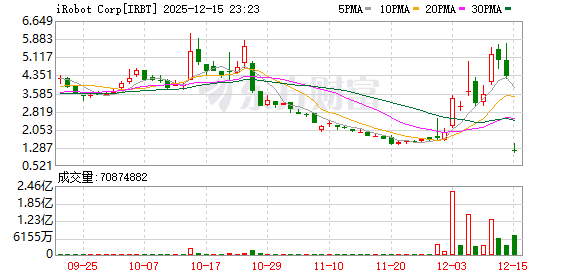
Core Viewpoint - iRobot has filed for bankruptcy protection and will become a wholly-owned subsidiary of a Chinese manufacturing company, following a series of financial struggles and a significant decline in market position [1][3][8]. Financial Performance - iRobot's third-quarter revenue for 2025 was only $146 million, a 24.6% decrease compared to the same period in 2024, with a net loss of $9.9 million, contrasting with a profit of $15.1 million in the previous year [5]. - The company owes over $350 million to its main creditor, Shenzhen-based Picea, while having only $24.8 million in cash and cash equivalents [4][6]. Market Position - iRobot's market share has plummeted from over 80% in the U.S. to 7.9% globally, with significant revenue declines in key regions: 43% in Europe, the Middle East, and Africa; 18% in the U.S.; and 6% in Japan [7][9]. - The company's stock price has drastically fallen from a peak of $197.4 in 2021 to around $4.3, leading to a market capitalization drop from over $6 billion to $140 million [7]. Competitive Landscape - iRobot faces intense competition from Chinese brands like Roborock and Ecovacs, which have adopted advanced technologies such as laser navigation, while iRobot has been slow to innovate [8][9]. - The introduction of a 46% tariff on home appliances imported from Vietnam by the U.S. government is expected to increase operational costs by approximately $23 million in 2025, further straining iRobot's financial situation [9]. Historical Context - Founded in 1990, iRobot was a pioneer in consumer robotics, launching the first Roomba vacuum in 2002. However, its performance deteriorated significantly in 2022, with a 24% revenue decline and a net loss of $286.3 million [6][8].

扫地机器人鼻祖iRobot黯然退场
Sou Hu Cai Jing· 2025-12-16 14:20
Core Viewpoint - iRobot, once a leader in the consumer robotics market, has filed for bankruptcy protection and will become a wholly-owned subsidiary of a Chinese manufacturer due to severe financial distress and operational challenges [1][4]. Financial Distress - iRobot is facing a liquidity crisis with total debts exceeding $350 million (approximately 2.5 billion RMB) while having only $24.8 million in cash and cash equivalents [5]. - The company reported a revenue of $146 million in Q3 2025, a 24.6% decline year-over-year, and a net loss of $9.9 million, contrasting with a profit of $15.1 million in the same period the previous year [5][6]. - iRobot's 2022 revenue fell by 24% to $1.1834 billion (approximately 8.118 billion RMB), with a net loss of $286.3 million [6][7]. Market Position and Competition - iRobot's market share has plummeted from over 80% in the U.S. to 7.9% globally, facing intense competition from Chinese brands like Roborock and Ecovacs [7][8]. - The company has struggled to innovate, lagging behind competitors in adopting advanced technologies such as laser navigation and hybrid cleaning solutions [8][9]. Operational Challenges - iRobot's high product prices, often exceeding $1,000, have contributed to declining sales, forcing the company to implement layoffs [9][10]. - The introduction of a 46% tariff on home appliances imported from Vietnam by the U.S. government is expected to add approximately $23 million in operational costs for iRobot in 2025, further straining its financial situation [10].
苏超、票根经济等入选2025年度十大新词语
Zhong Guo Xin Wen Wang· 2025-12-16 02:55
Core Insights - The "Top Ten New Words of 2025" highlights significant trends in various sectors, including sports, technology, economy, and culture, reflecting a year of innovation and development [1][2] Group 1: Sports and Economy - "苏超" (Su Super League) emerges as a notable urban sports league, enhancing regional culture and serving as a new engine for city branding [1] - The rise of "票根经济" (Ticket Root Economy) revitalizes traditional ticketing through the integration of AR technology and blockchain, unlocking new consumption potential [1] Group 2: Technology and Urban Development - "杭州六小龙" (Hangzhou Six Little Dragons) represents a group of cutting-edge tech companies making breakthroughs in AI, robotics, and game development [1] - The concept of "现代化人民城市" (Modernized People's City) is advancing, utilizing big data and cloud computing for refined and intelligent urban management [1] Group 3: Social Policies and International Trade - "育儿补贴" (Childcare Subsidy) is being upgraded to alleviate pressure on young families, contributing to population structure optimization and family stability [1] - The "跨境支付通" (Cross-Border Payment System) is being fully upgraded, enhancing efficiency and security in international trade and investment [2] - New agreements on "对等关税" (Reciprocal Tariffs) are being established, injecting vitality into the open world economy [2] Group 4: Culture and Lifestyle - "新大众文艺" (New Mass Culture) continues to thrive, with innovations in online literature, short videos, and live streaming, allowing amateur creators to shine [2] - The "轻体" (Light Lifestyle) concept promotes simplicity, environmental consciousness, and health as new trends [2] - The trend of "拉布布" (Labubu) toys, characterized by unique design and multicultural elements, becomes popular among youth as a means of self-expression [2]
熔断!暴跌69% 扫地机器人鼻祖破产!中资或接盘
Zheng Quan Shi Bao· 2025-12-15 15:23
Core Viewpoint - iRobot has filed for bankruptcy protection in the U.S. due to declining sales, increased competition, and rising operational costs from tariffs [2][3][7]. Company Background - iRobot was founded in 1990 by MIT professors and launched the first Roomba vacuum robot in 2002, becoming a pioneer in the robotic vacuum industry [4]. - The company went public in 2005 and saw its stock price peak at $197.4 in 2021, with a market capitalization exceeding $6 billion [7]. Financial Performance - iRobot's revenue has been declining over the past three years, dropping from $1.183 billion in 2022 to an estimated $682 million in 2024 [8]. - The company reported a net profit of $286 million in 2022 but is projected to incur a loss of $146 million in 2024 [8]. Market Challenges - iRobot has faced significant competition from Chinese brands, leading to a continuous decline in product sales and necessitating layoffs [7]. - The introduction of a 46% tariff on home appliances imported from Vietnam in 2025 is expected to increase operational costs by approximately $23 million, further squeezing profit margins [7]. Acquisition Attempts - Amazon attempted to acquire iRobot for $1.7 billion in 2022, but the deal was ultimately terminated due to regulatory hurdles, with the final offer dropping to $1.4 billion [8]. - Following the termination of the acquisition, iRobot received $94 million in breakup fees, most of which was used to cover advisory costs and repay loans [8]. New Ownership - Shenzhen PICEA Robotics Co. and its subsidiary Santrum Hong Kong Co. will acquire all shares of iRobot, leading to its delisting from NASDAQ and privatization [9]. - The acquisition is expected to significantly improve iRobot's balance sheet and ensure continued operations while maintaining its global business presence [11]. Industry Trends - According to IDC, global shipments of smart robotic vacuums are projected to reach 17.424 million units in the first three quarters of 2025, marking an 18.7% year-over-year increase [12]. - Chinese companies dominate the market, with Roborock leading in shipments, followed by Ecovacs and other brands [12].