
渠道改革

Search documents
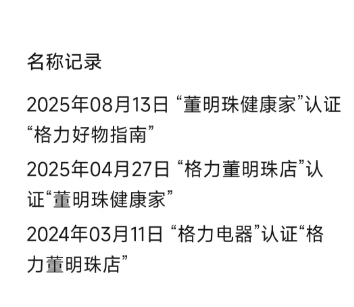
轰轰烈烈搞了半年“董明珠健康家”后,格力电器突然转舵,疑似开始去董明珠化
Jin Rong Jie· 2025-08-13 13:57
Core Viewpoint - Gree Electric Appliances has rebranded its service account from "Dong Mingzhu Health Home" to "Gree Good Product Guide," indicating a potential shift away from the personal branding of its long-time chairwoman, Dong Mingzhu, just six months after launching the health-focused initiative [1][3]. Group 1: Brand Strategy Changes - The rebranding marks the third name change since March 2024, with the previous names including "Gree Dong Mingzhu Store" and "Dong Mingzhu Health Home" [1]. - The original initiative aimed to transform Gree from a traditional home appliance manufacturer to a health and smart home service provider, with plans to open 10,000 "Dong Mingzhu Health Home" stores [4]. Group 2: Leadership and Management - Dong Mingzhu has been the chairwoman of Gree Electric for over 12 years and recently began a new three-year term [7][8]. - Discussions around her potential retirement have surfaced, with Dong indicating that she has identified several candidates for succession [8]. Group 3: Market Position and Challenges - The company has faced challenges in its retail channels, including the departure of key figures and the need for a strategic overhaul to boost sales [4][5]. - Dong Mingzhu's controversial statements and personal branding efforts have drawn criticism, suggesting that her approach may negatively impact Gree's reputation [5]. Group 4: Financial Standing - As of the end of the first quarter, Dong Mingzhu held approximately 101 million shares of Gree Electric, with a market value exceeding 4.82 billion yuan based on the stock price of 47.73 yuan per share on August 13 [9].


甘源食品(002991):需求淡季&渠道调整收入利润短期承压 关注新品铺货表现
Xin Lang Cai Jing· 2025-08-13 02:38
Core Viewpoint - The company reported a decline in revenue and net profit for the first half of 2025, indicating challenges in both product performance and channel dynamics [1][2]. Financial Performance - For H1 2025, the company achieved revenue of 945 million yuan, down 9.34% year-on-year, and a net profit attributable to shareholders of 75 million yuan, down 55.20% year-on-year [1]. - In Q2 2025, revenue was 441 million yuan, a decrease of 3.37% year-on-year, with a net profit of 22 million yuan, down 70.96% year-on-year [1]. - The gross margin for H1 2025 was 33.61%, a decline of 1.33 percentage points year-on-year, while Q2 2025 gross margin was 32.79%, down 1.58 percentage points year-on-year [2]. Product Performance - The "old three" product categories remained relatively stable, while the comprehensive nut and bean products saw a decline in revenue [1]. - Revenue for comprehensive nuts and beans was 273 million yuan, down 19.92% year-on-year, while revenue for green peas was 234 million yuan, down 1.56% year-on-year [1]. Channel Dynamics - Direct sales through supermarkets experienced rapid growth, while traditional distribution channels faced pressure [1]. - Revenue from distribution was 696 million yuan, down 19.84% year-on-year, while e-commerce revenue was 153 million yuan, up 12.42% year-on-year [1]. Cost and Expenses - The company faced increased expense ratios due to revenue decline and higher expenditure [2]. - In Q2 2025, the expense ratio was 26.79%, an increase of 8.45 percentage points year-on-year, with sales expense ratio at 19.97%, up 6.42 percentage points [2]. Strategic Initiatives - The company is actively embracing new channels and nearing completion of adjustments in traditional channels, focusing on new product launches and partnerships [3]. - The company has been enhancing brand influence through marketing activities and expanding its product matrix with differentiated new flavors [3]. Future Outlook - Revenue projections for 2025-2027 are estimated at 2.288 billion yuan, 2.597 billion yuan, and 2.952 billion yuan, with expected year-on-year growth rates of 1.36%, 13.49%, and 13.68% respectively [3]. - Expected net profits for the same period are projected at 298 million yuan, 401 million yuan, and 498 million yuan, with year-on-year growth rates of -20.92%, 34.67%, and 24.21% respectively [3].

娃哈哈“砍经销商”风波背后,冰柜之战生死时速
Huan Qiu Wang· 2025-08-12 05:53
Core Viewpoint - Wahaha is undergoing significant changes in its distribution strategy, particularly targeting distributors with annual sales below 3 million yuan, which has sparked controversy and highlighted the challenges of reforming its traditional sales system under the leadership of Zong Fuli, the founder's daughter [1][2][4] Group 1: Background of the Incident - The controversy began with reports that Wahaha was eliminating distributors with annual sales below 3 million yuan and merging smaller distributors into larger ones, leading to disputes over payments [2] - Despite Wahaha's claim that the number of new distributors far exceeds those terminated, the experiences of frontline distributors reveal the harsh realities of the reform [2][3] Group 2: Icebox Strategy and Channel Reform - The core of the issue is the aggressive push for channel reform initiated by Zong Fuli, focusing on the deployment of iceboxes to enhance product visibility and sales [3] - Wahaha's investment in icebox deployment is unprecedented, with plans for over 60,000 iceboxes and 100,000 smart iceboxes, reflecting a shift towards modern and refined management of its sales system [3] - Stricter performance standards for distributors have been introduced, with sales targets for 2025 set to increase by 50% compared to 2024, creating significant pressure on those accustomed to traditional models [3] Group 3: Company Response and Market Implications - Wahaha's management has characterized the changes as a normal market strategy adjustment, attempting to frame the situation as a routine operational update [4] - Industry analysts emphasize the urgency of these reforms, noting that without adequate icebox presence, sales would be severely impacted, highlighting the competitive necessity of this strategy [4] - The overarching goal of the reforms is to enhance operational efficiency and market competitiveness, but balancing the pace of change with the needs of existing distributors remains a critical challenge for management [4]
汤臣倍健(300146):收入降幅收窄,优化费投带动盈利改善
Huaxin Securities· 2025-08-11 14:36
Investment Rating - The investment rating for the company is "Buy" (maintained) [1] Core Views - The company reported a narrowing decline in revenue, with improved profitability driven by cost control measures [5][7] - The second quarter showed a significant recovery in net profit, with a year-on-year increase of 71% [4][5] - The company is focusing on optimizing its resource allocation and enhancing its operational efficiency [5][6] Financial Performance Summary - For the first half of 2025, total revenue was 3.532 billion yuan, a decrease of 23% year-on-year, while net profit attributable to shareholders was 737 million yuan, down 17% [4] - In Q2 2025, total revenue was 1.741 billion yuan, a decrease of 12% year-on-year, but net profit increased by 71% [4] - The gross margin for H1 2025 was 68.55%, with a slight decrease of 0.01 percentage points, while Q2 2025 saw an increase of 2 percentage points to 68.43% [5] - The company reduced its sales expense ratio by 5 percentage points in H1 and 11 percentage points in Q2, indicating effective cost control [5] Revenue and Profit Forecast - The company expects a further narrowing of revenue decline and an increase in profit margins for the full year 2025 [7] - The adjusted earnings per share (EPS) forecasts for 2025-2027 are 0.46, 0.52, and 0.60 yuan respectively, with corresponding price-to-earnings (PE) ratios of 27, 24, and 21 times [7][10]

汤臣倍健(300146):收入继续承压,控费带动Q2利润同比改善
EBSCN· 2025-08-11 05:11
Investment Rating - The report maintains a "Buy" rating for the company, indicating a positive outlook for future performance [6]. Core Views - The company experienced a significant decline in revenue, with a 23.4% year-on-year decrease in H1 2025, amounting to 3.53 billion yuan, while net profit decreased by 17.3% to 740 million yuan. However, Q2 2025 showed signs of recovery with a 71.4% increase in net profit compared to the previous year [1][4]. - The company is expected to narrow the revenue decline for the full year 2025, projecting a single-digit percentage decrease compared to H1 2025 [4]. Summary by Sections Financial Performance - In H1 2025, the main brand "汤臣倍健" generated 1.888 billion yuan in revenue, down 28.32% year-on-year. The "健力多" brand saw a 30.35% decline, generating 411 million yuan, while "Life-Space" domestic revenue fell by 34.43% to 138 million yuan. However, the overseas revenue for LSG increased by 13.46% to 534 million yuan [2]. - The company's gross margin for H1 2025 was 68.55%, slightly down from the previous year, while the net profit margin improved significantly to 21.61% due to effective cost control measures [3]. Cost Management - The sales expense ratio decreased by 4.59 percentage points in H1 2025, reflecting the company's efforts to control costs and reduce advertising expenditures. Management expenses increased slightly due to revenue decline, but overall profitability improved [3]. Future Outlook - The company plans to implement several initiatives to drive performance recovery, including product innovation and channel reform. New products are set to be launched in the second and third quarters of 2025, and the company aims to enhance its online sales and user engagement [4]. - Profit forecasts for 2025-2027 are set at 791 million, 921 million, and 1.024 billion yuan, respectively, with corresponding EPS of 0.46, 0.54, and 0.60 yuan, indicating a positive growth trajectory in the coming years [4].
实控人又减持,口子窖被“抛弃”
Sou Hu Cai Jing· 2025-08-05 11:33
口子窖此前凭借渠道和价格优势稳居"榜眼",不过自2022年,迎驾贡酒反超口子窖,至今仍占据第二的 位置。 古井贡酒、迎驾贡酒此前经理人网均有撰文分析,在此不表,我们将目光放到已丢掉徽酒"榜眼"的口子 窖。 实控人减持又质押 关注到口子窖是因其日前的一则减持公告:刘安省计划自2025年8月12日至2025年11月11日通过大宗交 易方式减持不超过1000万股口子窖股票,占公司总股本的1.67%,减持价格按照市场价格确定。 刘安省是谁? 公开信息显示,刘安省历任口子窖总经理、董事长、监事会主席等职务,虽于2020年退休但仍与口子窖 现任董事长徐进同为口子窖实际控制人,也是公司的第二大股东。截至上述减持公告披露日,刘安省持 有口子窖6347.35万股,持股比例达10.58%,且其与徐进、范博、徐钦祥等8人结为一致行动人,合计持 有口子窖42.01%股权。 高管减持无可厚非,何况刘安省采用的是大宗交易方式,该方式不同于集合竞价系统以中小投资者为 主,其接盘方大多为机构投资者,交易数据不会被纳入市场交易中,通常对股价影响较小。 不过我们看到,公告披露当日(7月21日)口子窖股价下跌0.5%,至今日收盘的连续12个交易日 ...

净利预减三成! 华润饮料“栽跟头”,经销商揭“价格倒挂”内幕 | BUG
Xin Lang Cai Jing· 2025-07-31 00:26
Core Viewpoint - China Resources Beverage has issued a profit warning, expecting a 20% to 30% year-on-year decline in net profit for the first half of 2025, leading to a significant drop in stock price following the announcement [2][3] Financial Performance - The company reported a revenue of 12.124 billion RMB from packaged drinking water in 2024, a decrease of 2.6% compared to 2023, with its revenue share dropping from 92.1% to 89.7% [8] - The beverage segment generated 1.397 billion RMB in revenue in 2024, marking a 30.8% increase, but still only accounted for 10.3% of total revenue [9] Marketing and Strategy - Increased marketing expenditures have led to a higher marketing expense ratio, which has negatively impacted profits. The company has engaged in high-profile marketing strategies, including partnerships with sports events and athletes [3][5] - The company is undergoing channel reforms, shifting from traditional distribution to a more integrated approach, which includes introducing e-commerce and specialized distributors [5][6] Industry Context - The bottled water market in China is experiencing stagnation, with the production volume in 2024 falling below 50% of total beverage production for the first time [7] - Competitors like Nongfu Spring are gaining market share, with their tea beverage segment surpassing bottled water as the primary revenue source [10] Challenges and Future Outlook - The company faces significant challenges in its transformation from a bottled water leader to a diversified beverage group, including competition from established brands and the need for product innovation [11][15] - There is a pressing need for the company to enhance its digital and channel strategies to improve market penetration, especially in lower-tier markets [14]

港股异动丨华润饮料大跌超14%,发盈警,逊市场预期
Ge Long Hui· 2025-07-29 11:29
Core Viewpoint - China Resources Beverage (2460.HK) issued a profit warning, expecting a 20%-30% decline in net profit for the first half of the year, which is below market expectations for double-digit growth [1] Group 1: Company Performance - The company's stock price dropped over 14% to HKD 11.16, marking a new low in over five months, with trading volume increasing to HKD 960 million [1] - The decline in net profit is attributed to intensified competition in the packaged water industry, leading to higher sales and distribution expenses, as well as changes in product mix resulting in lower gross margins [1] Group 2: Analyst Opinions - Goldman Sachs remains optimistic about the regional beverage business expansion and penetration potential of China Resources Beverage, but downgraded the investment rating from "Buy" to "Neutral" and reduced the target price from HKD 16.4 to HKD 12.1 [1] - Goldman Sachs adjusted sales forecasts for 2025 to 2027 down by approximately 5%, with a 6% reduction in packaged drinking water sales expectations, estimating a 1.6 percentage point narrowing in gross margin due to increased promotional and channel investment, leading to a 26%-27% downward revision in profit forecasts [1] - UBS anticipates that the profit warning will negatively impact the overall beverage industry and noted that the management did not provide specific guidance, with expectations of continued competitive uncertainty in the second half of the year [2] Group 3: Future Outlook - UBS highlighted that China Resources Beverage plans to distribute an interim dividend, despite the negative market reaction to the profit warning [2] - The management reiterated a focus on deepening channel reforms, particularly in online, home, and dining channels [2]

格力电器(000651) - 2025年7月21日投资者关系活动记录表
2025-07-22 15:20
Group 1: Dividend Policy and Financial Performance - The company has a strong foundation for sustainable and stable high dividends, with a cumulative cash dividend of 41.125 billion CNY from 2020 to 2024, achieving a cumulative dividend rate of over 60% [1] - Future profit distribution policies will be reasonably formulated to ensure the stability, sustainability, and predictability of cash dividends [1] Group 2: "Dong Mingzhu Healthy Home" Initiative - The initiative aims to provide a one-stop health home solution through experiential scenarios, data visualization, and smart interaction, expanding from air conditioning to a full range of home appliances [2] - As of March 2025, over 600 stores have been upgraded, with a goal of completing 3,000 store renovations to enhance offline display and sales capabilities [2] - Non-air conditioning product sales in offline stores have seen over 20% year-on-year growth in the past 3-4 months, particularly in refrigerators and washing machines [2] Group 3: Product Development and Market Expansion - The company is accelerating product R&D and category expansion in refrigeration and home appliances, leveraging core technologies in compressors [3] - The introduction of popular products like the Lychee refrigerator has helped achieve top ten rankings on platforms like Zhihu and Douyin during promotional events [3] Group 4: Overseas Business Growth - The overseas business growth is driven by a "self-owned brand going global" strategy, with nearly 70% of export revenue coming from self-owned brand products [4] - The company has established nearly 500 self-owned brand agents globally and plans to enhance overseas sales company setups [4] - The overseas market has expanded from air conditioning to include refrigerators, washing machines, and environmental appliances, supporting the transformation into a comprehensive industrial group [4] Group 5: Channel Reform and Industry Characteristics - The company has streamlined its sales channels from multiple levels to 1-2 levels, significantly improving market response efficiency and channel control [5] - The air conditioning industry is characterized by durability, seasonality, and cyclical demand, requiring continuous investment in technology, quality control, and service systems [5] Group 6: Gree Titanium Business Synergy - Gree Titanium's business includes new energy commercial vehicles and energy storage, with a focus on lithium titanate battery technology, which is widely used in various sectors [6] - The synergy with Gree Titanium promotes the application of industrial products in the automotive sector, enhancing market promotion and business transformation [6] Group 7: Ten-Year Free Repair Policy - The company launched a ten-year free repair policy for home air conditioners in 2021, showcasing its commitment to quality and service standards [7] - The policy is supported by a comprehensive quality control system, ensuring low failure rates and enhancing consumer trust [8] - This initiative has shifted industry competition towards value rather than price, promoting quality and service upgrades across the sector [8]
空调专家20250605
2025-07-16 06:13
Summary of Conference Call Records Company and Industry Involved - The discussion primarily revolves around the home appliance industry, specifically focusing on a company that appears to be a major player in the market, possibly Gree or Midea, given the context of the conversation. Key Points and Arguments 1. **Inventory Management and Dealer Incentives** The company is implementing measures to reduce dealer inventory levels and improve cash flow by adjusting rebate policies. Previously, dealers were incentivized with rebates for larger orders, but this may be revised to lower percentages to optimize profits [1][2][3]. 2. **Price Adjustments and Impact on Sales** There has been a price increase from 3700 to 3800, which affects the rebate structure. The company is balancing the need to maintain competitive pricing while managing dealer incentives [2][4]. 3. **Pressure on Inventory Levels** The company is facing inventory pressure not only at the dealer level but also at the factory level. This has led to a strategy of reducing the amount of stock held by dealers, which in turn lowers their financial burden [4][5]. 4. **Sales Performance and Market Dynamics** The company reported a decline in sales in January, followed by a recovery in February, with growth rates reaching over 20% in some periods. However, the recovery speed is slower compared to the previous year [10][11][12]. 5. **Channel Reform and Sales Strategy** The company is undergoing channel reforms, particularly in Shandong, which has led to improved execution compared to the previous year. The introduction of national subsidies has also positively impacted sales, although not to the expected levels [12][13]. 6. **Sales Growth and Seasonal Trends** The company experienced a significant sales boost during promotional events, with some channels reporting growth rates as high as 200%. However, the overall growth for May was around 10%, indicating a need for continued promotional efforts [13][15]. 7. **Target Setting for Dealers** The company has set a minimum sales target of 5% for dealers, with an ultimate goal of achieving 15%. Most dealers are currently meeting targets between 10% and 15% [15][16]. Other Important but Possibly Overlooked Content - The company is also focusing on enhancing its brand image through specialized stores, which has shown positive results in sales performance [9]. - There is a mention of competitive pricing strategies against other brands, indicating a need to remain competitive in a tight market [8]. - The discussion highlights the importance of managing both online and offline sales channels, with a noted shift towards online sales as a significant growth driver [11][12].
