线上消费

Search documents
ETF开盘:线上消费ETF基金领涨4.61%,创业板人工智能ETF华夏领跌3.16%
news flash· 2025-06-23 01:26
Group 1 - The ETF market showed mixed performance with the online consumption ETF (159793) leading gains at 4.61% [1] - The Hong Kong Stock Connect Dividend ETF (159220) increased by 4.13%, while the medical device ETF (159797) rose by 3.77% [1] - Conversely, the ChiNext AI ETF (159381) experienced the largest decline at 3.16%, followed by the Sino-Korean Semiconductor ETF (513310) down 1.69%, and the gaming ETF (516770) down 1.64% [1] Group 2 - The market is undergoing adjustments, suggesting that investors may consider broad-based index funds for bottom-fishing opportunities [1]

提振消费政策持续显效(锐财经)
Ren Min Ri Bao Hai Wai Ban· 2025-06-20 21:21
Group 1: Overall Consumption Trends - In May, the total retail sales of consumer goods reached 4.13 trillion yuan, a year-on-year increase of 6.4%, marking the fastest monthly growth rate in 2024 [1] - From January to May, the total retail sales amounted to 20.32 trillion yuan, with a year-on-year growth of 5.0% [1] - The service retail sector saw a year-on-year growth of 5.2% from January to May, slightly higher than the growth rate of goods retail [4] Group 2: Factors Driving Consumption - Policies aimed at boosting consumption have shown effectiveness, with promotional events and increased holidays contributing to a faster release of consumer demand [2] - The retail sales of goods increased by 6.5% year-on-year in May, with significant growth in categories such as home appliances and communication equipment, which saw increases of 53.0% and 33.0% respectively [2] - The online retail sector experienced a year-on-year growth of 8.5% from January to May, driven by promotional activities and government subsidies [7] Group 3: Regional Consumption Insights - The retail sales in county and rural areas grew by 5.4% from January to May, outpacing urban areas by 0.6 percentage points [2] - The share of county and rural retail sales in the total retail sales reached 38.9%, an increase of 0.1 percentage points compared to the previous year [2] Group 4: Service Sector Performance - The tourism and dining sectors showed strong growth, with restaurant revenues increasing by 5.0% year-on-year from January to May [4] - The retail sales in tourism-related services and cultural leisure services also demonstrated positive trends during the same period [4] Group 5: Future Outlook - There is a need to enhance residents' consumption capacity and willingness, as the internal driving force for consumption growth remains to be strengthened [8] - Future actions will focus on implementing special measures to boost consumption and fostering new consumption scenarios and dynamics [8]

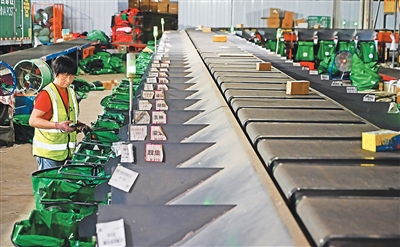
前5月四川实现网络交易额22457.5亿元 同比增长5.5%
Zhong Guo Chan Ye Jing Ji Xin Xi Wang· 2025-06-13 00:54
Core Insights - Sichuan province achieved an online transaction volume of 22,457.5 billion yuan from January to May, marking a year-on-year growth of 5.5% [1] - The online retail sales reached 4,289.2 billion yuan, with a year-on-year increase of 9.8% [1] - Physical online retail sales amounted to 2,911.6 billion yuan, also growing by 9.8% year-on-year, while service-based online retail sales reached 1,377.6 billion yuan, increasing by 9.9% [1] E-commerce Trends - The online consumption trend is highlighted by Meituan Travel's report, indicating that orders for local specialty dishes from non-local tourists increased by over 105% by May 5 [1] - Chengdu saw a 77% year-on-year growth in online dining orders contributed by non-local tourists, with popular food consumption areas including Chunxi Road, Tianfu New District, and MixC [1] Rural E-commerce Growth - Rural online retail sales reached 1,340.6 billion yuan from January to May, reflecting a year-on-year growth of 13.5% [1] - Online retail sales of agricultural products were 272.2 billion yuan, with an 11.6% year-on-year increase [1] City-specific Performance - Chengdu, Leshan, and Mianyang ranked highest in online retail sales, achieving 2,951.4 billion yuan, 229.5 billion yuan, and 171.9 billion yuan respectively, accounting for 68.8%, 5.4%, and 4.0% of the total [1] Physical and Service-based Retail Breakdown - In terms of physical online retail, Chengdu, Mianyang, and Leshan achieved sales of 2,070.6 billion yuan, 142.4 billion yuan, and 101.2 billion yuan, with respective market shares of 71.1%, 4.9%, and 3.5% [2] - For service-based online retail, Chengdu, Leshan, and Aba Prefecture recorded sales of 880.7 billion yuan, 128.3 billion yuan, and 44.2 billion yuan, with market shares of 63.9%, 9.3%, and 3.2% [2] Industry Insights - In the physical online retail sector, the top three categories were online dining, health food, and 3C digital products, generating sales of 704.8 billion yuan, 666.8 billion yuan, and 389.5 billion yuan, with respective shares of 24.2%, 22.9%, and 13.4% [2] - For service-based online retail, the leading categories were online travel, life services, and leisure entertainment, achieving sales of 739.6 billion yuan, 233.8 billion yuan, and 165.2 billion yuan, with shares of 53.7%, 17.0%, and 12.0% [2]
规上工业增加值同比增长8.7%!2025年1-4月青岛经济运行情况发布
Sou Hu Cai Jing· 2025-05-27 04:23
Economic Overview - The overall economic operation of Qingdao is stable, continuing a positive development trend in 2023 [1] Industrial Production - The industrial added value above designated size increased by 8.7% year-on-year in the first four months, with 22 out of 35 major industries showing growth, resulting in a growth rate of 62.9% [1] - Key industries such as railway, shipbuilding, aerospace, and automotive manufacturing saw significant increases in added value, contributing a total of 5.8 percentage points to the industrial growth rate [1] - The equipment manufacturing sector's added value grew by 14.2%, boosting the overall industrial growth rate by 7.3 percentage points, which is higher than the overall industrial added value growth rate of 5.5% [1] Service Sector - The revenue of service enterprises above designated size grew by 7.0% year-on-year in the first quarter, with leasing and business services increasing by 18.8% and scientific research and technical services by 3.8% [2] - Passenger transport volumes for rail, road, and air increased by 2.8%, 9.1%, and 2.5% respectively, while postal business volume grew by 10.4% [2] Fixed Asset Investment - Fixed asset investment increased by 1.0% year-on-year in the first four months, with the secondary industry seeing a significant growth of 27.8% [3] - Private investment rose by 8.3%, accounting for 63.7% of total investment, contributing 5.0 percentage points to the overall fixed asset investment growth [3] Online Consumption - Retail sales through public networks increased by 8.5% year-on-year, making up 37.7% of total retail sales [4] - The sales of cultural and office supplies and communication equipment surged by 48.7% and 23.8% respectively, driven by the policy encouraging the replacement of consumer goods [4] Trade and Exports - The total value of foreign trade imports and exports reached 291.1 billion yuan, a year-on-year increase of 3.7%, accounting for 25.8% of the province's total [5] - Exports grew by 8% to 175.64 billion yuan, while imports decreased by 2.2% to 115.46 billion yuan [5] - Private enterprises contributed significantly to trade, with a total of 204.84 billion yuan in imports and exports, marking a 6.4% increase [5] Financial and Employment Situation - The general public budget revenue was 49.49 billion yuan, while expenditure was 50.17 billion yuan, with education and cultural tourism spending increasing by 7.2% and 19.2% respectively [6] - Urban employment increased by 114,700, a growth of 5.0% year-on-year, with a notable rise in employment among migrant workers [7] - The consumer price index (CPI) showed a slight year-on-year decrease of 0.1%, with various categories experiencing different price changes [7]
AI人工智能ETF(512930)最新份额创新高,消费电子ETF(561600)近3月新增规模居同类第一,国内本土AI芯片供应链自主化进程有望加速
Sou Hu Cai Jing· 2025-05-26 03:19
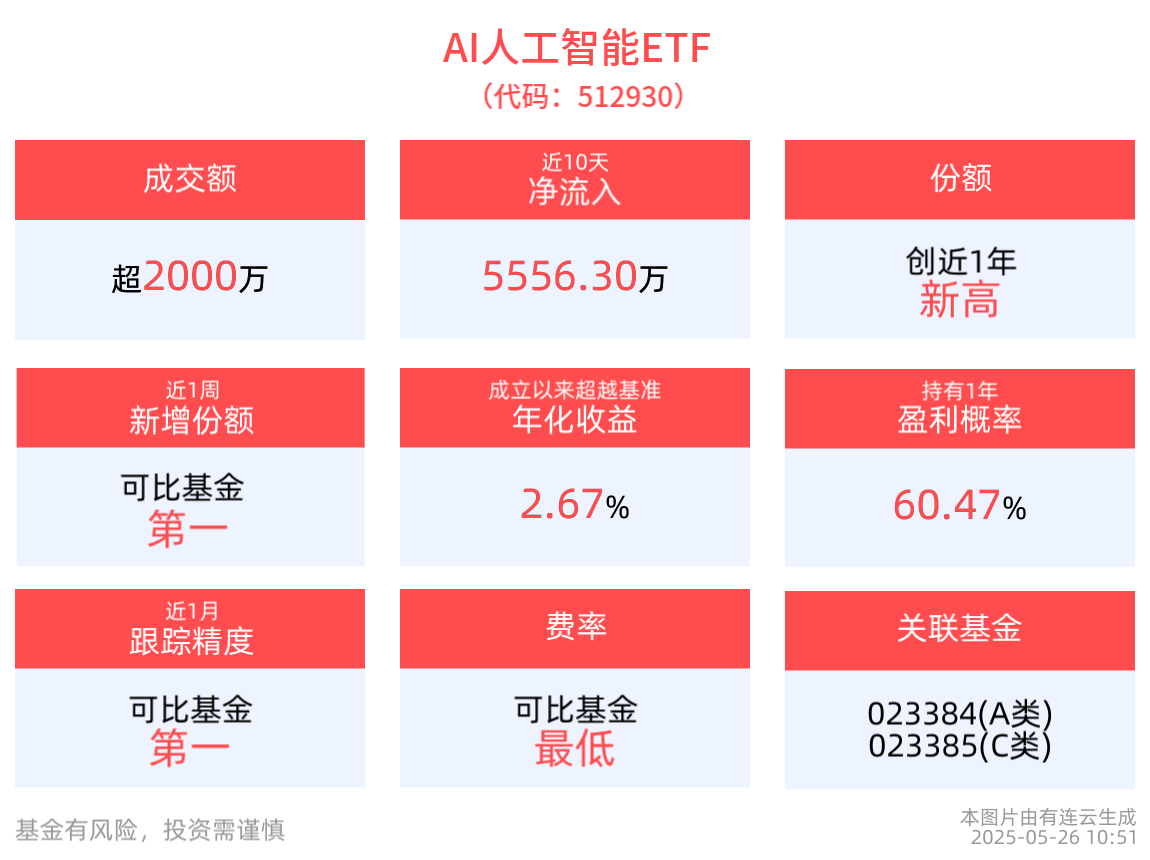
Group 1: AI Industry Insights - The CSI Artificial Intelligence Theme Index (930713) increased by 0.57%, with notable gains from constituent stocks such as Xingchen Technology (301536) up 5.59% and Kunlun Wanwei (300418) up 4.65% [1] - The AI Artificial Intelligence ETF (512930) rose by 0.47%, with a latest price of 1.29 yuan, and has seen a cumulative increase of 1.50% over the past month [1] - The latest scale of the AI Artificial Intelligence ETF reached 1.923 billion yuan, with a record high of 1.494 billion shares [1] - The net inflow of funds into the AI Artificial Intelligence ETF was 9.1088 million yuan, with a total of 55.563 million yuan net inflow over the last 10 trading days [1][2] Group 2: Consumer Electronics Sector - The CSI Consumer Electronics Theme Index (931494) rose by 0.21%, with significant increases from stocks like Tongfang Co., Ltd. (600100) up 3.19% and Jingwang Electronics (603228) up 2.41% [4] - The Consumer Electronics ETF (561600) increased by 0.39%, with a latest price of 0.77 yuan, and has shown a cumulative increase of 25.41% over the past year [4] - The Consumer Electronics ETF experienced a significant growth in scale, increasing by 8.5561 million yuan over the past three months, ranking in the top 1/5 among comparable funds [4] Group 3: Online Consumption Market - The CSI Hong Kong-Shanghai Online Consumption Theme Index (931481) saw a slight increase of 0.01%, with notable gains from stocks like Youzu Interactive (002174) up 9.97% and Kunlun Wanwei (300418) up 4.59% [5] - The Online Consumption ETF (159793) rose by 0.23%, with a latest price of 0.89 yuan, and has shown a cumulative increase of 1.15% over the past month [5] Group 4: AI Chip Market Developments - Nvidia plans to launch a new AI chip specifically for the Chinese market, with production expected to start in June 2025, priced between $6,500 and $8,000 [8] - Domestic AI chip suppliers are expected to accelerate the localization of the supply chain, with projections indicating that by 2025, local chips will account for 40% of the Chinese AI server market [8]
商务部:4月商品消费增速加快
Zhong Guo Zheng Quan Bao· 2025-05-23 21:14
Group 1 - The core viewpoint is that China's consumption market is showing stable growth, driven by effective policies and promotional activities [1][2] - In April, retail sales of goods increased by 5.1% year-on-year, with a 0.5 percentage point acceleration compared to the first quarter [2] - The "old for new" consumption policy has significantly boosted sales, particularly in home appliances, cultural office supplies, furniture, and communication equipment, with respective year-on-year growth rates of 38.8%, 33.5%, 26.9%, and 19.9% [2] Group 2 - The digital product subsidy policy has led to a notable increase in sales, with 48.8 million consumers purchasing 51.48 million digital products, generating sales of 143.26 billion yuan [1] - From January to April, retail sales of communication equipment increased by 25.4% year-on-year, ranking first among 16 categories of consumer goods [1] - The sales of new energy passenger vehicles surged by 33.9% in April, achieving a penetration rate of 51.5% [2] Group 3 - Online consumption is steadily growing, with online retail sales increasing by 7.7% year-on-year, and physical goods online retail sales growing by 5.8%, accounting for 24.3% of total retail sales [2] - E-commerce is enhancing domestic circulation and international cooperation, with significant contributions to improving consumption quality [2][3] - The integration of industrial e-commerce is facilitating foreign trade and domestic sales, with over 3,100 foreign trade enterprises participating in online activities, generating over 1.1 billion yuan in sales [3]
以旧换新政策带动广东4月家具建材零售增速创新高
Nan Fang Du Shi Bao· 2025-05-23 11:55
Core Insights - Guangdong's consumer market is showing significant recovery, driven by the successful implementation of the trade-in policy, leading to record retail growth in furniture and building materials [1][6] Retail Performance - In April, Guangdong's total retail sales of consumer goods increased by 4.9% year-on-year, with a 0.5 percentage point improvement from the first quarter [3] - Retail sales of household appliances and audio-visual equipment, furniture, and building materials surged by 86.9%, 123.5%, and 156.9% respectively, marking historic highs for furniture and building materials [3][6] - Nationally, retail sales of household appliances and furniture grew by 38.8% and 26.9% respectively in April, while building materials saw a monthly increase of 9.7% [3] Online Consumption and New Business Models - From January to April, Guangdong's manufacturing sector grew by 4.1%, with notable increases in computer and communication equipment (7.1%), automotive manufacturing (7.8%), and general equipment (10%) [4] - Online retail through public networks saw a year-on-year increase of 20%, with April's growth reaching 31.9%, indicating a strong shift towards online shopping [5] Trade-in Policy Impact - The trade-in policy in Guangdong has significantly boosted retail growth in home furnishings and building materials, with 2024 sales reaching 153.45 billion yuan, benefiting over 11.28 million consumers [6] - The policy has been expanded for 2025 to include smart home products and aging-friendly renovations, with substantial subsidies for vehicle trade-ins and home appliance upgrades [6] - Retail sales for home appliances, furniture, and building materials in the first four months of 2025 grew by 44%, 60.6%, and 29.2% respectively, far exceeding national averages [6]
商务部:1-4月相关平台入境游人数和消费额同比分别增长54.8%和66.8%
news flash· 2025-05-23 08:21
Core Viewpoint - The Ministry of Commerce reports significant growth in inbound tourism and consumer spending in April 2025, indicating a positive trend in China's consumption market [1] Group 1: Consumer Market Performance - In April, the total retail sales of consumer goods reached 3.72 trillion yuan, reflecting a year-on-year increase of 5.1% [1] - From January to April, the total retail sales of consumer goods amounted to 16.18 trillion yuan, with a year-on-year growth of 4.7% [1] Group 2: Key Trends in Consumption - There is an acceleration in the growth rate of goods consumption, with strong sales in automobiles, home appliances, and mobile phones [1] - Service consumption continues to expand, with sustained interest in cultural, entertainment, and tourism activities [1] - New consumption trends are emerging, with rapid growth in sales of green, smart, and health-related products [1] - Online consumption is steadily increasing, while physical retail is showing signs of recovery [1]
全球订单已超25万台!Rokid旗下智能眼镜引发热议,消费电子ETF(561600)近2周新增规模居同类第一,AI人工智能ETF(512930)昨日获资金净流入
Sou Hu Cai Jing· 2025-05-22 03:44
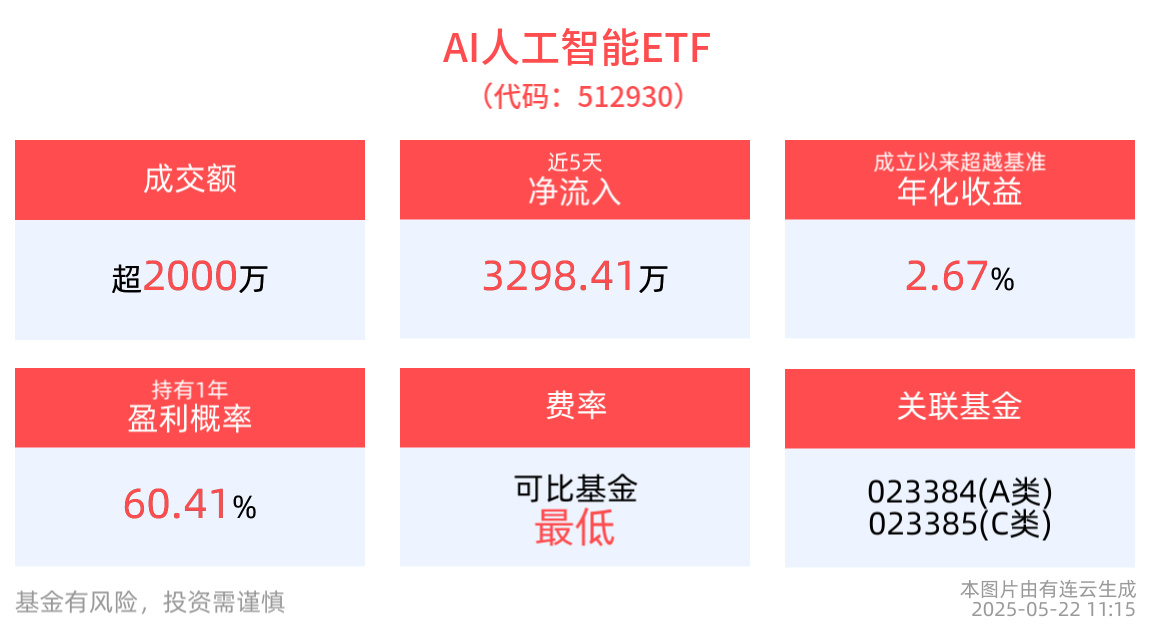
Group 1: Consumer Electronics Sector - The CSI Consumer Electronics Theme Index (931494) decreased by 0.13% as of May 22, 2025, with mixed performance among constituent stocks [1] - Leading gainers included Xunwei Communication (300136) up 3.30%, Wenta Technology (600745) up 2.63%, and Silan Microelectronics (600460) up 2.33% [1] - The Consumer Electronics ETF (561600) also fell by 0.13%, with a latest price of 0.78 yuan, but showed a 1.42% increase over the past month [1] - The ETF's trading volume was 287.16 million yuan with a turnover rate of 1.49% [1] - Over the past two weeks, the ETF's scale increased by 16.72 million yuan, ranking it in the top 1/5 among comparable funds [1] - The ETF's share count rose by 26 million shares in the same period, also placing it in the top 1/5 among comparable funds [1] - Recent capital inflow was balanced, with a total of 22.05 million yuan attracted over the last 10 trading days [1] Group 2: Artificial Intelligence Sector - The CSI Artificial Intelligence Theme Index (930713) declined by 0.06% as of May 22, 2025, with varied performance among its constituent stocks [2] - Top performers included Kunlun Wanwei (300418) up 7.89%, New Yisheng (300502) up 1.87%, and Shitou Technology (688169) up 1.82% [2] - The AI ETF (512930) decreased by 0.15%, with a latest price of 1.31 yuan, but recorded a 2.26% increase over the past month [2] - The ETF's trading volume was 28.19 million yuan with a turnover rate of 1.44% [3] - The latest scale of the AI ETF reached 1.95 billion yuan [3] - Recent net capital inflow was 1.31 million yuan, with a total of 32.98 million yuan attracted over the last five trading days [3] - Leveraged funds are actively participating, with the latest margin buying amounting to 4.44 million yuan and a margin balance of 90.18 million yuan [3] Group 3: Online Consumption Sector - The CSI Hong Kong-Shanghai Online Consumption Theme Index (931481) fell by 0.79% as of May 22, 2025, with mixed results among its constituent stocks [4] - Leading gainers included High Xin Retail (06808) up 10.24%, Kunlun Wanwei (300418) up 6.48%, and Youzu Network (002174) up 4.86% [4] - The Online Consumption ETF (159793) decreased by 0.78%, with a latest price of 0.89 yuan, but showed a 3.46% increase over the past month [4] - The index comprises 50 companies involved in online shopping, digital entertainment, online education, and telemedicine [13] - The top ten weighted stocks in the index account for 56.94% of the total weight, with Alibaba-W (09988) having the highest weight at 14.37% [13]



中国消费者选出了这些品牌
第一财经· 2025-05-21 12:17
Core Insights - The "Global Brand China Online 500 Strong List" (CBI500) is the first brand ranking based on actual consumer purchasing behavior, along with the "China Online Consumption Brand Index" (CBI) and "Online Brand Purchasing Power Index" (BPI) [1][3] Group 1: Consumer Quality Recovery - Over the past two years, China's consumption quality has significantly improved, with the CBI rising from 59.42 in Q1 2023 to 63.38 in Q1 2025, indicating a nearly 4-point increase in average brand ratings [3][5] - The CBI saw an increase of 11.5 percentage points in Q4 2024 and 6.7 percentage points in Q1 2025 compared to the baseline index [3] Group 2: Industry Performance - The 3C and home appliance sectors have the highest consumption quality, with indices above 75, indicating a strong market share for leading brands [5] - The pet supplies, home decoration, and women's clothing sectors have seen increases of over 5 points in their consumption brand indices since 2023, reflecting growing brand awareness among consumers [5] Group 3: Brand Evaluation Methodology - The CBI is based on real consumer data and focuses on high-quality online consumption, providing both national and regional indices [8][10] - The evaluation includes sales, pricing, search, and positive reviews, with a new "novelty" metric introduced to assess brand growth and innovation [10] Group 4: International Brand Presence - The CBI500 includes 57 American brands, 28 Japanese brands, and 53 European brands, indicating a competitive landscape where foreign brands benefit from China's large market [11][12] - International brands like Descente have seen significant growth in China, with sales rising from 0.2 billion in 2016 to over 5 billion in 2023 [11] Group 5: Domestic Brand Growth - Domestic brands are increasingly competing with foreign brands, with notable performances in various sectors, including sportswear and beauty [12][14] - High-end domestic brands are emerging, successfully entering markets traditionally dominated by foreign brands, such as the jewelry sector with brands like Laopuhuang [17][18] Group 6: Brand Growth Drivers - Key growth drivers for brands include product innovation, niche market targeting, and self-satisfying consumption trends [19][20] - The fastest-growing brands in the CBI TOP 1000 list are primarily driven by these three factors, particularly in the beauty and sports sectors [20] Group 7: Regional Brand Distribution - Guangdong and Zhejiang lead in the number of brands in the top 1000, with cities like Shanghai and Hangzhou also showing strong brand presence [21][23] - Hangzhou's success in the beauty and women's clothing sectors is attributed to its robust e-commerce ecosystem [23] Group 8: Technological Advancements - Hard tech brands like Yushubot and DJI are leveraging e-commerce to reach consumers, with significant growth in the robotics and drone sectors [27][28] Group 9: Impact of National Subsidies - National subsidy policies have significantly boosted brand indices, particularly in the home appliance and furniture sectors, leading to double-digit growth in monthly transaction volumes [30]