
科技创新

Search documents
九牧成为洲际酒店集团官方合作伙伴 品类覆盖全品牌
Xin Lang Cai Jing· 2026-02-03 00:13
九牧集团表示,洲际酒店集团供应商筛选标准严苛,对品质、设计、技术及服务等均有高要求。此次合 作打破了国际卫浴品牌对高端市场的垄断,也标志着九牧的科技创新与产品品质获得国际高端酒店集团 认可。九牧以每年不低于销售额10%的研发投入,累计专利超2万项,还曾入驻中国国家博物馆、人民 大会堂等地标建筑。 免责声明:本文内容与数据由观点根据公开信息整理,不构成投资建议,使用前请核实。 观点网讯:近日,九牧集团正式成为洲际酒店集团官方合作伙伴,双方达成战略签约。九牧的卫浴五 金、轻智能马桶等品类入库洲际酒店集团供应链,覆盖其全品牌。 ...
今年本市将建设300项市重点工程
Bei Jing Ri Bao Ke Hu Duan· 2026-02-02 22:22
新兴产业未来产业集中落地 从领域上看,100个重大科技创新及现代化产业项目的投资比重是最高的,当年计划投资达到1428亿 元。 科创+产业: 这100个项目中首先包括加快高水平科技自立自强的一批科研基础设施。市发改委相关负责人说,今年 本市将统筹科技基础设施平台建设,着力提升"三城一区"主平台发展能级,深化农业中关村建设,安排 11个重大科研基础设施项目,包括北京理工大学创新平台集群实验室项目、北京(平谷)农业微生物国 际创新研究院等。 50个新兴产业和未来产业项目也纳入今年的计划。其中,有人工智能创新街区文化智境等项目,将构建 集成电路和人工智能产业创新高地;有北汽享界生产线技术改造等项目,增强新能源汽车产业竞争力; 还有赛诺菲生物制剂原料药产业化、中关村(朝阳)数字医疗产业园二期等项目,提质升级医药健康产 业;更有航天火箭智能感知产业基地等项目,壮大空天技术产业…… 本报记者 曹政 昨天,2026年北京市重点工程计划发布。市发改委介绍,今年本市将持续发挥"3个100"市重点工程的示 范引领作用,集中推进100个重大科技创新及现代化产业项目、100个重大基础设施项目和100个重大民 生改善项目,以重大项目带 ...
一批国家标准本月起实施
Ren Min Ri Bao· 2026-02-02 19:29
Group 1: National Standards Implementation - A set of national standards related to industrial upgrading, public safety, and consumer protection has been implemented as of February 1 [1] - The standards cover key areas such as software and communication, energy management, technological innovation, education health, elderly care services, consumer environment, special equipment safety, and emergency rescue [1] Group 2: Technological Innovation and Industrial Upgrading - The "Software Process Capability Maturity Model" standard aims to enhance software companies' management levels and overall capabilities [1] - The "5G Mobile Communication Network Security Technical Requirements" standard establishes security architecture for 5G networks, focusing on access security, network security, and user privacy protection [1] Group 3: Energy Efficiency and Green Development - The revised "Energy Measurement Equipment Configuration and Management Guidelines" standard imposes mandatory requirements on energy measurement equipment, supporting energy-saving and efficiency management for enterprises [2] Group 4: Focus on Vulnerable Groups - The "General Technical Requirements for Student Rest Desks and Chairs" standard addresses the health needs of school students, ensuring product quality and improving their rest conditions [2] - The "Guidelines for Designing Furniture for the Elderly" standard provides specific design instructions for furniture used by older adults, enhancing their quality of life [2] Group 5: Consumer Rights and Public Safety - The "Barcode Placement Requirements" standard standardizes barcode placement on retail goods, improving data collection efficiency [3] - The "Elevator Safety Requirements Part 2" standard specifies safety parameters for elevators, providing a unified technical benchmark for safety evaluations [3] - New standards aim to guide the development of emerging industries, protect consumer rights, and ensure public safety [3]
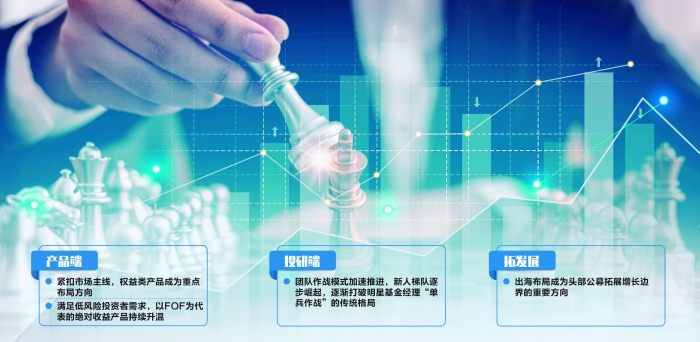
产品创新 投研升级 出海拓展 公募行业多点突破“新棋局”
Shang Hai Zheng Quan Bao· 2026-02-02 18:45
Core Insights - The public fund industry in China is focusing on high-quality development and reform, as emphasized by the China Securities Regulatory Commission (CSRC) during the 2026 system work meeting [2][7] Product Innovation - The public fund sector is witnessing continuous product innovation, with a dual focus on equity products and absolute return products like FOFs [2][3] - In January, 123 new funds were established, with a total issuance scale of 120.21 billion yuan, of which 95 were equity funds totaling 81.24 billion yuan [2] - Active equity funds have shown a resurgence, with notable issuances such as the GF Research Smart Mixed Fund at 7.22 billion yuan, marking the first active equity fund to exceed 7 billion yuan since November 2022 [2][3] Investment Trends - The current investment direction aligns closely with market trends, including cloud computing ETFs, AI ETFs, and funds focused on consumer and digital economy themes [3] - FOFs have gained traction, with a total issuance of 19.94 billion yuan in January, and 14 products still in the issuance phase as of February 2 [3] Research and Team Dynamics - The public fund industry is shifting towards a team-based research model, moving away from the traditional star fund manager approach [5] - Newer fund managers are emerging, as seen in the establishment of the Ruiyuan Research Balanced Fund, which was managed by a team of less-known managers rather than established stars [5][6] Long-term Investment Ecosystem - The CSRC aims to deepen reforms in the public fund sector, focusing on long-term investment strategies and risk management tools to foster a "long money, long investment" market ecosystem [7] - Analysts predict that by 2030, the public fund scale could exceed 50 trillion yuan, driven by deeper financial asset allocation and the entry of long-term capital [7] International Expansion - Leading public funds are increasingly looking to expand internationally, with products like the Southern Dongying CSI A500 ETF being listed on exchanges in Singapore and Hong Kong [8] - Strategic partnerships are being formed, such as the collaboration between Huatai and Korean investment firms to enhance their presence in the Hong Kong ETF market [8]

多维度展现发展韧性 百余家央企控股上市公司2025年业绩报喜
Shang Hai Zheng Quan Bao· 2026-02-02 18:44
Core Viewpoint - The overall performance of central enterprises listed on A-shares is showing a multi-dimensional improvement for the year 2025, with over 110 companies expected to report positive earnings, including 23 companies turning losses into profits, 46 companies experiencing profit growth, and 41 companies significantly reducing their losses [1] Group 1: Companies Turning Losses into Profits - 23 central enterprises, including South Grid Energy, China Ordnance, and China Chengxin, are expected to turn losses into profits in 2025, indicating a significant improvement in operational conditions [2] - South Grid Energy is focusing on energy-saving services and biomass sectors, projecting a net profit of 300 million to 360 million yuan for 2025 [2] - Military enterprises like China Aerospace South Lake and China Ordnance are also expected to report profits due to increased delivery of special equipment and defense products [2] Group 2: Companies with Significant Profit Growth - A group of central enterprises, such as Salt Lake Co., Longxin Bochuang, and China Shipbuilding Defense, are expected to see substantial profit growth in 2025, with some companies projecting profit increases of over 300% [4] - China Shipbuilding Defense is benefiting from a booming global shipbuilding market, with a projected profit growth of 149.61% to 196.88% for 2025 [4] - Longxin Bochuang is experiencing revenue growth due to demand from cloud computing and artificial intelligence, with expected profit growth exceeding 300% [4] Group 3: Companies Reducing Losses - 41 central enterprises, including China First Heavy Industries and China Great Wall, are expected to significantly reduce their losses in 2025, indicating positive signals during their transformation periods [6] - China First Heavy Industries is expected to reduce losses by 3.276 billion to 3.426 billion yuan through structural reforms and asset optimization [6] - In the steel industry, companies like Maanshan Steel and Chongqing Iron and Steel are also expected to reduce losses amid ongoing market challenges [6] Group 4: Cost Control and Operational Efficiency - Many central enterprises are implementing refined measures such as cost control and investment optimization to improve their financial performance [3] - Companies like China Chengxin and Blue Science High-tech emphasize the importance of cost control and efficiency improvements in their earnings announcements [3] - In the chemical sector, China National Chemical is enhancing operational capabilities and controlling costs to mitigate revenue pressures while achieving significant loss reductions [7]





从地方两会看今年经济增长点和产业发力点
Shang Hai Zheng Quan Bao· 2026-02-02 18:44
◎记者 李苑 地方两会近期陆续召开,从各地政府工作报告来看,持续扩大内需、推动科技创新和加力稳外贸稳外资 成为今年地方经济增长和产业发力方向。 多地今年经济增速目标在5%左右 目前已有逾20个省份公布了2026年经济增速目标。其中,北京、河南、吉林等多地设定为5%左右。 "今年北京GDP增速目标为5%左右,既有利于提振信心,激励各方共同努力,也有利于把握发展主动, 为应对不确定性和解决发展问题留出空间。"北京市发展改革委相关负责人表示。 各地明确了挖掘有效需求潜力的重点任务。比如,北京今年将研究制定城乡居民增收政策,增强居民消 费能力。优化商业载体布局,提升传统商圈综合品质,补齐社区、特色街区便民服务短板。浙江今年将 聚焦首发经济、银发经济、演艺经济、赛事经济等新模式,培育更多"文旅+消费"爆款IP,高水平办 好"浙BA"、城市足球联赛,举办大型营业性演出100场、重大体育赛事200场。 在扩大投资方面,2026年,江西将持续扩大有效益的投资,稳定投资规模,滚动实施"十百千万"工程, 实施省大中型项目5296个,年度完成投资1.1万亿元左右。河南提出,今年要加大民间投资支持力度, 优化实施服务业经营主体贷款、 ...
开化多项科创指标跻身全省前列
Xin Lang Cai Jing· 2026-02-02 18:02
企业敢闯敢试的背后,离不开开化对科技创新的系统性赋能。近年来,开化紧盯高新技术企业引育目 标,围绕创新平台建设、高层次人才引育、科技成果转化等关键环节,加大政策扶持力度,并通过优化 营商环境、落实税率优惠抵减、发放政策奖励等举措,逐步构建起"政策扶持+精准服务+平台搭建"的 创新支撑体系。2025年,全县规上工业企业研发费用占营业收入比重达4.37%,高新技术产业增加值占 规上工业增加值比重达78%。 本报讯 (报道组 徐露婷 通讯员 徐路) 近日,在浙江海纳半导体股份有限公司(以下简称"海纳")研 发实验室内,省级重大科技攻关项目——"基于AI大模型的电子级硅衬底智能制造关键技术研发与产业 化"进入关键阶段。作为省"尖兵领雁+X"科技计划项目,该项目聚焦行业前沿,成为企业以科技创新引 领高质量发展的生动实践。 海纳的创新突破,源于其多年来在研发和技术升级上的持续投入。作为一家集研发、制造、销售于一体 的国家级高新技术企业,海纳构建起"人才梯队+专业平台"的研发格局,内部成立企业研究院,组建专 业研发团队,并建立研发激励机制,鼓励员工参与技术攻关。同时,积极开展产学研合作,推动关键技 术研发与成果转化协同推进 ...
两会好声音|武瑞代表:“校地融合”为龙江聚智赋能
Xin Lang Cai Jing· 2026-02-02 16:59
Group 1 - The government work report emphasizes the importance of technological innovation, employment, and education, aligning with the mission of local universities and guiding their contributions to regional revitalization [2] - Suggestions include aligning talent cultivation with the "4567" modern industrial system of Heilongjiang Province, reforming educational models, and enhancing job placement mechanisms to increase local employment rates for graduates [2] - The focus on technology innovation and results transformation involves creating a collaborative model among government, universities, and enterprises, particularly in areas like smart agricultural machinery and traditional Chinese medicine [2] Group 2 - Strengthening policy support and institutional guarantees is essential for deepening cooperation between universities and local enterprises, with an emphasis on funding and policy incentives for projects that drive local development [3] - Recommendations include supporting university-affiliated hospitals to become regional medical centers and enhancing cultural services through minority research and collaboration with Russia [3] - Universities are encouraged to act as talent pools and innovation sources, providing robust support for the comprehensive revitalization of Heilongjiang Province through reforms and collaboration [3]

政策高频 | 加快培育服务消费新增长点(申万宏观·赵伟团队)
赵伟宏观探索· 2026-02-02 16:04
| 时间 | 事件 | 核心方面 | 主要内容 | | --- | --- | --- | --- | | | | | 家政服务。支持符合条件的家政服务企业创新服务模式、探索智慧化场景、拓展居家养老服务。 | | | | | 鼓励地方发布家政服务规范协议 ... | | | 《加快培 | 重点领域 | 汽车后市场服务。推动汽车流通消费领域全链条创新发展,选择部分城市开展试点,支持在汽车 后市场重点领域先行先试,加快清理限制性措施,探索开展汽车改装分级分类管理,健全传统经 | | | 育服务消 | | 典车认定体系,加强房车露营基地建设,研究完善相关管理制度、技术标准 ... | | 2026/ | 费新增长 | | 演出服务。优化演出管理,科学合理设置安全容量限制,持续推进跨地区巡演。探索将具备条件 | | 1/29 | 点工作方 | | 目有意愿的演出团体、专业剧场调整为公益二类事业单位,建立健全激励机制 ... | | | 案》 | 潜力领域 | 体育赛事服务。优化改进大型群众性活动安全管理,分级分类合理核定赛场安全容量,用于划设 | | | | | 治安缓冲区的容量原则上不超过赛场可用座位数的 10%。 ...

从5万亿之城到全球创新高地,上海乘势而上
Sou Hu Cai Jing· 2026-02-02 14:00
在上海,2026年的钟声仿佛与科创企业"敲钟"之声一同响起。这座经济总量跨入全球前五的大都会,正 加速迈向全球科技创新高地。 从AI企业陆续登陆资本市场,到"模速空间"创新生态蓬勃成势,国家所需即上海所向,为国担当、勇为 尖兵,是这座城市的使命所在。 在全球不确定性持续攀升的时代,上海维持确定性与可预期的竞争力。五年来,全市GDP接连迈上4万 亿元、5万亿元两个大台阶。在成为中国首个"5万亿之城"后,2025年上海经济继续向新向优,以5.4%的 GDP增速跑赢全国平均水平,经济结构优化、动能转换。 这是一座光荣的人民之城,跨越30多年的"拎马桶"改造已总体完成,"城中村"改造全面提速,遍布全市 的公园数量达到1100座。2025年,上海接待了入境游客936万人次,"中国入境游第一站"的新名片亮眼 夺目。 经济动能 "十五五"开局之年,上海经济站上新高度。 当外界还为"5万亿之城"的荣光赞叹,上海乘势而上,2025年全市地区生产总值达5.67万亿元,同比增 长5.4%,高于全国平均增速0.4个百分点,继续扛起经济大省的"大梁"。一个城市的经济规模,堪比瑞 典、比利时这样的欧洲国家。 作为外向型经济城市,上海能取 ...