人工智能

Search documents
知行集团控股(01539) - 自愿公告於印尼提供高效能运算或人工智能图形处理单元服务
2026-03-23 10:33
香港交易及結算所有限公司及香港聯合交易所有限公司對本公告的內容概不負責,對其準確性或完整性亦 不發表任何聲明,並明確表示,概不對因本公告全部或任何部份內容而產生或因倚賴該等內容而引致的任 何損失承擔任何責任。 Unity Group Holdings International Limited 知行集團控股國際有限公司 (於開曼群島註冊成立的有限公司) (股份代號:1539) 自願公告 於印尼提供高效能運算或人工智能圖形處理單元服務 茲提述本公司於二零二六年三月六日刊發之公告(「該公告」),提及包括但不限於簽訂 諒解備忘錄:於印尼提供高效能運算或人工智能圖形處理單元服務。除非本文另有所指外, 本公告所用詞彙與該公告所界定者具有相同涵義。 引言 董事會欣然宣布,根據自願性質,於二零二六年三月二十日,本公司與 Multipolar 訂立 高效能運算服務租賃協議(「該協議」)。根據該協議之條款及規定,本集團將透過貿易 於印尼提供高效能運算(GPU)服務(「該服務」),而 Multipolar 集團將作為分銷商 訂購該服務,並轉售予其於印尼之終端用戶(「終端用戶」)。 1 協議 該協議之主要條款載列如下: 2 日期 ...
电子行业周报:Micron 2026财年Q2单季度业绩创历史新高
Shanghai Aijian Securities· 2026-03-23 10:24
Investment Rating - The electronic industry is rated as "Outperform" compared to the market [2][29] Core Insights - Micron's Q2 FY2026 performance reached a historical high with revenue of $23.86 billion, a year-on-year increase of 196.3% and a quarter-on-quarter increase of 74.9%. Net profit was $13.785 billion, up 770.8% year-on-year and 163.1% quarter-on-quarter, with a gross margin of 74.41% [20][21] - The demand for high-end DRAM and NAND Flash products is driven by the tight supply-demand dynamics in the industry and the surge in AI server requirements, leading to significant ASP increases [21][22] - Samsung is deepening its collaboration with NVIDIA, announcing the development of the 2nm HBM5 technology, which is expected to enhance their competitive position in the AI storage market [23] - NVIDIA is partnering with Qnity Electronics to develop advanced materials for semiconductor manufacturing, focusing on AI and high-performance computing [24] Market Performance Overview - The SW electronic industry index decreased by 2.84%, ranking 9th out of 31 sectors, while the CSI 300 index fell by 2.19% [2][3] - The top-performing sub-sectors within the electronic industry included discrete devices (+5.17%) and semiconductor equipment (+0.16%), while LED and semiconductor materials faced declines [7][10] - Notable stock performances included Shenhua A (+61.01%) and Yuanjie Technology (+26.80%), while Huacan Optoelectronics (-16.14%) and Jingquan Hua (-15.35%) were among the worst performers [10][11]


计算机行业周报:Minimax发布M2.7,阿里云部分产品提价
CHINA DRAGON SECURITIES· 2026-03-23 10:24
Investment Rating - The investment rating for the computer industry is "Recommended" [2][20] Core Insights - MiniMax has launched its new flagship model M2.7, which achieves "self-evolution" capabilities, enhancing its training and optimization processes, resulting in approximately a 30% performance improvement on internal evaluation sets [6][14][17] - The price increases by domestic AI companies, including Zhizhu and Alibaba Cloud, are driven by surging global AI demand and rising hardware procurement costs, indicating a shift from a discount war to a new price increase cycle in the cloud computing industry [18][19][20] Summary by Sections Recent Developments - MiniMax's M2.7 model can autonomously execute over 100 cycles of "analysis-improvement-validation," significantly improving its performance in software engineering and project delivery scenarios [6][14][17] - Zhizhu has raised its API prices by 50% and 20% in two instances, while Alibaba Cloud has announced price hikes for certain AI computing and storage services, with increases ranging from 5% to 34% [18][19] Market Performance - The computer index fell by 4.74% from March 16 to March 20, 2026, with notable stock performances from companies like Langke Technology and Tongyou Technology [9] Investment Recommendations - The report suggests focusing on AI infrastructure companies such as Haiguang Information, Cambricon, and Inspur, as well as AI application companies like Zhuoyi Information and Dingjie Zhizhi, which are expected to benefit from the ongoing innovation cycle in the AI sector [20][21]
特斯拉AI6芯片,曝光
半导体芯闻· 2026-03-23 10:24
Core Insights - Tesla is optimistic about its chip tape-out timeline, indicating efforts to rapidly enhance its silicon chip manufacturing capabilities [1][3] - CEO Elon Musk is looking forward to the future of the AI6 autonomous driving chip, which is still two generations away from official release, but is already part of the company's ambitious AI hardware roadmap [1][3] - The AI6 chip aims to significantly improve Tesla's autonomous driving technology, humanoid robots, and data center operations [1][3] Group 1 - The AI5 chip has made progress, with Musk stating its design is "on track" and "nearly complete," describing it as a "critical" project requiring his personal involvement [3] - The performance of AI5 is comparable to Nvidia's Hopper level in a single system-on-chip (SoC) configuration and Blackwell level in a dual configuration, but with lower cost and power consumption [3] - AI5 is optimized for edge computing for Optimus robots and Robotaxi vehicles, while also capable of handling data center training tasks [3] Group 2 - The company plans to shorten future chip development cycles to nine months, enabling rapid iterations for AI7, AI8, and higher technologies [4] - Samsung is expected to produce the AI6 chip under a multi-billion dollar agreement, while AI5 will be jointly produced by TSMC and Samsung [4] - These chips will be central to Tesla's full self-driving system, enhancing safety and performance, while also providing efficient reasoning capabilities for expanding data centers [4] Group 3 - The advancement of the AI5 project has led Musk to restart the Dojo 3 supercomputer project, with long-term plans for internal production through the Terafab factory [4] - Tesla aims to accelerate chip development using AI tools to reduce reliance on third-party GPUs and provide high-performance, energy-efficient solutions tailored for its ecosystem [4] - The success of AI6 could mark a significant step for Tesla towards leadership in fully autonomous driving and robotics, although the timeline remains dependent on actual production circumstances [4]


733亿美元,三星投资计划曝光
半导体芯闻· 2026-03-23 10:24
Core Viewpoint - Samsung Electronics plans to invest over $73.3 billion by 2026 for new production lines and R&D, reflecting its expansion in memory chip capacity and exploration in fields like artificial intelligence [1] Group 1: Investment Plans - The investment will solidify Samsung's leading position in AI technology, representing a 22% increase compared to 2025 [1] - This move aims to reclaim market dominance from SK Hynix, which has become a major supplier of high-bandwidth memory for NVIDIA [1] Group 2: Strategic Vision - Samsung's vision is to become the only global company providing integrated solutions covering memory, chip manufacturing, and advanced packaging [1] - This strategy aims to enhance its technological advantage and demonstrates the company's ambition to control all aspects of semiconductor manufacturing [1] Group 3: Future Growth Areas - The company plans to continue mergers and acquisitions in growth areas such as advanced robotics, medical technology, automotive electronics, and HVAC systems [1] - This initiative is intended to restructure its business to align with these industries and ensure sustainable growth in the medium to long term [1] Group 4: R&D Focus - Samsung's R&D investments will focus on developing new technologies to support the semiconductor industry and enhance AI solutions, maintaining its technological leadership [1] - The announcement comes amid increasing global competition among leading companies in the microelectronics industry [1]

车载以太网,速度直指Tbps?
半导体芯闻· 2026-03-23 10:24
Core Viewpoint - The automotive industry is transitioning towards Ethernet technology for in-vehicle networks, as it offers higher speeds and better performance compared to traditional CAN bus systems. The 10BASE-T1S standard is emerging as a potential replacement for CAN, with speeds reaching up to 10 Mbit/s, while future developments may push speeds to gigabit levels and beyond [2][5][24]. Group 1: Advantages of Automotive Ethernet - Automotive Ethernet is faster and lighter than copper wiring, having undergone extensive testing under various environmental conditions, making it a standard choice for data transmission [2]. - The technology allows for simplified wiring systems and supports multiple endpoints through a single twisted pair cable, enhancing the efficiency of vehicle networks [2][5]. - The integration of different Ethernet types, such as 10BASE-T1S, with existing standards is technically feasible but complex, which may lead some OEMs to retain CAN or LIN in certain applications due to cost considerations [2][5][24]. Group 2: Challenges Facing Automotive Ethernet - Current automotive Ethernet faces challenges such as noise, testing, and interoperability, which need to be addressed for widespread adoption [3][5]. - The evolving standards for automotive Ethernet, including speed requirements, have made it difficult for manufacturers to keep pace with technological advancements [3][5]. Group 3: Future Trends and Requirements - The demand for higher speeds in vehicles equipped with advanced entertainment features is expected to grow, with potential speeds reaching gigabits per second in the near future [5][10]. - The shift towards software-defined vehicles (SDVs) necessitates robust Ethernet solutions to support advanced driver-assistance systems (ADAS) and over-the-air updates [7][10]. - The integration of AI and high-performance computing capabilities in vehicles will drive the need for higher bandwidth and more sophisticated networking solutions [24]. Group 4: Emerging Technologies - Optical Ethernet is being considered as a viable alternative to copper cables, offering advantages such as higher bandwidth, lighter weight, and better electromagnetic interference resistance [12][13]. - The development of SerDes technology remains crucial for high-bandwidth connections, particularly for applications requiring low latency and high reliability [14][15]. - The convergence of automotive and data center technologies is anticipated, with advancements in chip design and architecture influencing the future of automotive networking [17][19].

宏观视角看算力:政策、格局、投资
Huachuang Securities· 2026-03-23 10:15
Policy Insights - The strategic position of computing power has been elevated from the "14th Five-Year Plan" to the "15th Five-Year Plan," with computing power first included in the new infrastructure system in 2020[3] - The "East Data West Computing" project was fully launched in 2022, establishing 10 national data center clusters across 8 key nodes[4] - The "15th Five-Year Plan" includes the national integrated computing power network as the first item among 109 major engineering projects[15] Regional Layout - Since 2023, policies have shifted from "expanding cluster boundaries" to "strengthening rigid constraints," requiring computing resources to concentrate on the "East Data West Computing" hubs[4] - By 2025, it is expected that 60% of new computing power will be concentrated in national hub areas[18] Investment Trends - The planned total computing power scale for sample provinces and cities is expected to grow by 44% year-on-year by 2026, maintaining high double-digit growth[7] - Major telecom operators' capital expenditures are declining, but computing power investments remain stable compared to last year[7] - Tech giants like Alibaba are expected to increase investments in AI infrastructure, while Tencent and ByteDance are also following suit[7] Market Growth - By 2025, China's intelligent computing power is projected to reach 1590 EFLOPS, a year-on-year increase of 119%, significantly exceeding IDC's previous forecasts[6] - As of last year, the global share of intelligent computing power was 75% in the U.S. and approximately 15% in China, indicating substantial growth potential for China[6]
地缘风险持续发酵
Tebon Securities· 2026-03-23 09:56
Market Analysis - The A-share market experienced a significant decline, with the Shanghai Composite Index closing at 3813.28 points, down 3.63%, and briefly falling below the 3800-point mark. The Shenzhen Component Index and the ChiNext Index also saw declines of 3.76% and 3.49%, respectively, indicating a widespread market downturn driven by escalating geopolitical tensions in the Middle East [2][5] - The total trading volume in the A-share market reached 2.45 trillion yuan, a notable increase from 2.30 trillion yuan in the previous trading day, reflecting heightened trading activity amid panic selling. Only 305 stocks rose, while 5170 stocks fell, showcasing a clear bearish sentiment [2][5] Sector Performance - The coal sector was the only one to show a slight increase of 0.35%, while the oil and petrochemical sector fell by 0.22%. The rise in international oil prices, with Brent crude stabilizing above $100 per barrel, is expected to lead to an increase in domestic fuel prices, benefiting the coal and oil sectors [5] - The agricultural sector saw the largest decline, dropping 5.49%, while the defense and military sector fell by 4.89%, indicating a broad-based sell-off across sectors [5] Global Market Impact - Major global stock markets also faced significant declines, with the Korean Composite Index down 6.49% and the Nikkei 225 down 3.48%, reflecting the impact of geopolitical risks on global equities. The small-cap stocks faced severe pressure, with the Wind Microcap Index dropping 6.42%, indicating a shift in market focus towards safety and stability [7] Bond Market - The bond market exhibited a mixed performance, with the 30-year government bond futures rising by 0.07% to close at 110.71 yuan, while the 10-year futures fell by 0.09%. The overall trend in the bond market remains weak due to tightening liquidity expectations and inflation concerns [12] Commodity Market - The commodity index rose by 0.63%, driven by strong performance in energy and chemical products, while precious metals experienced significant declines. Key commodities such as propylene and butadiene rubber saw increases of 12.44% and 11.99%, respectively, while precious metals like silver and platinum fell by over 11% [9][16] Investment Themes - Key investment themes include artificial intelligence, commercial aerospace, nuclear fusion, consumer upgrades, brokerage firms, precious metals, and energy chemicals, with a focus on monitoring developments in these sectors for potential investment opportunities [13][15]
电子行业周报(2026、3、16-3、22):Micron2026财年Q2单季度业绩创历史新高-20260323
Shanghai Aijian Securities· 2026-03-23 09:49
Investment Rating - The electronic industry is rated as "Outperform" compared to the market [1] Core Insights - Micron's Q2 FY2026 results show record high revenue and profit, driven by strong demand in DRAM and NAND Flash segments, indicating a bullish trend in the storage industry [2][20] - Samsung is deepening its collaboration with NVIDIA, focusing on the development of next-generation HBM technology, which is expected to enhance their competitive edge in the AI storage market [23] - The ongoing price increase cycle in the storage sector presents significant investment opportunities, particularly in domestic storage industry chain companies [2] Market Performance Summary - The SW electronic industry index decreased by 2.84%, ranking 9th out of 31 sectors, while the CSI 300 index fell by 2.19% [2][3] - The top-performing sub-sectors within the electronic industry included discrete devices (+5.17%) and semiconductor equipment (+0.16%), while LED and semiconductor materials faced declines [7] - Notable stock performances included Shenhua A (+61.01%) and Yuanjie Technology (+26.80%), while Huacan Optoelectronics (-16.14%) and Jingquanhua (-15.35%) were among the worst performers [10] Company-Specific Developments - Micron reported Q2 FY2026 revenue of $23.86 billion, a year-on-year increase of 196.3% and a quarter-on-quarter increase of 74.9%, with a net profit of $13.785 billion [20][21] - The DRAM segment accounted for $18.8 billion in revenue, reflecting a 207% year-on-year growth, while NAND Flash reached $5 billion, marking a 169% increase [21] - Samsung's HBM5 development plan includes the use of 2nm technology, enhancing its partnership with NVIDIA for advanced semiconductor manufacturing [23][24] - NVIDIA's collaboration with Qnity Electronics aims to develop advanced materials for semiconductor manufacturing, focusing on AI and high-performance computing [24]
造火箭的辞职去放牛,彼得·蒂尔花20亿美元押注一个AI牛项圈
机器之心· 2026-03-23 09:46
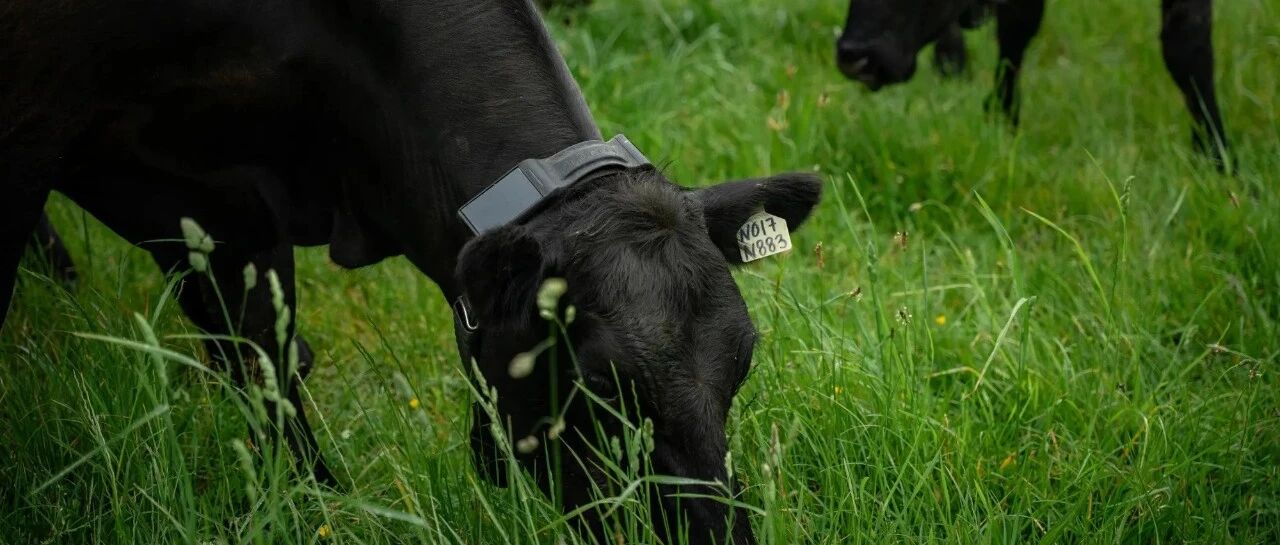
Core Insights - Peter Thiel plans to lead a $2 billion funding round for a company called Halter, which produces AI collars for cows [1][18] - The collars utilize solar-powered AI technology to track cows' health, location, and behavior, collecting 6,000 data points per minute [8][12] - Halter's innovative "virtual fencing" feature allows farmers to create boundaries using a mobile app, significantly reducing the need for physical fencing [9][12] Company Overview - Halter is a New Zealand-based company that has already equipped 600,000 cows with its collars across New Zealand, Australia, and the United States [12] - The virtual fences created by American farmers using Halter's technology span over 11,000 miles, saving an estimated $220 million in fencing costs [12] - The monthly cost for farmers to use the collar is between $5 to $8 per cow [12] Investment and Growth Potential - Founders Fund, led by Peter Thiel, invested in Halter during its $7 million Series A round in 2018, and the current valuation has doubled from $1 billion to $2 billion in just nine months [16][18] - Predictions suggest that Halter could surpass New Zealand's largest dairy cooperative, Fonterra, in market value within 11 quarters based on its growth trajectory [16] Technological Innovations - The collar system, referred to as "cowgorithm," is designed to enhance farm management efficiency and reduce labor hours by 20 to 40 hours per week for farmers [11][12] - The technology represents a significant advancement in agricultural practices, integrating AI into traditional farming methods [11][15] Market Reactions and Commentary - The introduction of AI collars has sparked humorous commentary online, with comparisons to smartphones for cows and discussions about the implications of AI in agriculture [17] - Some skepticism exists regarding the necessity of AI in this context, with critics suggesting that traditional methods could achieve similar results [19]