智能驾驶

Search documents
申万宏源:上调百度集团-SW(09888)至“买入”评级 目标价172.54港元
智通财经网· 2025-12-29 02:13
Group 1 - The core viewpoint of the report is that Shenyin & Wanguo has upgraded Baidu Group-SW (09888) to a "Buy" rating, forecasting overall revenues of 128.5 billion, 133.1 billion, and 141.0 billion RMB for 2025-2027, respectively, with a target valuation of 430.2 billion RMB and a target price of 172.54 HKD per share [1] Group 2 - The AI cloud revenue in China is accelerating in the AI era, with leading internet companies like Alibaba and Tencent increasing their AI capital expenditures significantly, with BAT's capital expenditure/revenue exceeding 10% in the first three quarters of 2025, approaching the level of overseas cloud companies in 2023 [2] - Baidu is continuously advancing its AI full-stack construction, with its intelligent cloud business experiencing accelerated growth, reporting AI cloud revenue of 6.2 billion RMB in Q3 2025, a 33% year-on-year increase, and a 31% year-on-year increase in intelligent cloud revenue for the first three quarters of 2025, reaching 19.33 billion RMB [2] Group 3 - Baidu's self-developed AI chip, Kunlun, is expected to enter a mass production phase, with a product matrix established from cloud to data center, and plans for new chip releases in 2025, 2026, and 2027 to support large-scale training and inference [3] Group 4 - The intelligent driving sector, represented by the company "萝卜快跑," has seen a significant increase in order volume, with over 250,000 orders per week and a 200% year-on-year increase in Q3 2025 orders, benefiting from enhanced economies of scale and reduced costs [4]


恒生科技涨2%!港股ETF密集发行,增量资金入场
Mei Ri Jing Ji Xin Wen· 2025-12-29 02:11
Group 1 - The Hong Kong stock market opened higher on December 29, with the Hang Seng Tech Index leading the gains, up by 2%, and the CSI Hong Kong Stock Connect Tech Index rising by 1.60% [1] - Key stocks in the smart driving sector, including NIO-SW, Xpeng Motors-W, Li Auto, BYD-W, and others, saw increases of over 3%, while leading stock SMIC rose by more than 2% [1] - Software application stocks also rebounded, with NetEase-S and Meituan-W both gaining over 2% [1] Group 2 - In the past two weeks, there has been a surge in the issuance of Hong Kong stock ETFs, indicating an influx of new capital into the market; three new ETFs focused on dividends and healthcare themes have been launched, raising nearly 700 million yuan [1] - Additionally, three new ETFs related to Hong Kong Stock Connect, high dividends, and biomedicine have been established, with a total fundraising scale of nearly 700 million yuan [1] - There are also 11 new ETF applications, including five related to information technology, three in the medical sector, and three focused on high dividend yields [1] Group 3 - Attention is drawn to already listed and liquid Hong Kong tech ETFs, which may experience a rebound from low levels; notable mentions include the Hang Seng Tech Index ETF (513180.SH) and the Hong Kong Stock Connect Tech ETF (159101.SZ) [1]
国海证券晨会纪要-20251229
Guohai Securities· 2025-12-29 01:09
Group 1 - The report highlights the launch of the domestic AI WanKa super cluster, which integrates computing, networking, and storage, achieving innovative breakthroughs [3][4] - The scaleX WanKa super cluster features a world-first single cabinet-level 640-card super node, capable of deploying 10,240 AI accelerator cards with a total computing power exceeding 5 EFlops [4][5] - The report emphasizes the company's strong ecosystem advantages in the global computing field, with the scaleX640 super cluster showcasing its long-term expertise in high-performance computing [5][6] Group 2 - The automotive sector is expected to experience structural opportunities despite overall market pressures, with a focus on high-end vehicle segments and electric trucks [11][12] - The report forecasts a stable end to 2025 for the automotive market, with a potential decline in passenger vehicle sales in 2026, but an increase in the high-end market share [12][13] - The report identifies opportunities in the intelligent driving sector, with advancements in high-level autonomous driving and the commercialization of robotaxis expected to drive growth [14][15] Group 3 - The lithium battery materials market is anticipated to recover in pricing, with sodium battery development expected to accelerate, driven by technological advancements and market demand [18][22] - The report notes a significant increase in prices across the photovoltaic industry, indicating a positive trend for profitability in 2026 [18][19] - The sodium battery industry is entering a critical phase of commercialization, with applications in energy storage and electric vehicles expected to expand [23][24] Group 4 - The report discusses the integration of cloud technology and robotics, with companies like Yunshen Technology initiating listing guidance and forming joint ventures to enhance their market presence [26][36] - The human-robot collaboration sector is highlighted as a growing investment opportunity, with significant advancements in humanoid robots and their applications expected in the near future [37][38] - The report emphasizes the importance of strategic partnerships and technological innovations in driving the growth of the robotics industry [36][37]
锂电产业链的板块节奏与投资方向梳理
2025-12-29 01:04
Summary of Key Points from Conference Call Industry Overview - The conference call primarily discusses the **lithium battery industry** and the **automotive sector**, particularly focusing on the **new energy vehicle (NEV)** market and its dynamics in response to policy changes and market conditions [1][3][5]. Core Insights and Arguments - **Automotive Sales Decline**: In October and November, automotive sales dropped by 9% and 11-12% respectively, with expectations of continued decline in December due to policy exits and consumer hesitation [1][3]. - **NEV Export Growth**: By 2026, NEV exports are projected to reach **3.3 million units**, a year-on-year increase of approximately **40%**, contributing to over **10% growth** in the wholesale sector [1][6]. - **Investment Opportunities**: Key investment opportunities identified include: - **Overseas Expansion**: Companies like BYD plan to export **1.5 million vehicles** [1][6]. - **High-end Market**: Companies such as JAC and Geely are highlighted for their high-end offerings [1][6]. - **Smart Driving**: Companies like Xpeng and Li Auto are noted for their advancements in smart driving technology [1][6]. - **Lithium Battery Sector Recovery**: The lithium battery sector has seen significant price recovery since September, driven by increased demand for energy storage and improved pricing conditions [2][7]. - **Heavy-Duty Vehicle Market**: The penetration rate of new energy in heavy-duty vehicles is expected to exceed **30%** next year, with exports becoming a significant growth driver [1][9]. - **Storage Demand Growth**: By 2026, a notable increase in energy storage demand is anticipated, supported by mature economic models and commercial frameworks in China and the U.S. [1][10]. Additional Important Insights - **Market Valuation**: The lithium battery sector's valuation is considered reasonable, with lithium hexafluorophosphate valued at approximately **7-8 times** earnings and battery segments around **20 times** or lower [3][11][12]. - **Short-term Catalysts**: Key short-term catalysts include successful price negotiations within the supply chain, with lithium hexafluorophosphate prices reaching **170,000-180,000 CNY** and potential increases for major clients [3][13]. - **Long-term Outlook**: The domestic power battery market outlook remains optimistic, with expected recovery in demand starting from January, driven by policy support and storage sector growth [3][14]. - **Investment Recommendations**: Recommended investment directions in the lithium battery midstream include segments with price elasticity, reasonable profitability, and new technology themes such as solid-state batteries [3][15]. - **Upstream Resource Opportunities**: The upstream lithium carbonate market is experiencing a price surge, with expectations for prices to potentially exceed **150,000 CNY** [3][18][19]. - **Equipment Sector Growth**: The lithium battery equipment sector is expected to see significant growth, with orders increasing by over **50%** year-on-year [3][20]. This summary encapsulates the key points discussed in the conference call, providing insights into the current state and future outlook of the lithium battery and automotive industries.
重仓龙头,智驾驱动,港股通汽车ETF华宝(520780)12月29日炫动上市
Xin Lang Cai Jing· 2025-12-28 23:20
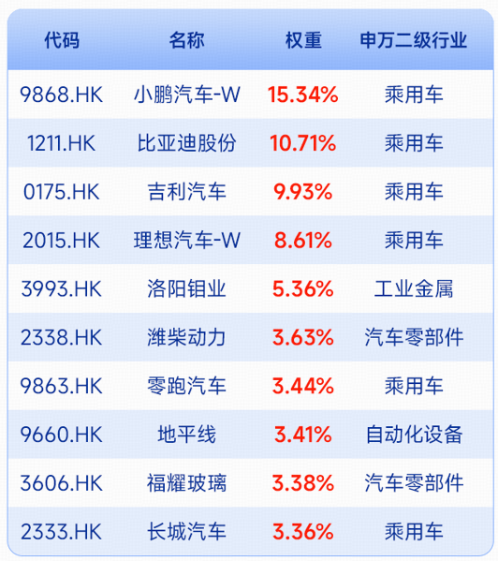
Group 1 - The Hong Kong Stock Connect Automotive ETF by Huabao (520780) has officially launched, providing a clear investment tool focused on vehicle manufacturing and brand car companies [1][12] - The ETF tracks the CSI Hong Kong Stock Connect Automotive Industry Theme Index, which has a high concentration of holdings and includes many scarce Hong Kong smart driving stocks, facilitating easier investment in leading automotive companies [3][6] - The ETF allows T+0 trading, which is expected to enhance market enthusiasm and optimize product liquidity [1][12] Group 2 - Analysts highlight the bright future of "smart driving," supported by high consumer demand, favorable national policies, and significant export potential [3][15] - The integration of AI into the automotive industry is seen as a major transformative force, with the potential for substantial capital influx due to advancements in electric and intelligent technologies [4][15] - The ETF is positioned to help investors easily access high-quality stocks across the entire automotive supply chain, particularly focusing on downstream vehicle manufacturing and applications [3][14] Group 3 - The CSI Hong Kong Stock Connect Automotive Industry Theme Index is characterized by a focus on leading companies, with the top ten constituents accounting for 67.18% of the index [6][16] - As of November 30, 2025, the index includes major players such as XPeng Motors, BYD, Geely, and Li Auto, with significant weightings in the index [6][17] - The index has shown strong performance, with a cumulative increase of 132.21% since its base date, outperforming other industry indices [8][18] Group 4 - The index's research and development expenditures have seen substantial growth, with a year-on-year increase of 22.5% expected in 2024, indicating a strong foundation for future growth in the smart driving sector [10][20] - The automotive industry is increasingly recognized for its global competitiveness, having surpassed Japan as the world's largest automotive exporter for two consecutive years by 2024 [4][15] - The synergy between high-quality automotive parts companies and the robotics industry is anticipated to drive economic development and transition towards a technology-driven future [4][15]

强达电路拟募5.5亿加码高端产能 创新驱动总资产15.29亿创新高
Chang Jiang Shang Bao· 2025-12-28 23:19
Core Viewpoint - Qiangda Circuit (301628.SZ) has announced a significant financing plan to issue convertible bonds to raise up to 550 million yuan, aimed at expanding its production capacity in the high-end PCB sector, particularly for AI servers, optical modules, and intelligent driving applications [1][2]. Group 1: Financing and Investment - The 550 million yuan raised will be specifically allocated to the Nantong Qiangda Circuit Technology Co., Ltd. project, which aims to produce 960,000 square meters of multilayer boards and HDI boards annually [1][2]. - The total investment for the Nantong expansion project is 1 billion yuan, focusing on advanced automation and intelligent production lines to create a modern PCB factory [2]. Group 2: Market and Industry Outlook - The global multilayer board market is projected to grow from 28 billion USD in 2024 to 34.9 billion USD by 2029, with a compound annual growth rate (CAGR) of 4.5% [3]. - The global HDI board market is expected to increase from 12.5 billion USD in 2024 to 17 billion USD by 2029, with a CAGR of 6.4% [3]. - The PCB market for AI and high-performance computing is anticipated to expand from 6 billion USD in 2024 to 15 billion USD by 2029 [3]. Group 3: Financial Performance - For the first three quarters of 2025, Qiangda Circuit reported revenues of 706 million yuan and a net profit of 96.32 million yuan, reflecting year-on-year growth of 20.74% and 20.91%, respectively [1][6]. - The company's total assets reached 1.529 billion yuan by the end of Q3 2025, marking a historical high and a year-on-year increase of 79.25% [8]. Group 4: Research and Development - Qiangda Circuit has invested a total of 128 million yuan in R&D over the past three years, emphasizing the importance of technological innovation in maintaining competitive advantage [7]. - The company has been actively pursuing research in various fields, including automotive radar, drones, AI servers, and 5G communication, resulting in multiple patent applications [7].
前11月出口430亿元增长77.5%
Mei Ri Shang Bao· 2025-12-28 22:19
Core Insights - Zhejiang's electric vehicle exports have shown remarkable growth, maintaining double-digit increases for 11 consecutive months, with total exports reaching 43 billion yuan, a year-on-year increase of 77.5% [1][2] Group 1: Export Growth and Market Expansion - The export destinations for Zhejiang's electric vehicles have expanded to 157 countries and regions, with 24 new markets added compared to the previous year [2] - The Middle East has emerged as the largest market, with export value exceeding 10.36 billion yuan, reflecting an 82.9% year-on-year growth [2] - Emerging markets such as the EU, ASEAN, Latin America, Australia, and Africa have also shown significant growth, with export increases of 140%, 160%, 210%, 450%, and 210% respectively [2] - The product structure has improved, with pure electric vehicle exports growing by 70.6%, accounting for 48.7% of total exports, while plug-in hybrid vehicles have seen a 1.8-fold increase, now making up 26.2% of exports [2] Group 2: Logistics and Customs Efficiency - New logistics channels and efficient customs services have been established to support the export of Zhejiang's electric vehicles [3] - The roll-on/roll-off shipping method has significantly improved loading efficiency and space utilization, saving approximately 1.2 million yuan in logistics costs per voyage [3] - Customs measures such as 24/7 appointment scheduling and "green channels" have been implemented to reduce vehicle dwell time at ports, ensuring a smooth logistics chain [3] Group 3: Policy Support and Smart Services - Free trade agreements and customs smart services have provided strong support for exports, with China signing 23 free trade agreements with 30 countries and regions [4] - Zhejiang Geely's international trade division has benefited from tax reductions through self-printed certificates of origin, with over 1,000 certificates issued, resulting in a tax benefit of over 5.4 billion yuan, a 43.6% increase year-on-year [4] - The "Smart Customs Strong Country" initiative has been launched to help businesses utilize policies effectively, offering a one-stop smart service system for policy integration and customized training [4]

扎堆递表 智驾企业的进与困
Bei Jing Shang Bao· 2025-12-28 16:11
Core Insights - The article highlights the recent surge of autonomous driving companies filing for IPOs in Hong Kong, indicating a trend of increased activity in the capital market for this sector [1][3] - Despite high revenue growth, these companies are still facing significant losses, with a collective adjusted net loss exceeding 800 million yuan for 2024 [1][5] - The differences in revenue and profitability among these companies are influenced by their positions in the industry chain and their technological investments [1] Revenue Growth - Several autonomous driving companies, including Mainline Technology, Yushi Technology, and Furuitai, have shown substantial revenue growth, with Furuitai's revenue increasing from 328 million yuan in 2022 to 1.283 billion yuan in 2024, and a 197.5% year-on-year growth in the first half of 2025 [3][4] - Xidi Zhijia, which focuses on autonomous trucks for mining and logistics, reported a revenue increase from 31.056 million yuan in 2022 to 410 million yuan in 2024, with the first half of 2025 nearing the total revenue of 2024 [4] Loss Trends - The companies exhibit divergent trends in their losses, with Furuitai experiencing the highest adjusted net loss of 152 million yuan in the first half of 2025, surpassing the combined losses of Mainline Technology and Yushi Technology [5][6] - Xidi Zhijia's adjusted net loss reached 110 million yuan in the first half of 2025, an 86.7% increase compared to the same period in 2024, while Mainline Technology's loss slightly increased by 1.1% [6] R&D Expenditure - R&D expenditures have become more manageable, with all companies reducing their R&D spending as a percentage of revenue to below 100% by the first half of 2025, indicating a shift from high cash burn to more controlled spending [7] - Furuitai's R&D expenditure as a percentage of revenue dropped to 21.7%, a decrease of 38.3 percentage points, while Mainline Technology's reduced significantly by 464.8 percentage points to 60.9% [7] Market Dynamics - The article discusses the competitive landscape, noting that the autonomous driving sector can be divided into toC (consumer) and toB (business) models, with toB models potentially achieving profitability more quickly due to their fixed routes and controlled environments [8][10] - The success of Xidi Zhijia's IPO reflects market recognition of leading companies in niche segments, although its increasing losses indicate ongoing investment needs, particularly in advanced technologies like V2X [6][9]
行业周报:晶圆代工厂涨价,深蓝首批L3车辆上路-20251228
KAIYUAN SECURITIES· 2025-12-28 07:44
Investment Rating - The industry investment rating is "Overweight" (maintained) [1] Core Insights - The report highlights that the semiconductor foundry price increases have alleviated market concerns regarding the demand for mature processes in 2026, primarily due to improved competitive dynamics and rising raw material costs [5][14] - The automotive sector is experiencing continued pressure on retail sales, with the first batch of L3 autonomous vehicles from Deep Blue officially registered and on the road [6][30] - In the tools sector, TTI has terminated its HART business to strengthen mid-term profitability, while SBD's divestiture of its aerospace segment is expected to significantly reduce debt and optimize leverage ratios [31][43] Summary by Sections Electronics - Semiconductor foundries have raised some production capacities, leading to a 5.4% increase in the electronics index, outperforming the Hang Seng Technology Index [5][14] - Notable stock performances include SMIC and Hua Hong Semiconductor, which rose by 9.2% and 5.5% respectively [5][14] Automotive - Retail sales in the passenger car market are under pressure, with a 19% year-on-year decline in retail volume for December 2025 compared to December 2024, although there was a 5% month-on-month increase [25][26] - The first L3 autonomous vehicles from Deep Blue were officially registered on December 26, 2025, marking a significant milestone in autonomous driving technology [30] Tools - TTI's termination of the HART business aims to enhance mid-term profitability, while SBD's sale of its aerospace business for $1.8 billion is expected to reduce debt significantly [41][43] - The divestiture is projected to create approximately $405 million to $415 million in revenue for the fiscal year 2025, with an adjusted EBITDA margin exceeding 10% [43] Investment Recommendations - In the electronics sector, companies like SMIC and Hua Hong Semiconductor are expected to benefit from the price increases in foundry services [55] - In the automotive sector, attention is drawn to companies involved in L3 autonomous driving and Robotaxi, including Xiaoma Zhixing and Horizon Robotics [55] - In the tools sector, the report recommends companies such as Techtronic Industries and泉峰控股, with beneficiaries including Juxing Technology and Greebo [55]
智能驾驶细分龙头月内涨超95% 梳理产业链激光雷达等环节市占率居前A股名单
Xin Lang Cai Jing· 2025-12-28 02:08
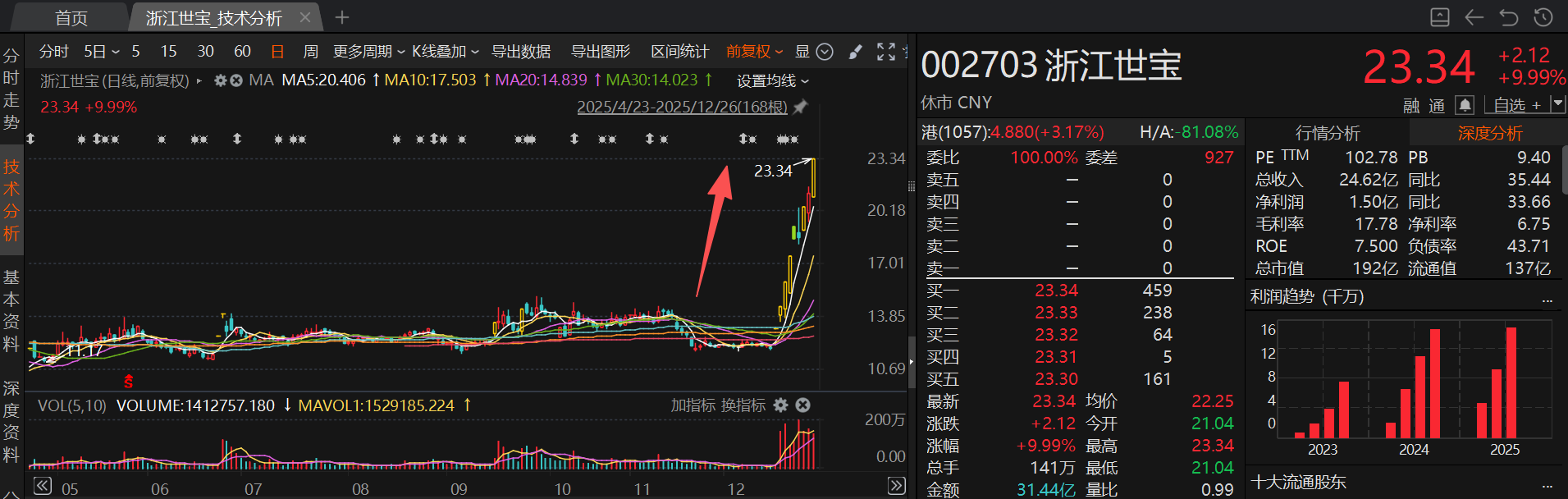
Core Viewpoint - The intelligent driving industry is entering a commercialized era, with the approval of L3-level autonomous driving marking a shift from technical validation to commercial application, enhancing expectations for policy, industry, and performance transmission [1] Industry Developments - Recent key policy breakthroughs and industry advancements in intelligent driving include the approval of China's first L3-level autonomous driving vehicles and Tesla's initiation of unmanned Robotaxi road tests, indicating a transition to large-scale application [1] - The intelligent driving sector is becoming a core engine for the transformation and upgrading of the automotive industry, fostering a collaborative ecosystem across the entire industry chain [1] Market Performance - In the secondary market, Zhejiang Shibao, focusing on steer-by-wire technology, recorded a maximum increase of 96.8% within the month, while Wanji Technology, focusing on lidar technology, saw a maximum increase of 52.7% [1] Company Insights - **Wanji Technology**: The company’s 128-line lidar has received approval from a major passenger vehicle manufacturer, and its 192-line lidar has passed validation from multiple mainstream automakers. The lidar products are being applied in leading commercial vehicles like Robobus [8] - **Zhejiang Shibao**: As a leader in electric power steering systems, the company has established long-term partnerships with several domestic traditional and new energy vehicle manufacturers, indicating a robust order book and normal operations [6][7] - **Bertley**: A leader in the automotive brake sector, the company holds a 12.59% market share in electronic parking brake systems in China and has received awards for its innovative small-diameter caliper technology, which enhances vehicle performance [7] - **Yongxin Optical**: The company specializes in lidar optical components and is expected to ship nearly one million units by the first half of 2025, with strong partnerships with leading lidar manufacturers [8]