
绿色低碳发展

Search documents
大丰经济开发区:锚定目标不松劲 励精笃行“下半场”
Xin Hua Ri Bao· 2025-08-19 07:22
Economic Performance - The total industrial output value reached 171.86 billion yuan, with a year-on-year growth of 1.77% [1] - A total of 17 projects with investments exceeding 100 million yuan were signed, including 3 projects between 1 billion and 3 billion yuan, and 10 projects between 100 million and 500 million yuan [1] - Foreign investment received amounted to 1,791.44 million USD, with total import and export value at 3.281 billion USD [1] Social Development - The district emphasizes improving people's livelihoods as a key governance project, with initiatives like village cleaning actions leading to the rectification of 335 locations and the removal of 172 instances of exposed garbage [2] - Construction of resettlement housing has progressed, with 1,345 households receiving 1,770 housing units [2] - Social assistance was provided to 24 families with disabilities, and home care services were extended to 850 elderly individuals [2] Project Development - The district has signed significant projects in strategic emerging industries, with a total investment of 4 billion yuan, including carbon fiber composite materials and energy storage equipment [3] - Projects such as wind turbine blades and intelligent manufacturing have successfully commenced, while others like IC packaging and battery production have been completed [3] - The district has engaged with Japanese and Korean business associations to enhance foreign investment, resulting in several successful foreign projects [3] Industrial Strategy - The district focuses on four main sectors: new energy and equipment manufacturing, automotive parts, high-end equipment manufacturing, and next-generation electronic information [4] - Key projects include electric equipment and automotive bearing manufacturing, aimed at creating a robust industrial ecosystem [4] - The district plans to enhance its business environment through innovation, talent development, and infrastructure upgrades to support high-quality development [4]
齐鲁大地绘就高颜值新画卷
Jing Ji Ri Bao· 2025-08-18 21:10
Group 1: Economic Growth and Energy Efficiency - Shandong Province has achieved an average economic growth of 6% supported by an average energy consumption growth of 3.9% since the start of the 14th Five-Year Plan, with energy consumption per unit of GDP decreasing by 18.5% [1] - The province aims for over 35% of high-energy-consuming industries to reach energy efficiency benchmark levels by 2024, exceeding the 14th Five-Year Plan target by 5 percentage points [3] Group 2: Industrial Transformation and Carbon Reduction - Shandong is focusing on the low-carbon transformation of traditional industries, with projects like the high-purity liquid carbon dioxide production achieving over 97% carbon capture rate [2] - The province has implemented a "one enterprise, one policy" approach for energy-saving diagnostics, helping companies achieve a total carbon reduction of approximately 800,000 tons annually [3] Group 3: Agricultural Innovation and Land Utilization - The province has successfully cultivated crops on saline-alkali land, with corn yields reaching around 1,000 pounds per acre, indicating significant agricultural productivity improvements [4] - Shandong has transformed nearly 800,000 acres of saline-alkali land into arable land through ecological restoration, with most of it designated as permanent basic farmland [5] Group 4: Ecological Value and Financial Innovation - Wulian County has developed an ecological system production value accounting system, promoting the monetization of ecological products through initiatives like "ecological vitality loans" [6] - The province has seen a significant increase in green credit, with a balance of 321.66 billion yuan as of June, reflecting a rise of over 280 billion yuan since July 2021 [7]
广西能源股份:“两山”答卷 绿色脉动
Zhong Guo Jin Rong Xin Xi Wang· 2025-08-18 12:10
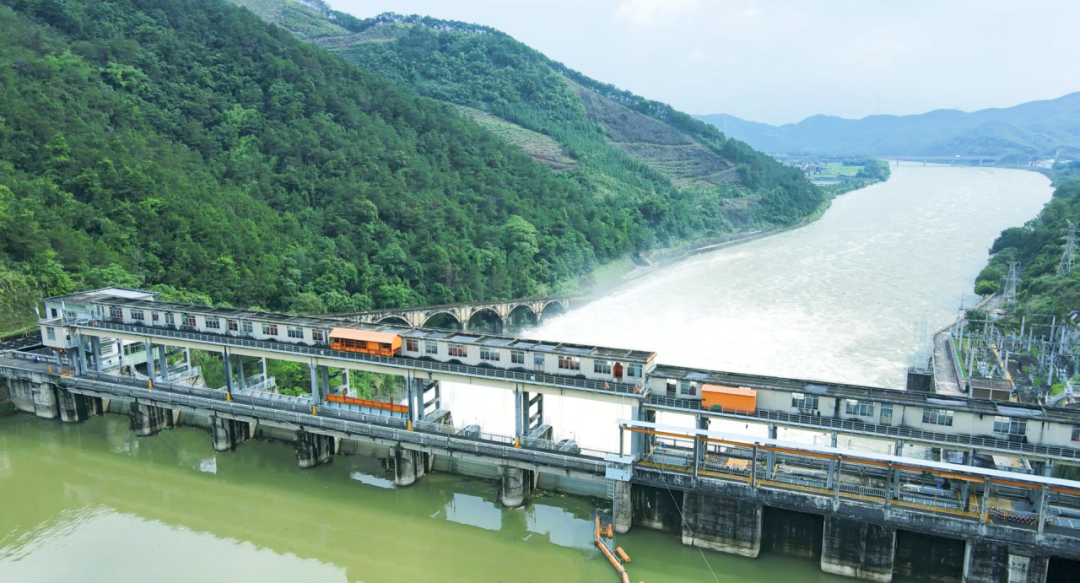
Core Viewpoint - Guangxi Energy Co., Ltd. has effectively implemented a green and low-carbon development strategy over the past 20 years, significantly increasing its clean energy capacity and optimizing its energy structure [1][3][6]. Hydropower Development - The company has established a hydropower energy industry chain with a total installed capacity of 858.6 MW, generating over 81 billion kWh of electricity, which equates to a reduction of approximately 73.54 million tons of CO2 emissions [3][6]. - Guangxi Energy Co., Ltd. emphasizes ecological protection alongside energy development, having released over 13 million rare fish species and established a breeding station for native fish [3][6]. Offshore Wind Power - The company is actively developing offshore wind power, with a demonstration project in the southern sea area of Fangchenggang, which has a total installed capacity of 700 MW and has delivered over 1.5 billion kWh of clean energy since its commissioning in January 2024 [6][10]. - The project is expected to generate over 5 billion kWh annually, meeting the electricity needs of nearly 5 million households and driving over 20 billion yuan in industrial investment [6][10]. Solar Energy Initiatives - Guangxi Energy Co., Ltd. has adopted an innovative "photovoltaic+" development model, establishing multiple solar power stations that integrate agricultural practices, achieving a dual benefit of clean energy and modern agriculture [8][10]. - As of July 2025, the company's solar installed capacity reached 84.6 MW, generating approximately 120 million kWh of electricity and reducing CO2 emissions by about 102,000 tons [8][10]. Onshore Wind Power Projects - The company is advancing several onshore wind power projects with a total installed capacity of 550 MW, expected to generate over 1.1 billion kWh annually and reduce CO2 emissions by around 1 million tons [10][12]. - Construction of these projects is progressing rapidly, contributing to the establishment of a comprehensive green energy network in Guangxi [10][12]. Energy Storage Development - Guangxi Energy Co., Ltd. is investing in energy storage solutions, with the Hezhou pumped storage power station included in the national development plan, designed with a total capacity of 1.4 million kW [12]. - The project is anticipated to generate approximately 1.6 billion kWh annually and save 503,600 tons of standard coal, playing a crucial role in stabilizing the power system [12].


新闻联播丨感知生态之变 能源转型和产业升级为高质量发展带来新动能
国家能源局· 2025-08-18 09:22
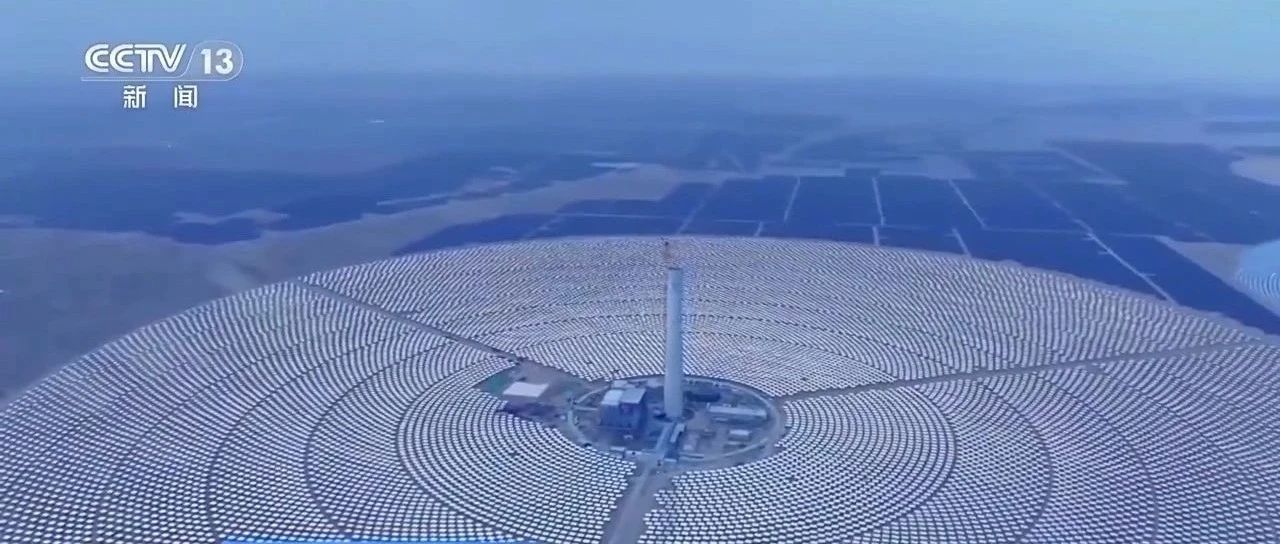
Core Viewpoint - The article emphasizes the importance of green productivity as a means to achieve high-quality development and address ecological issues, highlighting China's advancements in renewable energy and green production methods [2][6]. Group 1: Green Energy Development - Since the 18th National Congress, China has established the world's largest and most complete renewable energy industry chain, significantly supporting energy transition and industrial upgrading [2]. - The installed capacity of wind and solar power has increased 25 times since 2015, surpassing thermal power capacity for the first time in history in 2023 [6]. - China's share of global clean energy investment has risen from one-quarter to one-third over the past decade [6]. Group 2: Innovations in Transportation and Mining - The transportation of wind turbine blades has become more complex, with the length of blades increasing from over 40 meters to over 100 meters, necessitating advanced logistics and high-precision positioning systems [4]. - In Inner Mongolia, over 3,000 sensors are used for real-time monitoring in open-pit coal mines, leading to significant improvements in environmental conditions, including the introduction of electric unmanned mining trucks [9]. - There are nearly 5,000 green mines and over 6,000 green factories across China, contributing to more than one-fifth of the national manufacturing output [11]. Group 3: Impact on Infrastructure and Industry - By 2024, nearly all highways in China will be equipped with electric vehicle charging stations, a significant increase from 2015 when the first charging stations appeared on the Beijing-Shanghai Expressway [13]. - The number of electric vehicles has grown over 60 times since 2015, indicating a substantial shift towards sustainable transportation [13]. - China leads globally with nearly 80% of green ships and half of hydrogen fuel cells, with the green low-carbon industry generating over 11 trillion yuan in output value [13].
实业报国心 民族化工魂
Zhong Guo Hua Gong Bao· 2025-08-18 03:50
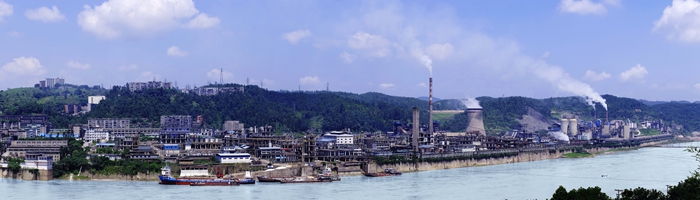
Core Viewpoint - The article highlights the historical significance and development of Yibin Tianyuan Group, emphasizing its role in China's chlor-alkali industry and its commitment to national industrialization and innovation [1][4][28]. Group 1: Historical Background - Yibin Tianyuan's origins trace back to the patriotic efforts of its founder, Wu Yunchu, who aimed to establish a self-sufficient chemical industry in China during the 1920s [4][7]. - The company was established as a response to the reliance on imported chemical products, particularly during the resistance against Japanese goods [4][7]. - The establishment of the first chlor-alkali plant in China marked a significant milestone in breaking foreign monopolies and fostering domestic industrial capabilities [7][8]. Group 2: Development and Achievements - Yibin Tianyuan successfully launched its "Tianchu" brand of MSG, which gained popularity due to its quality and affordability, competing directly with Japanese products [7][8]. - The company has achieved numerous technological milestones, including being the first in China to develop various chemical production methods and processes, contributing to its recognition as a national high-tech enterprise [12][21]. - The company has over 800 patents and has established a strategic focus on green and sustainable development, aligning with national goals for low-carbon growth [12][21][28]. Group 3: Resilience and Adaptation - During the Sino-Japanese War, Yibin Tianyuan demonstrated resilience by relocating its operations to ensure continuity and support for the war effort [15][24]. - The company has evolved from traditional chemical production to embracing new materials and renewable energy sectors, reflecting its adaptability to changing market demands [21][27]. - The spirit of innovation and self-reliance continues to drive the company's growth, as it aims to establish a comprehensive industrial chain that includes lithium and other advanced materials [27][28].

我国绿色产业领跑全球
Yang Shi Xin Wen· 2025-08-18 03:29
Group 1 - The core viewpoint emphasizes the importance of green low-carbon development as a fundamental strategy for addressing ecological and environmental issues, with a focus on forming green production and lifestyle practices to support high-quality development [1] - Since the 18th National Congress, China has established the world's largest and most complete new energy industry chain, providing significant support for energy transition and industrial upgrading [1] - The scale of installed wind and solar power generation capacity has increased 25 times since 2015, surpassing thermal power capacity for the first time in 2023, with China's clean energy investment share rising from one-quarter to one-third of the global total over the past decade [5][12] Group 2 - In the wind power sector, the transportation of increasingly longer wind turbine blades has become more complex, with the number of manufacturing bases increasing from three in 2015 to eight by 2022, leading to a broader operational reach [3] - The introduction of over 3,000 sensors in open-pit coal mines allows for real-time monitoring of environmental changes, resulting in significant noise reduction and ecological improvements, including the return of wildlife [8] - There are nearly 5,000 green mines and over 6,000 green factories across China, contributing to more than one-fifth of the national manufacturing output [10] Group 3 - The number of electric vehicle charging stations along highways has dramatically increased since 2015, with the number of electric vehicles growing over 60 times, indicating a significant shift towards sustainable transportation [12] - China leads globally in the production of green ships and hydrogen fuel cells, with the green low-carbon industry now valued at over 11 trillion yuan [12] - Green production is not only improving ecological conditions but also driving energy transition and industrial upgrading, providing continuous new momentum for high-quality development in China [12]

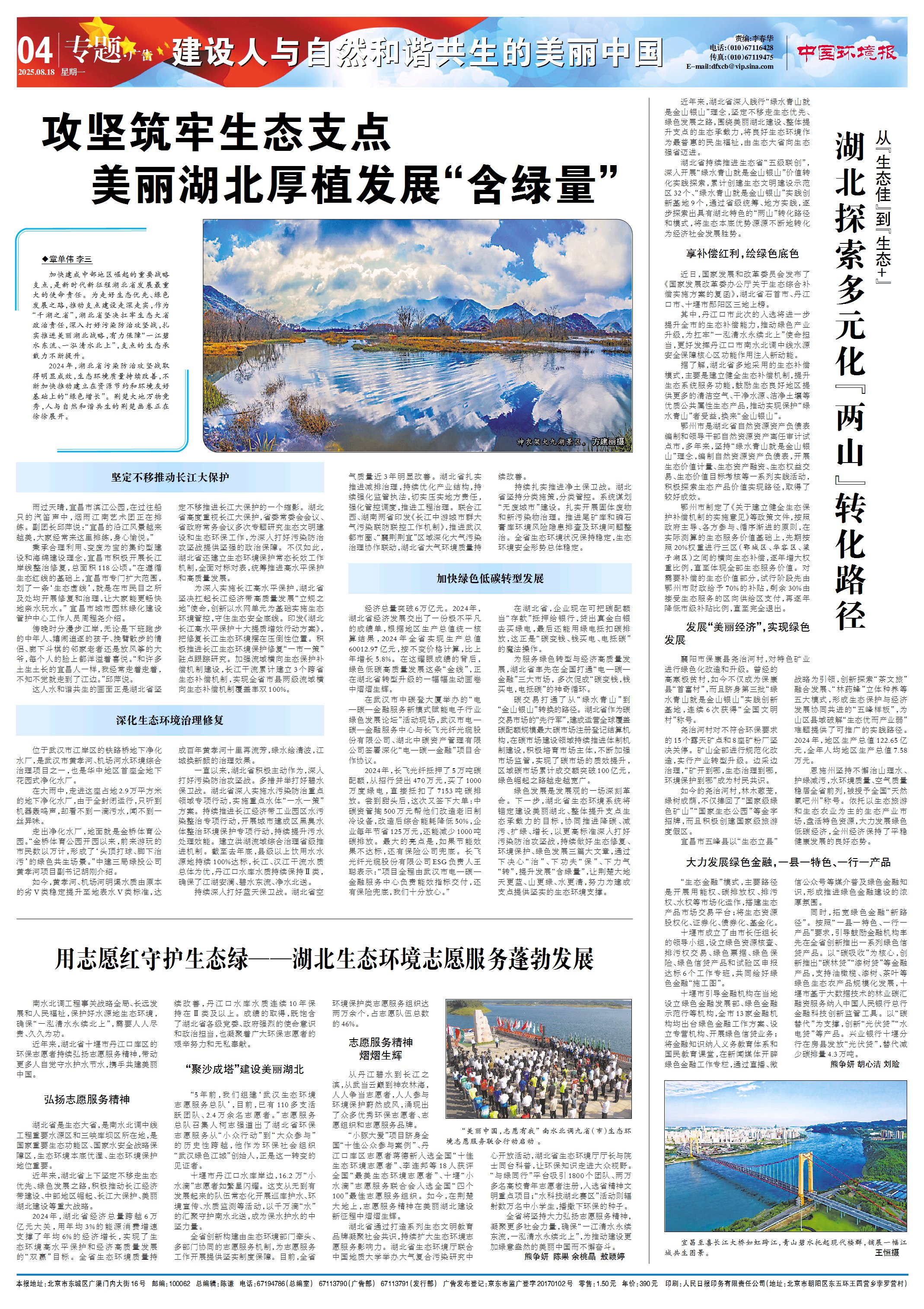
攻坚筑牢生态支点美丽湖北厚植发展“含绿量”
Zhong Guo Huan Jing Bao· 2025-08-18 01:43
Core Viewpoint - Hubei Province is committed to ecological priority and green development, aiming to enhance its ecological carrying capacity while achieving economic growth, with a focus on pollution prevention and environmental protection [2][15]. Group 1: Ecological Protection and Development - Hubei Province has established a long-term mechanism for ecological environment protection, ensuring high-level protection and high-quality development [6][18]. - The province has implemented the "Ten Major Actions for High-Quality Protection of the Yangtze River," prioritizing ecological restoration [18]. - Hubei's economic output surpassed 6 trillion yuan in 2024, with a growth rate of 5.8%, supported by a focus on green and low-carbon development [21]. Group 2: Pollution Prevention Efforts - Hubei has made significant progress in pollution prevention, with continuous improvement in ecological quality and the establishment of a comprehensive water pollution prevention strategy [11][20]. - The province has achieved 100% compliance in drinking water source protection at the county level, with overall water quality in major rivers rated as good [11][20]. - Air quality has improved significantly over the past three years, with collaborative efforts in air pollution control across provinces [20]. Group 3: Community Engagement and Volunteerism - Hubei has seen a rise in environmental volunteerism, with over 24,000 volunteers participating in various ecological protection activities [13]. - The province has developed a robust volunteer service mechanism, enhancing community involvement in environmental protection [13][14]. - The spirit of volunteerism is becoming a cultural norm in Hubei, contributing to the overall ecological conservation efforts [14]. Group 4: Innovative Financial Solutions for Green Development - Hubei has pioneered the integration of carbon trading with financial services, allowing companies to use carbon credits as collateral for loans to purchase green electricity [23]. - The province's carbon market has achieved a transaction volume exceeding 10 billion yuan, facilitating the transition from ecological benefits to economic gains [23]. - Innovative projects, such as the collaboration between the Wuhan Carbon-Financial Service Center and local companies, are driving energy efficiency improvements and carbon reduction [21][23].
工业固废“变废为宝”,山西朔州“碳”寻绿色发展
Zhong Guo Xin Wen Wang· 2025-08-18 00:38
Core Viewpoint - The 12th Industrial Solid Waste Comprehensive Utilization Conference held in Shuozhou focuses on advanced technologies and development trends in industrial solid waste utilization, aiming for low-carbon and green development outcomes [1][2]. Group 1: Industrial Solid Waste Utilization - In 2024, coal-fired power generation is projected to account for approximately 55% of total generation, resulting in over 800 million tons of solid waste such as fly ash and desulfurization gypsum, which face multiple disposal challenges [1]. - The comprehensive utilization rate of industrial solid waste in Shuozhou has increased to 73%, with 170 enterprises involved in the sector, producing over 200 varieties of products, including new technologies for petroleum catalytic cracking precursors and lightweight gypsum boards [1][2]. Group 2: Modern Coal Chemical Industry - Experts emphasize the need for Shuozhou to develop a modern coal chemical industry, leveraging its favorable policies and industrial foundation to create a demonstration base for modern coal chemical processes [2]. - The conference facilitated the signing of cooperation agreements for five projects, including the production of geological polymer cement and thermal insulation materials, with a total investment of nearly 700 million yuan [2].
全球能源转型,中国是稳定器和动力源
Zhong Guo Jing Ji Wang· 2025-08-17 23:59
转自:国际商报 □ 本报记者 白舒婕 在当今全球气候变化、能源安全和科技创新交织的大背景下,世界各国正重新审视能源安全,重塑能源 格局,加快向绿色低碳转型,以低碳发展为特征的新增长路径成为世界经济发展的重要方向。据国际能 源署预测,全球能源转型领域投资实现前所未有的增长,2025年全球将有2.2万亿美元投向可再生能 源、核能、电网和电气化等领域,全球即将进入全新的电气时代。 在此过程中,中国清洁能源企业以开放姿态融入全球产业链,为共建绿色"一带一路"、实现全球可持续 发展目标贡献力量。 在印度尼西亚,中国参与建设的雅万高铁项目预计减少约33万吨碳排放;在埃塞俄比亚,由中企承建的 亚环路项目在建设期创新采用全域新能源设施、智能感应路灯系统、雨水资源循环利用设施,并精心设 计野生动物生态廊道,构建起可复制的绿色发展新模式;在沙特,REPDO 4-AHK光伏项目是共 建"一带一路"倡议与沙特"2030愿景"重要合作成果之一,项目建成后将每年生产31亿千瓦时清洁电力, 保障麦地那75万户居民用电需求,并将每年减少310万吨二氧化碳和9.3万吨二氧化硫的排放,助力沙特 构建低碳环保的经济体系…… (责任编辑:王婉莹) ...

践行绿水青山就是金山银山理念 以能源新质生产力推进中国式现代化
Ren Min Ri Bao· 2025-08-17 22:01
Core Viewpoint - The "Two Mountains" concept, proposed by Xi Jinping, emphasizes the relationship between economic development and ecological protection, serving as a guiding principle for China's modernization efforts [1][2]. Group 1: Scientific Guidance for Modernization - The "Two Mountains" concept reflects the integration of high-quality development and environmental protection, highlighting the dialectical relationship between ecological and economic wealth [1]. - It embodies a people-centered development philosophy and aligns with China's historical respect for nature, representing both inheritance and innovation of traditional culture [1][2]. Group 2: Energy Transition and High-Quality Development - Energy is a crucial foundation for economic and social development, with fossil fuel consumption leading to significant greenhouse gas emissions and environmental damage [3]. - In 2024, global energy-related carbon emissions are projected to reach 37.8 billion tons, accounting for over 85% of total emissions [3]. - The transition to clean energy is essential for achieving high-quality development, necessitating a shift from fossil fuels to renewable energy sources [4]. Group 3: Achievements in Green Development - Over the past 20 years, the share of clean energy in China's primary energy consumption has increased from 7.4% to 19.7%, with clean energy generation rising from 18.2% to 36.8% [5]. - By 2023, carbon emissions per unit of electricity generation have decreased by 37% compared to 2005, with total reductions exceeding 28 billion tons since 2006 [6]. - Innovative ecological protection measures have been implemented alongside energy development, receiving international recognition [6]. Group 4: Policy and Mechanism Improvements - Continuous reforms in key areas have led to the establishment of a unified national electricity market and the world's largest carbon market, with significant trading volumes projected for 2024 [7]. Group 5: Future Directions for Energy Production - The focus is on advancing technological innovation, developing strategic emerging industries, and enhancing the electrification of energy consumption across various sectors [8][9]. - International cooperation is emphasized to enhance China's role in global energy governance and promote sustainable energy practices [9].