
量子计算

Search documents
道指首次触及48000点 英伟达市值突破5万亿美元 中概股上涨
2 1 Shi Ji Jing Ji Bao Dao· 2025-10-29 15:14
Core Insights - Nvidia has become the first company in history to reach a market capitalization of $5 trillion, with its stock price rising by 3.2% [4] - Nvidia's revenue for the first half of the fiscal year reached $90.8 billion, a 61.9% increase year-over-year, while net income rose by 43.58% to $45.2 billion [6] - Apple’s market capitalization has surpassed $4 trillion for the first time, reflecting strong performance in the tech sector [6] Nvidia Performance - Nvidia's stock price opened at $210.31, with a market capitalization of $5.11 trillion [5] - The company reported a quarterly revenue of $46.743 billion, a 56% increase year-over-year, and a 6% increase from the previous quarter [7] - Nvidia's data center revenue was $41.1 billion, also showing a 56% year-over-year growth [7] Market Trends - The U.S. stock market indices, including the Dow Jones and Nasdaq, reached new highs, with the Dow touching 48,000 points [2] - The storage sector in the U.S. stock market saw significant gains, with Seagate Technology rising by 13% and Western Digital increasing by over 8% [4] - Consumer confidence in the U.S. has dropped to a six-month low of 94.6, raising concerns about the economic outlook [8] Economic Outlook - Goldman Sachs has revised its revenue expectations for Nvidia to $500 billion, which is significantly higher than previous market consensus [6] - Analysts are cautious about the high valuations in the S&P 500, suggesting that the market may be overvalued compared to historical standards [8] - The ongoing U.S. government shutdown has raised concerns about economic stability and investor sentiment [9]


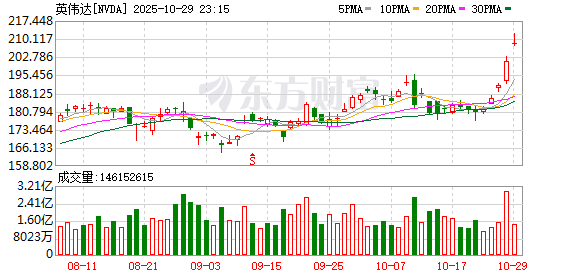
道指首次触及48000点,英伟达市值突破5万亿美元,中概股上涨
2 1 Shi Ji Jing Ji Bao Dao· 2025-10-29 15:08
Group 1 - U.S. stock market opened high with the Dow Jones reaching a record high of 48,000 points and the Nasdaq touching 24,000 points before narrowing gains [1] - Nvidia's stock rose 3.2%, making it the first company to surpass a market capitalization of $5 trillion, with CEO Jensen Huang's wealth exceeding $180 billion [1] - Nvidia's revenue for the first half of 2025 was $90.8 billion, a 61.9% increase year-over-year, with net income at $45.2 billion, up 43.58% [2] Group 2 - Nvidia's quarterly revenue reached $46.743 billion, a 56% increase year-over-year, with data center revenue at $41.1 billion, also up 56% [2] - The consumer confidence index in the U.S. dropped to a six-month low of 94.6, raising concerns about short-term employment opportunities [2] - Goldman Sachs reported that Nvidia's expected sales of $500 billion significantly exceed Wall Street's consensus of $447 billion, indicating strong market performance [1][2] Group 3 - Concerns about the U.S. government shutdown, which has lasted 22 days, are rising, with potential implications for market stability [2][3] - Analysts warn that the S&P 500 index appears overvalued compared to historical standards, despite strong financials from companies driving the index [3][4] - The upcoming earnings reports from tech stocks are seen as a critical test for the market, with potential volatility if results are disappointing [4][5]
Nvidia's Abundance of A.I. Partnerships Send Market Cap Past $5T
Youtube· 2025-10-29 15:01
Core Insights - Nvidia has become the first company to surpass a $5 trillion market cap following significant announcements at the GTC event in Washington DC, with shares up over 50% in 2025 [1][3]. Partnerships and Collaborations - Nvidia is taking a $1 billion stake in Nokia, forming a strategic partnership to develop next-generation 6G cellular technology, making Nvidia a nearly 3% shareholder in Nokia [4][5]. - The company is collaborating with 17 quantum developers and nine national labs to establish NVQ Link, a system that connects powerful GPUs with quantum processors for hybrid quantum supercomputers [6][7]. - Nvidia is partnering with Oracle and the Department of Energy to build powerful AI supercomputers named Solstice and Equinox, utilizing up to 100,000 of Nvidia's latest Blackwell GPUs [8][9]. - Eli Lilly is working with Nvidia to create the most powerful AI supercomputer in the healthcare sector, aimed at accelerating drug discovery processes [10][11]. - Hewlett Packard Enterprises is partnering with Nvidia to deliver two next-gen supercomputers for the Department of Energy, named Mission and Vision [12]. - Collaborations with Palantir, Uber, and Joby Aviation are focused on deploying smarter AI agents and developing autonomous transportation solutions [13]. Market Performance - Nvidia's shares rose more than 5% following the announcements, reflecting positive market sentiment [14]. - The stock has experienced a significant upward trajectory, with discussions around potential overreaction and FOMO (fear of missing out) among investors [18][19].
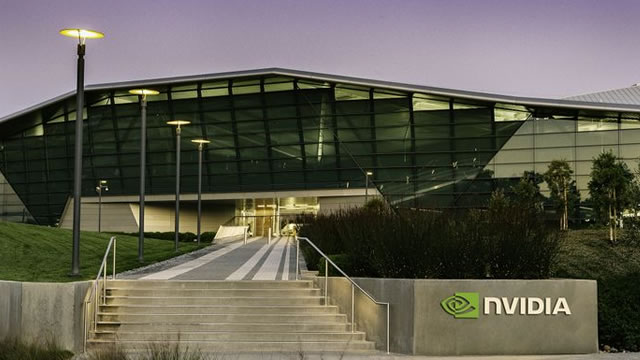
史上首家!英伟达市值超5万亿美元
2 1 Shi Ji Jing Ji Bao Dao· 2025-10-29 14:49
截至21:50,英伟达涨超4.5%,市值达到51057亿美元。 英伟达公司总市值从4万亿美元跨越5万亿美元,仅用时113天,而从3万亿到4万亿则耗时410天。高达5 万亿美元的总市值,早已超过英、法、德等国家的股市总市值,这一数字正逼近印度股市总价值(5.3 万亿美元)。 这家总部位于加州圣克拉拉市的公司股价已较4月低点反弹超135%,市值也增加了2.9万亿美元,该公 司股价今年已累计上涨54%。 10月29日晚间,人工智能芯片制造商英伟达公司股价开盘上涨3.2%,市值站上5万亿美元,成为史上第 一家市值跨越这一里程碑的上市公司。 华尔街金融巨头高盛的最新研报指出,5000亿美元的规模显著高于华尔街预期。该行分析团队指出,这 一目标比市场通过Visible Alpha Consensus Data反映的4470亿美元共识高出12%,同时也比高盛预测的 4530亿美元高出10%。 2025年8月27日,英伟达发布截至2025年7月27日的半年及季度财报。上半年财报期间,英伟达营收为 908亿美元,较上年同期的560.84亿美元增长61.9%。净利为452亿美元,较上年同期的314.8亿美元增长 43.58%。 ...
黄仁勋:第二个拐点现在已经到来
虎嗅APP· 2025-10-29 13:37
Core Viewpoint - The article emphasizes the transformative impact of AI and accelerated computing on various industries, highlighting NVIDIA's leadership in redefining computing paradigms and its strategic partnerships to advance technologies like 6G and quantum computing [4][6][15]. Group 1: NVIDIA's Innovations and Partnerships - NVIDIA's new product line, NVIDIA ARC, aims to enhance 6G infrastructure through AI and accelerated computing, marking a significant step for the U.S. to regain leadership in telecommunications technology [4][17]. - The collaboration with Nokia is expected to integrate NVIDIA's technology into future base stations, enhancing AI capabilities in wireless communication [18]. - NVIDIA's advancements in quantum computing include the introduction of NVQLink and CUDAQ, facilitating collaboration between quantum processing units and GPU supercomputers [5][23]. Group 2: AI and Accelerated Computing - AI is described as a force that redefines the entire computing stack, requiring substantial energy, GPU power, and new algorithmic frameworks [6][28]. - The shift from general computing to accelerated computing is highlighted as a critical transition, with NVIDIA's CUDA framework enabling this evolution [10][49]. - The article discusses the exponential growth in demand for computational resources driven by smarter AI models and their applications across various sectors [39][40]. Group 3: Future Outlook and Market Potential - NVIDIA's market capitalization reached $4.89 trillion, with expectations that GPU sales will reach $500 billion by the end of 2026, driven by government contracts and diversified revenue streams [6][6]. - The article suggests that the AI industry is at a turning point, with models becoming sophisticated enough to create value and warrant investment [39][40]. - The need for innovative solutions to meet the increasing computational demands is emphasized, particularly as traditional scaling methods face limitations [42][43].

AI进化速递丨宇树科技将发布四足新品
Di Yi Cai Jing· 2025-10-29 13:11
Group 1 - The first domestic robot equipped with the open-source HarmonyOS, named "Kua Fu," has been unveiled [1] - Nvidia plans to invest $1 billion in Nokia, focusing on AI-RAN and 6G technologies [1][2] - Nvidia has launched the NVQLink interconnection system, which integrates AI supercomputing with quantum computing [1][2] Group 2 - Yushu is set to release a new quadruped robotic dog product, with power performance approximately twice that of Go2 [1] - Tencent's Mixuan has introduced an interactive AI podcast feature, allowing listeners to "raise their hand" to ask questions [1] - OpenAI has announced the completion of its capital restructuring [1] - Microsoft has signed a new agreement with OpenAI, under which OpenAI will purchase an additional $250 billion worth of Azure services [1]


彩讯股份(300634) - 300634彩讯股份投资者关系管理信息20251029
2025-10-29 11:48
Financial Performance - In the first three quarters of 2025, the company achieved a revenue of CNY 1.341 billion, a year-on-year increase of 10.81% [3] - The net profit attributable to shareholders was CNY 196 million, a year-on-year increase of 0.61%, while the non-recurring net profit was CNY 168 million, a year-on-year decrease of 9.38% [5] - In Q3 2025, the revenue was CNY 422 million, a year-on-year decrease of 1.76%, and the net profit attributable to shareholders was CNY 6.098 million, a year-on-year decrease of 20.99% [3] Product Lines - The company has three main product lines: 1. **Collaborative Office Products**: Focused on digital employees, with email products being the preferred choice for 500 companies in China. The email product is now compatible with HarmonyOS and has been pre-installed on HarmonyOS devices [3] 2. **Smart Channel Products**: Aimed at data-driven operations, providing platforms for customer acquisition and intelligent operations. The Rich AIBox platform supports the development of AI marketing assistants and intelligent customer service applications [4] 3. **Intelligent Computing Services**: This segment has seen rapid growth, assisting clients in building intelligent driving computing centers and providing computing power services [4] AI Voice and Intelligent Computing - The AI voice business is expected to grow significantly, with a projected market size of trillions globally and hundreds of billions domestically over the next five years [5] - The company has established applications in AI voice, including a smart messaging platform in collaboration with China Mobile, enhancing customer interaction efficiency [7] - The intelligent computing services are expected to see substantial growth, focusing on large-scale projects in the next two to three years [5] Strategic Investments - The company has made strategic investments in quantum computing, holding a 0.9524% stake in Zhongke Kuyuan Technology, which is developing atomic quantum computers [8][9] - The investment aims to accelerate the development of quantum computing technology and its industrial application [9] Future Outlook - The company is positioned as a vertical solution provider in the AI field, focusing on high-value AI upgrades for B-end clients and exploring C-end AI applications [8] - The overall financial health remains robust, with significant investments in technology and a strong competitive position in the market [10]
英伟达涨超3%,市值或将创下5万亿美元纪录;今夜,美联储将打出“降息+停止缩表”组合拳?中概股普涨,阿里涨1.6%【美股盘前】
Mei Ri Jing Ji Xin Wen· 2025-10-29 11:36
Market Overview - Dow futures decreased by 0.25%, S&P 500 futures increased by 0.17%, and Nasdaq futures fell by 0.40% [1] Chinese Stocks Performance - Chinese stocks showed a pre-market rally with Alibaba up by 1.69%, Pinduoduo up by 0.72%, JD.com up by 0.46%, Baidu up by 1.26%, and Bilibili up by 0.66% [2] Commodity Prices - Spot gold prices reached $4020 per ounce, marking a 1.71% increase for the day [3] Company Earnings and Stock Movements - GlaxoSmithKline reported a turnaround in Q3, posting a profit of £2.01 billion compared to a loss of £58 million in the same period last year, leading to a pre-market increase of 3.36% in its stock [4] - Nvidia's stock rose over 3%, with a potential market capitalization of $5 trillion if the current level is maintained, following a broad discussion by CEO Jensen Huang on AI and other advanced technologies during the GTC conference [4] - Bloom Energy's stock surged over 17% after reporting a 57.1% year-over-year revenue growth, reaching $519 million, marking its fourth consecutive quarter of record revenue [4] Analyst Ratings - Jefferies raised the target price for Coinbase from $375 to $384 [7] Federal Reserve Meeting Expectations - The Federal Reserve is expected to announce a 25 basis point rate cut, bringing the target range to 3.75%-4% during the upcoming FOMC meeting [8] - Analysts noted increasing policy divergence within the FOMC, contrasting with the consensus seen in the previous meeting [8] - There are indications that the market is preparing for the end of the Fed's quantitative tightening policy, as evidenced by a significant trade involving 40,000 contracts betting on a minimal increase in the SOFR above the expected federal funds rate [8]

“抱团”打法
Datayes· 2025-10-29 11:18
Core Viewpoint - The A-share market has shown strong performance, surpassing the 4000-point mark, with a focus on the profitability effect rather than just the index itself [1] Group 1: Fund Holdings and Market Trends - In Q3, the proportion of heavy holdings in public funds reached 54.96%, up from 52.46% in the previous period, indicating a significant increase in concentration [1] - The number of stocks held by fund managers decreased from 2507 to 2377, suggesting a reduction in the diversity of stock holdings [1] - The latest allocation in the technology sector reached a historical high of 50.51%, while consumer finance saw a reduction of 6.08% [5] Group 2: Market Performance and Sector Highlights - On October 29, A-shares saw collective gains, with the Shanghai Composite Index rising by 0.70%, Shenzhen Component by 1.94%, and ChiNext by 2.93% [15] - The total trading volume for the day was 22909.30 billion, an increase of 1254.02 billion from the previous day, with over 2600 stocks rising [15] - Key sectors attracting attention included photovoltaic equipment, energy storage, and quantum computing, while the banking sector faced adjustments [15][16] Group 3: Company Performance and Sector Developments - Industrial Fulian reported Q3 revenue of 2431.72 billion, a year-on-year increase of 42.81%, with net profit rising by 62.04% [22] - Multiple companies in the PCB sector showed significant year-on-year profit growth, with Huadian shares up 46% and Shengyi Electronics up 546% in Q3 [15][25] - The energy storage market is experiencing strong growth, with companies like Duofluor and others reporting increased orders and full production capacity to meet demand [23] Group 4: International Relations and Market Impact - Reports suggest potential tariff reductions on Chinese goods related to fentanyl if China takes action against the export of fentanyl production chemicals [12] - HSBC indicated that a larger and more comprehensive agreement between China and the US may be on the horizon, which could positively impact market sentiment [14]

龙虎榜复盘 | 英伟达重磅产品点燃多板块走强,机构10亿扫货光伏龙头股
Xuan Gu Bao· 2025-10-29 10:50
Group 1: Institutional Trading Insights - Today, 38 stocks were listed on the institutional trading leaderboard, with 24 stocks seeing net purchases and 14 stocks experiencing net sales [1] - The top three stocks with the highest net purchases by institutions were: Sunshine Power (1.055 billion), Keda Guochuang (273 million), and Lian Te Technology (267 million) [1][2] Group 2: Sunshine Power Financial Performance - Sunshine Power reported a Q3 earnings per share of 5.73 yuan and a net profit of 11.881 billion yuan, reflecting a year-on-year growth of 56.34% [2] Group 3: Quantum Technology Collaborations - Tianrongxin has invested in Anhui Wentian Quantum and established a strategic partnership, focusing on quantum information technology with multiple international and domestic patents [3] - Keda Guochuang has made investments in Guoyi Quantum and Jiuzhang Quantum, and has engaged in minor software business collaborations within the quantum industry chain [4] Group 4: PCB/Copper Clad Laminate Market - A report from Shanghai Securities indicates that Nvidia's Rubin utilizes M9 materials, benefiting the upstream materials for AI PCBs amid an upgrade wave [5] - Currently, M7 and M8 levels remain mainstream for high-end AI servers, while M9 level advancements are becoming a market focus [5]