
数字经济

Search documents
君逸数码:公司持续关注数字经济及新一代信息技术的发展趋势
Zheng Quan Ri Bao Wang· 2026-01-20 14:10
Core Viewpoint - Junyi Digital (301172) is focusing on the development trends of the digital economy and new generation information technology, with a primary business in smart city-related information construction and system integration services [1] Group 1: Business Focus - The company has not yet directly engaged in independent computing power service business [1] - In project implementation, the company selects relevant technologies and products, including computing resources, based on customer needs to provide comprehensive solutions [1] Group 2: Future Plans - The company will strictly adhere to information disclosure rules and fulfill disclosure obligations in a timely manner if there are any developments or layouts related to new business [1]
昆仑信托董事长王峥嵘:以“三维驱动”模式 助力河南人工智能与能源产业融合发展
Shang Hai Zheng Quan Bao· 2026-01-20 13:55
Core Viewpoint - Kunlun Trust, a subsidiary of China National Petroleum Corporation (CNPC), focuses on its core business and collaborates with local enterprises in Henan to support energy conservation and carbon reduction initiatives [1][2] Group 1: Business Operations - Kunlun Trust operates under a flexible model that allows it to engage in both debt and equity financing, providing loans and equity investments [1] - The company has established partnerships with local enterprises, such as negotiating a joint venture with Xuchang Group to provide advanced technology support for CNPC's main business units [1] Group 2: Financial Innovation - The company proposes a "three-dimensional drive" model to support AI and digital economy enterprises through a combination of direct capital investment, financial innovation, and industrial collaboration [2] - Kunlun Trust aims to provide capital support to digital economy industries in Henan, addressing the need for equity capital rather than just loans [2] Group 3: Technological Integration - The company plans to deeply integrate AI into its internal and external operations to enhance financial service efficiency and welcomes AI enterprises to apply their products in financial scenarios [2] - By leveraging CNPC's industrial advantages, Kunlun Trust seeks to promote the application of AI technology in the energy and chemical sectors [2]

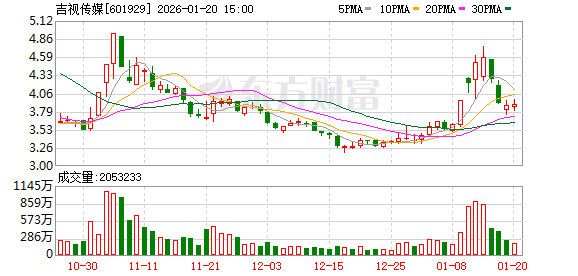
吉视传媒:2025年9月公司与龙翔投资控股集团有限公司签订了战略合作协议
Zheng Quan Ri Bao· 2026-01-20 13:40
Core Viewpoint - Jishi Media has signed a strategic cooperation agreement with Longxiang Investment Holdings Group, focusing on the integration of physical assets and digital technology to support the high-quality development of the digital economy in Jilin Province [2] Group 1 - The strategic cooperation agreement was signed on September 2025 [2] - The collaboration aims to respond to Jilin Province's initiatives of "Digital Jilin" and "Cultural Strong Province" [2] - The partnership will focus on deep integration of physical assets and digital technology [2]


中国南方五省区年用电量突破1.7万亿度
Zhong Guo Xin Wen Wang· 2026-01-20 13:25
Core Insights - The total electricity consumption in the five southern provinces of China is projected to exceed 1.7 trillion kilowatt-hours by 2025, marking a year-on-year growth of 5.4% [1][2] - The region's power supply structure is undergoing a historic transformation, with renewable energy capacity surpassing 260 million kilowatts, making it the largest power source [1][2] Group 1: Electricity Consumption Growth - By 2025, the electricity consumption in the first, second, and third industries, as well as urban and rural residents, is expected to grow by 8.1%, 4.3%, 7.8%, and 6.3% respectively [1] - Industrial electricity consumption will account for nearly 60% of total electricity consumption, highlighting its role as a pillar of economic development [1] Group 2: New Energy and Green Power - The installed capacity of new energy sources is projected to increase by over 75 million kilowatts, with non-fossil energy accounting for 66% of installed capacity and 55% of electricity generation [2] - The carbon emissions per kilowatt-hour consumed have decreased from 0.36 kg in 2020 to 0.33 kg, indicating an improvement in the quality of "green electricity" [2] Group 3: Emerging Service Industries - The electricity consumption in the information transmission, software, and IT services sector is expected to grow by 14.1%, with internet data services experiencing a remarkable growth rate of 55.2% [2] - The modern service industry in the region is also recovering, with a year-on-year increase of 6.2% in electricity consumption, particularly in wholesale and retail, as well as accommodation and catering sectors [1][2]
权威数读丨这三个维度,释放2026年中国经济发展潜能
Xin Hua Wang· 2026-01-20 13:22
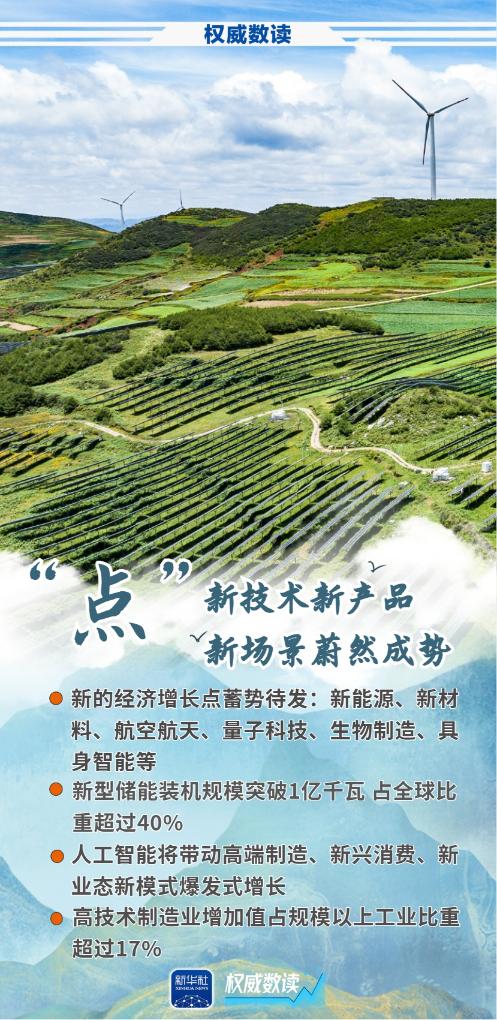
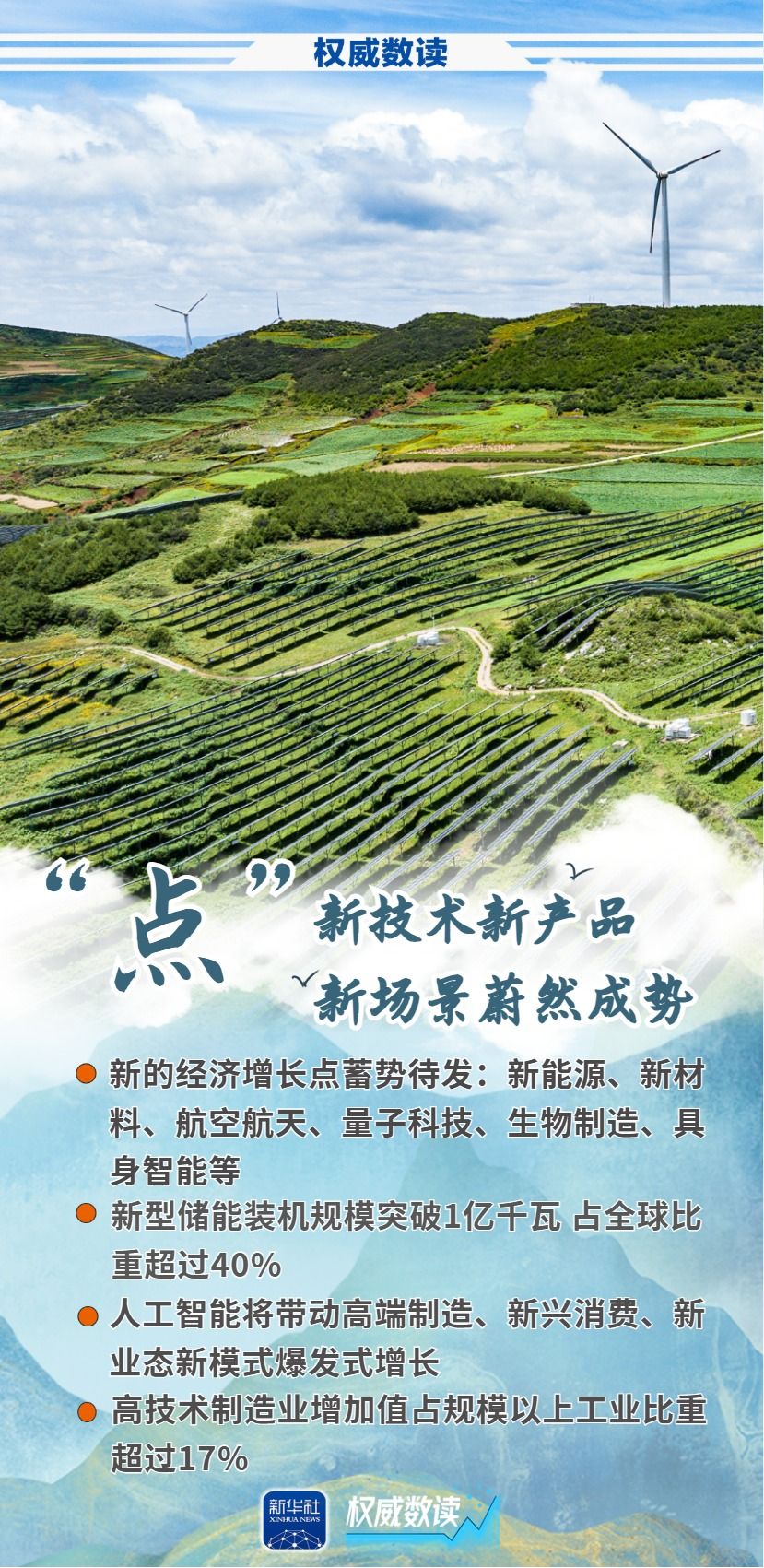
Group 1 - The core viewpoint is that China's economy is expected to reach a total volume of 140 trillion yuan by 2025, maintaining a growth rate of 5%, which positions it among the leading global economies [1] - In 2026, there is a focus on fully unleashing development potential to create new economic momentum and growth, setting a strong foundation for the "14th Five-Year Plan" [1] Group 2 - New economic growth points are emerging, particularly in sectors such as new energy, new materials, aerospace, quantum technology, biomanufacturing, and intelligent wearable technology [2] - The installed capacity of new-type energy storage has surpassed 100 million kilowatts, accounting for over 40% of the global total [2] - Artificial intelligence is projected to drive explosive growth in high-end manufacturing, emerging consumption, and new business models [2] - The added value of high-tech manufacturing is expected to exceed 17% of the industrial output above designated size [2] Group 3 - China possesses a complete industrial system and a vast market of over 1.4 billion people, along with the world's largest and most diverse talent resources [4] - There is a full-chain advantage in pushing innovation results from "shelf" to "market" [4] - By 2025, the added value of the digital economy is anticipated to reach 49 trillion yuan, accounting for approximately 35% of GDP [4] - The integration of digital consumption, digital trade, and micro-short dramas is expected to foster concentrated development in innovation, industry, and talent [4]
权威数读|这三个维度,释放2026年中国经济发展潜能
Xin Hua She· 2026-01-20 13:22
Group 1 - The core viewpoint is that by 2025, China's economy is expected to reach a total of 140 trillion yuan, maintaining a growth rate of 5%, which positions it among the leading major economies globally [1] - New economic growth points are emerging in sectors such as new energy, new materials, aerospace, quantum technology, biomanufacturing, and embodied intelligence [3] - The scale of new-type energy storage installations has surpassed 100 million kilowatts, accounting for over 40% of the global total [3] Group 2 - The high-tech manufacturing industry's added value is expected to exceed 17% of the total industrial output above designated size [3] - By 2025, the digital economy's added value is projected to reach 49 trillion yuan, making up approximately 35% of GDP [7] - China has a complete industrial system and a vast market of over 1.4 billion people, along with the world's largest and most diverse talent resources, facilitating the transformation of innovation from "shelf" to "market" [7] Group 3 - China currently has 24 global top 100 innovation clusters, maintaining the highest number in the world for three consecutive years [8] - The "Shenzhen-Hong Kong-Guangzhou" cluster has risen to become a global leader in innovation [8]
“十四五”落地亿元以上招商项目超4000个!广州挺起产业发展硬脊梁
Zhong Guo Jing Ji Wang· 2026-01-20 13:16
Core Viewpoint - Guangzhou is actively promoting the construction of a modern industrial system during the "14th Five-Year Plan" period, focusing on enhancing traditional industries and developing emerging sectors, particularly in advanced manufacturing and digital economy [1][2][3] Group 1: Industrial Development - Guangzhou aims to establish a "12218" modern industrial system, facilitating the expansion of existing industries and attracting new investments, with over 4,000 projects worth over 100 million yuan each [1] - The city has successfully promoted the digital transformation of 5,300 industrial enterprises and established four national-level advanced manufacturing clusters and two strategic emerging industry clusters [1] - Key sectors such as autonomous driving, biomedicine, low-altitude industries, and new displays are ranked among the top in the country [1] Group 2: Digital Economy and AI - Significant progress has been made in the digital economy, including the establishment of an artificial intelligence public computing power center and two national AI application pilot bases [1] - Guangzhou has implemented a "four-coupon linkage" mechanism involving computing power, data, scenario, and model coupons, and has recognized 33 national-level 5G factories [1] - The city plans to focus on AI as a key variable, launching initiatives to enhance computing power infrastructure and develop high-quality data sets [3] Group 3: Future Industries - Guangzhou is committed to revitalizing traditional industries while fostering new and future industries, including smart construction and industrialized building [2] - The city is exploring applications for intelligent connected vehicles and developing low-altitude industry ecosystems [2] - The Huangpu District is focusing on new energy vehicles, biomedicine, and low-altitude economies, aiming to enhance strategic emerging industries and support technological advancements [2]
《2025胡润未来独角兽:全球瞪羚企业榜》发布
Zheng Quan Ri Bao Wang· 2026-01-20 12:41
Group 1 - The HuRun Research Institute released the "2025 HuRun Future Unicorn: Global Gazelle Enterprises List," showing an increase in the number of gazelle companies from 525 to 819, a growth of 294 companies or 56% [1] - The listed companies span multiple industries and scenarios, with notable mentions such as Gaodeng Technology, which operates in agriculture, flexible employment, and transportation [1] - Gaodeng Technology's Vice President Zhao Ying highlighted the company's evolution from invoice tools to compliance verification and now to credit assets, reflecting the growth of gazelle enterprises and the integration of digital technology with traditional industries [1] Group 2 - HuRun Group's Chairman and Chief Research Officer stated that artificial intelligence is transforming global industries, with 71 gazelle companies in this sector [2] - In healthcare, AI aids in diagnosis, personalized medicine, and drug development, while in finance, it is used for fraud detection, risk management, and algorithmic trading [2] - AI benefits retail and e-commerce through personalization, inventory optimization, and chatbots, and is applied in manufacturing for automation, predictive maintenance, and quality control [2]
数字时代,怎样守护您的虚拟财产?听听法官怎么说
Sou Hu Cai Jing· 2026-01-20 12:32
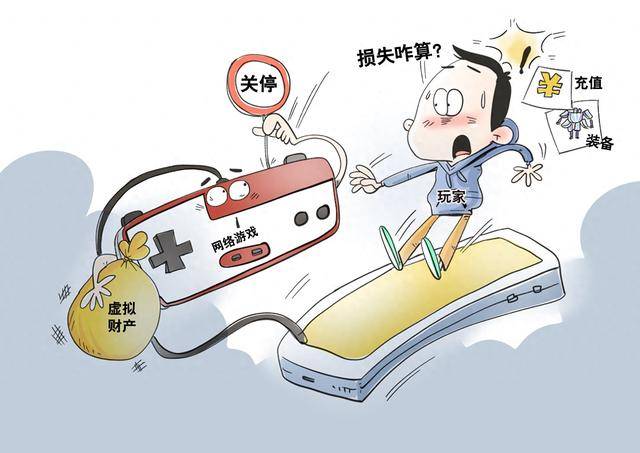
Group 1 - The new regulations on civil cases that took effect on January 1, 2023, include provisions for virtual property, addressing important aspects of digital economy governance [1] - The rise of self-media and e-commerce has led to disputes over rights and obligations among partners, emphasizing the need for clear agreements regarding asset division and account management [3] - Virtual property in online games is recognized as having economic value, and users have legal rights to their accounts and virtual assets, which can be protected through legal means [4] Group 2 - The legal framework stipulates that parties must fulfill contractual obligations, and failure to do so can result in liability for damages, highlighting the financial responsibilities involved in virtual property transactions [5] - Game operators may be held liable for losses incurred by players due to improper actions, such as freezing accounts or deleting virtual items, unless they can justify their actions [6] - Digital collectibles, linked to blockchain technology, are emerging as a new form of asset but are also associated with risks such as fraud and market speculation, necessitating cautious investment approaches [9][10]
2026年全国公共就业招聘专项活动,有10项安排
Xin Hua Wang· 2026-01-20 12:24
Core Viewpoint - The Ministry of Human Resources and Social Security has launched a nationwide employment recruitment initiative for 2026, focusing on key groups' employment needs and providing services to employers [1][2]. Group 1: Services for Key Employment Groups - From January to March, the "Spring Breeze Action" will be implemented to assist registered unemployed individuals and those facing employment difficulties through recruitment activities, vocational guidance, and support services [1]. - From April to May and October to November, national joint recruitment events for college graduates will be held, targeting both recent and past graduates who are unemployed [1][2]. - A "Hundred Days of Recruitment" initiative will take place from June to August, focusing on job matching activities for key groups to stabilize employment [2]. Group 2: Support for Specific Regions and Demographics - Special recruitment activities for college graduates from Tibet, Qinghai, Xinjiang, and certain counties in Sichuan, Yunnan, and Gansu will be organized from September 2026 to June 2027 [2]. Group 3: Services for Employers - From September to October, a series of recruitment events will be organized, including live-streamed job fairs and a service month for private enterprises, focusing on emerging industries such as digital economy and intelligent manufacturing [3]. - The initiative aims to enhance the role of private enterprises in job creation and provide comprehensive support for both job seekers and employers [3]. - Localized service activities will be developed in conjunction with national initiatives, exploring "AI+" employment services and promoting efficient policy implementation [3].