
产业升级

Search documents
从手术室到芯片车间:兴业银行武汉分行金融助力民营医疗净化龙头跨界突围
Sou Hu Cai Jing· 2025-12-26 09:01
Group 1 - The core viewpoint of the article highlights the significant advancements in the cleanroom technology sector, particularly in the semiconductor and medical fields, with Wuhan Huakang Century Clean Technology Co., Ltd. being a leading player in this industry [1][2] - The company has established a strong technical moat in the medical cleanroom sector, having won numerous contracts and completed projects for top hospitals and national laboratories, showcasing its industry leadership [1] - The demand for ultra-clean production environments in emerging industries like semiconductors and new displays is creating a new market opportunity worth trillions, prompting the company to expand its operations into electronic cleanroom engineering [1] Group 2 - The financial needs during the company's transition period are complex, requiring comprehensive solutions that align with its development pace, which led to the creation of a tailored financial service package by Industrial Bank's Wuhan branch [2] - The collaboration between the bank and the company has been efficient, with the entire process from demand matching to approval taking only one month, demonstrating the bank's commitment to supporting the company's strategic growth [2] - Huakang Medical's electronic cleanroom division has made a strong start, securing nearly 600 million yuan in orders within 10 months and aiming for a strategic target of 1 billion yuan for the year, exemplifying innovation-driven industrial upgrades [2]

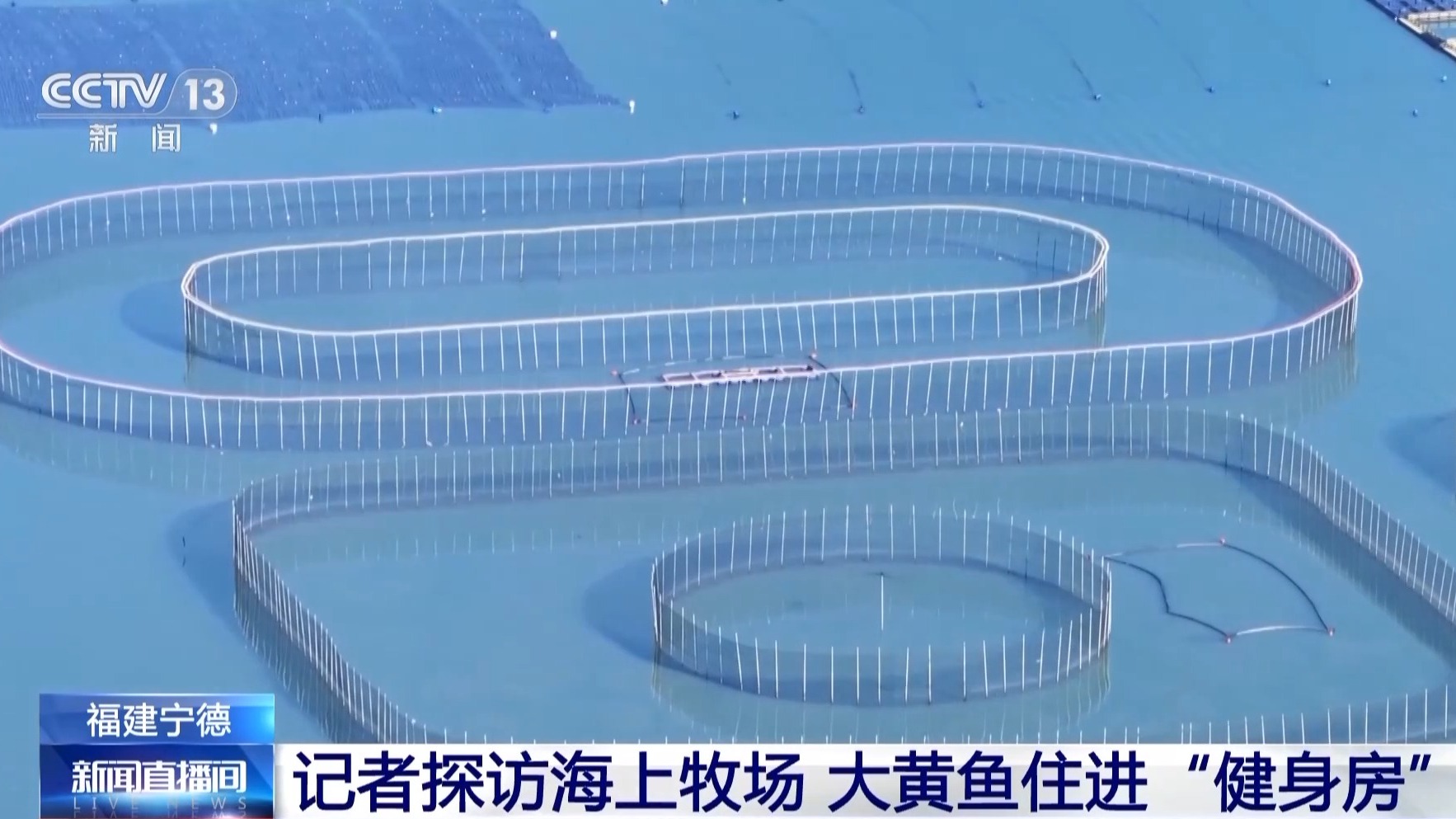
在这座海上牧场,大黄鱼住上“健身房”
Yang Shi Xin Wen Ke Hu Duan· 2025-12-26 07:37
Group 1 - The core viewpoint of the article highlights the innovative aquaculture practices in Ningde, Fujian, which is the main production area for large yellow croaker in China, accounting for 80% of the national output [1] - Ningde has transitioned from traditional nearshore farming to deep-sea farming, utilizing large circular nets to create a "wild training" environment for the fish [1][3] - The new farming method allows fish to swim freely and feed on natural prey, enhancing their growth and nutritional value [3][5] Group 2 - The establishment of a digital monitoring center enables real-time tracking of water quality and fish health, along with a product traceability system that assigns unique identity tags to each batch of fish [5] - The local industry has seen a significant upgrade, with the export value of Ningde large yellow croaker increasing from 1.13 billion yuan last year to 1.25 billion yuan this year, reaching over 60 countries and regions [9] - The total production of large yellow croaker in Ningde has exceeded 230,000 tons this year, marking a 7% increase year-on-year, with the total industry output value surpassing 20 billion yuan [13]

金融“升维”:当好现代化产业体系的“增长伙伴”
Jing Ji Guan Cha Wang· 2025-12-26 05:35
Core Viewpoint - The article highlights the transformation of Agricultural Bank's financial services, focusing on supporting technology-driven enterprises through innovative credit evaluation systems and a shift from traditional asset-based lending to a model that values intellectual property and technological capabilities [1][3][4]. Group 1: Agricultural Bank's Role in Supporting Technology Enterprises - Agricultural Bank has developed a "technology flow" evaluation system to provide precise financial support to technology enterprises, moving beyond traditional collateral-based lending [3][4]. - The bank has successfully provided loans to companies like Pangu Power Technology Co., Ltd., which has become a benchmark in the diesel generator market, showcasing the effectiveness of this new lending approach [3]. - The bank's financial support has enabled companies to accelerate their technological advancements and product quality improvements, as seen with companies like Yongxu New Materials [4]. Group 2: Comprehensive Financial Services - Agricultural Bank has established a comprehensive financial service system that includes investment, loans, bonds, leasing, and consulting, catering to the entire lifecycle of technology enterprises [7]. - The bank's approach has evolved from merely providing financing to becoming a strategic partner that supports the long-term growth and development of enterprises [6][7]. - The bank has engaged in equity investments and long-term capital support for companies like Saisir Group, enhancing their competitive edge in the market [6]. Group 3: Systematic Integration of Financial Services - The bank is shifting from single-point support to a systematic integration of financial services that fosters an entire industrial ecosystem [8][9]. - By designing tailored credit models for specific industrial chains, Agricultural Bank aims to enhance the overall efficiency and growth of key sectors [8]. - The bank has established a network of technology financial service centers and specialized branches to improve the precision and coverage of its services [8]. Group 4: Building a Collaborative Financial Ecosystem - Agricultural Bank is actively participating in creating a collaborative financial ecosystem that connects technology, industry, and finance, exemplified by its involvement in various funds and investment initiatives [9]. - The bank's efforts include establishing a 500 billion yuan innovation fund and issuing technology innovation bonds, which support the growth of technology-driven enterprises [9]. - The transformation of Agricultural Bank's financial services reflects a broader trend towards integrating financial support with industrial development, essential for China's modernization efforts [9].

人民币破6关口,美国押注国运,未来难回头?
Sou Hu Cai Jing· 2025-12-26 05:27
Core Viewpoint - The Federal Reserve's recent interest rate cuts are seen as a response to political pressures and a means to support the economy, particularly in the technology and manufacturing sectors [1][3]. Economic Indicators - In August, the U.S. added only 22,000 jobs, and the unemployment rate rose to 4.3%, highlighting economic challenges that influence decision-making [3]. - Some Federal Reserve members suggested a rare 50 basis point cut, indicating internal tensions and the influence of political factors on monetary policy [3]. Capital Flows - There is a noticeable shift in capital flows from U.S. equity and debt markets to perceived "stable and growing" RMB assets, reflecting changing investment strategies [3]. - Foreign investment teams are increasingly focusing on long-term RMB products, citing marketization and the stability of China's complete industrial chain as key reasons for their investments [3]. Trade and Supply Chain - Changes in customs clearance times and freight indices indicate a revaluation of supply chains, with a stronger RMB improving import costs and subtly shifting consumption structures [5]. - Tariff policies are increasing costs for businesses, and the Fed's rate cuts aim to mitigate these effects, although this approach may be seen as addressing weaknesses with further weaknesses [5]. Monetary Policy and Technology - The Fed's strategy includes using monetary easing to attract capital into the technology sector, representing a gamble on the future of industry [6]. - Venture capitalists express concerns that short-term liquidity may not translate into long-term innovation, fearing that market sentiment could drive funds into overvalued assets [6]. Global Currency Dynamics - The political use of interest rate cuts raises questions about the independence of the U.S. dollar in the international community, which could have long-term implications beyond immediate market fluctuations [8]. - The strengthening of the RMB is prompting international investors to reassess currency risk exposure in their asset portfolios, a process that takes time [8]. Structural Challenges - The U.S. dollar's status as a global reserve currency is at risk if institutional trust erodes, affecting cross-border contracts and central bank reserves [10]. - The Fed's rate cuts provide temporary relief but do not address fundamental structural issues such as declining labor participation, manufacturing offshoring, and persistent fiscal deficits [10]. Industry Adjustments - Chinese companies are adjusting their cost structures in response to RMB appreciation, with some export sectors shifting towards higher value-added areas, driven by market forces [11]. - In global supply chain hubs, managers prioritize delivery times, quality, and supplier stability, indicating a practical approach to currency fluctuations [13]. Long-term Implications - A potential weakening of U.S. dollar dominance could lead to a multipolar currency landscape, requiring adaptation from multinational corporations and policymakers [13]. - Historical shifts in currency systems often accompany long-term industrial adjustments and institutional innovations, suggesting that current market disruptions may signal the beginning of another gradual restructuring [15].
以更大开放诚意迎接全球资本,百瑞赢解读新版鼓励目录
Jin Tou Wang· 2025-12-26 03:28
Core Viewpoint - The release of the "Encouraging Foreign Investment Industry Catalog (2025 Edition)" marks a significant step in China's efforts to expand high-level openness and attract foreign investment, with a clear blueprint for future industrial upgrades and regional coordinated development [1][4]. Summary by Relevant Sections Expansion and Optimization - The new catalog has increased the total number of entries by 205, reaching 1,679, with over 300 entries modified compared to the 2022 version [1][3]. - The nationwide "Encouraging Catalog" has added 100 new entries, while the "Advantage Industry Catalog" for specific regions has increased by 105 entries, reflecting a systematic response to the demands of China's economic development [1][3]. Industry Focus - The core direction of the revision emphasizes two dimensions: promoting industries towards mid-to-high-end and facilitating regional coordinated development [3]. - In the manufacturing sector, new areas of encouragement include nucleic acid drug development, zero-magnetic medical equipment, smart detection instruments, and underwater operation robots [3]. - In the service sector, the catalog has expanded to include modern high-end shipping, virtual power plant operations, pet medical services, sports tourism, and camping accommodation design, indicating a comprehensive approach to enhancing supply chains and meeting diverse high-quality living demands [3]. Regional Customization - The catalog tailors encouragement based on local characteristics, such as ice and snow equipment in Heilongjiang, computing power infrastructure in Guizhou, and wind power operation in Qinghai, showcasing the intent to guide foreign investment in China's internal gradient development [3]. Supporting Policies - To enhance the attractiveness of the new catalog, several supportive policies are outlined, including exemptions from import tariffs on self-used equipment, land transfer price discounts for intensive land use projects, and a reduced corporate income tax rate of 15% for investments in western regions and Hainan Province [4]. - These tangible benefits, combined with measures from the National Development and Reform Commission to support major foreign investment projects and create investment cooperation platforms, form a robust policy framework aimed at attracting and retaining foreign investment [4]. Strategic Implications - The release of the catalog transcends mere policy updates, representing China's proactive approach to shaping new advantages for attracting foreign investment and creating a transparent, stable, and predictable institutional environment [4]. - It signals to the world that China's doors for openness will continue to widen, offering multinational companies a broad platform to share in China's development opportunities with an optimized industrial structure and regional layout [4].

为产业“把脉” 为创新“搭桥”——山东化学化工学会服务聚烯烃产业发展
Zhong Guo Hua Gong Bao· 2025-12-26 03:22
Group 1 - The Shandong Chemical and Chemical Engineering Society has established a cross-disciplinary expert team to support the upgrading of the regional polyolefin industry through a precise mechanism of "enterprises posing questions, the society providing a platform, and experts offering solutions" [1] - The society has built 5 collaborative innovation platforms, promoted over 70 technological achievements, and trained nearly 500 technical talents [1] - Experts from universities such as Qingdao University of Science and Technology and Shandong University of Technology have proposed optimization solutions to enhance product impact strength and heat resistance, as well as customized energy consumption reduction paths based on intelligent algorithms [1] Group 2 - The society has organized 5 high-quality seminars to discuss cutting-edge trends in the polyolefin industry, and has conducted specialized training activities, resulting in the training of over 200 technical personnel [2] - The society has conducted several specialized research reports, including "Research Report on Technological Progress in High-end Polyolefin Industry" and "Research on the Application of Biodegradable Agricultural Films in Shandong Province and Subsidy Policies," providing strong support for regional industrial development planning [2]
2025年版鼓励外商投资产业目录发布,锁定先进制造与现代服务
Huan Qiu Wang· 2025-12-26 02:28
Core Viewpoint - The release of the new "Encouraged Foreign Investment Industry Catalog (2025 Edition)" by the National Development and Reform Commission and the Ministry of Commerce signifies a new round of optimization and upgrading of China's foreign investment policies, aimed at enhancing high-level openness and providing clear, stable, and transparent investment expectations for global investors [1][2]. Group 1: Key Changes in the Catalog - The new catalog focuses on three core changes to optimize the structure of foreign investment. Firstly, it continues to prioritize advanced manufacturing, adding fields such as nucleic acid drug development, zero-magnetic medical equipment, smart detection equipment manufacturing, and key components for robots [3][4]. - Secondly, it emphasizes modern service industries, particularly productive services, with new entries including common technology platforms for new materials, modern high-end shipping services, and virtual power plant operations [3][4]. - Thirdly, it incorporates a wide range of service sectors to support consumer demand, including pet hospitals, sports tourism services, and internet-based healthcare services [3][4]. Group 2: Regional Policy Adjustments - The new catalog expands the encouraged investment scope based on the resource endowments and industrial advantages of the central and western regions, Northeast China, and Hainan Province. For example, new entries include cruise tourism services in Liaoning, ice and snow equipment development in Heilongjiang, and marine environmental governance in Hainan [4][5]. - This differentiated regional policy aims to guide foreign investment to align with local characteristics, promoting coordinated regional economic development [4][5]. Group 3: Policy Benefits and Support Measures - The new catalog not only specifies investment directions but also introduces tangible policy benefits. Foreign investors in encouraged sectors will enjoy multiple incentives, such as exemption from import tariffs on self-used equipment and priority land supply for intensive land-use industrial projects [4][5]. - Tax incentives include a reduced corporate income tax rate of 15% for investments in the western regions and Hainan, along with potential tax deferral or credits for foreign investors reinvesting profits through domestic enterprises [4][5]. Group 4: Implementation and Support for Foreign Investment - To ensure the effective implementation of policy benefits, relevant departments will enhance support services, including expediting major foreign investment projects and addressing challenges related to land use, environmental assessments, and energy consumption [5][6]. - A specialized action plan for foreign enterprises will be launched to facilitate investment cooperation and resolve operational challenges, fostering a market-oriented, legal, and international business environment [5][6]. Group 5: Industry Insights - Analysts view the new catalog as a pragmatic policy document with clear guidance. It aims to leverage global innovation elements and accelerate industrial upgrades through the integration of new technologies and business models [6]. - The inclusion of modern service sectors responds to domestic demands for improved living standards and opens up significant domestic market opportunities for foreign enterprises [6]. - The enhanced attractiveness of the central and western regions, combined with tax incentives, is expected to optimize China's foreign investment landscape and promote high-quality economic development [6].
人民币破7!打工人海淘狂省,出口厂却哭晕在厕所
Sou Hu Cai Jing· 2025-12-26 02:27
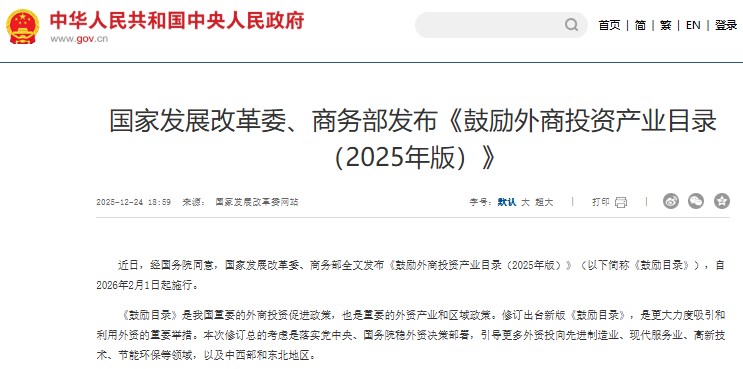
Group 1 - The offshore RMB exchange rate broke the 7.0 mark for the first time in 15 months, reaching a high of 6.9965, causing mixed reactions among different sectors of the economy [1][3] - The appreciation of the RMB is attributed to the expectation of interest rate cuts by the Federal Reserve, a record trade surplus exceeding $1 trillion, and significant foreign capital inflows into A-shares, with net inflows exceeding 150 billion [3][6] - For ordinary citizens, the stronger RMB translates to lower costs for overseas expenses, with the cost of exchanging $10,000 decreasing by nearly 1,700 yuan compared to the beginning of the year [3][6] Group 2 - Export-oriented businesses, particularly in labor-intensive sectors like textiles and toys, are facing significant challenges, with profit margins severely impacted by the RMB's appreciation [6] - The shift in China's foreign trade structure indicates a move away from relying on currency devaluation to boost exports, focusing instead on technology, branding, and added value, with new energy vehicles and solar components showing growth [6][8] - The recent RMB appreciation reflects the resilience of the Chinese economy and serves as a push towards high-quality development, highlighting the need for industries to adapt and upgrade [8]
破七不够劲爆,什么时候一比四了再说话
Sou Hu Cai Jing· 2025-12-26 01:02
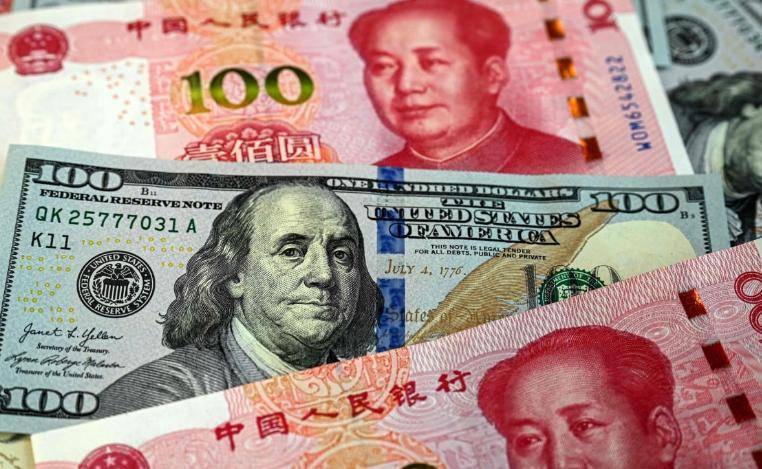
Core Viewpoint - The article discusses the recent appreciation of the Chinese yuan and its implications for the economy, emphasizing the importance of understanding market trends rather than merely celebrating milestones like currency thresholds [2][4]. Group 1: Currency Appreciation and Economic Impact - The recent appreciation of the yuan is seen as a result of both domestic actions and external factors, particularly the weakening of the US dollar due to the Federal Reserve's interest rate cuts [4][5]. - High-tech manufacturing investments are increasing, indicating a shift towards technology-driven economic growth rather than relying on low-cost labor [5][6]. - The appreciation of the yuan is expected to attract foreign investment, as foreign capital views Chinese assets as undervalued [6]. Group 2: Challenges for Businesses - Exporters are facing challenges due to fluctuating yuan values, which can erode profit margins and make it difficult to maintain competitive pricing against countries like Vietnam and India [7]. - Companies are urged to focus on technology and branding to avoid competing solely on price, as the market dynamics shift with the yuan's appreciation [7][10]. - The article warns that while currency appreciation may lower import costs, it also poses risks for industries that have not upgraded their value propositions [10]. Group 3: Market Expectations and Future Outlook - The article suggests that a significant and sustained appreciation of the yuan is unlikely, with a preference for maintaining stability and allowing for market fluctuations [9]. - The expectation is for a dual-directional fluctuation of the yuan, rather than a one-sided trend, which will require businesses and individuals to adapt their financial strategies accordingly [9].
海南封关:轻工制造业的机遇
Xiao Fei Ri Bao Wang· 2025-12-26 00:36
Core Insights - The "closure" policy in Hainan is transforming from a macro-level arrangement to a specific industry variable, presenting an opportunity for the light manufacturing industry to reshape its comparative advantages [1][4] - The regulatory model of "first line open, second line controlled" will significantly reduce import costs for raw materials, equipment, and components, providing a "systemic buffer" for cost-sensitive categories in light manufacturing [1][2] - Hainan's closure not only offers tax incentives and customs facilitation but also aligns with international rules, creating a conducive business environment for composite models like "manufacturing + design" and "manufacturing + branding" [2][3] Industry Summary - The light manufacturing sector has long been labeled as "low value-added" and "labor-intensive," with shortcomings in design, branding, channels, and services [2] - Hainan's free trade port has the potential to become an "international transit and brand incubation platform" for light manufacturing products, connecting domestic manufacturing with international markets [2][3] - Hainan's closure serves as a "systematic testing ground" for the national light industry, allowing for exploration in green manufacturing, digital supply chains, and intellectual property protection [3][4] - Overall, Hainan's closure is viewed as a proactive transformation window for the light manufacturing industry, where the ability to convert systemic benefits into structural advantages will determine competitive positioning in the new industrial adjustment [4][5]