全球去美元化

Search documents
盘后播报:A股后市仍然偏积极,资金持续偏好中证A500
Mei Ri Jing Ji Xin Wen· 2025-12-22 11:46
3、近期资金利率快速下行,隔夜利率稳定在1.27%附近,2Y活跃券250017收益率今日继续下行至 1.372%的新低。长端利率受交易盘影响出现反复,10Y利率小幅回升至1.845%。资金利率维持低位反映 央行对债市态度偏呵护,期限利差扩大不利于货币政策传导。在流动性维持宽松的环境下,后续长端利 率或迎来一波修复行情,或可关注十年国债ETF(511260)进行布局。 1、今日A股延续上涨态势,集体收涨。上证指数收于3917.36点,上涨0.69%,深证成指收于13332.73 点,上涨1.47%。两市成交量继续回升,共计接近1.9万亿元。市场整体涨多跌少,上涨个股约3000家, 其中电子、通信方向领涨。在积极的政策与资金持续流入的推动下,A股后市仍然偏积极,有望实 现"开门红"行情。 2、2026年中国将延续宽松的货币政策与积极的财政政策,总需求有望进一步回暖。在经济回暖阶段, A500指数凭借对先进制造、信息技术、通信、医药、原材料等的超配,更容易释放相对收益。其年化 受益、夏普比率优于主要宽基,成长占优期弹性更强。近期资金流向显示,A500ETF位居净流入前列, 显示出资金对中证A500的持续偏好。感兴趣 ...
今晨,金价突发!
Sou Hu Cai Jing· 2025-12-22 10:43
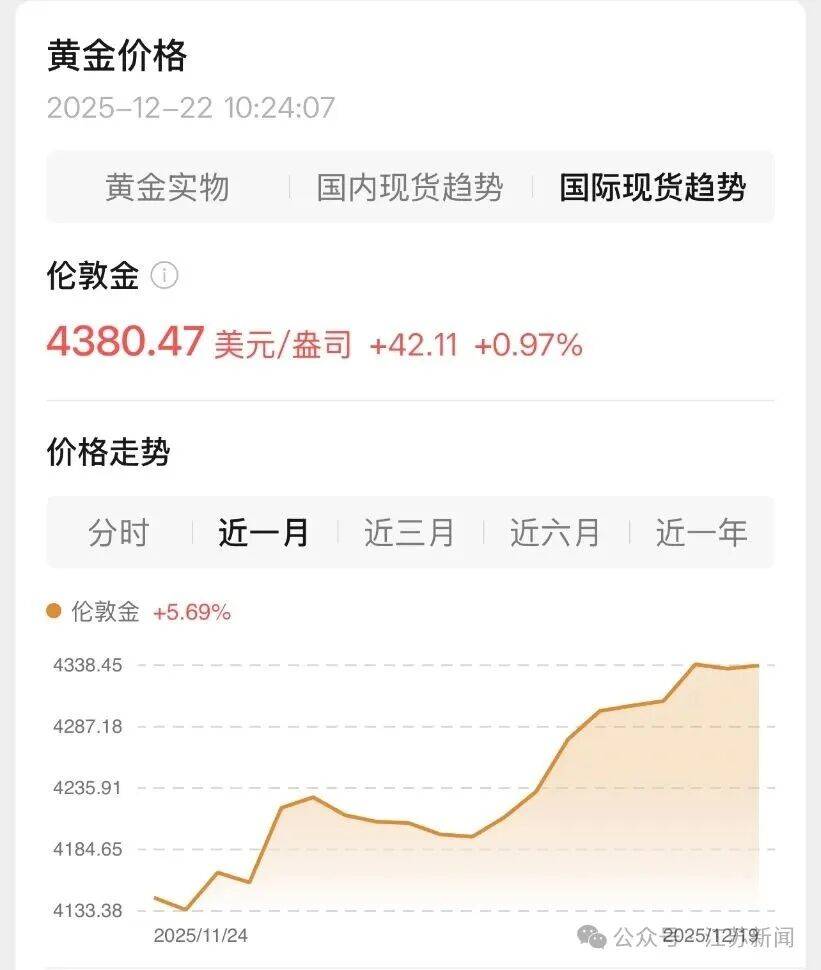
Group 1 - The core point of the article is that the spot gold price has surged, breaking the historical record set on October 20, reaching a new high of $4,380.290 per ounce, with an increase of nearly 1% [1] - The spot gold price has increased over 65% year-to-date, attributed to multiple factors including continued central bank gold purchases, geopolitical risks, and market re-evaluation of the Federal Reserve's interest rate cycle and debt issues [2] - The World Gold Council reported that global physical gold ETF inflows reached $5.2 billion in November, marking six consecutive months of inflows, with total assets under management rising to $530 billion, a 5.4% increase [2] Group 2 - The central bank's trend of purchasing gold remains unchanged, and the ongoing process of de-dollarization and geopolitical fragmentation is expected to continue, supporting the demand for gold as a credit hedge [2] - The total holdings in gold ETFs increased by 1% to 3,932 tons, achieving new highs, with the total inflow for the year projected to set a historical record [2]
全线狂飙!黄金、白银、铂金集体创新高
Sou Hu Cai Jing· 2025-12-22 06:10
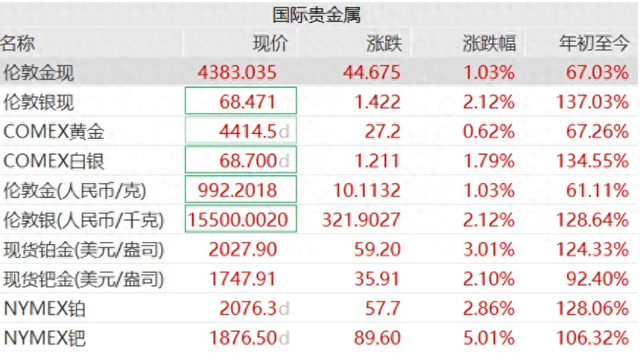
来源:中原网 12月22日,贵金属集体大涨,多个品种创新高。 | 国际贵金属 | | | | | | --- | --- | --- | --- | --- | | 名称 | 现价 | 涨跌 | 涨跌幅 | 年初至今 | | 伦敦金现 | 4383.035 | 44.675 | 1.03% | 67.03% | | 伦敦银现 | 68.471 | 1.422 | 2.12% | 137.03% | | COMEX黄金 | 4414.5d | 27.2 | 0.62% | 67.26% | | COMEX日银 | 68.700d | 1.211 | 1.79% | 134.55% | | 伦敦金(人民币/克) | 992.2018 | 10.1132 | 1.03% | 61.11% | | 伦敦银(人民币/千克) | 15500.0020 | 321.9027 | 2.12% | 128.64% | | 现货铂金(美元/盎司) | 2027.90 | 59.20 | 3.01% | 124.33% | | 现货把金(美元/盎司) | 1747.91 | 35.91 | 2.10% | 92.40% | | N ...

现货黄金再创历史新高 年内涨幅已超65%
Sou Hu Cai Jing· 2025-12-22 05:24
Group 1 - The core viewpoint of the news is that spot gold has reached a new historical high of $4,381.4 per ounce, marking a year-to-date increase of over 65% [1] - Market expectations for the Federal Reserve to lower interest rates in 2026 are rising, alongside increased geopolitical uncertainties due to the approaching Christmas and New Year holidays, which are supporting gold prices [3] - The World Gold Council reported that global physical gold ETF inflows reached $5.2 billion in November, marking six consecutive months of inflows, with total assets under management growing to $530 billion, a 5.4% month-on-month increase [3] Group 2 - The total holdings of gold ETFs increased by 1% to 3,932 tons, both figures representing new historical highs, with the total inflow for the year expected to set a record for the best annual performance [3] - The chief economist of Dongwu Securities, Lu Zhe, stated that the trend of central banks purchasing gold remains unchanged, and the long-term processes of de-dollarization and geopolitical fragmentation continue to support the demand for gold as a credit hedge [4] - The fundamental reasons for the gold bull market, including fiscal and debt risks in major economies, remain solid, indicating that the core logic of the gold bull market has not been disrupted [4]
刚刚,金价再创新高!
Sou Hu Cai Jing· 2025-12-22 03:46
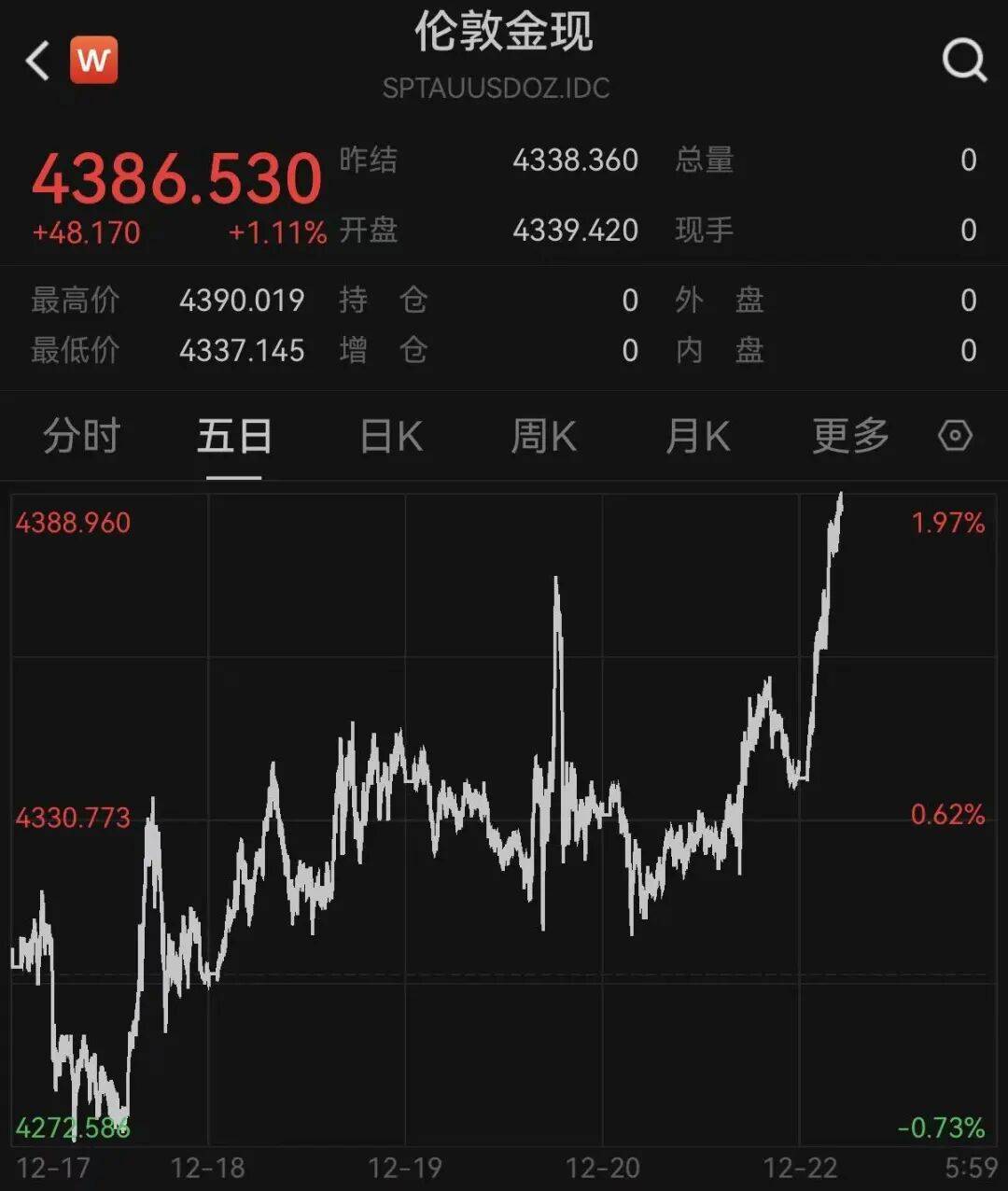
Core Viewpoint - The spot gold price has surged, breaking its previous record set on October 20, reaching a new high of $4,386.53 per ounce as of December 22 [1]. Group 1: Gold Price Performance - The spot gold price has increased by over 65% year-to-date [3]. - As of December 22, the prices for gold jewelry from major retailers are as follows: Chow Tai Fook at ¥1,368 per gram (up ¥8), Chow Sang Sang at ¥1,367 per gram (up ¥8), and Lao Miao at ¥1,367 per gram (up ¥6) [3][7]. Group 2: Factors Driving Gold Price Increase - The chief economist at Dongwu Securities, Lu Zhe, attributes the strong rise in gold prices to multiple factors, including ongoing gold purchases by global central banks since 2022, geopolitical risks, and the revaluation of financial markets concerning the Federal Reserve's interest rate cycle and debt issues [9]. - The World Gold Council reported that global physical gold ETF inflows reached $5.2 billion in November, marking six consecutive months of inflows, with total assets under management growing to $530 billion, a 5.4% increase [9]. - The total holdings in gold ETFs rose by 1% to 3,932 tons, setting new records, and the total inflow for the year is expected to achieve the best annual performance in history [9].
刚刚,现货黄金价格创历史新高
Sou Hu Cai Jing· 2025-12-22 03:36
Group 1 - The core viewpoint of the article highlights the strong surge in spot gold prices, which have reached a new high of $4,380.290 per ounce, surpassing the previous record set on October 20 [1] - Spot gold prices have increased by over 65% year-to-date, driven by multiple factors including continued central bank gold purchases, geopolitical risks, and market re-evaluations of the Federal Reserve's interest rate cycle [2] - The World Gold Council reported that global physical gold ETF inflows reached $5.2 billion in November, marking six consecutive months of inflows, with total assets under management growing to $530 billion, a 5.4% increase [2] Group 2 - The ongoing trend of central bank gold purchases, the process of de-dollarization, and geopolitical fragmentation are expected to continue supporting gold's demand as a credit hedge [2] - The core logic of the gold bull market remains intact, with persistent fiscal and debt risks in major economies further solidifying the demand for gold [2]
黄金之后,白银登场!年内飙涨120%,有人两个月赚了16万
Sou Hu Cai Jing· 2025-12-21 02:22
Group 1 - The silver market is experiencing a significant surge, with prices doubling compared to a year ago, while gold's price increase is only about 60% [1][5] - As of December 12, COMEX silver futures reached $64.835 per ounce, marking a 120% increase from the beginning of the year, which is a historical record for the silver market [3] - Investors are shifting their focus from gold to silver due to high gold prices and tax implications, leading to increased sales of silver products [5] Group 2 - The recent silver price surge is attributed to a combination of fundamental changes and capital inflows, with silver breaking away from its traditional role as a "by-product" of gold [8] - The demand for silver is being driven by the green energy transition and the AI revolution, with significant industrial demand emerging from sectors like photovoltaics and electric vehicles [8] - Historical data indicates that silver price increases often exhibit a cyclical pattern, with the current upward trend showing two distinct phases of price acceleration [10] Group 3 - The silver market's current enthusiasm is accompanied by rising risks, as highlighted by the warning from Guotou Ruijin Fund regarding high premium risks in silver fund trading [12] - The silver market is relatively small, making it more susceptible to liquidity issues and large capital movements, which could increase future volatility [12] - As of early December, spot silver prices surpassed $60 per ounce, with retail silver jewelry prices rising to between 24 and 28 yuan per gram [14]
12月15日大盘简评
Mei Ri Jing Ji Xin Wen· 2025-12-15 10:16
Group 1 - A-shares experienced a downward trend today, with the Shanghai Composite Index closing at 3867.92 points, down 0.55%, and the Shenzhen Component Index at 13112.09 points, down 1.10% [1] - The total trading volume in the two markets was less than 1.8 trillion yuan, a decrease from the previous trading day, indicating a market environment where declines outnumbered gains, particularly in the electronic communication sector [1] - The overall economic and policy environment for A-shares remains positive, with expectations for fiscal spending to support economic demand recovery, leading to a potential return to an upward cycle for A-shares in the medium term [1] Group 2 - The gold sector performed well today, with the Gold Fund ETF (518800) rising by 1.37% and the Gold Stock ETF (517400) increasing by 1.28% [2] - Short-term expectations include a 25 basis point rate cut by the Federal Open Market Committee (FOMC) in December, alongside ongoing geopolitical tensions and a global trend towards de-dollarization, which are expected to support gold prices [2] - The defensive demand in the market is increasing, with dividend stocks benefiting as a "safe haven," and the resource-heavy dividend index is sensitive to fluctuations in coal and oil prices [2]
贵金属:金银抗纛,铂钯起势
Guang Da Qi Huo· 2025-12-15 05:29
Report Industry Investment Rating The provided content does not mention the report industry investment rating. Core Viewpoints of the Report - The pricing logic of gold has undergone a profound transformation, with the traditional "real interest rate" and "US dollar" pricing anchors losing effectiveness after 2022. A diversified pricing system centered on "fiat currency credit hedging" and assisted by "global geopolitical order reconstruction" has emerged. In 2026, gold is expected to verify and extend the stability of this system, with an annual operating range of $3,900 - $4,800 per ounce and an average annual price of around $4,500 per ounce [2][113]. - Silver is likely to follow the trend of gold, with a greater price elasticity. In 2026, the shortage in the silver fundamentals and inventory liquidity risks are expected to become consensus and supporting factors, with the expected regression of the gold - silver ratio as the main driving force. The London spot silver is projected to fluctuate between $50 - $80 per ounce [2][116]. - In the context of the systematic re - evaluation of gold as a core credit - hedging asset, 2026 will be a year of both opportunities and further differentiation for platinum and palladium. Their prices will not only follow the upward trend of gold's financial attributes but also continue the divergent trend of "strong platinum and weak palladium" due to their different fundamentals. The London spot platinum is expected to find strong support in the $1,450 - $1,550 per ounce area and challenge the key resistance range of $1,800 - $2,000 per ounce, with an average annual price of around $1,750 per ounce. The London spot palladium is expected to oscillate in a wider range, with support at $1,050 - $1,250 per ounce and resistance at $1,600 - $1,800 per ounce, and an average annual price of around $1,300 per ounce [5][117]. Summary According to Related Catalogs 1. 2025 Year - end Review and Influencing Factors of Precious Metals - **Gold**: In 2025, the gold market was influenced by multiple factors such as global macro - economic conditions, geopolitical changes, and market sentiment. The London spot gold fluctuated between $2,613.9 - $4,381.17 per ounce, with an average price of about $3,400.79 per ounce, a year - on - year increase of about 40%. The price increase was driven by factors including Trump's policies, Fed policy changes, and concerns about the US dollar's credit [7][8]. - **Silver**: The London spot silver achieved a historical breakthrough, fluctuating between $28.311 - $58.968 per ounce, with an average price of $38.192 per ounce, a year - on - year increase of about 33.2%. The price increase was promoted by the strong rise of gold and the expected regression of the gold - silver ratio [8]. - **Platinum and Palladium**: In 2025, the platinum and palladium markets were a game between supply - demand mismatch and financial attributes. The London spot platinum fluctuated between $878.3 - $1,770 per ounce, with an average price of about $1,253.3 per ounce, a year - on - year increase of about 30%. The London spot palladium fluctuated between $870.5 - $1,695 per ounce, with an average price of $1,165.7 per ounce, a year - on - year increase of about 18.5%. On November 27, 2025, the Guangzhou Futures Exchange officially launched platinum and palladium futures [5][10]. 2. 2025 Precious Metals Fundamental Analysis - **Gold Supply - Demand Balance**: In 2025, the supply of gold increased slightly, with a 1.2% increase in output to 3,717.4 tons in the first three quarters compared to the same period last year. The net demand for gold increased by 10% to 3,639.7 tons in the first three quarters. The gold surplus decreased to 77.7 tons, a year - on - year decrease of 78.7%. Investment demand returned, with an increase in the demand for gold bars, medals, and an increase in the holdings of gold ETFs. However, central bank gold purchases decreased by 12.5% to 633.6 tons [28][41][43]. - **Silver Supply - Demand Balance**: In 2025, the global silver supply increased slightly, reaching 32,055 tons, a year - on - year increase of about 1.5%. The total demand was 35,716 tons, a slight decrease of 1.4% compared to 2024. Industrial demand remained stable, investment demand recovered, and traditional photography, jewelry, and silverware demand declined. The silver market was in a supply shortage for the fifth consecutive year [46][47][49]. - **Platinum and Palladium Supply - Demand Balance**: The supply of platinum and palladium was unstable in 2025. Global platinum mine production was expected to decline by 6%, and palladium mine production was also expected to decline by 6%. However, recycling improved. Platinum demand was diversified, while palladium demand was highly concentrated in the automotive sector. Platinum demand was supported by the "platinum replacing palladium" trend and the growth of hybrid vehicles, while palladium demand faced a structural decline due to the increase in electric vehicle penetration and platinum substitution [58][59][62]. 3. Macro - analysis: Multiple Narratives of Gold in the Intersection of the US Mid - term Election Year and Geopolitical Fission - **US Mid - term Election Year**: In 2026, the US government may adopt expansionary fiscal and monetary policies to boost election support. Fiscal deficits are expected to widen, and the Fed may cut interest rates. However, these policies may also lead to concerns about "stagflation" or "re - inflation" and increase short - term volatility in gold prices through trade and tariff policies [74][75][76]. - **Geopolitics**: The geopolitical situation in 2026 will be more complex, with a shift from traditional military confrontation to a "composite game" in the economic, trade, and technology fields. Although the peace process in the Middle East and Ukraine may bring short - term stability, potential risks still exist. Gold will have a structural premium due to geopolitical uncertainties, and central banks and large institutional investors will continue to increase their gold holdings [91][92]. - **Financial Market Narrative**: In 2026, the narratives of "soft landing", "re - inflation", or "stagflation" of the US economy will compete, leading to further differentiation in asset prices. Gold has become an asset for hedging against the volatility of US stocks, and the impact of the US dollar on gold prices needs to be considered in terms of its short - term and long - term trends [105][110][112]. 4. Conclusion - **Gold**: In 2026, gold is expected to oscillate upward and set new historical highs, with an annual operating range of $3,900 - $4,800 per ounce and an average annual price of around $4,500 per ounce. The price may experience different stages: high - level oscillation in the first half of the year, a main upward wave in the second half, and a potential technical correction in the fourth quarter [113][115][116]. - **Silver**: Silver is expected to follow the trend of gold with greater elasticity. The London spot silver is projected to fluctuate between $50 - $80 per ounce in 2026 [116]. - **Platinum and Palladium**: Platinum is expected to show stronger price elasticity and upward potential, while palladium is likely to oscillate in a wider range with a downward - shifting center of gravity [117].
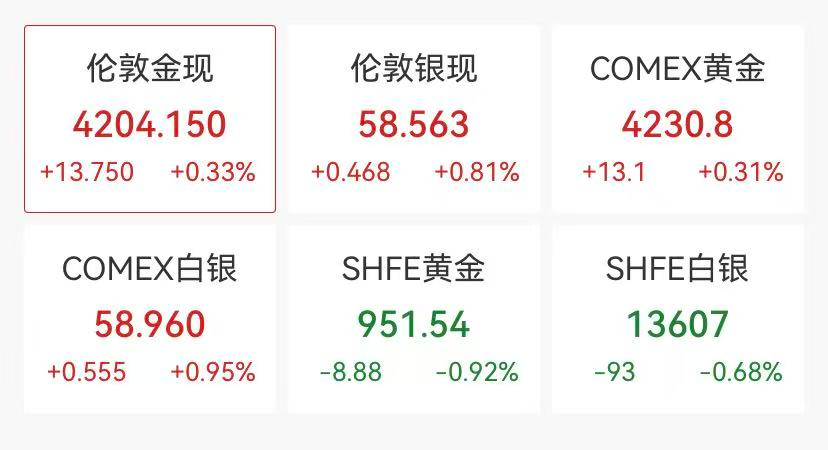
急涨急跌,黄金站上4230美元/盎司
2 1 Shi Ji Jing Ji Bao Dao· 2025-12-09 12:24
Core Viewpoint - International precious metal prices experienced significant volatility on December 9, with COMEX gold futures dropping sharply below the $4200 mark before recovering slightly to around $4232 per ounce, reflecting a gain of over 0.3% [1] Price Movements - COMEX gold futures reported at $4230.8, up by $13.1 or 0.31% from the previous close [2] - COMEX silver prices fluctuated, initially dropping below $59 per ounce but later rebounding to approximately $58.96, reflecting an increase of $0.555 or 0.95% [2] - The highest price for COMEX gold during the day reached $4242.3, while the lowest was $4197.8, indicating a trading range of $44.5 [3] Economic Indicators - The Bank of Japan's Governor, Kazuo Ueda, indicated a potential interest rate hike due to low real interest rates, which could impact the economic outlook [3] - Analysts from Huatai Securities noted that an early rate hike by the Bank of Japan could help avoid the risk of inflation "de-anchoring," but it may also lead to increased Japanese government bond yields and pressure on gold prices due to potential asset sell-offs [4] Historical Context - The previous rate hike by the Bank of Japan on July 31, 2022, led to a rapid appreciation of the yen and significant market volatility, including a 12.4% drop in the Nikkei 225 index and a nearly 4% fluctuation in New York gold futures prices [5] Market Outlook - Despite potential rate hikes, institutions believe the impact on the gold bull market may be limited, as the long-term macroeconomic drivers for gold prices remain intact [6] - Analysts from Ping An Securities maintain a bullish outlook on gold prices, citing ongoing concerns about the weakening of the US dollar's credit and the potential for continued central bank gold purchases [7] - As of the end of November, China's gold reserves reached 74.12 million ounces, marking a continuous increase for 13 months, which supports the underlying demand for gold [7]