数字化运营

Search documents
瑞幸鲸吞Costa,再上美股的一张门票?
Guan Cha Zhe Wang· 2025-11-24 10:44
Core Viewpoint - Luckin Coffee's major shareholder, Dazhong Capital, is reportedly considering acquiring Costa Coffee from Coca-Cola for an estimated £1 billion, aiming to integrate resources and create a global coffee empire [1][3]. Group 1: Acquisition Intentions - Dazhong Capital's potential acquisition of Costa Coffee is seen as a strategic move to enhance Luckin Coffee's international presence and brand recognition [3][14]. - The acquisition could allow for resource integration between Luckin and Costa, creating a complementary positioning in the coffee market [3][14]. - Analysts suggest that the timing of the acquisition is favorable due to Costa's current low valuation, making it an attractive opportunity for Dazhong Capital [14][21]. Group 2: Costa Coffee's Market Position - Costa Coffee has faced challenges in recent years, including a decline in performance and a significant reduction in its store count in China, dropping to 334 stores as of November 2023 [9][12]. - The brand's shift in strategy post-acquisition by Coca-Cola led to a focus on ready-to-drink coffee products, which has hindered its growth in the competitive Chinese market [8][12]. - Costa's revenue for 2023 was reported at £1.22 billion, a 9% increase year-over-year, but still below its 2018 revenue of £1.3 billion, with a reported loss of £9.6 million [13][14]. Group 3: Strategic Implications for Luckin Coffee - The acquisition of Costa could serve as a critical step for Luckin Coffee in its efforts to return to the international capital market, providing a new narrative to support its global ambitions [21][24]. - Luckin's recent financial performance shows a healthy cash flow and stable profitability, with a 50.2% year-over-year increase in net revenue for Q3 2023 [23]. - The integration of Costa's international store network could facilitate Luckin's expansion into overseas markets, particularly in Europe, while enhancing its brand competitiveness [23][24].


深圳“国际性枢纽”连接世界 释放大市场磁吸力
Sou Hu Cai Jing· 2025-11-21 15:22
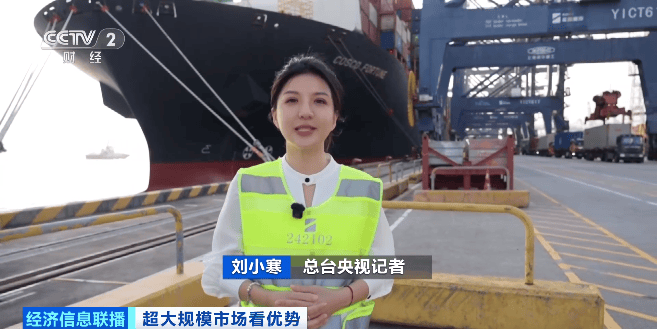
Core Viewpoint - Shenzhen is emerging as an international hub connecting China to the world, showcasing vibrant trade activities and a strong market appeal [1] Group 1: Trade and Economic Data - Shenzhen's import and export scale has maintained the top position among mainland cities in the first ten months, with imports of electromechanical products reaching 1.2 trillion yuan, an increase of 8.5%, and agricultural product imports at 82.26 billion yuan, growing by 10% [7] - China has been the world's second-largest importer for 16 consecutive years, with an annual import volume exceeding 20 trillion yuan, driven by a population of over 1.4 billion and more than 400 million middle-income individuals [9] - The recently concluded 8th China International Import Expo achieved a record intended transaction amount of 83.49 billion USD, with 290 Fortune 500 companies participating [9] Group 2: Port and Logistics Developments - Yantian Port has added 14 international routes since 2025, covering North America, Europe, and Asia, with over 100 weekly routes connecting globally [3] - Digital operations at Yantian Port enhance efficiency, allowing diverse international goods to flow quickly to production lines and consumers, injecting vitality into the domestic market [5] Group 3: Tourism and Visitor Trends - The implementation of a 240-hour visa-free transit policy at five ports, including West Kowloon and Hong Kong-Zhuhai-Macao Bridge, has made the region a significant hub connecting the Guangdong-Hong Kong-Macao Greater Bay Area with the world [12] - Over 1.2 million foreign travelers were inspected at the West Kowloon border checkpoint this year, with more than 260,000 benefiting from the visa-free policy, marking a 100% year-on-year increase [14] - The number of foreign tourists entering China has reached 20.89 million in the first three quarters, a growth of over 50%, with a significant increase in duty-free sales [26]
国盛证券:维持滔搏(06110)买入”评级 卓越零售能力与高分红回馈
智通财经网· 2025-11-21 03:35
Core Viewpoint - The report from Guosheng Securities maintains a "buy" rating for Tabo (06110), highlighting its position as a leading sports retail platform in China, despite short-term fluctuations in its main brand Nike, while Adidas shows strong growth momentum [1] Business Overview - Tabo is the largest sports retail and service platform in China, with partnerships including Nike, Adidas, Puma, Converse, and Vans. The company anticipates a revenue decline of 7% and 6% year-on-year for FY2025 and FY2026H1, respectively, reaching 27 billion and 12.3 billion RMB. Net profit attributable to shareholders is expected to drop by 42% and 10% to 1.29 billion and 790 million RMB for the same periods [1][2] Brand Performance - Revenue from main brands decreased by 4.8% to 10.8 billion RMB in FY2026H1, accounting for 88% of total revenue. Adidas has consistently outperformed expectations, with a 8% year-on-year revenue growth in Q3 2025 on a currency-neutral basis, while Nike's performance has been more volatile [2] Retail Operations - Tabo has optimized its offline stores based on brand characteristics, with 1,056 self-operated stores over 300 square meters as of FY2023, representing 16.1% of total stores. The company is shifting its "big store strategy" to a more tailored approach to enhance store efficiency. The company has also expanded its private domain and live e-commerce initiatives, with over 3,600 mini-program stores by FY2026H1, and e-commerce sales expected to account for around 40% of total sales [3] Membership and Digitalization - Tabo has achieved a cumulative registered membership of 89.1 million by FY2025H1, with ongoing efforts to enhance user engagement and conversion rates. The company's digital transformation strategy, initiated in 2019, focuses on empowering frontline employees, optimizing store operations, and improving product management [3] Mid-term Trends - The release schedule for new Nike products is expected to improve in FY2027, potentially benefiting Tabo's revenue and profit margins. Adidas continues to perform well, while Nike's performance in the Greater China region is recovering. The company anticipates that FY2026 profits will remain stable, with a positive outlook for FY2027 as new Nike products are launched [4] Profit Forecast and Investment Recommendation - Since its IPO in 2019, Tabo has maintained a cumulative dividend payout ratio of 107.3%. As of FY2026H1, the company holds 2.54 billion RMB in cash and cash equivalents. The company is projected to achieve net profits of 1.297 billion, 1.481 billion, and 1.666 billion RMB for FY2026 to FY2028, with a current price-to-earnings ratio of 14.6 times and a dividend yield of 7%. The "buy" rating is maintained [5]


街边美容院加速消失,美丽田园吞并行业前三
Guan Cha Zhe Wang· 2025-11-20 09:59
Core Viewpoint - The Chinese beauty industry is undergoing significant transformation, with a notable decline in small, individually operated beauty salons due to rising operational costs, increased competition, and changing consumer preferences towards branded services [1][2]. Industry Overview - The beauty market in China is valued at nearly 500 billion, with approximately one million beauty institutions, 90% of which are single-store operations, a figure that is rapidly changing [1][2]. - The industry is characterized by extreme fragmentation, with less than 0.1% of brands operating more than 20 locations [3]. Market Dynamics - Factors contributing to the decline of private beauty salons include high rental costs, intense customer acquisition competition, increased consumer trust in brands, and a lack of digital operational capabilities [2][3]. - The entry of capital has accelerated industry consolidation, exemplified by Meili Tianyuan's acquisition of major brands like Siyuanli and Nairui [2][4]. Consumer Behavior - Consumer behavior is shifting towards brand loyalty, with branded beauty institutions seeing search volumes 2.3 times higher than non-branded ones, leading to a 40% reduction in customer acquisition costs [3]. - The average transaction value increases by 20% to 50% with each level of brand recognition [3]. Operational Challenges - High operational costs, particularly in prime commercial areas, are squeezing the profitability of single-store operations, with annual rents in key areas reaching several million [3][4]. - The adoption of digital tools is becoming essential, with Meili Tianyuan investing over 200 million in developing proprietary systems to enhance service delivery [3]. Strategic Moves - Meili Tianyuan's strategy involves acquiring leading brands to gain quality membership assets and prime locations, while enhancing operational efficiency through digitalization and standardization [4][5]. - The company aims to maintain service quality while expanding, which is crucial given the industry's unique customer relationship dynamics [4][5]. Financial Performance - Post-acquisition, Nairui's single-store revenue increased by 44%, and profit margins improved from 6% to 11% [4]. - The company reported a cash balance of 2 billion and projected operating cash flow of 1 billion for the year, indicating strong financial health [7]. Market Positioning - Meili Tianyuan's recent IPO positions it as the last major player to enter the market before new regulatory challenges emerged, making future listings difficult [7][8]. - The company claims a dominant position in the high-end beauty market, suggesting a potential monopoly in the sector [7][8]. Future Outlook - The beauty industry is expected to continue evolving from a fragmented to a more consolidated structure, driven by digitalization and brand establishment [8][9]. - The growth is primarily supported by high-net-worth individuals, raising concerns about market segmentation and the sustainability of growth in the broader consumer base [5][9].

大钲资本欲购Costa 中国咖啡模式能否逆袭全球?
Xin Lang Zheng Quan· 2025-11-19 07:59
Core Insights - Luckin Coffee's major shareholder, Dazhong Capital, is considering acquiring Costa Coffee from Coca-Cola, which is looking to sell the brand, highlighting a significant shift in the global coffee industry [1][2] Group 1: Strategic Ambitions and Industry Changes - Dazhong Capital currently holds 31.3% of Luckin Coffee's shares and 53.6% of its voting rights, indicating a strong influence in the company [2] - The interest in acquiring Costa Coffee follows Dazhong Capital's previous attempt to acquire a stake in Starbucks China, showcasing its ambition to expand beyond the budget coffee market and integrate the entire coffee supply chain [2] - The global coffee market is undergoing significant changes, with increased collaboration between Chinese capital and international coffee brands, as evidenced by Starbucks' joint venture with Boyu Capital and JDE Peet's acquisition by Keurig Dr Pepper [2] Group 2: Costa Coffee's Current Situation - Costa Coffee, acquired by Coca-Cola for £3.9 billion (approximately $5.1 billion) in 2018, has not performed as expected, with 2023 fiscal year revenues exceeding £1.2 billion, a 9% increase year-on-year but below 2018 levels, and a shift from a profit of £2.459 million to a pre-tax loss of £96,000 [3] - If Costa is sold for the rumored £1 billion valuation, it would represent a significant loss for Coca-Cola compared to its acquisition price seven years ago [3] Group 3: Complementary Synergies and Integration Prospects - The strategic complementarity between Costa and Luckin Coffee is a key motivation for Dazhong Capital's interest in the acquisition, as Costa's high-end positioning contrasts with Luckin's efficiency and mid-to-low price strategy [4] - Costa's extensive international network, with over 2,700 stores in the UK and Ireland and more than 1,300 globally, contrasts with Luckin's 27,000+ stores in China, indicating a gap in international presence for Luckin [4] - The integration post-acquisition could focus on replicating Luckin's successful "small store model" at Costa, enhancing digital capabilities, streamlining supply chains, and leveraging Costa's global footprint to facilitate Luckin's entry into European markets [6]
瑞幸三季度:营收152亿加速扩张 重返美股主板计划浮出水面
Xin Lang Zheng Quan· 2025-11-19 07:57
Core Viewpoint - Luckin Coffee has reported a strong Q3 revenue of 15.287 billion RMB, signaling its intent to return to the US main board after overcoming past financial scandals [1][2][6]. Financial Performance - Total net revenue for Q3 reached 15.287 billion RMB, a year-on-year increase of 50.2% [2]. - The number of global stores has grown to 29,214, with a net addition of 3,008 stores in the quarter [2]. - Monthly active customers surpassed 112 million, marking a 40.6% increase year-on-year, with over 42 million new customers [2]. - GAAP operating profit was 1.777 billion RMB, a 12.9% increase, but the operating margin fell from 15.5% to 11.6% [2]. - Net profit decreased by 1.9% to 1.28 billion RMB [2]. Cost Structure - The increase in revenue was offset by rising delivery costs, which reached 2.889 billion RMB, a 211.4% increase due to a surge in orders from third-party delivery platforms [3]. Strategic Layout - The company emphasizes self-pickup as its core strategy, with delivery serving as a supplementary option [4]. - High-density store networks are a competitive advantage, allowing for lower rental and labor costs while maintaining profitability with a pricing strategy of 9.9 RMB [4]. - Internationally, Luckin has opened 29 new overseas stores, bringing the total to 118, with a focus on Singapore and the US [5]. Return to US Market - The company is actively pursuing a return to the US main board, with plans being discussed but no definitive timeline established [6][7]. - The return is seen as a significant event, potentially enhancing liquidity and valuation by 10% to 25% for Chinese companies transitioning from OTC to the main board [8]. Future Outlook - The CEO expressed caution regarding Q4 and next year's performance due to high international coffee bean prices and reduced delivery subsidies [9]. - The company aims to focus on long-term development, enhancing product and brand innovation while leveraging digital operations to meet diverse customer needs [9].
读懂百胜中国,先学会如何拼好一只鸡
36氪· 2025-11-18 14:10
Core Insights - The article emphasizes the importance of maximizing the value of every part of a chicken in the restaurant industry, particularly for companies like Yum China, which operates KFC and Pizza Hut [3][20][43] - Yum China's strategy focuses on maintaining competitive pricing while enhancing supply chain efficiency and product innovation, allowing the company to thrive in a competitive market [8][10][18] Group 1: Company Strategy - Yum China's CEO, Joey Wat, highlighted that since 2016, the Consumer Price Index (CPI) in China has risen by 13%, yet the company has not passed these costs onto consumers, focusing instead on value for money [8] - The company employs a strategy called "拼出一只鸡" (拼出一只鸡), which emphasizes flexible procurement and a diverse supplier base to enhance supply chain efficiency [10] - Yum China has introduced over 1,600 innovative or upgraded products in the past three years, with more than 100 products generating annual sales exceeding 100 million [24] Group 2: Market Potential - The article notes that China's restaurant chain penetration is only about 20%, significantly lower than over 50% in mature markets, indicating substantial growth potential [16] - By 2030, the frequency of dining out in China is expected to increase from 3.5 times to 5.5 times per week, suggesting a rising consumer demand [16] - Yum China's growth strategy includes expanding its brand portfolio to cover a larger portion of the population, aiming to increase its customer base from one-third to one-half of China's population [34][42] Group 3: Operational Efficiency - The company has streamlined its supply chain by eliminating unnecessary complexities, allowing for a more efficient use of resources and better product innovation [23][26] - The role of Restaurant General Managers (RGM) is crucial in connecting the operational front with the underlying supply chain and innovation processes, ensuring effective execution of strategies [30][31] - Yum China's focus on digital infrastructure and AI technologies has reduced trial and error costs, enabling more efficient store operations and better inventory management [26] Group 4: Future Goals - Yum China aims to have over 17,000 KFC outlets by 2028, with a projected operating profit exceeding 10 billion yuan [37][43] - The company plans to double the operating profit of Pizza Hut by 2029 compared to 2024, with a target of over 6,000 Pizza Hut locations by 2028 [39][43] - The multi-brand strategy is designed to create layered offerings that cater to different consumer needs, enhancing market penetration and brand reach [42]


竞争对手纷纷“让股”换增长 赛百味全球CEO访华曝光外资餐饮生存新法则
Mei Ri Jing Ji Xin Wen· 2025-11-18 13:21
Core Insights - Major adjustments in the international restaurant industry are highlighted by Starbucks and Burger King's recent decisions to sell their stakes in the Chinese market, reflecting common challenges such as rising costs, intense competition, and urgent localization needs [1] - Subway's global CEO, Jonathan Fitzpatrick, emphasizes the importance of the Chinese market for growth, noting the company's plans to open 4,000 new stores in China [1][4] Company Strategy - Subway has over 35,000 stores globally, but its store count has decreased by nearly 10,000 from its peak [3][4] - The company plans to open 220 new stores in China in 2024, setting a record for annual openings in its 30 years in the market [4] - A significant franchise agreement with Shanghai FRS aims to expand Subway's presence in China, potentially increasing its market size by over seven times [4] Market Dynamics - The competitive landscape in China is intensifying, with major players like McDonald's and KFC expanding their store counts significantly [6] - Subway's current store count in China has surpassed 1,000, but it still lags behind competitors in terms of brand recognition and market presence [6][9] Consumer Trends - Fitzpatrick identifies the need for menu innovation to cater to local tastes, particularly emphasizing the importance of breakfast offerings in China [7][8] - The company is focusing on digitalization to attract younger consumers, enhancing operational efficiency and customer experience [8][9] Future Outlook - Subway aims to reach 4,000 stores in China, with aspirations for further expansion, including potential public listing plans [9] - The insights gained from the Chinese market are expected to inform Subway's global strategy and transformation efforts [9]
瑞幸三季度业绩出炉,CEO说:瑞幸以自提为核心,外卖更多是阶段性补充,短期外卖占比显著提升对利润率造成一定负面影响
3 6 Ke· 2025-11-18 00:17
Core Viewpoint - The company reported strong revenue growth in Q3, driven by an expanding store network and increased consumer demand in the coffee market, with a total net revenue of RMB 15.287 billion, a year-on-year increase of 50.2% [1][12]. Financial Performance - Total net revenue for Q3 reached RMB 15.287 billion, up 50.2% year-on-year [12]. - GAAP operating profit was RMB 1.777 billion, reflecting a 12.9% increase [12]. - Same-store sales grew by 14.4%, a significant improvement from a decline of 13.1% in the same period last year [1]. - The company achieved a monthly average of over 100 million transacting customers, with a total of 420 million customers by the end of Q3 [12]. Store Expansion - The company opened 3,008 new stores in Q3, bringing the total number of stores to 29,214 [3][12]. - In China, 2,979 new stores were added, with a total of 29,096 stores, including over 10,287 franchise stores [3][6]. - The international market saw a net addition of 29 stores, totaling 118, with significant growth in Singapore and the U.S. [6][8]. Market Strategy - The company is focusing on expanding its store network to enhance delivery capabilities and meet growing consumer demand, particularly in high-tier cities and lower-tier markets [3][6]. - The CEO emphasized the importance of maintaining a strong digital operation and understanding customer preferences to drive long-term growth [17]. Competitive Landscape - The coffee industry in China is experiencing rapid growth, driven by increased consumer demand and significant subsidies from delivery platforms [9][11]. - The CEO noted that while the rise in delivery orders has impacted profit margins, it is a temporary phase in the industry's development [9][11]. Future Outlook - The company anticipates challenges in same-store growth due to fluctuating market conditions and high international coffee bean prices [17]. - The focus will remain on long-term strategic development, product innovation, and enhancing customer service to capture market opportunities [17].
瑞幸Q3总净收入近153亿,净增3008家门店:要紧抓咖啡市场的时代红利
Xin Lang Cai Jing· 2025-11-17 15:32
Core Insights - The current strategic focus of the company is on business growth and market share expansion, as highlighted by the strong financial performance in Q3 2025 [2][10] - The company reported a total net revenue of 15.287 billion RMB in Q3 2025, representing a year-on-year growth of 50.2% [2][3] - The company achieved a GAAP operating profit of 1.777 billion RMB with an operating profit margin of 11.6% [2][3] Financial Performance - Total net revenue for Q3 2025 was 15.287 billion RMB, up from 10.181 billion RMB in Q3 2024, marking a 50.2% increase [3] - Same-store sales growth for self-operated stores in Q3 2025 was 14.4% [3] - The average monthly transaction customer count reached over 112 million, a 40.6% increase from 79.85 million in Q3 2024 [3][4] Customer Metrics - The company added over 42 million new transaction customers in Q3 2025, with a cumulative transaction customer count exceeding 420 million [4] - The monthly average transaction customer count surpassed 100 million for the first time, marking a significant milestone [4] Store Expansion - The company maintained a leading store opening pace, with a net increase of 2,979 stores in China, bringing the total to 29,096 stores [6] - The number of self-operated stores reached 18,809, while franchise stores exceeded 10,287 [6] - Internationally, the company added 29 stores, bringing the total to 118, with a focus on Singapore and the U.S. markets [7] Market Strategy - The company is focused on expanding its store network in high-tier cities while also penetrating lower-tier markets [4][6] - The CEO emphasized the importance of product innovation and brand value enhancement to meet diverse customer needs and support long-term growth [4][9] Industry Context - The coffee market in China is still in its early stages, with significant growth potential as consumer demand continues to rise [10] - The company is adapting to market changes, including the impact of reduced subsidies from delivery platforms, while maintaining a focus on long-term development [8][9] - The CEO noted that the coffee business will gradually return to a self-pickup model as the primary consumption method, despite the current reliance on delivery services [9]