
特朗普关税政策

Search documents
出口深度思考系列之二:美国通胀的领先指标
Huachuang Securities· 2025-07-15 08:44
宏观研究 证 券 研 究 报 告 【宏观专题】 美国通胀的领先指标 ——出口深度思考系列之二 在年中展望报告中,我们认为今年"量"比"价"更重要。其简要逻辑在于, 在"以高质量发展的确定性应对外部环境变化的不确定性"的基调下,出口风 险的主线是:美国进口→全球贸易/中国的出口→就业影响/政策对冲,而特朗 普关税政策可能引致的通胀上行风险对美国经济的冲击,是影响美国进口需 求的重要因素。因此从国内基本面出发考虑,将本篇报告列为出口深度思考系 列之二,通过构建一个领先指数,来定量地观察美国通胀的短期上行风险。 通胀上行如何冲击美国经济? 1、居民部门:通胀上行,可能侵蚀美国消费者尤其是中低收入群体的实际收 入和消费能力。表面上来看,2021 年以来美国中低收入群体的实际薪资收入 增速要高于中高收入群体。但实际上,中高收入群体的总税后收入增速依然好 于中低收入群体,并且收入水平越低,税后收入增速越跑不过物价涨幅。基于 上述事实,如果通胀上行,实际薪资增速下行,对中低收入群体的实际购买力 以及整体贫富差距都存在负面影响,中低收入群体也是特朗普选民的基本盘。 2、居民部门:若出现明显的通胀上行,压制风险偏好带来美股下跌 ...
债市专题研究:三季度海外宏观主线再校准
ZHESHANG SECURITIES· 2025-07-10 10:55
1. Report Industry Investment Rating No relevant content provided. 2. Core Views of the Report - Non - farm data cooled the interest - rate cut trading significantly, and the macro mainline returned to Trump's tariff policy. Trump's administration's "apparently tough but actually soft" stance strengthened the TACO consensus, but Trump may not always "follow the rules", so the risk of TACO trading reversal should be watched, and attention should be paid to the progress of EU - US and China - US trade negotiations [1]. - The better - than - expected non - farm employment data in June showed that the US labor market remained resilient, and the sufficient condition for the Fed to cut interest rates was not triggered, leading to a significant cooling of interest - rate cut trading. The trading mainline may return to Trump's tariff policy [12][15][16]. - After the expiration of the reciprocal tariff suspension period, Trump's tariff policy was "apparently tough but actually soft", further strengthening the market's TACO trading consensus [20][22]. - In the third quarter, the macro trading mainline may revolve around TACO trading. The potential risk was that Trump might become tougher on tariff policy after domestic pressure eased, which could lead to a reversal of TACO trading [22][31]. - The next - stage macro trading mainline still revolved around Trump's tariff policy. There was a possibility of switching from TACO trading to interest - rate cut trading in September. Attention should be paid to the EU - US trade negotiations and the China - US trade negotiations after August 12 [4][32]. 3. Summary According to the Table of Contents 3.1 Third - Quarter Overseas Macro Mainline Recalibration 3.1.1 Non - farm Data and Interest - rate Cut Trading - The US added 147,000 non - farm jobs in June, higher than the market expectation, and the unemployment rate dropped to 4.1%, indicating the resilience of the US labor market. The government sector's employment increase supported the data, while the private sector's employment declined, showing some structural problems [12]. - Inflation was a necessary but not sufficient condition for the Fed to cut interest rates, while a significant weakening of the labor market was a sufficient condition. The good labor data in June likely closed the door for a July interest - rate cut, and interest - rate cut trading cooled [15][16]. 3.1.2 Trump's Tariff Policy - Before the expiration of the reciprocal tariff suspension period on July 9, Trump's administration adopted a "tough - and - soft" negotiation strategy. It sent tariff letters to 22 countries in two batches on July 7 and 9 [2][20]. - In terms of countries, the first two batches of letter - receiving countries were mainly Asian countries, with a "warning" meaning. In terms of tax rates, except for Brazil, only three countries had higher new tariff rates, and the increase was small. In terms of the implementation period, the new tariffs would be implemented on August 1, about three weeks later than the original plan [20][21]. - Trump's "apparently tough but actually soft" tariff policy strengthened the market's TACO trading consensus. After the letters were sent, the stock markets in Japan and South Korea showed a "bad news is good news" trend [22]. 3.1.3 Potential Risks of TACO Trading Reversal - Compared with April, Trump's domestic pressure had eased. The US financial market had recovered, and the "Great Beauty" bill had passed, which was a major victory for Trump [22][23][25]. - After the "Great Beauty" bill was passed, Trump's administration might shift its policy focus to tariffs to increase tariff revenue, promote re - industrialization, and strengthen the "victory narrative" for the 2026 mid - term elections [27]. - Trump's administration showed a tendency to weaponize tariff policy, such as significantly increasing the tariff rate on Brazil, which might lead to a reversal of TACO trading [29][31].
新美联储通讯社:如何看待美联储内部降息分歧,未来几个月的通胀数据很重要
华尔街见闻· 2025-07-10 09:57
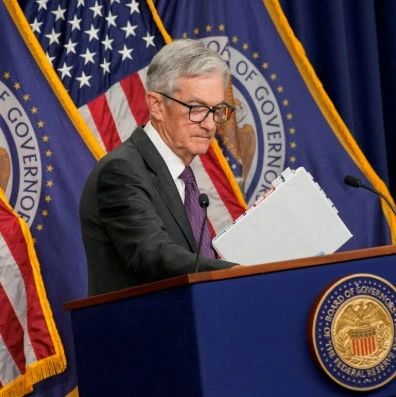
Core Viewpoint - The article discusses the significant internal debate within the Federal Reserve regarding the impact of Trump's tariffs on inflation and the potential for interest rate cuts in the coming months [1][4]. Group 1: Tariff Impact on Inflation - The Federal Reserve is divided on whether the new costs from tariffs justify maintaining high interest rates, with some officials concerned about inflation expectations [1][5]. - Recent changes, including a reduction in some extreme tariff increases and an extended negotiation period with multiple countries, have altered the Fed's outlook on rate cuts [4][5]. - There has been no significant increase in consumer prices related to tariffs yet, although many expect to see price rises in upcoming June and July data [5][6]. Group 2: Federal Reserve's Strategy - The internal division within the Fed presents a critical test regarding the inflationary nature of tariffs and how to manage costs if predictions are incorrect [6]. - Fed Chair Powell's recent comments suggest a tactical flexibility, indicating that potential rate cuts are a continuation of a process paused due to tariff risks [7][8]. - Powell's stance reflects a middle ground, acknowledging the possibility of less severe inflation than previously thought, which may open the door for rate cuts based on labor market conditions or improved inflation data [8][9].

目前市场的一大风险:压根不信特朗普关税
Hua Er Jie Jian Wen· 2025-07-08 08:04
Core Viewpoint - The market appears to be indifferent to Trump's latest tariff threats, reflecting a belief that these threats may not be implemented or will have minimal impact on the economy and corporate profits [1][3]. Group 1: Market Reaction - Trump's announcement to delay tariff negotiations until August 1 and impose 25% tariffs on Japanese and South Korean products, as well as up to 40% on products from 12 other countries, resulted in a modest decline of 0.2% in the S&P 500 index [1]. - The South Korean stock market saw a significant increase, with the Seoul Composite Index rising by 1.5% at one point, indicating a positive market sentiment despite the tariff threats [1]. - Analysts suggest that the market's calm response indicates a belief that the tariffs will not have a substantial effect on economic growth or corporate profits [3]. Group 2: Investor Sentiment - Investors seem to be ignoring the latest tariff announcements, interpreting them as a negotiation tactic rather than a definitive stance on tariff levels [4]. - The market has adapted to the unpredictable nature of tariff policies, with significant structural misalignments observed, as evidenced by the stability of U.S. inflation swap prices despite ongoing tariff threats [4]. - The prevailing sentiment is that the tariff threats are not taken seriously, leading to potential risks if Trump adopts a more aggressive stance unexpectedly [3][4].
多国央行行长同台论道!鲍威尔甩锅特朗普,松口降息?
Sou Hu Cai Jing· 2025-07-02 01:48
Core Viewpoint - The annual central bank meeting in Portugal highlighted the cautious stance of major central bank leaders in response to the economic impact of Trump's policies, with a notable signal from Powell regarding potential interest rate cuts [1][3]. Group 1: Federal Reserve Insights - Powell indicated that without Trump's tariffs, the Fed might have already lowered interest rates, emphasizing that inflation trends are a key consideration in rate decisions [1]. - The Fed's recent "dot plot" suggested two potential rate cuts by the end of 2025, with Powell previously stating the Fed was in a good position to remain observant [2]. - Powell's recent comments suggest a shift from the previously held view of considering rate cuts only in the fall [1]. Group 2: Global Central Bank Perspectives - ECB President Lagarde noted that while the Eurozone's inflation reached the 2% target in June, challenges remain, and geopolitical risks pose dual threats [4]. - The Bank of England's Bailey stated that monetary policy remains restrictive, with signs of a mild slowdown in the UK economy potentially influencing future decisions [6]. - The Bank of Japan's Ueda maintained a wait-and-see approach, indicating no immediate plans to raise borrowing costs [6][7]. - The Bank of Korea's Lee expressed concerns about the impact of tariffs on economic growth rather than inflation, suggesting a careful approach to rate cuts [8]. Group 3: Dollar and Trade Policy - Central bank leaders agreed that the dollar's status as the preferred global reserve currency is unlikely to change in the short term, amidst ongoing trade negotiations by the Trump administration [9]. - Trump announced intentions to implement new tariffs by July 9, emphasizing a strict stance on trade relations with various countries [10].
鲍威尔称特朗普关税推高通胀预期 阻碍美联储降息进程
智通财经网· 2025-07-01 22:28
当被问及市场是否太早期待7月降息时,鲍威尔回应:"我现在无法做出判断,一切取决于数据表 现。"根据芝商所FedWatch工具,交易员预计美联储在7月会议上继续按兵不动的概率超过76%。 鲍威尔强调,美联储将"逐会而定","我不会把任何一次会议排除,也不会承诺某次会议一定会行动, 一切都取决于数据如何演变。" 美联储坚持维持当前利率水平,遭到特朗普和其团队的猛烈抨击。特朗普上周公开批评鲍威尔"糟糕透 顶",甚至称他为"智力平平的人"。 智通财经APP获悉,美联储主席鲍威尔周二在葡萄牙辛特拉举行的欧洲央行论坛上表示,如果不是总统 特朗普今年早些时候推出的加征进口商品关税计划,美联储本应已经放松货币政策。 当被问及若特朗普没有宣布征收更高关税,美联储是否会在今年再次降息时,鲍威尔坦言:"我认为是 的。实际上,当我们看到关税规模时,我们就暂停了行动,几乎所有针对美国的通胀预期都因此明显上 升。" 这一坦率言论正值美联储在强烈的白宫压力下维持观望姿态,尽管美国经济放缓迹象渐显。上月,美联 储再次维持联邦基金利率在4.25%至4.5%区间不变,自去年12月以来一直未有变动。 根据最新的"点阵图"显示,美联储联邦公开市场委 ...
半年过去了,华尔街的“脸都被打肿了”
Hua Er Jie Jian Wen· 2025-06-30 04:26
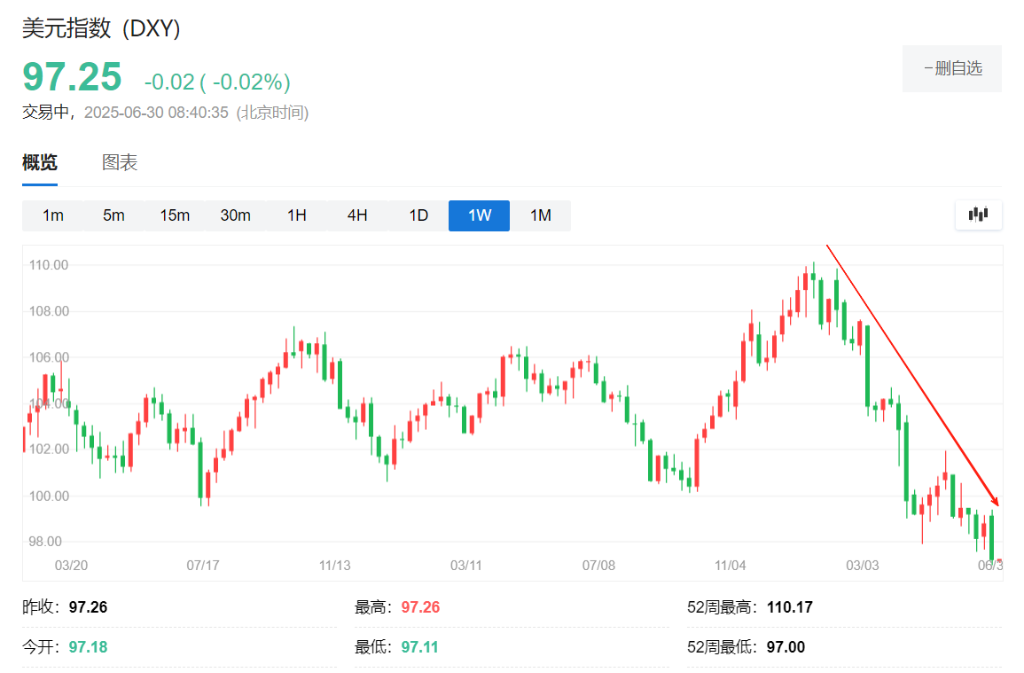
Group 1 - The core viewpoint of the articles highlights the significant shift in market dynamics due to Trump's tariff policies and geopolitical conflicts, which have disrupted initial predictions for the year, leading to poor performance of previously favored assets like the US dollar and US stocks, while European markets and emerging markets have emerged as unexpected winners [1][2][13] Group 2 - The US dollar has experienced its worst start to the year since 2005, contrary to expectations that Trump's policies would strengthen it due to anticipated inflation and reduced likelihood of Federal Reserve rate cuts [2][5] - The S&P 500 index saw a dramatic decline followed by a rapid recovery, with investor sentiment shifting significantly after Trump's decision to pause some tariffs, leading to a new historical high for the index [6][13] Group 3 - European stocks have outperformed US stocks, with the Stoxx 600 index beating the S&P 500 by 16 percentage points as of June 27, marking the best relative performance since 2016 [13] - Emerging markets have finally broken a trend of underperformance against US stocks, with a wealth increase of $1.8 trillion for shareholders in 2025, reaching a record market capitalization of $29 trillion [14] Group 4 - The Japanese yen has rebounded significantly against the dollar, with a nearly 9% decline in the dollar/yen exchange rate, reflecting a shift in market sentiment and demand for safe-haven assets [8][11] - Global bond markets are experiencing increased differentiation, with short-term government bonds performing well due to anticipated rate cuts, while long-term bonds face pressure from rising government debt [12]
中信期货2025年中策略会圆满收官
Qi Huo Ri Bao Wang· 2025-06-26 02:21
Group 1: Conference Overview - The CITIC Futures 2025 Mid-Year Strategy Conference was held on June 25, 2025, in Shanghai, focusing on the theme "Riding the Wind and Breaking the Waves" [1] - The conference featured one main forum and ten sub-forums, covering macroeconomics, equity, bonds, commodities, exchange rates, asset management, OTC derivatives, and overseas markets [1] Group 2: Keynote Speeches - CITIC Futures Chairman Dou Changhong emphasized the company's commitment to high-quality industrial services and the globalization of futures business [2] - Fudan University Professor Shen Guobing discussed the impact of Trump's tariff policies on Sino-U.S. trade, highlighting the challenges of trade fragmentation, geopolitical conflicts, and climate crises [3] - Yang Delong, Chief Economist at Qianhai Kaiyuan Fund, noted that U.S. stocks are in a high valuation phase, while A-shares and Hong Kong stocks are attracting significant foreign investment [4] Group 3: Market Outlooks - CITIC Futures Vice President Zeng Ning provided an outlook on the macro and commodity markets, indicating that the real estate sector will continue to drag down commodity demand for 1-2 years [5] - The Financial Forum discussed the shift from tariff-driven to dollar-driven macro themes, with a focus on structural allocation in A-shares [6] - The Nonferrous Forum highlighted the influence of U.S. trade policies on the market, with basic metals expected to remain strong despite macro uncertainties [8] Group 4: Sector-Specific Insights - The Agricultural Forum indicated that many agricultural products are facing price declines due to high supply, with potential supply contractions in the future [9] - The Black Forum discussed the cyclical downturn in construction steel demand, while the coal and coke markets face long-term pressure [10] - The Energy Transition Forum addressed the oversupply pressures in both traditional and new energy sectors, with coal and natural gas markets expected to face challenges [11][12] Group 5: Investment Strategies - The Asset Management Forum explored the innovative use of derivatives in wealth management, emphasizing the importance of risk management tools [15] - The Chemical Forum discussed the relationship between refined oil and chemical products, with a focus on market dynamics and potential investment opportunities [14] Group 6: Conclusion - The conference successfully provided a platform for sharing insights and strategies, reinforcing CITIC Futures' commitment to compliance, integrity, professionalism, and responsibility in the industry [16]
美国一季度外资流入大幅下降
news flash· 2025-06-25 01:41
智通财经6月25日电,美国商务部周二发布报告显示,第一季度流入美国的外国直接投资从2024年第四 季度的799亿美元大幅下降至528亿美元。经济学家警告称,特朗普关税政策带来的极端不确定性可能会 使企业的投资决策陷入瘫痪,并拖累经济增长。特朗普曾辩称,他的关税政策会促使企业掀起投资热 潮。 美国一季度外资流入大幅下降 ...
中信期货年中策略会:全球经贸格局面临深刻变革
Guo Ji Jin Rong Bao· 2025-06-24 16:14
6月24日,中信期货2025年中策略会在上海浦东召开。本次策略会以"御风破浪,笃行致远"为主 题,会期两天,共设置1个主论坛及10个分论坛,以多元化视角对下半年宏观、权益、债券、大宗商 品、汇率、资产管理、场外衍生品、海外市场等内容进行深入思考和展望。策略会期间,来自产业、金 融以及其他行业的投资者共聚现场,共享本次投资交流的盛宴。 "今年上半年,全球经贸格局面临深刻变革,在全球价值链深度重构与地缘政治博弈叠加的变局周 期,寻求稳定发展十分重要。"中信期货董事长窦长宏在主论坛上致辞表示,在国际贸易环境波动与海 外政策不确定性背景下,中国经济以战略定力锚定高质量发展。在政策组合拳支撑下,出口彰显韧性, 内需提振政策逐步落地,资本市场与房地产支持政策频繁出台,全面支持中国经济基本面的稳中向好。 复旦大学世界经济研究所副所长、经济学院教授沈国兵在主论坛上发表了关于《特朗普关税政策对 中美经贸影响及应对》的主题演讲。他认为,中美当前面临的世界经济新形势复杂多变,充满着不确定 性。全球经济面临"贸易碎片化、地缘冲突、气候危机"三重挑战,而多边合作与包容性增长是避免全 球"失序分化"的关键。 沈国兵在会上指出,从海外来看 ...