第四次工业革命

Search documents
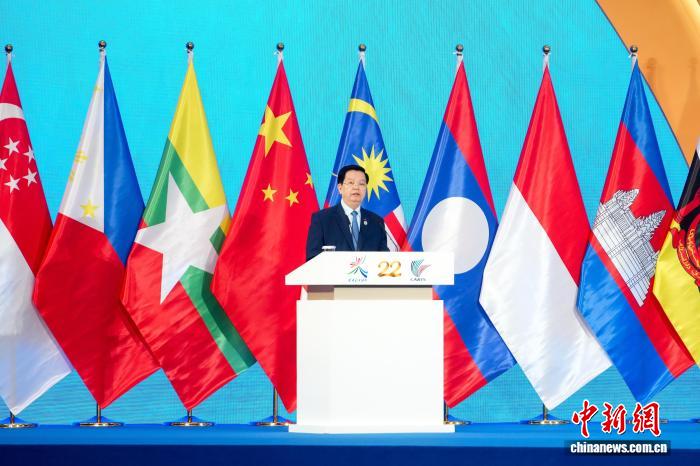
越南副总理:加强东盟与中国铁路公路互联互通
Zhong Guo Xin Wen Wang· 2025-09-17 07:26
Core Points - The Vice Premier of Vietnam, Pham Minh Chinh, emphasized the importance of enhancing connectivity between ASEAN and China through railway and road infrastructure development [1][3] - Vietnam is accelerating the construction of transportation networks with China, Laos, and Cambodia to facilitate better access for ASEAN goods to Central Asia and Europe [1][3] Group 1: Trade and Investment - The political relationship between China and ASEAN has led to significant growth in trade cooperation, with China being a major source of foreign direct investment for many ASEAN countries [3] - Vietnam is currently China's fourth-largest trading partner, with rapid growth in direct investment from China [3] Group 2: Economic Cooperation - The China-ASEAN Expo has played a vital role in promoting economic, trade, and investment cooperation between ASEAN and China over the past 21 years [3] - Approximately 200 booths at the current expo showcase high-quality Vietnamese products, including agricultural products, processed foods, consumer goods, home goods, wooden products, and handicrafts [3] Group 3: Innovation and Future Cooperation - The Vice Premier highlighted the need to expand cooperation into new areas such as digital economy, green economy, and technological innovation, particularly in artificial intelligence [3]

禾赛科技港股上市首日涨近10%,激光雷达企业竞争激烈,Robotaxi或成新战场
3 6 Ke· 2025-09-16 11:11
Core Viewpoint - Hesai Technology (02525.HK) officially listed on the Hong Kong Stock Exchange on September 16, marking the largest IPO in the global LiDAR industry and the largest financing scale for a Chinese concept stock returning to Hong Kong in nearly four years [1][3]. Company Overview - Founded in 2014, Hesai Technology is a global LiDAR research and manufacturing company, with products widely used in advanced driver-assistance systems (ADAS), autonomous vehicles, and various intelligent robotic applications [4]. - The company successfully listed on NASDAQ in February 2023, becoming the first in the global LiDAR industry to achieve dual primary listings in the US and Hong Kong [3]. Financial Performance - Revenue projections for Hesai Technology from 2022 to 2024 are 1.203 billion, 1.877 billion, and 2.077 billion yuan, respectively, with net losses of 301 million, 476 million, and 102 million yuan [4]. - In the first half of 2025, the company reported revenue of 1.232 billion yuan, with a net profit of 26.54 million yuan, marking a significant turnaround [4]. - The second quarter of 2025 saw a revenue increase of 53.9% year-on-year, reaching 706 million yuan, with a net profit of 44.1 million yuan [4]. Market Growth - The global automotive LiDAR market is expected to grow significantly, with a projected market size of 861 million USD in 2024, a 60% increase year-on-year [5]. - In China, the installation of LiDAR is expected to exceed 1.5 million units in 2024, a year-on-year increase of 179.7% [5]. Production and Innovation - Hesai Technology's total LiDAR delivery volume reached 547,913 units in the first half of 2025, a year-on-year increase of 276.2% [5]. - The company plans to achieve an annual production capacity of over 2 million units by 2025, with expected deliveries of 1.2 to 1.5 million units [5]. - The fourth-generation self-developed chip platform is set to be mass-produced within the year, optimizing LiDAR functionality and performance [6][8]. Strategic Partnerships - Hesai Technology has secured production contracts with over 24 global OEMs, including BYD, Xiaomi, and Geely, with plans for deliveries from 2025 to 2027 [6]. - The company has deepened partnerships with leading Robotaxi firms, signing contracts worth over 40 million USD [10]. Competitive Landscape - Hesai Technology holds a 33.0% market share in the domestic LiDAR market, leading but closely followed by Huawei at 30.2% and Suoteng at 27.4% [11]. - The company faces challenges related to customer concentration, with the top five customers accounting for 68.3% of total revenue in Q1 2025 [12].
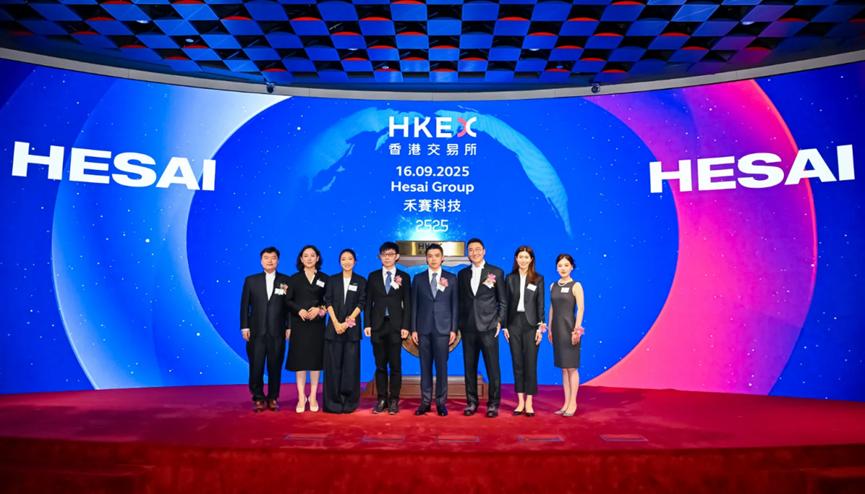
禾赛登陆香港交易所主板 以机器人感知技术领航全球智慧未来
Zhi Tong Cai Jing· 2025-09-16 04:57
Core Viewpoint - Hesai Technology has officially listed on the Hong Kong Stock Exchange, becoming the first lidar company to achieve a dual primary listing in both the US and Hong Kong markets [1][12]. Group 1: IPO Details - The IPO is the largest in the global lidar industry to date and the largest financing scale for a Chinese concept stock returning to Hong Kong in nearly four years, with a total pre-greenshoe financing amount exceeding HKD 41.6 billion (USD 5.33 billion) [7]. - The company received enthusiastic subscriptions from global investors, including top sovereign and long-term funds, showcasing the capital market's strategic consensus on the lidar sector and recognition of Hesai's commercialization capabilities and technological value [7]. - Upon opening, the stock reached HKD 244.0 per share, with a market capitalization exceeding HKD 36 billion [7]. Group 2: Company Achievements - Since its establishment in 2014, Hesai has become a leading lidar research and manufacturing company, achieving the number one global market share in vehicle-mounted lidar, ADAS lidar, and L4 autonomous driving lidar [9]. - The company has maintained a compound annual growth rate (CAGR) of 42.3% in revenue from 2021 to 2024, becoming the first and only publicly listed lidar company to achieve full-year profitability and positive operating and net cash flow [10]. - Hesai's lidar products have become standard safety features in many popular models, with over 120 mass production models from 24 OEMs planned for delivery between 2025 and 2027 [10]. Group 3: Technological Innovations - Since 2017, Hesai has focused on developing lidar-specific chips (ASIC), significantly enhancing performance, quality, and cost-effectiveness, which has provided a competitive advantage in the market [11]. - The fourth-generation self-developed chip integrates all seven key components of lidar, making Hesai the only company in the industry to independently develop all critical components and achieve mass production of both transmission and reception module chips [11]. - The successful launch on the Hong Kong Stock Exchange marks a new milestone for Hesai, emphasizing international capital market recognition of Chinese lidar technology and initiating a new chapter in the company's global strategic layout [11].


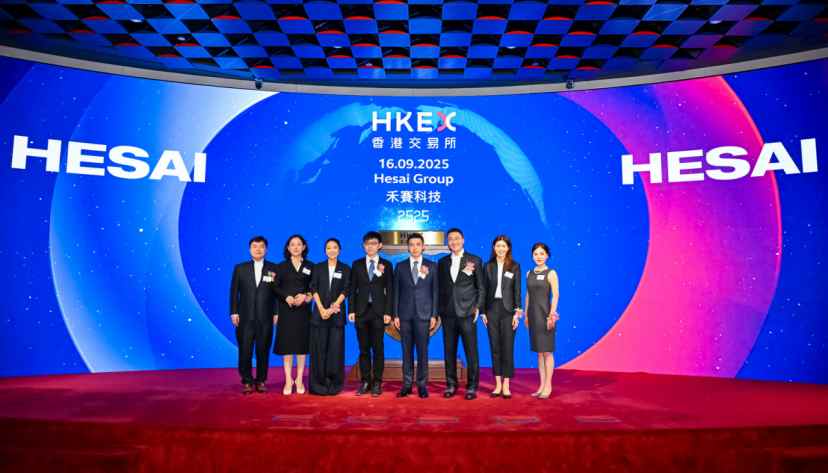
新股消息 | 禾赛(02525)登陆香港交易所主板 以机器人感知技术领航全球智慧未来
智通财经网· 2025-09-16 04:49
Core Viewpoint - Hesai Technology has officially listed on the Hong Kong Stock Exchange on September 16, 2023, becoming the first lidar company to achieve a dual primary listing in both the US and Hong Kong markets [1][12]. Group 1: IPO Details - The IPO is the largest in the global lidar industry to date and the largest financing scale for a Chinese company returning to Hong Kong in nearly four years, with a total financing amount exceeding HKD 41.6 billion (USD 5.33 billion) [7]. - The company received enthusiastic subscriptions from global investors, including top sovereign and long-term funds, showcasing the capital market's strategic consensus on the lidar sector and recognition of Hesai's commercialization capabilities and technological value [7]. - Upon opening, the stock reached HKD 244.0 per share, giving the company a market capitalization exceeding HKD 36 billion [7]. Group 2: Company Achievements - Over the past decade, Hesai has reduced the cost of lidar from USD 100,000 to USD 200, making advanced safety and intelligent technology accessible to the public, with plans to deliver lidar for over 1 million vehicles [9]. - The company has achieved the number one global market share in three categories: vehicle-mounted lidar, ADAS lidar, and L4 autonomous driving lidar, maintaining its leadership in the global market for four consecutive years [9]. - In 2024, the company is projected to achieve revenue of CNY 2.08 billion, with annual delivery volumes doubling for four consecutive years, making it the first and only publicly listed lidar company to achieve full-year profitability and positive operating and net cash flow [10]. Group 3: Market Position and Future Plans - Hesai's lidar has become a standard safety feature for many popular models in the ADAS sector, with over 120 models from 24 major manufacturers set for mass production between 2025 and 2027 [10]. - The company has established itself as the preferred lidar supplier for nine of the top ten Robotaxi companies globally, with significant clients including Motional, Baidu, and Didi [10]. - Since 2017, Hesai has focused on developing lidar-specific chips (ASIC), significantly enhancing performance, quality, and cost-effectiveness, creating a strong technological barrier [11]. - The listing on the Hong Kong Stock Exchange marks a new milestone for Hesai, reflecting international capital market recognition of Chinese lidar technology and initiating a new chapter in the company's global strategic layout [11].
禾赛正式登陆港交所:市值350亿港元,近4年来融资规模最大的中概股回港IPO
IPO早知道· 2025-09-16 04:09
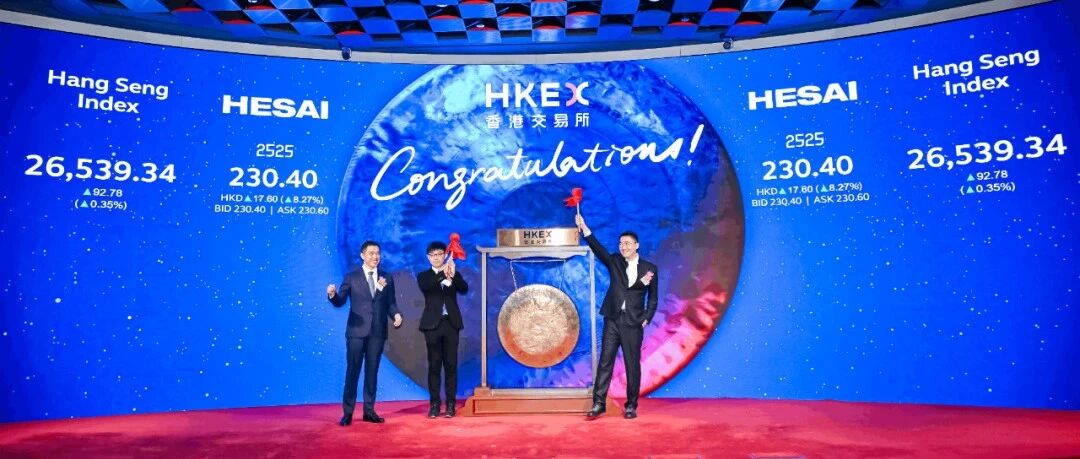
Core Viewpoint - Hesai Group has become the first lidar company to achieve dual primary listings in both the US and Hong Kong, marking a significant milestone in the lidar industry and reflecting strong market confidence in its commercialization capabilities and technological value [2][3]. Group 1: IPO and Market Performance - Hesai Group officially listed on the Hong Kong Stock Exchange on September 16, 2025, under the stock code "2525," raising over HKD 41.6 billion (USD 5.33 billion), making it the largest IPO in the lidar industry to date and the largest Chinese concept stock IPO in Hong Kong in nearly four years [2]. - As of 11:40 AM on the listing day, Hesai's stock price reached HKD 232.4, a 9.21% increase from the issue price, with a market capitalization exceeding HKD 35 billion [3]. Group 2: Business Achievements and Market Position - Founded in 2014, Hesai has become a global leader in lidar research and manufacturing, with its products widely used in advanced driver-assistance systems (ADAS), autonomous vehicles, and various types of intelligent robots [3][4]. - Hesai holds three global market leadership positions: the largest market share in vehicle lidar, the largest market share in ADAS lidar, and the largest market share in L4 autonomous driving lidar [4]. - In 2024, Hesai achieved a revenue of CNY 2.08 billion, with a compound annual growth rate (CAGR) of 42.3% from 2021 to 2024, and has been the only publicly listed lidar company to achieve profitability for four consecutive years [4]. Group 3: Technological Innovations and Future Outlook - Hesai's co-founder and chief scientist, Dr. Sun Kai, highlighted the company's achievement of reducing the cost of lidar from USD 100,000 to USD 200, making advanced safety and intelligent technologies accessible to the masses [6]. - The company has strategically positioned itself in the rapidly growing robotics market, with significant partnerships and collaborations across various sectors, including autonomous delivery and robotaxi services [7][8]. - Hesai has been proactive in developing proprietary lidar chips since 2017, enhancing performance, quality, and cost-effectiveness, and is the only company in the industry to have independently developed all seven key components of lidar technology [9]. Group 4: Investment and Support - In the IPO, Hesai attracted six cornerstone investors, raising a total of USD 148 million (approximately HKD 11.54 billion), with Hillhouse Capital being the largest cornerstone investor [11]. - Hillhouse Capital has been a long-term supporter of Hesai, participating in multiple funding rounds since 2021, indicating strong investor confidence in the company's growth potential [11][14]. - The founder of Lightspeed China Partners expressed optimism about Hesai's future, emphasizing the importance of early-stage investment in innovative companies and the company's leadership in the global lidar market [13].
李迅雷:之前是港股拉动A股,接下来可能是A股来推动港股
Jin Shi Shu Ju· 2025-09-15 06:01
Economic Outlook - The overall economic performance in China for the first half of the year shows a steady improvement, with GDP growth reaching 5.3% [4][5] - The nominal GDP growth was only 3.9%, indicating ongoing deflationary pressures [5][6] - Consumer spending has shown signs of weakness, particularly in July, despite a 5% growth in the first half of the year [6][7] Stock Market Analysis - A-shares and H-shares are currently undervalued compared to major overseas markets, suggesting significant room for valuation improvement [1][22] - The recent bull market in A-shares is primarily driven by declining interest rates and increased policy focus on stabilizing the stock market [1][6] - The financing balance in the stock market is currently at 2.49% of the circulating market value, which is not excessively high compared to the 4.7% peak in 2015 [20][21] Sector-Specific Insights - The valuation of the STAR Market's Sci-Tech 50 index has surged to a PE ratio of approximately 177, marking a new high since its inception [1][31] - The core drivers of the tech sector's performance are concentrated in the AI computing hardware supply chain [31] Currency and Market Correlation - The H-share market's performance is closely linked to the US dollar index, with a weaker dollar benefiting H-shares [34][40] - There is a potential for A-shares to drive H-shares upward, reversing the previous trend where H-shares led A-shares [41][42] Gold Market Perspective - Gold prices have recently surpassed $3,600 per ounce, with expectations of further increases due to global debt expansion and potential interest rate cuts [43][48] - The logic supporting gold's value remains intact, as global debt levels continue to rise, leading to currency overproduction [48][49]

人口灰犀牛:现状、影响和应对(国金宏观张馨月)
雪涛宏观笔记· 2025-09-13 05:04
Core Viewpoint - The key to maintaining output growth in the face of accelerating population aging is to improve labor productivity through technological advancement, increasing labor participation rates, and expanding overseas operations [2]. Group 1: Global Population Trends - The global population is transitioning through four stages of demographic transformation, with most countries having completed industrialization or being in its middle stages, leading to a decline in the demographic dividend and an increase in aging and low birth rates [5][10]. - By 2024, the global population aged 65 and older is projected to reach 10.2%, with this figure expected to rise to 13.1% by 2035, indicating a shift towards moderate aging societies [10]. - The total fertility rate globally has decreased from a peak of 5.32 in the 1960s to 2.25 in 2024, nearing the replacement level of 2.1, with developed economies facing significant challenges related to low birth rates [11]. Group 2: China's Population Challenges - China is entering a phase of accelerated aging, with the proportion of the population aged 65 and older expected to reach 15.6% by 2024, transitioning to a moderately aged society [16]. - The total fertility rate in China has fallen below the replacement level since 1991, reaching 1.0 in 2023, necessitating comprehensive policies to support childbearing and reduce the burden of child-rearing [18]. - The phenomenon of "aging before becoming rich" poses challenges for total demand and the social security system, as the elderly population's consumption capacity may be weaker than that of developed economies [20]. Group 3: Macroeconomic Impacts of Population Structure Changes - The aging population is expected to exert downward pressure on potential growth rates due to a shrinking labor force, with China's labor force participation rate declining from a peak of 74.5% in 2010 to 68.3% by 2024 [31][34]. - The aging process can lead to a negative output gap, as seen in Japan, where actual economic growth has consistently lagged behind potential growth due to demographic shifts [36]. - Population aging is associated with a shift in consumption patterns, increasing demand for services such as healthcare and elder care, which may enhance service consumption's share of total consumption [39]. Group 4: Strategies to Address Aging Challenges - Improving labor productivity is crucial to counter the negative impacts of an aging population, with technology playing a key role in enhancing productivity through automation and innovation [46][51]. - Increasing labor participation rates, particularly among women, and extending working hours can help mitigate the labor supply challenges posed by an aging population [57]. - Expanding overseas operations and attracting foreign labor can serve as effective strategies to address domestic labor shortages and enhance productivity [59][60].

【金麒麟优秀投顾访谈】中金财富白江波:模拟盘两大策略——核心仓+卫星仓策略、超短线+中线策略
Xin Lang Zheng Quan· 2025-09-11 03:19
Group 1: Investment Advisory Industry Overview - The second "Golden Unicorn Best Investment Advisor Selection" event is being held, highlighting the growth of China's wealth management industry as residents' financial awareness increases [1] - Investment advisors play a crucial role in wealth management, impacting asset allocation trends among the public [1] - The event aims to provide a platform for investment advisors to showcase their capabilities and enhance communication with investors, promoting healthy development in the wealth management sector [1] Group 2: Performance of Investment Advisor - Bai Jiangbo from Zhongjin Wealth Securities achieved the 10th position in the August stock simulation portfolio ranking, with a total return rate exceeding 26% [2] - Bai's trading strategies include a core and satellite strategy, with the core portfolio focusing on macro, industry, and fundamental analysis, while the satellite portfolio emphasizes sentiment, capital, and technical analysis [2] - Bai views the current market as a structural bull market rather than a comprehensive bull market, noting significant inflows of external capital since last year [2] Group 3: Future Investment Opportunities - Promising sectors include artificial intelligence, which is seen as a key area for growth, particularly in AI hardware and robotics applications [3] - Other sectors of interest include solid-state batteries, innovative pharmaceuticals, cyclical stocks, and anti-involution themes [4] Group 4: Enhancing Advisory Services - Bai plans to strengthen advisory services by enhancing brand IP, improving professional capabilities, and utilizing AI tools for research efficiency [4] - The stock 50 advisory service launched by Zhongjin Wealth has generated over 100 million yuan in revenue this year, indicating significant growth potential [4]

逐梦非洲 点亮未来——第十届非洲职业技能挑战赛圆满收官
Zhong Guo Min Hang Wang· 2025-09-03 09:00
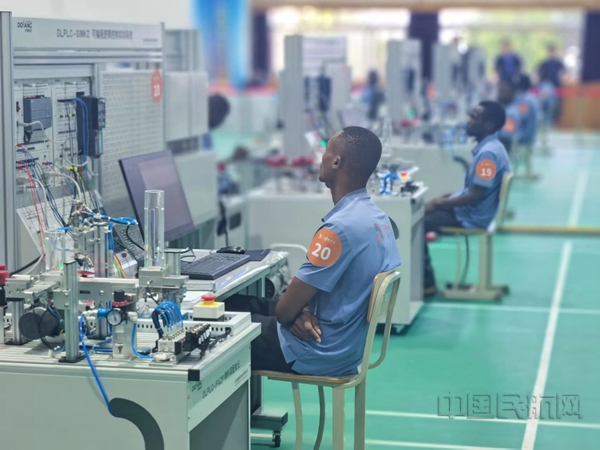
Group 1 - The 10th Africa Tech Challenge (ATC) concluded successfully in Kenya, co-hosted by China Aviation Industry Corporation, the Kenyan Ministry of Education, and the China Education International Exchange Association [1] - The ATC project has benefited 14 African countries and has established a comprehensive talent training model that integrates training, competition, and further education [2][3] - The event attracted 142 teams and 568 participants from 12 African countries, showcasing the confidence and capabilities of African youth in the face of the Fourth Industrial Revolution [3] Group 2 - China Aviation Industry Corporation has upgraded 144 vocational schools in Kenya and has trained over 20,000 teachers and students annually, contributing to the improvement of vocational education in Africa [2] - The awards ceremony recognized winners in CNC turning, mechanical CAD, and mobile application development, with champions receiving training opportunities in China for the World Skills Competition [3] - The release of the "ATC 10th Anniversary Report" highlighted the achievements and experiences of the ATC project in vocational education cooperation and talent development between China and Africa [4]

AI并不会重蹈互联网泡沫的覆辙,但风险依然值得警惕
虎嗅APP· 2025-08-26 13:44
Core Viewpoint - The AI industry is experiencing a significant transformation, with capital increasingly concentrating on leading players. The global AI financing is expected to exceed $100 billion in 2024, with 69% of investments being over $100 million, indicating a pronounced head effect in the market [3][10]. Group 1: Investment Opportunities and Market Dynamics - The valuation of companies like Nvidia reflects high expectations for the future of AI, with price-to-earnings ratios reaching 40-50 times, similar to Apple [5]. - The AI sector is characterized by a clear distinction between foundational models and application layers. While foundational models require substantial resources and are dominated by large players, application layers present opportunities for smaller companies to innovate and create value [12][10]. - The potential for AI applications spans various sectors, with significant opportunities in areas that can leverage data to enhance efficiency and create value [12][10]. Group 2: AI as a Revolutionary Force - AI is viewed as the core of the Fourth Industrial Revolution due to its ability to replicate human decision-making and significantly enhance productivity across various sectors [9]. - The efficiency gains from AI applications can drastically reduce costs and time in processes such as drug development, which traditionally took years and millions of dollars [9]. - The rapid adoption of AI technologies is expected to outpace previous technological revolutions, with applications emerging quickly across different industries [15]. Group 3: Market Trends and Future Outlook - The current investment landscape reflects a "fear of missing out" mentality, leading to inflated valuations and a rush to invest in emerging AI companies [24]. - The AI industry is still in its early stages, akin to the mobile internet phase a decade ago, with foundational technologies in place and a forthcoming explosion in application development [14][15]. - The next wave of significant applications is anticipated to emerge in consumer-facing sectors, particularly in content generation and social platforms [32]. Group 4: Challenges and Considerations - The AI industry may face a bubble, but this is seen as a necessary phase for technological advancement, distinguishing between asset bubbles and technology bubbles [18][19]. - The ability to identify genuine innovation versus mere hype is crucial for investors, focusing on projects that demonstrate a clear application and data-driven business model [21]. - The competitive landscape suggests that while foundational models may dominate, application-layer companies can thrive by creating unique data advantages and addressing specific market needs [28][29].