红利投资

Search documents
从分红而言,为什么买港股红利接近于跨市场“套利”?
Sou Hu Cai Jing· 2025-11-11 03:48
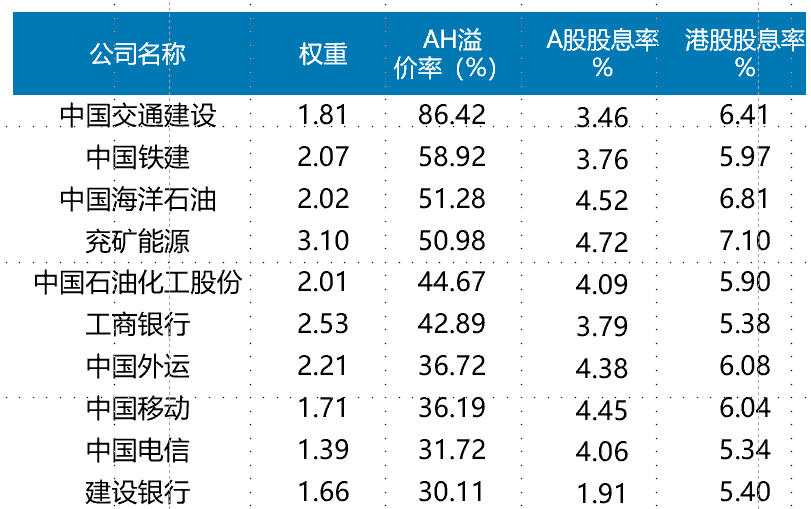
在投资世界里,"套利"是一个大家都很向往但是却非常稀缺的事情。而当我们将目光投向AH两地市场的分红差异上,一个被长期忽视的"套利"机会或许是 存在的。 试想:同一家企业的自由现金流不会因上市地点不同而改变,分红金额更不会因投资者所在地而有所区别。但是当你查看同一公司港股的股息率和A股的股 息率时就会发现,他们的股息率可能有着不小的差别。如果配置了股息率更高的标的,若不考虑汇率波动,则近似于"零成本"获得了更多的分红。以恒生红 利低波(恒生港股通高股息低波动)的成分股为例, 我们可以看到一些典型的上市公司如中国交通建设, 其H股的股息率为6.41%,而A股的为3.46%, 差了足 足2.95%, 它的投资者在港股可以更低的价格获取更多的分红,。 图:恒生港股通高股息低波动指数部分AH成份股股息率情况 | 公司名称 | 权重 | AH溢 | A股股息率 | 港股股息率 | | --- | --- | --- | --- | --- | | | | 价率 (%) | % | 9/0 | | 中国交通建设 : 1.81 : 86.42 : 3.46 : | | | | . 6.41 | | 中国铁建 | 2.07 | ...

红利风向标|“红利信仰”强势回归,长线资金加速涌入
Xin Lang Ji Jin· 2025-11-11 01:15
Group 1 - The latest dividend yield for Hwabao Fund is 4.92% [1] - The performance of the S&P China A-Share Dividend Opportunity Index shows a 1-week increase of 1.08%, 1-month increase of 3.29%, and a 1-year increase of 13.20% [1] - The annualized volatility for the index is reported at 11.74% [1] Group 2 - The S&P Hong Kong Stock Connect Low Volatility Dividend Index has a 1-week increase of 12.69%, 1-month increase of 1.01%, and a 1-year increase of 28.73% [2] - The annualized volatility for this index is 3.09% [2] - The A500 Low Volatility Dividend ETF shows a 1-week increase of 0.65%, 1-month increase of 2.23%, and a 1-year increase of 7.62% [2] Group 3 - The CSI 800 Low Volatility Dividend Index has a 1-week increase of 0.63%, 1-month increase of 1.48%, and a 1-year increase of 4.95% [2] - The annualized volatility for this index is 9.88% [2] - The MACD golden cross signal indicates a positive trend for certain stocks [4]

金融破段子 | 在“收租”讨论中直击红利投资的本质
中泰证券资管· 2025-11-10 11:30
Core Viewpoint - The article discusses the potential investment opportunity in a specific type of small apartment in Shanghai, emphasizing the importance of rental yield over short-term price fluctuations [2][4]. Group 1: Investment Opportunity - A small apartment built in the 1980s is being sold urgently for around 1.2 million, with an area of nearly 30 square meters, located in a mature area within walking distance to a subway station [2]. - The rental income for similar properties, despite a decline in property prices, remains over 40,000 annually, resulting in a rental yield of approximately 3.5% [2]. - The author notes that while there is a possibility of further price declines, the significant drop from previous highs and the property's desirable location suggest limited downside risk [2]. Group 2: Understanding Dividend Investment - The article contrasts two investment perspectives: capital gains from price appreciation and dividend investment focused on stable rental income [4]. - Dividend investment is characterized by acquiring high-dividend stocks at reasonable prices and holding them long-term to benefit from dividends and reinvestment [4][7]. - The article highlights that dividend investment has gained attention from investors due to its relative resilience during market downturns, although it should not be viewed merely as a defensive strategy [4][7]. Group 3: Performance Metrics - The CSI Dividend Total Return Index has shown a total return of 111.12% over the past decade, with an annualized return of 7.99% [5]. - The compounding effect of high dividends becomes more pronounced over time, providing substantial long-term returns for investors [5]. Group 4: Characteristics of Dividend Assets - Successful dividend investments require companies to have strong profitability, a willingness to distribute dividends, and good corporate governance [7]. - The article emphasizes the importance of thorough research and monitoring to identify quality dividend assets, especially during market corrections when attractive prices may emerge [7].

红利风向标 | 震荡方知红利香! “长红”的红利又红了
Xin Lang Ji Jin· 2025-11-10 01:00
Core Insights - The article discusses various dividend-focused ETFs and their performance metrics, highlighting their respective dividend yields and index tracking capabilities [1][2][3]. Group 1: Dividend ETFs Performance - The latest dividend yield for the S&P Dividend ETF is reported at 4.92% [1]. - The Shanghai Composite Index shows a year-to-date performance of 15.18% [1]. - The Hong Kong Stock Connect Dividend ETF has a recent dividend yield of 5.54% [1]. Group 2: Index Tracking and Volatility - The S&P Hong Kong Stock Connect Low Volatility Dividend Index has a one-year return of 25.70% with an annualized volatility of 7.20% [2]. - The CSI 500 Low Volatility Dividend ETF has a one-year return of 6.39% and an annualized volatility of 9.86% [2]. - The CSI 800 Low Volatility Dividend ETF shows a one-year return of 6.09% with an annualized volatility of 3.07% [2]. Group 3: Cash Flow ETFs - The Cash Flow ETF tracking the CSI 300 Free Cash Flow Index has a recent yield of 4.17% [3]. - The index has shown a one-month performance of 5.70% [3]. - The Shanghai Composite Index has a comparative performance of -0.25% over the same period [3].

巴菲特:做投资的关键不是聪明,而是敢出手
聪明投资者· 2025-11-09 02:07
Group 1 - The article emphasizes the importance of stable investment products, particularly in the current market environment where investors are more sensitive to drawdowns and risk management [2][3] - It highlights the collaboration between Smart Investors and Guotai Fund in the "Midnight Diner" series, which has been ongoing for four years, reflecting a commitment to providing reliable investment insights [2] - The article suggests that despite the volatility in technology and energy sectors, a stable investment remains a crucial anchor for investors, often underestimated in its strength [3] Group 2 - The article mentions key insights from the APS 30th anniversary forum, including discussions on the rare earth market, institutional resilience, and the reassessment of the China-US landscape [4] - It features an exclusive interview with Zhang Yidong, who advocates for a patient long-term investment strategy, suggesting that the upcoming AI market will likely lead growth in large-cap stocks, with both emerging and traditional sectors expected to perform well next year [4] - Liu Yuhui's recent commentary indicates that the sentiment in the A-share market is unlikely to be aggressive as it approaches the year-end, with a focus on four key sectors and gold as a preferred stable investment asset [4]

红利ETF:穿越“十五五”周期的压舱石
Sou Hu Cai Jing· 2025-11-05 09:16
Core Viewpoint - The article emphasizes the growing importance of dividend investment strategies in the current economic environment characterized by low interest rates and a focus on high-quality development, positioning dividend assets as a stable choice for investors seeking reliable returns [1][2]. Economic Environment - The continuous decline in interest rates, with the ten-year government bond yield dropping to 1.76% and bank deposit rates falling below 1%, has diminished the appeal of traditional fixed-income products [2]. - The significant yield difference between government bonds and dividend indices, with the latter offering 6-8% dividend yields, is attracting low-risk capital towards dividend assets [2]. Policy Influence - The "14th Five-Year Plan" encourages the introduction of "patient capital," primarily from insurance funds, which favor dividend assets due to their stable cash flow characteristics [3]. - Regulatory policies, such as the "National Nine Articles," are pushing listed companies to increase dividend payouts, with state-owned enterprises' dividends exceeding 370 billion yuan, enhancing the long-term investment value of dividend assets [3]. Types of Dividend ETFs - The article categorizes various types of dividend ETFs, including the classic CSI Dividend ETF, which focuses on high-dividend stocks primarily in traditional sectors like banking and coal, maintaining a stable dividend yield around 6% [4]. - The low-volatility dividend ETF combines high dividend yields with low volatility, appealing to risk-sensitive investors [4]. - The dividend quality ETF emphasizes sustainable profitability and growth, featuring high-quality companies and sectors like consumer goods and pharmaceuticals, albeit with lower dividend yields [5]. Investment Strategy - Dividend ETFs are positioned as defensive assets rather than aggressive growth investments, suitable for turbulent or declining markets but potentially underperforming in bull markets [6]. - Long-term investors are encouraged to reinvest dividends to accumulate more shares, enhancing wealth through compound growth [6]. - The article advises on the importance of timing and valuation awareness, noting that current valuations for dividend indices are high, suggesting caution for new investors [7]. Conclusion - The article underscores the necessity of patience and strategic planning in investing in dividend ETFs, recommending a long-term holding approach and the use of systematic investment strategies to manage market fluctuations [8][9].

风格平衡进行时,关注红利ETF易方达(515180)、恒生红利低波ETF(159545)等产品投资价值
Mei Ri Jing Ji Xin Wen· 2025-11-05 05:21
Group 1 - The market opened lower but rebounded, with coal, banking, and shipping sectors leading the gains. As of 11:25, the CSI Dividend Index rose by 0.5%, with Semir Garment increasing nearly 6% and Dalian Commodity Exchange rising over 3% [1] - Analysts suggest that the recent change in market style is due to a mean reversion after extreme growth trading, with the divergence between growth and value nearing historical 99th percentile at the end of September [1] - The market's previous overbought sentiment has transitioned into a phase of emotional digestion, leading to a shift towards defensive investments as the market enters a period of volatility [1] Group 2 - Nearing year-end, institutions are shifting towards stable value investments to ensure steady returns [1] - The E Fund Dividend ETF (515180) tracks the CSI Dividend Index, which consists of 100 stocks with high cash dividend yields and stable dividends, reflecting the overall performance of high-dividend A-share listed companies [1] - The banking, coal, and transportation sectors account for approximately 55% of the index, with the banking sector having a significant weight; the current index dividend yield stands at 4.2% [1]
A股一场跨越十三年的“龟兔赛跑” ——红利的“慢”与成长的“快”之间,藏着多数人忽略的长期真相
2 1 Shi Ji Jing Ji Bao Dao· 2025-11-04 14:04
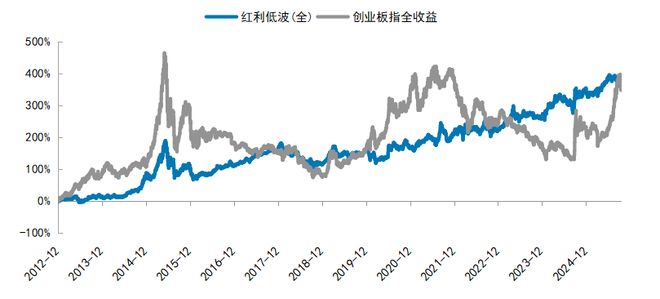
Core Insights - The article discusses the long-term performance comparison between dividend low-volatility indices and growth indices in the A-share market, highlighting their convergence in returns by September 2025 [1][4]. Group 1: Dividend Low-Volatility Indices - Dividend investments are often perceived as stagnant and associated with traditional sectors like coal, electricity, and transportation, leading to their neglect in favor of growth stocks [4][5]. - The characteristics of dividend indices include a systematic value screening mechanism that emphasizes sustainable dividend payments and valuation safety margins, which is rare in the A-share market [5][11]. - The compounding effect of reinvested dividends creates a significant long-term return, positioning time as an ally for investors [5][12]. Group 2: Growth Investments - Growth investments are characterized by high volatility and frequent narrative shifts, making them challenging to manage, with the potential for significant losses during market corrections [8][9]. - The allure of growth stocks often leads to emotional decision-making, causing investors to exit positions prematurely during downturns [9][10]. - The article emphasizes that while growth investments can uncover opportunities, they also come with high risks and uncertainties, contrasting with the steadiness of dividend strategies [11][13]. Group 3: Investment Philosophy - The article posits that dividend strategies offer a more suitable investment approach for ordinary investors, focusing on discipline, steady returns, and the power of compounding rather than speculative gains [11][12]. - It encourages investors to reflect on their ability to handle market volatility and whether they can maintain composure amidst market fluctuations, suggesting that dividend strategies may be more aligned with their needs [13][14]. - The conclusion draws a distinction between fleeting wealth stories and the enduring value of stable assets, advocating for a long-term investment perspective [14][15].
A股一场跨越十三年的“龟兔赛跑”
Xin Lang Ji Jin· 2025-11-04 13:13
Core Insights - The article discusses the contrasting investment styles of dividend stocks and growth stocks, highlighting how both have reached similar return levels despite their different approaches over the years [1][4]. Group 1: Dividend Stocks - Dividend stocks are often perceived as slow and lacking excitement, associated with traditional industries like coal, electricity, and transportation, which are seen as having peaked growth [4][5]. - The characteristics of dividend indices include a systematic value screening mechanism that emphasizes sustainable dividend payments and valuation safety margins, which is rare in the A-share market [5][11]. - The compounding effect of reinvested dividends creates a significant long-term return, with time favoring investors who adopt this strategy [5][11]. - Dividend assets tend to exhibit stability, avoiding extreme volatility and maintaining a steady growth trajectory, akin to a long, calm stream [5][11]. Group 2: Growth Stocks - Growth investing is characterized by high volatility and frequent narrative shifts, often leading to anxiety among investors as they chase trends in technology and innovation [8][9]. - The high expectations associated with growth stocks come with significant risks, as the competitive landscape can change rapidly, leading to potential losses during market corrections [9][10]. - The article emphasizes that while many investors can achieve quick returns, sustaining long-term growth is much rarer, highlighting the psychological challenges faced during market fluctuations [10][11]. Group 3: Investment Philosophy - The essence of dividend investing lies in its disciplined approach, focusing on steady returns rather than speculative gains, making it suitable for ordinary investors [11][12]. - The article contrasts the pursuit of quick profits with the wisdom of slow, steady investment, suggesting that the latter may be more beneficial for long-term wealth preservation [12]. - Ultimately, the choice between being a "shooting star" or a "steady star" in investing reflects one's ability to handle market volatility and the pursuit of sustainable returns [12].
大盘鏖战4000点?配点红利避避险
Sou Hu Cai Jing· 2025-11-04 06:41
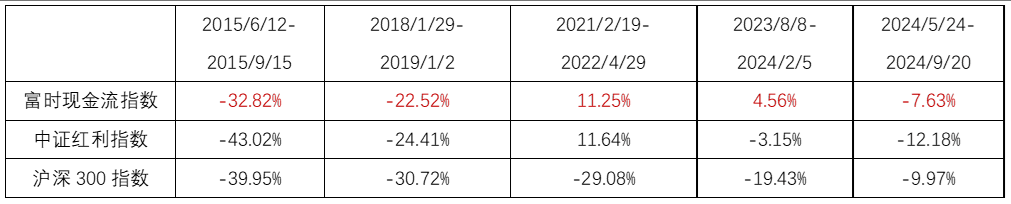
Core Viewpoint - The market is experiencing significant fluctuations after the Shanghai Composite Index broke the 4000-point mark, leading to increased profit-taking and heightened volatility, necessitating a defensive investment strategy [1] Group 1: Market Analysis - The Shanghai Composite Index's breakthrough of 4000 points is significant, marking a ten-year high, but market divergence is increasing, and the sustainability of this breakthrough remains to be tested [1] - The volatility in the market is expected to rise, prompting investors to prepare for a shift from aggressive to defensive strategies [1] Group 2: Investment Strategies - Defensive sectors, particularly dividend-paying stocks, are highlighted as a means to provide stability amidst market fluctuations, complementing the high-growth characteristics of technology stocks [1] - A "barbell strategy" is suggested, combining growth opportunities in technology with the stability of dividend stocks to create a balanced portfolio [1] Group 3: Recommended ETFs - **Dividend State-Owned Enterprise ETF (510720)**: This ETF tracks the Shanghai State-Owned Enterprise Dividend Index, focusing on high-dividend central and state-owned enterprises, with a high dividend yield. It has distributed dividends for 18 consecutive months as of the end of October [1] - **Cash Flow ETF (159399)**: This ETF tracks the FTSE China A-Share Free Cash Flow Focus Index, selecting the top 50 stocks based on cash flow rates. It has shown superior resilience during market downturns, with a significant portion of its holdings in large-cap stocks [2][3] Group 4: Performance Comparison - Historical data indicates that during market downturns, the FTSE Cash Flow Index has outperformed the broader market indices, demonstrating lower declines compared to the CSI 300 Index and the CSI Dividend Index [3] - The Cash Flow ETF has also distributed dividends for 8 consecutive months as of the end of October, enhancing its appeal during periods of market volatility [4] Group 5: Long-term Outlook - The current market environment, influenced by new policies encouraging dividend distributions and declining risk-free rates, enhances the attractiveness of dividend-paying assets for long-term investment [4]