通用人工智能

Search documents
穿越到2050年,世界将变成什么样
Ke Ji Ri Bao· 2026-01-20 03:02
Group 1 - The year 2050 is seen as a significant milestone for transformative changes in technology and space exploration, with global space agencies focusing on this timeline for their missions [2][3] - NASA aims to achieve manned missions to Mars by 2050, while SpaceX plans to launch unmanned missions as early as 2026 to pave the way for human exploration [3] - Challenges related to biological factors, such as space radiation and psychological isolation, are highlighted as significant hurdles for Mars missions [3] Group 2 - Artificial Intelligence (AI) is predicted to play a central role in scientific research by 2050, potentially becoming the main driver of scientific discovery [4] - The concept of General Artificial Intelligence (AGI) is expected to materialize, enabling AI to autonomously design experiments and analyze data [4] - Current advancements in AI-driven laboratories are already demonstrating the potential for automated scientific research without human intervention [4] Group 3 - New technologies are expected to lead to significant scientific breakthroughs, such as the development of ultra-sensitive quantum sensors that could enhance gravitational wave detection [4][5] - Nuclear fusion energy is anticipated to become a reality by 2050, providing clean and limitless energy to households [6] - Emerging technologies like "clay electronics," which can transform into various forms, may revolutionize medical applications, including the creation of artificial organs [6] Group 4 - The discovery of exoplanets is projected to accelerate, with estimates suggesting that by 2050, humans may confirm the existence of one billion exoplanets, some of which may harbor conditions suitable for life [6] - There is speculation that scientists may discover extraterrestrial life by 2050, potentially leading to significant recognition such as a Nobel Prize [6] - The future is shaped by current investments, policies, and ethical decisions, emphasizing the importance of technology serving humanity [7]
MiniMax创始人闫俊杰出席座谈会
Xin Lang Ke Ji· 2026-01-19 12:25
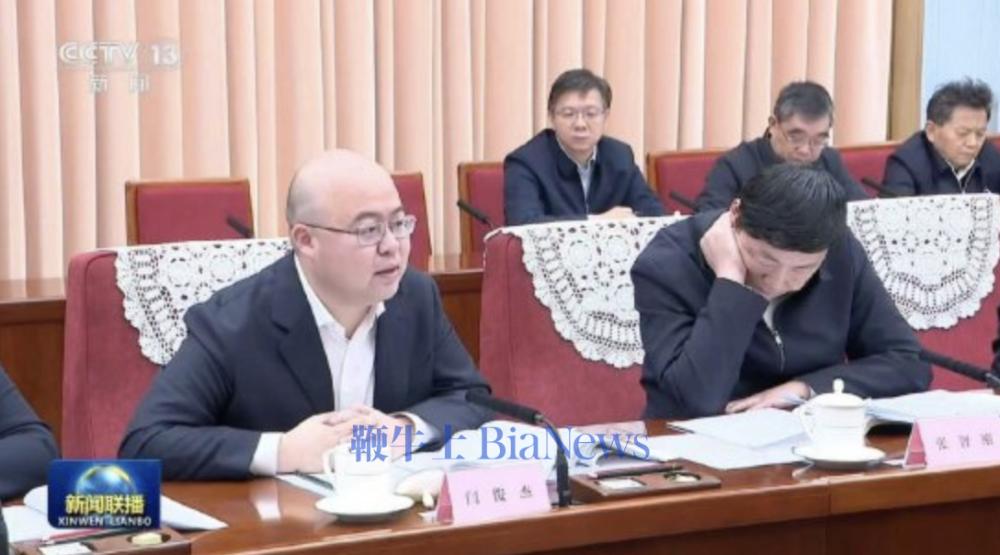
Group 1 - The meeting was chaired by Li Qiang, a member of the Standing Committee of the Political Bureau of the CPC Central Committee and Premier of the State Council, to gather opinions on the government work report and the draft outline of the 14th Five-Year Plan [1] - Yan Junjie, founder and CEO of MiniMax, represented the AI large model enterprises at the meeting, marking the second participation of an AI company following Liang Wenfeng from DeepSeek [3] - MiniMax, founded in 2022, is recognized as a leading global general artificial intelligence technology company, specializing in self-developed multimodal capabilities across text, video, and voice [3] Group 2 - MiniMax achieved a record for the fastest IPO among AI companies, going public within four years of its establishment [3] - The company has over 212 million users across more than 200 countries and regions, with over 70% of its revenue generated from international markets [3]

李强主持召开专家、企业家和教科文卫体等领域代表座谈会,MiniMax创始人闫俊杰出席
Xin Lang Cai Jing· 2026-01-19 11:47
Core Insights - The meeting was chaired by Li Qiang, a member of the Standing Committee of the Political Bureau of the CPC Central Committee and Premier of the State Council, to gather opinions on the government work report and the draft of the 14th Five-Year Plan [2][4] Company Overview - MiniMax, founded in 2022, is recognized as a leading global general artificial intelligence technology company, focusing on self-research across text, video, and voice modalities [5] - The company has achieved the fastest IPO record in the AI sector, going public within four years of its establishment [5] - MiniMax has over 200 million users across more than 200 countries and regions, with over 70% of its revenue generated from international markets [5]
马斯克称推动特斯拉转型为机器人公司,估值将达25万亿美元
Xin Lang Cai Jing· 2026-01-19 10:21
Group 1 - The core viewpoint of the articles highlights Tesla's shift towards robotics, particularly the Optimus humanoid robot, as a new growth avenue amid declining automotive sales and regulatory challenges in driver-assistance software [1][2] - Elon Musk predicts that by 2040, the number of robots will reach "10 billion or more," indicating a significant future reliance on robotics for production and services [2] - Tesla's automotive deliveries for 2025 are projected to be 1.636 million units, reflecting an approximate 8.6% year-over-year decline, marking the first time Tesla's annual electric vehicle sales have been surpassed by Chinese manufacturer BYD [2] Group 2 - Despite ambitious goals, Tesla's target of producing 5,000 units of the Optimus robot by 2025 has not been met, with actual production only reaching several hundred units, and the robots still depend on remote control for operation [3] - Tesla's revenue for Q3 2025 was reported at $28.1 billion, a 12% year-over-year increase, but net profit fell to $1.373 billion, a 37% decline, with an operating margin of only 5.8%, the lowest in five years [3] - Plans are underway for Tesla to expand its Texas Gigafactory to establish a dedicated facility for mass production of the Optimus robot, aiming for an annual production capacity of 10 million units, with mass production expected to start in 2027 [3]


二十而励,向新而行:深商盛典勾勒中国企业未来突围路径
Tai Mei Ti A P P· 2026-01-19 09:03
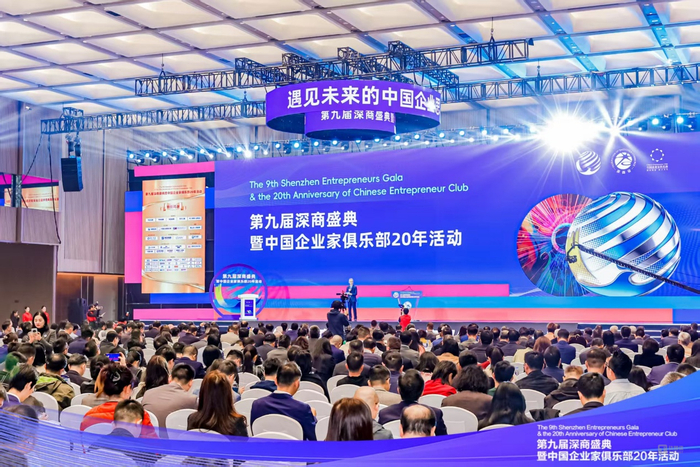
Group 1 - The event highlighted the transformation of Chinese enterprises over the past two decades, evolving from followers in the global supply chain to pioneers in emerging strategic industries [2] - The "going global" strategy of Chinese companies has shifted from mere product exports to a systematic approach involving business models, industrial capabilities, and supply chains [2] - Emphasis was placed on leveraging technological innovation as a driving force for high-quality development and global expansion [2] Group 2 - The era of general artificial intelligence is accelerating, fundamentally reshaping industry forms and business logic, with a projected 1000-fold increase in per capita token consumption in China by the end of 2025 [3] - The Chinese automotive industry is transitioning from electrification to intelligent competition, with breakthroughs in core technologies like autonomous driving being crucial for global leadership [3] - The integration of traditional industries with technological innovation showcases diverse paths for innovation among Chinese enterprises [3] Group 3 - The core value of Luzhou Laojiao lies in its 450-year-old microbial community, which is being enhanced through modern technology, including AI for process innovations [4] - The wealth management market in China is expected to grow significantly, with household assets projected to reach 440 trillion yuan by 2030, indicating a shift in investment strategies [4] - The future development path for Chinese enterprises is clear: leveraging technological breakthroughs for industrial upgrades, focusing on user value and quality management, and fostering a symbiotic relationship between cultural heritage and technological empowerment [4]
圣贝拉集团今日股价涨超12%,携手云迹科技构建AI服务闭环
Sou Hu Cai Jing· 2026-01-19 08:12
Core Viewpoint - The strategic partnership between Saint Bella Group and Cloudwalk Technology aims to integrate artificial intelligence and robotics in the home care sector, marking a significant advancement in the company's AI strategy and enhancing the development momentum of the home care industry [1][10]. Group 1: Strategic Partnership - Saint Bella Group has signed a strategic cooperation framework agreement with Cloudwalk Technology, focusing on high-demand home care scenarios [1]. - This collaboration is expected to create an innovative service ecosystem by deeply integrating AI and robotics technology [1][3]. Group 2: Technological Integration - The partnership will leverage both companies' strengths to build a complete closed-loop ecosystem from data to service [3]. - Saint Bella will provide access to its extensive network of high-end maternity centers and over one million real family care data sets for AI model training [3][8]. - Cloudwalk Technology has developed a general service intelligent agent (HDOS) that can adapt to various service scenarios, enhancing the AI's ability to understand and respond to real-world changes [3][4]. Group 3: Service Ecosystem Development - The initial focus will be on restructuring nearly 120 offline locations under Saint Bella Group, integrating robotics and AI to create a self-optimizing intelligent service ecosystem [4]. - The AI intelligent agent "Dr. Bella" will offer personalized care solutions based on real-time data, enhancing the customer experience in home care [4][6]. Group 4: Competitive Advantage - The collaboration establishes a "smart hub + physical hardware + service network" model, fundamentally reshaping the competitive landscape of the home care industry [5][8]. - Saint Bella's extensive service network and supply chain capabilities ensure high-quality product offerings and stable supply within the ecosystem [8]. Group 5: Future Outlook - The partnership aims to create a smart infrastructure for health management across the entire family lifecycle, with a clear technological roadmap for evolving intelligent services [9]. - The combination of Saint Bella's data assets and Cloudwalk's AI infrastructure is expected to extend intelligent services beyond traditional sectors into family, community, and healthcare domains [9][11]. - This collaboration sets a benchmark for the intelligent transformation of the home care industry, showcasing the potential for technological growth and development [10].

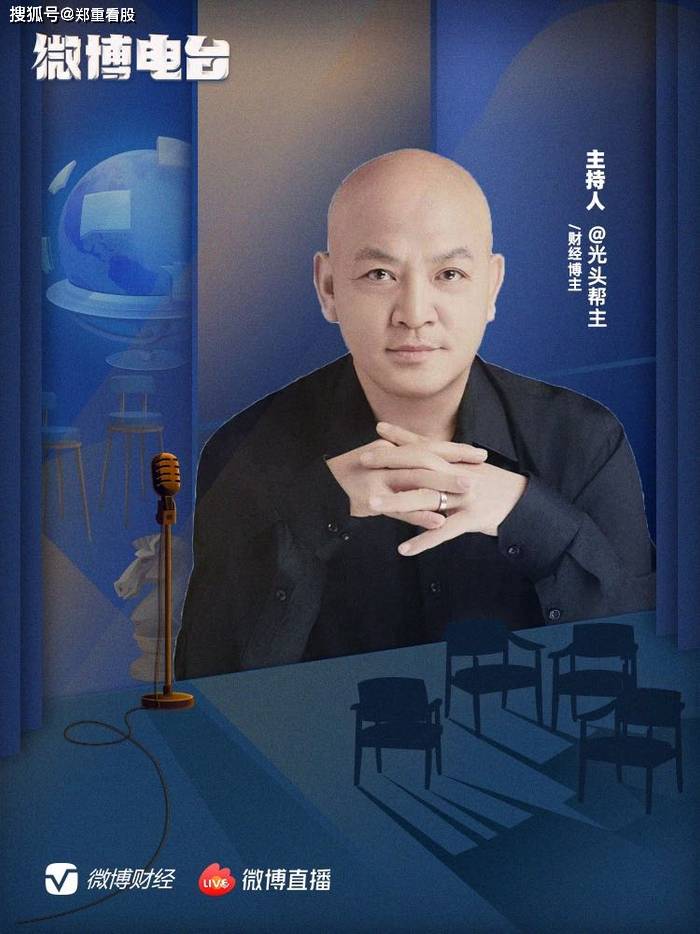
帮主郑重:马斯克豪赌25万亿,特斯拉“忘掉造车”是神话还是陷阱?
Sou Hu Cai Jing· 2026-01-19 08:11
Core Viewpoint - Elon Musk's statement about Tesla potentially being remembered for its robots rather than cars signifies a strategic shift towards robotics, indicating a transformative vision for the company [1]. Group 1: Strategic Shift - Tesla's mission has evolved from "accelerating the world's transition to sustainable energy" to "accelerating the world's transition to sustainable abundance," with a focus on its humanoid robot, Optimus [3]. - Musk predicts that approximately 80% of Tesla's future value will come from Optimus, which is central to his ambitious compensation plan that includes delivering 1 million robots by 2035 and increasing the company's market value to $8.6 trillion [3]. Group 2: Technological Foundation - Tesla's confidence in achieving its ambitious goals stems from a decade of building a robust technological foundation in the smart electric vehicle sector [4]. - The company has accumulated over 45 billion miles of driving data, which supports the development of its AI systems necessary for robotics [4]. - Tesla aims to keep the cost of Optimus between $20,000 to $30,000, significantly lower than competitors, by leveraging its existing supply chain and engineering capabilities [4]. - A clear roadmap is in place, with the third-generation Optimus V3 expected to launch in Q1 2026, aiming for an annual production of 1 million units within five years [4]. Group 3: Challenges and Realities - Tesla faces significant challenges in achieving its production goals, with the initial target of 5,000 units by 2025 already deemed unattainable, as only a few hundred units have been produced for testing [5]. - Technical hurdles remain, particularly in developing a dexterous hand, understanding the environment with AI, and scaling production capabilities [5]. - The financial burden of extensive robot development may strain Tesla's core automotive business, especially as vehicle deliveries decline and profits are pressured [5]. Group 4: Industry and Investment Implications - Tesla's entry into the humanoid robot market is reshaping the industry landscape, accelerating commercialization and attracting significant capital and talent [6]. - If successful, Tesla's mass production of robots could revolutionize the entire supply chain, impacting components like motors and sensors, with related companies already seeing increased attention in the capital markets [6]. - Investors are encouraged to adopt a long-term perspective, focusing on technological milestones rather than immediate profitability [7]. - Caution is advised as Tesla's stock price reflects high expectations, and the transition from producing "hundreds" to "millions" of units presents substantial challenges [8]. Conclusion - Tesla's transformation represents a high-stakes test of its engineering capabilities and a challenge to achieve advanced AI in robotics, with 2026 being a critical year for evaluating progress [9].
追风赶月不停留
Xin Lang Cai Jing· 2026-01-18 18:28
Core Insights - The Anhui Provincial Justice Department held a meeting to review past achievements, assess current status, and plan future actions, emphasizing the need for concrete measures to enhance work effectiveness [1] Group 1: Past Achievements - Anhui ranked first in the number of designated national law-based government construction demonstration areas and projects [1] - The province's legal business environment was rated third nationally in a survey conducted by the All-China Federation of Industry and Commerce [1] - The department developed 100 innovative measures to enhance the law-based business environment [1] Group 2: Current Initiatives - The Justice Department implemented key measures in law enforcement, including 112 on-site case verifications and 120 mediation meetings, successfully resolving 25 cases [1] - The rate of administrative agency heads appearing in court remained at 100%, with over 50% of main leaders participating [1] - The department is promoting a "no proof city" initiative to reduce burdens on citizens and businesses [1] Group 3: Future Plans - The department aims to enhance legislative efforts in key and emerging areas, aligning with national development strategies [1] - The "Commercial Mediation Regulations" will be implemented starting May 1, aimed at standardizing commercial mediation activities [1] - The department plans to leverage artificial intelligence in legal consulting through the 12348 legal service hotline [1]
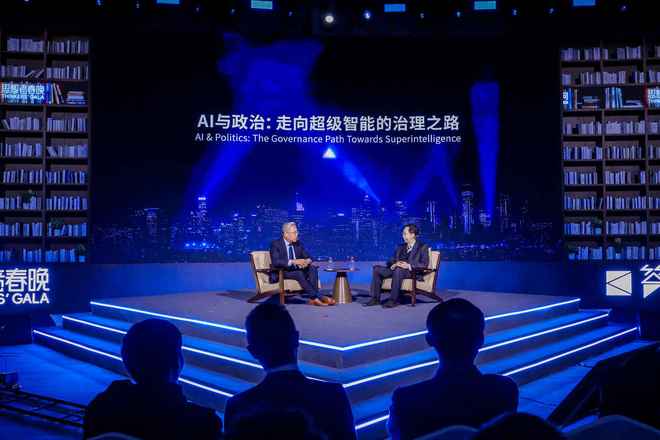
中美AI发展路径,有这些明显的分歧
Guan Cha Zhe Wang· 2026-01-18 00:54
Core Viewpoint - The discussion highlights the divergent paths of AI development between China and the United States, focusing on the underlying ideological and technical differences that may lead to distinct governance and ethical frameworks in AI [1][5][7]. Group 1: AI Development Paths - The emergence of ChatGPT and DeepSeek represents the contrasting AI development trajectories of the US and China, with each country adopting different technological philosophies [3][5]. - The US approach is characterized by "brute force computing," relying heavily on hardware, while China's strategy emphasizes "smart computing," focusing on programming capabilities and efficiency [5][6]. - The historical context of technological competition is referenced, comparing current AI developments to past industrial revolutions, indicating that differing foundational beliefs can lead to divergent technological outcomes [5][6]. Group 2: Scientific and Ethical Discrepancies - There is a significant scientific divergence, with the US adhering to a "material science paradigm" while China is moving towards an "information science paradigm," which may influence the future of AI technologies [6][12]. - Ethical considerations in AI development reveal a divide, with the US leaning towards technological libertarianism, while China emphasizes embedding ethical considerations into technology design [7][12]. - The potential for a "clash of civilizations" is acknowledged, suggesting that deep-rooted cultural differences may shape the future of AI governance and development [12][18]. Group 3: Global Cooperation and Governance - The urgency for global cooperation in AI governance is emphasized, as fragmented standards could lead to inefficiencies and conflicts similar to historical colonial disputes [14][20]. - The need for a unified approach to AI standards and protocols is critical to avoid technological fragmentation and ensure mutual benefits for all nations involved [14][20]. - The discussion suggests that AI should not merely be viewed as a technology but as a complex relationship between technology and humanity, necessitating a collaborative governance framework [18][20]. Group 4: Future Implications - The potential for AI to significantly impact social and economic structures is acknowledged, with differing timelines for the realization of these impacts in the US and China [20][21]. - The emphasis on practical applications in China may lead to more sustainable AI development compared to the US's focus on theoretical advancements [20][21]. - The overarching theme is that technology should serve humanity, with the importance of human agency in guiding AI development being paramount [21].
世界顶尖科学家峰会将在迪拜举行
Ren Min Wang· 2026-01-17 07:23
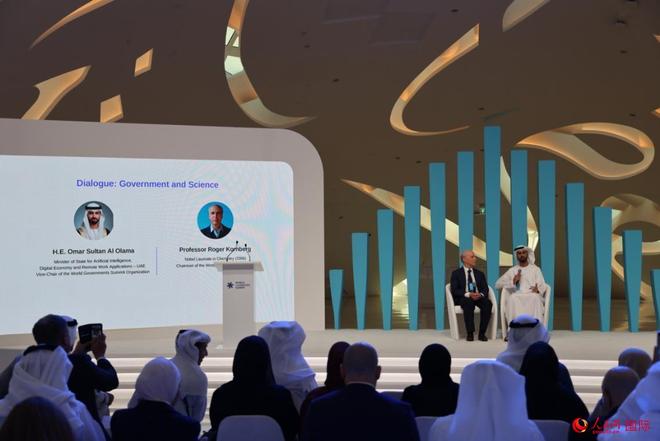
Group 1 - The World Top Scientists Summit will be held from February 1 to 3 in Dubai, featuring 71 leading scientists, including 39 Nobel laureates, 6 Turing Award winners, and 7 Wolf Prize winners, discussing the theme "Basic Science: Addressing Future Challenges for Humanity" [1][3] - The summit will focus on four key topics: the integration of artificial intelligence and basic science, the collaborative evolution of scientific progress and social development, global collaboration pathways for open science, and the future construction of scientific cooperation systems [3] - The 2026 World Government Summit is scheduled for February 3 to 5 in Dubai, with the theme "Shaping Future Governments," and it is expected to be the largest since its inception in 2013, with over 30 foreign heads of state and government leaders in attendance [3]