
关税战

Search documents
下周,特朗普朝天一枪,动荡又要重演?
凤凰网财经· 2025-05-25 13:30
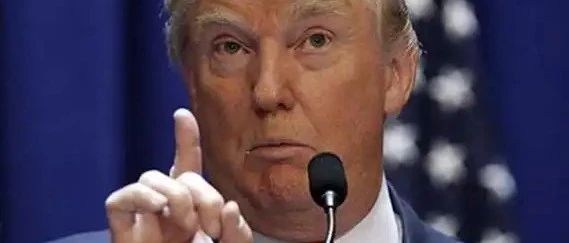
这个周末,特朗普,又有大动作了! 特朗普签署了四项行政命令,旨在扩大核能生产,推动核能行业的发展,相关概念股随即大幅上涨。 与此同时,特朗普强调不会削减万亿美元国防预算,展现出对军事开支的强硬立场。 此外,他提议自2025年6月1日起对欧盟实施50%关税,这一表态导致市场避险情绪升温,美股、欧股双 双下跌。 这些行动不仅可能重塑美国内外政策格局,还将对全球市场产生深远影响。 01 扩大核能 据报道,特朗普周五签署了四项行政命令,以扩大核能生产。 当天,在椭圆形办公室的签署仪式上,特朗普称核能是一个"热门行业",并补充说,"现在是发展核能 的时候了,我们将把它做得非常大。" 特朗普签署的行政命令旨在改革美国能源部的核能研究,为能源部在联邦拥有的土地上建造核反应堆扫 清道路,彻底改革核管理委员会,并扩大美国的铀矿开采和浓缩。 行政令还呼吁美国能源部和国防部门评估重启已关闭的核电站的可行性,并探索在联邦土地和军事基地 选址反应堆。美国核监管委员会发言人Scott Burnell表示,该机构正在评估这些行政命令,并将遵守白 宫的指示。 特朗普推动核能的举措可能促进这一无排放能源的发展,核能被视为煤炭和天然气发电的气候 ...

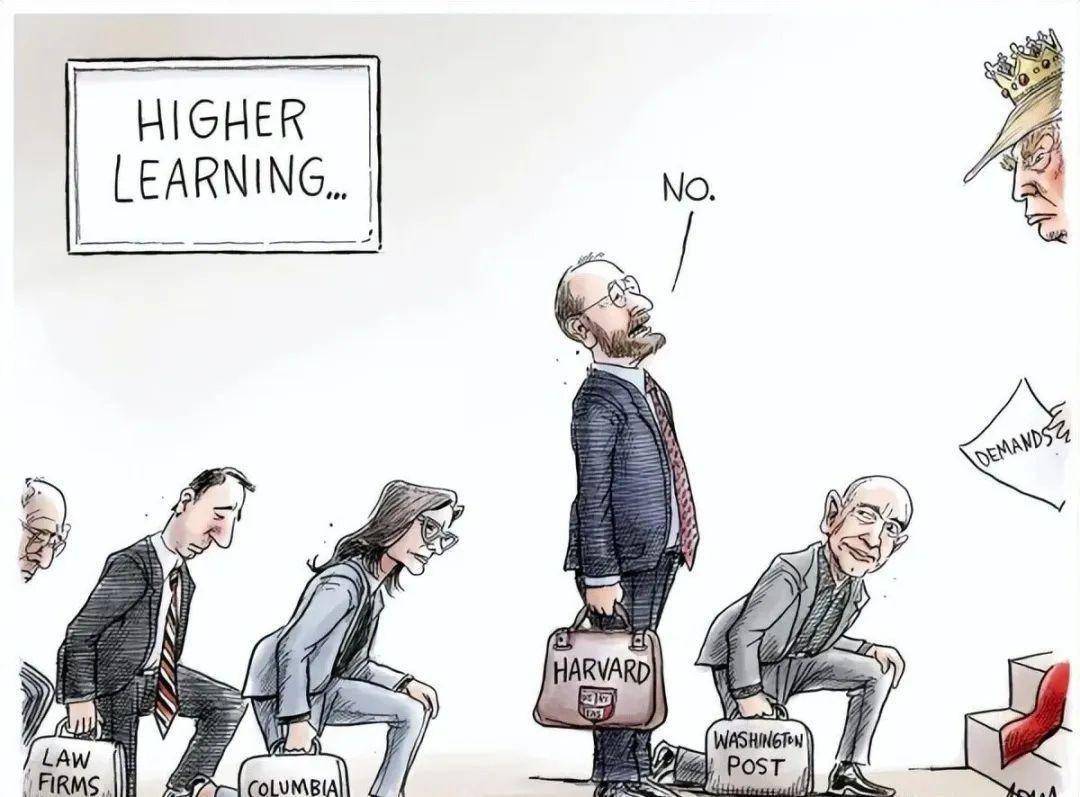
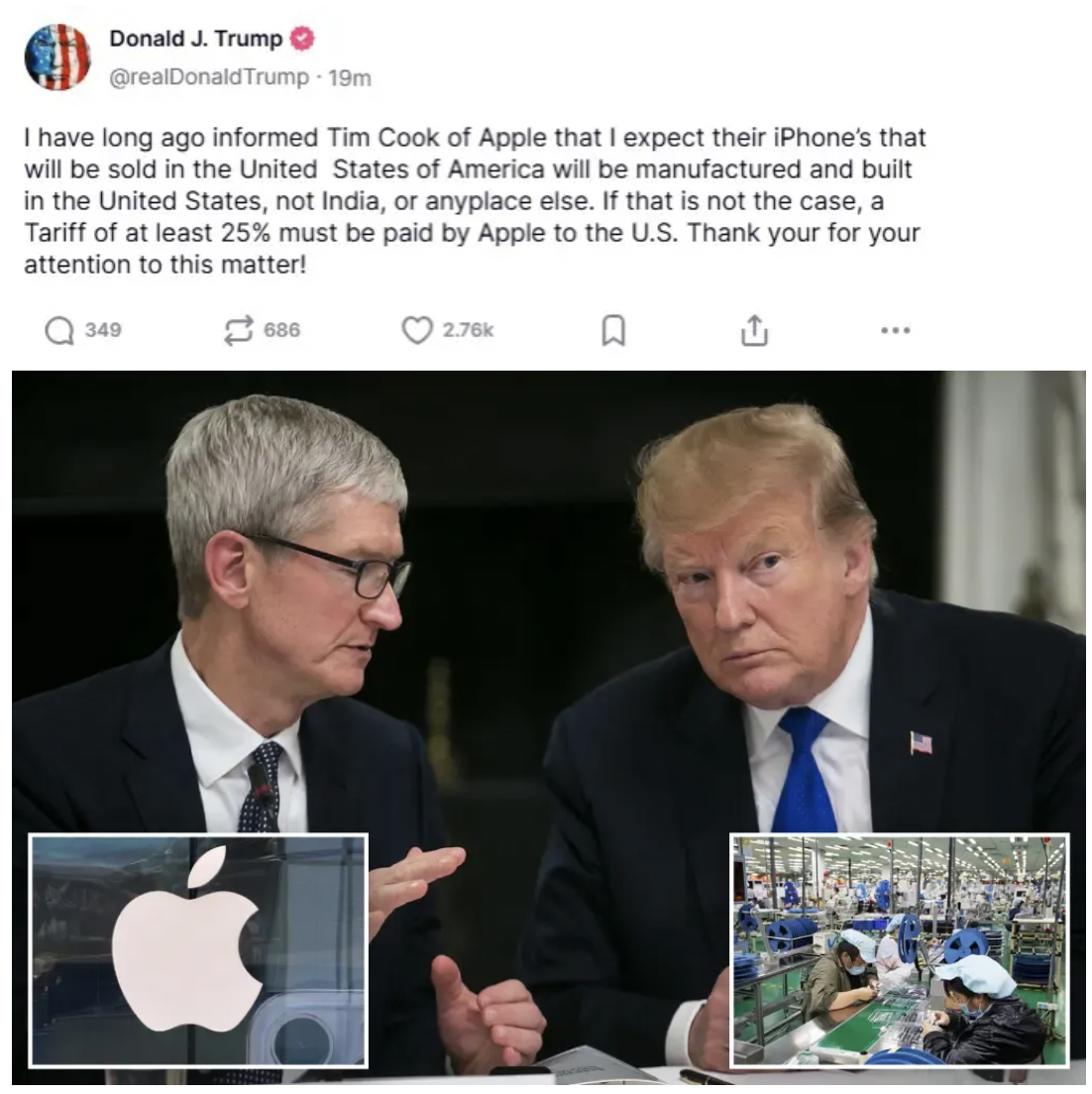
对哈佛下手后,特朗普又拿苹果开刀:必须搬回美国否则加税25%
Sou Hu Cai Jing· 2025-05-25 06:14
Core Viewpoint - The article discusses the recent actions taken by former President Trump against Harvard University and Apple, highlighting the implications of his policies on international students and the tech giant's production strategies. Group 1: Harvard University - Harvard University received a 72-hour ultimatum from the U.S. Department of Homeland Security to expel all international students or risk losing federal funding, citing collaboration with the Chinese Communist Party and fostering violence and anti-Semitism [2]. - Over 6,000 international students are affected, with 43% from STEM fields, leading to a halt in 27 advanced research projects in the U.S. [2]. - Trump's dissatisfaction with universities stems from their non-compliance with his directives, leading to punitive measures against Harvard [4][5]. Group 2: Apple Inc. - Trump has targeted Apple, demanding that the company either produce in the U.S. or face a 25% tariff, which could significantly increase production costs [7]. - If Apple were to relocate production to the U.S., initial estimates suggest an investment of $22 billion, with the cost of each iPhone potentially rising by 300%, making it unaffordable for many consumers [7][10]. - The global supply chain for Apple is heavily reliant on Asian suppliers, with 97% of rare earth materials and 82% of battery components sourced from Asia, complicating any potential shift to U.S. production [8]. - A 25% tariff could lead to the closure of 30% of Apple’s retail stores, resulting in approximately 58,000 job losses [8]. - The production cost of iPhones could increase by over 50% due to tariffs and higher labor costs in the U.S., potentially leading to a profit loss of up to $33 billion for Apple [10]. - The restructuring of Apple's supply chain is fraught with challenges, as 70% of components are deeply integrated into the Chinese supply chain, making a quick transition to U.S. production difficult [12]. - If prices rise, the basic iPhone could increase from $799 to $1,142, with a significant portion of U.S. consumers likely unwilling to pay over $2,000 for a phone, risking a shift to Android devices [13].

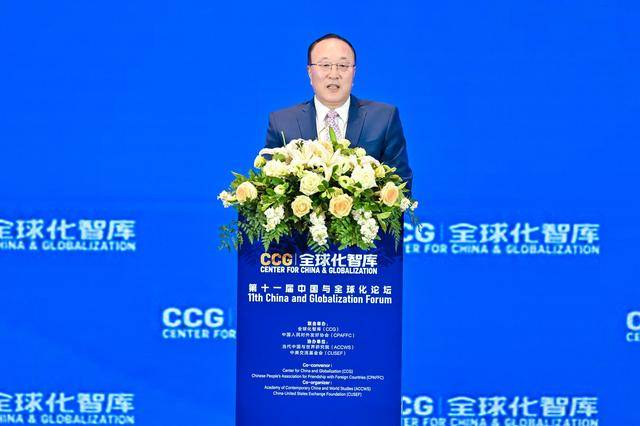
博鳌论坛秘书长张军:中美经贸谈判或永久改变美国主导游戏方式
Sou Hu Cai Jing· 2025-05-25 06:14
博鳌亚洲论坛秘书长张军在日前在京举办的第十一届中国与全球化论坛上表示,在瑞士日内瓦举行的中 美经贸高层会谈的意义远超关税和贸易本身,可能成为改变美国主导游戏方式的历史性事件。 张军说,当今世界多极化趋势加速发展,转型中的世界也充满挑战和不确定性。目前最大的挑战就是美 国向全球发动关税战。 他指出,无论是从实际效果还是世界各国反应来看,美国挑起关税战都不会达到目的。因为其中有三大 严重问题,一是错误认知,二是错误算法,三是错误行为。 第三,技术革命引领时代变革。科技创新正在全方位改变人类生产生活方式,既注入新的动力,也引发 新的竞争,科技竞争成为大国博弈的前沿阵地。从关税战也可看到,全球科技生态和科技供应链布局正 在发生改变,中国成为新的创新驱动中心,全球南方正从"跟随"向"并列"甚至"领跑"转变。这种变化将 越来越多地作用于全球政治和经济生态的演变,甚至成为主要驱动力。 来源:北京日报客户端 记者:白波 张军说,当前关税战超越了纯经济范畴,必须从世界大变局的视角看待关税战,把握世界大变局的新趋 势及孕育的新机遇。事实上,关税战本身也是大变局的一部分。关税战没有产生美方预期的效果,说明 世界正在发生重大变化。关 ...
美能源行业公开抗命,中国官方点名警告李嘉诚,不要有侥幸心理
Sou Hu Cai Jing· 2025-05-24 11:06
美能源行业公开抗命,中国官方点名警告李嘉诚,不要有侥幸心理。美国的能源行业为何会公开抵制政府命令?这与前期轰轰烈烈的"卖港案"又有什么联系 呢? 据多家媒体报道,由于中美之间的关税战影响,两国之间的能源贸易受到了严重的打击,根据《纽约时报》、彭博社等媒体的报道,自从2月10日开始,中 国已经连续70天没有从美国进口哪怕一船液化天然气(LNG),创下了五年以来的最长纪录。 根据数据统计,在2023年,美国超过澳大利亚一跃成为世界最大的天然气出口国,也就是在这一年,中国船企在全球LNG船只领域的市场份额占到了35%, 也就是说中美两国原本应该在生产和运输两端各自深耕,但是现在特朗普却要横插一脚,想要打击中国在海运领域的主导地位,但是却误判了形势,遭到了 自己人的反对。 这件事情却足以给我们敲响警钟,按照特朗普的个性,他能够在美国境内对中国船只征收停靠费,那么在美国企业控制的海外港口当然也存在这种可能。这 不由得让人联想到不久前的长和与贝莱德之间的港口交易,假如当时没有国家市场监管局的紧急介入叫停了这笔交易,一旦真的由美国财团控制了位于巴拿 马运河的主要港口,那么中国的船只在通过或者停靠的时候,是不是也要被无端征收 ...


U.S. Pharmaceutical Imports Might Soon Face Tariffs: 3 Stocks That Could Tumble as a Result
The Motley Fool· 2025-05-24 08:11
Core Viewpoint - The pharmaceutical industry is facing potential cost increases due to the U.S. tariff war, particularly affecting companies reliant on foreign manufacturing [1][2][3] Group 1: Impact of Tariffs on Pharmaceutical Companies - The U.S. has threatened a 25% import tariff on foreign-made drugs, which could push domestic production but also increase costs for companies [2][3] - Companies like Amgen, Pfizer, and AbbVie are particularly vulnerable due to their reliance on overseas manufacturing, especially in countries like Ireland [5][11][16] - The construction of new U.S. manufacturing facilities is costly and time-consuming, leaving companies exposed to rising costs and thin profit margins [3][10] Group 2: Company-Specific Vulnerabilities - **Amgen**: Heavily reliant on overseas production, particularly in Ireland and Singapore, which could become a liability if tariffs are imposed [7][8][9] - **Pfizer**: Significant production of top-selling drugs in Ireland and other European countries, with potential tariffs impacting about 10% of its total revenue [11][13][12] - **AbbVie**: While the company has not included tariff impacts in its guidance, analysts suggest it could face hundreds of millions in costs due to reliance on foreign manufacturing for bestsellers [17][18][19] Group 3: Financial Implications - Rising costs from tariffs could erode already thin profit margins across the pharmaceutical sector [10] - AbbVie is earmarking $10 billion for domestic manufacturing expansion over the next decade, indicating a significant financial commitment amid tariff uncertainties [20] - The company is also facing challenges in maintaining its dividend amidst ongoing patent wars and high advertising costs for its products [22]



加税“非美产”苹果,特朗普开始做一种最坏的打算
Hu Xiu· 2025-05-24 06:25
Group 1: Trump's Trade War Strategy - Trump's trade war is characterized by a belief that the U.S. is being exploited by other countries, with a focus on "fair trade" and "decoupling" from global trade systems [4][5] - The trade war's theoretical framework has evolved, with economists like Milan proposing a "optimal tariff" strategy to minimize domestic harm while applying tariffs [7][10] - The initial trade war strategies by Navarro and Lighthizer have faced academic criticism for their simplistic assumptions about trade dynamics [8][10] Group 2: Economic Impacts of the Trade War - The trade war has led to significant economic turmoil, with U.S. stock markets and bond yields experiencing volatility, indicating a failure of Trump's initial expectations [15][16] - Inflation and various economic indicators have worsened, leading to increased tensions between the White House and the Federal Reserve [14][16] - The trade war has resulted in rising costs for American consumers, with major retailers like Walmart and Amazon facing pressure to raise prices due to increased tariffs [20] Group 3: Political Ramifications - The trade war has caused divisions within Trump's MAGA base, with key figures expressing dissent over the handling of the tariffs and their economic consequences [17][18] - Trump's attempts to shift blame for economic issues onto the Democratic Party have been met with skepticism, as his administration's actions have led to significant economic challenges [19][20] - The internal conflicts within the Republican Party may jeopardize their prospects in the upcoming 2026 midterm elections, as the trade war's fallout continues to affect voter sentiment [18][20] Group 4: International Relations and Global Trade Dynamics - The trade war has accelerated changes in international relations, with traditional allies like Canada and Japan responding with retaliatory tariffs and a reluctance to make concessions [22][23] - Countries like India and Vietnam are attempting to capitalize on the trade war by attracting businesses looking to relocate from China, although skepticism remains about their capabilities [26] - The trade war has inadvertently strengthened China's position in global trade, as it contrasts its policies with the U.S. approach, fostering deeper ties with developing nations [26]
巨亏中的波音,靠关税战续命
吴晓波频道· 2025-05-24 00:05
Core Viewpoint - Boeing, once a symbol of American manufacturing, now relies heavily on foreign orders for survival, as evidenced by recent transactions with Middle Eastern countries and the implications of U.S. trade policies [2][52]. Group 1: Recent Transactions and Orders - Qatar gifted a Boeing 747 valued at $400 million to the U.S. military, which will be modified to serve as Air Force One [2][4]. - The UAE's AviLease ordered 20 Boeing 737 MAX aircraft, with an option for 10 more, while Qatar Airways signed a contract worth $96 billion for up to 210 Boeing 787 and 777X aircraft [6][7]. - Boeing's revenue is projected to drop to $66.5 billion in 2024, marking a significant decline from $101.1 billion in 2018, with continuous losses expected [7][9]. Group 2: Financial Performance - Boeing's financials show a decline in revenue from $101.1 billion in 2018 to an expected $66.5 billion in 2024, with a net loss projected at $10.7 billion for 2024 [9]. - The company has faced operational losses for five consecutive years, with a projected operating loss of $10.7 billion in 2024 [9]. - Boeing's backlog of orders remains substantial, with $49.88 billion in contracts as of 2024, indicating ongoing demand despite recent challenges [9]. Group 3: Historical Context and Industry Position - Boeing has been a significant player in the aerospace and defense sectors, being the largest exporter in the U.S. and employing over 172,000 people, with 85% based in the U.S. [26][38]. - The company has transitioned from a manufacturing powerhouse to a more finance-driven model, outsourcing approximately 70% of its production [33][34]. - The decline in Boeing's reputation and market share is seen as a reflection of broader issues within American manufacturing, particularly following high-profile accidents and operational challenges [36][41]. Group 4: Geopolitical Implications - U.S. trade policies and tariffs have created uncertainty for Boeing, with potential price increases for its aircraft due to tariffs, which could benefit competitors like Airbus [41][42]. - The relationship between Boeing and China has deteriorated, with no significant orders from China since 2017, contrasting with previous decades of strong collaboration [49][50]. - Boeing's future heavily relies on U.S. government support and the revival of American manufacturing, particularly under the current administration's policies [38][52].


Why Five Below Stock Got Socked Today
The Motley Fool· 2025-05-23 22:16
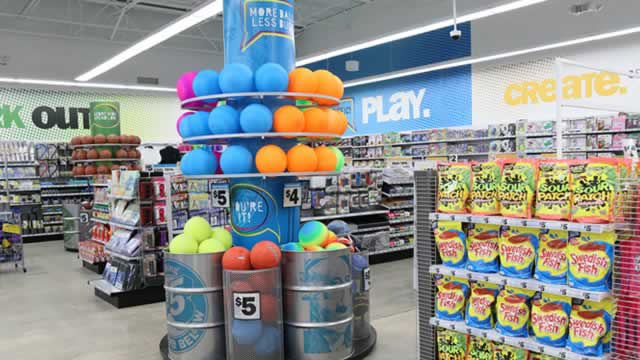
Core Viewpoint - Five Below's stock experienced a 2.5% decline following a downgrade from CFRA, which changed its recommendation from buy to hold with a price target of $108 [1][2]. Group 1: Analyst Recommendations - CFRA downgraded Five Below's recommendation to hold from buy, setting a price target of $108 [2]. - The downgrade occurred shortly before Five Below is expected to release its first quarter fiscal 2026 earnings report [4]. Group 2: Earnings Expectations - Analysts anticipate a 19% year-over-year increase in sales for Five Below, projecting sales to reach $966 million [4]. - Per-share earnings are expected to rise by 38% to $0.83 [4]. Group 3: Company Guidance - Five Below raised its Q1 sales estimate to approximately $967 million, aligning with analyst consensus, up from a previous forecast of $905 million to $925 million [5]. - The company expects same-store sales growth of 6.7%, significantly higher than the earlier projection of flat to 2% [5]. Group 4: Market Context - The current economic environment, particularly regarding the tariff situation, is not as severe as previously feared, which may positively influence retail stocks like Five Below [6].

广东经济观察:如何做到“内外兼修”?
Sou Hu Cai Jing· 2025-05-23 20:18
Economic Resilience - Guangdong's economy shows overall stability with industrial, consumption, and import-export indicators performing steadily despite external pressures [1][7] - The manufacturing sector grew by 4.1%, indicating a shift towards mid-to-high-end production [2][6] - Key industries such as computer, communication, and electronic equipment manufacturing saw a value-added growth of 7.1%, while electrical machinery and equipment manufacturing grew by 7.7% [2] Trade Performance - Guangdong's foreign trade import and export reached 2.96 trillion yuan, a year-on-year increase of 4.9%, outpacing the national growth rate of 2.5% [7] - Exports totaled 1.86 trillion yuan, growing by 2.1%, while imports increased by 10.1% to 1.1 trillion yuan [7][11] Consumer Demand - Social retail sales in Guangdong increased by 3.0% year-on-year, with a notable rise of 4.9% in April [11] - The implementation of policies such as the old-for-new consumption scheme has contributed to the recovery of consumer demand [15][16] Policy Support - The government has introduced various policies to support manufacturing and consumption, including tax incentives and streamlined regulations [20] - Specific retail categories, such as communication equipment and home appliances, saw significant sales growth, with some categories experiencing increases of over 60% [16][20] Technological Advancements - Guangdong's manufacturing sector is transitioning from traditional OEM models to building independent brands, enhancing product value and resilience against trade tensions [6][20] - The robotics industry in Guangdong is thriving, with products like AI-driven coffee machines being exported to over 60 countries [6]

股指期货周报「2025.5.23」-20250523
Rui Da Qi Huo· 2025-05-23 09:48
1. Report Industry Investment Rating - No relevant content provided 2. Core View of the Report - A - share major indices fluctuated this week, with all recording slight declines except for the Small - and - Mid - Cap 100. The four stock index futures showed divergence, with large - cap blue - chip stocks outperforming small - and - mid - cap stocks. The domestic economic data for April announced on Monday was weaker than before, pressuring the market. The market sentiment was briefly repaired on Tuesday and Wednesday with the LPR cut, but due to the lack of further catalysts, the market started to correct on Thursday, and stock indices collectively dropped significantly in the afternoon on Friday. Market trading activity declined slightly compared to last week. Currently, the domestic economic fundamentals are slightly weakening, which has a negative impact on market sentiment. Although macro - support policies have been introduced, it is necessary to wait for the policy effects to materialize. The market is expected to remain volatile in the short term. It is recommended to wait and see for now [6][83]. 3. Summary by Relevant Catalogs 3.1 Market Review - Futures: The weekly percentage changes of IF2506, IH2506, IC2506, and IM2506 were 0.01%, - 0.08%, - 0.71%, and - 1.04% respectively, and the Friday percentage changes were - 0.88%, - 0.82%, - 0.95%, and - 1.03% respectively. Their closing prices were 3846.2, 2693.0, 5561.8, and 5872.0 respectively [10]. - Spot: The weekly percentage changes of the CSI 300 and SSE 50 were - 0.18%, the Friday percentage changes were - 0.81% and - 0.80% respectively, and their closing prices were 3882.27 and 2711.85 respectively. The weekly percentage change of the CSI 500 was - 1.10%, the Friday percentage change was - 0.88%, and the closing price was 5653.04. The weekly percentage change of the CSI 1000 was - 1.29%, the Friday percentage change was - 1.26%, and the closing price was 5989.68 [10]. 3.2 News Overview - Economic data: In April, the year - on - year actual growth of the added value of industrial enterprises above the designated size was 6.1%, and the month - on - month growth was 0.22%. From January to April, the year - on - year growth of fixed - asset investment (excluding rural households) was 4.0%, and the month - on - month growth in April was 0.10%. In April, the year - on - year growth of total retail sales of consumer goods was 5.1%, and from January to April, it was 4.7%. From January to April, real estate development investment decreased by 10.3% year - on - year, and new commercial housing sales area and sales volume decreased by 2.8% and 3.2% respectively. The average urban surveyed unemployment rate from January to April was 5.2%, and in April, it was 5.1%, a 0.1 - percentage - point decrease from the previous month [13]. - Policy news: On May 20, 2025, the 1 - year LPR was 3.00%, and the 5 - year - plus LPR was 3.50%, both down 10 basis points from the previous period. Eight departments including the Financial Regulatory Administration jointly issued measures to support small and micro - enterprise financing. The CSRC will optimize the domestic listing environment for technology companies and implement a more flexible and precise new - share issuance counter - cyclical adjustment mechanism [14]. 3.3 Weekly Market Data - Domestic main indices: The weekly percentage changes of the Shanghai Composite Index, Shenzhen Component Index, STAR 50, Small - and - Mid - Cap 100, and ChiNext Index were - 0.57%, - 0.46%, - 1.47%, 0.62%, and - 0.88% respectively, and the Friday percentage changes were - 0.94%, - 0.85%, - 1.02%, - 0.42%, and - 1.18% respectively [17]. - Overseas main indices (as of Thursday): The weekly percentage changes of the S&P 500, FTSE 100, Hang Seng Index, and Nikkei 225 were - 1.95%, 0.63%, 1.10%, and - 1.57% respectively, and the Thursday percentage changes were - 0.04%, - 0.54%, 0.24%, and 0.47% respectively [18]. - Industry sector performance: Most industry sectors declined. The computer, machinery and equipment sectors had relatively large declines, while the pharmaceutical and biological, and comprehensive sectors led the gains. Industry main funds generally showed net outflows, with large net outflows in the computer and machinery and equipment sectors [21][25]. - SHIBOR short - term interest rates: They first declined and then rose, and the capital market remained loose [29]. - Restricted share lifting and northbound capital transactions: This week, major shareholders had a net reduction of 5.296 billion yuan in the secondary market, the market value of restricted share lifting was 22.765 billion yuan, and northbound capital had a total trading volume of 501.203 billion yuan [30]. - Futures basis and net positions: The basis of the main contracts of IF, IH, IC, and IM all fluctuated. The data on the net positions of the top 20, top 10, and top 5 of IF, IH, IC, and IM were also presented [38][41][46][50]. - Options data: Data on the trading volume distribution, open - interest distribution, trading and open - interest PCR, implied volatility, and historical volatility of CSI 300 options and CSI 1000 options were provided [63][74]. 3.4 Market Outlook and Strategy - The market is expected to remain volatile in the short term due to the slightly weakening domestic economic fundamentals and the lack of immediate policy effects. It is recommended to wait and see [83].