自动驾驶

Search documents
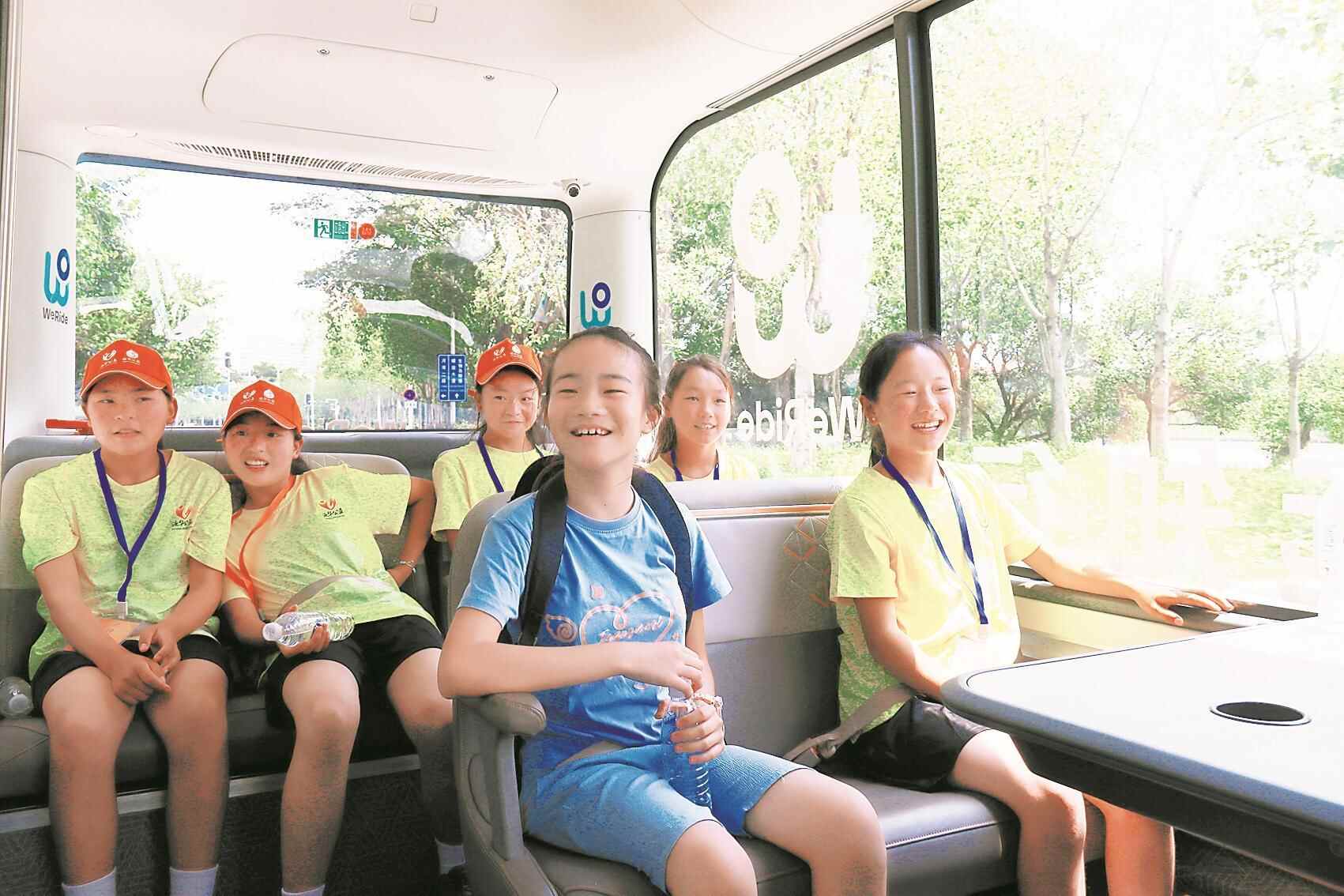
为大山孩子打开未来之窗 这家粤企既摘冠又播种
Xin Lang Cai Jing· 2026-01-26 00:26
Core Viewpoint - The article highlights the intersection of advanced technology and social responsibility, showcasing how a self-driving vehicle company, WeRide, engages with children from remote areas to educate them about autonomous driving technology while also achieving recognition in international competitions [2][5]. Group 1: Educational Initiatives - WeRide implemented a "precise popular science" program to help children from the Daliang Mountains understand complex autonomous driving concepts by using relatable analogies [3]. - Engineers at WeRide used simple explanations and models to illustrate the technology, making it accessible to children who had limited exposure to traditional vehicles [3][4]. - The initiative aims to inspire children to envision careers in technology, shifting their questions from curiosity about urban architecture to aspirations of creating autonomous vehicles [4]. Group 2: Achievements and Recognition - WeRide recently won first place at the Dubai World Autonomous Driving Challenge, demonstrating its technological prowess on an international stage [4][5]. - The company balances its pursuit of technological excellence with a commitment to social impact, as evidenced by its educational outreach efforts [5]. Group 3: Long-term Commitment to Social Responsibility - WeRide has partnered with the Pan-Hua Public Welfare Foundation to create a series of experiences for children, having already hosted nearly 100 children from impoverished areas [5]. - The company is expanding its social initiatives, including transforming autonomous buses into services for mentally challenged youth and conducting educational activities in schools [5][6]. - The philosophy driving these efforts emphasizes that cutting-edge technology should be accessible to those who need it most, fostering a broader understanding of science and technology [6].

鸿海叩开日本汽车大门
汽车商业评论· 2026-01-25 23:07
Core Viewpoint - Foxconn's parent company, Hon Hai, is making significant strides in the automotive sector by establishing a joint venture with Mitsubishi Fuso Truck and Bus Corporation to produce electric buses in Japan, aiming to strengthen its foothold in the Japanese automotive market and accelerate the adoption of electric vehicles [4][6][11]. Group 1: Joint Venture and Production Plans - Hon Hai and Mitsubishi Fuso will each invest 50% to create a bus joint venture, set to launch in the second half of 2026, with its headquarters in Kawasaki [4]. - The joint venture will focus on manufacturing Hon Hai's pure electric buses while also handling the development and production of existing diesel buses [6]. - The goal is to secure orders for the Hon Hai EV bus Model T by 2027 and expand to other product lines like the EV microbus Model U [6]. Group 2: Market Context and Challenges - The Japanese automotive industry is facing challenges such as declining competitiveness and a need for restructuring, with foreign investment becoming a key driver of this change [9][11]. - The traditional "Made in Japan, exported globally" model is becoming unsustainable due to rising tariffs and protectionism, leading to an urgent need for localized production [11]. - The Japanese electric vehicle (EV) market is lagging, with EV buses currently accounting for less than 1% of the total bus market, presenting a significant growth opportunity [21][26]. Group 3: Strategic Importance of the Joint Venture - The partnership with Mitsubishi Fuso is seen as a critical step for Hon Hai to establish a local production base in Japan, which is essential for future expansion and collaboration with Japanese automakers [11][20]. - The joint venture is expected to help absorb some of the production capacity needs in Japan, which is crucial for maintaining local employment and manufacturing capabilities [24]. - The Japanese Bus Association has set a target to introduce 10,000 EV buses by 2030, indicating substantial market potential for Hon Hai's offerings [26].
聚焦端到端的公司,越来越多了......
自动驾驶之心· 2026-01-25 10:07
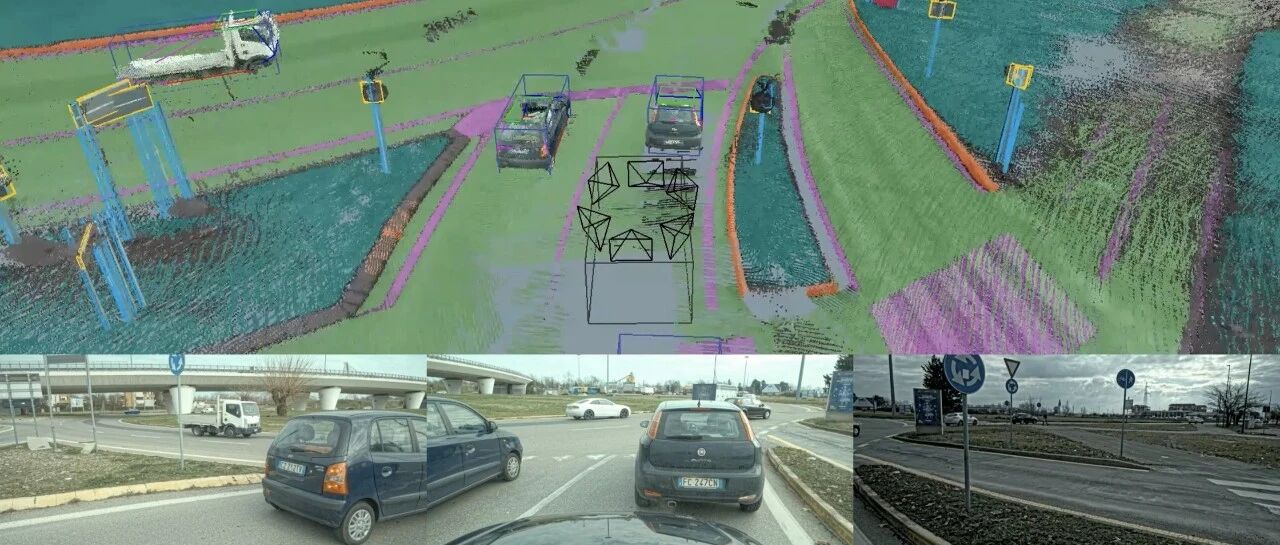
Core Viewpoint - The article emphasizes the shift in the autonomous driving industry towards end-to-end solutions, with both large and small companies accelerating their transformation to adopt these models [2][4]. Group 1: Data Requirements and Model Development - Companies are exploring the data requirements for developing effective one-stage and two-stage models, with 2 million clips being sufficient for a decent two-stage model, while one-stage models require around 10 million clips [2][4]. - The necessity of simulation data (SD) for end-to-end models and potential pitfalls such as navigation failures are highlighted [4]. Group 2: Community and Knowledge Sharing - The "Autonomous Driving Heart Knowledge Planet" community has been established to provide a comprehensive platform for learning and sharing knowledge in the autonomous driving field, currently hosting nearly 4,500 members with a goal of reaching 10,000 in two years [5][17]. - The community offers a variety of resources including videos, articles, learning paths, and Q&A sessions, aimed at reducing the trial-and-error costs for newcomers [5][9]. Group 3: Technical Routes and Learning Resources - The community has compiled over 40 technical routes covering various aspects of autonomous driving, including VLA benchmarks, multi-modal models, and data annotation practices [7][18]. - Regular discussions with industry experts are held to explore trends, technology directions, and production challenges in autonomous driving [7][9]. Group 4: Job Opportunities and Career Development - The community facilitates job opportunities by connecting members with companies in the autonomous driving sector, providing insights into open positions and career paths [11][22]. - Members can receive guidance on research directions and job applications, enhancing their career prospects in the industry [11][91].
12只眼8个雷达宇通巴士炼出火眼金晴
Xin Lang Cai Jing· 2026-01-25 09:01
Core Insights - The article highlights the advanced autonomous driving capabilities of Yutong buses, showcasing their ability to detect and avoid obstacles more quickly than human drivers [1] Group 1: Technology Features - Yutong buses are equipped with 12 cameras and 8 laser radars, enabling them to see obstacles clearly within a range of 250 meters without additional assistance [1] - The autonomous features include automatic obstacle avoidance and automatic parking, demonstrating the bus's advanced technological integration [1]

天然橡胶专题二:石化链涨价带动,产能瓶颈明确,2026年价格预计易涨难跌
Guoxin Securities· 2026-01-25 08:31
Investment Rating - The report maintains an "Outperform" rating for Hainan Rubber, indicating a positive outlook for the company in the context of the natural rubber industry [3][4]. Core Insights - Natural rubber has a complex framework influenced by its agricultural and industrial attributes, with short-term price movements expected to be driven by industrial factors [1][12]. - The long-term price cycle of natural rubber is approximately 20 years, primarily determined by the age of rubber trees entering their productive phase [2][37]. - The report anticipates that the price of natural rubber will be difficult to decrease after 2026 due to capacity constraints and rising synthetic rubber prices [2][43]. Summary by Sections Natural Rubber Attributes - Natural rubber is produced from rubber trees and is subject to long-term adjustment delays, making it sensitive to weather disturbances [12][18]. - Approximately 70% of natural rubber is used in tire production, linking its demand closely to the automotive industry [18][20]. Price Outlook for 2026 - The report forecasts that synthetic rubber price increases will support natural rubber demand in the short term, while long-term supply constraints will lead to price stability [2][43]. - The price of synthetic rubber has shown a strong correlation with natural rubber prices, influenced by supply-side factors such as production cuts and geopolitical tensions [24][25][44]. Supply and Demand Dynamics - The report highlights that major producing countries like Thailand and Indonesia are facing production challenges, leading to a projected slight increase in global natural rubber production in 2025 [48][49]. - The long-term supply outlook indicates a reduction in global natural rubber supply over the next decade due to aging trees and declining planting areas [62][63]. Investment Recommendations - Hainan Rubber is recommended as a core investment due to its position as a leading player in the natural rubber industry, benefiting from both rubber and non-rubber business segments [3][4][36]. - The projected net profit for Hainan Rubber is estimated at 100 million, 240 million, and 450 million yuan for 2025, 2026, and 2027 respectively, with corresponding EPS of 0.02, 0.06, and 0.11 yuan [3][4].

中国公司全球化周报|荣耀、倍思、努比亚等50+品牌签约速卖通品牌出海/《明日方舟:终末地》全球公测,阿里云提供技术支撑
3 6 Ke· 2026-01-25 07:20
Group 1: Events and Forums - The "Dubai Business Forum - China" will take place in Shenzhen on May 14, 2026, focusing on the theme "Working Together for New Economic Growth" to introduce Dubai's economic agenda (D33) and explore new paths for cooperation and strategic investment between Chinese and Dubai businesses [2] Group 2: Company Developments - Over 50 brands, including Honor, Baseus, and Nubia, have signed with AliExpress for the "Super Brand Going Global Plan" to accelerate overseas market expansion, particularly in high-value categories like consumer electronics and smart hardware [3] - Eagle Network's new game "Arknights: Endfield" has launched globally, supported by Alibaba Cloud to handle high concurrency demands during the launch, ensuring smooth operation and real-time player interaction [3] - TikTok Shop in Southeast Asia is projected to double its GMV by 2025, with daily GMV increasing by 90% year-on-year, indicating a significant consumption upgrade in the region [4] - Ninebot has initiated Malaysia's first autonomous vehicle testing project in collaboration with local postal and logistics companies, with over 16,000 autonomous vehicles already operating globally [4] - Jiutian Chuangzhi signed a multi-million dollar order in Oman for autonomous cleaning vehicles, expanding its market reach to Malaysia, Turkey, and Palestine [5] - Cao Cao Mobility plans to deploy 100,000 customized Robotaxis globally by 2030, transitioning towards unmanned operations [5] - Baidu's "Luobo Kuaipao" has launched a fully autonomous driving service in Abu Dhabi, marking its first overseas public service [6] - Cainiao's global overseas warehouse order volume is expected to grow by 32% year-on-year by 2025, with plans for expansion and automation upgrades in key markets [6] - JD Logistics and Honor are collaborating to build overseas warehouses in the Middle East, aiming to support Honor's mobile phone sales in Saudi Arabia [6] - Ant International's Alipay+ has connected with Italy's Tinaba digital wallet, enabling seamless payment solutions for Chinese merchants [7] - UBTECH has partnered with Airbus to deploy humanoid robots in manufacturing processes, with significant order growth expected in the coming years [7] - Longi Green Energy is collaborating with NeoVolta to build an 8GWh battery storage manufacturing plant in Georgia, USA, to meet growing energy storage demands [7] Group 3: Investment and Financing - Zhongke Kelan has completed a multi-million angel round financing to accelerate product development and international expansion of its biodegradable plastics [8] - Yanhua Technology has secured nearly 100 million yuan in A1 round financing to enhance production capacity and global market reach for its perovskite solar cells [8] - Muxin Intelligent has completed a B round financing exceeding 100 million yuan, focusing on product development and global market channel expansion [9] Group 4: Market Trends - The overseas micro-short drama market is expected to exceed $5 billion by 2026, with Chinese apps capturing 90% of the market share [10] - Despite high tariffs, Chinese electric vehicle sales in Europe surged by 127% year-on-year in December 2025, with market share doubling to 9.5% [10]




特斯拉FSD系统预计下个月在中国获批?知情人士:该消息不实
Xin Lang Cai Jing· 2026-01-25 05:56
Core Viewpoint - Tesla CEO Elon Musk announced at the World Economic Forum in Davos that the Full Self-Driving (FSD) system requiring driver supervision is expected to be approved in Europe as early as next month, with China potentially following suit around the same timeframe [1] Group 1 - The announcement has sparked market speculation regarding the "supervised version of FSD" entering China next month [1] - Reliable sources have clarified that this speculation is unfounded [1] - Tesla's China division has stated that there are no relevant updates to disclose at this time [1]

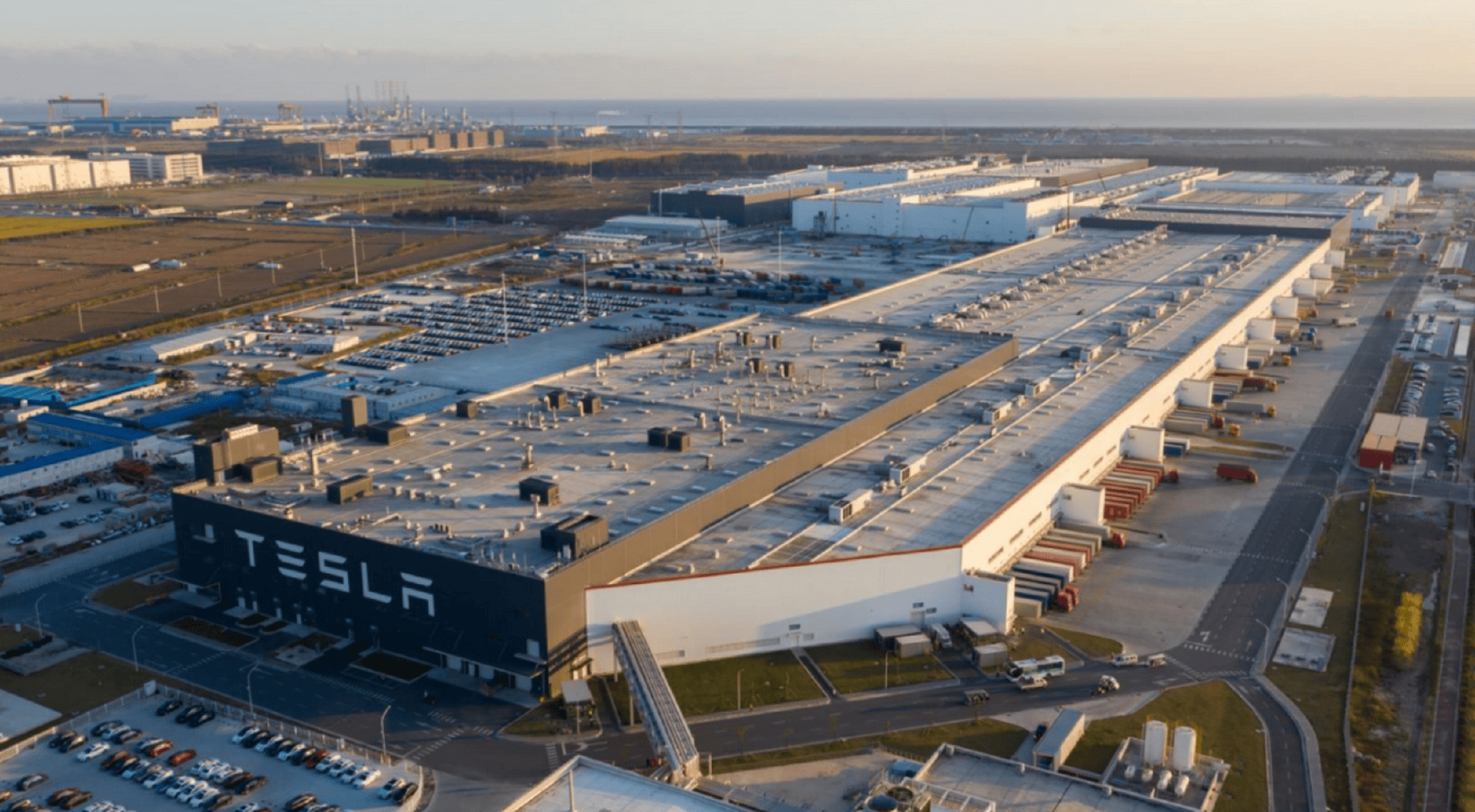
1700多人被裁,特斯拉也撑不住了?马斯克警告美国:不要低估中国
Sou Hu Cai Jing· 2026-01-25 05:00
Group 1 - Tesla's Berlin factory has laid off over 1,700 employees, representing a 14% reduction in workforce, leaving approximately 10,703 employees remaining [1][3] - The layoffs at the Berlin factory are significant as it is Tesla's only production base in Europe, which was initially seen as a key investment for the company's European market strategy [3][5] - The current economic downturn in Europe has led to decreased consumer spending, impacting the demand for electric vehicles, despite Tesla being a leader in the EV market [5][7] Group 2 - The layoffs align with a global plan announced by Elon Musk in 2024 to reduce Tesla's workforce by over 10%, indicating a strategic move to cut costs in a challenging economic environment [7] - Musk has been focusing on cost-saving measures and efficiency improvements, suggesting that the company is prioritizing financial stability over aggressive expansion [7][8] - Despite the challenges in the EV market, Tesla is also investing in AI and autonomous driving technologies, which Musk believes could redefine transportation and offset declining vehicle sales [8][9] Group 3 - Musk has expressed concerns about the competitive landscape, particularly regarding the U.S. and China, highlighting that the U.S. may fall behind due to energy supply issues affecting AI development [9][11] - The commentary on China's advancements in technology and energy supply suggests a growing competitive threat to U.S. companies, including Tesla, in the global market [11]
轻舟智航董事长于骞:公司辅助驾驶系统搭载量突破100万台 正式进入L4无人物流领域
Zhong Zheng Wang· 2026-01-25 03:27
Core Insights - The company Lightyear has officially entered the L4 unmanned logistics sector and has begun deployment operations in multiple locations, marking a new phase of large-scale implementation for its passenger vehicle assistance systems, which have surpassed 1 million units in deployment [1][2]. Group 1: Industry Trends - The evolution of autonomous driving technology is undergoing profound changes, transitioning from a "machine intelligence" phase to a "human-like intelligence" phase, with 2026 identified as a critical turning point for the industry [2]. - The introduction of end-to-end architecture and models like VLA and world models will drive a comprehensive understanding of the real world, allowing autonomous systems to surpass human driving capabilities [2]. - The next decade is expected to be a golden era for autonomous driving, with significant advancements in technology and market penetration anticipated [2]. Group 2: Product Development - Lightyear plans to launch its first end-to-end urban NOA solution based on a single journey 6M platform by April 2025, with the official vehicle integration occurring in January 2026 [3]. - The new generation "Lightyear Sailing 2.0" assistance solution will focus on safety and explainability, achieving a driving experience equivalent to 256 TOPS with only 128 TOPS of computing power [3]. - The company aims to promote high-level assistance driving solutions to the 100,000 yuan market by 2026, expanding its coverage from 80,000 to 400,000 yuan models [3]. Group 3: Future Deployment Plans - Lightyear has outlined a product evolution roadmap that includes the large-scale deployment of Robotaxi by 2027, supported by the Robo-X autonomous driving open platform [5]. - The Robo-X platform aims to become the "Android of the autonomous driving field," providing a universal technology base and comprehensive tools for various autonomous driving scenarios [5]. - Strategic partnerships, such as with Chery Commercial Vehicles, are being formed to create benchmark L4 logistics products and services [5].
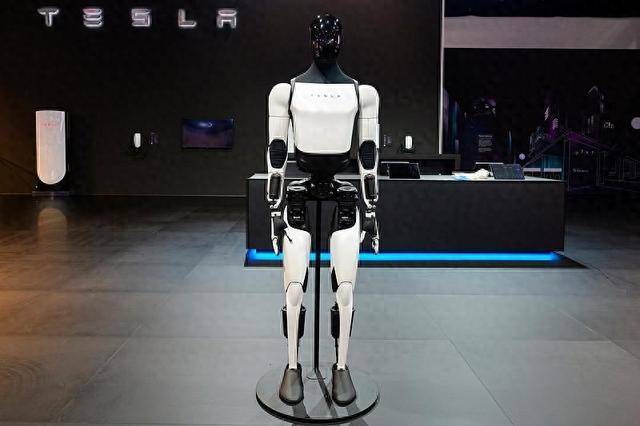
马斯克突袭达沃斯!特斯拉人形机器人明年开卖,万亿市场即将爆发
Sou Hu Cai Jing· 2026-01-24 23:12
Core Insights - Elon Musk announced that Tesla's humanoid robot 'Optimus' could start public sales as early as the end of next year, igniting excitement in the tech and capital markets [1] - Tesla has begun using Optimus for simple tasks in its factories, with expectations that by the end of 2026, these robots will handle more complex jobs [1][3] - This announcement marks a significant step in Tesla's commercialization of robotics, with the company positioning humanoid robots alongside AI and autonomous driving as core strategic directions [3] Group 1 - Musk's appearance at the World Economic Forum was unexpected, as he had previously criticized the forum, suggesting his presence may be linked to breakthroughs in the Optimus project [3] - During discussions with BlackRock CEO Larry Fink, Musk shared future plans including building a space data center and advancing the autonomous taxi project, while cautioning that initial production of Optimus and Cybercab will be slow and challenging [3][4] - Tesla's push into robotics comes at a time when its traditional electric vehicle business faces challenges, with declining delivery volumes over the past two years due to product line stagnation and reduced EV subsidies in the U.S. [4] Group 2 - Investors are advised to focus on upstream core component suppliers in the robotics industry, particularly in areas like servo motors, gear reducers, and sensors, which may present investment opportunities [4] - There are warnings about the risks of speculative trading in humanoid robots, as commercialization faces multiple challenges including technology, cost, and safety [5] - Long-term investors should consider companies within Tesla's supply chain that possess technological barriers, as they are likely to benefit from Tesla's vertical integration in the robotics sector [5]