高端化

Search documents
正式挂牌 成都天府奥体公园体育科创楼宇首家企业入住
Mei Ri Jing Ji Xin Wen· 2025-07-12 08:05
Core Insights - Chengdu Tianfu Sports Park has officially launched its Sports Science and Technology Innovation Building, which aims to incubate sports technology enterprises focusing on sports health technology, outdoor scene development, and sports education and training [1][2] - The park is positioned as a key player in the rapid transformation of China's sports industry towards digitalization, intelligence, and high-end development [1] Group 1: Industry Overview - The Sports Science and Technology Innovation Building is part of Chengdu's East New Area, which is designed to foster a collaborative ecosystem for the "training, medical, education, and business" sectors within the sports industry [1] - The building will attract companies involved in smart sports equipment development, digital sports services, and health management, contributing to the growth of emerging industries in the region [1] Group 2: Company Profile - The first company to settle in the Sports Science and Technology Innovation Building is Jianji Technology Co., Ltd., established in 2014, recognized as a national high-tech enterprise and a leader in the football digitalization field [2] - Jianji Technology plans to invest 300 million yuan to establish its Western headquarters in Chengdu, focusing on the development of intelligent hardware and software for football, as well as big data analysis platforms [2] Group 3: Future Plans - The park aims to host sports technology innovation and entrepreneurship competitions to attract high-quality projects and incubate high-growth companies in smart equipment and digital sports [2] - The goal is to create a closed-loop system within three years that encompasses research and development, pilot incubation, scenario application, and industrial clustering, ultimately establishing a comprehensive and mature service ecosystem for the sports industry [2]
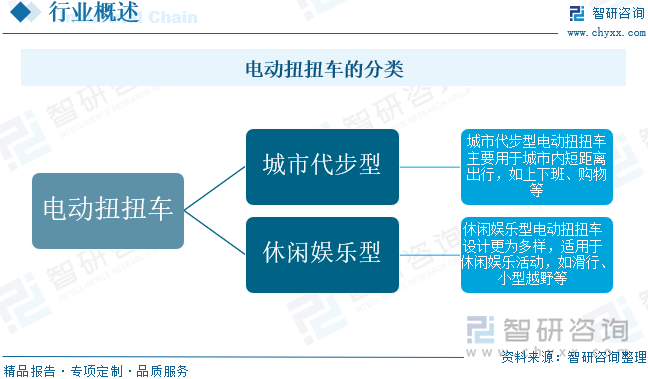
研判2025!中国电动扭扭车行业发展历程、产业链、市场规模、重点企业及未来展望:电动扭扭车规模达367亿元,未来将向个性化、高端化、智能化方向发展[图]
Chan Ye Xin Xi Wang· 2025-07-12 02:30
Core Viewpoint - The electric hoverboard market in China is experiencing significant growth, with the market size projected to increase from 16.44 billion yuan in 2018 to 36.7 billion yuan by 2024, representing a compound annual growth rate (CAGR) of 14.32% [1][15]. Industry Overview - Electric hoverboards are intelligent personal transportation tools based on dynamic balance principles, featuring advanced electric drive systems and precise sensing technology [1][4]. - The market is segmented into urban commuting and recreational types, catering to short-distance travel and leisure activities [4]. Advantages of Electric Hoverboards - Electric hoverboards are compact, suitable for various age groups, promote parent-child interaction, and are more affordable compared to other toys [5]. Industry Development Stages - The industry has evolved through three main stages: 1. **Emerging Stage**: Focused on simple toy forms for children with basic functionalities. 2. **Growth Stage**: Rapid market expansion with diversified products and features, including smart technologies like GPS and Bluetooth. 3. **Mature Stage**: Emphasis on smart, eco-friendly, and multifunctional designs, including lithium battery adoption and integrated fitness features [8]. Industry Chain - The upstream of the electric hoverboard industry includes raw materials and components such as engineering polypropylene, ABS plastic, and electric motors [11]. Key Companies - Notable companies in the electric hoverboard market include Ninebot, Shenzhen Lexing Tianxia Technology, Hangzhou Qike Intelligent Technology, and others, which are leveraging strong R&D capabilities and advanced production technologies [2][3][17]. Market Trends - **Personalization**: Future products will focus on customizable designs to meet diverse user preferences [24]. - **High-end Products**: Companies are expected to shift towards high-end offerings with premium materials and advanced features [25]. - **Intelligent Features**: Integration of AI and IoT functionalities will enhance user experience and product value [27]. - **Safety Enhancements**: Increased focus on battery management and safety features to improve overall product reliability [28].

三钢闽光:预计2025年上半年净利润1.31亿元,扭亏为盈
news flash· 2025-07-11 10:58
Core Viewpoint - The company, Sansteel Minmetals Corporation, is expected to report a net profit of 131 million yuan for the period from January 1, 2025, to June 30, 2025, marking a significant recovery from a loss of 234 million yuan in the same period last year, representing a growth of 155.78% [1] Financial Performance - The net profit attributable to shareholders is projected to be 131 million yuan, compared to a loss of 234 million yuan in the previous year, indicating a growth of 155.78% [1] - The net profit after deducting non-recurring gains and losses is expected to be 108 million yuan, a substantial increase from a loss of 271 million yuan year-on-year, reflecting a growth of 139.97% [1] - Basic earnings per share are anticipated to be 0.05 yuan, recovering from a loss of 0.1 yuan per share in the same period last year [1] Strategic Initiatives - The company continues to promote strategies focused on high-end, intelligent, green, and low-cost operations, optimizing product structure and deepening cost reduction across all processes [1] - The successful implementation of these strategies has led to a turnaround from losses to profits in the first half of the year, with year-on-year improvements in operational performance [1]

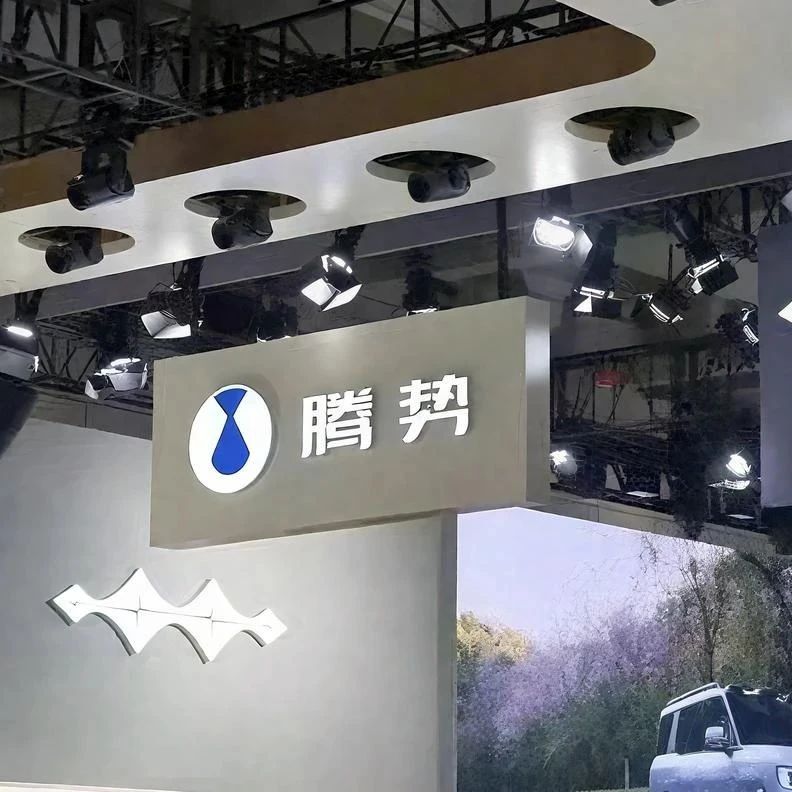
中高端车型销量占比达6.5%,比亚迪高端化还有多远?
雷峰网· 2025-07-11 00:36
Core Viewpoint - BYD is facing dual challenges of brand upgrading and technological breakthroughs in its pursuit of high-end market positioning [2][4]. Group 1: Market Position and Sales Performance - BYD achieved a global market share of 5.2% in the first half of 2025, surpassing General Motors and ranking sixth among global automakers [2]. - In the first half of 2023, BYD sold 2.146 million vehicles, reaching 39% of its annual target, but only 6.5% of sales came from its mid-to-high-end brands, including Tengshi, Fangchengbao, and Yangwang [2][3]. - The company aims to reduce the sales contribution of its mainstream brands (Wangdiao and Haiyang) from 94.7% in 2024 to around 80% by 2025, targeting a 20% contribution from its mid-to-high-end brands [2]. Group 2: Pricing Strategy and Profitability - The price war initiated in early 2023 led to a significant increase in sales, with a year-on-year growth of approximately 62%, but also resulted in a decline in average vehicle prices from 173,800 yuan in 2022 to 123,700 yuan in 2024 [5][6]. - The majority of BYD's sales are concentrated in the sub-200,000 yuan market, which accounted for 73% of the Wangdiao series sales in the first half of 2023, indicating limited profitability in the mainstream market [6][7]. Group 3: Challenges in High-End Brand Development - BYD's attempts to establish high-end brands have faced difficulties, with models like Tengshi D9 initially performing well but later experiencing significant sales declines [10][11]. - The Fangchengbao brand has also struggled, with the Fangchengbao 5 needing a price cut of 50,000 yuan to stimulate sales, and the Fangchengbao 8 showing a similar pattern of initial success followed by a drop in orders [11][12]. - Frequent price reductions in the high-end market have led to customer dissatisfaction and concerns about brand value dilution [12][13]. Group 4: Strategic Adjustments and Future Plans - BYD is shifting its focus and resources towards mid-to-high-end models, with plans to enhance its sales channels and service quality for these brands [15][16]. - The company is implementing a tiered technology strategy, with advanced features reserved for higher-end models, and plans to enhance its international brand image through exports of high-end vehicles [16][17].

开源证券:BOPET膜国内产需高增 行业自律有望助力格局优化、盈利改善
智通财经网· 2025-07-10 08:03
Core Viewpoint - The BOPET industry has faced continuous profit pressure since 2022, leading to a slowdown in planned capacity and a potential decrease in actual implementation. However, industry self-discipline is expected to optimize the market structure and improve profitability. In the medium to long term, market resources are gradually concentrating on companies with cost and technological advantages, with a positive outlook on the rapid enhancement of domestic high-end polyester film product development, driving the BOPET industry towards high-end and green development [1][2]. Industry Overview - The BOPET film, known for its excellent performance, is widely used in packaging, printing, optical displays, electrical and electronic applications, and photovoltaic new energy sectors. From 2014 to 2024, the domestic BOPET industry has seen rapid growth in capacity and apparent consumption, but the consumption growth rate has not kept pace with capacity and production growth, leading to a structural imbalance characterized by an oversupply of low-end products and a shortage of high-end products [1][3]. Supply and Demand Dynamics - Supply Side: From 2014 to 2024, domestic BOPET capacity expanded from 2.47 million tons to 6.95 million tons, with a CAGR of 10.9%. Production increased from 1.61 million tons to 4.59 million tons, with a CAGR of 11.0%. Currently, the industry capacity stands at 6.482 million tons per year, with the top 10 enterprises accounting for 63.0% of the total capacity [3][4]. - Demand Side: During the same period, domestic BOPET apparent consumption rose from 1.71 million tons to 4.15 million tons, with a CAGR of 9.3%. The growth rate of consumption has lagged behind that of capacity and production, exacerbating market oversupply. In 2024, the demand shares for packaging, protective films, solar back sheets, and optical films are projected to be 45.8%, 14.7%, 4.9%, and 10.2%, respectively [3][4]. Import and Export Trends - Since 2015, China has become a net exporter of BOPET, yet it still imports 200,000 to 300,000 tons annually, with the average import price being more than twice that of the export price, indicating a continued reliance on imported high-end BOPET products [3]. Price Trends - BOPET prices have followed the trend of crude oil prices, with the cost of slice method being slightly higher than that of direct melting method. The supply-demand imbalance has led to a decline in BOPET prices since 2022, reaching historical lows, and the industry is experiencing negative gross margins [4]. Company Performance - Most companies have seen a decline in profitability since 2022, with expectations of turning from profit to loss in 2023-2024. Profitability is still under pressure in Q1 2025, and capital expenditures and construction projects in the sector have been reduced since 2023 [4].
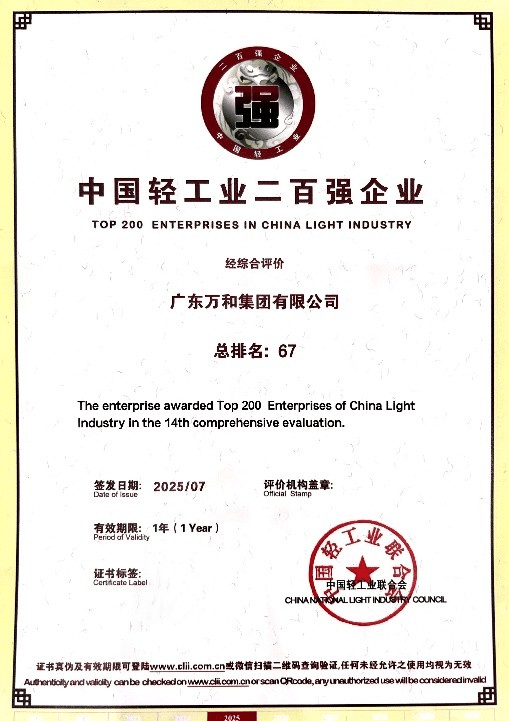
万和荣膺2025中国轻工业五金制品行业十强、科技百强企业
Sou Hu Cai Jing· 2025-07-10 07:28
Core Insights - The conference held on July 9, organized by the China Light Industry Federation, focused on the theme "Focusing on 'New' Power to Lead New Consumption," gathering over 300 representatives from leading enterprises and experts to outline a high-quality development blueprint for the light industry [1] - Guangdong Vanward Group Co., Ltd. was awarded three national honors: "Top Ten Enterprises in China's Light Industry Hardware Products," "Top 200 Enterprises in China's Light Industry," and "Top 100 Science and Technology Enterprises in China's Light Industry," reflecting its strong comprehensive strength and technological innovation achievements [1][3] Industry Overview - The China Light Industry Federation is a national, comprehensive industrial organization with service and management functions, and its annual rankings are highly authoritative and influential in the industry, serving as important benchmarks for evaluating the vitality of light industry enterprises in China [3] - The rankings for "Top Ten Enterprises in China's Light Industry Hardware Products" and "Top 200 Enterprises in China's Light Industry" assess companies based on comprehensive strength, requiring balanced development and strong market vitality, while the "Top 100 Science and Technology Enterprises" focuses on innovation capabilities, evaluating indicators such as revenue, R&D investment, and patent numbers [3] Company Performance - Vanward Group's simultaneous selection for the three prestigious lists demonstrates its robust competitive strength and leadership in technological innovation amid a complex economic environment [5] - The company has been advancing a product strategy centered on "high-end and green," achieving significant breakthroughs in ultra-low temperature heat pumps, noise reduction in combustion, high-altitude combustion technology, and hydrogen energy, including the establishment of national hydrogen energy standards and obtaining the first domestic BSI certification for hydrogen energy stoves [5] - The company has enhanced operational quality and profitability through deep digital transformation and lean management across the entire value chain, improving R&D efficiency, manufacturing levels, channel expansion, and service responsiveness [5] Global Expansion and Future Outlook - Vanward Group is accelerating its global layout with production bases in Thailand and Egypt, effectively supporting its international market business development [7] - The company is building a high-value user ecosystem through brand development and ESG practices, achieving substantial emission reductions through initiatives like distributed photovoltaic applications and energy-saving renovations [7] - Looking ahead, Vanward Group will continue to deepen its four strategic pillars: product-driven, efficiency growth, digital upgrade, and global operations, focusing on emerging fields such as hydrogen energy and heat pumps, while enhancing global capacity coordination and brand value [8]

净利预高增、押注汽水业 燕京啤酒还有什么挑战
Sou Hu Cai Jing· 2025-07-10 05:13
Core Viewpoint - The beer industry is experiencing a challenging environment, yet Yanjing Beer is showing strong performance with significant profit growth and strategic initiatives aimed at revitalization and market expansion [3][4][10]. Financial Performance - Yanjing Beer expects a net profit of approximately 10.62 billion to 11.37 billion yuan for the first half of 2025, representing a year-on-year increase of 40% to 50% [3]. - In 2024, Yanjing Beer achieved a revenue of 146.67 billion yuan, a 3.2% increase year-on-year, and a net profit of 10.56 billion yuan, a 63.74% increase [4]. - The company plans to distribute cash dividends of about 5.36 billion yuan in 2024, which is 50.73% of its net profit [5]. Market Position and Strategy - Yanjing Beer is focusing on high-end products, with the Yanjing U8 beer becoming a significant driver of sales, achieving a 31.40% increase in volume in 2024 [6][7]. - The company is also diversifying its product line by entering the beverage market with the launch of Best Jia soda, aiming for a dual-driven growth strategy [9][10]. Operational Efficiency - Yanjing Beer has implemented cost control measures and operational efficiency improvements, which have contributed to its profitability [8]. - The company has seen a significant reduction in inventory turnover days, indicating improved cash flow management [14]. Challenges and Risks - The beer industry is facing a decline in overall production and revenue, with a reported 0.6% decrease in beer production in 2024 [5]. - Yanjing Beer is also dealing with potential legal and regulatory issues, including a significant amount of outstanding debts and compliance challenges [13][14]. Future Outlook - The company aims to maintain its growth trajectory by focusing on product innovation and market expansion, particularly in underperforming regions [12][15]. - Yanjing Beer is aware of the competitive landscape in the beverage market and is strategizing to differentiate its offerings to capture market share [10][11].

燕京啤酒2025上半年预盈超10.62亿 聚焦大单品中高档产品收入占超六成
Chang Jiang Shang Bao· 2025-07-09 22:28
Core Viewpoint - Yanjing Beer has achieved significant revenue and net profit growth due to product structure optimization, cost control, and market expansion [1][2][3] Financial Performance - The company expects a net profit of 1.062 billion to 1.137 billion yuan for the first half of 2025, representing a year-on-year growth of 40% to 50% [1][3] - From 2020 to 2024, Yanjing Beer's revenue increased from 10.928 billion yuan to 14.667 billion yuan, a cumulative growth of 34%, while net profit surged from 197 million yuan to 1.056 billion yuan, an increase of over 400% [2][3] Brand Value - Yanjing Beer was included in the "China's 500 Most Valuable Brands" list with a brand value of 237.9 billion yuan in 2025, up from 180.575 billion yuan in 2023 and 223.695 billion yuan in 2024 [3] Product Strategy - The company has focused on a big product strategy and expansion of mid-to-high-end production capacity, with the revenue share of mid-to-high-end products rising from 59.81% in 2020 to 67.01% in 2024 [1][4] - The Yanjing U8 product has seen an average annual sales growth of over 30% since its launch in 2020, with sales exceeding 5 billion yuan in 2024, accounting for 35% of the company's beer business revenue [4] Market Expansion - Yanjing Beer has entered international markets through Southeast Asian agents, achieving export revenue of 120 million yuan in 2024, a 40% year-on-year increase [4] - The company has diversified its product line by launching beverages like Beistejia soda and health foods, with non-beer business revenue reaching 820 million yuan in 2024, a 22% increase [5]
“实业兴国,实干兴邦”(人民论坛)
Ren Min Ri Bao· 2025-07-09 22:14
Group 1 - The development of China's automotive industry has evolved from manual craftsmanship to advanced technology, exemplified by Xiaomi's factory where over 700 robots are involved in production, achieving a vehicle output every 76 seconds [1] - President Xi Jinping emphasized the importance of traditional manufacturing as a vital part of the real economy, advocating for technological innovation to revitalize traditional industries [1] - China's industrial growth has transitioned from reliance on imports to becoming the world's largest manufacturing nation with a complete range of industrial categories [1] Group 2 - The bearing industry, described as the "joints" of industry, has seen significant advancements, with China's manufacturing value added exceeding 30 trillion yuan annually since the 14th Five-Year Plan, maintaining a global leadership position for 15 consecutive years [2] - The shift from a broad manufacturing base to a focus on high-quality production is driven by technological empowerment, as seen in the application of graphene in sports shoes and innovations in the textile and apparel industry [2] - Shanghai's automated terminal has achieved a labor productivity rate 213% higher than traditional terminals, contributing to a record container throughput of over 50 million TEUs [2] Group 3 - The transition to green industries is exemplified by Ordos, which has developed multiple circular industrial chains from coal, moving from a reliance on coal as a fuel to utilizing it for materials and green industries [3] - Traditional industries are not synonymous with sunset or low-end industries; through technological advancements and innovation, they can evolve into high-value production sectors [3] - The emphasis on perseverance and the utilization of advanced technology and equipment is crucial for China's modernization and economic development [3]
中金2025下半年展望 | 食品饮料:大众食品突破,白酒筑底,板块估值修复有望延续
中金点睛· 2025-07-08 23:34
Core Viewpoint - Consumer demand in the food and beverage sector is stabilizing at a low level, with structural highlights emerging despite overall weak consumer confidence. The sector is expected to improve marginally in the second half of 2025 due to government policies aimed at boosting domestic demand and consumption [1][4]. Group 1: Food and Beverage Sector Overview - The food and beverage sector is anticipated to see a marginal improvement in demand in the second half of 2025, driven by government policies to stimulate consumption and encourage childbirth [1]. - The mass food segment has shown signs of improvement since March 2025, with expectations for continued growth in new consumption trends such as spicy snacks, healthy beverages, and sparkling yellow wine [1][4]. - The liquor sector, particularly baijiu, is experiencing a valuation correction due to macroeconomic factors and policy impacts, with the fundamentals currently at a bottoming stage [1][4]. Group 2: Mass Food Segment - The mass food sector is expected to see stable demand growth, with high-growth sub-sectors like leisure snacks and soft drinks maintaining innovation and high market activity [4][7]. - The leisure snack market is witnessing a shift towards health-oriented and flavorful products, with ingredients like konjac and high-protein snacks gaining popularity [11][17]. - The soft drink sector is experiencing robust growth, particularly in health-related subcategories, with innovations in products like sugar-free tea and electrolyte water [19][27]. Group 3: Channel Trends - The snack retail channel is expanding, with significant growth in discount supermarkets and membership-based stores, indicating a shift in consumer purchasing behavior [8][9]. - E-commerce channels, including short video platforms and community group buying, continue to grow, with notable sales increases during shopping festivals [9][19]. - Traditional supermarkets are undergoing transformations to adapt to changing consumer preferences, with a focus on enhancing product offerings and store formats [9][10]. Group 4: Liquor Sector - The liquor industry is facing a downturn, with demand expected to remain under pressure in the second half of 2025, although leading brands are focusing on long-term value creation [4][52]. - The impact of government regulations on consumption patterns is being monitored, with expectations for gradual recovery in consumer demand for baijiu [53][55]. - The pricing dynamics of leading brands like Moutai are stabilizing after significant fluctuations, indicating a potential for recovery in the market [55][57]. Group 5: Dairy Products - The dairy sector is experiencing a mixed recovery, with some categories like liquid milk and cheese showing signs of improvement, while overall demand remains weak [30][31]. - The cost of raw milk has decreased, which is expected to benefit dairy companies' profit margins in 2025 [31][37]. - Long-term growth opportunities exist in emerging dairy categories and international markets, as companies expand their product lines and distribution channels [46][47]. Group 6: Frozen Foods and Condiments - The frozen food sector is expected to see revenue growth in the second half of 2025 as companies shift focus to consumer channels amid weak restaurant demand [49][50]. - The condiment industry is facing pressure from external demand but is benefiting from lower raw material costs, which may enhance profit margins [51]. - Companies are actively pursuing innovation and market expansion to adapt to changing consumer preferences and competitive pressures [51].