AI技术

Search documents
MediaGo携手hipto连获两项国际大奖,深度学习赋能保险行业精准获客
Sou Hu Cai Jing· 2026-01-04 02:23
作为法国数字营销领域的权威奖项,Les Cas d'Or 重点关注技术创新、业务增长与用户价值等核心指 标。此次获奖案例聚焦于竞争高度激烈的保险行业,该行业始终面临着线上行为信号相对分散、消费者 决策路径复杂等挑战。如何在保障用户体验的前提下,实现高质量获客效果的规模化获取,一直是行业 难题。尤其是针对那些决策更为审慎、且对传统服务模式依赖度较高的高价值细分人群,对投放策略的 精细度与技术平台的预测能力提出了更高要求。 近日,百度国际旗下全球智能广告平台 MediaGo 与法国领先的销售线索生成专家 hipto 的合作案例,在 法国极具影响力的数字营销行业奖项 Les Cas d'Or 中接连斩获殊荣。继今年 10 月荣获原生广告类别金 奖后,双方于12月9日再度凭借卓越的获客成效,获得银行与保险(Banking & Insurance)领域获客 (Acquisition)类别铜奖。 MediaGo携手hipto连获两项国际大奖 连续两项国际奖项的获得,不仅体现了双方在欧洲数字营销市场的专业能力,也进一步验证了MediaGo 深度学习技术在复杂效果获客场景中的实际商业价值。 MediaGo 合作拓展负责人Le ...


消费科技品牌「xTool」递表港交所,腾讯领投2亿美元Pre-IPO融资丨早起看早期
36氪· 2026-01-04 00:06
Core Viewpoint - xTool, a high-end consumer technology brand, is set to go public on the Hong Kong Stock Exchange, having submitted its prospectus on January 1, 2026, with plans to raise funds for R&D, brand building, and supply chain development [5][6]. Group 1: Company Overview - xTool's main business focuses on laser-based personal creative tools and material printers, targeting individual consumers, small and medium-sized enterprises (SMBs), and retail brands [7]. - The company achieved a revenue of over 2 billion RMB in 2024, with a significant growth trajectory [4]. Group 2: Market Position and Growth - xTool holds the leading position in the global laser personal creative tools market, with a market share of 37% in the first nine months of 2025, and 47% in the laser engraving machine segment, significantly outpacing competitors [7]. - Revenue growth from 2023 to 2024 is projected to increase from 14.6 billion RMB to 24.8 billion RMB, representing a 70% year-on-year growth [7]. Group 3: Financial Performance - The company's gross margins for 2023, 2024, and the first nine months of 2025 are reported at 59.2%, 54.4%, and 56.0% respectively, with adjusted net profit margins of 12.6%, 10.4%, and 9.7% [8]. - The average selling price of core products increased from approximately 12,000 RMB in 2023 to 21,000 RMB in the first nine months of 2025, exceeding industry averages by 10%-30% [8]. Group 4: User Engagement and Community - Approximately 80% of users engage with their devices monthly, with 40% using them daily. The company has established 470 communities across 32 countries, with over 210,000 active users on its self-operated overseas community platform [9]. - The global market for technology-enabled personal creative tools is expected to grow from 6.8 billion USD in 2024 to 39.1 billion USD by 2030, with a compound annual growth rate (CAGR) of 33.8% [9]. Group 5: Future Outlook - The personal creative tools sector is seen as having significant growth potential, with xTool's IPO marking a notable event in the industry, potentially making it the first publicly listed company in the consumer-grade laser engraving machine market [10].

布局2026,机构核心投资思路曝光
Xin Lang Cai Jing· 2026-01-03 23:45
Core Viewpoint - The investment outlook for 2026 remains optimistic, with technology continuing to be a dominant theme, alongside structural opportunities in renewable energy and non-renewable resources following a valuation recovery in 2025 [1][6]. Investment Insights - Institutions express strong confidence in equity assets for 2026, with a focus on three key trends: AI technology development, accelerated domestic production, and the recovery of industry cycles [2][7]. - The AI-related industry chain is expected to present incremental opportunities due to technological breakthroughs [2][7]. - The semiconductor industry is projected to continue its self-sufficiency push, with attention on equipment, materials, wafer foundry, and IC design sectors [2][7]. - The traditional semiconductor cycle is recovering, with storage as a key indicator, suggesting a healthier supply-demand structure across the industry [2][7]. Sector Focus - Jiashi Fund identifies five key sectors for investment in 2026: manufacturing (with a focus on smart manufacturing), information technology (including next-gen mobile communications and quantum information), materials (covering advanced materials and new material innovations), energy (focusing on nuclear, hydrogen, and biomass), and space industries [3][8]. - Wanji Fund emphasizes strategic resource products in the first half of 2026, particularly those benefiting from overseas fiscal expansion and monetary easing, such as gold, silver, copper, rare earths, and minor metals [3][8]. - Traditional sectors like service consumption, building materials, chemicals, and coal are expected to see improvements due to policy support and economic recovery [3][8]. Aggressive Sector Outlook - Zhongjia Fund maintains a focus on technology, particularly AI, as a key area for both short-term performance and long-term narratives [4][9]. - The lithium battery sector is viewed as at the bottom of its cycle, with potential for a reversal in 2026, particularly in the electrolyte segment [4][9]. - The commercial aviation sector may experience short-term overheating but is expected to have long-term sustainability due to clear timelines and national support [4][9].
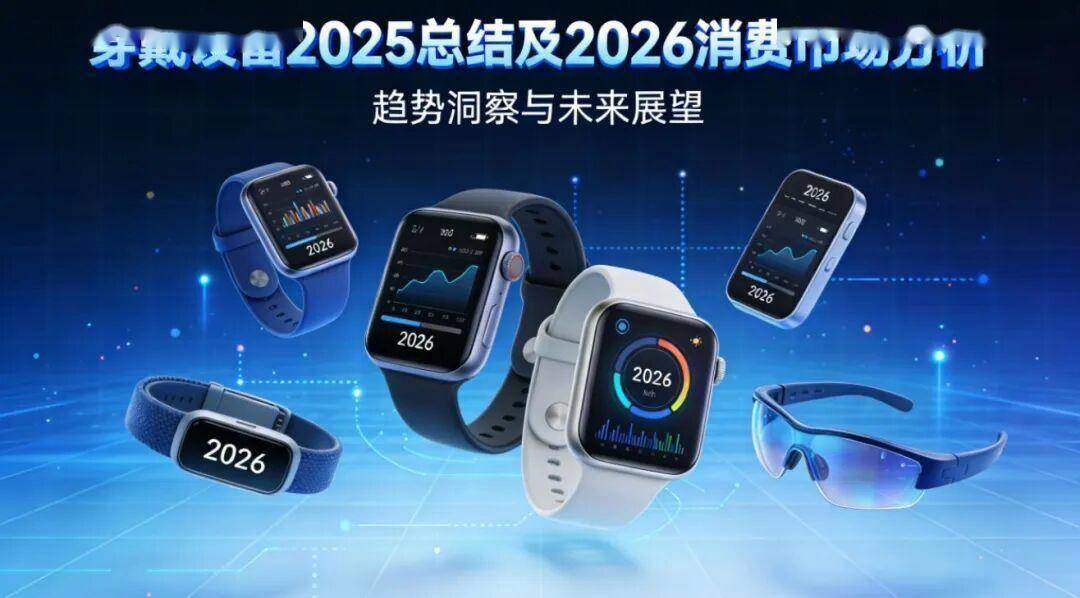
穿戴设备市场研究报告!
Sou Hu Cai Jing· 2026-01-03 19:11
Group 1: Market Overview - The global wearable device market is expected to exceed $430 billion by 2025, with China leading the growth at over 20% [1][2] - The market is projected to reach a scale of over 600 billion yuan in China by 2026, with global shipments nearing 800 million units [1][2] - The growth is driven by health monitoring upgrades, 5G technology proliferation, and AI algorithm optimization [2] Group 2: Product Forms and Technological Innovations - Wearable devices are evolving from visible to "invisible" forms, with innovations in design and integration of health sensors [3] - The rise of smart rings, such as Samsung's Galaxy Ring, signifies a shift towards more discreet health monitoring solutions [3] - Flexible electronics technology is revolutionizing device forms, with companies like BOE producing ultra-thin flexible screens [6] Group 3: Application Scenarios and User Demands - The application scenarios for wearable devices are diversifying, expanding from health monitoring to medical intervention and smart home control [4] - Medical-grade features are becoming more prevalent, with a penetration rate exceeding 55% in health monitoring [16] - The demand for elderly care devices is increasing, with smart fall prevention products gaining traction in the market [17] Group 4: Competitive Landscape - The global wearable device market is characterized by a "three-legged" competition, with Chinese brands holding significant market shares [9] - Huawei leads the global market with a shipment of 28.6 million units, followed by Xiaomi and Apple [9][10] - In the Chinese market, Huawei, Xiaomi, and Little Genius dominate, with Huawei holding a 33.4% market share [10] Group 5: Future Market Trends - The global wearable device market is expected to continue growing, with shipments projected to exceed 850 million units by 2026 [12] - AI functionality penetration is anticipated to rise, with AI watches expected to exceed 25% market penetration by 2026 [12] - The Chinese wearable device market is forecasted to reach 600 billion yuan, with significant growth in medical-grade devices [13][14] Group 6: Key Brand Strategies - Huawei's strategy focuses on its HarmonyOS ecosystem and domestic chip breakthroughs, achieving significant market penetration [19] - Apple's differentiation lies in its high-end ecosystem and M-series chip advancements, maintaining a strong position in the premium market [20][21] - Xiaomi emphasizes high cost-performance and AIoT ecosystem integration, enhancing user experience through interconnected devices [23]


一分钟奖励3万,这个风口正在火过短剧
盐财经· 2026-01-03 10:17
Core Viewpoint - The article discusses the rapid growth and popularity of "manga dramas" (漫剧), a new form of animated short series that is gaining traction among young audiences, particularly on platforms like Douyin and Bilibili [3][7]. Industry Growth - In October 2025, Douyin reported that the total playback volume of manga dramas exceeded 6.1 billion, with several series surpassing 100 million views, and the top hit "Happy Hammer 2025" reaching a cumulative playback of 1.29 billion [3]. - The total monthly playback volume of manga dramas across the internet has surpassed 10 billion [3]. - In the first half of 2025, the number of manga dramas launched reached 3,000, with a monthly compound growth rate of 83%, and revenue scaling up by 12 times [3]. - Multiple brokerages predict that the annual market size for manga dramas could exceed 20 billion yuan, potentially reaching one-third of the revenue of the live-action short drama market [3]. Market Dynamics - Major internet companies are entering the manga drama space, including traditional long-video platforms like iQIYI and Bilibili, short-video platforms like Douyin and Kuaishou, and even e-commerce platforms like JD and Pinduoduo [3][25]. - The majority of current manga dramas are produced with AI involvement, significantly lowering the barriers for creators [5][20]. Audience Engagement - The demographic for manga dramas is predominantly male, with over 60% of viewers aged 18-30, contrasting with the female-dominated audience of live-action short dramas [25]. - The article highlights a shift in viewer preferences, with many young people finding manga dramas more appealing than traditional live-action series due to their creative potential and visual representation [12][28]. Technological Impact - The emergence of AI technology has drastically reduced the production costs and time for manga dramas, allowing for quicker turnaround and lower budgets compared to traditional animation [20][22]. - For instance, the production cost for manga dramas is reported to be between 1,000 to 2,500 yuan per minute, with a total production cost of approximately 100,000 to 300,000 yuan per episode [22]. Competitive Landscape - Internet giants are implementing various support policies for manga drama creators, including financial incentives and IP resource sharing [25]. - Companies like Douyin and Kuaishou are actively promoting AI-driven content creation, while platforms like Yuewen Group are opening up extensive IP libraries to enhance content offerings [25][26]. Future Outlook - Analysts suggest that while manga dramas have the potential to fill gaps in the market, particularly for male audiences, the future success of this genre will depend on innovative content creation rather than just technological advancements [28][29].

2026年重磅线上私享会来了!
格隆汇APP· 2026-01-03 07:49
越是变化剧烈,越需要站在高处看清脉络。越是噪音密集,越要接近源头。 浪潮已至,新程将启。 站在时代的十字路口,我们感受到的,早已不只是日历翻页,更是一场正在发生的深层变革。 2026,并非一个被讨论的未来,它已是正在展开的现实。科技跃迁、全球格局重组、资本逻辑重写,多 股力量正在同一时间叠加。 问题不在于"会不会发生",而在于——你是否已经站在信息出现的地方。 历史从不提前公告。我们正在跨过的,不只是一个年份,更是一条认知分界线。 旧框架正在失效,新线索正在形成。有人已经看见轮廓,有人仍停留在旧地图里。 全球流动性结构正在变化,AI技术进入加速演进区间,资本、科技、生产力之间的联动,比以往任何时 候都更紧密。 变化正在发生。而真正稀缺的,从来不是结论,而是第一时间的判断素材与底层逻辑。 线上直播,名额有限。 正因如此,2026年1月8日,格隆汇携手广发基金、汇添富基金、易方达基金,集结当下极具实战深度与 研究密度的专业力量,共同呈现——《2026潮起新程·开门红联名策略会》。 这不止于一次简单的观点分享,而是一场从全球宏观视角出发,直抵科技、资金与资产配置底层逻辑的 深度线上私享会。 金融学博士、著名经济学家 ...

地产寒潮中,中国最大房产中介撑不住了!转型之路是救命稻草吗?
Sou Hu Cai Jing· 2026-01-02 20:46
Core Viewpoint - The real estate industry is undergoing a significant transformation, with the necessity for real estate agencies to adapt to changing market conditions and consumer needs [3][16]. Market Overview - The National Bureau of Statistics reported that the sales of commercial housing reached 96,750 billion yuan last year, a decline of 17.1% compared to the previous year; from January to October this year, sales amounted to 69,017 billion yuan, reflecting a year-on-year decrease of approximately 10% [4]. - The second-hand housing market shows a unique trend, with a year-on-year increase of 4.7% in signed area, but sales revenue has declined due to falling prices, indicating a "volume increase and price decrease" scenario [6]. Agency Performance - Beike's third-quarter report illustrates a stark contrast between revenue and profit: net income was 23.1 billion yuan, up 2.1% year-on-year, while net profit fell by 36.1% to 747 million yuan [8]. - In the stock housing business, transaction volume reached 505.6 billion yuan, a growth of 5.8%, but revenue decreased by 3.6%, primarily due to changes in the commission model [10]. Transformation Strategies - Beike's transformation path is representative, with new housing business contributions surpassing second-hand housing, particularly in major cities where agency personnel outnumber developers' employees [12]. - The "one fish three eats" strategy diversifies risks by expanding into rental, home furnishing, and decoration services, with non-real estate transaction businesses accounting for 45% of Beike's revenue [12]. Industry Evolution - The role of real estate agencies is shifting from "investment advisors" to "community service providers," offering comprehensive lifecycle services similar to practices in developed countries [14]. - The transition may lead to increased income for agencies, as evidenced by overseas cases where transformed agencies saw income rise by over three times [14]. Challenges Ahead - Beike's market value has significantly decreased, and rumors of layoffs have emerged, reflecting the pressures within the industry [16]. - The integration of AI technology is expected to accelerate industry reshuffling, potentially replacing traditional service scenarios with intelligent systems [16]. Conclusion - The real estate agency industry must embrace refined services to remain relevant, transitioning from facilitating one-time transactions to becoming service providers within the housing ecosystem [18].


酒店业年终盘点:“韧性”中寻找价值 “阵痛”中跨越周期
Xin Lang Cai Jing· 2026-01-02 20:34
Core Insights - In 2025, the Chinese hotel industry faces a challenging and transformative year, characterized by both high occupancy rates during holidays and weak RevPAR growth, indicating a supply-demand imbalance [2][3] - The industry is experiencing a "K-shaped growth," where high-end hotels in prime locations perform well, while mid-range and low-end hotels continue to struggle [3][4] - The overall operational performance of the hotel industry is declining, with significant stock price drops for several hotel companies, reflecting structural pressures [4][6] Supply and Demand Dynamics - The total number of hotel rooms in China is among the highest globally, indicating a shift from growth to competition over existing assets [3][4] - The operational levels of the industry are decreasing, with some regions experiencing declines in both occupancy rates and revenue per room [4][5] - The rapid turnover of hotel assets is evident, with properties being sold at low prices due to financial pressures [4][6] Trends in Hotel Operations - The trend towards increased chain hotel rates and limited-service hotels is becoming mainstream, with major hotel groups like Huazhu showing strong performance during key holiday periods [5][6] - Huazhu's operational data indicates significant year-on-year revenue growth, with occupancy rates exceeding 100% during peak times [5][6] - The introduction of AI technology in the hospitality sector aims to enhance operational efficiency and improve customer experience [9][10] Emerging Segments - The non-standard accommodation sector, particularly homestays and "accommodation+" models, is showing resilience and growth, with increased demand for longer stays [8][9] - The entry of younger consumers into the market is driving demand for unique travel experiences, particularly in non-traditional destinations [8][9] - The integration of AI in the homestay sector is expected to improve the selection process for consumers, enhancing the overall quality of offerings [9][10] Future Outlook - The hotel industry is expected to continue facing challenges in 2026, but opportunities exist in niche markets and through technological advancements [10][11] - Companies that can adapt to customer needs and enhance their product and service offerings are likely to thrive in the evolving landscape [10][11]

乔锋智能(301603) - 301603乔锋智能投资者关系管理信息20260102
2026-01-02 11:08
Group 1: Industry Performance and Growth - In the first three quarters of 2025, the company's sales in key sectors such as consumer electronics (approximately 25% share), molds (approximately 6%), and engineering machinery (approximately 5%) experienced over 100% growth [2] - Automotive parts (approximately 16% share, mainly related to new energy vehicles) grew by about 80% [2] - The largest segment, general equipment (approximately 32% share), reversed a slight decline in 2024, achieving a year-on-year growth of over 10% [2] Group 2: Competitive Advantages - High self-manufacturing rate of core components reduces procurement costs and supply chain risks, enhancing production efficiency [3] - The company has established a comprehensive product line in metal cutting machine tools, significantly improving brand recognition and market presence [3] - A flexible sales model combining direct sales and distribution enhances market coverage and reduces sales costs [3] - A well-established service team with 37 permanent locations nationwide ensures high-quality customer service [3] Group 3: 3C Electronics Sector Outlook - The 3C electronics industry is currently experiencing high demand, supported by structural adjustments in orders and a shift towards domestic alternatives [4][5] - The replacement cycle of existing equipment and the increasing competitiveness of domestic machine tools are driving demand [4] - Innovations in end products and materials, along with the rapid integration of AI technologies, are accelerating the need for new processing equipment [4][5] Group 4: Core Component Manufacturing - The company has achieved self-manufacturing of key components such as spindles, power tool towers, and turntables, which enhances product quality and reduces costs [6] - External procurement of components like CNC systems and linear guides is based on performance requirements and market preferences, with partnerships established with both international and domestic brands [6] Group 5: Emerging Opportunities in Liquid Cooling - The company is focusing on opportunities in liquid cooling for sectors like new energy vehicles and AI servers, where demand for high-efficiency cooling solutions is rapidly increasing [7] - Core components for liquid cooling, such as cooling plates and connectors, require precise machining, which the company is equipped to provide through its advanced machining centers [7]
起底AI“魔改”视频流量变现灰色链条
Xin Lang Cai Jing· 2026-01-01 16:39
Core Viewpoint - The National Radio and Television Administration will implement a one-month special governance initiative starting January 1, 2026, to address the chaotic spread of "AI-modified" videos, focusing on content based on classic literature, historical themes, revolutionary themes, and heroic figures [3]. Group 1: AI Modification Controversy - AI modification, or "AI magic modification," refers to the use of artificial intelligence to radically alter original works, often seen in short videos and visual creations [3]. - Some AI-modified videos have gained significant popularity on short video platforms, with likes reaching tens of thousands, and accounts amassing over 100,000 followers in just half a month [3][5]. - The low technical barrier and high profitability of AI content generation have led many creators to exploit these tools for quick gains, often promoting AI services and monetizing through advertisements and knowledge sharing [4][6]. Group 2: Cultural Impact and Concerns - There is a divide in public opinion regarding AI-modified videos; while some view them as creative expressions, others argue they undermine the integrity and artistic value of original works [5]. - Concerns have been raised about the potential distortion of cultural memory and values, especially for younger audiences who may be influenced by these altered narratives [5][7]. - Legal precedents, such as the "Ultraman AI generation infringement case," highlight the risks of AI modifications distorting historical memory and cultural heritage [5]. Group 3: Governance and Regulation - The National Radio and Television Administration has previously urged short video platforms to monitor and regulate AI-modified content, emphasizing the need for strict entry and oversight of related technologies [8]. - Platforms like Douyin have issued guidelines to discourage low-quality AI-generated content and ensure transparency by labeling AI-generated videos [9]. - Experts suggest that a collaborative approach involving technology companies, legal regulators, and ethical committees is necessary to establish comprehensive governance standards for AI applications [9][10].