具身智能

Search documents
神玑“单挑”英伟达:蔚来要赌AI时代算力话语权
2 1 Shi Ji Jing Ji Bao Dao· 2026-03-02 23:04
Core Insights - The automotive industry's shift towards "intelligentization" is accelerating, particularly in the chip sector, as evidenced by NIO's announcement of a successful financing round for its chip subsidiary, Anhui Shenji Technology Co., Ltd, raising over 2.2 billion RMB with a post-investment valuation nearing 10 billion RMB [1][11] - The financing round attracted a mix of local state-owned enterprises and industry capital, indicating strong confidence in the semiconductor sector and NIO's strategic direction in autonomous driving and embodied intelligence [1][2] - NIO retains a 62.7% stake in Anhui Shenji, while external investors hold 27.3%, with 10% allocated for management incentives, allowing NIO to maintain control over core technologies while alleviating financial pressure [1][3] Company Developments - Anhui Shenji's financing comes at a pivotal moment as the global supply chain is being reshaped and AI technology is rapidly advancing, positioning car-mounted chips as strategic assets for automakers [2][6] - The "Shenji NX9031" chip, the world's first mass-produced 5nm automotive-grade high-performance driving chip, exemplifies NIO's commitment to self-research and development, avoiding reliance on ARM's public licenses [3][4] - The NX9031 chip features over 50 billion transistors, a 32-core CPU architecture, and a self-developed ISP capable of processing 6.5G pixels per second, providing significant cost advantages and performance improvements for NIO vehicles [4][5] Industry Trends - The automotive industry is undergoing a transformation where AI capabilities and chip performance are becoming the core competitive advantages, moving beyond traditional vehicle components [8][9] - Major players in the automotive sector, including Xpeng and Li Auto, are also investing heavily in chip development, indicating a broader industry trend towards self-reliance in AI technology [7][10] - The successful financing of Anhui Shenji reflects a revaluation of technology investments in the automotive sector, highlighting the strong market demand for advanced semiconductor capabilities [11]

3月苏州站:投研闭门会、追觅生态、魔法原子、灵猴机器人——AI中国力量·前沿科技
泽平宏观· 2026-03-02 16:07
Core Viewpoint - The article emphasizes the importance of advanced technology companies in redefining modern life and driving economic growth, particularly in the fields of AI, robotics, and smart living ecosystems [8][14]. Company Summaries Chasing Technology - Founded in 2017, Chasing Technology focuses on high-speed digital motors, intelligent algorithms, and motion control technology, believing that "core technology is fundamental" [4][19]. - As of December 2025, the company has applied for over 8,000 patents globally and has received more than 3,000 authorized patents, establishing itself as a global leader in the smart cleaning sector [4][19]. Magic Atom - Established in 2024, Magic Atom is one of the few companies in China with full-stack self-research capabilities for humanoid robots, boasting a hardware self-research rate exceeding 90% [5][20]. - The company emphasizes commercialization and has launched the "Thousand Scenes Co-Creation Plan" to refine robots in real-world settings, addressing practical usability issues [5][20]. Monkey Robotics - Founded in 2015, Monkey Robotics is a core component supplier in the smart manufacturing sector, focusing on machine vision, direct-drive motors, and industrial robots [7][21]. - The company aims to build a comprehensive ecosystem for embodied intelligence, providing one-stop ODM services and expanding its product offerings, including visual modules and joint modules [7][21]. Industry Insights AI and Robotics Trends - The article highlights the transition of AI from virtual to physical reality, unlocking trillion-dollar market opportunities [9][18]. - Key topics for discussion include the development of service robots driven by AI models, the bottlenecks in humanoid robot mass production, and the investment logic in the robotics industry [18].


想入局VLA却不知从何下手?NTU&中大开源「终极菜谱」:从基座到频域建模,每一步都有实验支撑
量子位· 2026-03-02 16:00
Core Insights - The article discusses the development of VLANeXt, a new model that systematically analyzes the design space of Visual-Language-Action (VLA) models across 12 key dimensions, providing a comprehensive "recipe" for effective model design [1][5][20] - VLANeXt significantly outperforms various state-of-the-art (SOTA) methods, including models with 7 billion parameters, achieving a 10% increase in success rate under previously unseen conditions such as lighting and camera angles [1][23] Group 1: Background and Motivation - The rise of large foundational models has highlighted the potential of VLA models, which leverage rich visual and language understanding for scalable robotic learning [5] - The current VLA research landscape is fragmented, with various models claiming superior performance but lacking a unified framework for evaluation, necessitating a return to fundamental design principles [5] Group 2: Model Development Process - The research team began with a baseline model similar to RT2, using LLaMA as the backbone and focusing on action modeling through a simple architecture [7] - Key enhancements included the introduction of an independent policy module, deeper policy modeling, and action chunking to improve inference speed and model performance [9][11] Group 3: Foundational Components - The team discovered that decoupling language and action spaces and using an independent policy head significantly improved performance compared to reusing text tokens for action classification [9] - The model architecture was deepened to 29 layers to better capture action distributions, aligning with the backbone of the visual-language model (VLM) [9] Group 4: Perception Essentials - The study found that redundant historical visual information did not enhance performance, leading to the decision to use only the current frame's image [14] - Incorporating multi-view inputs, including third-person and wrist perspectives, provided complementary geometric cues, improving action accuracy [14] Group 5: Action Modeling Perspectives - The team explored the use of world models for action learning but opted against it due to increased training time, focusing instead on efficient modeling techniques [16] - They introduced frequency domain modeling through discrete cosine transforms (DCT) to enhance action prediction without significant additional training costs [16] Group 6: Experimental Results - VLANeXt demonstrated superior performance across various benchmarks, including LIBERO and LIBERO-plus, achieving an average score of 99.0 in the LIBERO benchmark [21][22] - The model's robustness was validated in real-world tasks, showing strong adaptability in both single-arm and bimanual scenarios without specialized pre-training [25]

荣耀李健这一“跳”:要跨过手机?
虎嗅APP· 2026-03-02 13:52
Core Viewpoint - The article discusses the significant transformation of Honor as it aims to redefine its identity beyond being a successor to Huawei, particularly in the context of the competitive smartphone market and the introduction of innovative products like the "Robot Phone" and humanoid robots [5][16]. Group 1: Product Innovations - Honor's "Robot Phone" features a micro 4DoF gimbal system that allows for dynamic movements and interactions, showcasing a shift from traditional smartphone designs [4][10]. - The upcoming Magic V6 will include a 7150mAh battery, emphasizing Honor's focus on high-performance hardware while also introducing humanoid robots to its product lineup [4][6]. - The introduction of the humanoid robot and its interaction with the Robot Phone signals Honor's ambition to integrate AI into physical devices, moving beyond conventional smartphone functionalities [4][12]. Group 2: Market Position and Strategy - Following Huawei's resurgence, Honor's market share has declined, with a reported 3% drop in shipments while Huawei's increased by 37% in Q1 2024 [6][16]. - The 2024 replacement cycle in the smartphone market has intensified competition, leading to price pressures and a need for innovation among manufacturers [7][8]. - Honor's "Alpha Strategy" aims to transform the company into an AI terminal ecosystem, with a planned investment of $10 billion over five years to develop smart devices [7][13]. Group 3: Industry Trends and Challenges - Analysts predict a 13% decline in the global smartphone market by 2026, prompting manufacturers to pivot towards AI and robotics products [8][10]. - The humanoid robot market is currently limited, with global shipments below 18,000 units and sales around $440 million, indicating that this segment is not yet a significant growth driver for manufacturers [10][12]. - Despite the challenges, Honor's focus on high-end products like the Robot Phone suggests a strategy to target consumers with purchasing power, as over 30% of the smartphone market consists of high-end models priced above $600 [10][12].

【汽车零部件&机器人主线周报】智元“牵手”敏实,宇树发布新款四足机器狗
东吴汽车黄细里团队· 2026-03-02 13:51
Investment Highlights - The SW Auto Parts Index increased by 1.73% this week, ranking first among SW Auto sectors, with a year-to-date increase of 6.76% [3][12] - The latest PE (TTM) for SW Auto Parts is at the 88.37% historical percentile, while the PB (LF) is at the 81.92% historical percentile [3][33] Robotics Sector Review - The Wande Robotics Index rose by 0.08% this week, with a year-to-date increase of 2.63%, underperforming the SW Auto Parts sector by 1.65% [4][35] - The latest PE (TTM) for Wande Robotics is at the 81.07% percentile for the past year, and the PB (LF) is at the 81.89% percentile [4][44] Key Developments in Core Coverage - Sensible Group signed a strategic cooperation agreement with Zhiyuan Robotics to accelerate the localization and large-scale deployment of robotics technology in Europe [5][53] - Notable stock performers this week include: - Xingyuan Zhuomei +10.64% - Bertley +7.15% - Feilong Co. +7.11% - Changhua Group +5.19% - Yinlun Co. +4.73% [6][51] Major Events This Week - Zhiyuan entered the German market - Yushu launched a new quadruped robot - Honor will showcase its first humanoid robot in Barcelona on March 1 - Xiaopeng plans to build the industry's first full-chain production base for humanoid robots, with IRON expected to start mass production by the end of 2026 [7][45] Investment Recommendations - For auto parts, focus on structural opportunities by selecting product-oriented companies and those entering high-value sectors to increase ASP, with a priority on companies expanding capacity in Europe, North America, and Southeast Asia [8][54] - For robotics, look for certainty in opportunities, particularly with the anticipated release of Optimus V3 in Q1 2026, and monitor the application deployment by domestic companies like Xiaopeng, Yushu, and Zhiyuan [8][54] - Specific recommendations include: - EPS dimension: Fuyao Glass, Xingyu Co., Sensible Group, Junsheng Electronics, Xingyuan Zhuomei, with a focus on Xinquan Co. - PE dimension: Top Group, Junsheng Electronics, Shuanghuan Transmission, Sensible Group, Yinlun Co., Feilong Co., with a focus on Yap Co. and Daimi Co. [8][54]

你的邮件被AI删过吗?这事儿马斯克都慌了
经济观察报· 2026-03-02 13:06
Core Viewpoint - The rapid advancement of AI technology has not diminished the value of cybersecurity; instead, it has elevated it to a new level of rigid demand, necessitating a focus on innovation and safety in the AI era [2][10]. Group 1: Focus on Private Economy and Legal Protection - The implementation of the "Private Economy Promotion Law" has strengthened the confidence of private enterprises, providing a legal foundation for their development [4]. - Key benefits observed by private enterprises include legal protections that allow for bolder development, and a swift follow-up of supportive measures from central to local governments [4][5]. Group 2: AI and Security as Dual Drivers - The integration of "AI + security" is seen as essential for building a modern industrial system, addressing challenges such as insufficient industrial upgrade foundations and unstable operational orders [3]. - The need for a virtuous cycle of "security construction - intelligent application - green integration" is emphasized to foster innovation and development [3]. Group 3: Financing Challenges for Private Enterprises - Despite the introduction of significant funding initiatives, such as a 100 billion yuan national venture capital fund, challenges in financing persist, particularly for light-asset tech companies facing high borrowing costs [5]. - The average financing cost for some private tech enterprises ranges from 8% to over 20%, contrasting sharply with state-owned enterprises that can secure loans at rates below 3% [5]. Group 4: Talent Acquisition and Retention - Private enterprises have advantages in attracting talent due to their flexible mechanisms and high efficiency, but face challenges in addressing housing, healthcare, and education for employees [8]. - Government support is needed to ensure that private sector talent can access the same recognition and benefits as those in state-owned enterprises [8]. Group 5: Opportunities and Challenges in AI - The current wave of AI presents a historic opportunity for innovation, driven by favorable policies and technological advancements [9]. - Major challenges include the long innovation cycles and high investment required for core technologies, as well as the pressing need for robust security measures against sophisticated cyber threats [9][10]. Group 6: New Risks Associated with AI - The evolution of AI into "superhuman" capabilities raises significant security risks, including data security crises and challenges in maintaining effective cybersecurity measures [12]. - The necessity for preemptive security measures in AI innovation is highlighted, emphasizing the importance of embedding security throughout the AI application lifecycle [13]. Group 7: AI's Impact on Cybersecurity Workforce - AI is transforming the cybersecurity landscape by automating routine tasks, allowing professionals to focus on higher-value activities, while also creating new roles such as AI red team and security model engineers [14][15]. - The introduction of AI-driven security robots is enhancing human-machine collaboration, significantly improving the efficiency and effectiveness of security operations [15]. Group 8: Emerging Challenges from Embodied Intelligence - The development of embodied intelligence introduces new security challenges across decision-making, execution, and physical layers, necessitating a comprehensive defense strategy [17]. - A unified defense system that integrates monitoring, risk analysis, and access control is essential to safeguard data assets and ensure operational integrity [17].


苏州固锝(002079):光伏+半导体+人形机器人布局全面,期待多领域进展提速
ZHESHANG SECURITIES· 2026-03-02 12:46
Investment Rating - The investment rating for the company is "Buy" and is maintained [4] Core Views - The company is actively expanding in multiple sectors including photovoltaics, semiconductors, and humanoid robotics, with expectations for accelerated progress across these fields [2][4] - The company holds a 22% stake in Suzhou Minghao and is focusing on developing pressure sensor products [2] - Profit forecasts indicate that the net profit attributable to the parent company is expected to be CNY 0.80 billion, CNY 0.99 billion, and CNY 1.20 billion for the years 2025 to 2027, representing growth rates of 9%, 23%, and 21% respectively [2] Financial Summary - The projected operating revenue for the company is CNY 5.638 billion in 2024, with a forecasted decline to CNY 3.989 billion in 2025, followed by a recovery to CNY 4.199 billion in 2026 and CNY 4.662 billion in 2027, reflecting changes of +38%, -29%, +5%, and +11% respectively [3] - The net profit attributable to the parent company is projected to decrease to CNY 0.074 billion in 2024, then increase to CNY 0.080 billion in 2025, CNY 0.099 billion in 2026, and CNY 0.120 billion in 2027, with respective growth rates of -52%, +9%, +23%, and +21% [3] - The earnings per share (EPS) is expected to remain stable at CNY 0.1 from 2024 to 2026, and increase to CNY 0.15 in 2027 [3]

【太平洋科技-每日观点&资讯】(2026-03-03)
远峰电子· 2026-03-02 11:58
Market Overview - The Shanghai Composite Index increased by 0.47%, while the Shenzhen Component Index decreased by 0.20%, the ChiNext Index fell by 0.49%, the STAR Market 50 dropped by 1.56%, and the Beijing Stock Exchange 50 declined by 3.99% [1] - The TMT sector led the gains with SW Communication Cables and Accessories up by 3.80%, SW Communication Network Equipment and Devices up by 3.47%, and SW Military Electronics III up by 2.69% [1] - Conversely, the TMT sector also saw declines, with SW Marketing Agency down by 5.23%, SW Communication Application Value-Added Services down by 5.01%, and SW Film and Animation Production down by 4.51% [1] Domestic News - New Tang Technology announced a price adjustment for its wafer foundry business, effective April 1, 2026, with an overall adjustment of approximately 20% to maintain supply stability and deepen long-term customer relationships [2] - MediaTek invested approximately $90 million (around 619.7 million RMB) to acquire a 2.4% stake in US silicon photonics company Ayar Labs, which is backed by major players like NVIDIA, AMD, and Intel [2] - Crystal Tech's 12-inch silicon carbide (SiC) crystal growth furnace successfully passed on-site acceptance testing, demonstrating good repeatability and reliability, ready for mass production [2] - The first domestic 8-inch diamond heat sink production line was officially launched by Huanghe Xuanfeng's subsidiary, with a total investment of 1.2 billion RMB, capable of producing 20,000 pieces annually [2] Overseas News - AOI received its fourth 800G mass production order from a major hyperscale customer to support AI data center growth, with expectations for 400G business to remain strong [3] - TrendForce forecasts that global sales of new energy vehicles (BEV, PHEV, and hydrogen fuel cell vehicles) will reach 20.53 million units in 2025, a 26% year-on-year increase, with a projected 14% growth to 23.4 million units in 2026 [3] - Rohm announced the integration of its GaN power device technology with TSMC's process technology to enhance supply capabilities for AI servers and electric vehicles [3] - Gartner predicts that PC manufacturers will have to raise prices due to rising memory costs, leading consumers to delay purchases and extend the lifespan of personal computers by 20% by the end of the year [3] AI Insights - Tsinghua and Stanford teams proposed the VLAW framework, achieving bidirectional iterative optimization of VLA strategies and action condition world models, significantly reducing false positive rates [4] - OpenRouter data shows that from February 9 to 15, the model call volume in China reached 4.12 trillion tokens, surpassing the US's 2.94 trillion tokens, with further increases noted in the following week [4] - SaaS leader Jushuitan integrated the Qwen large model into its intelligent ERP system, introducing features that have helped e-commerce merchants save over 90% on model invitation and shooting costs [4] - Domestic AI made significant breakthroughs in vulnerability detection, surpassing Claude by identifying 10 additional 0-day vulnerabilities [4] Industry Tracking - Star River Dynamics announced a new rocket patent that allows for automatic attitude adjustment during rocket segment docking, improving efficiency and precision [5] - Swedish scientists proposed the "giant super-atom" theory, which could reduce reliance on complex external measurement and control circuits for quantum networks and sensors [5] - Faraday Future announced the delivery of its EAI robots to a high-end Airbnb operator in the US, marking a significant step in its robotics deployment [5] - Anhui Haoyuan Chemical's project for an annual production of 30,000 tons of hexamethylenediamine has been approved, which includes new production facilities [5]
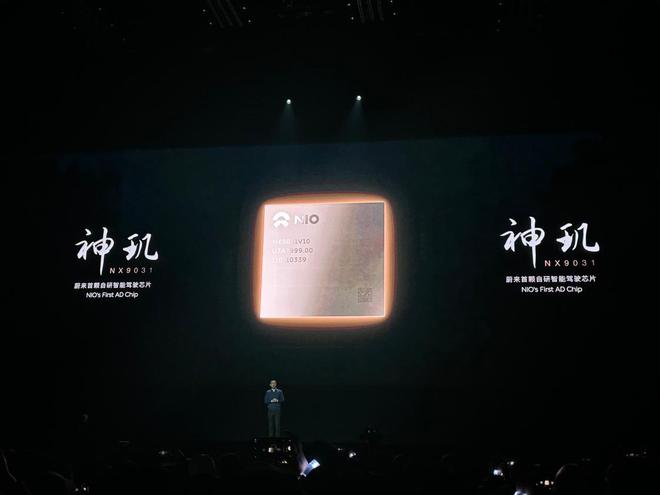
神玑单挑英伟达:蔚来拆分芯片业务,赌的是AI时代算力话语权
2 1 Shi Ji Jing Ji Bao Dao· 2026-03-02 10:56
Core Viewpoint - The automotive industry's shift towards "intelligentization" is accelerating, with a focus on chip technology as a critical battleground for competitive advantage in autonomous driving and AI applications [1][4]. Group 1: NIO's Strategic Moves - NIO's subsidiary, Anhui Shenqi Technology Co., Ltd., completed its first round of equity financing, raising over 2.2 billion RMB, with a post-investment valuation nearing 10 billion RMB [3]. - The financing will support the continued research and development of high-end, competitive chip products, aiding NIO's long-term strategy in autonomous driving and embodied intelligence [3][5]. - NIO retains a 62.7% stake in Shenqi, while external investors hold 27.3%, and 10% is held by management incentive entities, allowing NIO to maintain control over core technologies [3][6]. Group 2: Technological Advancements - The Shenqi NX9031 chip is the world's first mass-produced 5nm automotive-grade high-performance driving chip, showcasing significant technological advancements [6]. - The NX9031 features over 50 billion transistors, a 32-core CPU architecture, and a self-developed ISP capable of processing 6.5G pixels per second, with a latency of less than 5ms [7]. - NIO's strategy of self-research and development in chip technology aims to reduce costs significantly, with each vehicle potentially saving 10,000 RMB by replacing multiple purchased chips with a single self-developed chip [7]. Group 3: Industry Trends and Competition - The automotive industry is undergoing a transformation where AI technology is becoming essential, shifting from an optional to a mandatory focus for companies aiming to be leaders in the sector [9]. - Major players like Xpeng and Li Auto are restructuring their organizations to enhance their AI capabilities, indicating a broader trend of traditional automakers evolving into AI technology companies [9][10]. - The competition for AI chips is intensifying, as companies recognize that the core competitiveness of vehicles is shifting from traditional components to AI-driven capabilities [10][11]. Group 4: Future Prospects - The successful financing of Shenqi reflects a revaluation of technology investments in the automotive sector, emphasizing the importance of high-barrier, long-cycle technology [12]. - The ability of Shenqi to maintain stable supply to NIO while expanding into new markets, such as embodied robotics, will be crucial for its future success [12]. - The automotive AI competition is set to escalate in 2026, with NIO positioning itself at the forefront of this evolution through its advancements in chip technology [12].
海外周观点:OpenAI再获千亿美元融资,泡泡玛特加速推出新IP
HUAXI Securities· 2026-03-02 10:55
Investment Rating - The report provides a "Buy" rating for the industry, predicting that stock prices will outperform the Shanghai Composite Index by 15% or more in the next six months [45]. Core Insights - OpenAI has secured $110 billion in financing, with a pre-investment valuation of $730 billion, indicating strong investor confidence and potential for growth in the AI sector [2][11]. - The launch of new IPs by Pop Mart, including "After School Merodi" and "Key A," has generated significant consumer interest, with over 35,000 pre-orders and a reading volume exceeding 100 million within 48 hours [3][12]. - JD's food delivery service has captured over 15% market share, with expectations to reach 30% by 2026, supported by a growing user base and strategic expansion [4][14]. Summary by Sections OpenAI Financing - OpenAI announced a $110 billion financing round, with major investments from Nvidia ($30 billion), Amazon ($50 billion), and SoftBank ($30 billion), reflecting a robust valuation of $730 billion [2][11]. Pop Mart New IP Launch - Pop Mart's new IP "After School Merodi" was launched online on February 26 and offline on February 27, featuring 12 regular and 1 hidden variant, priced at 69 yuan per blind box and 828 yuan per full box [3][12]. JD Food Delivery Market Share - JD's food delivery service reported over 240 million users by 2025, achieving a market share exceeding 15%, with plans to expand to 30% by 2026 [4][14].