
无人驾驶

Search documents
9.26犀牛财经早报:机构大举增持主动权益基金 黄仁勋连续4个月卖出英伟达
Xi Niu Cai Jing· 2025-09-26 01:40
Group 1 - The A-share market is recovering, leading to significant profits for fund investors, with 2.15 billion fund investors on the Ant Fund platform achieving cumulative profits [1] - Institutional investors have notably increased their holdings in active equity funds, with a rise of 54.1 billion yuan in asset scale and an increase of 27.1 billion fund shares by the end of the first half of the year [1] - West China Fund confirmed that a fund manager was caught gambling and has been dismissed from their position following administrative penalties [1] Group 2 - The China Coking Industry Association recommends a 30% production cut across the coking industry to maintain reasonable profit levels and healthy development [2] - Coking prices are set to increase, with specific price adjustments for various types of coke effective from September 26 [2] Group 3 - The global average selling price (ASP) of smartphones is projected to rise from $370 in 2025 to $412 in 2029, driven by high-end trends and the adoption of 5G technology [3] Group 4 - The Robotaxi sector is experiencing a surge in stock prices, with leading companies like Pony.ai and Baidu seeing significant increases in their stock values due to accelerated commercial applications [4] - The cobalt market is tightening due to export bans from the Democratic Republic of Congo, leading to a nearly 40% increase in cobalt prices this year [4] Group 5 - Starbucks plans to close underperforming stores in North America, reducing the number of company-operated stores by approximately 1% by fiscal year 2025, while also cutting about 900 non-retail positions to invest in store operations [5] Group 6 - ByteDance has denied rumors of preparing for an IPO in Hong Kong, urging caution against misinformation regarding "Byte concept stocks" [6] Group 7 - Shanghai Forever Bicycle Company has stated that products like "Forever Rabbit" are not associated with the company and will pursue legal action against unauthorized use of its trademark [7] Group 8 - Horizon Robotics plans to raise approximately 6.339 billion HKD through a share placement to expand its overseas market and support advanced driver assistance solutions [9] Group 9 - Dragon Big Food announced that 0.70% of shares held by its controlling shareholder are under judicial freeze, but this will not affect the company's operations or governance [10] Group 10 - Zhaochi Co. has completed the R&D design of its 1.6T OSFP DR8 optical module, with plans to launch samples by the end of 2025 [11] - Jingchen Co. has submitted an application for H-share listing on the Hong Kong Stock Exchange [12]


Robotaxi三国杀:Lucid交车了,特斯拉慌吗?
汽车商业评论· 2025-09-25 23:08
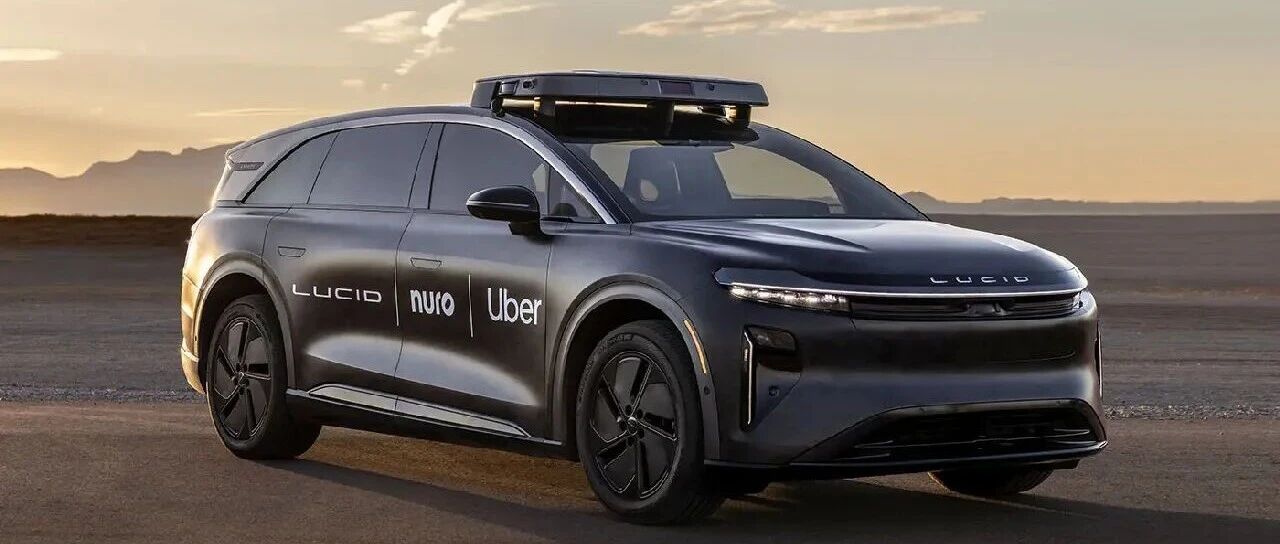
Core Viewpoint - Lucid has initiated its entry into the Robotaxi market by delivering its first engineering vehicle to Nuro for integration with the "Nuro Driver" system, marking a significant step towards operational deployment in partnership with Uber [4][5]. Group 1: Delivery and Partnership - The delivery of the first vehicle signifies the beginning of an exciting new chapter for Lucid, with plans to deploy at least 20,000 L4 Robotaxis over the next six years starting in 2026 [5]. - Uber has invested $300 million in Lucid, which has been completed as of September 4, providing initial funding for engineering prototypes and early-stage production [9]. - The vehicle will be exclusively available to passengers through the Uber app, with the first city launch planned for 2026 [9]. Group 2: Production and Regulatory Challenges - Lucid has faced production capacity challenges due to supply chain fluctuations, but claims these issues have been largely resolved, with the Gravity platform ramping up as planned [11]. - The company is extending the $7,500 federal tax credit through the end of the year to stabilize delivery expectations [12]. - Regulatory compliance is another hurdle, with updates from U.S. transportation safety regulators streamlining the temporary exemption application process for autonomous driving [13]. Group 3: Competitive Landscape - The entry of Lucid and other new players is reshaping the autonomous driving landscape, with Tesla recently reigniting interest in Robotaxis through pilot programs [17]. - Waymo is expanding its services in multiple cities, emphasizing a cautious and steady approach to growth [20]. - Uber is diversifying its partnerships and technology routes, moving towards a platform-based model rather than heavy asset ownership [22]. Group 4: Future Outlook - The period from 2026 to 2028 is anticipated to be critical for evaluating the operational capabilities of various autonomous driving models, including those of Lucid, Nuro, and Uber [22].

经营数据亮眼 无人驾驶出租车商业化进程提速
Zhong Guo Zheng Quan Bao· 2025-09-25 22:16
Core Insights - The stock performance of Robotaxi companies has been impressive, with significant increases in share prices for major players like Pony.ai, WeRide, and Baidu's Apollo Go in September 2023 [1] Company Developments - Pony.ai has entered the Singapore market, partnering with ComfortDelGro to launch autonomous ride-hailing services pending regulatory approval, marking a significant step in its international expansion [2] - Pony.ai reported a total revenue of 154 million yuan for Q2 2025, a year-on-year increase of 75.9%, with Robotaxi revenue growing by 157.8% and passenger fare revenue increasing by over 300% [2] - WeRide announced that its Robobus received Belgium's first federal-level L4 autonomous driving test license, expanding its operational footprint to seven countries [2] - WeRide's Q2 revenue was 127 million yuan, up 60.8%, with Robotaxi revenue soaring by 836.7%, now accounting for 36.1% of total revenue [2] - Baidu's Apollo Go provided over 2.2 million rides globally in Q2, a 148% increase year-on-year, and has formed strategic partnerships with Uber and Lyft to expand its services [3] Industry Trends - The improvement in Robotaxi companies' operations is attributed to cost reductions from a mature supply chain and the scale effects of market expansion [4] - The cost of Robotaxi operations is expected to match that of traditional taxis by 2026, according to Frost & Sullivan [4] - In high-income markets like the U.S., Robotaxi customers show a strong willingness to pay, prioritizing safety over price, while in China, customers remain price-sensitive [4] - The competition in the autonomous driving sector is shifting towards establishing a complete ecosystem involving technology, platforms, and vehicle models [5] - Safety and trust issues remain significant challenges for the widespread adoption of Robotaxi services, particularly following accidents involving L2 and L4 autonomous systems [5]

经营数据亮眼无人驾驶出租车商业化进程提速
Zhong Guo Zheng Quan Bao· 2025-09-25 22:13
Core Insights - The stock performance of Robotaxi companies has been impressive, with significant increases in share prices for major players like Pony.ai, WeRide, and Baidu's Apollo Go in September 2023 [1] Company Developments - Pony.ai has entered the Singapore market, partnering with ComfortDelGro to launch autonomous ride-hailing services pending regulatory approval, marking a significant step in its international expansion [2] - In Q2 2025, Pony.ai reported total revenue of 154 million yuan, a year-on-year increase of 75.9%, with Robotaxi business revenue growing by 157.8% and passenger fare revenue increasing by over 300% [2] - WeRide announced that its Robobus received Belgium's first federal-level L4 autonomous driving test license, expanding its operational footprint to seven countries [2] - WeRide's Q2 revenue was 127 million yuan, up 60.8%, with Robotaxi revenue soaring by 836.7%, now accounting for 36.1% of total revenue [2] - Baidu's Apollo Go provided over 2.2 million rides globally in Q2, a 148% increase year-on-year, and has formed strategic partnerships with Uber and Lyft to expand its service offerings [3] Industry Trends - The Robotaxi sector is experiencing a critical transition from technology validation to large-scale commercial operations, driven by improved operational data and reduced costs [1][4] - The cost of Robotaxi hardware is significantly decreasing, which is accelerating the commercialization process, with projections indicating that by 2026, the cost per kilometer for Robotaxis will be comparable to traditional taxis [4] - There is a strong willingness to pay among Robotaxi customers in high-income markets, while in China, customers remain price-sensitive, viewing Robotaxis as alternatives to traditional ride-hailing services [4] Challenges - Safety and trust issues remain the biggest challenges for the large-scale deployment of Robotaxis, particularly following traffic accidents that have raised concerns about the reliability of L2 driving assistance technologies [5] - Experts have noted that while end-to-end architectures show potential in L2 scenarios, they are not yet suitable for the higher safety requirements of L4 autonomous driving [5]
多赛道竞速升级 激光雷达行业“卡位战”正酣
Shang Hai Zheng Quan Bao· 2025-09-25 18:14
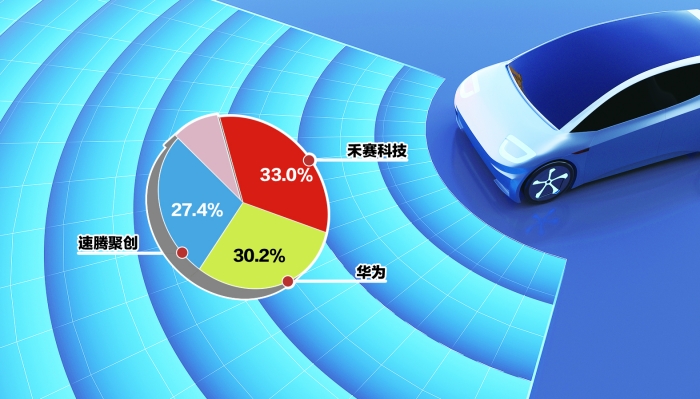
Core Insights - The laser radar industry is transitioning from technological breakthroughs to competition for application scenarios, with companies racing to establish their presence in the market before it solidifies [2][3]. Group 1: Market Dynamics - Major laser radar manufacturers are announcing significant orders and partnerships to capture the autonomous driving market, particularly in the Robotaxi sector [3][4]. - Hesai Technology has secured a $40 million overseas order and strategic partnerships for its laser radar products, indicating a clear production timeline with expected mass production by 2026 [3][4]. - The market share of leading companies in the vehicle-mounted auxiliary driving sector is closely contested, with Hesai, Huawei, and Suteng JuChuang holding 33.0%, 30.2%, and 27.4% respectively, showing a competitive landscape [5]. Group 2: Technological Advancements - The industry consensus is shifting towards equipping L3 and L4 autonomous driving solutions with multiple laser radars, enhancing the perception capabilities of autonomous vehicles [3]. - Suteng JuChuang is focusing on digital high-line laser radar and has integrated its products with NVIDIA's DRIVE platform, aiming for mass production by the end of the year [4]. Group 3: Strategic Collaborations - Companies are forming strategic partnerships to enhance their market positions, with Hesai collaborating with Motional and others to supply laser radars for Robotaxi models [3][4]. - Suteng JuChuang has established collaborations with multiple Robotaxi companies, including a significant partnership with Didi Autonomous Driving, targeting mass production by 2025 [4]. Group 4: Expansion into New Markets - The competition is expanding beyond passenger vehicles into commercial vehicles, with companies like Tudatong targeting the autonomous truck market and forming partnerships for mass production [5][6]. - The growth in the robotic sector is notable, with Hesai and Suteng JuChuang launching products specifically for applications like lawn mowing, indicating a diversification of their product offerings [6].

芯片主业承压! 英伟达入局无人驾驶出租车?
Mei Ri Jing Ji Xin Wen· 2025-09-25 13:29
Core Insights - Nvidia is incubating a Robotaxi project, transitioning from a chip supplier to a direct participant in the market, driven by the need for a technology closed-loop [1][2] - The global Robotaxi market is expected to reach 488.8 billion yuan in China and 834.9 billion yuan worldwide by 2030, with Nvidia aiming to leverage its technology for sales growth in autonomous driving solutions [2][3] - Nvidia's automotive and robotics revenue was only 1.31% of its total revenue in FY2025, indicating a need for growth in this segment [3] Group 1: Nvidia's Strategic Shift - Nvidia's move into Robotaxi may be an attempt to replicate Tesla's success by validating its GPU and AI capabilities through real-world projects [2][3] - The company has previously invested in Robotaxi firms like WeRide, indicating a strategic interest in the sector [1] - Analysts suggest that Nvidia's involvement in Robotaxi could enhance its technology ecosystem by providing real operational data for model optimization [1][8] Group 2: Market Dynamics and Competition - The Robotaxi industry is rapidly evolving, with both China and the U.S. leading in small-scale operations and commercialization [2] - Nvidia's Drive Orin-X chip holds a 39.8% market share in the domestic smart driving domain, but its automotive revenue remains low compared to its overall earnings [2][3] - Competitors like Waymo and Tesla have established a strong foothold in the market, posing challenges for Nvidia in terms of operational experience and data accumulation [6][8] Group 3: Financial Performance and Projections - Nvidia's total revenue for FY2025 is projected at $130.5 billion, with automotive and robotics contributing only $1.7 billion [3] - The company aims to accelerate its automotive business, targeting $5 billion in revenue by FY2026 [3] - Despite its strong chip technology, Nvidia faces challenges in the automotive sector, including delays in the production of its next-generation DRIVE Thor chip [6][7] Group 4: Investment Trends and Challenges - The Robotaxi sector requires significant capital investment, with companies like Waymo receiving substantial funding to advance their projects [4][6] - Domestic competitors are increasing their R&D expenditures, indicating a competitive landscape where Nvidia must enhance its operational capabilities [4][7] - The industry is still in its early stages, with profitability being a concern, making Nvidia's timing for entry critical [3][8]
西菱动力(300733.SZ)无产品应用于无人驾驶领域
Ge Long Hui· 2025-09-25 09:03
Core Viewpoint - Xiling Power (300733.SZ) has confirmed that the company does not have any products applied in the field of autonomous driving [1] Group 1 - The company has clarified its position regarding its product offerings in the autonomous driving sector [1]

中伟股份:公司与特斯拉、三星SDI等客户建立了稳定的合作关系
Mei Ri Jing Ji Xin Wen· 2025-09-25 05:42
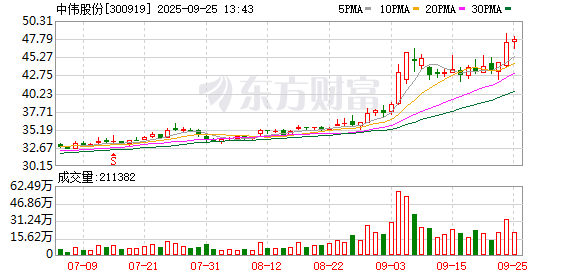
Core Viewpoint - The company, Zhongwei Co., Ltd. (300919.SZ), is actively expanding its presence in the lithium battery industry, focusing on various sectors including energy storage, consumer electronics, and emerging technologies such as artificial intelligence and robotics [2]. Group 1: Business Expansion - The company has fully entered the global lithium battery supply chain, demonstrating strong supply capabilities across multiple fields [2]. - Zhongwei Co., Ltd. is exploring battery materials for new emerging fields, positioning itself to seize market opportunities [2]. Group 2: Client Relationships - The company has established a global and diversified core customer system, forming stable partnerships with leading clients such as Tesla, Samsung SDI, CATL, ECOPRO, and POSCO [2].
何小鹏:未来的汽车都是全自动驾驶、无人驾驶,我们的下一代或不用考驾照了
Feng Huang Wang Cai Jing· 2025-09-25 03:03
Group 1 - The "Phoenix Bay Area Finance Forum 2025" was held in Guangzhou, focusing on the theme "New Pattern, New Path" and gathering global elites from politics, business, and academia to explore development opportunities [1] Group 2 - Xiaopeng Motors' Chairman and CEO He Xiaopeng emphasized the future of driving, suggesting that in 20 years, the next generation may not need to obtain a driver's license, similar to how horseback riding has become a hobby rather than a necessity [3] - He highlighted the significant growth of electric vehicles in China, noting that in the past 11 years, the market share of electric vehicles in new car sales rose from less than 0.4% to over 60% this year, with a peak of 50% last year [3] - He argued that the belief in the future of smart vehicles, particularly with AI, has evolved over the past decade, indicating that the next industrial revolution will transform daily life through advancements in fully autonomous and robotic vehicles [3]


百度集团-SW涨超3% 萝卜快跑将在迪拜率先部署超过1000台全无人驾驶汽车
Zhi Tong Cai Jing· 2025-09-25 02:15
值得一提的是,迪拜道路和交通管理局(RTA)在7月份为萝卜快跑颁发了首批50个自动驾驶测试牌照。 根据今年3月签署的战略合作协议,萝卜快跑将在迪拜率先部署超过1000台全无人驾驶汽车。 目前,萝卜快跑已驶入香港、迪拜、阿布扎比等16座城市,累计在全球提供超1400万次无人驾驶出行服 务,安全行驶里程超2亿公里。今年7月以来,萝卜快跑与Uber、Lyft等全球平台合作,将进一步加速在 中东、欧亚等地区的布局。 百度集团-SW(09888)涨超3%,截至发稿,涨3.34%,报132.9港元,成交额8.99亿港元。 消息面上,据百度官微消息,9月24日,萝卜快跑携带迪拜首个自动驾驶测试牌照——001号车牌,亮 相"迪拜世界自动驾驶交通大会"展台。据介绍,今年2月,百度创始人李彦宏在迪拜WGS大会上与阿联 酋AI部长奥马尔·苏丹·奥拉马对谈时,部长表示,"期待在明年的大会上,所有车队都是由萝卜快跑支持 的无人驾驶。" ...