
产业升级

Search documents
申科股份(002633.SZ):拟在上海设立研发总部
Ge Long Hui A P P· 2025-12-21 10:39
格隆汇12月21日丨申科股份(002633.SZ)公布,公司深耕厚壁滑动轴承及动力装备零部件领域多年,已 形成一定的技术壁垒与市场资源优势。为落实公司全面转向"厚壁滑动轴承及动力装备系统解决方案 商"的战略定位,突破从"厚壁滑动轴承及动力装备零部件供应商"向"厚壁滑动轴承+动力装备部套件+动 力装备系统解决方案"的产业升级,公司拟在上海设立研发总部,研发总部投资额不超过5000万元人民 币。 ...

申科股份:拟在上海设立研发总部 投资额不超5000万元
Mei Ri Jing Ji Xin Wen· 2025-12-21 09:47
Group 1 - The company, Shenkai Co., Ltd. (002633), announced its strategic shift towards becoming a "thick-walled sliding bearing and power equipment system solution provider" [1] - To support this transition and facilitate industrial upgrades, the company plans to establish a research and development headquarters in Shanghai [1] - The total investment for this initiative will not exceed 50 million RMB [1]
申科股份:拟不超5000万元在上海设立公司研发总部
Xin Lang Cai Jing· 2025-12-21 09:27
申科股份公告称,为落实战略定位、实现产业升级,公司拟在上海设立研发总部,投资额不超5000万 元。出资方式为自有及自筹资金,业务涵盖新材料研究等。该投资不构成关联交易和重大资产重组,已 获董事会战略委员会审议通过,无需股东大会批准。此举利于公司在多领域取得突破、开展产学研合作 等,但执行初期或有管理和市场风险,且相关事项尚需工商部门核准。 ...
俄罗斯出口石油赚上万亿,为啥经济还那么差?
Sou Hu Cai Jing· 2025-12-21 04:32
Group 1 - The core viewpoint is that despite Russia's rich natural resources, it has struggled to develop a strong economy due to high extraction costs, technological limitations, and the impact of oligarchic exploitation [3][5] - Post-Soviet Russia has maintained its status as a world power but faces significant challenges due to political instability, social conflicts, and economic sanctions from Western countries [5][7] - Russia's reliance on energy exports has not translated into economic strength comparable to other resource-rich nations like Saudi Arabia, primarily due to the high costs associated with resource extraction and transportation [3][5] Group 2 - The need for Russia to develop its industrial strength and open international markets is crucial for economic revitalization, leveraging its military-industrial complex and market systems [7] - Recent economic cooperation with Europe, driven by a desire to reduce dependence on the U.S., has led to some recovery in the Russian economy, although long-term growth requires broader industrial development [5][7] - Historical military trade experience from the Soviet era provides Russia with a potential revenue stream, which could support its ambitions to become a powerful empire again if it seizes global economic opportunities [7]


2025年北方GDP10强城市预测:北京超5.2万亿,济南第5,唐山第8
Sou Hu Cai Jing· 2025-12-20 23:43
Core Insights - The 2025 GDP forecast for northern cities highlights Beijing leading with 52,630.15 billion yuan, followed by Tianjin and Qingdao at 18,600.42 billion yuan and 17,890.31 billion yuan respectively, showcasing strong economic growth in the region [1][9] - The total GDP increment across these cities exceeds 800 billion yuan, indicating robust economic vitality in northern China [1] - Cities are focusing on innovation-driven development and industrial upgrades, contributing to regional collaborative growth and revitalization [1] Beijing - Beijing's GDP is projected to surpass 5.2 trillion yuan, with an increment of nearly 2,800 billion yuan and a growth rate of 5.59%, maintaining its position as the second-highest in the nation [3] - The city is recognized as a technology innovation hub, with the AI industry growing at 12% annually, creating over 500,000 jobs [3] - Digital transformation is advancing, with a 5G coverage rate of 98% and investments in smart city projects exceeding 100 billion yuan [3] Jinan - Jinan ranks fifth in northern cities with a GDP of 14,330.55 billion yuan, an increment of 803 billion yuan, and a growth rate of 5.94%, leading among provincial capitals [5] - The city benefits from a robust transportation network, with logistics growing by 18%, which supports manufacturing upgrades [5] - The green economy is thriving, with a forest coverage rate of 25% and a 30% increase in clean energy installed capacity [5] Tangshan - Tangshan's GDP is projected to exceed 1 trillion yuan, reaching 10,481.92 billion yuan, with an increment of 478 billion yuan and a growth rate of 4.78% [7] - The city has successfully transformed its steel industry, with high-end steel exports increasing by 10% and green steel technology application rates exceeding 80% [7] - The port economy is expanding, with a 15% increase in throughput at Caofeidian Port and over 30 billion yuan in foreign investment [7] Overall Northern Cities - The northern city cluster is rapidly emerging, with cities like Jinan and Tangshan shining as new stars, while Beijing leads the innovation wave [9] - The collective economic growth is expected to contribute significantly to national economic momentum [9]

改进传统模式 培养更多应用型创新人才
Xin Lang Cai Jing· 2025-12-20 21:04
(来源:光明日报) 转自:光明日报 【聚才论道】 顺应新一轮科技革命和产业变革的加速演进,面对国家创新驱动发展战略的深入实施,培养更多应 用型创新人才已迫在眉睫。"十五五"规划建议提出,"一体推进教育科技人才发展""促进科技自主创新 和人才自主培养良性互动""围绕科技创新、产业发展和国家战略需求协同育人,优化高校布局、分类推 进改革、统筹学科设置"。 面对新形势新要求,需要改进应用型创新人才培养的传统模式,实施以需求为导向的系统性、整体 性、协同性改革,系统构建学科专业、教学科研、通专教育、校企培养、数智技术"五融合"人才培养新 模式,形成人才培养、科技创新和产业发展相互促进的良好生态,为国家培养更多具备扎实理论基础、 较强实践能力和持续创新精神的高素质应用型创新人才。 比如,天津理工大学紧扣天津市"1+3+4"现代产业体系,修订所有专业培养方案,优化课程体系, 每个专业设置2门至3门学科交叉类课程,完善学生跨学科知识体系结构与综合思维培养;另外,新增8 个新兴交叉专业并改造15个传统专业,设立"智能制造+管理"等18个跨学科微专业,形成覆盖前沿技术 与传统产业升级的专业集群,有效弥合应用型创新人才培养与产业 ...
自食其果!美囤铜谋制约,铝价逆势飙涨,中国坐庄,他们急着求饶
Sou Hu Cai Jing· 2025-12-20 12:57
Core Viewpoint - The international commodity market in 2025 is experiencing significant volatility, particularly with aluminum prices surging due to increased demand from industries like electric vehicles and AI data centers, while the U.S. faces challenges due to declining aluminum imports and strategic missteps in copper accumulation [1][5][17]. Group 1: Aluminum Price Surge - Aluminum cash prices averaged $2,786 per ton in October and rose to $2,859 per ton in November, marking a new high for the year [3]. - The U.S. imported 303,000 tons of unrefined aluminum in July, the lowest in recent years, with a cumulative import decline of 6.18% from January to July [3][11]. - The surge in aluminum prices is attributed to a demand explosion driven by global industrial upgrades, particularly in the electric vehicle sector, where aluminum usage is 42% higher than in traditional vehicles [7]. Group 2: U.S. Strategic Missteps - The U.S. government's strategy to stockpile copper to elevate international copper prices inadvertently led to a surge in aluminum demand, creating a supply crunch [5][17]. - In June 2025, the U.S. raised aluminum import tariffs to 50%, which resulted in a further decline in imports and a vicious cycle of rising prices due to supply shortages [11]. - The U.S. currently has only four operational aluminum smelters with a total capacity of approximately 2.6 million tons, insufficient to meet domestic demand [12]. Group 3: China's Dominance in Aluminum Industry - China produced 41.2 million tons of primary aluminum in the first 11 months of 2025, a 2.5% increase year-on-year, while global aluminum consumption reached over 77 million tons, 2.8 times that of copper [5][9]. - China's competitive advantage in the aluminum industry is supported by low electricity costs, with prices as low as 0.2-0.3 yuan per kilowatt-hour, significantly reducing production costs compared to the U.S. and Europe [9]. - China's comprehensive control over the aluminum industry is achieved through a full supply chain model, from resource importation to recycling [9]. Group 4: Market Dynamics and Future Outlook - The price of alumina futures fell to 2,500 yuan per ton, down from 5,500 yuan a year earlier, while electrolytic aluminum prices continued to rise, indicating a supply-demand mismatch [14]. - The trend of "aluminum replacing copper" is accelerating, with significant adoption in the air conditioning industry and other sectors, potentially leading to a global aluminum supply shortfall of 292,000 tons by 2026 [15][17]. - The U.S. aluminum inventory was only sufficient for 35 days as of October 2025, forcing manufacturers to hedge risks in the futures market [17].
西方围堵7年没用!中国贸易顺差破1万亿,全球经济主导权开始转移
Sou Hu Cai Jing· 2025-12-20 11:15
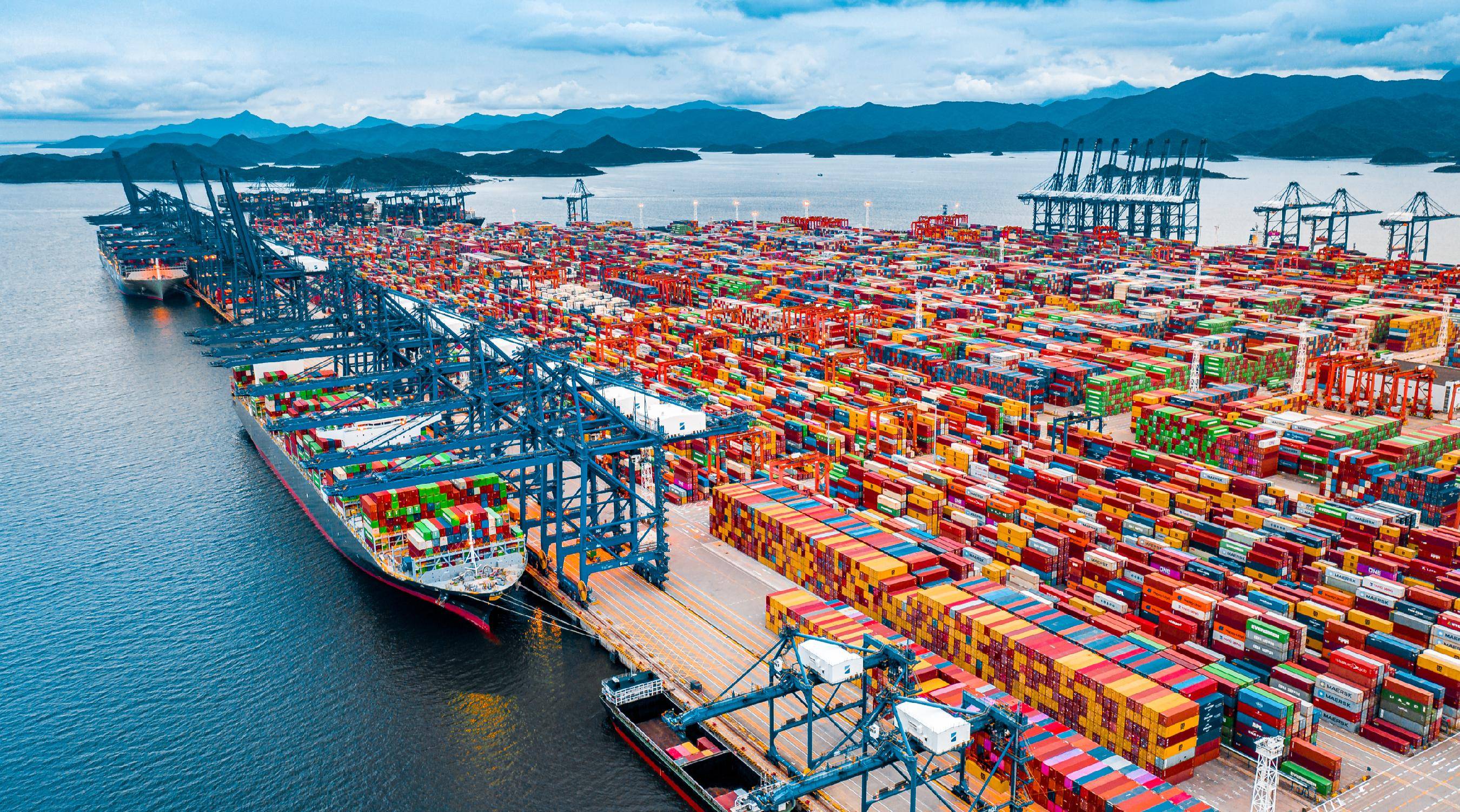
Core Viewpoint - China's trade surplus has reached an unprecedented $1.08 trillion, marking a historic achievement amid ongoing economic warfare initiated by the West [1][31]. Group 1: Trade Surplus Data - In the first 11 months of 2025, China's trade surplus exceeded $1.08 trillion, averaging a net gain of $30 billion per day [1]. - China's trade surplus with the EU was $310 billion, with the US at $250 billion, the UK at $54.3 billion, and Japan at $30 billion [7]. - This surplus is greater than the combined historical highest surpluses of the US, Japan, and Germany by one-third [3]. Group 2: Impact of Western Economic Policies - The trade war, characterized by the US imposing tariffs on hundreds of billions of dollars of Chinese goods, has not diminished China's export growth but rather catalyzed it [5][11]. - The failure of Western strategies to contain China's exports has led to a significant increase in China's trade surplus [11][28]. Group 3: Structural Changes in Exports - The share of private enterprises in China's exports rose to 57.1% by 2025, surpassing foreign-invested enterprises, which dropped to 29.3% [18]. - High-value and high-tech products now account for 82.9% of China's exports, while labor-intensive products have decreased to 15.1% [18]. - The shift from quantity to quality in exports signifies a transition to selling technology and value rather than just products [20]. Group 4: Industry Innovations and Competitiveness - Chinese companies, particularly in the automotive sector, have achieved significant breakthroughs, with exports of electric vehicles soaring [21][23]. - The semiconductor sector also saw a remarkable increase, with exports expected to exceed 1.4 trillion yuan, equivalent to the construction of seven Three Gorges projects [25]. - The technological advancements of private enterprises have made Chinese exports indispensable, countering Western attempts to impose tariffs on lower-end goods [28]. Group 5: Global Economic Power Shift - The $1 trillion surplus signifies a major shift in global economic power, with China becoming a new shaper of trade rules [31][35]. - The reliance of Western economies on Chinese products for achieving carbon neutrality and stabilizing prices highlights the paradox of their containment strategies [37]. - This trade surplus is not merely a statistical achievement but a reflection of China's resilience and innovation in the face of adversity [42][47].
广西贺州外贸实现双突破:黄金加工贸易“破冰” 农产品出口“火热”
Zhong Guo Xin Wen Wang· 2025-12-20 06:21
Group 1 - The core viewpoint of the articles highlights the significant growth in overseas demand for agricultural products from Hezhou, with companies like Huacai Modern Agriculture Co., Ltd. reporting stable monthly exports exceeding 100 tons since October [1][2] - Huacai Modern Agriculture has invested in a new vegetable processing production line with an annual capacity of 10,000 tons and has developed standardized planting bases for products like taro and water chestnuts, creating a complete industrial chain from production to overseas markets [1] - The company experienced a 50% increase in order volume from October to November compared to the average monthly orders in the previous three quarters, indicating strong domestic and international sales [1] Group 2 - Guangxi Fulong Jewelry Co., Ltd. has shifted its focus to high-end gold jewelry processing after relocating to Hezhou, with products primarily sold to markets in the Middle East, such as the UAE [2] - The company anticipates a foreign trade import and export volume of 500 million RMB in the fourth quarter, reflecting robust demand for its products [2] - Hezhou's Business Bureau has implemented a "one-on-one" support mechanism for gold jewelry processing enterprises, facilitating policy implementation such as export tax rebates and improving logistics efficiency to enhance foreign trade growth [2]

【央广时评·坚定信心①】用好优势 巩固拓展经济稳中向好势头
Xin Lang Cai Jing· 2025-12-20 02:40
Core Viewpoint - The upcoming year 2026 marks the beginning of the "15th Five-Year Plan," with a focus on maintaining economic stability and growth amidst challenges and leveraging advantages for development [1][2]. Group 1: Economic Stability and Growth - The central economic work conference emphasizes the need to maintain confidence, utilize advantages, and address challenges to sustain the positive momentum of the economy [1]. - China's contribution to global economic growth has remained stable at around 30% during the "14th Five-Year Plan," with the economy expected to reach approximately 140 trillion yuan this year [1]. - Recent data from the National Bureau of Statistics indicates that China's economic operation continues to show a stable and improving trend [1]. Group 2: Challenges and Opportunities - There is a recognition of deepening external environmental changes, domestic supply-demand imbalances, and risks in key areas that pose challenges to economic progress [2]. - The importance of transforming advantages into strengths and potential into capabilities is highlighted as essential for maintaining economic momentum [2]. Group 3: Strategic Focus for Development - Strengthening the comprehensive leadership of the Party is deemed fundamental for advancing modernization and ensuring the implementation of high-quality development [3]. - The strategy focuses on expanding domestic demand, enhancing the adaptability of supply and demand in consumer goods, and promoting a unified national market to boost domestic circulation [3]. - Emphasis is placed on technological innovation to lead industrial upgrades and the development of a modern industrial system centered on advanced manufacturing [3].