Workflow
货币政策
icon
Search documents
鲍威尔遭“钓鱼式”调查?特朗普盟友出手,一场降息引发的“围猎”
Sou Hu Cai Jing· 2026-01-16 06:29
突发大瓜!美联储主席鲍威尔被刑事调查了!相信明眼人都看的出来,这不是什么工程追责,而是一场精心设计的"钓鱼式"围猎——特 朗普的铁杆盟友亲自下场,背后真正博弈的,是那场没谈拢的降息之争。 先说清楚来龙去脉。1月11日,有消息曝出:哥伦比亚特区联邦检察官办公室已对鲍威尔启动刑事调查,名义上是质疑他在美联储总部 翻修项目中向国会"撒谎"。可关键在于,批准这项调查的,正是特朗普的长期死忠粉、检察官珍妮娜·皮罗。这操作,显然不是查案,而 是布局。 说到底,这场"围猎"的真正目标,根本不是钱,而是权。作为美国央行,美联储本应超然于政治之上,只对经济数据负责。可如今,仅 仅因为没配合总统的货币政策偏好,就要被盟友牵头启动刑事调查,这不是"钓鱼执法"是什么? 一旦开了这个口子,以后谁还敢当"不听话"的央行行长?货币政策若沦为总统的竞选工具,想降就降、想松就松,通胀卷土重来只是时 间问题,全球金融市场也得跟着颤抖。 鲍威尔在回应中也把话说透了:他历经四任总统,无论共和党还是民主党执政,始终坚守"价格稳定"和"充分就业"两大使命。这话一点 不虚。央行独立,本就是现代经济体系的基石。要是连美联储都得看白宫脸色行事,那美国乃至全球 ...
金价涨势暂歇进入调整期 强美元与降息延迟成主因
Jin Tou Wang· 2026-01-16 06:04
Core Viewpoint - International gold prices continue to decline, with spot gold prices dropping to around $4605 per ounce, primarily due to stronger-than-expected U.S. employment data and a rising U.S. dollar index, which has dampened investor expectations for short-term rate cuts by the Federal Reserve [1][2]. Fundamental Analysis - The U.S. Department of Labor reported that initial jobless claims fell to 198,000 for the week ending January 10, below the market expectation of 215,000 and down from the revised previous value of 207,000, indicating a resilient labor market that supports the U.S. dollar [2]. - Market expectations for Federal Reserve action in the first half of the year have become more cautious, with the dollar index reaching multi-week highs, which has exerted significant pressure on gold prices [2]. - A temporary easing of geopolitical tensions has also diminished gold's traditional appeal as a safe-haven asset, as concerns over escalating Middle East tensions have subsided, leading to a withdrawal of some safe-haven funds [2]. Latest Spot Gold Market Analysis - Technical analysis indicates that gold faced significant resistance around the $4650 level, leading to a downward shift in price momentum, with the market entering an adjustment phase [3]. - The MACD indicator shows a bearish crossover at high levels, with a reduction in upward momentum, while the RSI has retreated from overbought territory to neutral, reflecting a cooling of market enthusiasm [3]. - The Bollinger Bands indicate that gold prices have retracted from the upper band to the middle band, suggesting a potential decrease in volatility [3]. - A critical support level is identified at $4580, which is close to the 20-day moving average; a break below this level could target the $4520-$4500 range [3]. - For upward movement, gold prices need to regain stability above $4650 to alleviate short-term pressure, with the current market showing signs of a consolidation phase rather than a strong bullish trend [3]. - The recent price correction is attributed to the dual factors of a strengthening dollar and a decrease in safe-haven sentiment, rather than a fundamental deterioration in demand [3].
日度策略参考-20260116
Guo Mao Qi Huo· 2026-01-16 06:01
1. Report Industry Investment Ratings - No clear overall industry investment ratings are provided in the report. However, specific ratings for some individual industries are as follows: - Industrial silicon is rated "bearish" [1] -沪胶 is rated "bullish" [1] 2. Core Views of the Report - The stock index is expected to continue rising after a period of shock adjustment. The bond market is favored by the asset shortage and weak economy, but short - term interest rate risks are prompted by the central bank. The prices of various commodities show different trends due to factors such as macro - policies, supply - demand relationships, and geopolitical situations [1] 3. Summary by Related Catalogs Macro - financial - **Stock index**: After the policy of lowering the margin trading leverage, the market speculative sentiment declined. The central bank's measures of lowering interest rates and increasing loan quotas are expected to further loosen the capital side. The stock index is expected to continue rising after shock adjustment [1] - **Treasury bonds**: The asset shortage and weak economy are beneficial for bond futures, but the central bank's short - term interest rate risk prompt and the Japanese central bank's interest rate decision need attention [1] Non - ferrous metals - **Copper**: The downstream demand is relatively pressured. With the cooling of market sentiment, copper prices have fallen from high levels and are currently in a volatile trend [1] - **Aluminum**: Due to limited industrial drivers and weakening macro - sentiment, aluminum prices have fallen from high levels and are expected to fluctuate [1] - **Alumina**: The alumina production capacity has a large release space, and the industrial side exerts downward pressure on prices. However, the current price is close to the cost line, so it is expected to fluctuate [1] - **Zinc**: The cost center of zinc fundamentals is stabilizing, but there is inventory pressure. Although zinc prices have made up for losses due to good macro - sentiment recently, the upside space is cautiously viewed [1] - **Nickel**: The 2026 RKAB target of Indonesian nickel mines is about 260 million wet tons, but the supply shortage pattern is difficult to change. Nickel prices are expected to be strongly volatile in the short term, and attention should be paid to Indonesian policies, macro - sentiment, and futures positions [1] - **Stainless steel**: The price has risen sharply due to the supply shortage of nickel ore. The price of raw material nickel - iron has been rising, the social inventory of stainless steel has slightly decreased, and steel mills' production in January has increased. The stainless steel futures are expected to be strongly volatile [1] - **Tin**: Due to good macro - sentiment and continuous supply disturbances, tin prices have continued to rise. The exchange's margin - increasing action on the 15th has had a short - term impact on tin prices [1] Precious metals and new energy - **Precious metals**: With the easing of geopolitical tensions and Trump's decision to postpone the tariff on key minerals, the upward momentum of precious metal prices has slowed down. Gold and silver prices are expected to fluctuate widely at high levels in the short term. Platinum and palladium prices are expected to fluctuate widely in the short term. In the long term, due to the supply - demand gap of platinum and the relatively loose supply of palladium, platinum can be allocated at a low price or a [long - platinum, short - palladium] arbitrage strategy can be adopted [1] - **Lithium carbonate**: It is in the traditional peak season of new energy vehicles, with strong demand for energy storage and increased supply from restarts. It is expected to be strongly volatile, but the spot market is weak, and the upward momentum is insufficient [1] Black metals - **Rebar and hot - rolled coil**: High output and high inventory suppress the price increase space. The transmission from futures price increases to the spot market is not smooth. Unilateral long positions should be closed and observed, and cash - and - carry arbitrage positions can be participated in [1] - **Iron ore**: There is obvious upward pressure, and it is not recommended to chase long positions at the current position [1] - **Coking coal and coke**: If the "capacity - reduction" expectation continues to ferment and there is pre - holiday stockpiling in the spot market, coking coal may still have room to rise. However, since the "capacity - reduction" expectation mainly comes from online rumors, the actual upward space is difficult to judge, and the volatility increases after a sharp rise [1] - **Glass and soda ash**: The short - term market sentiment has warmed up, and supply and demand are supportive. However, in the medium term, supply and demand will continue to be in surplus, and prices will be under pressure. Soda ash mainly follows the trend of glass, and its supply - demand situation is more relaxed in the medium term, so the price is under pressure [1] Agricultural products - **Palm oil**: The rumor that Indonesia will not implement B50 has put pressure on the market. It is expected to enter a shock - consolidation phase in the short term, waiting for positive driving factors such as Indian stockpiling and inventory reduction in the producing areas [1] - **Soybean oil**: It has a strong fundamental situation, and it is recommended to allocate more in the oil market. Consider a long - soybean - oil, short - palm - oil spread strategy [1] - **Rapeseed oil**: The expectation of improved Sino - Canadian trade and the Australian commercial crushing are expected to improve the tight domestic supply situation. Coupled with the global rapeseed harvest in the new season, the fundamentals of rapeseed oil are relatively weak in the oil market [1] - **Cotton**: There is support from the new - crop purchase price, and the downstream has rigid replenishment demand. However, there is currently no clear driving factor. Future attention should be paid to the central government's No.1 Document in the first quarter of next year, planting intentions, weather during the planting period, and the peak - season demand in March and April [1] - **Sugar**: The global sugar market has a surplus, and the domestic new - crop supply has increased. There is a strong consensus on short positions. If the futures price continues to fall, there will be strong cost support below, but there is a lack of continuous fundamental drivers in the short term [1] - **Corn**: The grain - selling progress has slowed down but is still faster than the same period last year. The port inventory is low, and there is a certain pre - holiday replenishment demand from the middle and lower reaches. The spot price is still firm in the short term, and the futures price is expected to fluctuate at a high level [1] - **Soybeans**: The USDA report is bearish. The expected harvest pressure in South America is gradually reflected in the Brazilian CNF premium. The domestic futures market is expected to be weakly volatile. In the first quarter, the concentrated ownership of imported soybeans may lead to structural problems, which may support the pre - holiday spot price, but the domestic auction policy is uncertain [1] Energy and chemicals - **Crude oil**: OPEC+ has suspended production increases until the end of 2026, the uncertainty of the Russia - Ukraine peace agreement, and US sanctions on Venezuelan oil exports have an impact on the market [1] - **Fuel oil**: It follows the trend of crude oil in the short term. The probability of the "14th Five - Year Plan" rush - work demand is falsified, and the supply of Venezuelan crude oil is not short [1] - **Asphalt**: The raw material cost provides strong support, the futures - spot price difference has rebounded significantly, and the mid - stream inventory has increased significantly [1] - **BR rubber**: The futures position has declined, the new warehouse receipts have increased, and the short - term upward momentum has slowed down. The spot price has led the recovery of the basis, and attention should be paid to the upward momentum above 12,000. The processing profit of butadiene rubber has narrowed, and the overseas cracking device capacity has been cleared, which is beneficial for the long - term domestic butadiene export [1] - **PTA**: The PX market has experienced a sharp rise, which is not due to fundamental changes. The PX fundamentals are supported, and the market is expected to be tight in 2026. Domestic PTA maintains high - level operation, and the high gasoline spread supports aromatics [1] - **Ethylene glycol**: Two MEG plants in Taiwan, China, with a total capacity of 720,000 tons/year, plan to shut down next month. Ethylene glycol has rebounded rapidly due to supply - side news. The current polyester downstream operating rate is maintained above 90%, and the demand performance slightly exceeds expectations [1] - **Styrene**: The Asian styrene market is generally stable. Suppliers are reluctant to lower prices due to continuous losses, while buyers insist on pressing prices due to weak downstream polymer demand and profit compression. Although the downstream demand is weak, the domestic market has a strong bullish sentiment due to export support. The market is in a weak - equilibrium state, and the short - term upward momentum depends on the overseas market [1] - **Hydrogen**: The upward space is limited due to weak domestic demand, but there is support from anti - involution and the cost side [1] - **PE**: The supply pressure is relatively large due to high operating load and less maintenance. The downstream improvement is less than expected, and the price has returned to a reasonable range. Geopolitical conflicts may lead to a rise in crude oil prices [1] - **PVC**: There is less global production in 2026, and the future expectation is optimistic. The cancellation of export tax rebates may lead to a rush - export phenomenon. The implementation of differential electricity prices in the northwest region may force the elimination of PVC production capacity [1] - **LPG**: The January CP has risen unexpectedly, providing strong support for the import cost. The escalation of the Middle East geopolitical conflict has increased the short - term risk premium. The EIA weekly C3 inventory accumulation trend has slowed down and is expected to turn into inventory reduction, and the domestic port inventory has also decreased. Domestic PDH maintains high - level operation but is deeply in deficit [1] Others - **Container shipping**: It is expected to reach the peak in mid - January. Airlines are still cautious about trial resumption of flights. The pre - holiday replenishment demand still exists [1] - **Paper pulp**: Affected by the decline of the commodity macro - market, paper pulp has fallen but has not broken through the shock range. The short - term commodity sentiment fluctuates greatly, and it is recommended to observe cautiously [1] - **Log**: The spot price of logs has shown signs of bottom - rebounding recently, and the further decline space of the futures price is limited. However, the January overseas offer has still declined slightly, and the log futures and spot markets lack upward driving factors, and it is expected to fluctuate in the range of 760 - 790 yuan/m³ [1] - **Live pigs**: The spot price has gradually stabilized recently. Supported by demand and with the unsold slaughter weight, the production capacity still needs to be further released [1]
万亿民营企业再贷款,助力民营经济高质量发展
Xin Lang Cai Jing· 2026-01-16 05:44
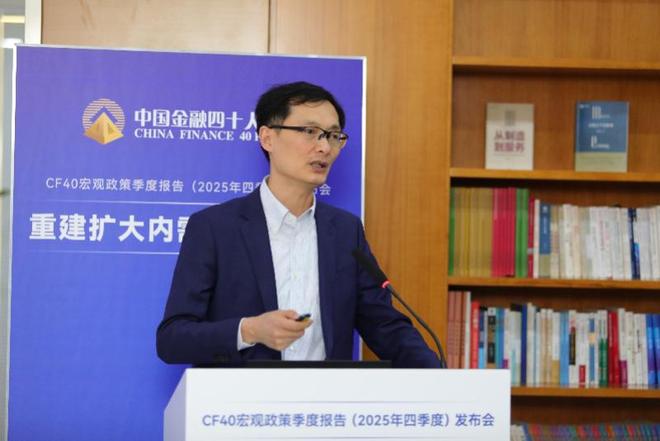
1万亿元,专供民营企业。 你没看错,1月15日,央行送出政策大礼包。其中,最受瞩目的莫过于单设的1万亿元民营企业再贷款。 规模之大,足见诚意。 这一举措的核心目的,就是加大对民营中小微企业的金融支持力度,精准破解民企融资痛点。 当前,民营大型企业融资能力较强,小微企业已有不少政策支持,而民营中型企业成了融资链条上的薄 弱环节。此次新政正是为了补上这一短板。 据央行介绍,民营企业再贷款将设在支农支小再贷款项下,在继续支持民营小微企业的基础上,将民营 中型企业纳入支持范围。 额度构成非常清晰,从现有支农支小再贷款额度中拿出5000亿元,再加上新增5000亿元额度,合计1万 亿元。 当天,央行还宣布下调各类结构性货币政策工具利率0.25个百分点。各类再贷款一年期利率从目前的 1.5%下调到1.25%。 董希淼认为,这是通过精准"滴灌"支持实体经济。与全面降息不同,结构性政策工具降息能将信贷资源 更精准地导入政策鼓励的薄弱环节和重点领域,提高资金使用效率,提高金融服务实体经济质效。 除了万亿资金,还有一批直接惠及民企的政策同步落地。 其中,科技创新和技术改造再贷款额度从8000亿元增至1.2万亿元,并将研发投入水平较 ...
【广发宏观钟林楠】货币弹性下降,定价矛盾切换:2026年流动性环境展望
郭磊宏观茶座· 2026-01-16 05:35
Group 1 - The monetary policy in 2025 is expected to be moderately loose, with lower rates of cuts compared to 2023-2024, primarily focused in the second quarter due to external shocks and a combination of resilient exports, proactive fiscal policy, and industrial highlights enhancing growth resilience [1][11][12] - Structural tools have formed a framework to support key areas such as consumption and real estate, with a focus on optimization in 2026, including streamlining the number of tools and expanding counterparties to include non-bank institutions [15][16] - The policy framework is shifting towards interest rate regulation, with a focus on narrowing the width of the short-term interest rate corridor, which currently has a width exceeding 200 basis points [2][18][19] Group 2 - Narrowing the interest rate corridor is expected to stabilize liquidity expectations and reduce short-term interest rate volatility, which is crucial for improving the interest rate transmission mechanism [20][21] - The narrow liquidity in 2025 is projected to gradually loosen after the first quarter, with potential tightening risks due to credit exceeding acceptable levels and unexpected exchange rate fluctuations [23][24] - The systemic convergence of narrow liquidity fluctuations since 2016 is attributed to increased exchange rate marketization and changes in intermediary targets, leading to a more stable monetary supply [26][27] Group 3 - In 2025, the growth of M1 is expected to increase by 3.6 percentage points, driven mainly by fiscal expansion and overseas net income, although the micro-level activation of funds remains limited [32][33] - The growth of M2 is projected to rise by 0.7 percentage points in 2025, supported by fiscal expansion and a decrease in bond issuance, but may slow down in 2026 due to uncertainties in the banking sector [42][43] - The total amount of remaining liquidity is expected to increase by approximately 0.7 trillion yuan in 2025, primarily flowing into private equity funds and fixed-income assets, but significant expansion in 2026 is unlikely [45][48][49]
有色商品日报(2026年1月16日)-20260116
Guang Da Qi Huo· 2026-01-16 05:11
1. Report Industry Investment Rating - No relevant content provided. 2. Core Views of the Report Copper - Overnight, both domestic and international copper prices initially declined and then rebounded, with losses in domestic refined copper imports persisting. The US labor market remains resilient, and a Fed official said there's no reason to cut interest rates. China's central bank cut the interest rates of various structural monetary policy tools by 0.25 percentage points. LME copper inventories decreased by 500 tons, Comex inventories increased by 4,653 tons, SHFE copper warrants increased by 13,378 tons, and BC copper increased by 2,098 tons. As copper prices rose again, downstream procurement became more cautious, and the export window is gradually opening. Trump said he would not impose tariffs on key minerals like copper. The high - level instability of copper prices is evident, and there is a divergence between foreign capital's bullish sentiment and the industrial situation [1]. Aluminum - Overnight, alumina, Shanghai aluminum, and aluminum alloy all trended weakly. Spot alumina prices fell, and the spot discount of aluminum ingots widened. Alumina producers have high ore reserves, and costs are under pressure. With the end of environmental controls and increased production, along with imports, inventories are accumulating. The processing end of the photovoltaic industry may maintain resilience, and the pressure on aluminum ingot inventory accumulation has eased slightly. Aluminum prices continue to be high, and the spot discount is narrowing [1][2]. Nickel - Overnight, LME nickel fell 1.04% and Shanghai nickel fell 0.24%. LME and SHFE nickel inventories increased. Indonesia plans to reduce its nickel ore production target in 2026, which may lead to a global primary nickel supply - demand gap and stimulate nickel price increases. The first - level nickel production has increased significantly, and hedging demand may put pressure on prices. Short - term, it is advisable to look for buying opportunities near the cost line [2]. 3. Summary by Relevant Catalogs Research Views - **Copper**: The US labor market data is strong, and China's central bank cut interest rates. Inventory changes vary in different markets. High copper prices make downstream procurement cautious, and the export window is opening. Trump's statement on tariffs and external risks affect copper prices, with a divergence between market sentiment and the industrial situation [1]. - **Aluminum**: Futures and spot prices of aluminum - related products are weak. Alumina costs are under pressure, inventories are accumulating, and the processing end may maintain resilience, with aluminum prices remaining high and the discount narrowing [1][2]. - **Nickel**: Nickel prices declined overnight, inventories increased. Indonesia's production cut plan may drive up prices, while increased production and hedging demand pose challenges [2]. Daily Data Monitoring - **Copper**: On January 15, 2026, the price of flat - water copper decreased by 1,325 yuan/ton compared to the previous day. LME inventories decreased by 500 tons, SHFE warrants increased by 13,378 tons, and social inventories increased by 20,000 tons. The active - contract import loss widened by 1,070 yuan/ton [3]. - **Lead**: The average price of 1 lead increased by 130 yuan/ton. LME inventories decreased by 3,800 tons, and SHFE inventories increased by 2,107 tons. The active - contract import profit increased by 140 yuan/ton [3]. - **Aluminum**: The Wuxi and Nanhai aluminum prices decreased by 470 yuan/ton. LME inventories decreased by 2,000 tons, SHFE inventories increased by 14,010 tons, and electrolytic aluminum social inventories increased by 16,000 tons. The active - contract import loss widened by 280 yuan/ton [4]. - **Nickel**: The price of Jinchuan nickel increased by 3,350 yuan/ton. LME inventories increased by 624 tons, SHFE inventories increased by 1,700 tons, and social inventories increased by 2,126 tons. The active - contract import profit increased by 6,230 yuan/ton [4]. - **Zinc**: The main - contract settlement price increased by 1.8%. LME inventories decreased by 25 tons, SHFE inventories increased by 793 tons, and social inventories decreased by 5,000 tons. The active - contract import loss turned to zero [6]. - **Tin**: The main - contract settlement price increased by 8.3%. LME inventories decreased by 5 tons, SHFE inventories decreased by 1,001 tons. The active - contract import loss turned to zero [6]. Chart Analysis - **Spot Premium**: Charts show the historical trends of spot premiums for copper, aluminum, nickel, zinc, lead, and tin from 2019 - 2026 [11]. - **SHFE Near - Far Month Spread**: Charts display the historical trends of the near - far month spreads for copper, aluminum, nickel, zinc, lead, and tin from 2021 - 2026 [12]. - **LME Inventory**: Charts present the historical trends of LME inventories for copper, aluminum, nickel, zinc, lead, and tin from 2019 - 2026 [18]. - **SHFE Inventory**: Charts show the historical trends of SHFE inventories for copper, aluminum, nickel, zinc, lead, and tin from 2019 - 2026 [24]. - **Social Inventory**: Charts display the historical trends of social inventories for copper, aluminum, nickel, zinc, stainless steel, and 300 - series from 2019 - 2026 [30]. - **Smelting Profit**: Charts present the historical trends of copper concentrate index, rough copper processing fee, aluminum smelting profit, nickel - iron smelting cost, zinc smelting profit, and stainless - steel 304 smelting profit margin from 2019 - 2026 [37]. Team Introduction - The team includes Zhan Dapeng, the director of non - ferrous research at Everbright Futures Research Institute, with extensive experience and many honors; Wang Heng, a researcher focusing on aluminum and silicon; and Zhu Xi, a researcher focusing on lithium and nickel, both with significant achievements and media exposure [44][45].
铝价快速上涨抑制消费可能产生负反馈
Hua Tai Qi Huo· 2026-01-16 05:05
1. Report Industry Investment Ratings - Aluminum: Neutral [9] - Alumina: Cautiously bearish [9] - Aluminum alloy: Neutral [9] - Arbitrage: Neutral [9] 2. Core Viewpoints of the Report - The rapid rise in aluminum prices may suppress consumption and create a short - term negative feedback loop. Although the short - term fundamentals show limited positive signs, macro - factors will drive long - term price increases [6]. - The spot price of alumina is slightly declining, with weakening market sentiment. The cost support is weakening, the supply is in surplus, and there is no strong support for price increases [7][8]. 3. Summary by Relevant Catalog Important Data Aluminum Spot - On January 15, 2026, the price of East China A00 aluminum was 24,190 yuan/ton, a change of - 480 yuan/ton from the previous trading day. The spot premium/discount was - 130 yuan/ton, a change of - 50 yuan/ton from the previous trading day [1]. - The price of Central Plains A00 aluminum was 24,030 yuan/ton, with the spot premium/discount changing - 50 yuan/ton to - 290 yuan/ton from the previous trading day [1]. - The price of Foshan A00 aluminum was 24,220 yuan/ton, a change of - 470 yuan/ton from the previous trading day. The aluminum spot premium/discount changed - 40 yuan/ton to - 100 yuan/ton from the previous trading day [1]. Aluminum Futures - On January 15, 2026, the main contract of Shanghai aluminum opened at 24,610 yuan/ton, closed at 24,375 yuan/ton, a change of - 370 yuan/ton from the previous trading day. The highest price was 24,780 yuan/ton, and the lowest was 24,065 yuan/ton. The trading volume for the day was 766,880 lots, and the holding volume was 346,831 lots [2]. Inventory - As of January 15, 2026, the domestic social inventory of electrolytic aluminum ingots was 736,000 tons, a change of 6,000 tons from the previous period. The warehouse receipt inventory was 138,083 tons, a change of 4,518 tons from the previous trading day. The LME aluminum inventory was 490,000 tons, a change of - 2,000 tons from the previous trading day [2]. Alumina Spot Price - On January 15, 2026, the SMM alumina price in Shanxi was 2,625 yuan/ton, in Shandong was 2,575 yuan/ton, in Henan was 2,655 yuan/ton, in Guangxi was 2,735 yuan/ton, in Guizhou was 2,775 yuan/ton, and the Australian alumina FOB price was 310 US dollars/ton [2]. Alumina Futures - On January 15, 2026, the main contract of alumina opened at 2,804 yuan/ton, closed at 2,789 yuan/ton, a change of - 6 yuan/ton or - 0.21% from the previous trading day's closing price. The highest price was 2,817 yuan/ton, and the lowest was 2,761 yuan/ton. The trading volume for the day was 618,962 lots, and the holding volume was 508,785 lots [2]. Aluminum Alloy Price - On January 15, 2026, the purchase price of Baotai civil raw aluminum was 17,600 yuan/ton, and the purchase price of mechanical raw aluminum was 17,900 yuan/ton, with a price change of - 400 yuan/ton compared to the previous day. The Baotai quotation for ADC12 was 23,600 yuan/ton, with a price change of - 200 yuan/ton compared to the previous day [3]. Aluminum Alloy Inventory - The social inventory of aluminum alloy was 69,300 tons, and the in - factory inventory was 60,200 tons [4]. Aluminum Alloy Cost and Profit - The theoretical total cost was 23,119 yuan/ton, and the theoretical profit was 481 yuan/ton [5] Market Analysis Electrolytic Aluminum - The price of Shanghai aluminum is fluctuating at a high level, suppressing consumption and potentially creating a short - term negative feedback. The current stockpiling speed is fast due to the late Spring Festival this year, and it is difficult for prices to decline in the short term. However, macro - factors are the main drivers for long - term price increases [6]. Alumina - The spot market price is slightly declining, the market sentiment is weakening, and the basis is narrowing. The cost support is weakening, and the supply is in surplus, with the possibility of inventory over - capacity in the future [7][8] Strategy - Unilateral trading: Aluminum - neutral; Alumina - cautiously bearish; Aluminum alloy - neutral [9] - Arbitrage: Neutral [9]
日本财务大臣警告:不排除支持日元的所有选项
Xin Lang Cai Jing· 2026-01-16 04:52
Core Viewpoint - Japan's Finance Minister warns that all options, including direct intervention in the currency market, are available to address the recent weakness of the yen [1][2][3] Group 1: Minister's Statements - Finance Minister Kato Mitsu has reiterated that bold actions will be taken if necessary to support the yen, which has positively impacted its value [1][2] - Kato downplayed U.S. Treasury Secretary Scott Basset's preference for the Bank of Japan to use policy measures rather than market intervention to support the yen [1][2] Group 2: Market Analysis - Kato stated that the recent market movements are excessive and do not reflect the underlying fundamentals [3] - Prior to Kato's comments, the U.S. Treasury issued a statement emphasizing the importance of formulating and communicating monetary policy due to the inherent adverse effects of excessive currency fluctuations [3] - Kato reaffirmed her belief that last year's joint currency statement between the two countries grants her the "freedom to act" as needed, including intervention [3]
通胀、地产与政策信号交织——2026年1月16日全球财经重点数据与事件前瞻解读
Sou Hu Cai Jing· 2026-01-16 04:42
Group 1 - The core focus of the upcoming financial market data on January 16, 2026, includes European inflation, U.S. industrial and real estate data, and multiple Federal Reserve officials' statements, which together will help assess economic resilience, inflation trends, and monetary policy direction [1] Group 2 - The final value of Germany's December CPI, released at 15:00, is a key indicator for the European market, as it serves as a significant signal for the European Central Bank's policy decisions. A consistent final value with a continued moderate or declining trend would confirm that inflation in the Eurozone is on a "controlled downward" path, allowing for a potential continuation of accommodative policies [3] Group 3 - The Bank of England's Governor Bailey is expected to address inflation outlook, financial stability, and interest rate policy balance at the Bellagio meeting. Market attention will be on whether he leans towards a "cautious accommodative" or "wait-and-see" signal [4] - Multiple Federal Reserve officials will speak, including Governor Bowman and Vice Chair Jefferson, focusing on inflation progress, labor market resilience, and interest rate maintenance duration, which may influence market expectations regarding interest rate adjustments and impact the dollar and U.S. Treasury yields [4] Group 4 - The U.S. December industrial production data, released at 22:15, is crucial for assessing the activity levels in the manufacturing and energy sectors. Positive growth in industrial output would reflect the U.S. economy's adaptability to tightening financial conditions, while a significant decline could reignite concerns about economic slowdown [5] - The January NAHB housing market index, released at 23:00, provides insights into the confidence within the real estate sector. A rebound in this index would indicate improved builder confidence amid stabilizing or declining mortgage rates, while continued low levels would suggest ongoing challenges for real estate recovery [5] Group 5 - The weekly U.S. oil rig count data, to be released at 02:00, impacts market sentiment regarding crude oil. A continued decline in rig counts may strengthen expectations of tightening supply, while an increase could exert downward pressure on oil prices [5] Group 6 - Overall, the data and events on January 16 are more trend-confirming rather than high-density data points. The German inflation final value validates the European inflation trajectory, while U.S. industrial and real estate data test economic resilience, and central bank officials' speeches provide a recalibration window for market policy expectations [5]
金荣中国:黄金短期震荡偏弱调整
Sou Hu Cai Jing· 2026-01-16 03:55
Group 1 - The international gold market opened weakly, facing resistance from previous trading sessions and overall negative data, indicating a short-term expectation of volatility and adjustment [1][3] - Despite the current weakness, the long-term outlook for gold remains bullish, with potential opportunities to enter long positions upon price retracement [1][3] - Key economic indicators to watch include the U.S. December industrial production month-on-month rate and the January NAHB housing market index, with a mixed market expectation leaning towards negative outcomes [3] Group 2 - The upcoming speeches from Federal Reserve officials, including Bowman and Jefferson, are anticipated to influence market sentiment, with previous comments being hawkish, suggesting continued pressure on gold prices [3] - Recent price action indicates a weakening bullish momentum for gold, with expectations of a potential adjustment towards the 10-day moving average around $4545 and the mid-line around $4475 [3] - If gold prices rebound and break the current consolidation pattern, it may present an opportunity to follow the bullish trend [3]