
电动化

Search documents
大众汽车称未来五年内约2万名员工将自愿离职
Huan Qiu Wang· 2025-06-04 02:04
Core Insights - Volkswagen AG plans to reduce approximately 20,000 employees in Germany over the next five years through a voluntary departure program to address uneven demand in the European market and accelerate its electrification transition [1][3] - This restructuring is the largest since the launch of the "Future Pact" strategy in 2024, aimed at optimizing costs and enhancing operational flexibility [1][3] Group 1: Market Challenges - The company faces long-term underutilization of production capacity in German factories due to weak consumer demand in Europe, rising supply chain costs, and lower-than-expected penetration rates of electric vehicles [3] - CEO Oliver Blume highlighted the dual challenges of demand structure and energy transition in Germany, emphasizing the need for streamlined operations to support electrification, digitalization, and software-defined vehicle strategies [3] Group 2: Employee Impact - The voluntary departure plan will affect various functions, including research and development, production, and administration, across Volkswagen's German brands such as Volkswagen Passenger Cars, Audi, and Porsche [3] - The total number of employees in Germany will decrease from 280,000 to approximately 260,000, representing a 7% reduction [3] Group 3: Strategic Goals - The restructuring is not only a response to short-term demand fluctuations but also a critical step in Volkswagen's long-term electrification strategy, with a goal to increase the share of electric vehicle production in Europe to 80% by 2030 [3] - The reorganization is expected to free up over €3 billion (approximately 234 billion RMB) in annual cost savings for investments in battery factories, autonomous driving, and connected vehicle technologies [3] Group 4: Future Production Plans - Volkswagen's factories in Emden, Zwickau, and Hanover will gradually transition to pure electric production bases, with plans to launch 10 new all-electric models by 2026 [4] - The company is collaborating with U.S. battery manufacturer QuantumScape to develop solid-state battery technology, which is currently in mass production testing and is expected to be implemented in German production lines by 2027 [4] - Blume emphasized that the goal is not only to cut costs but also to build future competitiveness through restructuring, maintaining Germany as a core base for innovation and manufacturing [4]

汽车行业周报(25年第21周):Robotaxi商业落地加速,小鹏MONAM03新车型上市1小时大定破万台
Guoxin Securities· 2025-06-04 01:25
Investment Rating - The report maintains an "Outperform" rating for the automotive industry [4][5]. Core Views - The report emphasizes the acceleration of Robotaxi commercialization and the launch of new models like Xiaopeng MONA M03, which achieved over 10,000 pre-orders in one hour [1]. - It highlights the long-term focus on the rise of domestic brands and opportunities in incremental components driven by electric and intelligent trends [3][12]. - The report anticipates a strong new product cycle for companies like Huawei and Xiaomi in the automotive sector [3][12]. Monthly Production and Sales Data - In April, automotive production and sales reached 2.619 million and 2.590 million units, respectively, with month-on-month declines of 12.9% and 11.2%, but year-on-year increases of 8.9% and 9.8% [1]. - New energy vehicles (NEVs) saw production and sales of 1.251 million and 1.226 million units, with year-on-year growth of 43.8% and 44.2% [1]. - NEVs accounted for 47.3% of total new vehicle sales, with exports reaching 517,000 units, reflecting a 2% month-on-month and 2.6% year-on-year increase [1]. Weekly Data - From May 19 to May 25, domestic passenger car registrations totaled 398,900 units, up 11.9% year-on-year and 2.4% month-on-month, with NEV registrations at 221,100 units, marking a 22.1% year-on-year increase [1][2]. Market Performance - For the week of May 26 to May 30, the CS Automotive index fell by 4.32%, with the CS Passenger Vehicle index down 8.93% [2]. - The CS Automotive sector underperformed the CSI 300 index by 3.24 percentage points [2]. Company Profit Forecasts and Investment Ratings - Key companies such as Leap Motor, Geely, and Xiaopeng Motors are rated as "Outperform" with respective earnings per share (EPS) forecasts for 2025 and 2026 [4]. - Leap Motor is projected to have an EPS of -0.05 in 2025, while Geely is expected to have an EPS of 1.36 [4]. Investment Recommendations - The report recommends focusing on domestic brands and the opportunities in incremental components, particularly in the context of electric and intelligent vehicle trends [3][12][24]. - Specific recommendations include: - Vehicle manufacturers: Leap Motor, Xiaopeng Motors, Geely, Yutong Bus, and Seres [3][12]. - Intelligent technology firms: Coboda, Huayang Group, Junsheng Electronics, Bertley, and Baolong Technology [3][12]. - Robotics companies: Top Group, Sanhua Intelligent Control, and Shuanghuan Transmission [3][12]. - Domestic alternatives: Xingyu Co., Fuyao Glass, Jifeng Co., New Spring Co., and Horizon Robotics [3][12].




一汽奥迪Q6L e-tron开启预售 PPE平台打造,华为智驾上车
Zhong Guo Jing Ji Wang· 2025-06-03 11:25
Core Viewpoint - The Audi Q6L e-tron, developed in collaboration with Huawei, represents a significant milestone in the integration of German engineering and Chinese innovation, positioning itself as a benchmark for luxury electric mobility [1][5][14]. Group 1: Product Features - The Q6L e-tron is built on the PPE luxury electric platform, emphasizing a combination of German craftsmanship and Chinese technological advancements [5][9]. - It features a full 800V architecture, enabling a charging power of 270kW, which allows for a 294 km range in just 10 minutes of charging, and a maximum range of 765 km [9]. - The vehicle includes advanced safety features, with an aluminum and high-strength steel composition of 83%, and a robust thermal management system for the battery [11]. Group 2: Technological Integration - Audi is the first luxury brand to incorporate Huawei's advanced driving technology, reflecting a long-standing partnership that began in 2019 [7]. - The Q6L e-tron boasts a smart cockpit with multiple screens, including a 14.5-inch OLED central display and a 10.9-inch passenger screen, allowing for seamless connectivity with mobile devices [11]. Group 3: Market Positioning - The launch of the Q6L e-tron marks a new phase in Audi's electric and intelligent development, aiming to reshape the global luxury electric vehicle market [14]. - The vehicle is designed to meet the evolving demands of Chinese consumers, highlighting the importance of local market considerations in product development [5][9].
余承东:不能为了低成本牺牲质量
3 6 Ke· 2025-06-03 03:12
Core Viewpoint - The automotive industry is experiencing a shift towards high-quality products, with a focus on safety and user experience, as highlighted by Huawei's emphasis on quality standards and the challenges faced by competitors in achieving similar benchmarks [1][2][17]. Group 1: Industry Dynamics - The penetration of electric vehicles (EVs) is increasing, leading to heightened scrutiny on safety and quality issues within the industry [1]. - Huawei's chairman, Yu Chengdong, criticized the current safety and quality standards of many car manufacturers, suggesting that many do not meet Huawei's stringent requirements [2][17]. - The automotive market is evolving, with traditional sales models being disrupted by new marketing and distribution channels, such as online sales [5][11]. Group 2: Huawei's Position and Strategy - Huawei is positioning itself as a leader in the smart electric vehicle sector, with significant investments in R&D, exceeding 20 billion yuan annually [7][9]. - The company has developed six key technological areas: intelligent driving, intelligent cockpit, intelligent electric, intelligent vehicle control, intelligent vehicle cloud, and intelligent connectivity, asserting its competitive edge in these domains [9][10]. - Huawei's new vehicle brand, "Wenjie," has achieved significant sales milestones, with the Wenjie M9 becoming a top seller in the high-end segment [7][15]. Group 3: Quality and User Experience - Huawei emphasizes a rigorous quality management system, which has led to a significant reduction in product failure rates, aiming for high user satisfaction [12][13]. - The company believes that user experience is paramount, with a focus on not just product quality but also usability and customer satisfaction metrics [12][14]. - Huawei's approach to quality extends to its partnerships with car manufacturers, where it insists on maintaining high standards across all aspects of vehicle performance and user experience [14][16]. Group 4: Future Outlook - The company is optimistic about the future of its vehicle brands, with expectations of growing recognition and market presence as they continue to innovate and improve [15]. - Huawei's ADS (Advanced Driver Assistance System) technology is set to advance, with plans for L3 and L4 capabilities in urban environments, reflecting the company's commitment to enhancing safety and user experience [18][19]. - The call for a collaborative ecosystem in the smart electric vehicle sector indicates a strategic focus on partnerships and industry-wide improvements [19].
越来越热闹的大湾区车展:鸿蒙智行首次包馆,小米YU7不开车门
Di Yi Cai Jing· 2025-06-02 11:30
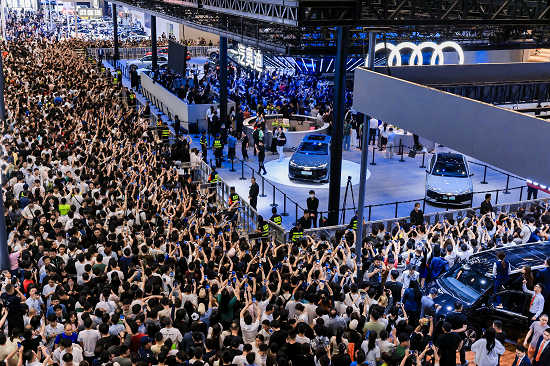
Group 1: Event Overview - The 2025 Guangdong-Hong Kong-Macao Greater Bay Area Auto Show was held in Shenzhen from May 31 to June 8, featuring 112 vehicle brands and 1,039 models, covering an area of approximately 260,000 square meters [1] - The event attracted a record attendance of 183,000 visitors on its opening day, coinciding with the Dragon Boat Festival [1] - The auto show has evolved from a sales venue to a new A-level auto show, gaining importance among car manufacturers, particularly in the electric vehicle segment [1][2] Group 2: Industry Insights - Shenzhen ranked first in China for new energy vehicle production in 2024, with a total output of 2.9353 million units, supported by major players like BYD and Huawei [2] - The auto show highlighted the increasing significance of the Guangdong automotive market, with rapid development in Shenzhen driving more attention from car manufacturers [1][2] Group 3: Company Highlights - BYD secured an entire exhibition hall for the second consecutive year, showcasing its full range of models and creating an interactive outdoor smart area of 30,000 square meters [3] - Huawei's "HarmonyOS Smart Driving" showcased its ecosystem partners and launched the high-end vehicle, the Zun Jie S800, with a starting price of 708,000 yuan [3] - Xiaomi's YU7 SUV made its debut at the show, generating significant interest despite not being fully operational for public interaction [7] Group 4: Market Trends - The luxury vehicle market is seeing increased competition from Chinese manufacturers, with brands like HarmonyOS Smart Driving and NIO entering the high-end segment traditionally dominated by foreign brands [6] - The report predicts that by 2025, China's new energy vehicle sales will reach 16.5 million units, maintaining a growth rate of 30% [7] Group 5: Sales Strategies - The auto show emphasized a strong sales approach, with many manufacturers offering exclusive discounts and promotional policies to attract buyers [10][11] - The local government in Shenzhen is providing subsidies up to 6,000 yuan, which can be combined with other incentives for vehicle purchases [11] - Recent price reductions by major players like BYD and others indicate a competitive market environment, although regulatory bodies are addressing concerns over price wars [12]


尊界S800上市:华为与江淮的百万豪车突围战
Jing Ji Guan Cha Bao· 2025-06-02 10:25
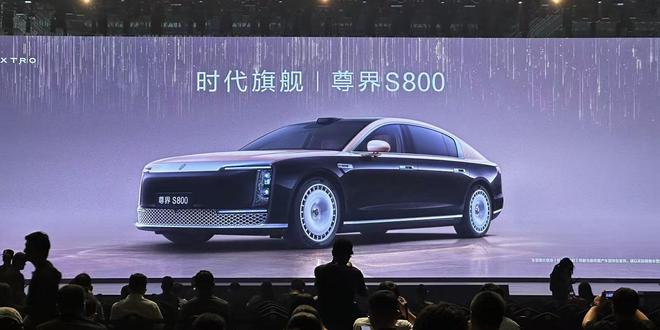
Group 1 - Huawei and JAC Motors launched the Zun Jie S800, priced between 708,000 to 1,018,000 yuan, marking a significant entry into the high-end electric vehicle market [2] - The Zun Jie S800 features advanced technology integration, including the Tuling Longxing platform and HUAWEI ADS 4 intelligent driving system, showcasing a shift in luxury car competition towards technology over traditional brand prestige [3] - The vehicle supports rapid charging capabilities, with a maximum charging power of 80kW and a 10%-80% charge time of just 10.5 minutes, highlighting advancements in electric vehicle technology [3] Group 2 - The launch of the Zun Jie S800 reflects a changing competitive landscape in the luxury car market, where technology and innovation are becoming more critical than historical brand reputation [3] - Despite the introduction of the Zun Jie S800, the premium luxury car market remains dominated by European manufacturers, indicating a challenging environment for domestic brands [4] - The collaboration between Huawei and JAC Motors involved a significant investment of 4 billion yuan to build a fully automated super factory, emphasizing the commitment to high-quality manufacturing [2]

驭势新程 “汽”贯长虹
Zhong Guo Zheng Quan Bao· 2025-05-29 21:32
Group 1 - The global automotive industry is undergoing a significant transformation towards electrification and intelligence, with Chinese automotive brands capturing over 65% of the passenger car market share and a penetration rate of nearly 60% for new energy vehicles [1][2] - The integration of technology and capital is reshaping the competitive landscape, with green bonds providing funding for innovation and mergers and acquisitions creating "chain leader" enterprises [1][2] - The automotive industry is expanding beyond traditional manufacturing into social and technological realms, with smart driving and battery swapping models representing both commercial innovation and energy storage advancements [2][3] Group 2 - Chinese automotive companies are increasingly focusing on user-centric values, aiming to create sustainable value for users and society [2][4] - The industry is witnessing a shift from scale-driven growth to value-driven leadership, emphasizing the importance of long-term strategies and technological endurance [6][7] - The emergence of a new narrative around Chinese automotive culture is essential for breaking through value ceilings and fostering a spirit of innovation [3][5] Group 3 - The automotive sector is at a critical juncture, with companies like Geely, Changan, and Great Wall emphasizing the need for innovation and collaboration to enhance their positions in the global value chain [3][4] - The role of media is highlighted as crucial in providing insights and fostering dialogue within the industry, particularly in the context of rapid changes and challenges [2][6] - The industry is expected to leverage technological advancements to achieve a competitive edge, with a focus on smart and electric vehicles as key drivers of future growth [5][7]
中国工程机械企业以智慧绿色“圈粉”海外
Zhong Guo Xin Wen Wang· 2025-05-29 07:34
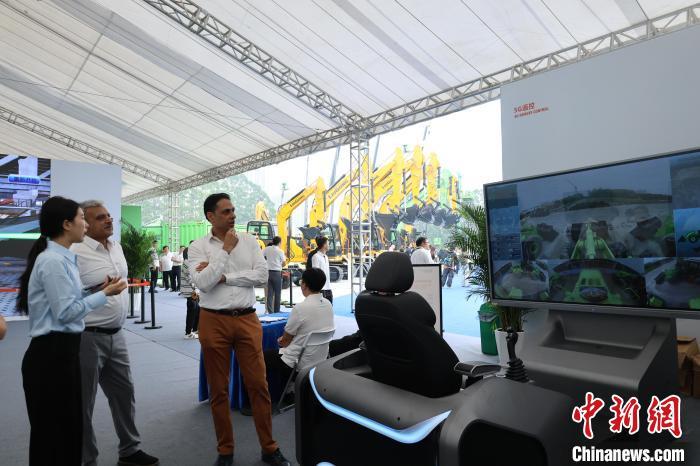
中新社柳州5月29日电 (林馨)在广西柳工机械股份有限公司(下称"柳工")智能化的工厂中,机械臂精准舞 动,自动导向车AGV小车自如穿梭,"海—陆—空"立体物流系统高效运转。日前,来自全球各地嘉宾 走进柳工装载机智能工厂和柳工挖掘机智慧工厂,近距离感受中国智造魅力。 近年来,柳工围绕"智慧""绿色"两大主线,加速电动化、智能化、数字化、无人化技术研发。2024年, 柳工营业收入突破300亿元人民币,海外收入同比大幅增长。今年一季度,公司海外营业收入占比突破 50%。 5月28日至29日,第五届柳工5·28全球客户节在柳州举行。来自全球近百个国家和地区的近千名嘉宾, 感受中国工程机械智能化、绿色化魅力。 本次客户节设8个展区,共110台创新产品(含45款电智产品)亮相,以动态、静态等不同形态展示港口物 流、金属冶炼、起重吊装、道路施工以及矿山开采等五大行业的技术和产品解决方案。 来自南非大型矿业公司的客户代表表示:"柳工电动装载机在矿山场景中的作业效率、续航能力,以及 整机响应速度,都证明这是一款成熟且可靠的产品。"在客户节上,柳工展示的换电和混动解决方案, 也让客户对在南非复杂施工环境中的落地应用更有信心。 ...

菲沃泰闪耀零跑技术盛会,解汽车防护难题助产业升级
Cai Fu Zai Xian· 2025-05-28 09:52
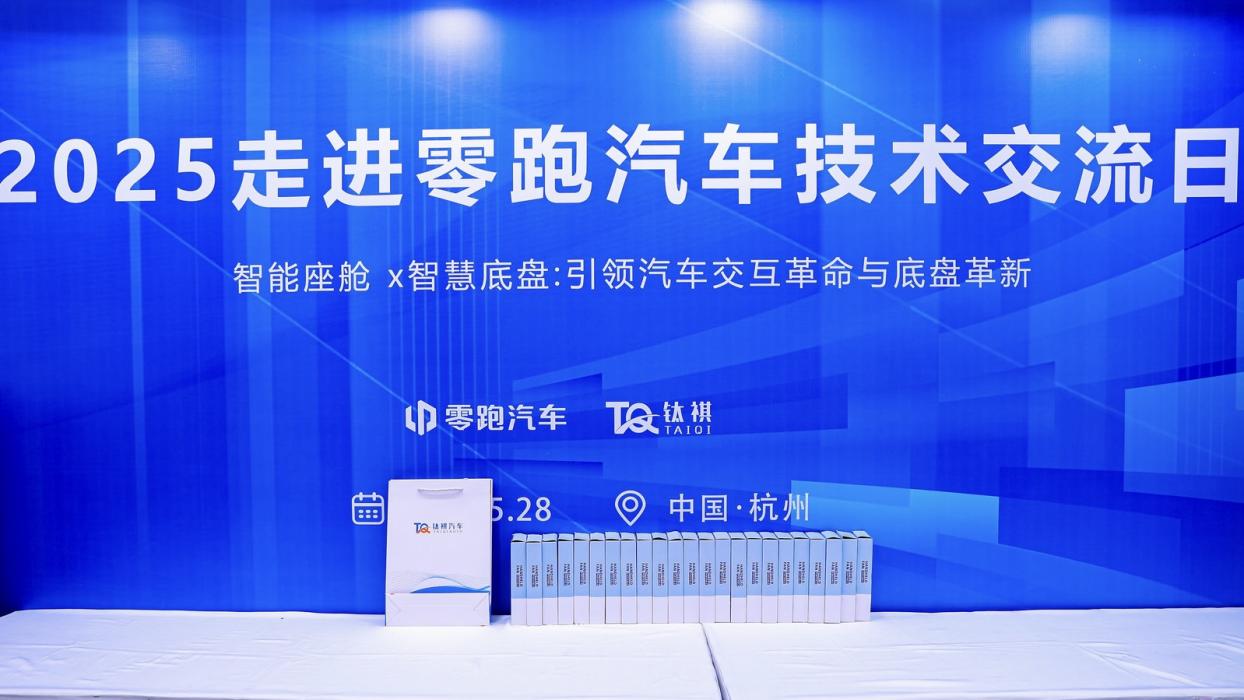
Group 1 - The event "2025 Entering Leap Motor Technology Exchange Day" was held at Leap Motor headquarters, focusing on cutting-edge automotive technology [1] - Fivotech showcased its multifunctional nano-coating technology for automotive applications, becoming a focal point of the industry [1][5] - The nano-coating technology received high praise from Leap Motor leadership and supply chain companies, being recognized as a "star technology" at the event [7] Group 2 - Fivotech's nano-coating technology enhances the reliability and durability of key automotive components, including the three electric systems, intelligent driving systems, and sensors, by providing excellent waterproof, anti-corrosion, insulation, and wear-resistant properties [5] - The technology simplifies product design, reduces weight and size, and lowers system-level costs by approximately 20%, offering an efficient and economical solution for automotive component protection [10] - Fivotech's technology meets stringent automotive standards and supports the balance of lightweight, low-cost, and high-performance requirements for innovative automotive companies like Leap Motor [10] Group 3 - As a national key specialized "little giant" enterprise, Fivotech has established a broad presence in consumer electronics, medical, and automotive sectors through its integrated technology system [11] - The participation in the Leap Motor technology exchange day signifies Fivotech's expanding technical influence within the automotive industry ecosystem [11] - Fivotech aims to deepen collaboration with automotive companies like Leap Motor to empower the upgrade of intelligent automotive protection systems, contributing to the advancement of China's new energy vehicle industry towards high-end and intelligent development [11]


富奥股份(000030) - 000030富奥股份投资者关系管理信息20250527
2025-05-27 10:02
Group 1: Company Strategy and Market Position - The company aims to strengthen customer cooperation and expand high-quality domestic and international customer resources to enhance market share [2][3] - Focus on cost control through a low-cost strategy and improving operational quality across the entire value chain [2][3] - Emphasis on R&D in "lightweight, electrification, intelligence, and connectivity" to accelerate product transformation and upgrade [2][3] Group 2: Financial Performance and Management - In Q1 2025, the company reported a revenue of CNY 3.627 billion, a decrease of 3.64% year-on-year, while net profit increased by 0.26% to CNY 163 million [11] - In 2024, the company achieved a revenue of CNY 16.468 billion, a growth of 3.95%, with net profit rising by 11.93% to CNY 676 million [12][13] - The net cash flow from operating activities increased by 961.69% in 2024, attributed to improved cash management practices [14] Group 3: R&D and Product Development - The company plans to increase R&D investment in 2025, focusing on core technologies such as chassis systems and electric systems [15] - The company has successfully developed electric control shock absorbers, leading to significant revenue growth and market share in this segment [6][9] Group 4: Market Expansion and Order Growth - In 2024, the company secured 307 new orders, with external market orders accounting for 48% of total revenue, and over 80% of new energy orders [8] - The company’s strategy includes differentiated market expansion tactics tailored to various customer groups to achieve significant order growth [8] Group 5: Industry Trends and Challenges - The automotive parts industry is rapidly transforming towards electrification, intelligence, connectivity, and low-carbon solutions, requiring stronger R&D capabilities [9][10] - The company aims to adapt to these changes by enhancing its core competencies and maintaining a flexible operational strategy [10]
