
中美经贸对话

Search documents
中美第6轮磋商在即,中国商务部正面回应,字不多,但信息量很大,这三个细节最意味深长!
Sou Hu Cai Jing· 2026-02-26 09:24
Group 1 - The core viewpoint of the article highlights the ongoing negotiations between China and the U.S. in trade discussions, indicating a positive trend as the sixth round of talks is taking place, suggesting both parties are still engaged and valuing the dialogue over confrontation [1] - The number of negotiation rounds (six) signifies that both sides have not abandoned the discussions, which implies a mutual interest in reaching an agreement rather than escalating tensions [1] - The spokesperson from the Ministry of Commerce provided a brief yet impactful statement, suggesting that the tone of the discussions is more pragmatic and less confrontational, which could indicate a shift towards more constructive engagement [1]


以求同存异妥处双方分歧(钟声·大国外交·2025年度回眸)
Ren Min Ri Bao· 2025-12-28 02:09
Group 1 - The core viewpoint emphasizes that the U.S. and China can achieve mutual success and shared prosperity by replacing confrontation with dialogue, resolving differences through cooperation, and managing contradictions with a broader perspective [1][3] - A recent poll by the Chicago Council on Global Affairs indicates that 53% of Americans support friendly cooperation and engagement with China, marking the first time since 2019 that a majority favors a cooperative approach [1] - The historical context of international relations highlights the importance of managing differences for global peace and stability, particularly between the world's largest developing and developed nations [1] Group 2 - It is essential to view differences correctly, especially in the economic and trade sectors, where the U.S. and China, as the world's two largest economies, have significant interdependencies and occasional competitive tensions [2] - The dialogue must be principled, with mutual respect and equality as the foundation for effectively managing differences, emphasizing the importance of respecting each other's core interests and development paths [2] - Constructive dialogue aimed at problem-solving is crucial, as evidenced by five rounds of negotiations that, despite challenges, have focused on leveraging the U.S.-China economic consultation mechanism to address issues [3]
0820港股日评:三大股指低开高走,港股通轻工制造领涨-20250821
Changjiang Securities· 2025-08-20 23:30
Core Insights - The Hong Kong stock market opened lower but closed higher, with a total trading volume of HKD 285.29 billion and a net outflow of southbound funds amounting to HKD 14.682 billion [2][9] - Major new consumer stocks reported strong interim results, and positive guidance from company leaders boosted the new consumption sector [2][9] - The light industry manufacturing sector led the gains in the Hong Kong Stock Connect, benefiting from positive earnings announcements from leading companies [2][9] Market Performance - The Hang Seng Index rose by 0.17% to 25,165.94, while the Hang Seng Technology Index slightly declined by 0.01% to 5,541.27 [6] - The Hang Seng China Enterprises Index increased by 0.08% to 9,013.27, and the Hang Seng High Dividend Index fell by 0.06% [6] - In the A-share market, the Shanghai Composite Index rose by 1.04%, and the CSI 300 Index increased by 1.14% [6] Sector Analysis - Among the primary sectors in the Hong Kong Stock Connect, light industry manufacturing (+5.82%), electronics (+1.09%), and agriculture, forestry, animal husbandry, and fishery (+0.95%) led the gains [6][9] - Conversely, the pharmaceutical sector (-2.88%), comprehensive sector (-2.53%), and computer sector (-2.34%) experienced declines [6][9] - Concept indices such as the paper industry (+9.17%), baby and child products (+8.63%), and electronic cigarettes (+6.37%) saw significant increases, while the Foxconn index (-6.93%) and unprofitable biotech index (-5.02%) faced declines [6][9] Future Outlook - The report anticipates that the Hong Kong market could reach new highs driven by three core directions: AI technology and new consumption sectors, continued inflow of southbound funds, and improved global liquidity conditions due to potential U.S. interest rate cuts [9] - The report emphasizes the importance of the upcoming Jackson Hole global central bank meeting and its implications for future monetary policy [9]
美元再度走弱、中国宏观政策支撑,人民币汇率日内升破7.17
2 1 Shi Ji Jing Ji Bao Dao· 2025-05-26 10:49
Core Viewpoint - The strong performance of the Renminbi (RMB) continues, with both onshore and offshore RMB exchange rates surpassing 7.17, marking the highest level since November 2024 [1][2]. Exchange Rate Performance - As of May 26, the onshore RMB closed at 7.1843, up 52 points from the previous trading day, with an intraday high of 7.1674. The offshore RMB reached a high of 7.1616, averaging 7.17. In May, the onshore RMB rose by 906 basis points, while the offshore RMB increased by over 1,000 points [1]. - The People's Bank of China set the RMB to USD central parity rate at 7.1833 on May 26, a significant increase of 86 points, the largest adjustment since January of this year [1]. Factors Influencing RMB Strength - The recent appreciation of the RMB is attributed to the ongoing depreciation of the US dollar, driven by concerns over the US fiscal health and the impact of proposed tariffs by the Trump administration [2][3]. - Domestic macroeconomic policies, including interest rate cuts and accelerated fiscal spending, have bolstered the resilience of the Chinese economy against external fluctuations, providing internal support for the RMB [2]. Market Dynamics - Analysts note that the appreciation of the RMB is influenced by the strengthening of other Asian currencies, such as the Korean won, and the easing of external depreciation pressures due to positive developments in US-China trade talks [3]. - The narrowing of the exchange rate gap between onshore and offshore RMB indicates strong motivation among overseas institutions to support RMB appreciation [3]. Economic Implications - Continuous RMB appreciation can enhance its attractiveness and reflect market confidence in the Chinese economy, potentially benefiting the stock market. However, it may also reduce the competitiveness of export goods, impacting domestic employment [3]. - Maintaining a stable RMB exchange rate is crucial, with a focus on expanding domestic demand and reducing reliance on exports, as excessive appreciation or depreciation could destabilize the Chinese economic fundamentals [3][4]. Future Outlook - The future trajectory of the RMB will largely depend on the progress of US-China trade negotiations and the performance of the US dollar. The complexity of resolving high tariff issues suggests that RMB fluctuations will continue, but the likelihood of sustained unilateral appreciation is low [4]. - The RMB is expected to experience a dual-directional fluctuation process against the dollar, with relatively smaller amplitude compared to other major currencies, indicating a more stable outlook [4].
(经济观察)人民币对美元中间价重返7.1区间
Zhong Guo Xin Wen Wang· 2025-05-13 08:37
Group 1 - The core viewpoint of the articles indicates that the Chinese yuan (RMB) has strengthened against the US dollar, reaching its highest value since April 7, driven by positive market sentiment following the US-China trade talks and supportive domestic macroeconomic policies [1][2][3] - The RMB to USD central parity rate reported by the China Foreign Exchange Trade System was 7.1991, with offshore and onshore RMB touching 7.1780 and 7.1855 respectively, marking the highest levels of the year [1] - Factors contributing to the RMB's appreciation include the unexpected reduction in tariffs from the US-China trade talks, which has boosted market confidence and led to a comprehensive appreciation of the RMB [1][2] Group 2 - The Chinese government has indicated a commitment to implementing proactive macroeconomic policies to stabilize growth, which is expected to provide significant support for the RMB [1][2] - Analysts suggest that the RMB's future trajectory will depend on the progress of US-China trade negotiations and the performance of the US dollar, with expectations of a dual-directional fluctuation process for the RMB [2][3] - The potential for further appreciation of the RMB is noted, particularly as the negative impact of tariffs on the US economy becomes more apparent, suggesting that the most significant depreciation pressures on the RMB may have passed [2]
人民币汇率拉升释放积极信号,未来走势取决于两个因素
Bei Jing Ri Bao Ke Hu Duan· 2025-05-06 13:03
Core Viewpoint - The recent appreciation of the Renminbi (RMB) against the US dollar is driven by a combination of factors, including a softening stance from the US on tariff negotiations and proactive macroeconomic policies from China aimed at stabilizing the economy [1][2][5]. Group 1: RMB Exchange Rate Movements - On May 6, the onshore RMB rose significantly against the US dollar, reaching a high of 7.2105, the highest level since November of the previous year [1]. - During the May Day holiday, the offshore RMB appreciated by 0.9%, with notable increases of over 650 points on May 2 and again on May 5, peaking at 7.19 [1]. - The RMB's overall stability amidst global market fluctuations caused by US tariff policies indicates a resilient exchange rate [1]. Group 2: Factors Driving RMB Strength - The recent strength of the RMB is attributed to the US's willingness to engage in tariff negotiations, as indicated by statements from US officials, which has positively influenced the RMB's value [2]. - The Chinese government's commitment to implementing proactive macroeconomic policies, as discussed in the April 25 Politburo meeting, aims to stabilize employment and market expectations, further supporting the RMB [2]. Group 3: Future Outlook for RMB - The future trajectory of the RMB will largely depend on the progress of US-China trade talks and the performance of the US dollar [4]. - The potential for a more flexible US stance on tariffs may reduce downward pressure on the RMB, suggesting that the most significant depreciation risks may have passed [4]. - The RMB is expected to exhibit a dual-directional fluctuation pattern against the dollar, with relatively smaller volatility compared to other major currencies [4]. Group 4: Economic Fundamentals Supporting RMB Stability - The foundation for maintaining a stable RMB exchange rate is strong, supported by positive domestic economic indicators and China's institutional advantages, including a large market and effective governance mechanisms [5]. - The People's Bank of China emphasizes a managed floating exchange rate system, aiming to stabilize market expectations and prevent excessive fluctuations in the RMB [5].
离岸人民币对美元汇率走强 政策发力+消费复苏点燃升值引擎
Sou Hu Cai Jing· 2025-05-06 09:10
Core Viewpoint - The recent surge in the offshore RMB against the USD is primarily driven by improved expectations regarding US-China trade negotiations and strong domestic consumption data during the May Day holiday [1][2]. Group 1: Factors Driving RMB Appreciation - The offshore RMB against the USD rose significantly, breaking the 7.20 mark, reaching a high of 7.1864, the highest since December 2024 [1]. - The Chinese Ministry of Commerce noted a softening stance from the US regarding tariff negotiations, which has positively influenced the RMB's strength [1]. - The Central Political Bureau's call for proactive macroeconomic policies to stabilize employment and market expectations has provided additional support for the RMB [1]. Group 2: Domestic Economic Indicators - The consumption data during the May Day holiday exceeded expectations, with travel indicators hitting historical highs, contributing to the RMB's appreciation [2]. - Increased domestic consumption and investment, including from foreign visitors, are seen as internal support for the RMB's value [2]. Group 3: Global Currency Dynamics - Concurrently, the USD index has declined, dropping below 100 to a low of 99.6258, indicating weakening confidence in the USD and its credit system [2]. - There is a growing expectation that global capital will increasingly favor RMB assets due to narrowing interest rate differentials between China and the US [2]. Group 4: Future Outlook - The RMB may experience a dual-directional fluctuation against the USD, but with relatively smaller amplitude compared to other major currencies [2]. - The potential for a more flexible and pragmatic US stance on tariffs suggests that the most significant depreciation pressure on the RMB may have passed [3].
“五一”假期离岸人民币大涨近700点 在岸人民币节后有望补涨
Xin Hua Cai Jing· 2025-05-06 01:28
Core Viewpoint - The offshore RMB has shown strong performance during the May Day holiday, with a cumulative increase of 687 basis points to 7.2011 against the USD, indicating a potential upward adjustment for the onshore RMB post-holiday [1][2]. Group 1: Factors Influencing RMB Performance - Four main reasons are identified for the recent strength of the offshore RMB: 1. Record high travel data during the May Day holiday may inject more economic growth momentum 2. Positive signals from Sino-U.S. trade negotiations during the holiday 3. Increased allocation of risk-averse funds into RMB assets 4. A declining trend in the USD index, leading to a gradual release of settlement demand [4][5]. Group 2: Sino-U.S. Trade Negotiations - The Chinese Ministry of Commerce noted that the U.S. has expressed willingness to negotiate on tariff issues, suggesting a softening stance that could facilitate trade dialogue and address high tariffs, contributing to the RMB's recent strength [4][5]. - Analysts expect that the RMB's future performance will largely depend on the progress of Sino-U.S. trade talks and the movement of the USD [5]. Group 3: Market Dynamics - The offshore RMB market experienced lower trading activity during the holiday, which may have amplified the rise in the RMB due to short-covering by overseas institutions [4]. - The overall sentiment in the foreign exchange market has improved due to favorable news from Sino-U.S. negotiations, leading to a potential decrease in tariff pressure on the RMB [5][6]. Group 4: Broader Currency Trends - Other Asian currencies, including the Hong Kong dollar and New Taiwan dollar, have also appreciated against the USD, indicating a regional trend of currency strengthening [7][8]. - Market expectations suggest that the USD may continue to weaken, influenced by the Federal Reserve's potential interest rate decisions and ongoing trade dynamics [9].
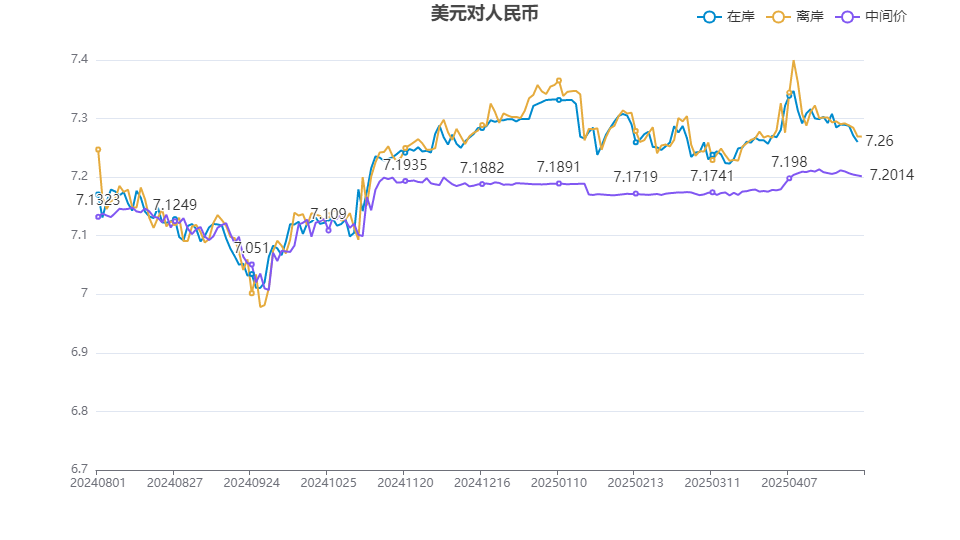
中国资产假期大涨;北交所迎来“920”时代……盘前重要消息还有这些
证券时报· 2025-05-06 00:20
Key Points - The article discusses the recent developments in the stock market, including the upcoming implementation of new securities codes for pilot stocks on the Beijing Stock Exchange, set to launch on May 6, 2025 [4] - It highlights the significant growth in new energy vehicle deliveries in April, with companies like NIO, Xpeng, and Li Auto showing substantial year-on-year increases [5] - The article also covers the performance of major companies such as Berkshire Hathaway and Apple, noting a decline in Berkshire's net profit and a slight increase in Apple's revenue [10] Group 1: Stock Market Developments - The Beijing Stock Exchange is preparing to implement new securities codes for pilot stocks, with six companies including YingTai Bio and Airoin Software participating in the trial [4] - The Hong Kong Monetary Authority intervened in the currency market by purchasing USD to defend the Hong Kong dollar's peg, marking its first intervention since 2020 [3] Group 2: Economic Indicators - The U.S. economy experienced its first contraction since 2022 in Q1, with a GDP decline of 0.3%, attributed to increased imports and reduced consumer spending [7] - The U.S. non-farm payrolls increased by 177,000 in April, exceeding market expectations, while the unemployment rate remained stable at 4.2% [7] Group 3: Company Performance - Berkshire Hathaway reported a net profit of $4.603 billion in Q1, a 64% decrease from the previous year, with revenues slightly down to $89.725 billion [10] - Apple Inc. reported a 5% increase in Q2 revenue to $95.359 billion, with a net profit rise of 4.84% to $24.780 billion, despite concerns over potential cost increases due to tariffs [10] Group 4: Industry Trends - New energy vehicle manufacturers showed significant growth in April, with Xpeng delivering 35,045 vehicles (up 273%) and Li Auto delivering 33,939 vehicles (up 31.6%) [5] - The Shenzhen Stock Exchange is optimizing the ChiNext index by introducing an ESG negative exclusion mechanism and a weight limit for individual stocks [5]



全线上涨!A50拉升 港股大涨 恒生科技指数涨3%
Zheng Quan Shi Bao· 2025-05-02 02:25
Market Performance - The overall performance of the Asia-Pacific market is strong, with the Hong Kong Hang Seng Index opening up by 0.33% and the Hang Seng Tech Index rising by 0.48% [1] - As of the report, the Hang Seng Index has increased by over 1%, while the Hang Seng Tech Index has risen by 3% [1] - The FTSE China A50 index futures opened slightly higher and have increased by approximately 0.7% during the session [2] Index Data - The current value of the Hang Seng Index is 22,418.34, with an increase of 298.93 points, representing a rise of 1.35% [2] - The Hang Seng Tech Index is currently at 5,217.86, up by 130.44 points, which is a 2.56% increase [2] Other Markets - The Nikkei 225 index in Japan has seen a rise of over 1.5% during the session, maintaining a gain of over 1% as of the report [3] - The South Korean KOSPI index initially dipped but later rebounded into positive territory [5] - Major U.S. stock index futures have also shown significant gains, turning positive during the session [7] Commodity Market - Crude oil prices, both Brent and WTI, have experienced substantial increases during the trading session [8] Economic Dialogue - The Chinese Ministry of Commerce has acknowledged the U.S. willingness to negotiate on tariff issues, emphasizing that any dialogue must include the U.S. correcting its unilateral tariff measures to demonstrate sincerity [10] - The Chinese stance remains firm, indicating that the trade conflict was initiated by the U.S., and any negotiations should be based on mutual respect and correction of previous actions [10]
