
剩余流动性

Search documents
——广发中证1000ETF投资价值分析:寻找盈利改善预期下的弹性
Huachuang Securities· 2026-03-13 07:46
Core Insights - The current liquidity remains relatively abundant, with the CSI 1000 index outperforming the overall market since the beginning of the year, increasing by 10.1% compared to 6.9% for the Wind All A and 1.6% for the CSI 300 [2][12] - Expectations for GDP deflation index to turn positive this year, coupled with strengthened policy support for technological innovation, are likely to restore risk appetite for growth sectors [2][19] - Corporate earnings are expected to continue recovering throughout the year, with the CSI 1000 showing greater fundamental elasticity [3][12] Group 1: Earnings Recovery and Market Dynamics - The current environment of abundant liquidity has led to a preference for small-cap growth stocks, with the CSI 1000 index showing a significant increase since the beginning of the year [14] - Historical trends suggest that monetary easing may lead to a return of inflation, which could positively impact corporate earnings, with an expected growth rate of 11%-17% for non-financial net profits in the entire A-share market in 2026 [3][23] Group 2: Investment Value Analysis of CSI 1000 Index - Valuation comparison indicates that the CSI 1000 index is at a medium level among major broad-based indices, with a price-to-earnings ratio of 50.8 times, which is at the 84th percentile over the past decade [4][30] - The industry distribution shows a strong focus on technology and growth sectors, with significant weights in TMT (Technology, Media, and Telecommunications) and high-end manufacturing [5][33] - The CSI 1000 index has historically outperformed the CSI 300 and CSI 800, with a cumulative return of 115% since 2010, although it is slightly lower than the Wind All A index [6][42] Group 3: Performance and Growth Expectations - The expected net profit growth rate for the CSI 1000 in 2026 is projected to be 25%, significantly higher than the overall market's 18.9% [7][46] - Recent improvements in earnings have been noted, with the CSI 1000's net profit growth recovering from a decline of -20% in Q4 2024 to -1.8% in Q3 2025 [7][46] - The CSI 1000 index's fundamental elasticity is expected to be greater during the earnings upcycle, making it a more attractive investment option [7][46] Group 4: Example of Investment Tool - The GF CSI 1000 ETF (560010) is designed to closely track the CSI 1000 index, providing investors with a tool for exposure to small-cap companies [8][47]
A股风格之辩:成长不只科创!
Hua Er Jie Jian Wen· 2026-02-09 08:27
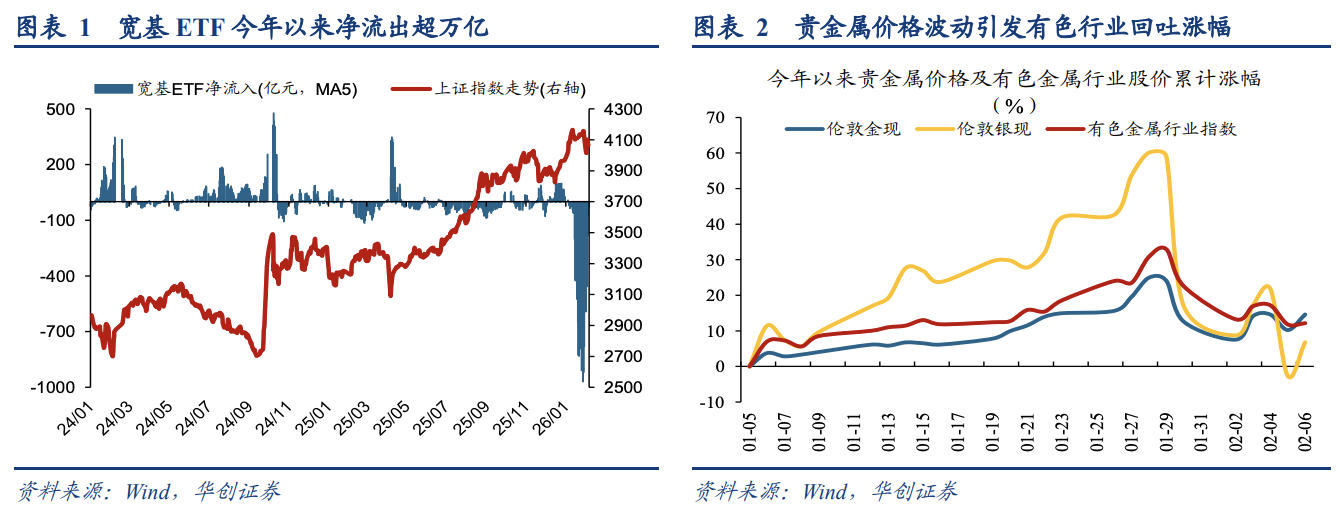
Core Viewpoint - The market has experienced a significant short-term adjustment, but a new allocation window has opened, with a focus on cyclical recovery and the real estate chain [1][11]. Market Adjustment and Liquidity - The market has undergone a sharp but brief adjustment, with a cumulative net outflow of 1.02 trillion yuan from broad-based ETFs this year and a net outflow of 58.2 billion yuan from leveraged funds over the past five trading days, marking a new high since April of last year [2][9]. - Investor sentiment indicators show that the market temperature near the 4000-point level of the Shanghai Composite Index is close to the 3800-point level from November of last year, with 130 companies hitting the daily limit down on February 2, surpassing the previous high of 107 companies on November 21 [6][9]. Investment Style Shift - A profound change in investment style is occurring, with growth stocks expected to outperform value stocks. Growth opportunities are not limited to the technology sector but also include cyclical and real estate chains [1][18]. - The remaining liquidity is expected to slow down, leading to large-cap stocks outperforming small-cap stocks. Since August 2025, large-cap stocks have significantly outperformed small-cap stocks, with the CSI 500 index rising by 31% compared to a 22% increase in the National Equity Index 2000 [23][25]. Annual Allocation Strategy - The main allocation theme for the year is expected to be driven by technology and cyclical sectors. Investors are advised to redefine the boundaries of "growth" and seek performance elasticity in cyclical and real estate chains, rather than focusing solely on the technology sector [26]. - The report highlights that the expected profit recovery for 2025 is clear, with the earnings forecast upgrade rate increasing from 65% in November last year to 96% currently [15][18]. Economic Indicators and Market Trends - The return of physical re-inflation is anticipated, with expectations of PPI turning positive, which will enhance EPS pricing and highlight the advantages of growth, profitability, and quality factors [21][22]. - The market environment is expected to shift, with valuation factors becoming less influential over the next year, and high valuations in small-cap stocks potentially reaching their limits [25].

广发证券存款的流向
GF SECURITIES· 2026-02-08 08:31
Group 1: Deposit Trends - Recent narrative around deposit migration is driven by the maturity of high-interest fixed deposits in 2026, leading to potential asset reallocation towards financial markets[3] - The proportion of deposits in residents' financial asset investments has decreased from 88% to approximately 53-54% since 2023Q3, indicating a significant shift in asset allocation preferences[14] - By 2025, the proportion of deposits is expected to be around 59%, compared to 35% in 2017Q4 and 43% in 2021Q3, suggesting room for further migration[3] Group 2: Fixed Deposit Maturity - The scale of fixed deposit maturities has been increasing, reaching approximately 33 trillion CNY in 2022 and projected to rise to 57-60 trillion CNY in 2026, with an annual increase of 5-8 trillion CNY[4] - The six major state-owned banks reported a fixed deposit maturity scale of about 57 trillion CNY for the year 2025, indicating a consistent upward trend in deposit maturities[4] - The maturity of fixed deposits is expected to peak in 2026, with a total maturity volume likely in the range of 50-60 trillion CNY[4] Group 3: Resident Savings Behavior - Despite low interest rates, many residents are likely to continue choosing fixed deposits or insurance products due to income constraints and a preference for capital preservation[6] - The proportion of residents opting for fixed deposits is projected to be 73.4% in 2025, reflecting a slight increase from the previous year[6] - Historical data shows a negative correlation between income confidence and savings willingness, with six notable declines in savings willingness over the past two decades[6] Group 4: Market Implications - The proportion of fixed deposits transitioning to equity assets is expected to be limited, as many deposits maturing are from risk-averse investors who have already shifted to lower-risk assets[11] - The experience from Japan in the mid-1990s indicates that even during low interest rates and rising risk assets, residents tended to increase holdings in cash and low-risk assets rather than equities[12] - The potential for further migration of deposits is constrained, with estimates suggesting a remaining migration space of about 1-2 percentage points[14]

【广发宏观钟林楠】货币弹性下降,定价矛盾切换:2026年流动性环境展望
郭磊宏观茶座· 2026-01-16 05:35
Group 1 - The monetary policy in 2025 is expected to be moderately loose, with lower rates of cuts compared to 2023-2024, primarily focused in the second quarter due to external shocks and a combination of resilient exports, proactive fiscal policy, and industrial highlights enhancing growth resilience [1][11][12] - Structural tools have formed a framework to support key areas such as consumption and real estate, with a focus on optimization in 2026, including streamlining the number of tools and expanding counterparties to include non-bank institutions [15][16] - The policy framework is shifting towards interest rate regulation, with a focus on narrowing the width of the short-term interest rate corridor, which currently has a width exceeding 200 basis points [2][18][19] Group 2 - Narrowing the interest rate corridor is expected to stabilize liquidity expectations and reduce short-term interest rate volatility, which is crucial for improving the interest rate transmission mechanism [20][21] - The narrow liquidity in 2025 is projected to gradually loosen after the first quarter, with potential tightening risks due to credit exceeding acceptable levels and unexpected exchange rate fluctuations [23][24] - The systemic convergence of narrow liquidity fluctuations since 2016 is attributed to increased exchange rate marketization and changes in intermediary targets, leading to a more stable monetary supply [26][27] Group 3 - In 2025, the growth of M1 is expected to increase by 3.6 percentage points, driven mainly by fiscal expansion and overseas net income, although the micro-level activation of funds remains limited [32][33] - The growth of M2 is projected to rise by 0.7 percentage points in 2025, supported by fiscal expansion and a decrease in bond issuance, but may slow down in 2026 due to uncertainties in the banking sector [42][43] - The total amount of remaining liquidity is expected to increase by approximately 0.7 trillion yuan in 2025, primarily flowing into private equity funds and fixed-income assets, but significant expansion in 2026 is unlikely [45][48][49]

散户慌逃美股,流动性给出答案,震荡市赚钱密码
Sou Hu Cai Jing· 2025-11-30 03:50
Core Viewpoint - The recent 5% pullback in the US stock market is not a sign of a bear market but rather a healthy correction supported by solid liquidity and a shift in investment strategies [1][3]. Market Dynamics - The current market shows a clear "structural differentiation," with value stocks outperforming growth stocks and defensive sectors leading over cyclical sectors, particularly the healthcare sector [6][8]. - This rotation indicates that investors are not panicking but are instead seeking more stable investments, reflecting a rational market behavior [9]. Liquidity Support - The market is underpinned by a combination of fiscal and monetary policies, referred to as "dual insurance." The government has been issuing debt to inject liquidity into the market, a strategy previously employed by former Treasury Secretary Yellen [11][12]. - Current data shows that as long as the net issuance of Treasury securities continues to rise, stock market returns are likely to meet or exceed average levels [12]. - The Federal Reserve's recent statements have provided reassurance, indicating that there is still room for interest rate cuts, which has positively impacted market sentiment [13][15]. Historical Context - Historical data suggests that as long as the actual money supply growth outpaces economic growth, the stock market is unlikely to experience significant declines [15]. - Past instances of liquidity tightening have often resulted in buying opportunities rather than prolonged downturns, indicating that current market conditions may not warrant excessive concern [19]. Investment Strategy - Investors are advised to maintain a balanced portfolio, with allocations to both value and defensive stocks while keeping some cash on hand for future opportunities [24][26]. - Monitoring fiscal issuance and Federal Reserve communications will be crucial in determining liquidity conditions and potential investment directions [23].

流动性如此充裕时,美股会有调整,但不会有熊市
Hua Er Jie Jian Wen· 2025-11-28 00:40
Core Viewpoint - Simon White, a macro strategist at Bloomberg, believes that despite recent market volatility, a bear market is unlikely due to the current liquidity environment [1]. Group 1: Market Dynamics - Recent declines in U.S. stock indices, approximately 5% from recent highs, have led to concerns about a potential market crash [1]. - White argues that the current downturn is merely a temporary correction rather than the onset of a long-term bear market, supported by a "loose" liquidity backdrop from government fiscal policies and Federal Reserve actions [1]. Group 2: Fiscal Support Mechanisms - The concept of "Fiscal Put" is highlighted, where the Treasury uses specific debt issuance strategies to inject liquidity into the market [2]. - Historical data indicates that when net bill issuance rises relative to the fiscal deficit, stock market returns tend to be favorable, with 1-month forward returns aligning with average levels and longer-term returns exceeding average levels [2]. Group 3: Federal Reserve's Role - The Federal Reserve's stance is crucial, with recent comments from New York Fed President John Williams suggesting there is still room for interest rate cuts, which positively impacted market sentiment [3]. - White emphasizes the importance of "Excess Liquidity" as a safety net for risk assets, currently reading at +0.9, indicating limited downside risk for the stock market [3]. Group 4: Temporary Funding Pressures - Recent market weakness has been attributed to tightening "Funding Liquidity," but White reassures that this is a short-term issue [4]. - Historical precedents show that past liquidity pressures have not led to significant market downturns, and indicators suggest a potential easing of funding pressures in the near future [4]. Group 5: Market Consensus and Future Outlook - There is a prevailing consensus that the market will undergo adjustments, but White cautions against blindly following popular strategies [5]. - The current market structure shows a shift towards value stocks outperforming growth stocks and defensive sectors leading over cyclical ones, which is not typical of a robust bull market [5]. - Overall, while the liquidity environment suggests low probabilities for a systemic collapse or bear market, it does not guarantee a rapid return to a bullish trend [5].
读研报 | 当缩量不期而至
中泰证券资管· 2025-10-21 11:33
Core Viewpoint - The recent A-share market has experienced a noticeable decrease in trading volume, indicating a potential shift towards a more cautious investment atmosphere [2][3][5] Trading Volume Analysis - Multiple broad-based indices have shown weakened trading activity, with the average daily turnover of the CSI 300 index dropping from approximately 662.9 billion yuan in September to about 650 billion yuan [2] - The trading volume for mid-cap and small-cap indices, such as the CSI 500 and CSI 1000, decreased by 10% and 12% respectively, while the daily trading volume for the ChiNext and STAR Market indices fell significantly by 20% and 13% compared to September [2] - As of October 20, A-share trading volume has remained below 2 trillion yuan for three consecutive trading days, suggesting a growing atmosphere of caution among investors [2] Differentiation of Fund Types - There is a notable divergence in the actions of different types of funds, with trading-type funds showing a decline in activity. The number of participating investors has decreased to levels seen in early September, with retail investors experiencing a net outflow of 13.7 billion yuan [2][3] - Conversely, the willingness of allocation-type funds to invest has increased, as evidenced by a rise in public fund positions for the first time since mid-August and a net inflow of 780 million yuan from actively managed foreign capital, marking a new high since 2025 [3] Liquidity and Market Dynamics - The remaining liquidity in the market has likely passed its most rapid growth phase, with M2 growth slowing from 8.8% in August to 8.4% in September, indicating a marginal reduction in liquidity [5] - Although current liquidity remains ample, its degree of expansion may not continue significantly, suggesting that future valuation expansion could be limited, while the core driving force may shift towards earnings per share (EPS) [5] - The market is characterized by a "slow bull" trend rather than a "fast bull," with the current environment supporting gradual growth rather than rapid increases [5][6] Market Sentiment and Future Outlook - The concept of "reduced volume" is relative, as the recent trading volumes are lower compared to the exceptional days of over 2 trillion yuan, which are not the norm in the market [6] - The market is expected to experience fluctuations and requires rational thinking rather than excessive enthusiasm, indicating a transition from a fast bull market to a slow bull market is likely [6]

【广发宏观钟林楠】居民活动收支表的构建、分析与运用
郭磊宏观茶座· 2025-09-25 23:47
Group 1 - The article discusses the limitations of traditional liquidity research, which categorizes liquidity into narrow (money) and broad (credit) dimensions, and highlights the need for a more comprehensive approach to understand the flow and usage of liquidity in the real economy [1][12][14] - The construction of a household activity income and expenditure table is proposed, integrating data from the National Bureau of Statistics and the central bank to provide a clearer picture of household income and expenditure dynamics [2][16][19] Group 2 - The income side of the household activity table includes seven components, with total household income growing at an average annual rate of approximately 6%, reaching 106 trillion yuan in 2023 [2][19] - Labor remuneration constitutes 45%-49% of total income, while property income remains stable at around 5%-6%, indicating a shift in income sources and a recovery in household balance sheets as debt income has decreased from 10% to 5% [2][19][21] Group 3 - The expenditure side of the household activity table shows that interest payments have increased from 1.5% to 1.7%, while actual final consumption has risen from 54% to 57%, reflecting changes in fiscal support and consumer behavior [3][24][25] - The analysis indicates that the structure of household spending has remained consistent with income growth, but the capital formation total has decreased from 14% to 10%, primarily due to a slowdown in housing and individual investment [3][24][25] Group 4 - A quarterly household activity income and expenditure table is proposed to analyze short-term changes in household income, consumption, and financial investment behaviors [4][33] - The article notes that disposable income growth is expected to rebound in 2024Q2-2025Q1, while consumption is projected to follow a similar trend, although it may decline in 2025Q2 [4][34][37] Group 5 - Financial investment is defined as the portion of total income remaining after consumption and non-financial investments, with three notable expansions of residual liquidity since 2016, indicating shifts in investment preferences towards stocks and bonds [6][42][46] - The article highlights that in the first half of 2025, the flow of residual liquidity shifted from bond assets to stock assets, reflecting changing market conditions and investment opportunities [7][49][50]

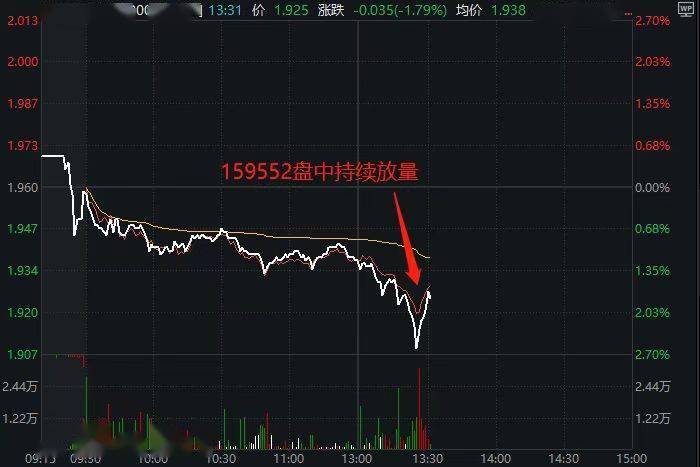
深V反转?中证2000增强ETF(159552)盘中再放巨量暴露资金分歧
Sou Hu Cai Jing· 2025-08-14 05:55
Core Insights - The market experienced fluctuations on August 14, with the CSI 2000 Enhanced ETF (159552) showing a significant intraday drop of 2.70% before recovering to a decline of 1.43% by 1:36 PM, while still leading the broad index ETFs with a year-to-date increase of 48.27% [1] - The fund saw a net inflow of over 12 million during the trading session, marking its ninth consecutive day of net inflows, and its total assets have surged by 6828.12% this year, reaching a historic high of over 1.1 billion [1] - Huachuang Securities suggests that if liquidity remains ample, the "water buffalo logic" may strengthen, leading to increased investments in small-cap growth stocks through ETFs and margin trading [1] Market Dynamics - The current market environment is characterized by strong investor interest, as indicated by the substantial net inflows into the CSI 2000 Enhanced ETF [1] - The potential for further growth in small-cap stocks is supported by the anticipated interest rate cuts by the Federal Reserve in the third quarter, which may favor growth styles [1] - However, industry experts caution that despite the positive outlook, the uncertainties in the external environment and the already high short-term gains in small-cap stocks warrant vigilance against potential pullbacks [1]
再通胀牛市系列4:如何看待微盘新高
Huachuang Securities· 2025-06-19 08:36
Group 1 - The report emphasizes that the micro-cap stocks are benefiting from liquidity expansion, with the current market environment favoring small-cap growth stocks due to a lack of a clear trend in the market and ongoing inflation concerns [2][3][15] - The micro-cap stock index has shown a strong performance, with a cumulative increase of 30% year-to-date, significantly outperforming the broader market [3][11][19] - The report highlights that the shareholder structure of micro-cap stocks is predominantly composed of individual investors, which positions them to benefit from the release of excess household savings into the stock market [4][23][34] Group 2 - The report identifies that the micro-cap sector is primarily driven by liquidity rather than fundamentals, as earnings growth is not a major pricing factor in the current environment [4][45][53] - The micro-cap industry covers sectors such as manufacturing and technology, including themes like AI, robotics, and innovative pharmaceuticals, which are expected to benefit from ongoing industrial policy support [5][63][64] - The trading mechanisms in the micro-cap space, such as higher price limits on exchanges like the Beijing Stock Exchange and ChiNext, provide greater elasticity compared to the main board, enhancing the attractiveness of micro-cap stocks [57][58]