
品牌维权

Search documents
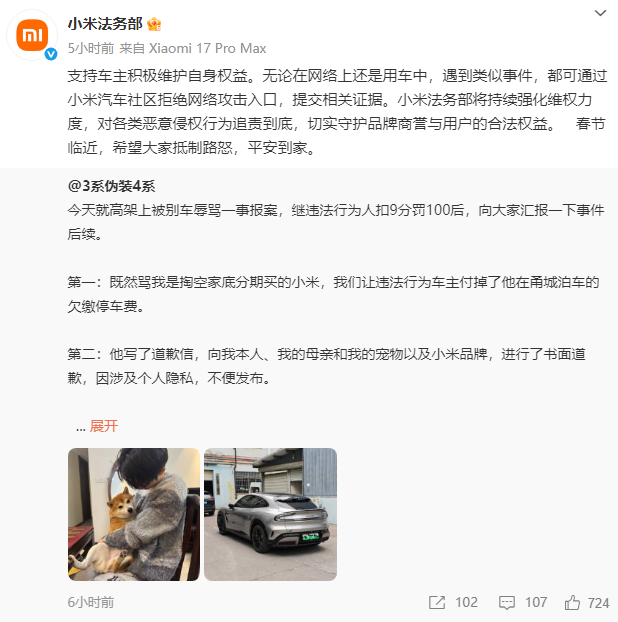
小米车主被“路怒”司机恶意别车、辱骂:“贷款买小米,装什么法拉利?”后者被扣9分、罚100元,写书面道歉信!小米法务部发声
Mei Ri Jing Ji Xin Wen· 2026-02-11 13:08
Core Viewpoint - A Xiaomi car owner in Ningbo experienced road rage from a Tesla driver, leading to legal action and a public apology from the offending driver [1][8]. Group 1: Incident Details - The incident occurred when the Xiaomi car owner was driving his mother to visit relatives and attempted to change lanes on a highway, which triggered aggressive behavior from the Tesla driver [4]. - The Tesla driver engaged in dangerous driving behaviors, including aggressive lane changes and verbal harassment, while the Xiaomi owner remained calm and documented the situation [6]. - After the incident, the Xiaomi owner reported the situation to the police, providing evidence such as the Tesla's license plate and audio recordings of the harassment [8]. Group 2: Legal and Company Response - The Tesla driver was penalized with a 9-point deduction on their driving record and a fine of 100 yuan for dangerous driving, along with a written apology to the Xiaomi owner and their family [8]. - Xiaomi's legal department expressed support for the car owner and emphasized the importance of protecting user rights against online and offline attacks, encouraging users to report such incidents [9][10]. - Since the launch of a special assistance program for Xiaomi car owners facing online attacks, 18,266 individuals have participated, with 2,189 providing evidence, leading to successful legal actions for 51 car owners [9].


“塔斯汀”打假“塔诗汀”,获赔500万元
新华网财经· 2026-01-22 03:25
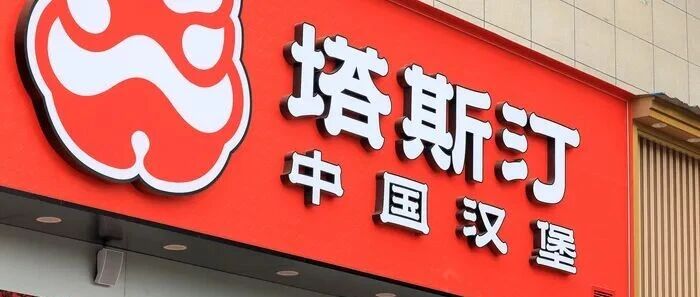
Core Viewpoint - The article discusses a legal case involving Fuzhou Tasting Catering Management Co., Ltd. against a competitor, highlighting issues of trademark infringement and the consequences faced by the infringing party [3]. Group 1: Legal Proceedings - Fuzhou Tasting Catering Management Co., Ltd. filed a lawsuit on January 13, 2025, and the Shanghai Minhang District People's Court held a public hearing on December 30, 2025, with a verdict announced on January 14, 2026 [3]. - The court ruled that the "Tashitin" brand infringed upon the registered trademark rights of "Tasting" and ordered the cessation of infringing activities, along with a compensation of 5 million yuan [3]. Group 2: Infringement Details - The "Tashitin" brand was found to closely mimic the Tasting brand, engaging in unfair competition through similar decor and advertising practices [3]. - The operator behind "Tashitin," Guangzhou Jinsha Brand Operation Co., Ltd., had previously faced penalties for violating the Commercial Franchise Management Regulations, incurring fines and the confiscation of illegal gains totaling approximately 4.98 million yuan [4][5]. Group 3: Industry Context - The article notes that "Tasting" is the sole brand under Fuzhou Tasting Catering Management Co., Ltd., specializing in "Chinese hamburgers" [5]. - From 2022 to 2025, Tasting opened over 2,300 new stores annually and expanded into first-tier cities, aiming to become a "ten-thousand-store brand" by the second half of 2025 [5]. - The article highlights the prevalence of counterfeit brands in the restaurant industry, emphasizing ongoing legal and regulatory efforts to combat such practices [5].
“海尓”碰瓷“海尔”!1688平台多款产品涉嫌虚假宣传
新华网财经· 2026-01-15 01:25
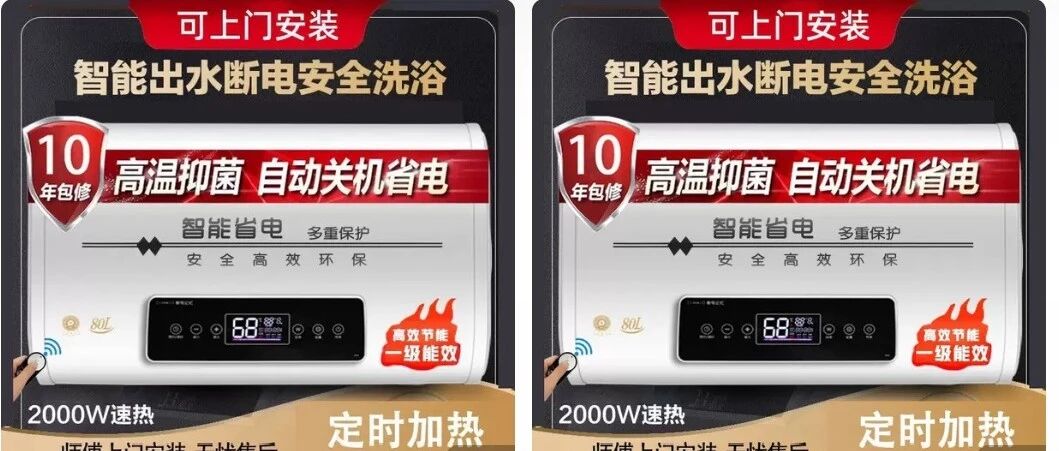
Core Viewpoint - The article highlights a case of misleading branding on Alibaba's 1688 platform, where a consumer ordered a "Haier" refrigerator but received a product from a different brand, "Hai'er," which closely resembles the original brand name [1][4]. Group 1: Misleading Branding - A consumer purchased a "Haier" refrigerator for 358 yuan but received a "Hai'er" product instead, indicating potential false advertising [1][4]. - The Alibaba platform's customer service acknowledged that the involved merchant's practices were misleading and stated that actions would be taken against them [1][4]. - As of January 14, the problematic store was no longer searchable on the 1688 platform [1][4]. Group 2: Ongoing Issues - Despite the removal of the specific store, numerous products labeled "Hai'er" still exist on the 1688 platform [2][4]. - A separate inquiry revealed that another store claimed to sell "Haier" gas water heaters but was not affiliated with the actual Haier brand, indicating a pattern of counterfeit products [8]. - The price of products labeled as "Haier" is significantly lower than genuine Haier products, with some "Haier" labeled refrigerators priced at 203 yuan compared to over 600 yuan for authentic Haier models [8].

锐评|“李鬼出事,李逵遭殃”,不能让品牌维权这么难
Xin Lang Cai Jing· 2026-01-14 09:22
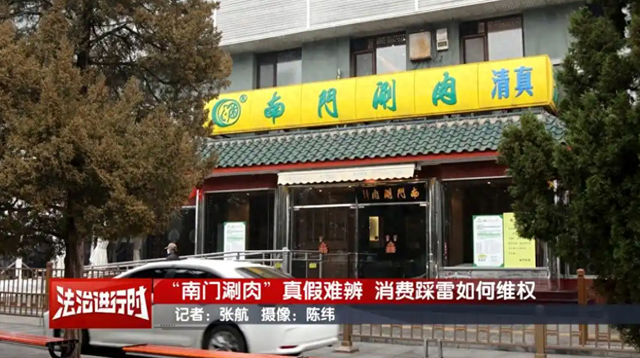
Core Viewpoint - The incident involving a customer allowing their pet dog to lick food at a hot pot restaurant has led to significant public attention and resulted in the restaurant's temporary closure and compensation to affected diners. This situation has inadvertently harmed the reputation of "Nanmen Shuanrou," a well-known brand in Beijing [1]. Group 1: Brand Integrity and Consumer Rights - The restaurant involved in the incident is not the authentic "Nanmen Shuanrou," but rather a counterfeit establishment that exploits the brand's name. The genuine brand operates only nine locations in Beijing and has never franchised [3]. - Numerous imitation hot pot restaurants have emerged, misleading consumers and damaging their rights. These counterfeit establishments benefit from the established reputation of the original brand without investing in quality or service [3]. - The rise of delivery services has led to an increase in counterfeit shops, which sometimes attract more customers than the original brand. This trend highlights the challenges of brand protection in the current market [3]. Group 2: Legal and Cultural Implications - There is a growing need for stronger legal measures against trademark infringement to protect cultural assets associated with well-known brands. Increasing the cost of violations is essential to eliminate the environment that allows counterfeit brands to thrive [4]. - Brands should enhance their trademark strategies and actively publish information about legitimate stores to help consumers make informed choices. Consumers are encouraged to research and support authentic brands to preserve the cultural significance of their favorite foods [4]. - The emphasis on integrity and genuine business practices is crucial for the long-term success of brands. New brands that focus on quality and customer satisfaction can also become recognized names in the future, reinforcing the idea that trust and authenticity are the best business strategies [4].
影石创新出手!称已固定2500余条谣言、公安立案调查中
证券时报· 2025-12-24 00:08
Core Viewpoint - The company is actively combating malicious rumors and misinformation regarding its newly launched product, the Antigravity A1 drone, by initiating legal actions and offering rewards for information on orchestrated smear campaigns [1][4]. Group 1: Legal Actions and Responses - The company has reported over 2,500 instances of malicious and false attacks online within two weeks of the product launch, leading to a formal police investigation [1][6]. - A public reward of up to 100,000 yuan is being offered for credible leads that can assist in identifying individuals or groups involved in spreading false information [1][4]. - The company has documented various tactics used by malicious actors, including account hacking and coordinated posting by multiple accounts, indicating organized efforts to undermine the brand [4]. Group 2: Product Performance and Market Challenges - The Antigravity A1 drone achieved sales of over 30 million yuan within 48 hours of its launch, despite facing significant external pressures and market skepticism [4][6]. - The company’s chairman, Liu Jingkang, acknowledged the challenges posed by competitors and the industry, attributing the negative rumors to a reaction against the company's disruptive market entry [4][6]. - The company has faced supply chain pressures from multiple core suppliers, which has necessitated a rapid restructuring of its supply chain to maintain product availability [6].

锐评丨北京同仁堂起诉!“同仁堂宇宙”里还有多少擦边黑洞
Bei Jing Ri Bao Ke Hu Duan· 2025-12-17 10:20
Core Viewpoint - A product claiming to be "99% pure Antarctic krill oil" from "Beijing Tongrentang" actually contains no krill oil, misleading consumers and raising concerns about brand integrity and consumer protection [1][4]. Group 1: Product Misrepresentation - The product's packaging prominently features "Beijing Tongrentang," leading consumers to believe it is from a reputable source, while the actual brand is "Tongrentang (TRT)" [1]. - The product claims to have a phospholipid content of 43%, but it contains no krill oil at all, undermining the quality associated with the Tongrentang brand [1][4]. - The infringing company, Beijing Tongrentang (Sichuan) Health Industry Co., Ltd., is being sued by Beijing Tongrentang Health Pharmaceutical Co., Ltd. for trademark infringement [1][5]. Group 2: Manufacturer's Accountability - The manufacturer, Anhui Habao Pharmaceutical Co., Ltd., has faced multiple administrative penalties in the past three years for label non-compliance and advertising violations [3]. - The out-of-line pricing of the product raises questions about the manufacturer's practices, suggesting a lack of transparency and accountability [3][4]. - The infringing company claims ignorance of the misleading packaging, but the circumstances suggest otherwise, indicating potential complicity [3]. Group 3: Brand Integrity and Consumer Trust - The "Tongrentang universe" is described as a chaotic marketplace where many products misuse the Tongrentang name, threatening the brand's reputation built over centuries [4]. - Beijing Tongrentang emphasizes the importance of maintaining its brand integrity and has repeatedly stated that it has never authorized the use of its trademark by subsidiary companies [4]. - The company is committed to legal action to protect its brand and consumer rights, highlighting the need for stricter regulatory oversight to prevent such abuses [5][7].


电商平台为什么要控价?三步走
Sou Hu Cai Jing· 2025-12-08 11:08
Core Viewpoint - Unauthorized sales on Pinduoduo lead to brand price system chaos and decreased trust in genuine products, necessitating a comprehensive rights protection strategy that includes platform compliance reporting, administrative intervention, and professional assistance to safeguard brand interests and market order [1]. Group 1: Pinduoduo Intellectual Property Platform - Complaining through Pinduoduo's official intellectual property protection platform is a direct method to combat unauthorized sales, which can result in penalties such as link deletion and product removal [3]. - The complaint process involves three steps: account registration, qualification submission, and evidence-based complaint [3]. - Registration requires uploading valid proof of the complainant's identity, such as ID for individuals or business licenses for companies, ensuring the authenticity of the complaint [4]. Group 2: Administrative Intervention - Brands can enhance their rights protection by leveraging administrative power through three main methods: 1. Submitting reports to the industrial and commercial department, detailing the unauthorized seller's violations and requesting investigations or penalties [7]. 2. Seeking mediation support from consumer associations to facilitate communication and resolution between brands and unauthorized sellers [8]. 3. Applying for arbitration if there was a prior partnership with the unauthorized seller and an arbitration agreement exists, requiring clear requests and supporting evidence [9]. Group 3: Third-Party Assistance - Small and medium-sized enterprises lacking professional rights protection teams can engage third-party organizations to address unauthorized sales issues, which typically have established pricing control teams and service systems [10]. - These organizations can conduct brand diagnostics and data analysis to identify sellers needing control, creating black and white lists, and developing targeted solutions to efficiently manage unauthorized activities [10]. - Utilizing third-party resources allows brands to save on manpower and time, focusing on product development and market operations while ensuring the selected institution aligns with their needs [10].


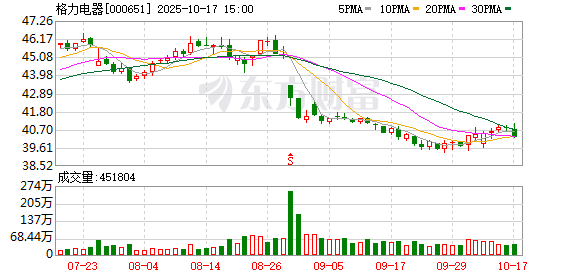
格力维权,最新进展
Shang Hai Zheng Quan Bao· 2025-10-17 08:51
Core Viewpoint - Gree Electric Appliances has taken legal action against a certain MCN company for spreading false information that damages its brand reputation, resulting in a court ruling in favor of Gree [2][5] Group 1: Legal Action and Court Ruling - Gree Electric Appliances filed a lawsuit against an MCN company for publishing numerous false claims related to the company, including fabricated customer complaints and derogatory language [2] - The court has ruled that the MCN company must publicly apologize and keep the apology pinned for 30 days, in addition to compensating Gree Electric Appliances with 160,000 RMB for economic losses [2] Group 2: Brand Protection and Commitment - Gree Electric Appliances emphasizes that the internet is not a lawless space and that any infringement will be legally pursued [5] - The company remains committed to providing high-quality products and sincere services to the public while using legal means to protect its brand dignity [5]

胖东来,讨厌胖都来们
3 6 Ke· 2025-05-05 03:28
Core Viewpoint - The article discusses the strategic maneuvering of a company named "胖都来" (Pang Dou Lai) that closely mimics the successful brand "胖东来" (Pang Dong Lai) to exploit market gaps and gain consumer attention while navigating legal boundaries [1][2][7]. Group 1: Market Strategy - "胖都来" targets a market gap by entering a region where "胖东来" has no physical presence, leveraging the controversy around its name to generate buzz and attract customers [2][9]. - The company employs a low-cost marketing strategy by creating a buzz through celebrity endorsements and social media, effectively reducing customer acquisition costs to 30% of traditional methods [8][9]. - The brand's strategy includes mimicking "胖东来" in visual identity and service promises, capitalizing on consumer confusion to drive foot traffic [6][17]. Group 2: Legal and Ethical Considerations - "胖都来" appears to test legal boundaries by registering similar trademarks in advance, indicating a calculated approach to avoid direct legal confrontation with "胖东来" [4][5]. - The article highlights the challenges of brand protection in China, where the cost of legal action often outweighs the benefits, leading many companies to forgo necessary protections [12][16]. - The existence of professional "hit-and-run" litigators complicates the legal landscape, making it difficult for brands like "胖东来" to effectively defend their trademarks [16][19]. Group 3: Consumer Perception and Brand Trust - Consumer recognition is fragile, with 63% mistakenly believing "胖都来" is affiliated with "胖东来," showcasing the reliance on brand symbols over product quality [17][18]. - The article warns that while "胖都来" may gain initial traction, long-term success hinges on delivering quality service and maintaining consumer trust, which is difficult to achieve through imitation [10][11]. - The potential for negative consumer backlash is significant if "胖都来" fails to meet the expectations set by "胖东来," which could lead to a rapid decline in customer loyalty [11][24]. Group 4: Lessons for Small and Medium Enterprises - The case of "胖都来" serves as a cautionary tale for SMEs, emphasizing the importance of building a unique brand identity rather than relying on imitation [20][22]. - Companies are encouraged to focus on differentiation and innovation to create genuine value for consumers, rather than attempting to capitalize on the success of established brands [22][25]. - The article concludes that true business success comes from creating a value-driven community rather than merely competing for market share through imitation [25][26].