
奥运经济

Search documents
李宁:期待今年净开店下收入加速增长-20260321
HUAXI Securities· 2026-03-21 07:45
Investment Rating - The investment rating for the company is "Buy" [1] Core Insights - The company achieved revenue of 29.598 billion yuan, net profit of 2.935 billion yuan, and operating cash flow of 4.852 billion yuan in 2025, with year-on-year growth of 3.2%, -2.6%, and -7.9% respectively, exceeding market expectations [2] - The company is expected to see high single-digit revenue growth in 2026, driven by double-digit growth in the running category and improvements in the sports leisure category [6][7] - The company plans to launch new running shoe products and increase marketing investments in the running segment [7] Financial Performance - In 2025, the gross margin was 49.0%, a decrease of 0.4 percentage points year-on-year, while the operating profit margin increased by 0.4 percentage points to 13.2% [4] - The net profit margin was 9.9%, down 0.6 percentage points year-on-year, primarily due to an increase in the tax rate and management expense ratio [4] - The company maintained a healthy inventory level with total inventory of 2.694 billion yuan, a year-on-year increase of 3.68% [5] Revenue and Profit Forecast - Revenue forecasts for 2026 and 2027 have been raised to 32.03 billion yuan and 35.33 billion yuan respectively, with net profit forecasts adjusted to 2.88 billion yuan and 3.356 billion yuan [7] - The earnings per share (EPS) estimates for 2026 and 2027 have been increased to 1.12 yuan and 1.30 yuan respectively [7] Market Position - The company has a total market capitalization of 51.05 billion Hong Kong dollars, with a closing price of 21.44 Hong Kong dollars as of March 20, 2026 [1]

米兰刷新冬奥会经济逻辑
Guo Ji Jin Rong Bao· 2026-02-23 10:41
Core Insights - The Milan-Cortina Winter Olympics represents Italy's return to hosting a major sporting event after 20 years, with significant implications for economic recovery and infrastructure development [3][5] - The event is expected to generate over €53 billion in economic returns, driven by investments in public infrastructure and private capital [5][6] - The Olympics aims to transform short-term tourism influx into long-term economic benefits through improved infrastructure and regional branding [4][7] Economic Impact - The overall budget for the Milan Winter Olympics is approximately €52 billion, with €35 billion allocated for public infrastructure and €17 billion from private investments [5][6] - Direct consumer spending during the event is projected to be around €11 billion, with an additional €12 billion expected from post-event tourism [6][7] - Long-term structural value in the northern Alps region is estimated to reach €30 billion through upgraded facilities and sustainable tourism networks [6] Infrastructure and Cost Management - The event's organization emphasizes cost control, with 85% of venues being existing facilities to minimize new construction costs [10][11] - The budget for the event has increased from an initial estimate of $1.3 billion to over $1.7 billion due to inflation and rising construction costs [10] - The decentralized hosting model aims to reduce environmental impact and enhance community resilience, integrating various regional assets into a cohesive tourism strategy [11][12] Challenges and Considerations - The decentralized venue approach may reduce peak consumption and population flow, potentially compressing short-term revenue despite lowering risks [8][12] - Historical data suggests that the economic benefits of hosting such events may not always justify the high capital expenditures involved [8][9] - The success of the Milan Winter Olympics will depend on balancing immediate economic stimulation with sustainable long-term growth [9][10]


中国蓝观察丨打开米兰冬奥会上的浙江元素 看浙江制造走向国际赛场
Xin Lang Cai Jing· 2026-02-12 12:13
Core Viewpoint - Zhejiang enterprises are actively participating in the Milan Winter Olympics, showcasing their sports products and experiencing a surge in international exports [1][15]. Group 1: Zhejiang Sports Apparel - The professional skiing outfits worn by Chinese athletes at the Milan Winter Olympics are developed by Hangzhou Taituo Outdoor Products Co., which has over 30 years of experience in the ski apparel industry [2][16]. - Taituo's ski suits are priced over 10,000 yuan, featuring advanced technology such as soft materials and superior waterproof performance [2][16]. - Taituo has seen an annual sales growth of 50% and plans to extend its technology advantages in ski apparel to outdoor lifestyle products [4][18]. Group 2: Textile Innovations - The "China Red" award ceremony outfit worn by athlete Su Yiming was produced by Shaoxing Qianyong Textile Co., showcasing the technological prowess of Zhejiang's textile industry [5][19]. - Qianyong has utilized digital printing technology to enhance the quality of their products, achieving a printing defect rate of over 90% [10][24]. - The company has previously supported major events like the Beijing Winter Olympics and the Hangzhou Asian Games, demonstrating its established presence in the sports textile sector [7][21]. Group 3: Functional Luggage - The "Winter Rhythm" luggage, designed by Hangzhou Zhenyuan Leisure Products Co., serves as the exclusive luggage supplier for the Chinese delegation at the Winter Olympics [11][25]. - This luggage features a unique design that combines traditional Chinese elements with modern technology, including a dry-wet separation design and a mechanical weighing structure [13][27]. - Zhenyuan has focused on functional luggage development and holds over 20 patents in areas such as antibacterial and thermal insulation technologies [13][27]. Group 4: Market Trends - The ongoing "Olympic economy" and "ice and snow economy" are driving a surge in the export of ice and snow sports equipment, opening broader international markets for Zhejiang enterprises [14][28]. - More Zhejiang companies are seizing the opportunities presented by the sports economy, reflecting a robust growth trend in the industry [14][28].

金银价格飙升,顶尖运动员有望在冬奥会获得意外之财
财富FORTUNE· 2026-02-09 13:05
Core Insights - The economic value of the 2026 Milan-Cortina Winter Olympics has reached unprecedented heights, driven by sponsorship agreements, event bonuses, and soaring precious metal prices, with Olympic medals now valued at historical peaks [2][3] Group 1: Precious Metal Prices - Gold prices have nearly doubled since early 2025, rising from $2,800 per ounce to over $5,000, with an approximate 80% increase over the past year, marking an unprecedented surge compared to the historical average annual increase of about 8% since 1971 [2] - Silver prices have also significantly increased, currently trading near $90 per ounce, up nearly 182% from $32 a year ago, far exceeding its historical growth rate [2] - The silver medal for the Winter Olympics is made of 999 pure silver, weighing 500 grams, while the gold medal is based on the silver medal and plated with 6 grams of gold, resulting in a value of approximately $1,400 for each silver medal and about $2,400 for each gold medal [2] Group 2: Medal Value and Auction Market - The total number of medals awarded at the Winter Olympics will be 245 each for gold, silver, and bronze, with the Paralympics awarding 137 medals in each category [2] - Despite the relatively low material value of the medals compared to the millions spent on athlete training, their collective value and symbolic significance far exceed their material worth, with buyers willing to pay high prices due to the historical significance and the athletes' stories behind them [3] - The auction market for Olympic medals is thriving, as evidenced by former U.S. swimmer Ryan Lochte selling three gold medals for a total of $385,520, averaging over $125,000 each [4][5] Group 3: Athlete Support and Financial Challenges - In addition to medals, U.S. Olympic and Paralympic athletes receive bonuses: $37,500 for gold, $22,500 for silver, and $15,000 for bronze, which are often insufficient for living expenses, leading many athletes to rely on sponsorships [6] - A billionaire has pledged to provide $200,000 to each U.S. Olympic athlete, regardless of medal achievement, with a portion of the funds deferred until the athlete reaches 45 years of age or 20 years after their first Olympic participation [6]

办冬奥会要花多少钱?能挣多少钱?算算米兰冬奥会的“经济账”
Sou Hu Cai Jing· 2026-02-09 13:01
Core Viewpoint - The Milan-Cortina Winter Olympics is projected to have significant economic implications for Italy, with a total budget of approximately €52 billion (about 426 billion RMB) and potential total expenditures estimated between €57 billion and €59 billion, emphasizing the importance of infrastructure investment and long-term economic benefits [3][5][12]. Expenditure Breakdown - The overall budget for the Winter Olympics is approximately €52 billion, with operational costs estimated at €17 billion, primarily for event organization, security, logistics, and marketing [3]. - The operational budget is largely funded by the International Olympic Committee (around €10 billion), with additional contributions from local sponsorships, ticket sales, and merchandise [3]. - Infrastructure investment is a major component, estimated at €35 billion by the Italian government, while S&P Global Ratings estimates it at around €40 billion, with 79% of this funding coming from the central government [5][6]. Infrastructure Investment - The infrastructure spending is divided into two main categories: approximately 66% for transportation infrastructure (railways, roads, bridges) and 34% for the renovation of Olympic venues [8]. - The approach of "less new construction, more reuse" marks a significant shift from previous Olympics, focusing on upgrading existing facilities rather than building new ones [10]. Economic Impact - The Italian government views the Winter Olympics as a "growth booster," with an estimated total economic contribution of about €53 billion, including direct consumption during the event and long-term infrastructure value [12]. - The decentralized hosting model is expected to distribute tourism benefits across a wider area, enhancing the longevity of tourism revenue [14]. Long-term Value - The true value of the Winter Olympics extends beyond the event itself, as it aims to improve transportation networks and urban development, contributing to a more prosperous Alpine region post-event [16].

冬奥东风劲 浙产体育用品出海逐浪
Mei Ri Shang Bao· 2026-02-08 22:20
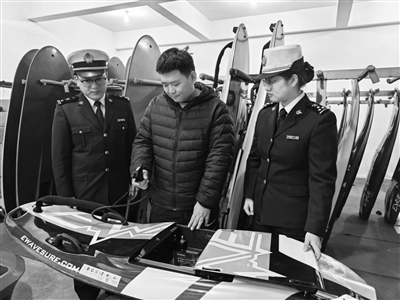
Group 1 - The 2026 Milan-Cortina Winter Olympics is expected to boost the Olympic economy and snow sports economy, leading to a surge in exports of sports goods from Zhejiang province, with an export value of 35.7 billion yuan in 2025, a year-on-year increase of 11.4% [2] - Various categories such as ice and snow equipment, professional training gear, and sports peripherals are experiencing strong demand, with Zhejiang companies leveraging technological innovation and quality control to expand overseas markets [2][3] - The Zhejiang Yuanjing Sports Goods Co., Ltd. has seen a significant increase in exports of ski goggles, with a 41.1% year-on-year growth to 69 million yuan in 2025, and anticipates a 61.8% increase in orders for ski goggles in 2026 due to the Winter Olympics [3] Group 2 - The overall export of sports goods from Zhejiang is accelerating, with companies like Zhejiang Jinnais Sports Goods Co., Ltd. reporting a nearly 40% increase in exports to Italy, reaching 330 million yuan in 2025 [4] - Zhejiang Shanait Sportswear is capitalizing on the snow sports consumption trend by launching functional products and aims to deepen its presence in the European market through international exhibitions [4] - The Hangzhou Customs has implemented supportive measures to help companies seize export opportunities in the sports economy, including facilitating customs clearance and enhancing quality control for products like ski goggles and boards [6]
米兰—科尔蒂纳冬奥会开幕在即!从康卡斯特(CMCSA.US)到Visa(V.US) 这些股票欢呼雀跃
智通财经网· 2026-02-06 13:20
Group 1: Event Overview - The Milan-Cortina Winter Olympics will take place from February 6 to 22, 2026, with the opening ceremony scheduled for February 6, 2026, at 2:00 PM EST [1] - NBC holds exclusive broadcasting rights in the U.S., utilizing its platforms such as NBC, Peacock, USA, and CNBC to distribute event coverage [1] - The Olympics will be bundled with the Super Bowl LX broadcast, creating one of the largest single-event advertising platforms in history [1] Group 2: Sponsorship and Advertising - Major sponsors include Procter & Gamble, Anheuser-Busch, Nike, and Alibaba, who will leverage customized marketing campaigns for global brand exposure [2] - A strong lineup of Italian corporate sponsors includes Enel, Eni, Intesa Sanpaolo, Poste Italiane, Leonardo, Stellantis, TIM, EA7 Emporio Armani, Pirelli, ITA Airways, Technogym, and Esselunga [2] - Analysts expect a moderate positive impact on local hotels and tourism, extending beyond the Olympics [2] Group 3: Apparel and Fashion - Ralph Lauren will provide uniforms for the U.S. team, while Lululemon will outfit the Canadian team, and EA7 Emporio Armani will support the Italian delegation [3] - Columbia Sportswear will customize uniforms for the U.S. curling team, and Amer Sports' Salomon is expected to supply volunteer gear [3] - Sports betting operators like FanDuel, BetMGM, and DraftKings are anticipated to see increased betting volumes in Q1 due to the absence of comparable large-scale events last year [3] Group 4: Travel and Payment Services - KeyBanc Capital Markets views the Olympics as a positive factor for Airbnb, Expedia, and Booking Holdings, leaders in the global short-term rental and high-end residential services [4] - RBC Capital Markets predicts significant benefits for Visa, driven by a substantial increase in value-added service revenues [4] - Visa has integrated stablecoins into its core clearing system, potentially enhancing its payment network through a combination of Visa and stablecoins [4]
图数室|冬奥氪金,从夯到更夯
Xin Lang Cai Jing· 2026-02-06 08:25
Group 1 - The core idea of the article highlights the evolution of Olympic sponsorship, showcasing how it has transformed from a concentrated model to a multi-layered approach, reflecting the deep connection between the Olympics and the economic landscape of the times [2][4][11] - The number of global partners for the Olympics has increased significantly, from 6 in the 2002 Salt Lake City Winter Olympics to 12 in the 2018 PyeongChang Winter Olympics, indicating a doubling of sponsorship opportunities [2][4] - The Beijing 2022 Winter Olympics exemplified an efficient sponsorship model with only 46 sponsors generating a record revenue of $1.838 billion, averaging nearly $40 million per sponsor, compared to 86 sponsors and $649 million in revenue for the previous PyeongChang Olympics [11][15] Group 2 - The sponsorship structure for the Beijing 2022 Winter Olympics included various levels such as official partners, sponsors, and suppliers, featuring both international brands like Intel and local companies like China Post, showcasing a blend of global and local economic forces [4][5] - The upcoming 2026 Milan Winter Olympics will introduce a new "senior partner" tier, integrating national strategic enterprises, which reflects a trend of deeper collaboration between Olympic branding and local industries [7][9] - The impact of Olympic sponsorship extends beyond immediate sales, serving as a platform for brands to demonstrate technological capabilities and build long-term brand equity through consumer engagement and emotional connections [15]
安踏体育(02020):零售持续承压,后续指引谨慎
Changjiang Securities· 2026-01-26 11:30
Investment Rating - The investment rating for Anta Sports (02020.HK) is "Buy" and is maintained [8]. Core Views - Anta's retail performance is under pressure, with the Anta brand experiencing a year-on-year decline in retail sales, while the FILA brand shows a moderate increase. Other brands have seen retail sales growth of 35%-40% year-on-year [2][6]. - The overall retail environment is expected to remain challenging, with operational profit margins (OPM) under pressure due to high marketing expenses in the Olympic year and a weak retail backdrop [8]. - FILA's brand restructuring is yielding positive results, with expected continued growth in 2026, although OPM may still face downward pressure due to ongoing channel adjustments [8]. - The company is projected to achieve net profits of 13 billion, 14 billion, and 15.1 billion yuan for the years 2025, 2026, and 2027, respectively, with corresponding price-to-earnings ratios of 15, 14, and 13 times [8]. Summary by Sections Retail Performance - Anta brand retail sales have declined year-on-year, attributed to a warm winter affecting winter apparel sales and a late Spring Festival impacting children's clothing sales. However, discounting and inventory turnover ratios are expected to remain stable [8]. - FILA brand retail sales have shown a year-on-year increase, with stable discounting and inventory turnover ratios. The brand's restructuring efforts are beginning to show results, with positive growth anticipated in 2026 [8]. Financial Projections - Revenue projections for Anta Sports are as follows: 70.826 billion yuan for 2024, 79.384 billion yuan for 2025, 86.247 billion yuan for 2026, and 93.297 billion yuan for 2027, reflecting growth rates of 14%, 12%, 9%, and 8% respectively [10]. - Net profit forecasts are 11.927 billion yuan for 2024, 13.016 billion yuan for 2025, 14.028 billion yuan for 2026, and 15.123 billion yuan for 2027, with growth rates of 17%, 9%, 8%, and 8% respectively [10].

餐饮倒闭潮,席卷欧洲
虎嗅APP· 2025-12-13 03:08
Core Viewpoint - The European restaurant industry is facing a severe crisis characterized by declining customer traffic, rising operational costs, labor shortages, and high tax burdens, leading to widespread closures and bankruptcies across the continent [4][5]. Group 1: Industry Crisis - The restaurant industry is a crucial sector in Europe, reflecting economic vitality. Since the summer of 2025, a noticeable decline in customer traffic has spread from France to the UK, Germany, and Southern Europe, indicating a widespread industry crisis [6]. - The Paris 2024 Olympics have significantly impacted the French restaurant sector, with customer traffic dropping by up to 80% in certain areas due to strict security measures [6][7]. - The UK pub industry has seen a decline, with the number of pubs falling below 39,000 and 412 closures in 2024, averaging over 8 closures per week [7]. - In Germany, the restaurant and accommodation sector's revenue fell by 3.7% in the first half of 2025, with the restaurant sector down by 4.1%, marking a 15% decline compared to pre-pandemic levels [8]. Group 2: Contributing Factors - The decline in the European restaurant industry is attributed to weakened demand, rising costs, and labor market shortages [9]. - Consumer spending on dining out has decreased due to high inflation, leading to a shift towards home consumption and alternative dining options [10]. - Rising operational costs, including an 18% increase in operating costs and a 2.3% decrease in disposable income in the UK, have pressured profitability [7][11]. - Tax policy changes, such as Germany's increase in VAT on dining from 7% to 19%, have further squeezed profit margins, forcing businesses to raise prices or reduce service quality [12]. Group 3: Future Trends - The European restaurant industry is expected to experience a "weak recovery with significant differentiation" in 2026, with larger chains likely to maintain resilience while smaller businesses struggle [15]. - Future developments in the industry will depend on factors such as changes in consumer income and price sensitivity, tax and labor policies, and the ability to address labor shortages [16]. - The overall decline in the restaurant sector reflects the broader stagnation of economic growth in Europe, with GDP growth projected at only 0.8% in 2024 [17].
