工资 - 物价良性循环

Search documents
BBMarkets:美元兑日元低位波动,日元收复跌幅但涨幅受限
Sou Hu Cai Jing· 2026-01-28 08:16
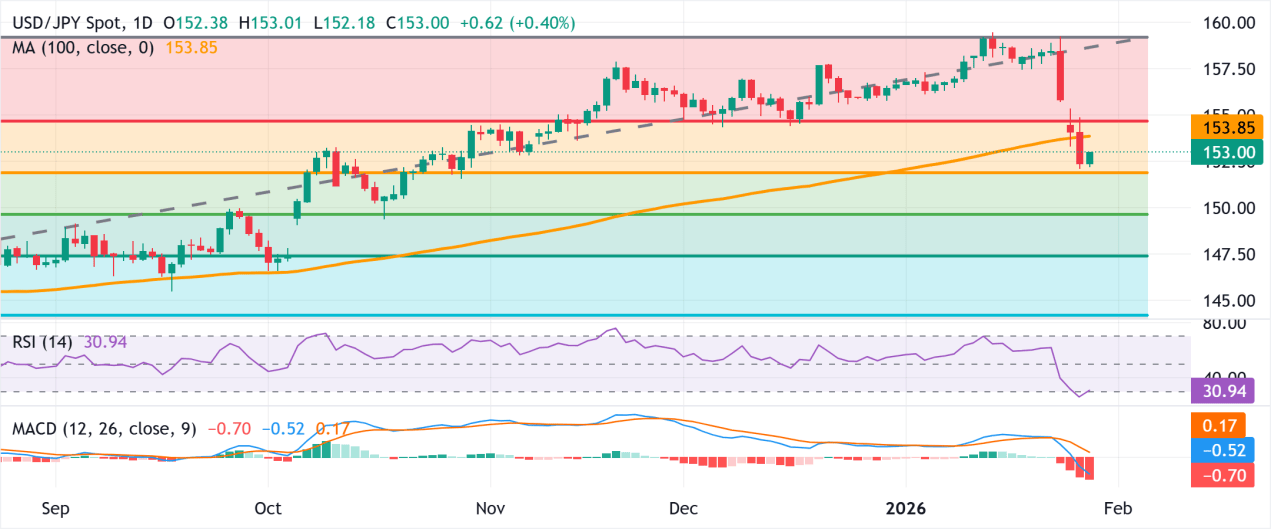
Core Viewpoint - The recent fluctuations in the USD/JPY exchange rate are primarily driven by diverging monetary policy outlooks between the Bank of Japan (BOJ) and the Federal Reserve, with domestic uncertainties in Japan limiting the yen's appreciation potential [1][2]. Group 1: Monetary Policy Outlook - The BOJ's December monetary policy meeting minutes indicate a consensus among committee members to continue raising interest rates, maintaining a normalization pace that began in 2025 [1]. - The BOJ has already raised rates twice in 2025, bringing the policy rate to 0.75%, the highest level since 1995 [1]. - There is increased confidence among BOJ members regarding a positive wage-price cycle, which supports the reduction of monetary easing and clarifies market expectations for future rate hikes [2]. Group 2: Market Reactions and Sentiment - The market anticipates that the Federal Reserve will implement two rounds of rate cuts in 2026, contrasting sharply with the BOJ's tightening stance, which underpins the low-yielding yen [3]. - Speculation about potential intervention by Japanese authorities to support the yen has provided some emotional support, allowing the yen to recover some losses during Asian trading hours [3]. - However, the yen's ability to achieve sustained appreciation is constrained by multiple domestic uncertainties, including concerns over Japan's fiscal health due to proposed tax cuts and increased spending ahead of the upcoming elections [3]. Group 3: Technical Analysis - The USD/JPY exchange rate is directly influenced by the performance of the US dollar, with the upcoming Federal Reserve interest rate decision and subsequent comments from Chairman Powell expected to be critical for the dollar's trajectory [4]. - The dollar's recent rebound faces resistance from concerns about the Fed's independence and economic policy risks stemming from US trade and geopolitical decisions, which may limit the dollar's upward potential [4]. - Technically, the USD/JPY pair is showing signs of short-term pressure, trading below the 100-day simple moving average and under the 154.00 level, indicating a bearish trend [4].

日本央行1月会议或释放鹰派信号以稳汇率
Xin Hua Cai Jing· 2026-01-22 07:52
Core Viewpoint - The Bank of Japan is expected to maintain its policy interest rate at 0.75% during the upcoming monetary policy meeting, while analysts warn of a potential hawkish stance in the policy statement due to recent economic signals and currency fluctuations [1][2]. Group 1: Monetary Policy Expectations - The Bank of Japan is likely to keep the interest rate unchanged at 0.75% as it awaits clearer economic signals, particularly from the spring labor negotiations and upcoming inflation data [1]. - Analysts suggest that if wage negotiations continue to show strong growth, the Bank may raise rates by 25 basis points as early as March [1]. - The recent depreciation of the yen, with the USD/JPY nearing 160, has raised concerns about inflation and the need for a hawkish policy response [1]. Group 2: Economic Indicators - The December Consumer Price Index (CPI) showed a significant cooling, complicating the policy path for the Bank of Japan [1]. - The market is closely monitoring the final CPI figures for December, as a substantial drop in inflation could lead the Bank to reassess its rate hike timeline [2]. - The sustainability of government debt is under scrutiny following the announcement of early elections aimed at expanding the ruling party's seats to promote more expansive fiscal policies [1]. Group 3: Future Projections - Analysts from ING believe that if core inflation stabilizes above 2%, supported by wage growth and government subsidies, the Bank may consider its next rate hike in the second half of 2026 [1]. - The potential for a hawkish tone in the upcoming policy statement could provide short-term support for the yen, while a more cautious approach may lead to further depreciation [2].
财通证券日本低通胀破局
CAITONG SECURITIES· 2026-01-18 09:12
Group 1: Inflation Dynamics - Japan's inflation has risen above the 2% policy target since 2021, breaking a long-term stagnation and moving towards normalization of monetary policy[9] - The initial inflation surge was driven by external factors, particularly energy prices, which saw a nominal price index increase of over 400% from April 2020 to June 2022[23] - Core CPI and service CPI have shown significant upward trends, indicating a shift from external to endogenous inflation drivers[35] Group 2: Wage-Price Interaction - The interaction between wages and prices has strengthened post-pandemic, with nominal wage growth accelerating since 2022, reaching a 5.25% increase in 2025, the highest in 34 years[42] - The transmission effect of wages on prices is evident, as companies raise prices to maintain profit margins in response to rising labor costs[44] - Despite nominal wage increases, real wages remain negative due to higher inflation, limiting consumer confidence and spending[71] Group 3: Labor Market Changes - Japan's labor market has tightened due to demographic pressures, with the effective job openings-to-applicants ratio exceeding 1, indicating a labor shortage[59] - The proportion of non-regular employees has increased, which has somewhat mitigated labor supply issues but has limited wage growth sustainability[63] - Consumer expectations regarding wage stability remain cautious, with nearly 40% of households anticipating no change in future wages[71]
植田和男“鹰”声嘹亮!物价已接近目标,2026年或继续加息
Sou Hu Cai Jing· 2025-12-25 12:47
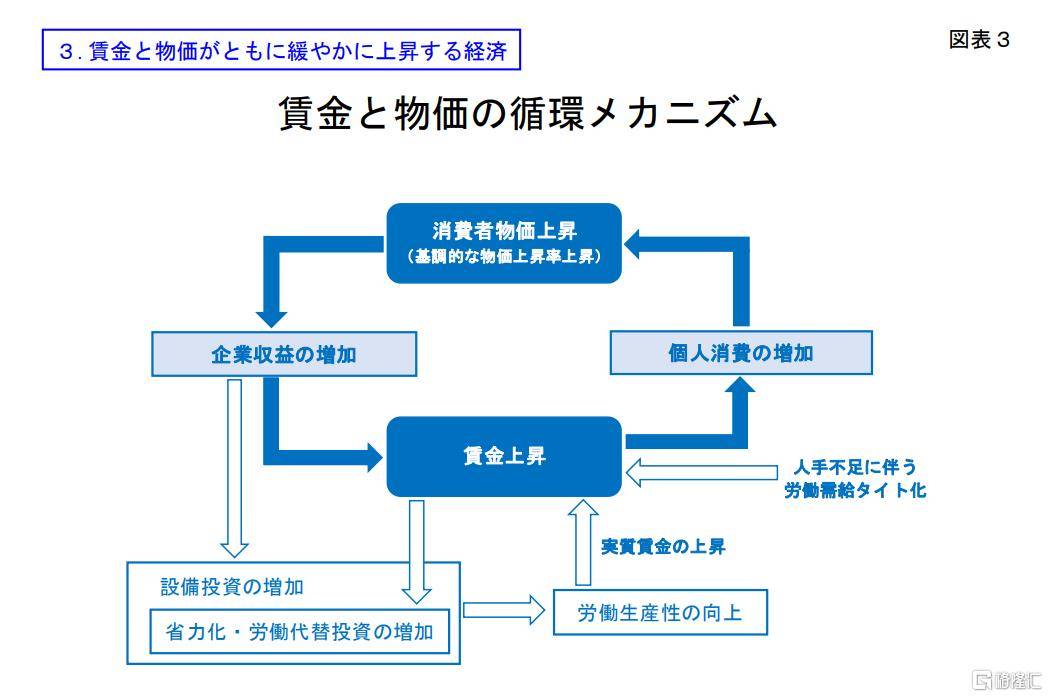
Core Viewpoint - The Bank of Japan is adjusting its monetary policy in response to a resilient economic recovery, raising interest rates to a 30-year high of 0.75% while aiming for a stable inflation target of 2% [3][5][12]. Economic Recovery and Monetary Policy - Japan's economy is showing moderate recovery despite external pressures such as U.S. tariff policies and corporate earnings facing downward pressure [2][10]. - The central bank's decision to raise interest rates reflects a careful assessment of the economic situation, marking a turning point from a decade-long period of aggressive monetary easing [9][10]. Wage and Price Dynamics - The tightening labor market has led to significant changes in corporate behavior regarding wage and price setting, with expectations of wage increases continuing into the next year's labor negotiations [4][16]. - A "virtuous cycle" of wage and price dynamics is being established, where increased corporate earnings lead to higher wages, stimulating consumer spending and further driving up prices [17][21]. Inflation and Economic Outlook - The Bank of Japan anticipates that the inflation rate will stabilize around the 2% target by the second half of 2026 to 2027, supported by a solid wage-price pass-through mechanism and improved inflation expectations [24]. - Current consumer price inflation, excluding fresh food, is around 3%, with expectations of gradual price increases in food and other goods due to rising wages [22][23]. Structural Reforms and Future Projections - The government is implementing a "strong economic comprehensive strategy" to support the virtuous cycle through measures that reduce corporate burdens and improve wage-setting environments [23]. - The ongoing structural changes in the labor market, driven by a declining working-age population, necessitate improvements in labor productivity to address supply constraints [23].
日本央行加息至三十年新高,全球套利资本面临再配置
Sou Hu Cai Jing· 2025-12-19 13:35
Group 1: Core Insights - The Bank of Japan raised its policy interest rate by 25 basis points to 0.75%, marking a 30-year high and the sixth rate hike since 2000, driven by persistent inflation exceeding the 2% target for 43 consecutive months [1][2] - Despite the rate hike, Japan's economy showed signs of weakness, with a 0.6% contraction in GDP for the third quarter, indicating a fragile recovery [2] - The decision to raise rates reflects a balancing act between controlling inflation and supporting economic growth, with potential implications for Japan's substantial public debt, which stands at 236% of GDP [2] Group 2: Market Reactions - The market response to the rate hike was relatively calm compared to previous hikes, attributed to the high level of expectation already priced in, leading to structural adjustments rather than systemic liquidity shocks [3][4] - Global capital flows are characterized by a dual track of "yen repatriation and dollar asset resilience," with Japan's rising domestic yields attracting some overseas funds without significantly impacting dollar assets [4] Group 3: Future Implications - The future path of interest rate hikes and ultimate rate targets is under scrutiny, with predictions suggesting rates could rise to 1.5% by the end of 2027, but the sustainability of Japan's massive government debt poses constraints on this trajectory [5][7] - The yen may receive short-term support from the rate hike, but long-term appreciation is limited by fiscal and trade deficits, with expectations for the USD/JPY exchange rate to remain between 150-160 [6][7] - The combination of rate hikes and fiscal stimulus presents inherent conflicts, potentially leading to a vicious cycle of rising interest payments and increased government borrowing, which could necessitate tax increases or social security cuts [7][8]
从“等待确证”到“预防滞后”,植田和男欲重塑日本货币政策逻辑
Sou Hu Cai Jing· 2025-12-19 11:08
Core Viewpoint - The Bank of Japan raised its policy interest rate by 25 basis points to 0.75%, marking the highest level since September 1995 and ending nearly three decades of ultra-low interest rates [1] Group 1: Monetary Policy Changes - The decision to raise interest rates was unanimously approved by the policy committee, indicating a significant shift in Japan's monetary policy [1] - Bank of Japan Governor Kazuo Ueda emphasized that the rate hike was due to reduced risks of inflation and growth rate declines [1] - Ueda stated that the central bank will closely monitor the impact of a weak yen on core inflation while avoiding direct comments on exchange rate levels [1] Group 2: Economic Indicators and Data Dependency - Ueda highlighted that the current wage growth is a key factor supporting stable core inflation, asserting that as long as wages continue to rise, core inflation will not decline [1][2] - The central bank's policy decisions will depend on available data in future meetings, focusing on core inflation rather than short-term fluctuations in overall CPI [2] - Ueda acknowledged the challenges in defining the neutral interest rate and indicated that the current policy rate is still below the lower bound of the neutral rate range [2] Group 3: Collaboration and Future Outlook - Ueda reaffirmed the collaboration between the central bank and the government, maintaining good communication with the Minister of Finance [3] - The central bank is transitioning towards a data-driven normalization phase, aiming to avoid both lagging and excessive tightening in its policy adjustments [3] - Analysts express skepticism about the likelihood of further aggressive rate hikes, noting that while the door for future increases is open, the threshold for the next hike will be higher [4]
日股迈向“牛市长期化”?花旗:日经指数5万点仅是中途站
Hua Er Jie Jian Wen· 2025-11-03 06:10
Core Viewpoint - The Japanese stock market is showing strong momentum towards a long-term bull market, driven by a robust global market and optimistic expectations regarding new government economic policies. Citi predicts that the Nikkei 225 index could reach 50,000 points as just a "checkpoint" on its way to 55,000 points by the end of 2026 [1][6]. Group 1: Government Policies - The establishment of the new government under Prime Minister Sanae Takaichi is seen as a core logic supporting the long-term bullish trend of the Japanese stock market. The government is expected to implement supportive economic policies, including tax cuts, to assist households facing declining real incomes [3][4]. - The new government's policy framework aims to create a virtuous cycle of wages and prices by encouraging investment in growth sectors and improving productivity [3][4]. Group 2: Corporate Earnings - Japanese companies are demonstrating strong profitability even in a persistent inflationary environment, with over 50% of companies exceeding quarterly earnings expectations since 2023. This trend is particularly evident in the non-manufacturing sector, driven by domestic demand [4][5]. - The report indicates that rising prices are helping companies improve their profit margins, and if the new government's measures succeed in boosting real incomes, it will further solidify inflation expectations and ensure sustained strong earnings for domestic-focused companies [4]. Group 3: Valuation and Foreign Investment - Despite short-term signs of overheating in the valuation of Japanese stocks relative to global markets, there remains significant potential for long-term valuation recovery. The average return on equity (RoE) for Japanese companies is increasing, supported by improved profit margins and stock buybacks driven by corporate governance reforms [5][6]. - There is still ample room for foreign capital inflow into the Japanese stock market, with net purchases by foreign investors reaching 5 trillion yen since 2025. This suggests that despite previous net selling trends, there is a substantial amount of overseas capital waiting to enter the market [5][6].

4.46 万亿,美国新关税或导致日本汽车业巨亏
汽车商业评论· 2025-03-28 13:51
编译 / 钱亚光 设计 / shelly 来源 / www.asahi.com, oilprice.com, apnews.com 2025年3月26日,美国总统唐纳德·特朗普(Donald Trump)宣布,自 4 月 2日起,对所有汽车进口征收 25%的关税,此举对全球经济产生了深远影 响,而且是对自由贸易原则的重大打击。尤其是日本,势必会面临严重的后果。 日本汽车业将面临什么 由于美国总统唐纳德·特朗普宣布从 4 月 2 日起对进口汽车和轻型卡车征收 25%的关税,日本汽车制造商的股票大幅下跌。 日本民间信用调查公司帝国数据银行(Teikoku Databank)指出,这将导致从墨西哥或日本出口到美国的日本汽车公司成本大幅增加,如果更高的价 格转嫁给消费者,可能会导致销售额下降。它还会影响供应零件的小型公司,以及钢铁、半导体和机床等其他行业的公司。 彭博社(Bloomberg) 指出,世界上许多最知名的汽车制造商很快都将因特朗普对汽车进口及关键零部件征收的新关税而面临更高的成本。这是因为在 美国销售的新车中约有 46%是进口车。 "赢家寥寥无几。"AutoForecast Solutions 公司负责全 ...