市场风格均衡

Search documents
对话联博基金:AI热潮步入验证期,资金多元化配置方兴未艾
2 1 Shi Ji Jing Ji Bao Dao· 2026-02-09 13:08
Group 1 - The core viewpoint is that while there are concerns about the absolute growth of AI companies, their stock price increases are supported by EPS growth, making valuation increases reasonable [1][2] - AI companies are expected to have stable profit models and broad market space, which may allow them to enjoy higher valuations [1] - The focus of investment may shift from a few standout companies to a more diversified opportunity landscape, with a balanced approach to AI stocks and other sectors [1][2] Group 2 - The penetration of AI in businesses is expected to be gradual, requiring time for companies to integrate AI into their operations [2] - If AI fails to translate into commercial value, it could negatively impact the market, leading to a cautious optimism regarding AI's long-term trend [2] - The growth style is expected to remain strong in 2025, but excess returns have started to narrow compared to other styles, indicating a potential shift towards a more balanced market style in 2026 [2][3] Group 3 - Global economic growth is anticipated to continue in 2026, supported by AI-related investments, a loose monetary policy environment, and reduced tariff uncertainties [3][4] - Emerging markets are expected to outperform developed markets, driven by capital market reforms and the concentration of AI industry chains [5][6] - The trend of diversifying asset allocation away from a heavy reliance on US assets towards a more varied approach is expected to strengthen over the next three to five years [6] Group 4 - In the Chinese market, the focus is on the transformation of the economy, with rising consumption contributing to GDP and creating investment opportunities in new consumption sectors [6][7] - The real estate sector is no longer the preferred investment choice, with high-value exports expected to drive corporate profitability [7] - The role of private enterprises in China's economy is anticipated to grow, supported by government policies aimed at enhancing their vitality [7][8] Group 5 - A balanced investment strategy is recommended to reduce portfolio volatility, including long-term assets and healthy revenue-generating companies, particularly in AI, innovative pharmaceuticals, and stable consumer sectors [8] - Improvements in corporate governance and increased returns to investors are expected to attract foreign capital into the market [8] - The trend of increasing dividend payout ratios in A-shares is seen as a positive factor for attracting foreign investment [8]
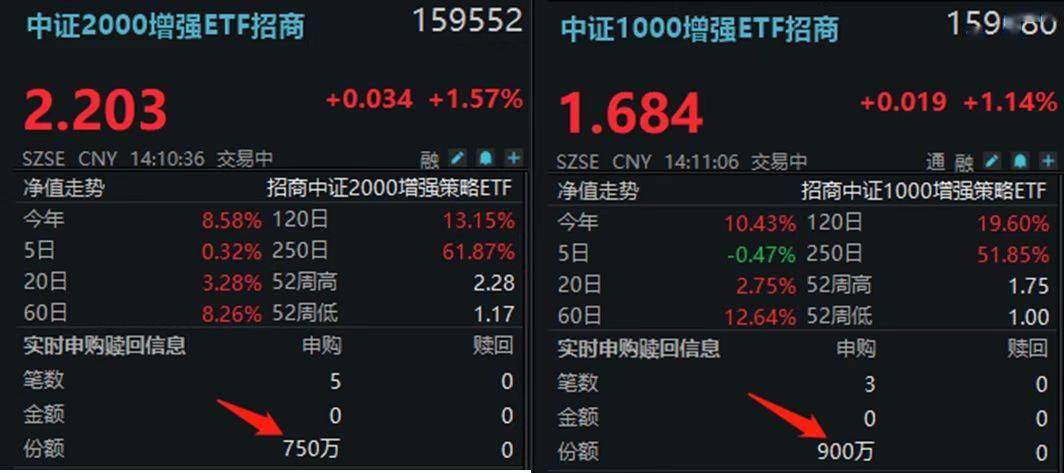
中小盘风格回归!主力盘中追涨1000ETF增强(159680)、中证2000增强ETF(159552)
Sou Hu Cai Jing· 2026-02-06 06:43
Core Viewpoint - The A-share market has experienced a significant style shift, with small and mid-cap stocks making a strong comeback, becoming the market focus as of February 6 [1] Market Performance - As of 14:15, the 1000ETF Enhanced (159680) and the CSI 2000 Enhanced ETF (159552) rose by 1.32% and 1.89% respectively, accompanied by substantial net capital inflows [1] - The CSI 2000 Enhanced ETF has shown a 120-day return of 13.15% and a 250-day return of 61.87% [2] - The 1000ETF Enhanced has a 120-day return of 8.58% and a 250-day return of 51.85% [2] Market Analysis - The collective strength of small and mid-cap stocks is driven by multiple factors, including a marginal improvement in market risk appetite, as the overall market stabilizes and previously declining technology stocks rebound [3] - The strong technical demand for oversold stocks is noted, as many small-cap stocks have reached historically low valuation levels, creating strong technical rebound momentum [3] - There is an expectation for supportive policies for small and medium-sized enterprises under the macro guidance of "developing new productive forces," which provides confidence for long-term capital allocation [3] Investment Outlook - Enhanced tools like the 1000ETF Enhanced and CSI 2000 Enhanced ETF offer efficient and diversified options for investors looking to participate in the small-cap market [3] - The sustainability of the small-cap market rally is highly dependent on overall market liquidity, with higher volatility compared to large-cap stocks, suggesting a cautious approach to position sizing [3]

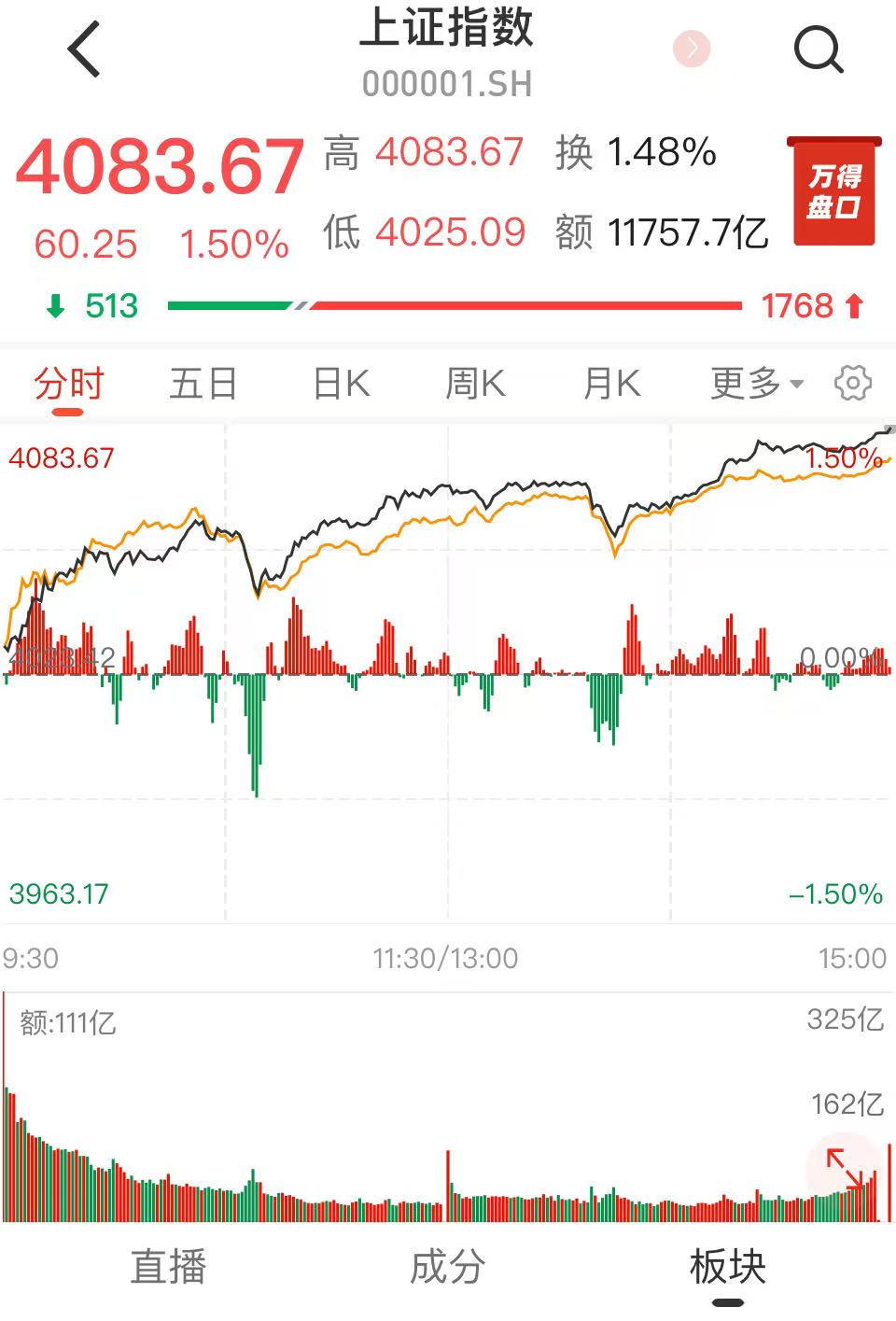
上证指数13连阳创历史,多路资金合力助推春季行情开启
2 1 Shi Ji Jing Ji Bao Dao· 2026-01-06 13:03
Core Insights - The A-share market has set two historical records on January 6, with the Shanghai Composite Index closing at 4083.67 points, marking a nearly ten-year high, and achieving a 13-day consecutive rise, breaking a 33-year record for the longest consecutive gains [1][3][6]. Market Performance - On January 6, all three major A-share indices rose, with the Shanghai Composite Index increasing by 1.50%, the Shenzhen Component Index by 1.4%, and the ChiNext Index by 0.75% [3]. - The trading volume reached 2.83 trillion yuan, indicating strong investor enthusiasm [1]. Sector Performance - The brain-computer interface sector saw a surge, with nearly 20 stocks hitting the daily limit [6]. - The commercial aerospace sector also performed well, with several stocks, including China Satellite Communications, reaching their daily limit [6]. - The non-ferrous metals sector was active, with companies like Luoyang Molybdenum and Zijin Mining hitting historical highs [6]. - Financial sectors, including insurance and securities, showed strong performance, with New China Life and China Pacific Insurance reaching new highs [6]. Fund Inflows - There is a strong expectation for fund inflows due to the "opening red" effect from financial institutions, with significant new premium funds available for market allocation [9][10]. - As of January 5, 2026, the financing balance reached 2.54 trillion yuan, a historical high, indicating increased market participation [9]. Market Outlook - Analysts predict a shift from valuation-driven to profit-driven market dynamics, with a more balanced market style expected in 2026 [11][12]. - The market is anticipated to maintain an upward trend supported by global liquidity easing and expectations of a stronger renminbi [10][12]. Investment Strategies - Investment firms suggest a balanced allocation strategy, focusing on sectors such as AI, resilient external demand, domestic consumption, and high dividend stocks [16]. - The "dumbbell strategy" is recommended, emphasizing growth sectors like technology and defensive sectors like non-ferrous metals and chemicals [16][17]. - Analysts advise against short-term trading and suggest focusing on long-term industry directions and value of dividend assets [17][19].
2025年公募自购3375亿创纪录,非货产品净申购87亿
Sou Hu Cai Jing· 2026-01-05 11:21
Core Insights - The public fund industry demonstrated strong confidence in the capital market by investing a record amount in self-purchases, totaling 337.51 billion yuan in 2025, significantly surpassing the previous year's 109.53 billion yuan [1][2]. Group 1: Self-Purchase Trends - In 2025, 118 fund companies executed 7,491 self-purchases, with a total transaction amount reaching 337.51 billion yuan, marking a historical high [1]. - The structure of self-purchases shifted notably, with non-monetary products becoming the focus, achieving a net subscription scale of 8.70 billion yuan, compared to 3.51 billion yuan in 2024 [2]. - Bond funds emerged as the mainstay of self-purchases, with a net subscription amount of 4.21 billion yuan, reflecting a year-on-year increase of over 227% [2]. Group 2: Product Preferences - Index products gained popularity, with passive index bond funds and mixed equity funds leading in self-purchase amounts [3]. - E Fund's index products received a self-purchase amount of 1.80 billion yuan, while several other index products also exceeded 100 million yuan in self-purchases [3]. - A total of 22 public fund managers had net subscription amounts exceeding 1 billion yuan, with Invesco Great Wall Fund leading at 2.77 billion yuan [3]. Group 3: Market Outlook for 2026 - Multiple public fund institutions expressed optimism for 2026, anticipating a more balanced market style driven by corporate earnings and liquidity [4]. - The market is expected to avoid extreme styles, with cyclical and value sectors poised for opportunities amid policy support [4]. - Analysts suggest that investors should focus on sectors benefiting from supply-side reforms and those with strong dividend capabilities, while also considering technology growth sectors despite potential volatility [5].
公募豪掷3375亿自购,2025年非货产品成“香饽饽”
Huan Qiu Wang· 2026-01-05 05:12
Group 1 - The public fund industry demonstrated strong confidence in the capital market in 2025, with 118 fund companies executing 7,491 self-purchases totaling 337.51 billion yuan, significantly surpassing the previous year's 109.53 billion yuan and setting a historical record [1] - Non-monetary products became the focus of fund companies' investments, with a total net subscription of 8.70 billion yuan for non-monetary funds, compared to 3.51 billion yuan in 2024. Bond funds emerged as the main contributors, with a net subscription of 4.21 billion yuan, reflecting a year-on-year increase of over 227% [1] - Mixed funds reversed from net redemptions to net subscriptions, achieving a net subscription of 2.15 billion yuan in 2025, while stock funds maintained steady self-purchase levels with approximately 2.34 billion yuan in net subscriptions [1] Group 2 - The public fund industry experienced significant redemptions in money market funds, with a net redemption of 193.95 billion yuan in 2025, indicating a shift towards seeking higher returns in alternative assets amid a low-interest-rate environment [2] - Index products became increasingly popular among institutions, with passive index bond funds, mixed equity funds, and passive index funds leading in self-purchase amounts. Notably, E Fund's index products garnered a self-purchase amount of 1.8 billion yuan [4] - A total of 22 public fund managers had net subscription amounts exceeding 1 billion yuan in 2025, with Invesco Great Wall Fund leading at 2.77 billion yuan, followed by ICBC Credit Suisse Fund at 1.70 billion yuan [4] Group 3 - The China Securities Regulatory Commission's policy guidance in May 2025, which emphasized long-term performance and self-purchase of equity funds as evaluation criteria, played a crucial role in driving the self-purchase trend among fund companies [4] - Multiple public fund institutions expressed optimism for the market in 2026, anticipating a resonance between corporate earnings and liquidity, leading to a more balanced market style [5] - Analysts noted that the large-scale self-purchase of non-monetary products by public funds signals a belief in the long-term value of equity and bond markets, reflecting a shift towards prioritizing investor satisfaction and stabilizing market expectations [6]
2025年超百家公募自购 非货类产品成重点
Xin Lang Cai Jing· 2026-01-04 21:06
Group 1 - In 2025, public funds showed strong enthusiasm for self-purchasing non-monetary products, with 118 fund companies executing over 7,000 self-purchases totaling 8.7 billion yuan [1][2] - The self-purchase of bond funds saw a significant increase of over 200%, while mixed funds reversed from net redemption to net subscription, and stock funds maintained stable self-purchase levels [1][2][3] - The net subscription amount for non-monetary funds reached 8.7 billion yuan in 2025, compared to only 3.5 billion yuan in 2024, indicating a strong recovery in investor confidence [3][5] Group 2 - The A-share market exhibited a W-shaped trend in 2025, with the Shanghai Composite Index, Shenzhen Component Index, and ChiNext Index rising by 18.41%, 29.87%, and 49.57% respectively [2] - The total trading amount for public fund self-purchases in 2025 was 337.51 billion yuan, significantly higher than the 109.53 billion yuan in 2024, despite a higher number of self-purchase instances in 2024 [2][3] - The top three categories for self-purchase amounts in non-monetary funds were passive index bond funds, equity-mixed funds, and passive index funds, with the highest self-purchase amount being 1.8 billion yuan for E Fund's index fund [4][5] Group 3 - In 2025, 22 fund management companies had self-purchase amounts exceeding 100 million yuan, with the top two being Invesco Great Wall Fund and ICBC Credit Suisse Fund, at 2.774 billion yuan and 1.701 billion yuan respectively [5] - Fund companies are increasingly choosing to implement self-purchases at the time of fund contract effectiveness, aligning their interests with investors [6] - The regulatory changes introduced by the China Securities Regulatory Commission in May 2025 are expected to encourage more fund managers to engage in self-purchase behavior, enhancing long-term performance focus [6][7] Group 4 - Looking ahead to 2026, the market is expected to achieve further balance, with corporate earnings and liquidity driving market dynamics [7][8] - The investment community anticipates that the stock market will continue to experience a "slow bull" trend, with structural opportunities becoming more pronounced [7] - The A-share and Hong Kong markets are likely to be driven by liquidity and risk appetite, with potential for wide fluctuations due to accumulated gains and rising volatility [8]
企业信心不减 :申万期货早间评论-20251126
申银万国期货研究· 2025-11-26 00:46
Group 1 - The State Council will hold a press conference on November 27 to discuss policies aimed at enhancing the adaptability of consumer goods supply and demand, and promoting consumption [1] - From January to October, China's total foreign direct investment reached $144.34 billion, a year-on-year increase of 6.2%, while new contracts for foreign engineering projects amounted to $210.7 billion, up 18.6% year-on-year [1] - A-share buyback amounts have exceeded 130 billion yuan this year, marking the second-highest level in history, with over 100 companies doubling their stock prices after implementing buybacks [1] Group 2 - The U.S. stock indices rose, with the communication and media sectors leading the gains, while defense and transportation sectors lagged [2] - The financing balance decreased by 2.88 billion yuan to 2.4423 trillion yuan on November 24, indicating cautious market sentiment as the year-end approaches [2] - The "Fifteen Five" plan continues to focus on technological self-reliance, suggesting that the technology sector remains a long-term investment direction [2] Group 3 - Palm oil inventories continue to accumulate, with a 16.4% month-on-month decrease in Malaysian palm oil exports expected for November 1-25 [3] - The domestic supply of rapeseed oil is under pressure due to increased raw material supply, leading to price declines [3] - Rubber prices are expected to fluctuate as supply pressures emerge from overseas production, while domestic production transitions to the off-season [3] Group 4 - The National Space Administration has issued a plan to promote the high-quality and safe development of commercial aerospace from 2025 to 2027, establishing a national commercial aerospace development fund [8]