白酒行业分化

Search documents
2026年白酒行业:春节白酒动销全景——茅五亮眼,结构分化-中信建投
Sou Hu Cai Jing· 2026-02-26 15:31
Core Insights - The core keywords for the Chinese liquor industry during the 2026 Spring Festival are "differentiation" and "bottoming out," with overall sales slightly declining but in line with expectations. Leading liquor companies face reduced risks, while cross-regional consumer movement and retail dining data show strong performance, suggesting investment opportunities in leading and regional liquor companies [1][6]. Group 1: Industry Performance - The overall sales performance of the liquor industry during the Spring Festival showed slight decline but was expected, with leading brands like Moutai and Wuliangye exceeding expectations [2][6]. - The average daily cross-regional movement increased by 5.56% year-on-year in the first 20 days before the Spring Festival, indicating a positive consumer base [1][10]. - Key retail and dining enterprises reported an average daily sales increase of 8.6% year-on-year during the first four days of the holiday, supporting the liquor consumption environment [1][12]. Group 2: Differentiation in the Market - The differentiation in the liquor market is evident in four aspects: brand and price differentiation, pricing strategy differentiation, consumption scenario differentiation, and clear signs of industry bottoming out [2][6]. - Moutai and Wuliangye showed strong sales performance, while mid-tier brands faced pressure, with the segment below 300 yuan showing structural growth [2][21]. - Pricing strategies varied, with Moutai and Wuliangye opting for price reductions to maintain market share, while brands like Guojiao and Fenjiu chose to maintain prices to enhance brand value [2][25]. Group 3: Regional Insights - Grassroots visits to eight cities confirmed the differentiation characteristics, with markets like Chengdu and Dazhou showing strong performance for leading brands, while regions like Zaozhuang and Anqing highlighted the dominance of local brands [2][29]. - In Beijing, Moutai and Fenjiu performed well, with strong demand for bottled liquor, while in Xinjiang, local brand Yilite dominated the market under 300 yuan [2][29]. - Each region exhibited a pattern of strong performance for high-end brands like Moutai and Wuliangye, pressure on mid-tier brands, and stability in the lower price segment [2][21].





“茅五”领跑、次高端失速,春节酒市上演“冰火两重天”
Huan Qiu Wang· 2026-02-26 04:08
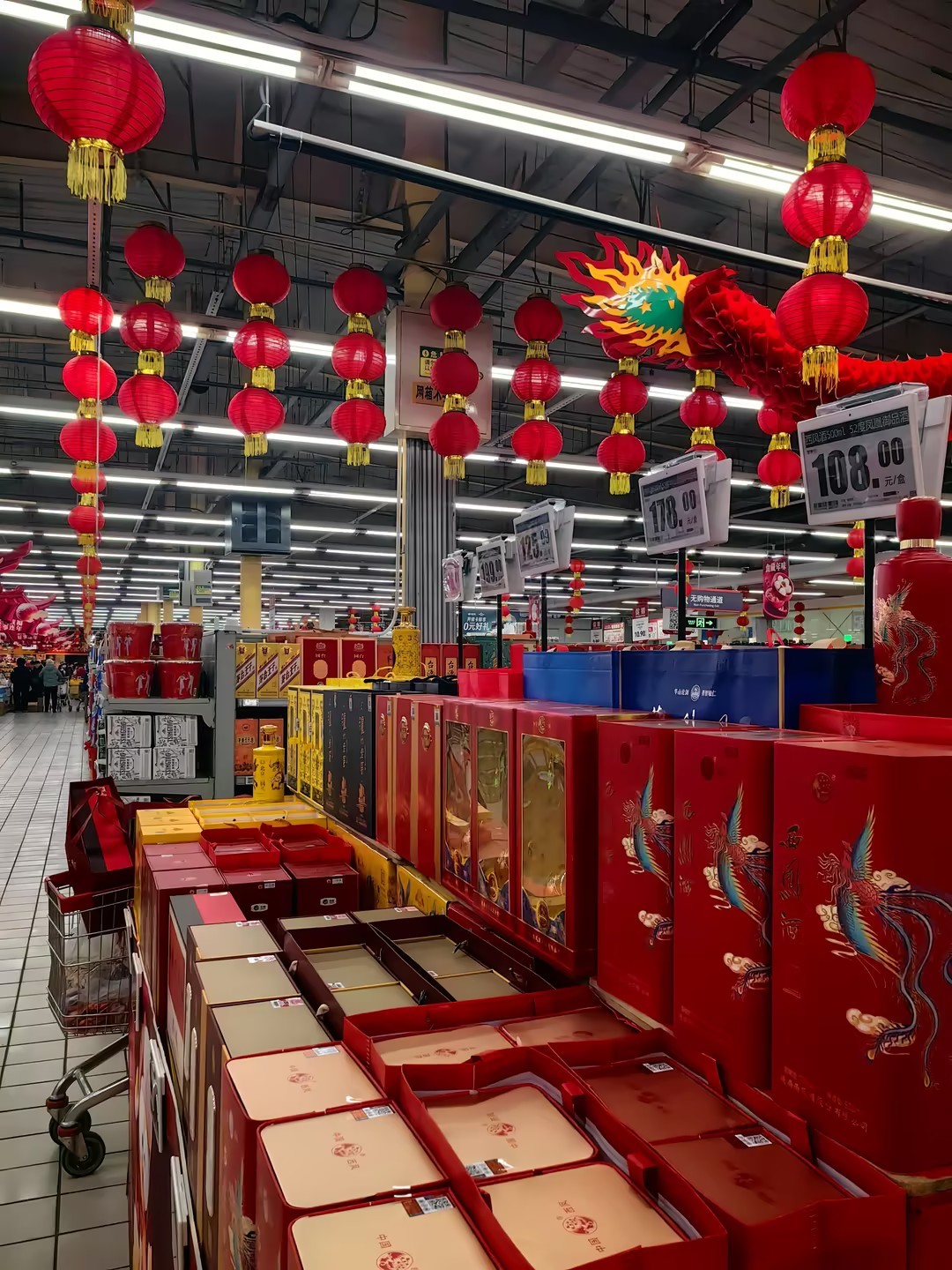
Core Viewpoint - The high-end liquor market, particularly represented by Moutai and Wuliangye, is showing resilience and growth despite overall industry challenges, indicating a divergence in market performance [1][4][6]. Price Trends - After the Spring Festival, the price of Moutai has not followed the usual post-holiday decline but has instead seen a slight increase, with retail prices generally above 1750 yuan and some reaching nearly 1900 yuan [2][3]. - The wholesale price of Moutai remains stable at around 1700 yuan for original boxes and approximately 1650 yuan for individual bottles, breaking the long-standing market trend of price reduction after the holiday [2]. Supply and Demand Dynamics - The unique market behavior is attributed to changes in supply and demand dynamics, including the impact of Moutai's market reforms and a strong consumer demand that has not been fully met [2][7]. - The demand for high-end brands like Moutai and Wuliangye remains robust, driven by gifting and business needs, while mid-tier brands face significant pressure [3][6]. Sales Performance - The overall sales performance of the liquor industry has shown a "K-shaped" trend, with leading brands experiencing growth while the industry as a whole faces a double-digit decline [4][6]. - Moutai's sales have reportedly increased by double digits, with minimal inventory reported across various channels, while Wuliangye's sales volume has grown over 20% following price adjustments [6][8]. Consumer Behavior Changes - There is a noticeable shift in consumer behavior towards seeking value and personal enjoyment, with a preference for brands that offer discounts or strong promotional efforts [7]. - The market is transitioning from "channel stockpiling" to "real consumption," indicating a more cautious approach from distributors and a focus on actual sales rather than inventory accumulation [7][8]. Industry Outlook - Analysts express cautious optimism regarding the future of the liquor industry, suggesting it has reached a cyclical bottom with signs of marginal improvement [8]. - The performance of high-end liquor brands is seen as a stabilizing factor, with future recovery dependent on the restoration of consumer demand and further inventory reduction [8].
2026白酒春节渠道反馈:价格筑底,分化加剧,头部反转
Shenwan Hongyuan Securities· 2026-02-23 07:50
Investment Rating - The report maintains a positive outlook on the liquor industry, particularly on high-end brands, indicating a strategic buy recommendation for major players like Guizhou Moutai, Luzhou Laojiao, Shanxi Fenjiu, and Wuliangye [3][7]. Core Insights - The overall sales volume for the liquor industry during the 2026 Spring Festival is expected to decline by 10%-20% year-on-year, which is slightly better than market expectations prior to the festival [3][6]. - A significant characteristic of the 2026 Spring Festival sales is the increasing differentiation and concentration among top brands, with high-end liquor performing exceptionally well. Moutai is projected to see a sales increase of over 30% year-on-year, while Wuliangye is expected to grow by 5%-10% [3][6]. - The industry is entering a notable destocking phase, with inventory levels for first-tier brands significantly lower than the same period last year [3][6]. - Prices for first-tier brands are stabilizing, with Moutai's price currently above 1700 yuan, expected to stabilize above 1600 yuan post-festival [3][6]. Summary by Sections Brand Performance - High-end liquor brands are outperforming expectations, with Moutai showing the best performance. Wuliangye is leveraging price adjustments to increase volume, while Guojiao 1573 is maintaining price stability [8][6]. - Moutai's sales are expected to grow by over 30%, with inventory levels at distributors being nearly zero [8][6]. - Wuliangye's sales are projected to increase by 5%-10%, with inventory levels at distributors around 10%-15% lower than last year [8][6]. - Guojiao 1573 is expected to see a sales decline of 15%-20%, while its low-end variant remains stable [8][6]. Regional Feedback - Feedback from various regions indicates a mixed performance, with high-end brands like Moutai and Wuliangye showing resilience, while mid-tier and local brands face challenges [19][21]. - In North China, overall sales are down by about 15%, with high-end brands benefiting from increased consumer interest [12][21]. - In Jiangsu, the overall sales volume is expected to decline by 10%-15%, with Moutai maintaining stable performance [19][21]. Future Outlook - The report anticipates that the second half of 2026 will see a turning point for top brands in terms of sales and financial performance, with a potential dual boost in valuation and earnings by the end of the year [7][3]. - The industry trend is shifting towards consolidation, with larger companies absorbing smaller ones, leading to inevitable differentiation among listed companies [7][3].


白酒“春节档” 茅台领涨!
Nan Fang Du Shi Bao· 2026-02-11 10:27
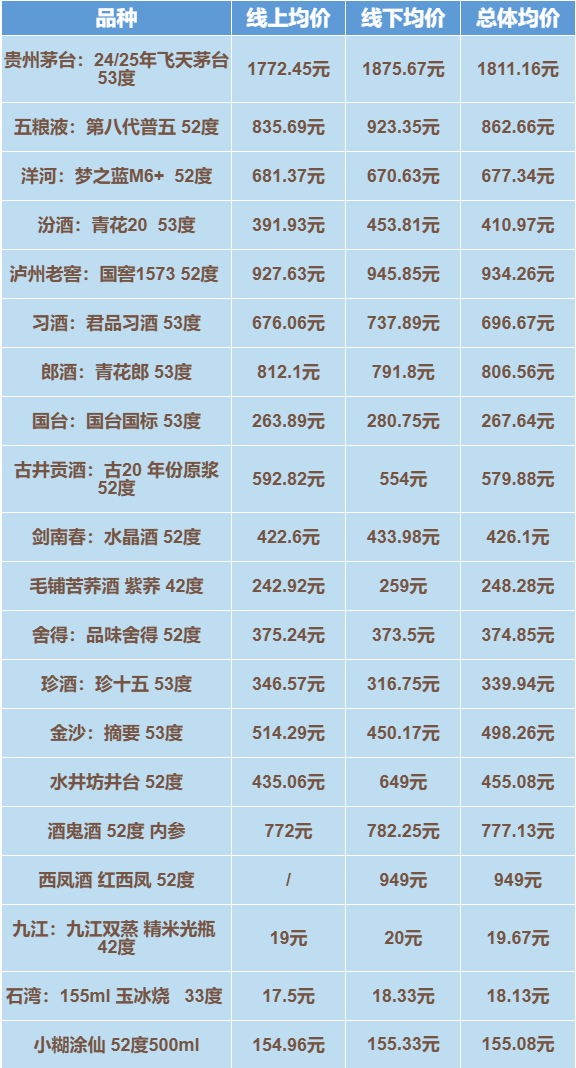
Core Insights - The white liquor market is entering a traditional peak season ahead of the Lunar New Year in 2026, with significant marketing efforts from major liquor companies and notable price fluctuations observed in various products [1][5]. Group 1: Market Trends - The sales of white liquor are showing a clear recovery signal, driven by demand for gifting and social gatherings, which is alleviating some inventory pressure in distribution channels [14]. - The price dynamics are notably diverse, with Moutai leading a price rebound, while other high-end and mid-range brands experience frequent price fluctuations due to competitive pressures [14]. - The overall market sentiment indicates a trend of "the strong getting stronger," with Moutai's performance serving as a bellwether for the entire price range [14]. Group 2: Price Movements - In Guangzhou, the average price of the "Inner Reference" product from Jiu Gui Jiu has seen the largest decline, dropping approximately 32 yuan to around 777 yuan, while Moutai's price increased from 1718 yuan to 1811 yuan, marking a rise of about 93 yuan [4][3]. - In Shenzhen, Moutai's retail price surged to an average of 1835.28 yuan, reflecting an increase of approximately 101 yuan compared to the previous period, influenced by high demand [9]. - Other products such as "Dream Blue M6+" and "Ancient Well Tribute Wine" also experienced price increases, while some mid-range products like "Green Flower Fen Wine" saw slight declines [10][11]. Group 3: Consumer Behavior - The upcoming extended holiday period is expected to stimulate social drinking demand, providing a boost to the market [5]. - The price stability and occasional increases in certain products indicate a healthy interaction between brand strength and market dynamics, with promotional activities on online platforms affecting price variations across different sales channels [14].
白酒指数持续低迷 古井贡酒本周再跌6.74%丨酒市周报
Mei Ri Jing Ji Xin Wen· 2025-12-14 03:07
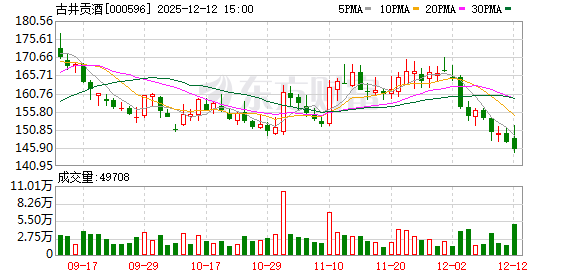
Core Viewpoint - The liquor industry is currently facing a challenging period, with many companies' stock prices entering a bottom range, as indicated by a 1.7% decline in the Wind liquor index this week and a cumulative drop of over 5% since December [2][4]. Company Summary - Gujing Gongjiu, known as the "King of Huijiu," experienced a significant stock price drop of 6.74% this week, following a previous decline of 6.2%, raising concerns about its ability to recover first in the market [2][4]. - The stock price of Gujing Gongjiu has fallen over 12% in December alone, ranking it second to last among all liquor companies, only ahead of *ST Yanshi, which faces delisting risks [6][7]. - The company is facing challenges such as long-term price inversion of its core product, slow national expansion, and a strategic adjustment that has led to a slowdown in revenue growth [7]. Industry Summary - The liquor industry is under pressure from fundamental, pricing, and market expectation factors, leading to a continued search for a bottom [4]. - The recent central economic work conference emphasized the importance of domestic demand, which may improve the return on equity (ROE) for companies in the medium term, potentially leading to increased spending and improved income expectations for residents [6]. - The beer sector remains stable, with some companies like Hong Kong Shengli Beer and *ST Lanhua seeing stock price increases, while the yellow wine sector shows mixed performance [6].

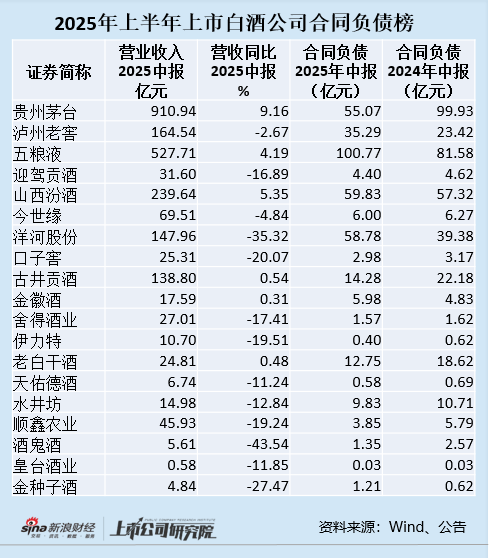
白酒中报| 13家酒企合同负债减少 贵州茅台合同负债一举减少44.89%
Xin Lang Cai Jing· 2025-09-12 09:48
Core Insights - The Chinese liquor industry is entering a period of accelerated clearing, with a total production of 1.9159 million kiloliters in the first half of 2025, a year-on-year decrease of 5.8% [1] - Sales revenue reached 330.42 billion yuan, showing a slight increase of 0.19% year-on-year, while profits fell to 87.687 billion yuan, down 10.93% year-on-year [1] - Over 58.1% of distributors reported increased inventory, with an average inventory turnover period of 900 days, up 10% from the previous year [1] Industry Performance - Among 19 listed liquor companies, 13 reported a decline in revenue, accounting for 68%, with a significant slowdown in revenue growth compared to the previous year [2] - The market is increasingly concentrated among leading companies, with the top six accounting for 47% of revenue in 2024, up 13 percentage points from five years ago [2] - The median revenue growth rate for companies with over 10 billion yuan in revenue was 2.36%, while those below 10 billion saw a median decline of 16.89% [2] Price Trends - The growth logic of the liquor industry is changing, with the previous "volume reduction, price increase" model failing, leading to simultaneous declines in both volume and price [2] - The wholesale price index for liquor has been declining from September 2024 to August 2025, affecting even premium brands [2] Contract Liabilities - Total contract liabilities for 19 listed liquor companies reached 37.497 billion yuan, a decrease of 9.01 billion yuan year-on-year [4] - Guizhou Moutai saw its contract liabilities drop from 9.993 billion yuan to 5.507 billion yuan, a decline of 44.89%, reflecting adjustments in direct sales channel allocations [4] - Eight companies reported a reduction in contract liabilities of over 15%, with most being smaller firms [5] Company-Specific Performance - Guizhou Moutai reported a revenue of 91.094 billion yuan, a year-on-year increase of 9.16%, with contract liabilities at 5.507 billion yuan [6] - Other companies like Luzhou Laojiao and Wuliangye also reported varying revenue changes, with Wuliangye's contract liabilities at 10.077 billion yuan [6] - Ancient Liquor, a regional representative, experienced a revenue growth of 10.38% in Q1 but a decline of 14.23% in Q2, indicating a significant market shift [5]

口子窖(603589):2025年中报点评:二季度承压,静待后续改善
Guoyuan Securities· 2025-08-25 11:44
Investment Rating - The report maintains a "Buy" rating for the company, expecting a profit growth in the coming years despite current challenges [5]. Core Views - The company experienced significant revenue and profit declines in the first half of 2025, with total revenue of 2.531 billion yuan, down 20.07% year-on-year, and a net profit of 715 million yuan, down 24.63% year-on-year [1]. - The high-end liquor segment faced the most substantial revenue drop, indicating a challenging market environment [2]. - The direct sales channel, particularly e-commerce, showed strong growth, contrasting with the struggling wholesale channel [2][3]. - The company is optimizing its distributor structure, with an increase in the number of distributors both within and outside its home province [3]. - Profit margins were affected by the overall weak demand in the industry, particularly for high-end products, leading to a decline in gross and net profit margins [4]. Summary by Sections Financial Performance - In H1 2025, the company's revenue from high-end, mid-range, and low-end liquor was 2.385 billion, 32 million, and 68 million yuan respectively, with declines of 19.80%, 10.82%, and 2.59% year-on-year [2]. - The gross profit margin for H1 2025 was 73.07%, down 2.77 percentage points year-on-year, while the net profit margin was 28.25%, down 1.71 percentage points [4]. Sales Channels - The wholesale channel, which accounts for over 90% of revenue, saw a significant decline, with H1 2025 revenue of 2.352 billion yuan, down 21.26% year-on-year [2]. - In contrast, the direct sales channel, including e-commerce, reported a revenue of 133 million yuan in H1 2025, up 44.57% year-on-year [2]. Regional Performance - Revenue from both the home province of Anhui and outside provinces declined in H1 2025, with Anhui revenue at 2.101 billion yuan and outside revenue at 384 million yuan, both down approximately 19% year-on-year [3]. Profitability Forecast - The company forecasts net profits of 1.247 billion, 1.314 billion, and 1.393 billion yuan for 2025, 2026, and 2027 respectively, with expected growth rates of -24.66%, 5.41%, and 5.98% [5].

贵州茅台再调查:价格场景的“变”与“不变”
Di Yi Cai Jing· 2025-08-10 12:51
Core Insights - The Chinese liquor industry is experiencing accelerated differentiation due to generational shifts in consumption and macroeconomic fluctuations, with Moutai's price trends and sales dynamics being a key indicator of the market [1][3]. Pricing and Sales - The price of 53-degree Moutai has remained stable throughout the year, with regional price differentiation observed but an overall upward trend [3]. - Inventory levels for Moutai are reported to be healthy, with no signs of excessive stockpiling, particularly as the Mid-Autumn Festival approaches [4]. Consumption Scene Transformation - Moutai's consumption scenarios are shifting from business banquets to a more youthful demographic, reflecting broader trends in consumer demand and generational change [5]. - The proportion of government consumption has dropped from over 40% in 2012 to less than 1% in 2025, with business banquets, family gatherings, and personal consumption becoming the main market drivers [5]. - Young consumers, particularly those born in the 1980s and 1990s, are increasingly purchasing Moutai for its quality and brand reputation rather than just price [5]. - The "i Moutai" digital platform has significantly increased acceptance among younger consumers, with the young demographic now accounting for 45% of Moutai's customer base [5]. Service Model Adaptation - Moutai is adapting its service model to enhance consumer experience and brand loyalty, with initiatives like "Moutai Friends" tasting salons aimed at attracting younger consumers [6]. - The company has successfully transitioned from a dual-driven model of "government + business" to a multi-scenario approach that includes personal consumption [6]. Cultural and Global Narrative - Despite macroeconomic challenges, Moutai's strong brand power and unique product value mitigate the impact on high-end liquor consumption [7]. - Future growth points for the high-end liquor market are expected to focus on cultural IP and personalized customization, appealing to consumers' desires for uniqueness [7]. - Moutai is leveraging cultural elements and internationalization strategies, such as hosting events abroad, to enhance its global presence and appeal [9].
口子窖创始股东减持或套现约3亿元,经营隐忧叠加引市场关注
Qi Lu Wan Bao· 2025-07-22 06:31
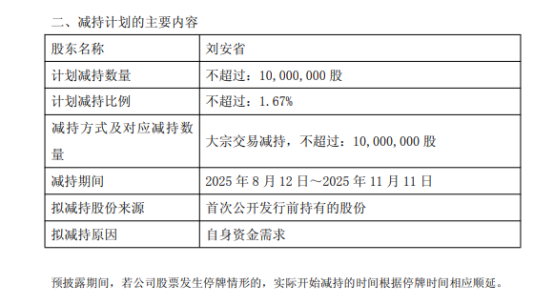
Core Viewpoint - The company is facing significant challenges, including a major shareholder's plan to reduce holdings, a failed stock incentive plan, declining financial performance, and a decrease in dividend payouts, all of which contribute to a negative outlook for its future development [2][4][6][9]. Shareholder Actions - The founder and major shareholder, Liu Ansheng, plans to reduce his stake by up to 10 million shares, representing 1.67% of the total shares, with an expected cash-out of over 3.37 billion yuan based on the closing price [2][3]. - Liu Ansheng's current holdings have decreased from 72.64 million shares at the time of the IPO to 63.47 million shares, indicating a trend of continuous reduction since his retirement in 2020 [3][9]. Financial Performance - The company's revenue and net profit growth rates have significantly slowed, with 2024 revenue at 6.015 billion yuan, a 17.14% increase from 2022, and net profit at 1.655 billion yuan, a mere 6.77% increase [5][6]. - The company has lowered its dividend payout for 2024 to 778 million yuan, with a per-share dividend decrease from 1.5 yuan in 2023 to 1.3 yuan, breaking its previously stable dividend policy [6][9]. Stock Incentive Plan - The company announced the cancellation of its stock incentive plan due to failing to meet performance targets, which were set to achieve over 30% growth in net profit and revenue by 2024 [4][5]. - The total number of shares to be repurchased and canceled is 1.8805 million, which will reduce the total share capital to 598.12 million shares [5]. Market Performance - As of July 18, the company's stock price closed at 33.73 yuan, down 58.15% from its peak of 80.59 yuan at the end of 2021, and approximately 53% lower than its rebound high of 71.77 yuan in 2023 [7][9]. - The current market environment shows a clear divide in the liquor industry, with leading companies maintaining growth while regional players like the company are struggling [8][9]. Future Outlook - The combination of shareholder sell-offs, failed incentive plans, declining financial metrics, and reduced dividends casts a shadow over the company's future prospects [9]. - The company needs to implement substantial and effective adjustments in its operational strategy, management efficiency, and investor communication to regain market confidence and address increasing competition [9].
古井贡酒:正杀到洋河城下
Sou Hu Cai Jing· 2025-05-09 11:45
Core Viewpoint - The white liquor industry is experiencing a significant divergence among leading companies, with Fenjiu entering the top three, creating a new competitive landscape of "Mao, Wu, and Fen" [1] Group 1: Company Performance - Yanghe's revenue and net profit for 2024 were 28.876 billion and 6.673 billion respectively, showing declines of 12.83% and 33.37%, with net profit returning to 2017 levels [2] - Gujing Gongjiu reported revenue and net profit of 23.578 billion and 5.517 billion respectively, with year-on-year growth of 16.41% and 20.22%, achieving historical highs [2] - The revenue gap between Yanghe and Gujing Gongjiu has narrowed significantly over five years, with Yanghe's lead in revenue decreasing from 10.809 billion to 5.298 billion and in net profit from 5.627 billion to 1.151 billion [2] Group 2: Product Performance - Yanghe's mid-to-high-end liquor products saw a revenue decline of 14.79%, significantly impacting net profit, which fell more than revenue [4] - Gujing Gongjiu's mid-to-high-end products, particularly the year-round original series, achieved revenue of 18.086 billion, growing by 17.31% and accounting for 76.7% of total revenue [4] Group 3: Market Dynamics - Yanghe's revenue from domestic and external markets fell by 11.43% and 14.35% respectively, indicating pressure in both areas [5] - Gujing Gongjiu maintained strong growth across all regions, with significant increases in Central, North, and South China [7] Group 4: Strategic Positioning - Yanghe claims to be undergoing a "proactive deceleration transformation" for sustainable development, although this has not aligned with market expectations [8] - The competitive landscape is intensifying, with Yanghe facing challenges from both internal and external competitors, particularly in its home market [10][11] Group 5: Channel Effectiveness - Yanghe has the highest number of distributors at 8,866, but its average revenue per distributor is lower than Gujing Gongjiu's, indicating less channel efficiency [12] - Yanghe's distributor count increased by only 77, while Gujing Gongjiu added 448, reflecting a stronger market appeal for Gujing Gongjiu [14] Group 6: Industry Trends - The white liquor industry is shifting towards a new normal of stock competition and volume reduction, with Yanghe's challenges highlighting the need for strategic adjustments [15]