美元信用体系松动

Search documents
金价疯涨并不是牛市,而是警报!全球银行狂囤金,旧秩序正在碎裂
Sou Hu Cai Jing· 2026-02-14 05:14
Core Viewpoint - The surge in gold prices to $4,985 is not indicative of a bull market but rather a warning signal of the loosening global dollar credit system [1] Group 1: Price Volatility - Gold prices experienced extreme fluctuations, with a monthly increase of 13.01% in January 2026, reaching over $5,000, followed by a significant drop of over 9.25% on January 30, marking the largest single-day decline in 40 years [3] - The gold market saw a dramatic adjustment, with prices swinging nearly $700 within a week, prompting exchanges to raise margin requirements for precious metal trading [3][4] - The price discovery mechanism is chaotic, with different market participants (leveraged funds, ETF investors, and central banks) operating on different strategies, leading to amplified volatility [16] Group 2: Central Bank Behavior - Central banks are the primary buyers in the gold market, with China's gold reserves reaching 74.19 million ounces by the end of January 2026, marking a continuous increase for 15 months [3] - In Q4 2025, global central banks net purchased 230 tons of gold, a 6% increase from the previous quarter, with total purchases for 2025 reaching 863 tons [3][4] - The trend of central banks increasing gold holdings contrasts sharply with the erratic behavior of institutional investors [4] Group 3: Institutional Investor Activity - In January 2026, global gold ETFs saw inflows of approximately $19 billion, the highest monthly record, pushing total assets under management to $669 billion, a 20% increase [4][15] - Despite the record inflows, the behavior of institutional investors is characterized by instability, with rapid buying and selling patterns driven by market fluctuations rather than fundamentals [4][16] Group 4: Consumer Behavior - Ordinary consumers are purchasing smaller gold items, reflecting a trend of "light investment" as they seek psychological security amid uncertainty [6] - The retail gold market remains supported by traditional consumption patterns, particularly during the Chinese New Year [6] Group 5: Structural Changes in the Market - The foundation of dollar credit is weakening, with U.S. federal debt exceeding $38 trillion and the dollar's share in global foreign exchange reserves dropping to 56.92%, the lowest since 1995 [6] - The shift towards "de-dollarization" is evident as central banks increase gold holdings while reducing U.S. Treasury holdings [7][9] Group 6: Geopolitical Risks - Geopolitical tensions, such as the U.S.-Iran conflict and the Russia-Ukraine war, have transitioned from short-term market disturbances to long-term pricing factors for gold [7] - The market reacts to geopolitical news, with prices fluctuating based on expectations rather than actual events [7] Group 7: Future Outlook - Analysts have differing views on gold prices, with some predicting a rise to $6,000 by the end of 2026, while others expect short-term fluctuations between $4,800 and $5,200 [13][19] - The gold market is increasingly viewed as a strategic asset rather than a cyclical commodity, reflecting a loss of confidence in the current financial order [9][21]


煤炭ETF、红利国企ETF国泰大涨点评
Sou Hu Cai Jing· 2026-02-04 12:07
Group 1 - The core event is that Indonesian officials announced a suspension of spot coal exports, with production quotas for major miners reduced by 40% to 70% compared to 2025 levels [1] - The Indonesian government proposed a significant cut in coal production quotas for 2026 to 600 million tons, down from 730 million tons in 2025, representing a decrease of approximately 24% from the actual production of about 790 million tons in 2025 [1] - The suspension of spot coal exports is aimed at supporting prices, as current prices yield low profits for Indonesian mines, leading to reduced production enthusiasm among companies [1] Group 2 - Indonesia is the largest source of thermal coal imports for China, with imports of 210 million tons in 2025, accounting for 57% of thermal coal imports and 5% of total thermal coal consumption [1] - The reduction in quotas may lead to a significant decrease in China's imports from Indonesia in 2026, creating a noticeable import gap [1] - The current suspension of spot coal exports from Indonesia is expected to have a substantial impact on domestic coal supply, potentially causing fluctuations in coal prices [1] Group 3 - The weakening of the US dollar credit system is highlighted, with US external debt exceeding $38 trillion and a continuously expanding fiscal deficit, leading to a decline in the recognition of US Treasury bonds as a traditional credit anchor for the dollar [1] - Global central banks are increasing their gold holdings and reducing reliance on dollar assets, indicating a shift in investment strategies [1] - The resource sector is anticipated to undergo a long-term revaluation of pricing, with a shift in global capital towards commodities and physical assets as inflation hedges [2] Group 4 - The coal sector is expected to experience short-term supply-demand catalysts and long-term valuation support due to the weakening dollar credit, enhancing its investment value [2] - Investors are advised to pay attention to the only coal ETF (515220) and the high-dividend advantage of the dividend state-owned enterprise ETF (510720), which has a coal allocation of nearly 40% [2] - The index dividend yield for the coal sector is reported at 5.16%, with the coal sector accounting for 37.3% of the index as of February 4, 2026 [2]
央行为何连续13个月增持黄金?背后暗藏哪些经济信号?
Sou Hu Cai Jing· 2025-12-08 02:14
Group 1 - The core viewpoint is that the continuous increase in gold reserves by central banks, particularly China's, reflects deeper changes in the global monetary system, with international gold prices likely to remain volatile due to the weakening of the dollar's credit system [1][3]. - China's central bank's gold reserves reached 74.12 million ounces at the end of November, marking a month-on-month increase of 30,000 ounces, continuing a trend of 13 consecutive months of accumulation [1]. - The World Gold Council reported that global central banks purchased a net total of 53 tons of gold in October, the highest monthly figure for the year, indicating a historical pace of gold accumulation amid rising public debt risks in the U.S. and geopolitical conflicts [3]. Group 2 - China's foreign exchange reserves have rebounded to $3.17 trillion, but the optimization of the reserve structure is deemed more critical, with a shift in the monetary properties of gold as the Federal Reserve's interest rate expectations change [4]. - The central bank's strategy of increasing gold reserves is not solely for profit but aims to establish a dual-anchor system of "dollar + gold," which can mitigate the impact of U.S. Treasury price fluctuations and maintain control amid the diversification of international settlements [4]. - The gold market has entered a third bull market, with the price of gold breaking previous highs, suggesting that individual investors may consider allocating 5%-10% of their assets to gold as a low-cost strategy against inflation and unforeseen events [5].
11月28日金价:大家要有心理准备了,下周金价或将重现15年历史
Sou Hu Cai Jing· 2025-11-29 01:00
Group 1 - The core viewpoint of the article highlights the significant surge in gold prices and the associated risks for consumers and investors, emphasizing that many are purchasing gold incorrectly, leading to a high pitfall rate exceeding 90% [1][3] - As of November 28, 2025, gold prices on the Shanghai Gold Exchange surpassed 942 yuan per gram, with retail prices for gold jewelry reaching 1312-1318 yuan per gram, mirroring the market conditions of 2010 [2][8] - Historical patterns indicate that simultaneous occurrences of geopolitical tensions, central bank gold accumulation, and rising expectations of interest rate cuts by the Federal Reserve often lead to long-term bullish trends in gold prices [2][9] Group 2 - The current market shows a stark contrast between investment and consumption, with gold bar sales increasing significantly, particularly in major cities, while gold jewelry consumption has declined sharply [5][6] - Retail sales for companies like Chow Tai Fook have dropped by 18.6% year-on-year in Q2, and the wholesale volume of gold jewelry in Shenzhen has decreased by 15%, indicating a shift in consumer behavior towards lighter products and cost-saving strategies [6][8] - The central banks' actions are pivotal, with a collective increase in gold purchases leading to a historical record of 1089 tons in 2024, marking a shift in the gold pricing model from dollar-based to central bank-driven [9][12] Group 3 - The article discusses the changing dynamics of gold pricing, where the traditional model based on the US dollar's real interest rates has been replaced by a new model dominated by central bank demand, which now constitutes 23% of total gold demand [12] - The decline in the dollar's share in global foreign exchange reserves from 55.25% to 46.74% between 2010 and 2024, alongside an increase in gold's share from 11.24% to 19.13%, reflects a shift in the perception of gold as a hedge against dollar credit risks [12][10] - Consumers are advised to prioritize purchasing gold in a way that minimizes costs, such as opting for gold priced by weight rather than fixed-price jewelry, and to be cautious of high premiums associated with branded products [14][17]
黄金基金ETF(518800)涨超0.5%,连续5日净流入超23亿元,市场关注避险需求与配置价值
Sou Hu Cai Jing· 2025-10-16 07:06
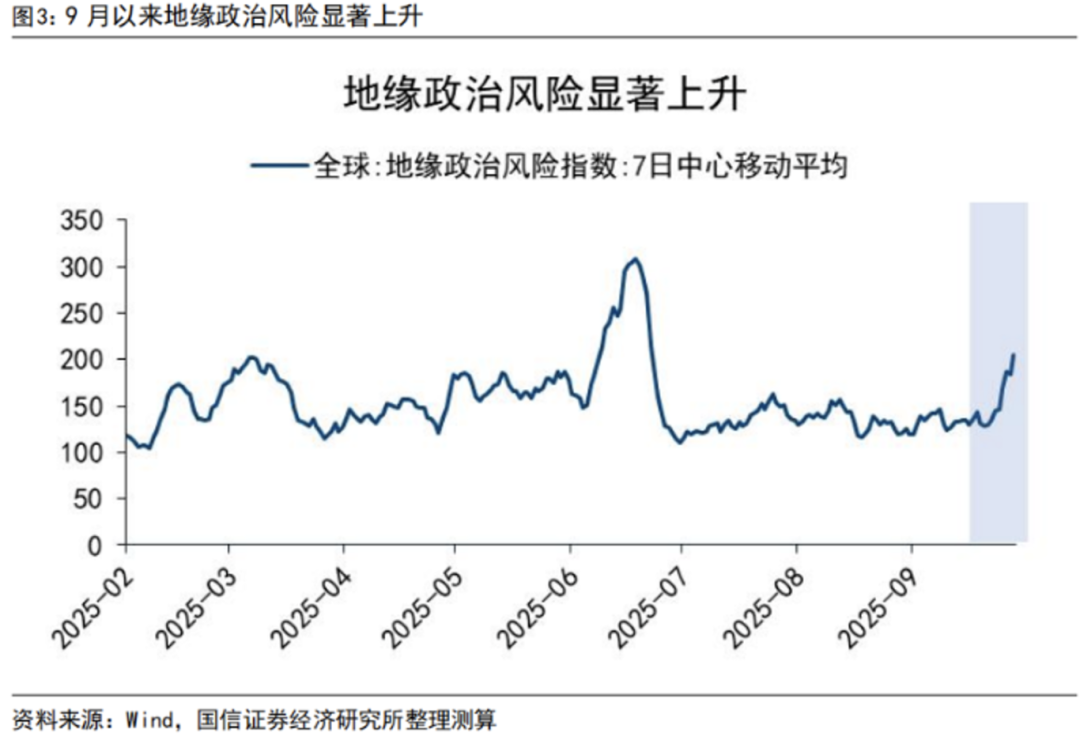
Group 1 - The core logic of gold investment is based on three main factors: 1) long-term loosening of the dollar credit system and continuous gold purchases by central banks; 2) potential levels of dollar yields, which are influenced by the state of the U.S. economy; 3) short-term demand for safe-haven assets due to geopolitical disturbances [1] - Gold ETF funds hold physical gold contracts traded on the Shanghai Gold Exchange, directly corresponding to the physical gold stored in the exchange's vaults, making investment in gold ETFs equivalent to direct investment in physical gold [1] - The price fluctuations of gold ETFs closely follow the AU9999 spot contracts, which represent domestic gold prices, with a requirement that at least 90% of the fund's assets must be held in physical gold [1]
金价再创新高,关注黄金基金ETF(518800)
Mei Ri Jing Ji Xin Wen· 2025-10-16 01:20
Core Viewpoint - Gold prices reached a new high on October 15, with COMEX gold standing strong at $4,200 per ounce after a slight pullback on October 9. The gold ETF (518800) rose by 2.45%, leading the market. The medium-term outlook for gold remains positive, with a recommendation to focus on the gold ETF (518800) [1]. Group 1: Key Drivers of Gold Prices - The core logic driving gold prices includes three main factors: (1) long-term weakening of the dollar credit system and ongoing gold purchases by central banks; (2) medium-term potential levels of dollar yields, influenced by the state of the U.S. economy; (3) short-term geopolitical disturbances leading to increased demand for safe-haven assets [1]. - The potential decline in U.S. dollar yields may further support gold prices. A weaker U.S. economy could lead to lower dollar yields, reducing the opportunity cost of holding gold, thus increasing its relative value against the dollar [1]. Group 2: Short-term and Long-term Outlook - In the short term, geopolitical disturbances are likely to persist, which may trigger a surge in gold prices. However, the long-term logic remains solid, suggesting that investors should continue to monitor the situation and consider positioning themselves after any pullbacks [2].
ETF日报:债市层面,在边际上看到一些好转,但目前好转尚未形成趋势,可关注十年国债ETF
Xin Lang Ji Jin· 2025-10-15 13:03
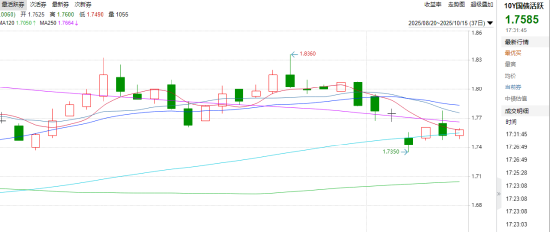
Market Performance - A-shares showed strong performance today, with the Shanghai Composite Index rising by 1.22% to 3912.21 points, the Shenzhen Component Index up by 1.73%, and the ChiNext Index increasing by 2.36% [1] - The total trading volume in the Shanghai and Shenzhen markets reached 2.09 trillion yuan, significantly lower than the previous day [1] - The technology sector, particularly photovoltaic, machinery, and communication stocks, led the gains, while defensive assets like gold also saw an increase [1] Investor Sentiment - Investor risk appetite was strong today, with over 4,300 stocks gaining [1] - Small-cap stocks outperformed large-cap stocks, and growth stocks were favored over value stocks [1] Trade Tensions and Market Outlook - The escalation of US-China trade tensions has led to a cautious sentiment among investors, particularly affecting high-valuation technology stocks [2][3] - Despite the trade tensions, the market has shown resilience, with investors having anticipated the complexities of US-China relations, limiting panic selling [2] - The trade conflict is viewed as a "lose-lose" situation, which may prevent further deterioration of the situation [2] Structural Opportunities - The A-share market is expected to exhibit more structural characteristics, with a recommendation to avoid previously high-flying sectors linked to overseas tech stocks [3] - Future opportunities may arise from domestic policies, particularly in high-end manufacturing and self-sufficient supply chains [3] Bond Market - The bond market remains neutral, with some signs of improvement, as the yield on 10-year government bonds has dipped below 1.75% [3] - Recent economic data has raised concerns about China's economic outlook, prompting a watchful stance on bond investments [3] Gold Market - Gold prices reached new highs, with COMEX gold trading above $4,200 per ounce [5] - The medium-term outlook for gold remains positive, driven by factors such as the weakening dollar credit system and ongoing geopolitical tensions [7][8] - Short-term geopolitical issues may lead to further spikes in gold prices, but the long-term fundamentals remain strong [8]