
美国财政扩张

Search documents
期货日报:“双引擎”驱动有色与贵金属板块上涨
Qi Huo Ri Bao· 2026-01-09 01:21
Core Insights - The analysis by Tian Yaxiong from CITIC Futures indicates that the commodity market in 2026 will be driven by the combination of "U.S. fiscal expansion" and "AI capital expenditure growth," which are crucial for supporting economic growth [1][2] Group 1: Market Dynamics - U.S. fiscal expansion is playing a vital role as a "counter-cyclical support" in the current economic cycle, with a series of legislative measures becoming core variables for economic growth [1] - Major tech companies like Microsoft, Google, and Amazon are projected to invest hundreds of billions to over a trillion dollars in AI-related capital expenditures, creating new demand for non-ferrous metals like copper and aluminum [1] - The power density of AI data centers significantly exceeds that of traditional facilities, leading to increased reliance on copper and aluminum for power distribution and cooling systems, which shapes the future commodity market [1] Group 2: Economic Outlook - Domestic economic recovery is expected to continue, with the Producer Price Index (PPI) likely turning positive after the third quarter of 2026 [1] - The significant increase in export value added indicates resilience in industrial upgrades, while the monetary credit cycle has shown signs of a turning point [1] - The M1-M2 indicators are expected to support a moderate recovery in prices, leading PPI by approximately six months [1] Group 3: Cognitive Discrepancies - Four key cognitive discrepancies were highlighted: 1. The paradox of capacity clearance, where industries like electrolytic aluminum and lithium processing face a "loss-expansion" dilemma, with leading firms expanding despite losses [2] 2. The need to validate whether current massive capital expenditures in AI are overextending future investment potential and if global labor productivity can significantly improve due to AI [2] 3. The U.S. designating copper and silver as critical minerals, leading to increased trade barriers and supply tensions [2] 4. The potential slowdown in the "de-coal" process among emerging Asian economies due to energy security and economic considerations, impacting demand for related commodities [2] Group 4: Investment Strategy - The historical combination of "fiscal expansion + de-globalization" since 1970 suggests that commodities could enter a significant bull market under similar conditions [2] - Investors are advised to focus on structural opportunities in the non-ferrous and precious metals sectors, closely tied to AI and fiscal policies, while remaining cautious of monetary policy shifts and geopolitical events that may cause market volatility [2]
“双引擎”驱动有色与贵金属板块上涨
Qi Huo Ri Bao· 2026-01-08 23:40
Core Insights - The analysis highlights the significant impact of "U.S. fiscal expansion" and "AI capital expenditure growth" on the rise of non-ferrous and precious metals, with U.S. fiscal policies playing a crucial role in supporting economic growth during the current economic cycle [1][2] Group 1: Market Trends - The global macroeconomic landscape is evolving, leading to a transformation in demand for commodities, particularly in the non-ferrous and precious metals sectors [1] - AI-related capital expenditures from major tech companies like Microsoft, Google, and Amazon are projected to reach hundreds of billions to over a trillion dollars, creating new demand for metals such as copper and aluminum [1] Group 2: Domestic Economic Outlook - The domestic economy is expected to continue its recovery, with the Producer Price Index (PPI) likely turning positive after the third quarter of 2026 [2] - There is a notable increase in the export value added, indicating resilience in industrial upgrades [2] Group 3: Key Divergences - Four key cognitive divergences are highlighted: 1. The paradox of capacity clearance, where industries like electrolytic aluminum and lithium processing are expanding despite losses, delaying industry clearance [2] 2. The validation of AI narratives, questioning whether current capital expenditures are overextending future investment potential and if global labor productivity can significantly improve due to AI [2] 3. The U.S. designating copper and silver as critical minerals, leading to increased trade barriers and supply tightness [2] 4. The potential slowdown in the "decarbonization consensus" among emerging Asian economies, which may affect the demand for related commodities [2] Group 4: Future Projections - The analysis draws parallels to the historical combination of "fiscal expansion + de-globalization" starting in the 1970s, suggesting that a similar environment could lead to a significant bull market in commodities [2] - Investment strategies should focus on the AI-driven and fiscal-related themes within the non-ferrous and precious metals sectors while remaining cautious of monetary policy shifts and geopolitical events that could create market volatility [2]


国泰君安期货:金银铂钯年末表现强势,明年要关注哪些变化?
Xin Lang Cai Jing· 2025-12-23 06:38
Core Viewpoint - The precious metals sector has shown strong performance this year, with gold and silver breaking historical highs, and platinum and palladium also experiencing upward momentum. Factors such as macroeconomic support, spot market contradictions, demand expectations, and market sentiment are driving precious metal prices. As the year ends, attention should be paid to the driving factors for the precious metals sector in the coming year and how they may differ from this year [3][10]. Gold - U.S. Monetary Policy: The median forecast from the Federal Reserve's dot plot in September and December indicates that the interest rate cut cycle may continue into 2026, but at a slower pace. Monitoring whether policy rates approach the theoretical neutral rate is essential [3][10]. - U.S. Fiscal Expansion: The Federal Reserve is set to restart balance sheet expansion in December, primarily through short-term Treasury purchases. The impact of this expansion on U.S. dollar liquidity should be observed [3][10]. - Geopolitical Factors: The global economic and political uncertainty index reached a historical high in April and remains elevated. Attention should be given to short-term impacts from "event-driven" factors on gold, as well as broader long-term strategic considerations [3][10]. Silver - Continued Macroeconomic Easing: The current macroeconomic environment remains accommodative, which may have a relatively mild impact on silver prices [4][11]. - Ongoing Spot Market Contradictions: Factors such as supply-demand gaps, tariff expectations leading to inventory arbitrage, and continuous accumulation in silver ETFs are causing persistent contradictions in the silver spot market. Monitoring changes in futures inventory, London market leasing rates, and domestic-international price differentials is crucial [5][11]. - Demand Growth Points: Attention should be paid to whether the growth rate of photovoltaic installations domestically and internationally will face a decline, as well as the consumption of silver by AI computing centers [6][12]. Platinum and Palladium - Supply Constraints: South Africa is facing electricity supply shortages, rising mining costs, and decreased willingness to develop new projects, which may limit the growth elasticity of platinum group metal production next year. The potential for recycled supply to alleviate tight supply-demand conditions should be monitored [6][13]. - Demand Side Differences: In the automotive catalytic field, the increasing penetration rate of hybrid vehicles globally may alleviate the pressure on platinum and palladium demand caused by the decline in pure gasoline vehicle ownership. The forms of investment demand differ, with physical investment in platinum and financial instruments like ETFs for palladium being areas of focus [6][13]. - Capital Outflow Effect: Attention should be given to the "investment spillover" effect within the precious metals sector, especially after sustained strong performance in silver, which may lead to significant price fluctuations in platinum and palladium [6][13].

东方证券:有色板块再次迎来逢低布局机会 建议积极关注电解铝、黄金
智通财经网· 2025-11-24 03:38
Core Viewpoint - The non-ferrous metal sector is experiencing a significant decline, primarily influenced by the sharp drop in lithium carbonate prices, creating a potential opportunity for investors to consider undervalued segments within the industry [1] Non-Ferrous Metal Sector Summary - The non-ferrous metal sector saw a substantial decline of 6.75% last week, with a single-day drop of 5.26% on November 21 [1] - Market expectations for a Federal Reserve rate cut in December have decreased, with the probability of a 25 basis point cut dropping from 42.9% on November 17 to 35.4% on November 20 [1] - Some investors believe the sector may continue to face weakness, making it difficult to identify investment opportunities [1] Electrolytic Aluminum Sector Summary - The electrolytic aluminum sector may have been unfairly punished, as the leading companies' stock offerings do not impact the overall supply-demand balance or profitability [2] - Current valuations for companies like Tianshan Aluminum have fallen to around 8.5 times historical lows, while dividend yields have risen to approximately 6%, providing defensive support for the sector [2] - The sector is expected to benefit from increased industrial metal demand due to U.S. fiscal expansion in 2026, with potential price increases driven by overseas demand [2] Gold Sector Summary - Short-term gold prices are expected to remain volatile due to fluctuating expectations regarding the Federal Reserve's December rate cut [3] - The long-term outlook for gold remains positive, driven by weakening U.S. dollar credit and increasing government debt, which reached $38.37 trillion as of November 20, up by $0.176 trillion since November 13 [3] - U.S. fiscal spending is anticipated to boost demand in the non-ferrous metal sector, potentially raising metal prices and benefiting gold prices in the medium term [3] Investment Recommendations - For the electrolytic aluminum sector, Tianshan Aluminum (002532.SZ) is recommended for its improved cost structure and potential for volume and price growth in 2026 [4] - Other notable companies include Yun Aluminum (000807.SZ), Zhongfu Industrial (600595.SH), and Shenhuo Co. (000933.SZ) [4] - In the gold sector, Chifeng Jilong Gold Mining (600988.SH) is recommended due to its improving gold production and accelerating performance [4] - Additional companies to watch include Zhongjin Gold (600489.SH) and Shanjin International (000975.SZ) [4]



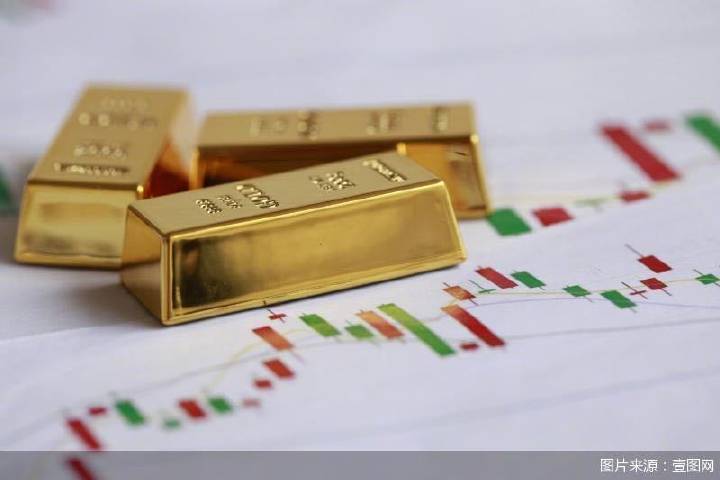
金价再创历史新高,还能买吗?
Sou Hu Cai Jing· 2025-09-23 14:01
Core Insights - The article highlights the significant rise in gold prices, with both London gold spot and COMEX gold futures reaching historical highs, driven by various factors including monetary policy shifts and geopolitical tensions [1][3]. Group 1: Gold Price Trends - On September 23, London gold spot prices peaked at $3,791.08 per ounce, marking a historical high with a daily increase of 1.21% and a monthly increase of approximately 8.7% [1]. - COMEX gold futures reached a maximum of $3,824.6 per ounce, with a daily increase of 1.31% and a monthly increase of about 7.6% [1]. Group 2: Influencing Factors - The rise in gold prices is primarily attributed to the Federal Reserve's shift towards a more accommodative monetary policy, including a recent 25 basis point rate cut, which has fueled expectations of a global easing cycle [3]. - Structural factors such as escalating geopolitical tensions and military conflicts have led to increased safe-haven investments in gold [3]. - The sensitivity of gold to global liquidity and inflation, along with strong demand from central banks, particularly in light of ongoing fiscal pressures in the U.S., are significant catalysts for the price increase [3][5]. Group 3: Central Bank Activities - Central banks globally have continued to purchase gold, with a net acquisition of 166 tons reported in the second quarter of 2025, indicating a positive outlook for gold demand despite a slowdown in purchasing pace [4]. - The People's Bank of China has increased its gold reserves for ten consecutive months, reaching 7.402 million ounces by the end of August 2025 [4]. Group 4: Investment Strategies - Investors are advised to adopt a phased buying strategy in gold, focusing on gold ETFs and companies involved in gold mining and sales, while being cautious with high-leverage products like futures and options [6]. - It is emphasized that investors should understand their risk tolerance and actively monitor macroeconomic changes affecting the gold market [6].
市场主流观点汇总-20250701
Guo Tou Qi Huo· 2025-07-01 11:41
Report Summary 1. Report Industry Investment Rating No information provided regarding the report industry investment rating. 2. Core View of the Report The report aims to objectively reflect the research views of futures companies and securities companies on various commodity varieties, track hot - spot varieties, analyze market investment sentiment, and summarize investment driving logics. It is based on the publicly - released research reports of institutions in the current week, and the closing price data is from last Friday, with the weekly change calculated as the change in the closing price from the previous Friday [2]. 3. Summary by Relevant Catalogs 3.1行情数据 - **Commodities**: From June 23 to June 27, 2025, commodities such as coke, copper, and iron ore had price increases, with coke rising 2.67%, copper rising 2.47%, and iron ore rising 1.92%. Commodities like corn, gold, and palm oil had price decreases, with corn falling 1.04%, gold falling 1.56%, and palm oil falling 1.87%. Crude oil had a significant drop of 12.02% [3]. - **A - shares**: During the same period, the CSI 500 rose 3.98%, the SSE 50 rose 1.27%, and the CSI 300 rose 1.95% [3]. - **Overseas Stocks**: The Nikkei 225 rose 4.55%, the Nasdaq Index rose 4.25%, and the S&P 500 rose 3.44% [3]. - **Bonds**: The 5 - year Chinese Treasury bond rose 0.64%, the 10 - year Chinese Treasury bond rose 0.30%, and the 2 - year Chinese Treasury bond rose 0.19% [3]. - **Foreign Exchange**: The euro - US dollar exchange rate rose 1.69%, the US dollar index fell 1.52%, and the US dollar central parity rate fell 0.09% [3]. 3.2大宗商品观点汇总 3.2.1宏观金融板块 - **Stock Index Futures**: Among 8 institutions' views, 2 were bullish, 1 was bearish, and 5 were for a sideways market. Bullish factors included rising Fed rate - cut expectations, a low risk - premium rate of the CSI 300, increased issuance of equity - oriented public funds, and sufficient bottom - supporting funds. Bearish factors included short - term difficulty in improving corporate fundamentals, the central bank's change in monetary policy stance, and over - heated market sentiment [4]. - **Treasury Bond Futures**: Among 7 institutions' views, 3 were bullish, 1 was bearish, and 3 were for a sideways market. Bullish factors included net liquidity injection by the central bank, weak credit and inflation data, and strong demand for bond allocation. Bearish factors included the central bank's change in monetary policy stance, the stock - bond seesaw effect, and rising long - term interest rates [4]. 3.2.2能源板块 - **Crude Oil**: Among 9 institutions' views, 3 were bullish, 2 were bearish, and 4 were for a sideways market. Bullish factors included falling US and Cushing crude oil inventories, reduced Russian exports, and geopolitical tensions. Bearish factors included the decline in geopolitical premiums, expected OPEC production increases, and weak terminal demand [5]. - **Eggs**: Among 8 institutions' views, 2 were bullish, 2 were bearish, and 4 were for a sideways market. Bullish factors included postponed peak - season stocking, approaching stocking season, potential egg - price increases, and reduced supply due to heat. Bearish factors included limited decline in laying - hen inventory, high chick - replenishment volume, high new - production capacity, and postponed downstream stocking [5]. 3.2.3有色板块 - **Copper**: Among 7 institutions' views, 5 were bullish, 0 were bearish, and 2 were for a sideways market. Bullish factors included rising Fed rate - cut expectations, improved risk appetite, and falling global visible inventories. Bearish factors included the substitution effect of recycled copper, weakening downstream procurement, and weakening terminal demand [6]. - **Methanol**: Among 7 institutions' views, 0 were bullish, 1 was bearish, and 6 were for a sideways market. Bullish factors included limited port - available goods, expected low port inventories, and increased downstream demand. Bearish factors included expected increases in Iranian imports, port inventory accumulation, potential MTO device maintenance, and a loosening supply - demand pattern [6]. 3.2.4贵金属 - **Gold**: Among 7 institutions' views, 4 were bullish, 1 was bearish, and 2 were for a sideways market. Bullish factors included rising Fed rate - cut expectations, a downward trend in real interest rates, and the strengthening of gold's safe - haven property. Bearish factors included reduced safe - haven demand, capital flowing to risky assets, and technical - level sell - offs [7]. 3.2.5黑色板块 - **Iron Ore**: Among 8 institutions' views, 2 were bullish, 2 were bearish, and 4 were for a sideways market. Bullish factors included increased molten - iron production, expected decline in overseas shipments, and improved macro sentiment. Bearish factors included rising port inventories, increased global shipments, weakening demand for five major steel products, and narrowing basis [7].