
股指期货贴水

Search documents
宏观金融数据日报-20260316
Guo Mao Qi Huo· 2026-03-16 07:44
Key Information from the Research Report 1. Market Data and Trends - **Interest Rates**: DRO01 closed at 1.32 with a -0.58bp change, DR007 at 1.46 with -0.88bp, GC001 at 1.18 with -28.00bp, GC007 at 1.50 with -2.00bp, SHBOR 3M at 1.54 with -0.40bp, LPR 5 - year at 3.50 with 0.00bp, 1 - year treasury at 1.28 with 0.67bp, 5 - year treasury at 1.56 with 0.55bp, 10 - year treasury at 1.81 with 0.76bp, and 10 - year US treasury at 4.27 with 6.00bp [4] - **Stock Indexes**: Last week, CSI 300 rose 0.19% to 4669.1, SSE 50 fell 1.2% to 2956.8, CSI 500 fell 1.44% to 8239.8, and CSI 1000 fell 0.42% to 8214.3. This week, CSI 300 closed at 4669 with -0.39%, SSE 50 at 2957 with -0.50%, CSI 500 at 8240 with -1.43%, and CSI 1000 at 8214 with -1.46% [5] - **Stock Index Futures**: IF volume was 105420 with 7.5% change, IF open interest was 271580 with 0.9% change; IH volume was 40231 with -4.4% change, IH open interest was 104055 with -2.9% change; IC volume was 143226 with 1.2% change, IC open interest was 292785 with -1.0% change; IM volume was 202030 with 7.6% change, IM open interest was 376110 with 0.2% change [5] - **Industry Indexes**: Last week, power equipment (4.6%), building decoration (4.1%), public utilities (3.1%), banks (1.4%), and agriculture, forestry, animal husbandry and fishery (1%) led the gains, while national defense and military industry (-6.6%), comprehensive (-4.3%), non - ferrous metals (-3.7%), media (-3.2%), and machinery and equipment (-2.4%) led the losses [5] - **Stock Trading Volume**: Last week's A - share daily trading volumes were 26706 billion yuan, 24168 billion yuan, 25283 billion yuan, 24606 billion yuan, and 24173 billion yuan, with an average daily trading volume decrease of 456.3 billion yuan compared to the previous week [5] 2. Central Bank Operations - **Last Week**: The central bank conducted 176.5 billion yuan of reverse repurchase operations, with 277.6 billion yuan of reverse repurchases maturing, resulting in a net withdrawal of 101.1 billion yuan. Also, 150 billion yuan of 1 - month treasury cash fixed - term deposits matured [4] - **This Week**: 176.5 billion yuan of reverse repurchases will mature, with 48.5 billion, 39.5 billion, 26.5 billion, 24.5 billion, and 37.5 billion yuan maturing from Monday to Friday respectively. Additionally, 600 billion yuan of 182 - day repurchase - style reverse repurchases will mature on Monday. The central bank conducted 500 billion yuan of repurchase - style reverse repurchases on March 16, with a contraction scale of 100 billion yuan [5] 3. Market Outlook and Strategy - **Geopolitical and Economic Events**: Uncertainty remains in the Middle East conflict, with multiple countries in initial contact with Iran for safe passage through the Strait of Hormuz. High overseas imported inflation risk exists due to oil price fluctuations. China and the US will hold economic and trade consultations in France [6] - **Stock Index Outlook**: Last week, stock indexes were weakly volatile. In the future, as external inflation pressure eases and market risk appetite recovers, stock indexes are expected to consolidate and resume an upward trend. For the medium - to - long - term, consider building long positions using the discount advantage of stock index futures [6] 4. Futures Premium and Discount - **IF Premium/Discount**: The current - month contract has a 17.42% premium, next - month 6.14%, current - quarter 6.97%, and next - quarter 6.72% [7] - **IH Premium/Discount**: The current - month contract has a - 0.38% discount, next - month 0.62%, current - quarter 1.42%, and next - quarter 3.32% [7] - **IC Premium/Discount**: The current - month contract has a 23.03% premium, next - month 10.04%, current - quarter 9.64%, and next - quarter 8.92% [7] - **IM Premium/Discount**: The current - month contract has a 24.25% premium, next - month 13.02%, current - quarter 12.18%, and next - quarter 11.13% [7]
宏观金融数据日报-20260313
Guo Mao Qi Huo· 2026-03-13 03:01
Group 1: Market Liquidity and Central Bank Operations - DR001 closed at 1.33 with a -4.19bp change, DR007 at 1.47 with a 0.57bp change, GC001 at 1.46 with a -6.50bp change, GC007 at 1.52 with a -0.50bp change, SHBOR 3M at 1.55 with a -0.10bp change, LPR 5 - year at 3.50 with a 0.00bp change, 1 - year treasury at 1.25 with a -1.25bp change, 5 - year treasury at 1.55 with a -0.40bp change, 10 - year treasury at 1.81 with a -0.40bp change, and 10 - year US treasury at 4.21 with a 6.00bp change [3] - The central bank conducted 245 billion yuan of 7 - day reverse repurchase operations with an operating rate of 1.40%, and 230 billion yuan of reverse repurchases matured, resulting in a net injection of 15 billion yuan [3] - This week, 2776 billion yuan of reverse repurchases will mature in the central bank's open market, and 1500 billion yuan of 1 - month treasury cash fixed - deposits will mature on Tuesday [4] Group 2: Stock Market Conditions - The closing prices of major stock indices changed as follows: CSI 300 decreased by 0.36% to 4687.6, SSE 50 decreased by 0.46% to 2971.6, CSI 500 decreased by 0.52% to 8359.5, and CSI 1000 decreased by 0.33% to 8335.9. The trading volume of the Shanghai and Shenzhen stock markets was 2.46 trillion yuan, a decrease of 67.7 billion yuan from the previous day. Wind power equipment and coal mining sectors rose significantly, while military, general equipment, electronic components, engineering machinery, and energy metal sectors declined [5] - After experiencing range - bound fluctuations, the stock index is expected to consolidate and resume an upward trend with the easing of external geopolitical situations and the recovery of market risk appetite. Referring to the situation in 2025, after a short - term shock adjustment, the market sentiment quickly recovered, and the stock index broke through and opened an upward trend. Domestically, economic policies are conducive to growth, macro - liquidity is abundant, and capital market policies support a "slow - bull" market, so the stock index is expected to have upward room. Strategically, long - term investors can consider building long positions using the discount advantage of stock index futures [5] Group 3: Stock Index Futures Data - The closing prices and changes of stock index futures contracts: IF当月 decreased by 0.6%, IH当月 decreased by 0.6%, IC当月 decreased by 0.7%, and IM当月 decreased by 0.4%. The trading volume and positions of various contracts also changed. For example, IF trading volume increased by 21.4% to 98091, and its position increased by 0.7% to 269145 [5] - The premium and discount rates of different stock index futures contracts are as follows: IF升贴水 was 28.38% for the current - month contract, 9.85% for the next - month contract, 7.59% for the current - quarter contract, etc.; IH升贴水, IC升贴水, and IM升贴水 also had corresponding values [5]
日度策略参考-20260310
Guo Mao Qi Huo· 2026-03-10 07:32
1. Report Industry Investment Ratings - No investment ratings are provided in the report. 2. Core Views of the Report - The short - term geopolitical factors face significant uncertainties, and most commodities are expected to oscillate in the short term. The mid - to long - term strategy for some commodities can consider building long positions by leveraging the discount advantage of stock index futures [1]. - The energy price increase raises inflation risks and suppresses interest - rate cut expectations, but the unexpected February non - farm payrolls in the US increase the risk of economic stagflation, which also supports the prices of precious metals and platinum - palladium [1]. - The ongoing geopolitical conflicts have a wide - ranging impact on the commodity market, affecting supply, demand, and cost factors of various commodities [1]. 3. Summary by Commodity Categories Metals - **Precious Metals**: Affected by factors such as inflation risk, economic stagflation risk, and geopolitical games, precious metals are expected to oscillate in the short term, and platinum - palladium prices may fluctuate within a range [1]. - **Base Metals** - **Copper**: Due to the deterioration of the Middle East situation and the continuous accumulation of domestic and foreign copper inventories, copper prices are running weakly [1]. - **Aluminum**: The supply disturbances in the Middle East and the increase in energy costs are expected to drive aluminum prices to be strong. Attention should be paid to the supply disturbances in the Middle East [1]. - **Alumina**: The operating capacity has slightly declined, but the inventory has further accumulated, with a weak fundamental situation, and the price is expected to oscillate in the short term [1]. - **Zinc**: The concerns about zinc ore supply support zinc prices, but the short - term fundamental contradictions are limited, and zinc prices are expected to oscillate [1]. - **Nickel**: The supply of Indonesian nickel ore is tightening, and nickel prices may oscillate at a high level, affected by the resonance of the non - ferrous sector. It is recommended to go long on dips [1]. - **Stainless Steel**: The raw material prices have risen after the festival, and the steel mills' production schedule in March has increased significantly. The social inventory has slightly decreased. The stainless steel futures are expected to oscillate widely, and low - buying opportunities can be focused on [1]. - **Tin**: Tin prices are highly volatile and oscillating. Investors are advised to focus on risk management and profit protection [1]. - **Ferrous Metals** - **Steel Products** - **Rebar**: The inventory is at a relatively high historical level, and the price is expected to oscillate. After taking profits on the long - basis positions, wait for the next entry opportunity [1]. - **Hot - Rolled Coil**: The price has significant upward pressure, but due to geopolitical conflicts, it is difficult for iron ore to have a unilateral downward trend. The short - term supply and demand are weak, but geopolitical conflicts, policy benefits, and cost support are positive factors [1]. - **Iron Ore**: The short - term supply and demand are weak, but geopolitical conflicts, policy benefits, and cost support are positive for the price [1]. - **Silicon Iron**: The short - term supply and demand are weak, but the expected reduction in supply and geopolitical conflicts provide cost support [1]. - **Glass**: The cost is supported by the increase in energy prices due to geopolitical conflicts, and the supply and demand are weak in the short term [1]. - **Soda Ash**: It mainly follows the trend of glass. In the short term, it is affected by geopolitical conflicts, and the supply and demand will be more relaxed in the medium term, with price pressure [1]. - **Coking Coal and Coke**: The first round of spot price cuts has begun, but the market has already priced in 2 - 3 rounds of cuts. The market is waiting to see, and industrial players can establish cash - and - carry positions in the 05 contract on rebounds [1]. Energy and Chemicals - **Crude Oil**: Geopolitical factors drive up the price, which in turn affects the prices of related energy and chemical products [1]. - **Fuel Oil**: Affected by geopolitical factors such as the Middle East conflict, the market sentiment is positive, and the risk appetite of funds has recovered [1]. - **Asphalt**: The impact of Iranian imports on the domestic market is relatively small, but the price is affected by the cost transmission of crude oil [1]. - **Natural Rubber**: After the festival, the downstream demand is gradually recovering, the basis difference has expanded to a high level in the same period, and the raw material cost has strong support [1]. - **BR Rubber**: Due to the impact of the shutdown of upstream production, the inventory may turn into a deficit. The cost of butadiene has strong support, and the profit of private cis - butadiene rubber plants is in a loss state, with an increasing expectation of maintenance and production reduction [1]. - **PTA**: Geopolitical factors lead to a strong expectation of crude oil prices. Northeast Asian refineries are facing a shortage of crude oil supply, and the supply of PX is tight, which affects the downstream polyester industry [1]. - **Ethylene Glycol**: Due to the reduction of raw materials caused by geopolitical factors, domestic ethylene glycol plants have seen a sharp increase in prices [1]. - **Styrene**: The overseas pure benzene and styrene markets are strongly rising due to multiple disturbances on the supply side, and the spot supply of styrene is extremely tight [1]. - **Methanol**: The import from Iran is affected by geopolitical conflicts, but the domestic production is at a high level, and the inventory is at a historical high [1]. - **PE and PP**: Geopolitical factors drive up the price of crude oil, but the fundamentals are weak [1]. - **PVC**: In 2026, the global production capacity is expected to be reduced, and the geopolitical conflict has an impact on the raw material supply, with a relatively optimistic future expectation [1]. - **LPG**: The price is affected by factors such as the Middle East geopolitical conflict, the CP price, and the domestic and overseas demand. The basis difference is expected to repair and expand, and the demand side is short - term bearish [1]. Agricultural Products - **Cotton**: Internationally, the global cotton inventory is expected to tighten in the 2026/27 season. Domestically, the inventory is high, but the price is expected to rise gradually with the recovery of demand and the expectation of reduced planting [1]. - **Sugar**: The global sugar market is in a state of structural surplus in the 2025/26 season, and the domestic sugar supply is also relatively abundant. The price of Zhengzhou sugar is expected to have limited fluctuations, with a pattern of strong domestic and weak international prices [1]. - **Soybean and Soybean Meal**: The Middle East conflict supports the prices of soybean and soybean meal. The short - term focus should be on international situation dynamics, and unilateral operations should be cautious [1]. - **Pulp**: The fundamental situation of pulp futures is weak in the short term, and attention should be paid to the pressure level of 5350 - 5450 [1]. - **Logs**: The spot price of logs has risen, and the arrival volume in February has decreased. The external quotation is expected to rise, providing upward momentum for the market [1]. - **Livestock**: The recent spot price has stabilized, the demand is supported, and the production capacity needs to be further released [1].
日度策略参考-20260309
Guo Mao Qi Huo· 2026-03-09 05:56
1. Report Industry Investment Ratings No relevant content provided. 2. Core Views of the Report - The short - term geopolitical factors face significant uncertainties, and most varieties are expected to oscillate and consolidate in the short term. For the medium - to - long - term, strategies can be formulated according to the characteristics of each variety, such as constructing long positions in combination with the premium advantage of stock index futures [1]. - The escalation of the Middle East situation has a wide - ranging impact on the market, affecting the risk appetite, supply, and cost of various commodities, and leading to different trends in different varieties [1]. 3. Summary by Related Catalogs 3.1 Non - ferrous Metals - **Copper**: The deterioration of the Middle East situation and the continuous accumulation of domestic and foreign copper inventories have led to a weak operation of copper prices [1]. - **Aluminum**: Although the Middle East situation has suppressed market risk appetite, the continuous increase in the supply disturbance of electrolytic aluminum in the Middle East and the rise in energy prices have increased costs, so aluminum prices are expected to run strongly. Attention should be paid to the supply disturbance of electrolytic aluminum in the Middle East [1]. - **Alumina**: The operating capacity of domestic alumina has declined slightly, but the inventory has further increased, and the fundamentals are still weak. The short - term price will oscillate [1]. - **Zinc**: The concerns about zinc ore supply due to the Middle East situation can support zinc prices, but the short - term fundamental contradictions are limited, and zinc prices are expected to oscillate [1]. - **Nickel**: The tightening concerns of the RKAB quota of Indonesian nickel ore have resurfaced, the quota approval is slow, the nickel ore premium remains high, and the closure of the Strait of Hormuz may affect the MHP raw material supply. Nickel prices may oscillate at a high level and are still affected by the resonance of the non - ferrous sector. It is recommended to go long on dips and control risks [1]. - **Stainless Steel**: After the festival, raw material prices have risen, steel mills' production in March has increased significantly, and the social inventory has decreased slightly. The macro - sentiment fluctuates greatly, and there is still raw material support. Stainless steel futures will oscillate widely. Attention should be paid to the demand acceptance. It is recommended to pay attention to low - buying opportunities and control risks [1]. - **Tin**: Inflation risks have increased, putting short - term pressure on the non - ferrous sector. Tin will oscillate with high volatility in the short term. Investors are advised to pay attention to risk management and profit protection [1]. 3.2 Precious Metals and New Energy - **Precious Metals**: The continuous rise in energy prices has increased inflation risks and suppressed interest - rate cut expectations. However, the poor February non - farm payrolls in the United States have increased the risk of economic stagflation, and combined with the Middle East geopolitical game and private credit risks in the United States, precious metal prices may oscillate strongly in the short term [1]. - **Platinum and Lithium**: The continuous rise in energy prices has increased inflation risks and suppressed interest - rate cut expectations. The poor February non - farm payrolls in the United States have increased the risk of economic stagflation, and the Middle East geopolitical uncertainty remains high. Platinum and lithium prices may oscillate within a range in the short term [1]. 3.3 Industrial Silicon and Related Products - **Industrial Silicon**: There is production increase in the northwest and production decrease in the southwest. The production of polysilicon and organic silicon in December decreased by 88 [1]. - **Polysilicon**: The inventory is at a low level, the demand expectation is weak, and the price oscillates [1]. - **Carbonate Lithium**: The energy storage demand is strong, there is battery export rush, and there are disturbances at the mine end. It is bullish [1]. 3.4 Black Metals - **Rebar**: The inventory is at a relatively high historical level, and the de - stocking pressure needs to be tested in the future. The price oscillates [1]. - **Hot - Rolled Coil**: After taking profits on the long - basis positions, wait for the next entry opportunity [1]. - **Iron Ore**: The short - term supply and demand continue to be weak, but geopolitical conflicts, policy benefits, and cost support are positive for the price. It is difficult for iron ore to have a unilateral downward market under geopolitical conflicts [1]. - **Silicon Iron**: The short - term supply and demand are both weak, the expectation of supply reduction has increased, and at the same time, geopolitical conflicts have intensified, energy prices have strengthened, and there is cost support [1]. - **Glass**: The short - term supply and demand are both weak, the expectation of supply reduction has increased, and at the same time, geopolitical conflicts have intensified, energy prices have strengthened, and there is cost support [1]. - **Soda Ash**: It mainly follows glass. In the short term, it is affected by geopolitical conflicts, and in the medium term, the supply and demand are more relaxed, and the price is under pressure [1]. - **Coking Coal and Coke**: Geopolitical conflicts continue to ferment, and the first round of spot price cuts for coking coal and coke has begun. However, the previous low has already factored in the expectation of 2 - 3 rounds of price cuts, so there is not much market trading. The digital targets given by the domestic two sessions are basically in line with expectations. As energy and chemical products rise and other assets perform poorly, the market is moving towards the stagflation logic. Attention should be paid to the subsequent changes in the situation. Energy - related varieties should avoid speculative short positions, and coking coal and coke should be mainly on the sidelines. The industry can take advantage of the rebound opportunity to establish spot - futures positive hedging positions in the 05 contract [1]. 3.5 Agricultural Products - **Palm Oil**: The sharp rise in crude oil will drive up the price of palm oil through the biodiesel demand. However, the current fundamental pressure of palm oil is large, with high inventory in Malaysia, the production season, and the consumption off - season. Be vigilant against the decline after the stagnation of crude oil [1]. - **Soybean Oil**: The sharp rise in crude oil will drive up the price of soybean oil through the biodiesel demand. However, after the end of the Southeast Asian Ramadan, the incremental export of domestic soybean oil may decline rhythmically, and the large arrival of soybeans in April will also bring pressure. Be vigilant against the decline after the stagnation of crude oil [1]. - **Cotton**: Internationally, the USDA expects that the global cotton inventory will tighten in the 2026/27 season due to production cuts in major producing countries and increased consumption. China's import demand is expected to increase by 25%, and the export of US cotton will slightly increase but face competition from Brazil. Recently, the export sales of US cotton have reached a new high for the year, and Trump's visit to China may further expand the import of US agricultural products, which is beneficial to the export of US cotton. Domestically, the cotton inventory is high, the willingness of textile enterprises to replenish inventory is weak, the supply is abundant, the demand is stable and resilient, and the import substitution pressure brought by the internal - external price difference exists. The policy is stable, and the reduction of cotton - planting area in Xinjiang is the core variable. The domestic cotton price will gradually rise with the recovery of demand and the expectation of reduced planting in the medium - to - long - term [1]. - **Sugar**: Internationally, the global sugar market has a clear pattern of structural surplus in the 2025/26 season. India has a significant increase in production, Brazil's production remains high, and Thailand's slight production cut has limited impact. The overall supply of major producing countries is abundant. With the expectation of the new sugar - crushing season in Brazil, the supply pressure in the global sugar market continues to increase. Domestically, the supply of domestic sugar is in a loose pattern in the 2025/26 season. The production of cane sugar has entered the peak of concentrated crushing, and the domestic sugar production has increased year - on - year. The arrival of imported sugar is stable, and the industrial inventory is high. The total domestic supply is abundant, and the market has changed from a tight balance to a slight surplus. Overall, it is expected that the Zhengzhou sugar price will have a ceiling and a floor and will not fluctuate significantly, and the pattern of strong domestic and weak international prices will continue. The short - term inventory replenishment demand and geopolitical risks support the disk to oscillate strongly, but the downstream profit is poor, and it is expected to increase the use of other substitutes. In addition, pay attention to policy risks, such as the release of policy grains such as aged rice and changes in import policy orientation [1]. - **Soybean and Soybean Meal**: The continuous Middle East conflict has raised concerns about the increase in shipping costs and planting costs. The war risk premium supports the US soybean and soybean meal disks. In the short term, pay attention to the international situation. The sustainability of the war is difficult to estimate, and be cautious in unilateral operations [1]. - **Paper Pulp**: The weak fundamentals of paper pulp futures are difficult to change in the short term. The whole industry chain is accumulating inventory, and the price increase letters of domestic finished paper are difficult to implement. Affected by the macro - sentiment of commodities, paper pulp futures have increased in price with reduced positions. Pay attention to the pressure level of 5350 - 5450 [1]. - **Log**: The spot price of logs has increased, the log arrival volume in February has decreased, and the expectation of an increase in the foreign quotation is relatively clear, so the disk has an upward driving force. At the same time, the foreign quotation has increased due to the impact of shipping costs. Pay attention to the domestic acceptance [1]. - **Pig**: Recently, the spot price has gradually stabilized, supported by demand. The slaughter weight has not been fully cleared, and the production capacity still needs to be further released [1]. 3.6 Energy and Chemicals - **Crude Oil**: Affected by geopolitical factors, the expectation of crude oil has strengthened significantly. The Northeast Asian refineries are extremely dependent on crude oil supply from the Middle East. Due to the closure of the Strait of Hormuz, the Northeast Asian refineries are facing a shortage of crude oil supply and have to reduce their production [1]. - **Fuel Oil**: The escalation of the Middle East situation, the obstruction of transportation in the Strait of Hormuz, and the increase in market risk appetite have all affected fuel oil [1]. - **Asphalt**: The impact of Iranian asphalt imports on the domestic market is not large, but the price transmission of crude oil on the cost side affects asphalt, which is relatively weak among energy varieties [1]. - **BD and BR Rubber**: The escalation of the US - Iran situation has a great impact on the raw material imports in Northeast Asia. Refineries have chosen to stop production for maintenance and suspend external sales due to the lack of raw materials. The prices of BD and BR have risen significantly and still have room to rise. The cost of butadiene has strong support at the bottom, the price of Japanese light naphtha is still rising, and the overseas cracking device capacity is being cleared, which is beneficial to the long - term domestic butadiene export expectation. Recently, the profit of private cis - butadiene devices has remained in a loss state, and the expectation of maintenance and production reduction has increased. The downstream negative feedback is gradually being realized. In terms of fundamentals, the inventory of BD/BR may turn to a de - stocking expectation under the influence of upstream production suspension [1]. - **PX**: The Asian PX market's speculative sentiment has recovered, but the physical supply is tight, and the physical PX has begun to be in short supply. Due to the extreme market concerns, downstream replenishment has been rapid, and the polyester's operating load is also lower than expected [1]. - **Naphtha and Ethylene Glycol**: The Middle East situation is tense, and the market is in chaos. Asian naphtha cracking devices have undergone large - scale production cuts and shutdowns. South Korea, as the largest naphtha cracking center in Asia, has synchronously launched production - cut plans, and the overall operating rate has dropped sharply. Domestic refineries have also taken actions to reduce production and load to deal with the possible reduction of raw materials. Domestic ethylene glycol devices have risen sharply due to the reduction of raw materials [1]. - **Short - Fiber**: The short - fiber price continues to fluctuate closely following the cost [1]. - **Pure Benzene and Styrene**: The overseas pure benzene market has risen driven by the soaring energy prices, and multiple disturbances on the supply side are also affecting the price. The Middle East geopolitical conflict continues to ferment, providing strong support for oil prices. The middle and lower reaches are buying goods crazily, the market is cautious in selling, and the trading atmosphere is crazy. The overseas pure benzene devices have concentrated production cuts and declared force majeure. The overseas styrene market has shown a strong upward pattern under multiple disturbances on the supply side. The downstream and traders of styrene are replenishing goods crazily, resulting in an extremely tight supply of styrene spot. Any unexpected interruption may cause the price to soar further [1]. - **Methanol**: Iran's imports have a significant impact. The mutual attacks on energy facilities between the US and Iran have led to the shutdown of some devices, and the closure of the Strait of Hormuz has prevented Iranian methanol from being transported out. However, the current domestic production is at a high level, and the inventory is at the highest level in the same period of history [1]. - **PE**: The geopolitical situation has heated up, crude oil has risen, and the fundamentals are weak [1]. - **PVC**: In 2026, there will be less global production. The differential electricity price in the northwest region is expected to be implemented, forcing the clearance of PVC production capacity, and the future expectation is optimistic. Geopolitical conflicts have intensified, freight has risen, and the ethylene - based method is facing the problem of raw material shortage [1]. - **LPG**: The CP price in March is flat, and the near - month purchase is still relatively tight. The premium of the Middle East geopolitical conflict has recovered, and the PG trend is strong. The driving logic of the overseas cold wave is gradually weakening, and it is expected that the basis will continue to repair and expand. The domestic PDH operating rate has declined, and the profit is expected to recover seasonally. The short - term demand for LPG is bearish, suppressing the upward movement of the disk. The port is continuously de - stocking, but the domestic civil gas is relatively abundant, resulting in a divergence in the internal and external market trends and a deviation between FEI and PG [1].
股指期货早报-20251031
Da Yue Qi Huo· 2025-10-31 02:04
Report Industry Investment Rating No relevant information provided. Core View of the Report - The meeting between Chinese and US leaders reached significant consensus, with short - term positive effects materialized and the index undergoing a pull - back adjustment, and the premium of index futures increased. The margin trading balance was 2488.5 billion yuan, an increase of 11.6 billion yuan. The IH2512 had a premium of 1.61 points, and the IF2512 had a discount of 9.91 points. The market order was IH>IC>IF>IM, and IH, IF, IC, and IM were above the 20 - day moving average. The long positions of IF and IC main contracts decreased, while those of IH increased. After the Fourth Plenary Session, the technology sector strengthened, and the index rebounded. Currently, it is recommended to appropriately reduce positions on days of significant intraday gains, and the index is expected to maintain a volatile and slightly bullish trend [3]. Summary by Related Catalogs Futures Market - **Index Futures Premium and Discount**: IC2512 had a discount of 86.71 points, IM2512 had a discount of 120.68 points, indicating a bearish signal. IH2512 had a premium of 1.61 points, and IF2512 had a discount of 9.91 points, showing a neutral situation [3]. - **Index Futures Data**: Data on contract prices, price changes, trading volumes, index prices, price - to - earnings ratios, price - to - book ratios, dividend yields, spreads, premium/discount ratios, annualized premiums/discounts, contract values, delivery dates, and remaining terms of IH, IF, IC, and IM from 2025 to 2026 were provided [4]. - **Base and Spread Charts**: Base and spread charts of the Shanghai Stock Exchange 50 and CSI 500 were presented, with data sourced from Wind Information and compiled by Dayue Futures [5][8]. Spot Market - **Important Index Daily Price Changes**: Daily price change data of important indexes such as the Shanghai Composite Index, Shanghai Stock Exchange 50, CSI 300, etc. were shown [11]. - **Style Index Daily Price Changes**: Daily price change data of style indexes including 300 Cycle, 300 Non - Cycle, etc. were provided [14]. - **Industry Index Daily Price Changes**: Daily price change data of industry indexes such as Agriculture, Forestry, Animal Husbandry and Fishery (Shenwan), Basic Chemicals (Shenwan), etc. were given [18]. Market Structure - **AH Share Premium/Discount**: The chart of the Hang Seng AH Premium Index from 2025/02/05 to 2025/10/30 was presented [21]. - **Price - to - Earnings Ratio (PE)**: The PE (TTM) chart of the Shanghai Stock Exchange 50, CSI 300, CSI 500, and ChiNext Index from 2004 to 2025 was shown [23]. - **Price - to - Book Ratio (PB)**: The PB chart of the Shanghai Stock Exchange 50, CSI 300, CSI 500, and ChiNext Index from 2004 to 2025 was presented [25]. Market Fundamentals - **Stock Market Fund Inflows**: The chart of A - share fund net inflows and the CSI 300 from 2021 to 2025 was shown [27]. - **Margin Trading Balance**: The chart of margin trading balance and the CSI 300 from 2021 to 2025 was presented [29]. - **Northbound Capital Inflows**: The chart of northbound capital net inflows from 2021 to 2024 was shown [31]. - **Stock Unlock**: No specific content was provided, only the data source was mentioned [34]. - **Funding Cost**: The chart of SHIBOR overnight, SHIBOR one - week, and SHIBOR two - week from 2025/02/05 to 2025/10/30 was presented [37]. Market Sentiment - **Trading Activity**: The turnover rate (free - floating market value) charts of the Shanghai Stock Exchange 50, CSI 300, CSI 500, and ChiNext Index were shown [40][43]. - **Public - Offering Hybrid Fund Positions**: No specific content was provided, only the data source was mentioned [46]. Other Indicators - **Index Dividend Yield and 10 - Year Treasury Yield**: The chart of the dividend yields of the CSI 300, Shanghai Stock Exchange 50, CSI 500, and CSI 1000 and the 10 - year treasury yield from 2015 to 2025 was presented [49]. - **Renminbi Exchange Rate**: The chart of the US dollar - to - Renminbi exchange rate from 2021 to 2025 was shown [51]. - **New Account Openings and Shanghai Composite Index Tracking**: No specific content was provided. - **Newly Established Fund Scale Changes**: No specific content was provided for the newly established scale changes of stock - type, hybrid, and bond - type funds [55][57][59].
沪指八连阳!1000ETF增强(159680)净值再刷历史新高
Sou Hu Cai Jing· 2025-08-14 01:29
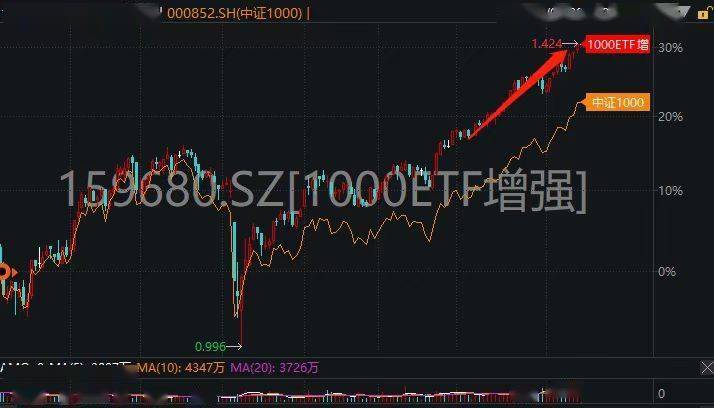
Group 1 - The Shanghai Composite Index (沪指) achieved a trading volume exceeding 2 trillion yuan, marking an eight-day consecutive rise to a new high [1] - The net value of the popular small-cap ETF 1000ETF Enhanced (159680) reached 1.4196, setting a new historical peak, with a year-to-date scale growth of nearly 160% [1] - Market analysts attribute the significant outperformance of small-cap stocks over large-cap stocks to four main factors: ongoing global liquidity easing expectations, a weak dollar environment leading to increased foreign investment in A-shares, clear policies in the technology sector attracting capital, and a general market rally driving up valuation levels [1] Group 2 - The narrowing of the basis between stock index futures reflects an ongoing improvement in market risk appetite [1] - Analysts caution about the potential divergence risk between fundamental performance and market behavior [1]

宏观金融数据日报-20250710
Guo Mao Qi Huo· 2025-07-10 06:30
Report Industry Investment Rating - Not provided in the given content Core Viewpoints - In the short term, with few domestic and foreign positive factors, market sentiment and liquidity are acceptable. Stock indices may show a relatively strong oscillating pattern. The premium advantage of stock index futures has shrunk in the past two days, so caution is advised when chasing up [6]. Summary Based on Related Catalogs Money Market - DR001 closed at 1.32 with a 0.24bp change; DR007 closed at 1.48 with a 1.32bp change; GC001 closed at 1.43 with a -6.50bp change; GC007 closed at 1.51 with a -1.00bp change; SHBOR 3M closed at 1.56 with a -0.80bp change; LPR 5 - year remained at 3.50 with a 0.00bp change; the 1 - year treasury bond closed at 1.36 with a 0.50bp change; the 5 - year treasury bond closed at 1.48 with a 0.30bp change; the 10 - year treasury bond closed at 1.64 with a 0.00bp change; the 10 - year US treasury bond closed at 4.42 with a 2.00bp change [4]. - The central bank conducted 755 billion yuan of 7 - day reverse repurchase operations yesterday at an operating rate of 1.40%. With 985 billion yuan of reverse repurchases maturing, the net withdrawal for the day was 230 billion yuan. This week, 6522 billion yuan of reverse repurchases are due in the central bank's open market, with 572 billion yuan and 340 billion yuan due on Thursday and Friday respectively. Recently, the inter - bank market liquidity has become more relaxed, and major repurchase rates have declined. The weighted average rate of overnight pledged - style repurchase by depository institutions dropped 4.47bp to 1.315%, reaching a new low since December 2024 [4]. Stock Index Market - The closing prices and changes of major stock indices and their corresponding futures contracts: The CSI 300 closed at 3991, down 0.18%; the SSE 50 closed at 2740, down 0.26%; the CSI 500 closed at an unspecified value, down 0.41%; the CSI 1000 closed at 6390, down 0.27%. The IF current - month contract closed at 3977, down 0.1%; the IH current - month contract closed at 2730, down 0.1%; the IC current - month contract closed at 5930, down 0.5%; the IM current - month contract closed at 6359, down 0.3% [5]. - The trading volume and open interest changes of stock index futures: IF trading volume was 82089, down 13.5; IF open interest was 246185, down 4.2; IH trading volume was 42379, down 8.9; IH open interest was 85854, down 2.5; IC trading volume was 70784, down 23.9; IC open interest was 222178, down 5.1; IM trading volume was 162388, down 25.4; IM open interest was 321744, down 7.4 [5]. - In June 2025, the year - on - year increase of CPI turned from a 0.1% decline last month to a 0.1% increase, with a cumulative year - on - year decline of 0.1% in the first half of the year. The year - on - year decline of PPI was 3.6%, with the decline widening from 3.3% last month, and the cumulative decline in the first half of the year was 2.8%. The turn of CPI from negative to positive was mainly driven by high - temperature and rainy weather leading to a reverse increase in vegetable prices and a significant narrowing of the year - on - year decline, as well as the increase in international oil prices driving the year - on - year recovery of domestic energy prices to positive growth. The year - on - year decline of PPI widened due to weak domestic demand, sufficient supply causing accelerated price declines of industrial products such as coal and steel, and tariff policy adjustments and weak external demand increasing the downward price pressure on some export - oriented industries [5]. - The升贴水 (premium/discount) rates of stock index futures contracts: IF current - month contract was 14.63%, next - month contract was 7.32%, current - quarter contract was 4.90%, next - quarter contract was 4.01%; IH current - month contract was 14.98%, next - month contract was 5.80%, current - quarter contract was 2.95%, next - quarter contract was 1.20%; IC current - month contract was 16.00%, next - month contract was 12.74%, current - quarter contract was 11.08%, next - quarter contract was 9.53%; IM current - month contract was 20.10%, next - month contract was 15.66%, current - quarter contract was 14.00%, next - quarter contract was 12.72% [7]. - Yesterday's closing situation: The CSI 300 rose 0.84% to 3998.5; the SSE 50 rose 0.57% to 2747.2; the CSI 500 rose 1.31% to 5977.7; the CSI 1000 rose 1.27% to 6407.7. The trading volume of the Shanghai and Shenzhen stock markets was 15052 billion yuan, an increase of 512 billion yuan from the previous day. Most industry sectors declined, with the diversified finance, engineering consulting services, cultural media, medical services, and banking sectors leading the gains, and the insurance, small metals, precious metals, shipbuilding, and wind power equipment sectors leading the losses [10].
股指期货全面贴水该引起我们的注意吗?
私募排排网· 2025-05-29 07:52
Core Viewpoint - The significant basis management challenges in stock index futures since 2024 are attributed to the historical low basis spreads, particularly influenced by the liquidity crisis in small-cap stocks and the concentrated exercise of out-of-the-money options, indicating strong short-selling pressure from institutional traders [2]. Group 1: Basis Spread Analysis - As of May 23, the annualized basis spreads for the main stock index futures of CSI 300, CSI 500, and CSI 1000 reached 11.08%, 19.08%, and 23.43% respectively [2]. - The substantial basis spread in the CSI 50 and CSI 300 is primarily driven by seasonal dividends, with the annualized hedging costs for the current quarter being -0.27% and 2.86% respectively, suggesting limited impact from upcoming dividends [4][5]. Group 2: Small-Cap Stock Concerns - Despite the influence of dividends, the basis spreads for CSI 500 and CSI 1000 futures remain at historically low levels, indicating a declining risk appetite for small-cap indices among large institutional investors [7]. - The number of neutral strategy products has remained high, with 6,569 products registered since December 31, 2019, but only 2,326 have been liquidated early, suggesting a significant amount of capital is still engaged in stock index futures [7][8]. Group 3: Market Trends and Institutional Behavior - The market has shifted from technology stocks to large-cap blue-chip stocks, driven by macroeconomic events and policy changes, which has increased institutional demand for stable growth assets [10]. - The current high basis costs may erode the alpha portion of neutral strategies, while the potential for profit in arbitrage strategies is lower due to increased volatility and borrowing costs [11][13].
中金:DCN与类雪球产品规模估计与对冲机制研究
中金点睛· 2025-05-28 23:35
Core Viewpoint - The recent low level of stock index futures basis is linked to the dynamics of Dynamic Coupon Notes (DCN) products, which are believed to potentially reduce the basis rather than deepen it [1][4][31]. Group 1: Stock Index Futures Basis - The recent basis rates for IC and IM have reached historical lows, influenced by factors such as hedging, trading, dividend cycles, and policy restrictions [2][6]. - The basis rates are expected to exhibit cyclical fluctuations, with the current deep basis potentially benefiting the yield and scale of structured products like DCN and snowball products [2][7]. - The basis rates for IC and IM, after adjusting for dividends, remain at historical lows, indicating persistent pressure on the stock index futures market [8][9]. Group 2: Dynamic Coupon Notes (DCN) - DCN is characterized as a type of snowball product without an observation for knock-in, providing fixed income features combined with derivatives [3][25]. - The structure of DCN allows for monthly interest payments if the index price meets certain thresholds, with a risk of loss if the index falls below a specified level at maturity [25][30]. - The hedging mechanism of DCN is smoother compared to traditional snowball products, as it lacks a knock-in feature, resulting in a more stable impact on the stock index futures market [4][31]. Group 3: Market Dynamics and Product Scale - The total scale of snowball-like structured products is estimated to be around 100 billion yuan, which is less than half of the scale at the beginning of 2024 [4][31][38]. - The recent deep basis in stock index futures is expected to lead to a rapid increase in the yield and scale of DCN and similar structured products [4][45]. - The issuance of DCN products is seen as attractive in a low-interest environment, potentially leading to increased demand and market activity [4][31].

股指期货:缩量等待变盘
Zhong Xin Qi Huo· 2025-05-28 04:19
1. Report Industry Investment Rating - The investment ratings for stock index futures, stock index options, and treasury bond futures are all "neutral" or "wait - and - see", indicating a cautious stance [6][7][9] 2. Core View of the Report - The market for stocks and bonds should be approached with caution. Stock index futures are in a state of shrinking volume and awaiting a trend change, stock index options show an increase in hedging transactions, and treasury bond futures are expected to continue oscillating [1][2] 3. Summary by Related Catalogs 3.1 Market Outlook Stock Index Futures - Yesterday, the market had shrinking volume and consolidation, with the All - A index dropping 0.3%. The impact of tariff disturbances has weakened, and the market is more sensitive to industry events. There is a possibility of a trend change, and currently, it's in an oscillating pattern with a downside tail - risk. It's recommended to wait and see [6] Stock Index Options - In a low - volatility environment of the underlying asset, the trading volume of the options market decreased slightly. The trading data of Shanghai 500ETF options shows an increase in hedging power. Volatility trend strategies should avoid varieties with extremely low volatility quantiles. The operation suggestion is to continue with the covered - call strategy, appropriately allocate short - term bullish spread portfolios, and lightly position in long - volatility strategies [7] Treasury Bond Futures - Yesterday, treasury bond futures closed down across the board. The market is in an oscillating pattern, and it's difficult to break out of this pattern. Attention should be paid to upcoming PMI data and the central bank's May outright reverse repurchase. The short - end bullish sentiment may stabilize, while the long - end needs to be cautious [9] 3.2 Economic Calendar - The economic calendar includes the US initial jobless claims for the week ending May 24, 2025, the US April core PCE price index annual rate, and the US May University of Michigan consumer confidence index final value [11] 3.3 Important Information and News Tracking - As of the end of April 2025, there are 163 domestic public - fund management institutions in China, with a total net asset value of public funds under management of 33.12 trillion yuan. From January to May 2025, the number and area of second - hand housing transactions in Guangzhou increased significantly year - on - year. The Hong Kong Exchange plans to launch same - day - expiration options contracts as early as the first half of 2026. Japan lost its status as the world's largest creditor nation for the first time in 34 years [11][12]