能源供应链安全

Search documents
《能源化工》日报-20260327
Guang Fa Qi Huo· 2026-03-27 01:30
1. Report Industry Investment Ratings - No information about industry investment ratings is provided in the reports. 2. Core Views of the Reports Pure Benzene - Styrene - Pure benzene supply is expected to decline due to reduced refinery loads and planned maintenance, while downstream product prices are rising, leading to improved supply - demand expectations. It may follow oil price fluctuations, and the strategy is to wait and see and shrink the EB05 - BZ05 spread on rallies [1]. - Styrene supply is stable with some装置restarts and maintenance. Demand is weak in procurement but the supply - demand situation remains tight. It also follows oil price fluctuations, and the strategy is the same as that for pure benzene [1]. LPG - No overall view is provided, but price, inventory, and开工率 data are presented, showing changes in various aspects such as prices, inventory levels, and开工率 of LPG - related products [2]. Natural Rubber - Supply is tight in Southeast Asia, and domestic new rubber supply is limited in the short term. Demand from tire enterprises is stable. The price is expected to fluctuate widely, and attention should be paid to the development of the US - Iran conflict [3]. Crude Oil - The current conflict has lasted for more than four weeks, and the focus is on the control of the Strait of Hormuz and energy supply chain security. Oil prices are expected to maintain wide - range fluctuations, with the main factors being geopolitical support and policy suppression. Short - term focus is on the actual resumption of navigation in the Strait of Hormuz and the progress of negotiations [4]. Glass and Soda Ash - Soda ash has a pattern of strong supply and weak demand. Short - term price is supported by plant maintenance, but supply will increase next week, and it is expected to be weak and volatile. Attention should be paid to the support at around 1150 for SA605, and 5 - 9 reverse arbitrage can be considered [5]. - Glass has weak market trading. Supply is slightly reduced, and demand is weak. Inventory reduction is weakening. Attention should be paid to the support at around 1030 for FG605, and short - selling can be tried lightly if demand or inventory reduction does not improve [5]. Methanol - Methanol futures are rising, and the basis is strengthening. Supply is increasing domestically but imports are expected to decrease. Demand is improving. However, risks of sharp fluctuations and price corrections due to geopolitical easing should be noted [9]. Polyester Industry Chain - PX supply is expected to decline, but downstream polyester has cost - transmission problems, and short - term PX follows oil price fluctuations. PTA has limited self - driving force and follows cost - end fluctuations [10]. - Ethylene glycol has strong cost support, and supply is decreasing. Port inventory is expected to decline, and the price may continue to rise, but there is a risk of a pull - back [10]. - Short - fiber has weak self - driving force and follows raw material fluctuations. Attention should be paid to the resumption of navigation in the Strait of Hormuz and downstream cost transmission [10]. Polyolefins - The polyolefin market is trading based on the logic of "strong cost, reduced supply". The 05 - contract inventory is expected to be low, driving up prices. However, demand is limited, and long positions can be reduced on rallies [11]. PVC and Caustic Soda - Caustic soda futures fluctuate greatly, and the spot price is stable. Supply is increasing slightly, and inventory is accumulating. The overall supply - demand pattern is weak, and attention should be paid to the impact of the Middle East situation [8]. - PVC futures are weakly volatile, and the spot price is falling. The supply - demand fundamentals are weak, but it may be pushed up passively by the overall environment, and attention should be paid to the impact of regional trends [8]. Urea - Urea futures open low and close high, and the spot market is weak. Supply is slightly reduced, and inventory is relatively low, providing some support. However, the supply is still abundant, and demand is weak. It is expected to fluctuate and consolidate in the short term, and attention should be paid to the 1830 - 1900 range [7]. 3. Summaries by Relevant Catalogs Pure Benzene - Styrene - **Upstream Prices and Spreads**: Brent and WTI crude oil prices decreased on March 26 compared to March 25, while CFR Japan naphtha and CFR China pure benzene prices increased. The spreads between pure benzene and naphtha, and toluene and naphtha decreased [1]. - **Styrene - Related Prices and Spreads**: Styrene spot and futures prices decreased slightly, and the EB - BZ spread decreased [1]. - **Downstream Cash Flows**: Cash flows of some downstream products such as phenol and caprolactam improved, while those of aniline decreased [1]. - **Inventory**: Pure benzene inventory in Jiangsu ports decreased, while styrene inventory increased [1]. - **开工率**: The开工率 of some pure benzene and styrene - related industries changed slightly, with some increasing and some decreasing [1]. LPG - **Prices and Spreads**: LPG futures prices showed different trends, with some increasing and some decreasing. The spreads between different contracts decreased. Spot prices and basis also changed [2]. - **外盘Prices**: FEI and CP contracts' prices increased [2]. - **Inventory**: LPG refinery storage ratio, port inventory, and port storage ratio all increased [2]. - **开工率**: The开工率 of upstream refineries decreased, while the开工 rate of downstream PDH increased [2]. Natural Rubber - **Spot Prices and Basis**: Some spot prices such as Yunnan state - owned whole - latex and Thai standard mixed rubber changed slightly, and the basis also changed [3]. - **月间Spreads**: The 9 - 1 spread decreased, while the 1 - 5 spread increased [3]. - **Fundamentals**: Production in some countries and regions changed, and the开工 rate of tire enterprises was stable. Import and export volumes of rubber and related products changed [3]. Crude Oil - **Prices and Spreads**: Brent, WTI, and SC crude oil prices changed, and the spreads between different contracts and different types of crude oil also changed [4]. - **Refined Oil Prices and Spreads**: NYM RBOB, NYM ULSD, and ICE Gasoil prices increased, and the spreads between different contracts also changed [4]. - **Refined Oil Crack Spreads**: Crack spreads of various refined oils such as US gasoline, European gasoline, and Singapore gasoline changed [4]. Glass and Soda Ash - **Glass - Related Prices and Spreads**: Glass spot prices were stable, and futures prices decreased. The basis increased [5]. - **Soda Ash - Related Prices and Spreads**: Soda ash spot prices were stable, and futures prices decreased. The basis increased [5]. - **Supply**: Soda ash production capacity utilization and weekly output decreased, and the daily melting volume of float glass and photovoltaic glass also decreased [5]. - **Inventory**: Glass factory inventory decreased slightly, and soda ash factory inventory decreased slightly [5]. - **Real Estate Data**: New construction area decreased, construction area increased, completion area increased, and sales area increased [5]. Methanol - **Futures Prices and Spreads**: Methanol futures prices increased, and the spreads between different contracts changed [7][9]. - **Upstream Raw Materials**: Some upstream raw material prices such as anthracite and动力煤changed slightly [7]. - **Spot Market Prices**: Methanol spot prices in different regions changed slightly [7]. - **跨区Spreads and Basis**:跨区spreads and basis changed [7]. - **下游Products**: Prices of some downstream products such as melamine increased [7]. - **Supply - Demand Overview**: Domestic urea daily production decreased, and the开工率 of urea production enterprises decreased [7]. Polyester Industry Chain - **Upstream Prices**: Brent and WTI crude oil prices increased, and CFR Japan naphtha and CFR China MX prices increased [10]. - **下游Polyester Product Prices and Cash Flows**: Prices of some polyester products such as POY, FDY, and DTY changed, and cash flows also changed [10]. - **PX - Related Prices and Spreads**: PX prices and spreads changed [10]. - **PTA - Related Prices and Spreads**: PTA prices and spreads changed, and the开工 rate decreased [10]. - **MEG - Related Prices and Spreads**: MEG prices and spreads changed, and the开工 rate decreased [10]. - **开工率**:开工 rates of various industries in the polyester industry chain such as polyester comprehensive开工率and straight - spun filament开工率changed [10]. Polyolefins - **Futures Prices and Spreads**: L and PP futures prices increased, and the spreads between different contracts changed [11]. - **Spot Prices and Basis**: Spot prices of LLDPE and PP increased slightly, and the basis changed [11]. - **Non - Standard Prices**: Non - standard prices of PE and PP changed slightly [11]. - **开工率**: PE and PP装置开工 rates decreased, and downstream加权开工 rates increased [11]. - **Inventory**: PE and PP enterprise and social inventories changed [11]. PVC and Caustic Soda - **PVC and Caustic Soda Spot & Futures**: PVC and caustic soda spot and futures prices changed [8]. - **Caustic Soda Overseas Quotes & Export Profits**: Overseas quotes and export profits of caustic soda increased [8]. - **PVC Overseas Quotes & Export Profits**: Overseas quotes and export profits of PVC increased [8]. - **Supply: Chlor - Alkali开工率& Industry Profits**: The开工 rate of the caustic soda industry and PVC decreased, and profits changed [8]. - **Demand: Caustic Soda下游开工率**: The开工 rate of some downstream industries of caustic soda such as alumina and viscose staple fiber decreased slightly [8]. - **Demand: PVC下游制品开工率**: The开工 rate of some downstream products of PVC such as pipes and profiles increased [8]. - **Chlor - Alkali Inventory:社库&厂库**: Caustic soda and PVC inventories decreased slightly [8].
特斯拉启动光伏制造基地选址,大摩分析:契合自身太空战略,提升长期估值
美股IPO· 2026-02-11 23:46
Core Viewpoint - Morgan Stanley believes that Tesla's plan to build 100GW of vertically integrated solar manufacturing capacity is not merely a simple entry into the ground solar market, but rather a strategic move aimed at energy supply chain security under geopolitical pressures and long-term goals related to Musk's space data centers, while also deeply integrating with Tesla's existing energy storage business [1][3]. Group 1: Strategic Rationale - The solar capacity expansion is supported by two core logical frameworks: the need for energy supply chain autonomy due to geopolitical factors and the demand for space data centers, indicating a long-term energy and space strategy rather than short-term market expansion [4]. - Over 75% of global solar manufacturing capacity is concentrated in China and Southeast Asia, with the U.S. supply chain showing significant structural imbalances, which Tesla aims to address through vertical integration [4][6]. - The majority of Tesla's planned solar capacity will be directed towards space solar data centers, with only a small portion intended to supplement the U.S. ground utility solar market, aligning with Musk's broader space strategy [5][6]. Group 2: Financial Implications - The construction of 100GW solar capacity will require substantial capital expenditure, estimated between $150 billion to $700 billion depending on the level of vertical integration achieved [9][10]. - Tesla's solar business is projected to generate significant revenue and profit potential, with an estimated annual revenue of $25 billion by 2030 at full capacity, surpassing its energy storage business revenue [11]. - The U.S. manufacturing tax credit policy is expected to provide substantial financial benefits, potentially yielding $17.25 billion annually if full vertical integration is achieved [12]. Group 3: Technological Direction - Tesla is likely to abandon traditional crystalline silicon technology in favor of developing solar technology suited for space environments, which presents a significant technological differentiation from existing market players [13][14]. - The specific technological roadmap for Tesla's solar capacity has not yet been disclosed, and its development will be crucial for the success of the solar capacity construction and application [14]. Group 4: Valuation Impact - Tesla's solar strategy is expected to enhance the valuation of its energy business by 35%, contributing an estimated $25 billion to $50 billion in equity value, translating to an increase of $6 to $14 per share [15][16]. - The solar business is positioned as a critical growth driver within Tesla's overall valuation framework, which includes various business segments [17]. Group 5: Future Outlook - Tesla has begun site selection for solar manufacturing facilities, and further details on capacity construction are anticipated in upcoming quarterly earnings calls [18]. - Key future focus areas include the announcement of the solar technology roadmap, progress on space data centers, the synergy between solar and energy storage businesses, and the implementation of tax credit policies, all of which are vital for realizing the value of Tesla's solar business [18].


特斯拉启动光伏制造基地选址,大摩分析:契合自身太空战略,提升长期估值
Zhi Tong Cai Jing· 2026-02-11 13:42
Core Insights - Tesla's ambitious plan to establish 100GW of vertically integrated solar manufacturing capacity is not merely a market expansion but a strategic move aimed at energy supply chain security amid geopolitical tensions and aligning with Musk's long-term space data center goals [1][2][9] Group 1: Supply Chain and Strategic Goals - The primary motivations behind Tesla's solar capacity expansion are the need for energy supply chain autonomy due to geopolitical factors and the anticipated demand from space data centers, rather than just catering to the terrestrial solar market [2][3] - Currently, over 75% of global solar manufacturing capacity is concentrated in China and Southeast Asia, leading to a significant imbalance in the U.S. solar supply chain, where core upstream capacities are below 10GW [1][3] Group 2: Market Dynamics - The global solar market is experiencing a surplus with over 1000GW of manufacturing capacity against an annual demand of approximately 625GW, while the U.S. market remains relatively balanced due to tariffs and investigations, making it a crucial supplementary market for Tesla [3][4] Group 3: Financial Projections - The construction of the 100GW solar capacity will require substantial capital expenditure, estimated between $150 billion to $700 billion depending on the level of vertical integration achieved [5][6] - Tesla's solar business is projected to reach a breakeven point by 2030, with expected annual revenues of $25 billion once fully operational, significantly surpassing its energy storage business revenue projections for 2025 [6][7] Group 4: Tax Incentives - The U.S. manufacturing tax credit is a vital financial advantage for Tesla's solar operations, potentially yielding $17.25 billion annually if full vertical integration is achieved [7][8] Group 5: Technological Direction - Unlike traditional solar manufacturers, Tesla is likely to develop new solar technologies suited for space applications, moving away from conventional crystalline silicon technology to meet the unique demands of space data centers [8][9] Group 6: Valuation Impact - The solar initiative is expected to enhance Tesla's energy business valuation by 35%, contributing an estimated $25 billion to $50 billion in equity value, which translates to an increase of $6 to $14 per share [9][10] Group 7: Future Outlook - Tesla is in the process of selecting sites for its solar manufacturing facilities, with upcoming quarterly earnings calls anticipated to provide further details on capacity development and technological advancements [10]
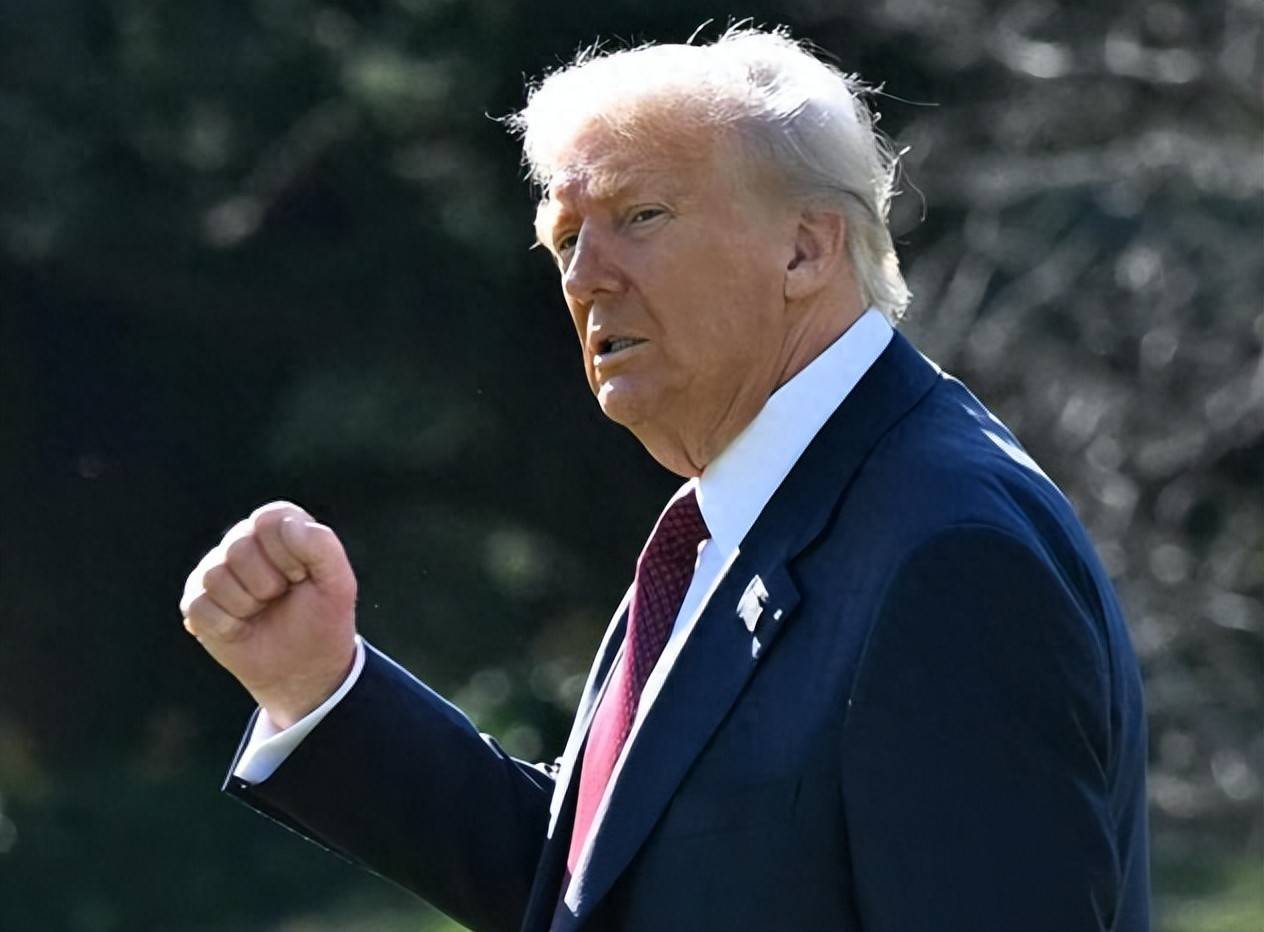
特朗普开始断中国生命线,要求断绝与伊朗贸易,否则加征25%关税
Sou Hu Cai Jing· 2026-01-14 08:51
Group 1 - The article discusses Trump's recent threats against Iran, which are perceived as part of a broader strategy aimed at China, particularly in the context of energy supply chains [1][3] - Trump's announcement of a potential 25% tariff on countries trading with Iran could escalate global trade tensions, especially affecting nations like China, India, Turkey, and the UAE that maintain trade relations with Iran [1][3] - The ambiguity in Trump's tariff announcement raises questions about its seriousness and the specific details regarding implementation, indicating a possible emotional reaction rather than a well-defined policy [1] Group 2 - China is actively diversifying its energy import channels to mitigate risks from U.S. provocations, demonstrating a strong response to Trump's actions regarding Venezuela and Iran [3][5] - The return of Chinese oil tankers from Venezuela signals China's refusal to engage with what it perceives as coercive tactics, emphasizing its ability to find alternative sources for heavy crude oil [3] - China's energy security has been bolstered by increasing imports from Russia, which has become its largest supplier of oil and gas, further undermining Trump's strategy to cut off China's energy supply [5]
专家:特朗普3年内难实现对委石油企图
Bei Jing Ri Bao Ke Hu Duan· 2026-01-09 06:46
Core Insights - The article discusses the challenges and uncertainties surrounding the U.S. interest in Venezuelan oil, highlighting that achieving control over these resources within three years is unlikely due to the unstable social environment in Venezuela [1] Group 1: U.S. Interest in Venezuelan Oil - President Trump mentioned "oil" 26 times during a press conference, indicating a strong interest in Venezuelan oil resources, which are the largest proven reserves globally [1] - Experts suggest that the U.S. may not be able to monopolize Venezuelan oil, drawing parallels to the situation in Iraq post-Saddam, where the U.S. did not gain exclusive access to oil resources [1] Group 2: Investment Risks - U.S. oil companies are hesitant to invest heavily in Venezuela due to significant risks and uncertainties, making it difficult to predict when investments would become profitable [1] - The need for a stable social environment for oil infrastructure investment is emphasized, with experts predicting that Trump's ambitions regarding Venezuelan oil are unlikely to materialize within the next three years [1] Group 3: China's Position - Venezuela is a key partner for China in oil production and supply chains, with substantial Chinese investments in exploration and refining [1] - In 2025, Venezuelan oil is expected to account for 4% of China's oil imports, indicating its importance despite the small percentage [1] - Experts note that Venezuela's oil resources are crucial for ensuring China's energy supply chain security and promoting the internationalization of the Renminbi [1]
中远海能(600026.SH):拟签订十九艘船舶的建造合同
Ge Long Hui A P P· 2025-12-12 09:46
Core Viewpoint - China COSCO Shipping Energy Transportation Co., Ltd. (中远海能) has signed a contract for the construction of 19 vessels with a total contract price of RMB 7.88198 billion, aimed at enhancing energy supply chain resilience and optimizing fleet structure and market competitiveness [1] Group 1 - The company has entered into a construction contract with a related party, China COSCO Shipping Heavy Industry's subsidiary shipyard, for 19 vessels [1] - The total contract price, including tax, amounts to RMB 7.88198 billion [1] - The investment is focused on developing multiple types of clean fuel vessels to improve energy supply chain resilience and security [1]
美国进出口银行启动千亿美元战略转向,重点投资关键矿产与能源供应链
智通财经网· 2025-11-25 08:12
Group 1 - The new chairman of the Export-Import Bank of the United States, John Gavano, announced a commitment of $100 billion to ensure the security of the U.S. supply chain for critical minerals, nuclear energy, and liquefied natural gas [1] - The initial transactions will involve projects in Egypt, Pakistan, and Europe, focusing on delivering U.S. energy globally and addressing over-reliance on critical mineral supply chains [1] - The bank's early transactions include a $4 billion credit insurance guarantee for Hartree Partners' natural gas delivery to Egypt and a $1.25 billion loan for Barrick Gold's development of the Reko Diq copper-gold mine in Pakistan [1] Group 2 - In the 12 months ending September 30, the bank approved new transactions totaling $8.7 billion, excluding a previously approved $4.7 billion loan for TotalEnergies' liquefied natural gas project in Mozambique [1] - The Export-Import Bank is increasingly focusing on supporting liquefied natural gas exports and energy security, marking a shift in its priorities under the Biden administration [1] - The bank's support for green energy projects reached $1.6 billion in 2024, a 74% increase from 2023 [1] Group 3 - Nuclear energy will be a focal point for the new leadership, with active discussions on several nuclear power projects in Southeast Europe, where U.S. companies like Westinghouse Electric are seeking to invest [2]
美英挑动俄乌冲突!联合30 国搞俄能源,中国能源供应链受损
Sou Hu Cai Jing· 2025-10-27 03:21
Group 1: Military Assistance and Strategic Alliances - The UK is accelerating the delivery of over 5,000 lightweight multi-role missiles (LMM) to Ukraine, shortening the delivery timeline by approximately five months to enhance Ukraine's air defense capabilities before winter [1][5] - The "steadfast alliance" of over 30 countries aims to gradually remove Russian energy from the global market, with a focus on economic sanctions against Russia's oil and gas exports [5][9] - The UK government plans to utilize frozen Russian sovereign assets to fund military assistance to Ukraine, raising legal and ethical concerns regarding international financial order [9] Group 2: Energy Market Implications - The proposed energy blockade against Russia could disrupt the global energy supply chain, leading to significant price volatility in oil and gas markets, which may impact countries like China that heavily rely on energy imports [5][6][8] - China's energy cooperation with Russia has deepened, with increasing imports of oil and gas, highlighting the potential challenges China faces if the energy blockade is implemented [6][8] - The instability in energy prices caused by non-market factors could disrupt China's long-term energy planning and security [8] Group 3: Diplomatic Efforts and Conflict Resolution - China advocates for dialogue and negotiation to resolve conflicts, emphasizing the importance of respecting national sovereignty and territorial integrity [8][12] - The establishment of the "Friends of Peace" group by China and other global South countries aims to promote diplomatic mediation and steer conflicts back to political solutions [8][12] - The ongoing conflict and energy disputes illustrate the need for a balanced and sustainable security framework in Europe to achieve lasting peace [9][11]