
方便面

Search documents
中国必选消费品2月成本报告:环比平稳,同比仍处低位
Haitong Securities International· 2026-02-27 04:50
研究报告 Research Report 27 Feb 2026 中国必需消费 China (Overseas) Staples 中国必选消费品 2 月成本报告:环比平稳,同比仍处低位 February CGCI: Month-on-month flat, year-on-year still low [Table_yemei1] 观点聚焦 Investment Focus | [Table_Info] | | | | | --- | --- | --- | --- | | | | | 市盈率 P/E | | 股票名称 | 评级 目标价 | PE(2025E) | PE(2026E) | | 百威亚太 | Neutral 7.90 | 27 | 24 | | 海底捞 | Outperform 18.22 | 18 | 17 | | 华润啤酒 | Outperform 36.00 | n.a. | n.a. | | 康师傅 | Outperform 17.74 | 18 | 16 | | 中国飞鹤 | Outperform 7.00 | 8 | 7 | | 优然牧业 | Outperform 5.50 | n. ...
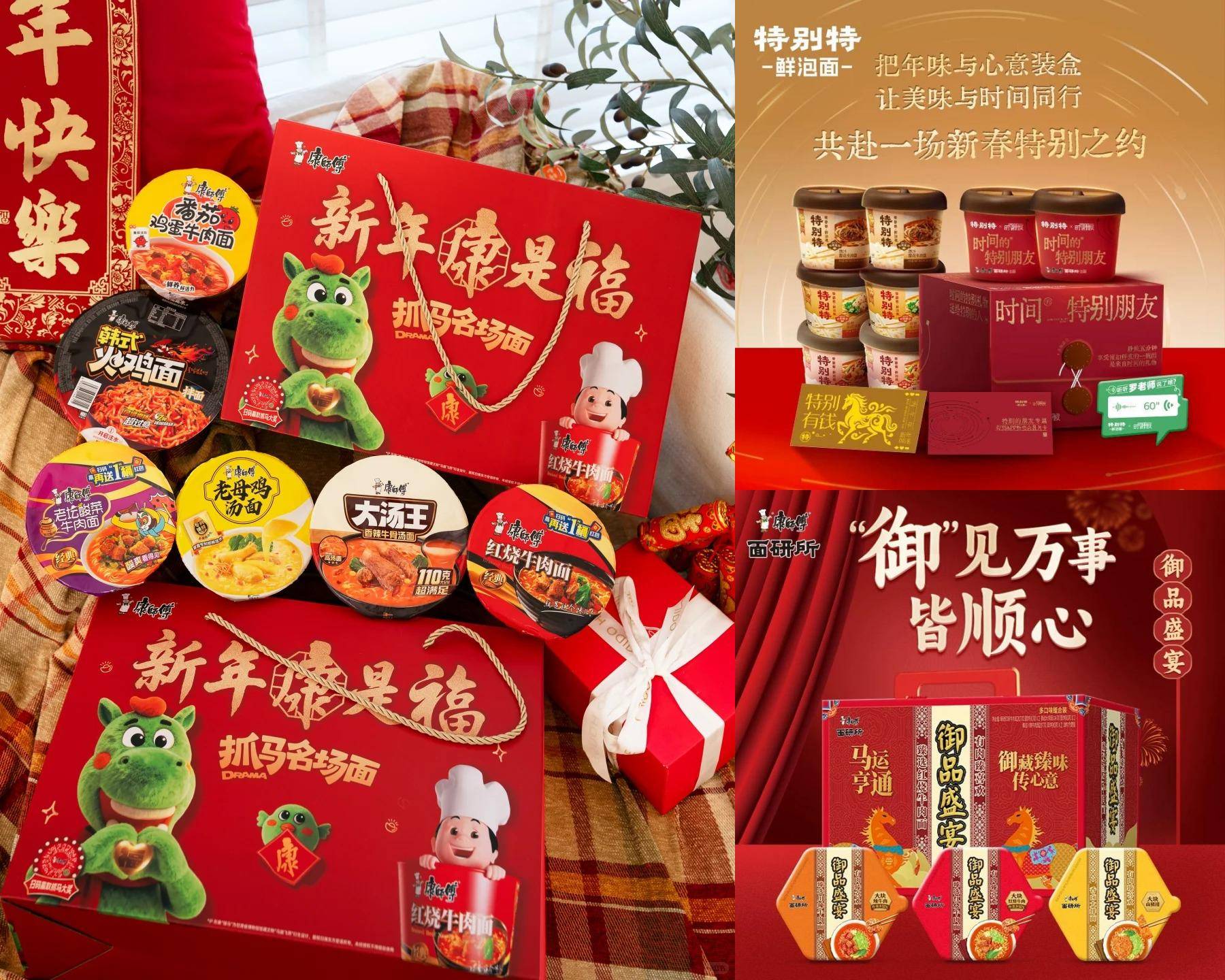
新春新陪伴:一碗康师傅,就是回家的第一口年味
Sou Hu Wang· 2026-02-09 09:25
Core Insights - A significant shift in consumer behavior is occurring, particularly among the younger generations, who prioritize quality, health, emotional value, and personalized experiences over mere abundance in their holiday purchases [1][5][10] - Instant noodles, once viewed as a simple and emergency food option, are now becoming a central part of the Spring Festival consumption scene, reflecting a deeper emotional need for personal satisfaction amidst festive gatherings [1][2] Group 1: Product Adaptation and Innovation - Master Kong's instant noodles have successfully adapted to the festive dining scene by offering products that meet the demand for both convenience and quality, such as the "Old Hen Soup Noodle" which caters to the desire for lighter, nourishing options during the holiday season [2][6] - The introduction of themed gift boxes like "Royal Feast" and "Special Special" has enhanced the gift-giving aspect of instant noodles, appealing to younger consumers looking for creative and culturally relevant gifts [4][10] - The brand has also innovated with cooking techniques and product features, such as the "single basket boiling process" that enhances the texture and flavor of the noodles, making them more appealing for home cooking [9][10] Group 2: Consumer Preferences and Market Trends - Over 60% of consumers now prioritize low oil and salt, high fiber, and no additives when selecting instant noodles, indicating a shift towards healthier options in the market [5][6] - The evolution of instant noodles reflects a broader trend of quality improvement and diversification, allowing them to be considered suitable for festive occasions and family meals [6][10] Group 3: Brand Engagement and Marketing Strategies - Master Kong has engaged in various marketing initiatives to connect emotionally with consumers, including the "1㎡ Warm Heart Noodle House" project aimed at providing warm meals to urban workers during the festive season [10][12] - The brand's collaboration with popular figures like actor Guo Qilin for promotional campaigns has effectively integrated the brand into the cultural context of the New Year, enhancing its visibility and relevance [12][14] - Through interactive marketing activities and festive events, Master Kong has created a multi-faceted brand presence that resonates with consumers' holiday sentiments and daily lives [14]


8点1氪:爱泼斯坦遗嘱把萝莉岛留给女友;白象在2026份桶面中投放1克金条,客服回应;李亚鹏6小时直播销售额达1.6亿
36氪· 2026-02-02 00:09
Group 1 - Epstein's will includes $288 million in assets and properties distributed to at least 44 beneficiaries, with his girlfriend receiving $50 million in cash, a 33-carat diamond ring, and several properties, including Little Saint James Island [3][4] - The U.S. Department of Justice released over 3 million pages of documents related to Epstein's case, including his will signed shortly before his death in prison [4] - Epstein was previously convicted in 2008 for soliciting minors for prostitution and was arrested again in 2019 for sex crimes before his death, which was ruled a suicide [4] Group 2 - White Elephant launched a promotional campaign offering 2,026 custom 1-gram gold bars as prizes, starting from December 20, 2025, with the event running until March 31, 2026 [5][7] - The campaign has generated significant social media attention, with users attempting to use metal detectors to find gold bars in the noodle cups, although the company advises against this [7] - The promotional activity is described as a random surprise, and the exact probability of winning is not calculable due to production uncertainties [5] Group 3 - Xiaomi's car deliveries in January 2026 exceeded 39,000 units, a decline of over 20% from the previous month, attributed to the discontinuation of the first-generation SU7 model [8][9] - The production capacity is now focused on preparing for the new generation of models, with the transition from SU7 to YU7 underway [9] Group 4 - International gold prices experienced the largest single-day drop in 40 years on January 30, 2026, leading to significant volatility in the market [10] - The rapid decline in gold prices is seen as a correction of previously overheated market sentiments, causing concerns among investors and suppliers about the availability of gold materials [10] - Retail gold jewelry prices in China dropped by 20 to 40 yuan per gram, prompting consumer demands for refunds and raising discussions about return policies [12] Group 5 - Legal disputes have arisen regarding gold return policies, with some retailers reportedly charging fees for returns, which has led to consumer rights discussions [11][12] - Lawyers have indicated that return policies must be clearly communicated, and excessive fees may be deemed invalid under consumer protection laws [12]
中国必选消费品1月成本报告:涨价现实弱于预期,成本仍处低位
Haitong Securities International· 2026-01-30 13:53
Investment Rating - The report provides various investment ratings for companies in the consumer staples sector, with several companies rated as "Outperform" and one as "Neutral" [1]. Core Insights - The report indicates that price hikes in the consumer staples sector are weaker than expected, while costs remain low [1]. - The monitored spot cost indices for six consumer goods categories have declined, while futures cost indices have primarily increased [34]. Summary by Category Beer - The spot cost index decreased by 1.87% month-on-month, while the futures index increased by 3.15%. Year-to-date, the spot index has changed by -0.6% and the futures index by +1.81% [35]. - Glass prices have shown a month-on-month decrease of 1.2% for spot prices and an increase of 3.4% for futures prices [35]. Condiments - The spot cost index decreased by 1.37% month-on-month, while the futures index increased by 3.03%. Year-to-date changes are -0.42% for spot and +2.23% for futures [36]. - Soybean prices have decreased by 2.4% month-on-month for spot prices, while futures prices increased by 6.7% [36]. Dairy Products - The spot cost index decreased by 1.93% month-on-month, while the futures index increased by 1.58%. Year-to-date changes are -0.43% for spot and +1.68% for futures [37]. - Fresh milk prices rose to 3.04 yuan/kg, with corn prices increasing by 0.4% month-on-month [37]. Instant Noodles - The spot cost index decreased by 0.51% month-on-month, while the futures index increased by 3.31%. Year-to-date changes are +0.79% for spot and +3.46% for futures [38]. - Palm oil prices increased by 9.6% month-on-month for spot prices [38]. Frozen Food - The spot cost index decreased by 1.74% month-on-month, while the futures index decreased by 0.61%. Year-to-date changes are -1.44% for spot and -0.14% for futures [39]. - Vegetable prices fell by 1.8% month-on-month [39]. Soft Drinks - The spot cost index decreased by 3.71% month-on-month, while the futures index remained unchanged. Year-to-date changes are -1.12% for spot and -0.19% for futures [40]. - PET chip prices increased by 5.4% month-on-month [40].



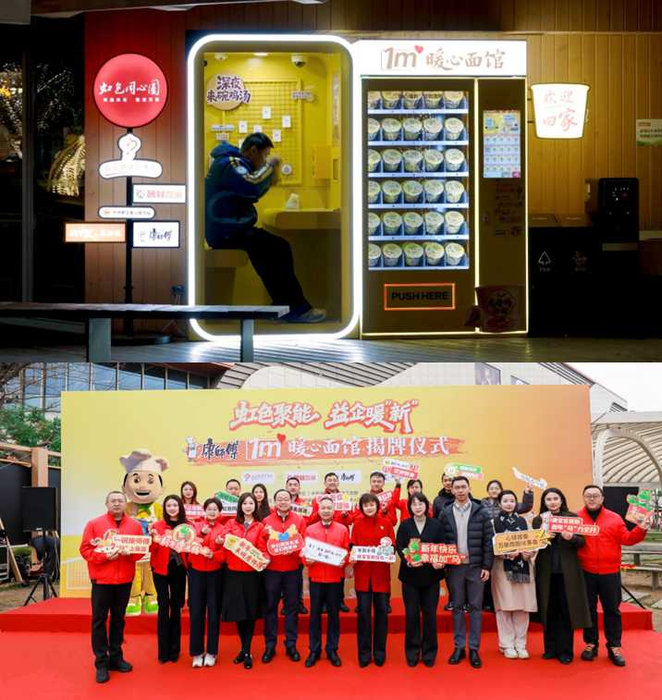
同心守护城市微光,首个政企共筑康师傅1㎡暖心面馆落地虹桥
Zhong Guo Jin Rong Xin Xi Wang· 2026-01-28 06:43
Core Viewpoint - The establishment of the "1m² Warm Heart Noodle Shop" by Kang Shifu in Shanghai's Minhang District represents a significant initiative aimed at providing warmth and support to new employment groups through a collaborative model involving government and enterprises [1][3][4]. Group 1: Project Overview - The "1m² Warm Heart Noodle Shop" is part of the "Rainbow Circle" Party Building brand, marking the first integration of this project into a community-focused initiative [1][3]. - The project aims to serve new employment groups, particularly outdoor workers like delivery riders and couriers, by providing a space for them to rest and enjoy a warm meal [7][14]. - Kang Shifu's chairman in Shanghai, Su Lirong, emphasized the company's commitment to social responsibility and the importance of providing comfort through food [3][4]. Group 2: Community Engagement - The opening ceremony was attended by various local officials and community representatives, highlighting the collaborative effort between Kang Shifu and local governance [4][6]. - The initiative has received positive feedback from the community, particularly from delivery riders who expressed the need for a warm place to rest during their busy schedules [8][12]. Group 3: Product Offering - The noodle shop serves Kang Shifu's signature "Old Hen Soup Noodles," which are marketed as a healthier option with low oil and salt content, catering to the needs of urban consumers seeking comfort food [9][11]. - The product features innovative preservation techniques to maintain freshness and quality, distinguishing it from typical fast food offerings [9][11]. Group 4: Long-term Vision - The "1m² Warm Heart Noodle Shop" is set to expand to ten core locations in Shanghai, transitioning from a temporary pop-up to a permanent service station, thereby enhancing its outreach to more new employment groups [7][14]. - This initiative reflects a broader strategy by Kang Shifu to integrate corporate social responsibility with community needs, fostering a sense of shared support and care [16][17].
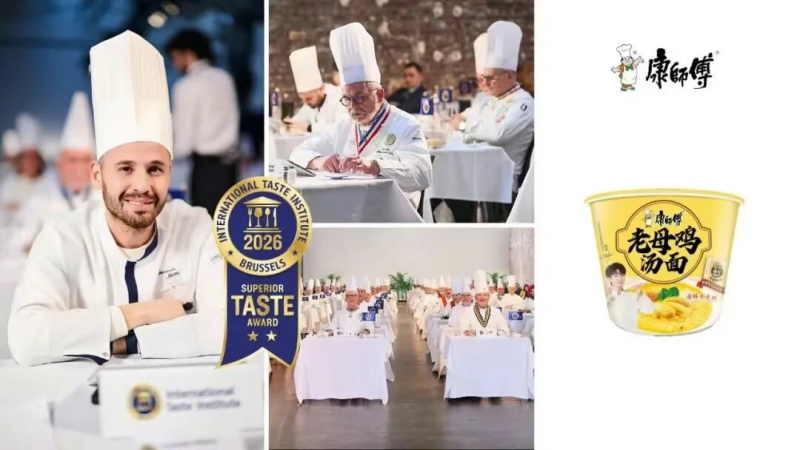
荣获“食品界奥斯卡”!解码康师傅老母鸡汤面的价值深耕与文化远见
Sou Hu Wang· 2026-01-24 02:17
当消费者的期待从"便捷可得"升级为"本真享受",品类的价值竞赛也随之进入深水区。近期,康师傅老母鸡汤面荣 获2026年度"国际美味奖",这枚奖章照亮的,不仅是一款产品的杰出品质,更是一条以长期主义深耕,引领行业实现 价值跃迁的清晰路径。 一.国际认证: 好鸡汤的"全球美味通行证" "国际美味奖(Superior Taste Award)"是由比利时布鲁塞尔国际味觉协会(International Taste Institute,简称ITI)设 立的权威奖项,被誉为"食品界的奥斯卡"。 经250余位全球顶级厨师、品酒师等盲测评选,从第一印象、视觉、嗅觉、味觉、质地五大维度严苛打分,康师 傅老母鸡汤面以87.7%的得分(满分100%)斩获国际美味奖二星殊荣,被认为是"杰出产品"。 从家庭厨房的慢炖砂锅,到深夜加班的温暖一餐,"喝鸡汤"是刻在中国人味觉记忆里的本能。当今时代,它承载 着更多人对"健康养生日常化"与"即时情感治愈"的双重渴望。这驱动着以老母鸡汤面为代表的高汤面品类,持续成为方 便速食市场最具生命力的赛道之一。 本次获奖核心的指向,是国际级美食权威对于"老母鸡汤"这一传统风味的"纯鲜"本味,以及康师傅这 ...
老坛酸菜再暴雷,比315“臭脚门”还炸裂!
Xin Lang Cai Jing· 2026-01-23 18:23
Core Viewpoint - The re-emergence of the "old坛酸菜" scandal highlights a severe decline in food safety standards, leading to a renewed loss of consumer trust in the brand and the broader industry [1][32]. Group 1: Incident Overview - The "old坛酸菜" brand has faced renewed scrutiny after a recent media investigation revealed unsanitary production practices, including the use of "土坑法" (pit method) for fermentation [4][7]. - Disturbing footage showed workers engaging in unhygienic behaviors, such as smoking and spitting near the food, raising serious concerns about food safety [6][7]. - Consumers have reported finding foreign objects, such as a piece of medical gauze, in their products, further damaging the brand's reputation [10]. Group 2: Impact on Companies - The previous scandal had a devastating impact on major brands like 康师傅 (Master Kong) and 统一 (Uni-President), causing significant sales declines and forcing price increases to recover lost profits [21][22]. - The current scandal is expected to further erode consumer confidence, compounding the challenges faced by these companies in a competitive market filled with alternative fast-food options [22][24]. - The negative perception surrounding "old坛酸菜" has also affected related food categories, such as "酸菜鱼" (sour cabbage fish), leading to brand shifts in the industry [24][26]. Group 3: Consumer Response - Consumers are expressing frustration and disappointment, with some opting to stop purchasing "酸菜" products altogether or even resorting to making their own [15][16]. - The ongoing issues have led to a broader crisis of trust in the food industry, prompting consumers to seek out reputable brands and consider self-sufficiency [27][28]. - The situation underscores the need for a more robust regulatory framework to ensure food safety and rebuild consumer trust in the industry [30].

2025年上海市方便面定量包装商品净含量监督抽查结果公布
Zhong Guo Zhi Liang Xin Wen Wang· 2026-01-16 07:59
2025年上海市方便面定量包装商品净含量监督抽查结果 2025年上海市市场监督管理局对本市方便面定量包装商品净含量监督抽查。本次抽查了20批次产品,经检验,未发现不合格。 转自:上海市市场监督管理局网站 具体抽查结果如下: 2025年上海市方便面商品净含量计量监督抽查所检项目符合相关标准的商品 | 样品标称名称 | 标 称 | 标称规格型号 | 标称生产 日期/批 | 标称生产者名称 | 被抽样生产者、销售者 | 被抽样销售者所在商场/ | 认 证 | | --- | --- | --- | --- | --- | --- | --- | --- | | | 商 | | 号 | | | 电商平台 | 机 | | | 标 | | | | | | 构 | | 三养弹谷意面蒜香橄榄油味 | 弹 | 100克×4(面饼:78.5克 | 2025-05- | 进口商/代理商:三养食品 | 上海芯愔企业管理有限 | 龙湖虹桥天街购物中心 | / | | (非油炸方便面) | 谷 | ×4) | 09// | (上海)有限公司 | 公司闵行第二十九分公 | / / | | | | | | | | 司 | | | | | 白 ...
马斯克旗下Grok或遭多国封禁|首席资讯日报
首席商业评论· 2026-01-13 04:15
Group 1 - The AI tool Grok developed by Musk's xAI may face bans in multiple countries due to concerns over generating inappropriate content, highlighting the challenges of balancing technological advancement with governance [2] - The price of DRAM storage chips has surged, prompting major tech companies like Google and Microsoft to send teams to South Korea to secure supplies, with the price of 8GB DDR4 memory increasing over five times in a year [2] Group 2 - South Korea's instant noodle exports reached a record high of $1.52 billion in 2025, marking a 21.8% increase from 2024 and doubling from $765 million in 2022, with China and the US accounting for over 40% of total exports [3] Group 3 - South Korean companies and professional investors are now allowed to invest up to 5% of their own capital in cryptocurrencies, with guidelines established by the Financial Services Commission [4] Group 4 - Bilibili has acquired a stake in Shanghai Jiangqu Network Technology, which is involved in anime and game development, indicating a strategic move to expand its digital content portfolio [6] Group 5 - The market regulator in China has unconditionally approved several mergers and acquisitions, including the acquisition of the Changchun Automotive Testing Center by the China Automotive Technology Research Center [7] Group 6 - Google has introduced personalized advertising features in its AI shopping tool, marking a significant step in monetizing AI technology [8] Group 7 - The second-hand car market for Xiaomi has seen significant price drops, with the SU7 model decreasing by 50,000 yuan, reflecting rapid new car iterations and challenges in retaining value for older models [9] Group 8 - OpenAI and SoftBank have entered a partnership to invest a total of $1 billion in SB Energy, aimed at developing AI infrastructure and constructing a 1.2 GW data center in Texas [10] Group 9 - Hongxun Technology clarified that it does not engage in humanoid robot business, focusing instead on automation, digitalization, and new energy sectors [12]

2025年中国老母鸡汤方便面行业发展历程、市场政策、产业链图谱、市场规模、竞争格局及发展趋势分析:锁鲜技术将成为企业突破增长瓶颈的核心抓手[图]
Chan Ye Xin Xi Wang· 2026-01-11 01:03
Core Insights - The domestic consumption trend is shifting from "cost-effectiveness" to "high quality and convenience," with consumers increasingly willing to pay for healthy convenience foods [1][8] - The market for old hen soup instant noodles is projected to reach 2.19 billion yuan by 2025, representing a year-on-year growth of 75.2%, although its market share remains below 5% compared to traditional instant noodle varieties [1][8] Industry Overview - Old hen soup instant noodles are made primarily from wheat flour and feature a soup base that simulates the flavor of old hen broth, complemented by dehydrated vegetables and meat [2] - The product is categorized into three types based on packaging: bagged, bucket, and cup, catering to different consumer needs and scenarios [2] Development History - The industry has evolved from traditional flavors to a focus on quality and authenticity, driven by consumer upgrades and technological advancements since 2021 [2][8] - Key innovations include temperature-controlled cooking and freshness-locking techniques, enhancing the authenticity and stability of the chicken soup flavor [2] Regulatory Environment - Recent policies emphasize food safety and quality control across all stages of production, processing, and distribution, pushing the industry towards standardization and high-quality development [4] Industry Chain - The upstream supply chain includes suppliers of old hens, wheat flour, dehydrated vegetables, and other ingredients, while the downstream consists of sales channels like supermarkets, convenience stores, and e-commerce platforms [4] Consumer Insights - The primary consumer demographic for old hen soup instant noodles is aged 18-35, with a significant focus on health and quality [6] - The most common consumption scenarios include late-night snacks and quick meals, with flavor authenticity being the top priority for 78% of consumers [6] Competitive Landscape - The market is dominated by major players like Kang Shifu and Uni-President, with increasing competition as more brands enter the old hen soup instant noodle segment [8] - Companies are focusing on product differentiation through health-oriented branding and innovative cooking techniques [8] Future Trends - The industry is expected to adopt freshness-locking technologies as standard, enhancing the authenticity of flavors and nutritional value [10] - There will be a shift towards using natural ingredients and reducing artificial additives in response to rising health consciousness among consumers [10]
