
宠物食品

Search documents
中宠股份拟最高2亿元回购股份!当前股价距高点回撤逾三成,曾因转股信披违规被出具警示函
Mei Ri Jing Ji Xin Wen· 2026-01-25 11:05
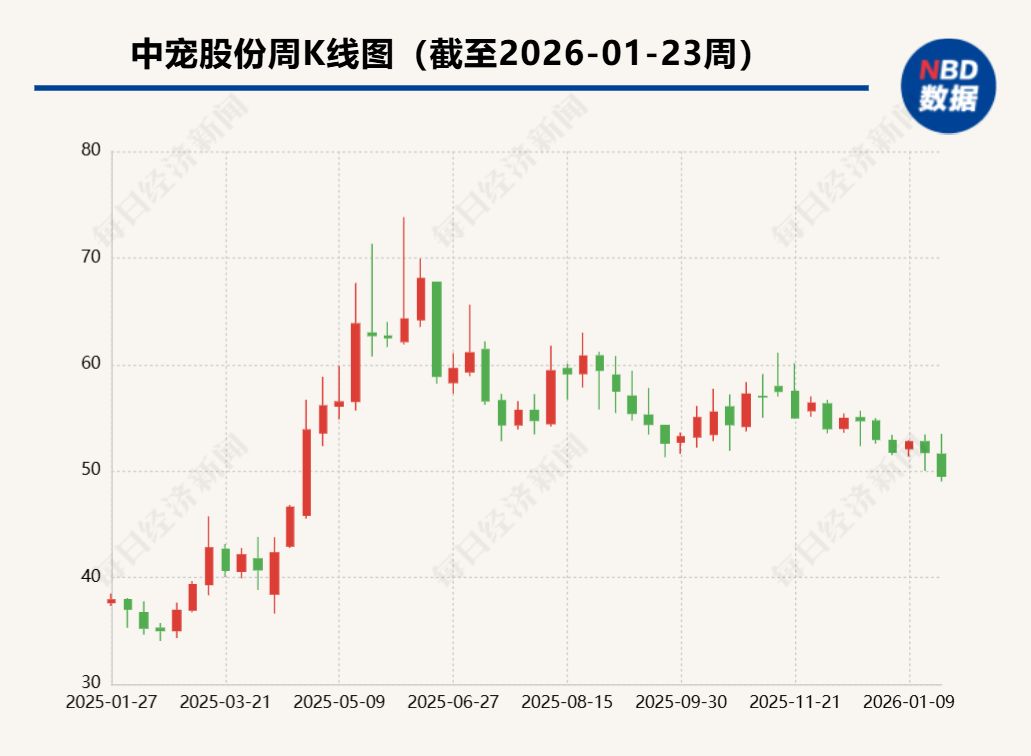
Core Viewpoint - The company Zhongchong Co., Ltd. has announced a share buyback plan in response to a significant decline in its stock price and market capitalization, aiming to boost investor confidence and facilitate the conversion of convertible bonds [3][6]. Group 1: Buyback Plan Details - Zhongchong plans to use between 100 million and 200 million yuan for the buyback, with a maximum repurchase price set at 78.00 yuan per share, which is significantly higher than the current price of 49.52 yuan [3][5]. - The buyback is expected to cover approximately 2.564 million shares, accounting for about 0.84% of the total share capital [4]. - The buyback period is set for up to 12 months from the board's approval date [5]. Group 2: Market Context and Financial Performance - The company's stock price has dropped approximately 32.90% from its peak of 73.80 yuan in June 2025 to 49.52 yuan as of January 23, 2026 [6][9]. - Despite a revenue increase of 21.05% year-on-year to 3.86 billion yuan in the first three quarters of 2025, the net profit for the third quarter fell by 6.64% year-on-year to 130 million yuan [9]. - The company faced regulatory scrutiny due to a failure to disclose changes in shareholding related to convertible bond conversions, which has added to market concerns [9]. Group 3: Strategic Implications - The high buyback price suggests that management believes the current stock price is undervalued and aims to create favorable conditions for the conversion of convertible bonds [5][6]. - The company has a strong international presence, with 64.75% of its revenue coming from overseas in the first half of 2025, and is pursuing a global strategy that includes "global R&D + North American manufacturing + global sales" [9]. - The buyback initiative is seen as a move to reassure the market amid internal performance fluctuations and external stock price pressures [6][9].

耐用消费周报:关注潮玩节日催化,新型烟草日本上新,AI消费多款新品上市-20260125
SINOLINK SECURITIES· 2026-01-25 11:02
Investment Ratings - The report provides a positive outlook on the new tobacco industry, indicating a steady upward trend, while the home furnishing and packaging sectors are stabilizing at the bottom [6][11][15]. Core Insights - The report highlights the marketing strategies around the Spring Festival and Valentine's Day for trendy toys, with companies like Pop Mart and Blok launching limited series to enhance IP value and collectability [7][8]. - In the new tobacco sector, the necessity for domestic development is emphasized, with major players increasing investments in heated tobacco products (HNB) and innovative marketing strategies [11][12]. - The home furnishing market is experiencing a contraction in sales, with significant declines in both new and second-hand property transactions, but there are signs of potential recovery driven by policy support [13][14]. - The packaging industry is expected to benefit from a steady recovery in downstream demand, supported by growth in consumer goods sectors [15][16]. - The pet food industry is facing increased competition, leading to higher sales expense ratios, but listed companies are leveraging their financial advantages for mergers and acquisitions [21]. Summary by Sections Trendy Toys - Focus on marketing strategies for key holidays, with companies like Pop Mart and Blok launching special editions to enhance brand value [7]. - The integration of AI in toys is gaining traction, with companies like Kid King and JD.com developing AI products to meet family needs [8][9]. New Tobacco - The report notes a projected decline in electronic cigarette exports, with a focus on the need for innovation in the domestic market [11]. - Major tobacco companies are increasing their investments in HNB products, indicating a significant growth potential in this segment [12]. Home Furnishing - The report indicates a significant drop in property transactions, with new home sales down 29.23% year-on-year and second-hand home sales down 8.94% [13]. - Despite current challenges, there is optimism for recovery in the home furnishing sector due to supportive policies [14]. Packaging - The packaging sector is expected to see a recovery in demand, with growth in consumer goods contributing positively to the industry [15][16]. - The report highlights price fluctuations in raw materials, particularly in the paper and aluminum sectors, which could impact packaging costs [15]. Pet Food - Increased competition in the pet food industry is leading to higher sales expenses, but established companies are positioned to benefit from consolidation opportunities [21]. - The report suggests focusing on companies with strong brand recognition and those actively pursuing mergers and acquisitions [21].






中宠股份:拟1亿元—2亿元回购股份
Zheng Quan Shi Bao Wang· 2026-01-25 07:48
Core Viewpoint - The company Zhongchong Co., Ltd. (002891) announced a plan to repurchase shares worth between 100 million to 200 million yuan for the purpose of converting bonds into shares, with a maximum repurchase price set at 78 yuan per share [1]. Group 1 - The company intends to repurchase shares valued at 100 million to 200 million yuan [1] - The repurchase is aimed at facilitating the conversion of issued convertible bonds into shares [1] - The maximum price for the share repurchase is capped at 78 yuan per share [1]
宠物板块-功能粮处方粮发展现状及未来趋势探讨
2026-01-23 15:35
Q&A 请介绍一下中国目前处方粮市场的基本情况,包括市场规模和增长情况,以及 猫狗市场的细分情况。 处方粮在国内和国际上都属于技术壁垒较高的品类。目前在国内,皇家是处方 粮市场的领军品牌,年销售规模约为 8 至 10 亿元(出厂价)。其他品牌如爱 迪生主打中药,年营收约 5,000 至 8,000 万元;广州傲龙主要通过互联网销售, 年营收约 5,000 万至 1 亿元;冠能也有跟进,但其品类较少,只有 6 至 8 个单 品,而皇家 SKU 数已突破 40 个。总体来看,中国处方粮市场规模大约在 15 至 20 亿元左右,相比整个宠物食品行业,这一数字仍然很小。 中国与国际市场相比,在处方粮领域有哪些差距? 在国际市场上,如玛氏、皇家、高露洁等品牌的处方粮占据了很大的份额,并 且对利润贡献显著。例如玛氏集团 80%的宠物护理净利润来源于处方粮。而在 功能粮与处方粮的区别在于使用场景和目的,功能粮用于长期慢性病管 理或健康维护,而处方粮主要用于特定疾病治疗,功能粮市场潜力巨大, 但存在概念滥用问题。 传统宠物食品赛道竞争激烈,功能粮和处方粮因研发壁垒较高,将有助 于提升头部企业的市场集中度,并推动行业朝着更健康 ...
卡尼离开北京,中加2000亿落地,特朗普心知肚明:加拿大已成废棋
Sou Hu Cai Jing· 2026-01-23 11:25
Core Viewpoint - The recent visit of Canadian Prime Minister Carney to China marks a significant shift in Canada-China relations, indicating a potential realignment away from U.S. influence and towards deeper cooperation with China [1][3]. Group 1: Economic Cooperation - Canada and China have established a ministerial-level energy dialogue mechanism, creating a formal platform for cooperation in the energy sector [3]. - Canada has agreed to reduce tariffs on Chinese electric vehicles to 6.1%, a significant decrease from the previous 100% tariff, reflecting a shift in Canada's economic policy towards China [3]. - Multiple cooperation agreements have been signed, including one for the import of pet food, indicating a broader economic engagement between the two nations [3]. Group 2: Strategic Agreements - A major strategic breakthrough is the signing of a 200 billion currency swap agreement between Canada and China, which poses a challenge to U.S. dollar dominance in international trade [5][7]. - This currency swap agreement is expected to have significant implications for the U.S. economy, particularly in the context of the ongoing trend of deindustrialization in the U.S. [5][7]. Group 3: U.S. Response - U.S. officials have expressed concern over Canada's shift towards China, with Transportation Secretary Sean Duffy stating that Canada will likely regret this decision [9]. - U.S. Trade Representative Greer has warned against allowing Chinese electric vehicles into the U.S. market, highlighting the dependency of Canada on the U.S. [9][10]. - The U.S. reaction reflects a mix of anger and fear regarding the growing closeness between Canada and China, indicating a sense of helplessness in countering this trend [10]. Group 4: China's Response - In response to Canada's overtures, China has announced a reduction in anti-dumping duties on Canadian canola from 85% to approximately 15%, showcasing a commitment to fair and reciprocal international cooperation [12]. - This move contrasts sharply with U.S. unilateralism and demonstrates China's willingness to engage in equitable partnerships, further solidifying its relationship with Canada [12].

2025猫粮行业趋势:社媒热度、品牌营销与需求洞察-数说故事
Sou Hu Cai Jing· 2026-01-23 10:25
Core Insights - The Chinese cat food industry is expected to thrive in 2025, with the overall pet food market projected to reach approximately 175 billion yuan, reflecting a year-on-year growth of 14.4% and maintaining a compound annual growth rate (CAGR) of 10%-15% over the next five years [6][12][10] - The growth is primarily driven by the steady increase in the number of pet cats, projected to reach 124 million by 2025, alongside rising consumer spending per pet due to trends like "scientific pet care" and "pet humanization" [6][13][12] Market Trends - The market exhibits distinct characteristics of premiumization, diversification, and functionalization, with cat snacks, wet food, and freeze-dried products being the most popular segments [6][15] - Social media platforms have become crucial marketing battlegrounds, with Douyin accounting for 78.80% of interaction volume, highlighting its role as the core interactive platform [6][20][15] Brand Competition - The competitive landscape is being reshaped, with brands like NetEase Yanxuan, Royal Canin, and Myfoodie leading in social media interaction volume [2][28] - Domestic brands are gaining market share through insights into local consumer needs, supply chain upgrades, and innovative marketing strategies, intensifying competition with international brands [2][28] Consumer Demand Insights - The "scientific feeding" concept has deeply resonated with consumers, who now demand high-quality, traceable ingredients, and high animal protein content (≥80%) in cat food [7][28] - New pet owners, referred to as "newbie cat owners," are increasingly seeking knowledge through social media, significantly influencing their purchasing decisions based on professional content and genuine reviews [7][28] Future Directions - Cat food brands need to focus on core consumer needs, investing in product development, technological innovation, and brand transparency, while employing precise and professional content marketing to build consumer trust and loyalty [2][28]

农林牧渔行业月报:猪价偏弱震荡,2025年宠物食品出口表现向好-20260123
Zhongyuan Securities· 2026-01-23 09:14
Investment Rating - The report maintains an investment rating of "Outperform" for the agriculture, forestry, animal husbandry, and fishery industry [1]. Core Insights - The report highlights a weak fluctuation in pig prices, with the average price in December 2025 at 11.58 yuan/kg, down 0.09% month-on-month and down 26.76% year-on-year. However, a supply gap for heavy pigs is expected to lead to a price rebound [9][19]. - The white feather chicken prices showed an upward trend in December, with an average price of 3.67 yuan/jin, up 5.16% month-on-month, supported by tight supply and demand [9][25]. - Pet food exports maintained a year-on-year growth, with December 2025 exports at 37,700 tons, up 15.49% year-on-year, although the export value in USD decreased by 1.68% [9][32]. Summary by Sections Market Review - In December 2025, the agriculture, forestry, animal husbandry, and fishery index rose by 0.24%, ranking 22nd among 30 sectors, while the Shanghai and Shenzhen 300 index increased by 2.28%, indicating a 2.04 percentage point underperformance [9][12]. Livestock Industry Data Tracking - **Pig Farming**: The average price of pigs in December was 11.58 yuan/kg, with a month-on-month decrease of 0.09% and a year-on-year decrease of 26.76%. The supply-demand dynamics are expected to stabilize, with a potential increase in prices due to supply gaps [19][24]. - **White Feather Chicken**: The average price for white feather chicken in December was 3.67 yuan/jin, reflecting a month-on-month increase of 5.16% due to tight supply and demand support [25][29]. Pet Food - Pet food exports in December reached 37,700 tons, a year-on-year increase of 15.49%, while the total export value for the year was 1.412 billion USD, down 4.62% year-on-year [32][34]. Investment Recommendations - The report suggests focusing on companies such as Muyuan Foods, Pulaike, and Guobao Pet, all rated as "Buy" based on their earnings forecasts and relative valuation [1][9].


依依股份:拟购杭州高爷家100%股权,相关工作未完成
Xin Lang Cai Jing· 2026-01-23 07:52
依依股份公告称,公司拟通过发行股份及支付现金,向19名交易对方购买杭州高爷家有好多猫宠物食品 有限责任公司100%股权,同时募集配套资金,预计不构成关联、重大资产重组及重组上市。公司股票 于2025年10月14日起停牌,10月27日复牌。截至公告披露日,交易相关尽职调查、审计、评估等工作未 完成,后续待完成后将再开董事会审议,且交易尚需经董事会、股东会及监管机构批准,存在不确定 性。 ...
南农晨读 | 吉桔送四海
Nan Fang Nong Cun Bao· 2026-01-23 01:30
Group 1 - The Ministry of Agriculture and Rural Affairs is focusing on ensuring the quality of agricultural products during the "first mile" of market entry [2] - A press conference held on January 22 highlighted the acceleration of agricultural modernization and the promotion of rural revitalization [5][10] - The Ministry has initiated a second round of land contract extensions for 30 years, covering 7 provinces, 221 counties, and 349 townships, benefiting over 25 million farmers [6][7] Group 2 - The Guangdong Provincial People's Congress is set to focus on agricultural modernization in 2026, which is a key year for advancing rural revitalization [14][15] - The "万人人鹅宴" event in Shantou attracted significant attention, reaching over 100 million people through various media [39] - The training program for 421 grassroots agricultural technicians in Zhanjiang emphasizes grain and oil stability and smart agriculture [41][45] Group 3 - China's tea exports are projected to reach 418,800 tons in 2025, marking a historical high with an export value of approximately $1.546 billion, reflecting strong global competitiveness [32][34]

精准配比严把质量,日照这家宠物食品企业积极抢滩海外市场
Qi Lu Wan Bao· 2026-01-22 05:17
Core Insights - The article highlights the transformation of the pet food industry from "scale expansion" to "quality breakthrough," exemplified by Bernina (Shandong) Pet Food Co., Ltd. [1] - The company has developed a business model driven by "own brands + OEM + foreign trade," successfully launching multiple well-known brands and establishing a standardized operational system [1][2] Group 1: Company Overview - Bernina was established in 2013 and entered the pet food sector in 2017, now offering a range of products including mid-to-high-end staple foods, functional foods, and cat litter [1] - The company has a strong research and development team, led by a guest professor from Belgium's KU Leuven, focusing on precise nutrition and innovative product development [2] Group 2: Product and Innovation - Bernina has introduced the "6G product concept," emphasizing safety, health, nutrition, stability, cost-effectiveness, and high repurchase rates [2] - The company operates six production lines with an annual designed capacity of 50,000 tons for staple foods, allowing for both large orders and customized small-batch production [2] Group 3: Market Strategy - The company is actively expanding into both domestic and international markets, leveraging its location in Rizhao City for stable raw material supply and cost advantages [3] - Future strategies include focusing on technology-driven growth, enhancing product competitiveness, and expanding cross-border e-commerce to promote "Made in China" pet food globally [3]