快消

Search documents
康师傅控股上半年净利润22.7亿元;泡泡玛特泰国新店“撞脸”名创优品?丨消费早参
Mei Ri Jing Ji Xin Wen· 2025-08-11 23:20
每经记者|舒冬妮 每经编辑|文多 |2025年8月12日 星期二| NO.1 泡泡玛特泰国新店陷"撞脸"名创优品?双方回应来了 8月11日,"泡泡玛特泰国店被指撞脸名创优品"话题登上热搜。日前,泡泡玛特在曼谷"ICONSIAM"购 物中心新开的全球最大品牌旗舰店正式营业。但有网友称,该门店与名创优品位于上海南京东路 的"MINISOLAND"店相似,涉嫌抄袭。针对此事,《21世纪经济报道》记者以消费者身份分别致电泡 泡玛特与名创优品。泡泡玛特接线客服表示,已有相关部门在处理,后续建议关注官方渠道获取事件进 展。名创优品接线工作人员则称,相关问题已登记反馈,如果情况属实,公司肯定会跟进处理。 点评:事件本质是"多巴胺美学"趋同下的品牌视觉碰撞,争议已触发社交媒体情绪,若官方处理失当, 或压制股价势头。若借机强化IP叙事并推出差异化体验,反而有望延续涨势。 NO.2 宜家入驻京东 瑞典家具零售商宜家在电商平台京东的旗舰店已正式开业,公司希望借此拓展在中国第三方线上购物平 台的业务,以低价产品吸引新客户。旗舰店将销售超6500 款产品,配送由京东物流承接。继2020年3月 在阿里巴巴的天猫商城开店后,京东是宜家入驻 ...



曝宗馥莉砍掉娃哈哈年销300万以下经销商
Di Yi Cai Jing· 2025-08-10 10:48
Group 1 - Wahaha is implementing a strict strategy to eliminate distributors with annual sales below 3 million yuan, sometimes abruptly cutting ties without settling outstanding payments [1] - Some distributors have ended their cooperation with Wahaha, while others have been merged into larger distributors, leading to settlement issues among distributors [2] - The consolidation of smaller distributors into larger ones aims to address problems such as cross-regional distribution, multi-party debts, and other issues, allowing larger distributors to manage these challenges more effectively [2] Group 2 - There are risks associated with this transformation; if the larger distributors have their own issues, Wahaha may face greater challenges in controlling them [3]
零碳先锋企业的共性: 动力、方法和愿景 | 《财经》书摘
Sou Hu Cai Jing· 2025-08-10 09:59
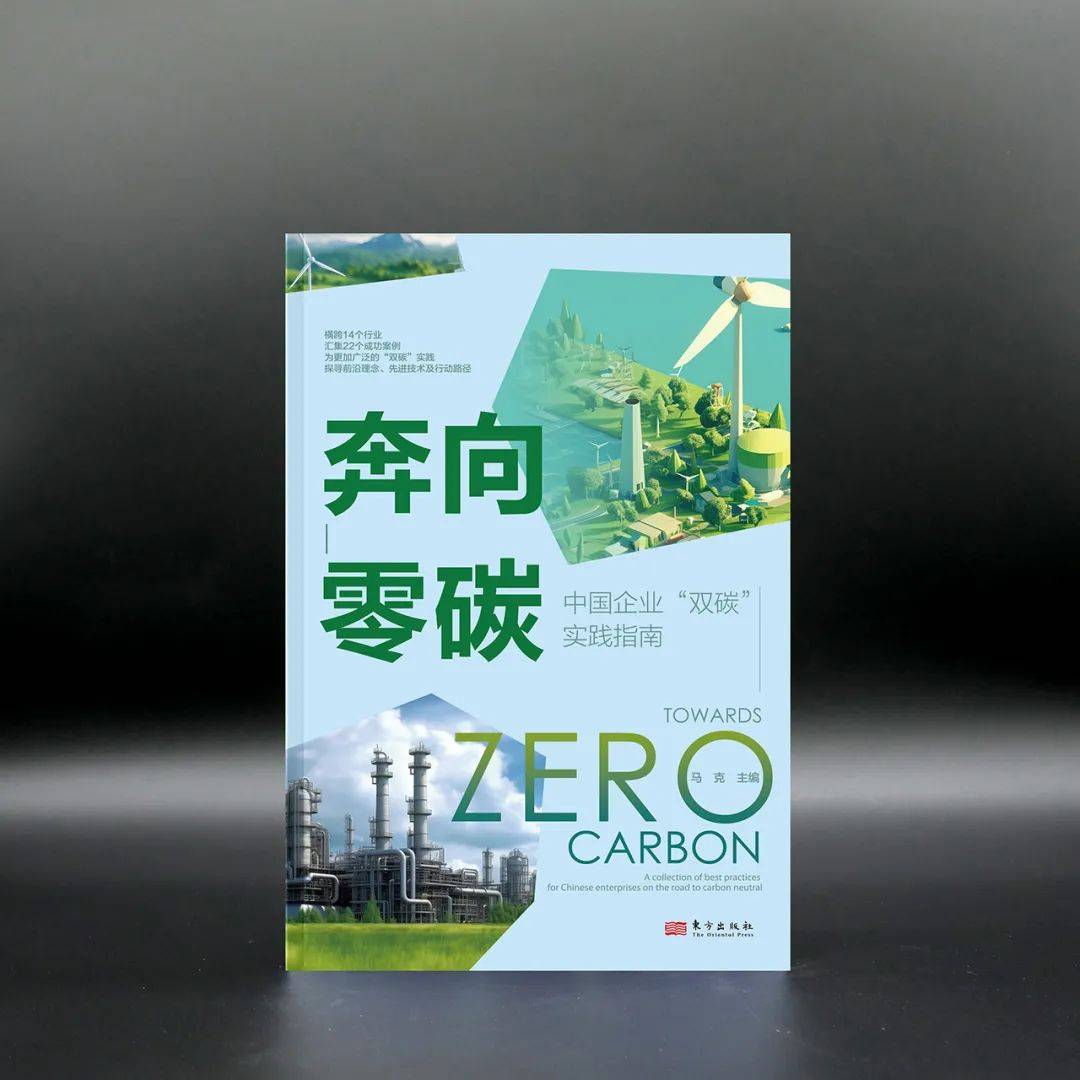
Core Insights - The low-carbon economy has become a national policy in China, with enterprises being the main force in implementing this policy [2][6] - The book "Towards Zero Carbon: Action Guide for Chinese Enterprises on 'Dual Carbon'" presents 22 case studies from various industries, highlighting common paths and innovative technologies for carbon reduction [2][4] Group 1: Common Paths for Carbon Reduction - Enterprises share common carbon reduction paths, including transitioning to renewable energy sources, improving energy efficiency, utilizing carbon trading, and understanding their carbon emissions data [2][3] - The role of leading enterprises in supply chain carbon reduction is crucial, emphasizing the importance of carbon data assessment as the first step [2][4] Group 2: Technological Innovations - Digital technology plays a significant role in carbon reduction, with companies promoting their experiences and technologies across supply chains and industries [3][4] - Various innovative technologies are highlighted, such as Lenovo's low-temperature soldering process, low-carbon concrete from China State Construction Engineering, and hydrogen metallurgy in the steel industry [4] Group 3: Market Dynamics and Public Engagement - Companies that have engaged with international markets tend to be the earliest adopters of carbon reduction practices, often aligning with global standards [5] - Public participation in carbon reduction is essential, with companies like Alibaba and Tencent leveraging their influence to educate consumers and promote carbon accountability [5][6] Group 4: Economic Context - The global shift towards a low-carbon economy is seen as a critical turning point, with low-carbon growth being a necessary driver for sustainable development in China [7][8]

联合利华业绩双降:仅冰淇淋业务营收增长0.2、大中华区持续下降、高端美妆表现低迷
Xin Lang Zheng Quan· 2025-08-01 09:22
2025年上半年,消费品巨头联合利华陷入了"增长涨跌互见、利润失血难止"的冰火困局。当最新财报披 露其营业额下滑3.2%、净利润缩水5.1%时,市场看到的不仅是近五年首现的上半年营收倒退,更是一 个缩影——传统快消巨头如何在通胀挤压与消费分层中寻找生存支点。剥离唯一正增长的冰淇淋业务、 高端与大众市场的断裂、新兴市场阵地失守,多重矛盾的叠加让这份成绩单成为联合利华转型阵痛的深 度刻度。 注:本文结合AI 责任编辑:AI观察员 颇具讽刺意味的是,上半年唯一正增长的冰淇淋业务(46亿欧元,同比微增0.2%),正被联合利华亲 手剥离。11月独立上市的计划虽被解释为"聚焦高利润核心",实则折射出集团在资本配置上的矛盾:一 方面通过裁撤7500人、重组销售团队推行"生产力计划",试图压缩成本;另一方面,自由现金流骤降 50%至11亿欧元的警报,暴露了短期止血与长期造血能力的脱节。 新任CEO费尔南多的战略宣言——"重仓美妆个护、押注美国印度、发力高端化与数字渠道"——仍未跳 出既有框架。当企业需要同时应对原料成本波动、地缘关税风险(如美国关税冲击)、及分拆冰淇淋的 一次性成本时,所谓"下半年增长将提速"的承诺更像是对市 ...
深耕用户价值 构建健康增长,天猫快消发布《2025 GAIN用户价值经营方法论》
Zhong Guo Chan Ye Jing Ji Xin Xi Wang· 2025-07-31 10:56
Core Insights - The fast-moving consumer goods (FMCG) industry is transitioning from a "traffic era" to a "value era" due to diminishing traffic dividends and increasing competition [1][5] - Tmall and Otaipu have introduced the "User Lifecycle Value (CLTV) Health - GAIN" assessment system to help brands navigate the challenges of stock competition [1][3] - The GAIN model evaluates brand health across four dimensions: Generate Demand, Audience Adaptation, Intensify Engagement, and Nurture Growth, with 12 core indicators [1][11] Market Challenges - The FMCG sector faces significant challenges as traditional growth models are strained by a shrinking customer acquisition landscape [5] - Brands are increasingly focusing on maximizing user lifecycle value (CLTV) to shift from one-time transactions to long-term value management [5][11] CLTV Operations - Various brands are exploring CLTV operations to achieve sustainable growth, emphasizing the importance of user lifecycle value [6][9] - High-end brands are targeting high-net-worth individuals by creating exclusive experiences and emotional connections to enhance loyalty and repurchase rates [7] - Efficacy-driven skincare brands are leveraging professional content and precise conversion strategies to build trust and drive user demand [8] GAIN Assessment Model - The GAIN model quantifies user value and helps brands identify growth opportunities by focusing on long-term value rather than one-time traffic [11][14] - It includes metrics for demand generation, audience strategy, engagement intensity, and long-term growth potential [11][12] Future Outlook - The GAIN model is expected to facilitate a paradigm shift for brands from short-term gains to long-term value management, enhancing their competitive edge in the market [15][16] - With advancements in AI and big data, user value management will become more intelligent and precise, allowing brands to better understand user needs and optimize engagement [16]
餐饮业卷生卷死的当下,麦当劳如何用AI突围
Hu Xiu· 2025-07-31 08:25
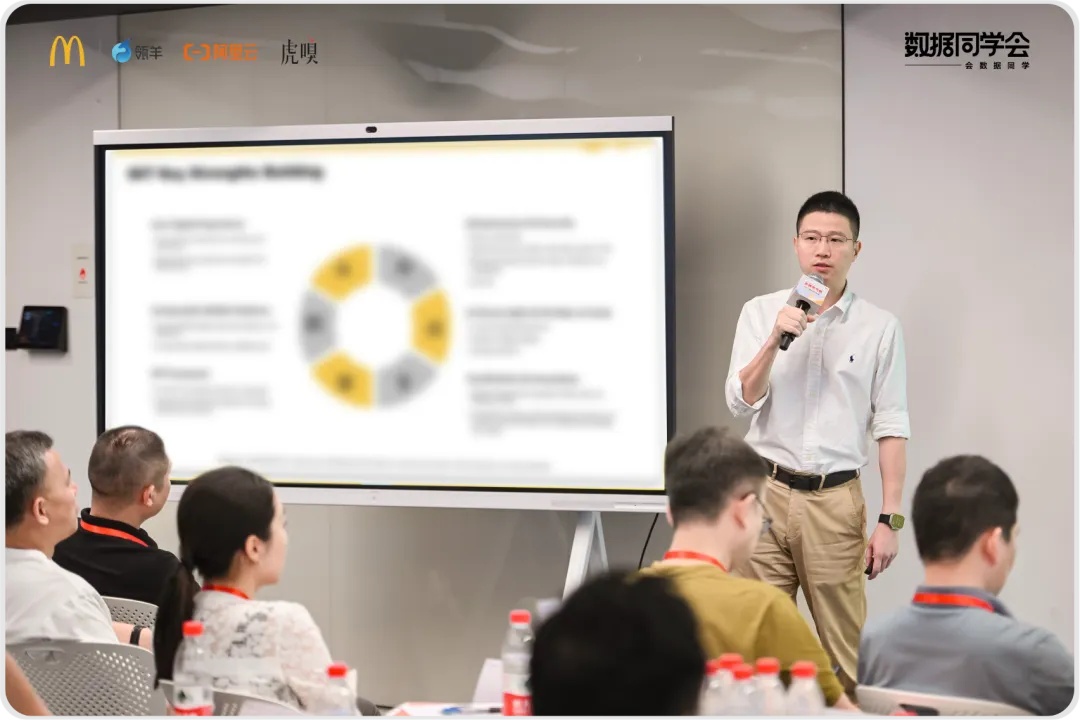
Group 1 - The core idea of the article is how McDonald's leverages AI and digital transformation to enhance operational efficiency and customer experience in the competitive fast-food industry [1][3][5] - McDonald's has integrated AI across various aspects of its business, including customer ordering, inventory management, and supply chain optimization, demonstrating a comprehensive approach to digitalization [2][4][6] - The company has focused on a customer-centric digital strategy since 2020, aiming to support its vast operations, which include over 7,000 stores and more than 300 million members [7][9][10] Group 2 - The introduction of the RGM BOSS system in 2022 has streamlined operations for over 200,000 restaurant employees, allowing them to save time on administrative tasks and focus more on customer service [11][12] - McDonald's IT team employs an Agile development model, enabling rapid deployment of new features and continuous improvement in business operations [13] - The event highlighted the importance of organizational adaptability and the need for businesses to identify high-value scenarios for AI implementation, such as customer service and operational processes [34][36][37] Group 3 - The article discusses the emergence of enterprise-level AI agents, which are designed to enhance business processes and improve efficiency across various functions [14][22][23] - Key insights from the event included the necessity for businesses to integrate AI into their workflows and the importance of data quality and process standardization for successful AI deployment [30][34][36] - The consensus among industry leaders was that the real challenge lies not in the technology itself but in the organization's ability to effectively utilize AI solutions [35][36][38]

IMF上调中国经济增长预期,2025世界500强出炉 | 财经日日评
吴晓波频道· 2025-07-31 00:30
Group 1 - The central government emphasizes the need for sustained macroeconomic policies, including more proactive fiscal policies and moderately loose monetary policies to stimulate domestic demand and investment [1][2] - The upcoming October meeting will significantly influence China's economic development path and structure, focusing on boosting consumption and expanding foreign trade [2] - The implementation of a child-rearing subsidy program aims to alleviate the financial burden on families, with a budget of approximately 90 billion yuan allocated for this initiative [3][4] Group 2 - The IMF has raised China's economic growth forecast for 2025 by 0.8% to 4.8%, reflecting a more optimistic outlook amid global economic uncertainties [5][6] - Despite a challenging global economic environment, China's GDP is expected to achieve a growth target of around 5% for the year, supported by internal demand recovery and easing trade tensions with the US [6][7] - The performance of state-owned enterprises has been under pressure, with a 3.1% decline in profits in the first half of the year, indicating structural issues and the need for transformation towards high-end manufacturing and digital economy [8][9] Group 3 - The 2025 Fortune Global 500 list shows that Chinese companies are approaching the number of US firms, but still lag in revenue and profit performance, highlighting the need for a shift from scale-driven growth to quality and efficiency [10][11] - The rankings reflect changes in industry dynamics, with significant improvements in the positions of Chinese tech companies, driven by e-commerce and new consumption trends [10][11] - Procter & Gamble's second-quarter results exceeded expectations, indicating resilience in the fast-moving consumer goods sector despite inflationary pressures [12][13]

宝洁涨价,美消费经济拉响警报,消费者纷纷缩减开支
Huan Qiu Shi Bao· 2025-07-30 22:52
Group 1 - The ongoing trade conflict and uncertainty have led to rising consumer goods prices in the U.S., prompting major brands like Procter & Gamble to announce price increases [1] - Procter & Gamble expects a profit reduction of $1 billion due to tariffs, with approximately 25% of its products set to increase in price by around 5% [1] - Other notable brands such as Nike, Walmart, Best Buy, Ford, and Subaru have also indicated plans to raise prices [1] Group 2 - Despite the overall stock market reaching new highs driven by tech investments, leading consumer companies are struggling, with Procter & Gamble's stock down 19% since April [2] - Consumer spending has been weak, particularly in clothing and footwear, as budget-conscious consumers are cutting back due to high prices [2] - The latest Federal Reserve report indicates that consumer spending is showing signs of fatigue, with discount stores performing better than traditional retailers [2] Group 3 - Analysts suggest that prior stockpiling by U.S. retailers in anticipation of tariffs may delay the impact of price increases until later this year, potentially affecting inflation data in Q4 or Q1 of the following year [3]

WAIC现场,消费企业成 AI 落地 “显眼包”
虎嗅APP· 2025-07-30 15:00
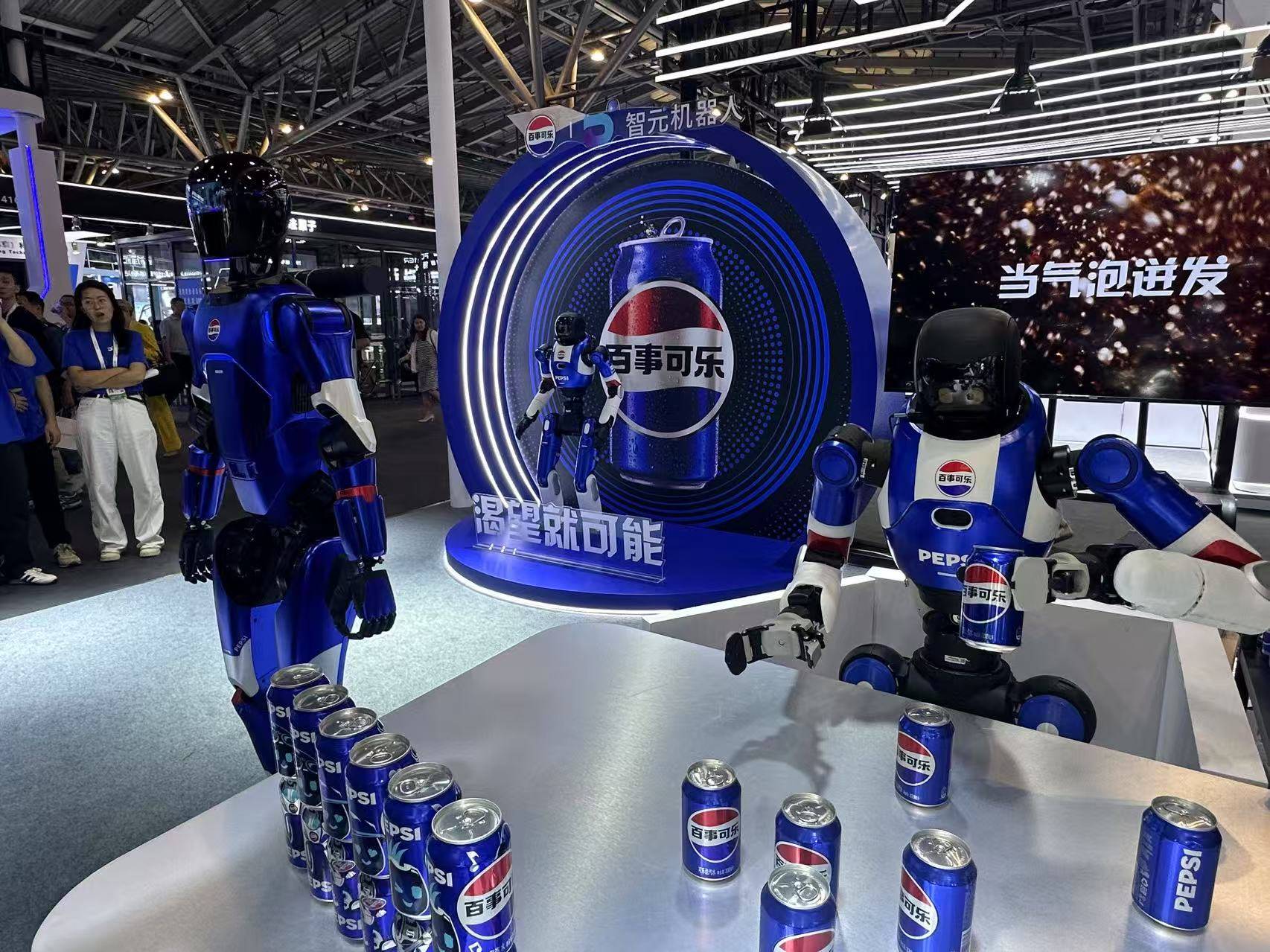
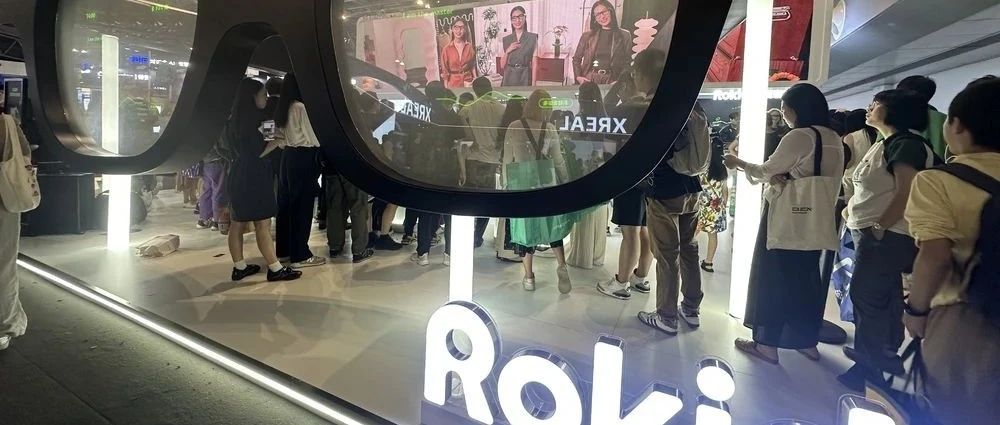
Core Viewpoint - The integration of AI into consumer products is evolving from a technical novelty to a part of daily life, but the journey remains challenging and superficial in many areas [3][8][22]. Group 1: AI in Fast-Moving Consumer Goods (FMCG) - Major FMCG companies are showcasing AI innovations, such as Yili's real-time AI supply chain system and Feihe's AI-driven safety and nutrition enhancements for infant formula [6][5]. - Unilever launched the "AI for Science" platform, which includes six AI models for product development and ingredient selection [6]. - PepsiCo's booth featured humanoid robots that engage with visitors, highlighting the entertainment aspect of AI in consumer interactions [6][8]. Group 2: Smart Glasses and Fashion - The AI glasses segment is gaining popularity, with products shifting towards lightweight and personalized designs to appeal to younger consumers [10][12]. - Alibaba's Quark AI glasses integrate various services, such as navigation and payment, enhancing user convenience [12]. - Despite the excitement, no domestic AI/AR glasses brand has achieved significant market success yet, indicating that the market is still in its infancy [16][22]. Group 3: AI in Sports and Fitness - AI fitness devices, like the "AI personal trainer mirror," are gaining traction, providing real-time feedback on exercise form [19]. - The introduction of consumer-grade exoskeletons, such as the VIATRIX, marks a significant step into the civilian market for AI-assisted physical activities [20]. - The beauty industry is also leveraging AI for personalized skincare solutions, as demonstrated by the AI skin analysis robot [20]. Group 4: AI in Content Creation and Office Efficiency - AI tools are enhancing workplace productivity, with features like automatic video editing and real-time translation [21]. - The "Giant AI Super Intelligent Entity" from Botao Technology is designed to interact with tourists, showcasing the potential of AI in the tourism sector [21]. Group 5: Future of AI in Consumer Experience - The relationship between AI and consumers is evolving beyond mere product purchases to include experiences, emotional value, and engagement [22]. - The 2025 WAIC event highlighted the ongoing transformation of AI from a background technology to a central element in consumer lifestyles [22].
WAIC现场,消费企业成 AI 落地 “显眼包”
Hu Xiu· 2025-07-30 13:36
Core Insights - The integration of AI into consumer products is evolving from a technical concept to a part of daily life, with various brands showcasing their innovations at the WAIC 2025 [1][22] - Despite the excitement surrounding AI, many applications in the consumer goods sector remain superficial, lacking strong connections to the products themselves [5][22] Group 1: Consumer Goods and AI Integration - Major consumer brands are leveraging AI to enhance their product offerings and supply chain efficiency, as seen with companies like Yili and Feihe showcasing AI-driven supply chain systems and health monitoring for dairy cows [2][3] - Unilever introduced the "AI for Science" platform, which includes six AI models for product development, indicating a shift towards data-driven innovation in consumer goods [3] - PepsiCo's interactive humanoid robots at their booth highlight the trend of using AI for consumer engagement and brand interaction [3] Group 2: AI in Fashion and Wearables - The AI eyewear segment is gaining traction, with products focusing on lightweight and personalized designs to appeal to younger consumers, as demonstrated by Halliday Glasses and Alibaba's Quark AI glasses [6][8] - The trend of "de-teching" smart glasses aims to make them more fashionable and integrated into daily life, moving away from the perception of being purely technical devices [8][16] Group 3: AI in Fitness and Outdoor Activities - AI fitness devices, such as the "AI personal training mirror," are becoming popular, providing real-time feedback on exercise form and promoting a more interactive fitness experience [18] - The introduction of consumer-grade exoskeletons like VIATRIX indicates a growing interest in AI applications beyond traditional fitness settings, targeting outdoor enthusiasts [19] Group 4: AI in Beauty and Personal Care - The beauty industry is focusing on personalized solutions, with AI skin detection robots offering tailored skincare recommendations based on individual assessments [21] - AI innovations in office productivity tools aim to enhance efficiency, addressing common workplace challenges through smart features [21] Group 5: Future of AI in Consumer Experience - The overall trend indicates that AI is not just about technology but about enhancing consumer experiences, emotional engagement, and participation in the brand narrative [22][23] - The journey of integrating AI into everyday life is just beginning, with significant potential for future developments in various sectors [23]