投资银行

Search documents
高盛:美经济或重新加速,今明货币政策路径不同
Sou Hu Cai Jing· 2025-09-29 06:40
Core Insights - Goldman Sachs report indicates an increased likelihood of a U.S. economic acceleration, driven by a resilient labor market, expectations of fiscal stimulus, and a loose financial environment [1] - The latest data on initial jobless claims shows improvement, leading Goldman Sachs' global investment research team to forecast a 2.6% GDP growth rate for the third quarter, which will support growth in the first half of next year [1] - The prospect of economic acceleration will influence Federal Reserve monetary policy, especially with the upcoming appointment of a new chair [1] - Goldman Sachs notes that the monetary policy path for 2025 and 2026 may differ significantly [1] - The firm predicts that the policy interest rate will gradually normalize to 3% - 3.5% for the remainder of this year, with expectations of a 25 basis point rate cut in both October and December to avoid overly restricting the labor market [1] - Future monetary policy will heavily depend on the policy preferences of the new chair [1]


高盛警告:美国经济“重新加速”的风险正在上升
美股IPO· 2025-09-29 00:18
Core Viewpoint - Goldman Sachs indicates that factors driving the U.S. economy towards "re-acceleration" include a loose financial environment, expectations of fiscal stimulus, AI capital expenditures, and a solid consumer base. This will significantly impact the Federal Reserve's monetary policy path, particularly regarding whether the new Fed chair will lower rates below neutral levels during healthy economic conditions and whether they can raise rates to counter overheating if necessary [1][2]. Group 1: Economic Indicators - Goldman Sachs analysts report that the risk of the U.S. economy re-accelerating is increasing, supported by a resilient labor market, fiscal stimulus expectations, and a loose financial environment. They project a healthy annualized GDP growth rate of 2.6% for Q3 [2][3]. - The U.S. macroeconomic surprise index has recently surged, and initial jobless claims data is encouraging, indicating strong performance across multiple key economic indicators [3]. Group 2: Key Factors for Re-acceleration - The report identifies several key factors contributing to the risk of economic re-acceleration: - Loose financial conditions characterized by strong performance of risk assets, expectations of future rate cuts by the Fed, and a weaker dollar [4]. - Anticipated positive fiscal policy impulses in the first half of next year, alongside continued capital expenditures in the AI sector, are expected to provide growth momentum [6]. - A solid consumer base and the impact of deregulation are also highlighted as significant contributors [6]. Group 3: Monetary Policy Path - The monetary policy path for 2025 and 2026 presents a markedly different scenario, with the Fed's decisions heavily influenced by the new chair's policy inclinations. Key questions include whether the Fed will lower rates below neutral levels even when the economy is performing well and whether it can raise rates during a potential Trump administration to address economic overheating [7]. - Goldman Sachs maintains a baseline scenario of a 25 basis point rate cut in both October and December of this year, depending on economic conditions [7]. - The current market measures of mid-2026 rate expectations indicate that the SFRM6/M8 spread is hovering around flat, suggesting that the market has not fully priced in the risks of rate hikes [8].

美国经济,“重新加速”的风险正在上升
Hu Xiu· 2025-09-28 12:53
Core Viewpoint - Goldman Sachs warns that the risk of a "re-acceleration" of the U.S. economy is rising, which could lead to a significantly different monetary policy path by 2026 [1] Group 1: Economic Indicators - The U.S. economy is showing strong performance across multiple key indicators, with Goldman Sachs' U.S. Macro Surprise Index recently surging and initial jobless claims data being encouraging [2] - Goldman Sachs' Global Investment Research (GIR) expects the U.S. GDP growth rate for Q3 to reach a healthy 2.6% on a seasonally adjusted annualized basis, providing strong support for growth in the first half of next year [2] Group 2: Factors Driving Economic Re-acceleration - Key factors contributing to the risk of economic re-acceleration include: - Loose financial conditions characterized by strong performance of risk assets, expectations of future rate cuts by the Federal Reserve, and a weaker dollar [3] - Anticipated positive fiscal policy impulses in the first half of next year, along with continued capital expenditure in the artificial intelligence sector [3] - A solid consumer base in the U.S. and the impact of deregulation [3][4] Group 3: Monetary Policy Path - The monetary policy path for 2025 and 2026 presents a starkly different scenario, heavily influenced by the new Federal Reserve chair's policy inclinations [5] - Current statements from Federal Reserve Chair Jerome Powell indicate that recent job growth is below the "breakeven" level, suggesting a potential normalization of policy rates closer to neutral levels (3%-3.5% range) [6] - Goldman Sachs' baseline scenario anticipates rate cuts of 25 basis points in both October and December of this year [6] Group 4: Market Reactions to Policy Expectations - If the market expects the policy rate to remain low (indicating the Fed will not effectively tighten policy), the appropriate trades would be to go long on longer-dated breakeven inflation rates, gold, and continue holding risk assets [8] - Conversely, if the market believes the Fed will respond to economic re-acceleration by tightening policy, the U.S. Treasury yield curve should steepen [9] - The current SFRM6/M8 spread, which measures mid-term rate expectations for 2026, is hovering around flat (currently -5 basis points), indicating that the market has not fully priced in rate hike risks [10] - In this scenario, the 2-year and 10-year Treasury yield curve (2s10s) is also expected to steepen [11]
高盛警告:美国经济“重新加速”的风险正在上升
Hua Er Jie Jian Wen· 2025-09-28 10:30
高盛的分析显示,美国经济在多项关键指标上展现出强劲表现。 据高盛称,其美国宏观经济意外指数(US MAP surprise index)近期大幅飙升,本周的初请失业金人数 也令人鼓舞。该行全球投资研究部(GIR)预计,美国第三季度GDP环比年化增长率将达到2.6%的健康 水平。 高盛最新警告,一系列因素正显著增加美国经济"重新加速"的风险,将为2026年的货币政策路径带来截 然不同的前景和挑战。 9月28日,高盛分析师Cosimo Codacci-Pisanelli和Rikin Shah在最新报告中称,美国经济面临重新加速的 风险正在上升,这一预期建立在劳动力市场韧性、财政刺激预期以及宽松金融环境等多重利好因素基础 之上。 该行分析师认为,当前美国经济在多项指标上表现强劲,本周公布的首次申请失业救济人数数据令人鼓 舞,而高盛全球投资研究部门预计第三季度美国GDP增长率将达到健康的2.6%(环比年化率)。这为 明年上半年的增长提供了有力支撑。 报告称,这一经济重新加速的前景将对美联储货币政策路径产生重要影响,特别是在美联储选出新主席 人选的背景下。高盛指出,关键问题在于美联储是否会在经济健康运行时仍将利率降至中 ...
2025年国庆假期大宗商品展望
对冲研投· 2025-09-28 09:07
Core Viewpoints - The article discusses the macroeconomic outlook for commodities during the upcoming National Day holiday in China, highlighting the impact of recent Federal Reserve interest rate cuts and geopolitical tensions on market dynamics [2][3]. Group 1: Global Economic Context - The Federal Reserve has restarted a new round of interest rate cuts, leading to a shift in market strategies and increased volatility in asset prices [2]. - The easing of U.S.-China tensions and the gradual reduction of tariffs are contributing to a more optimistic economic recovery outlook, reflected in rising U.S. stock prices and strengthening silver and copper prices [2]. - Ongoing geopolitical conflicts, particularly the intensifying Russia-Ukraine war and tensions in the Middle East, pose significant risks to energy prices and shipping rates, which are likely to experience sharp fluctuations during the holiday [2]. Group 2: Domestic Economic Trends - In China, there has been a trend of strong expectations but weak realities, particularly following the Fed's interest rate cut, leading to a focus on economic fundamentals and a decline in optimistic sentiment [3]. - The "anti-involution" policy is seen as a necessary response to external pressures and a move towards a high-quality development model, with the market closely monitoring its implementation and effects on economic recovery [3]. Group 3: Sector-Specific Insights - Goldman Sachs reports that the current rebound in the Chinese stock market is driven by "re-inflation" expectations and themes related to artificial intelligence, with institutional investors playing a crucial role [5]. - The temporary cancellation of export taxes on agricultural products in Argentina is expected to increase soybean exports, potentially alleviating supply concerns in China for the upcoming quarter [6]. - A field survey in Xinjiang indicates a significant reduction in red date production, with an estimated yield drop of approximately 39.2% compared to the previous year, raising concerns about quality and overall supply [8]. Group 4: Market Dynamics and Trading Opportunities - The article identifies high liquidity commodities and suggests potential trading opportunities in various sectors, including palm oil and construction materials, while cautioning against investments in government bonds due to tightening monetary policy [9][10]. - The glass market has seen a recent price increase driven by supply-side policies and seasonal demand, indicating a potential upward trend in the sector [24][26].

美联储降息引爆A股!北上资金单日狂买177亿,外资抄底人民币资产
Sou Hu Cai Jing· 2025-09-28 08:40
Group 1 - The core focus of the article is the impact of the Federal Reserve's interest rate cut on the A-share market, highlighting the optimism of international investment banks towards core RMB assets and the continuous inflow of northbound capital [1][2]. - Following the Federal Reserve's announcement on September 17, 2023, there is a strong expectation that further rate cuts may occur in October and December 2025, indicating a prolonged trend of global liquidity easing [2][4]. - The offshore RMB to USD exchange rate reached a new high since 2025 on the day of the rate cut, with 1 USD exchanging for 7.1 RMB, marking the largest appreciation of the RMB against the USD this year [3]. Group 2 - If the Federal Reserve proceeds with another rate cut in Q4 2025, the appreciation trend of the RMB against the USD is likely to continue, which could lead to a shift in global capital preferences from USD assets to RMB assets [4][5]. - The combination of these factors is expected to support the A-share market, with international investment banks like Goldman Sachs and Morgan Stanley expressing positive outlooks on RMB core assets in A-shares based on the analysis of the Federal Reserve's policies and capital flows [5][11]. - Data from September 24 indicates significant net inflows from foreign capital into A-shares, with the MSCI China Index seeing a net inflow of 17.7 billion RMB, and the FTSE Russell China Index and S&P China Index also showing substantial inflows [8][9]. Group 3 - The continuous inflow of northbound capital serves as a market-level confirmation of the positive trends driven by the Federal Reserve's rate cuts, RMB appreciation, and the favorable outlook from international investment banks [11]. - Monitoring macro policy changes and capital flows can help investors better understand current market dynamics and seize investment opportunities [11].

已成AI“关键瓶颈“,高盛:欧美电网远远落后于中国,铜将变成新的石油
智通财经网· 2025-09-28 07:34
Core Insights - Goldman Sachs warns that aging power grids in Western countries have become a "vulnerable link" in energy security due to rising AI demand and geopolitical tensions, predicting copper prices will reach $10,750 per ton by 2027 [1][7] Group 1: Aging Infrastructure - The average operational lifespan of power grids in Europe is 50 years, while in North America it is 40 years, nearing the end of their designed operational life [2][4] - The focus of U.S. energy security policy has shifted from oil and gas transportation to the aging power grid systems that have limited backup capacity [2] Group 2: Demand Pressures - The growth in electricity demand in the U.S. is causing significant pressure on regional markets, with 9 out of 13 regional power markets reaching critical tightness in the summer of this year [3] - Goldman Sachs predicts that by 2030, all but one U.S. regional power market will reach critical tightness, highlighting the urgent need for infrastructure upgrades [3] Group 3: AI and National Security - The rapid development of AI is pushing the power grid to the core of energy security, as data centers, which are crucial for AI infrastructure, require substantial electricity [4] - The interdependence of the power grid, AI, and national defense makes grid upgrades a national security priority, transforming the modernization of the grid into a strategic issue [4] Group 4: Copper Demand - The demand for copper is expected to surge due to the need for power grid upgrades, with Goldman Sachs forecasting that by the end of 2030, power grid and infrastructure projects will drive approximately 60% of global copper demand growth [6] - This increase in demand is equivalent to adding another U.S. consumption level to global demand, supporting the bullish copper price forecast [6][7]
已成AI"关键瓶颈",高盛:欧美电网远远落后于中国,铜将变成新的石油
美股IPO· 2025-09-28 06:27
Core Viewpoint - Aging power grids in Europe and North America have become critical bottlenecks for AI development and energy security, necessitating urgent upgrades to meet rising demands [1][3][4] Group 1: Aging Infrastructure - The average operational lifespan of European power grids is 50 years, while North American grids average 40 years, indicating that many are nearing the end of their designed operational life [3][4] - Nine out of thirteen U.S. electricity markets are already experiencing tight supply conditions, with projections indicating that nearly all will face similar pressures by 2030 [5][6] Group 2: AI and Energy Security - The rapid development of AI is placing power grids at the center of energy security, as data centers, which are crucial for AI infrastructure, require significant electricity [6][7] - The interdependence of the power grid, AI, and national defense makes upgrading the grid a national security priority, transforming it into a strategic issue rather than just an infrastructure concern [6][7] Group 3: Copper Demand Surge - The demand for copper is expected to surge due to the need for power grid upgrades, with projections indicating that by 2030, approximately 60% of global copper demand growth will be driven by electricity infrastructure [7][8] - Goldman Sachs predicts that the price of copper will rise to $10,750 per ton by 2027, supported by the anticipated increase in demand from power grid and infrastructure projects [8]

已成AI"关键瓶颈",高盛:欧美电网远远落后于中国,铜将变成新的石油
Hua Er Jie Jian Wen· 2025-09-28 03:33
Group 1 - Goldman Sachs warns that aging power grids in Western countries have become a "vulnerable link" in energy security due to increasing AI demand and geopolitical tensions, predicting copper prices will rise to $10,750 per ton by 2027 [1][4] - The average operational lifespan of power grids is nearing its end, with Europe at 50 years and North America at 40 years, while China is advancing its ultra-high voltage transmission network [1][2] - The report emphasizes the interdependence of the power grid, AI, and national defense, making investment in grid infrastructure a pressing national security priority [3][4] Group 2 - The rapid development of AI is intensifying pressure on already strained power grid systems, as data centers require significant electricity [3] - Goldman Sachs predicts that by the end of 2030, power grid and infrastructure upgrades will account for approximately 60% of global copper demand growth, equivalent to adding another U.S. consumption level to global demand [4] - The strategic importance of copper is increasing as it becomes essential for power grid construction, leading to its characterization as the "new oil" [4]
黄金要涨到5000?基民该如何借基金布局?一文看懂
Sou Hu Cai Jing· 2025-09-27 09:47
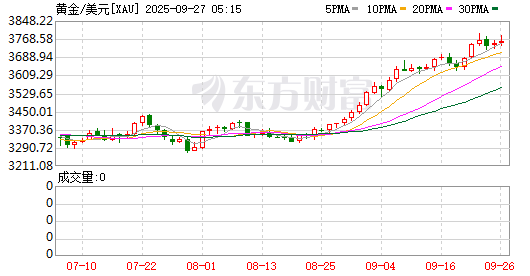
Core Viewpoint - Recent gold prices have surpassed $3,800 per ounce, reaching a historical high with an annual increase of over 38% [1] Group 1: Institutional Outlook on Gold Prices - Multiple authoritative institutions remain bullish on gold prices, with Goldman Sachs suggesting that in extreme scenarios, gold could reach $5,000 per ounce [1][3] - Other institutions like JPMorgan and UBS also expect gold prices to stabilize above $4,000 in the medium to long term [1][3] Group 2: Reasons for Bullish Sentiment - Central banks are continuing to purchase gold, with plans to increase gold holdings while reducing dollar reserves over the next five years [3] - Market expectations indicate a shift in the Federal Reserve's monetary policy towards interest rate cuts, which typically depresses the dollar's value and bond yields, thereby boosting gold prices [3] - Concerns regarding the independence of the Federal Reserve could lead to increased inflation expectations and a loss of dollar credibility, prompting a shift of funds from dollar assets to gold [3] - Geopolitical tensions and economic uncertainties enhance gold's appeal as a safe-haven asset [3] - Technical analysis shows that gold has broken through significant resistance levels, entering an upward trend [3] Group 3: Investment Options in Gold - Gold ETFs provide a convenient investment channel, allowing investors to trade gold spot contracts on stock exchanges with T+0 trading efficiency [4] - Gold ETF linked funds are suitable for investors who prefer not to engage in direct stock market transactions, available through banks and third-party platforms [4] - Gold-themed funds invest in gold-related stocks, offering higher potential returns but also higher risks due to the volatility of mining companies [5] - Gold QDII funds focus on overseas gold markets, suitable for investors looking to diversify risk, though they may involve currency risks [6] Group 4: Considerations for Choosing Gold Funds - Investors should align their investment goals and risk tolerance when selecting gold funds, with options ranging from gold ETFs for tracking gold prices to gold-themed funds for higher returns [6] - Cost differences are significant, with on-exchange gold ETFs generally having lower trading costs [7] - Liquidity and convenience are important factors, as gold ETFs support high liquidity with T+0 trading, while linked funds have lower liquidity but do not require a securities account [7] - Fund size and tracking error are critical indicators when selecting specific products, with larger funds typically offering better liquidity and stability [7]