
货币政策路径

Search documents
2026年3月美联储议息会议点评:地缘政治风险与货币政策路径
工银国际· 2026-03-19 06:24
Economic Overview - The Federal Reserve maintained the benchmark interest rate at 3.50%-3.75%, aligning with market expectations[1] - The U.S. GDP growth rate for Q4 2025 was revised down to 0.7%, a significant drop from 4.4% in Q3 2025[2] - Personal consumption expenditures in Q4 2025 grew at an annualized rate of 2.0%, while private investment increased by 3.3%[2] Labor Market and Inflation - Non-farm payrolls decreased by approximately 92,000 in February 2026, with the unemployment rate rising to 4.4%[2] - Average hourly earnings increased by about 0.4% month-over-month and 3.8% year-over-year, indicating some resilience in wage growth[2] - The Consumer Price Index (CPI) rose by 2.4% year-over-year in February 2026, with core CPI at 2.5%, both above the Fed's 2% target but stable overall[2] Geopolitical Risks - Rising geopolitical tensions, particularly in the Middle East, have introduced new uncertainties into the macroeconomic environment[1] - Geopolitical events can lead to increased energy and commodity prices, potentially raising actual inflation levels and suppressing consumer and investment demand[1] - Historical data indicates that geopolitical shocks can increase key agricultural prices, with wheat prices rising by an average of 2% and corn by 1%[3] Monetary Policy Outlook - The Fed is likely to maintain a cautious stance to solidify inflation expectations, with future monetary policy dependent on energy price trends and geopolitical developments[1] - If external shocks diminish, there is potential for a gradual return to rate cuts[1] - The interplay of inflation pressures and economic slowdown may limit the Fed's ability to lower rates, creating a risk of stagflation[6]
美司法部就“鲍威尔案”提起上诉
第一财经· 2026-03-14 00:49
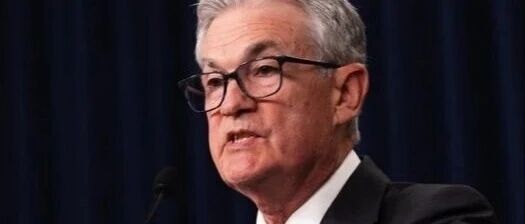
Core Viewpoint - The ongoing political and judicial disputes surrounding the potential replacement of Federal Reserve Chairman Jerome Powell are creating uncertainty regarding the leadership transition at the Fed, particularly affecting the confirmation process of Kevin Warsh as the new chairman [3][4]. Investigation Controversy - The U.S. Department of Justice plans to appeal a ruling that dismissed a grand jury subpoena against Powell, which could delay Warsh's confirmation in the Senate [6][8]. - A federal judge ruled that there was insufficient evidence for the investigation into Powell, which relates to the Fed's headquarters renovation and Powell's public statements [6]. - Critics argue that the investigation undermines the independence of the Federal Reserve, especially given the political context of former President Trump's criticisms of the Fed's interest rate policies [6][9]. Warsh's Confirmation Delay - Senator Thom Tillis stated he would not support any new Fed chairman nominations until the investigation into Powell concludes, indicating that Warsh's confirmation process may be postponed [8][9]. - If the Senate does not confirm Warsh by Powell's term end on May 15, Powell may continue to lead the Federal Open Market Committee's meeting scheduled for June 16-17 [10]. Policy Outlook Variables - Rising oil prices due to geopolitical tensions are impacting global financial markets and could influence inflation and economic growth, adding complexity to future monetary policy decisions [11]. - Market expectations for interest rate cuts have cooled, with projections indicating a cumulative cut of slightly less than 25 basis points by December, down from earlier expectations of about two cuts [13]. - The upcoming Federal Reserve meeting on March 18 is anticipated to provide insights into the Fed's assessment of geopolitical impacts on monetary policy, especially in light of recent employment data showing a decrease in non-farm payrolls [12][13][14].

地缘冲突升级,避险需求持续
Zhong Xin Qi Huo· 2026-03-06 03:07
Report Industry Investment Rating - Not provided Core Viewpoints of the Report - Geopolitical premiums are rising, and macroeconomic games are intensifying. Geopolitical risks have significantly increased, and safe-haven funds are continuously flowing into the precious metals market. Gold prices are approaching $5,200 per ounce. Energy prices are rising, pushing up global inflation expectations, and the market is re - evaluating the monetary policy path. The US dollar has rebounded, and precious metals are maintaining a high - level oscillation pattern between safe - haven demand and interest rate expectations [1]. - If the Middle East conflict continues and disrupts global energy supply, the safe - haven demand for gold will remain. However, if energy prices drive inflation expectations to rise and strengthen the high - interest - rate environment, the upward space for gold prices may be limited. In the short term, gold may maintain a high - level oscillation pattern, and in the medium term, it still depends on real interest rates and the US dollar trend [2]. - Silver is a high - volatility asset under the resonance of precious metals. Geopolitical conflicts strengthen the overall safe - haven demand for precious metals. Silver has received support from capital allocation. After significant fluctuations, silver has entered a shock - repair stage, and capital re - allocation within the precious metals sector makes the short - term volatility of silver significantly higher than that of gold. The industrial attribute provides marginal support for silver demand. If the safe - haven sentiment continues to heat up, silver is expected to maintain high elasticity in the precious metals sector. If interest rate expectations rise again, silver price fluctuations may further increase, maintaining a high - volatility oscillation pattern [3]. Summary by Relevant Catalogs Gold - **Viewpoint**: Geopolitical premiums are rising, and macroeconomic games are intensifying [1]. - **Logic**: - The Middle East conflict continues to escalate, and the uncertainty of global energy supply has significantly increased, and safe - haven demand continuously supports the gold price [1]. - Rising oil prices drive up inflation expectations, and the market re - evaluates the monetary policy path of major economies. The possibility of maintaining high interest rates exerts a phased suppression on gold [1]. - The US dollar rebounds after a previous decline. Exchange rate and interest rate factors cause gold to show an oscillation pattern at a high level [1]. - **Outlook**: If the Middle East conflict continues and disrupts global energy supply, the safe - haven demand for gold will remain. However, if energy prices drive inflation expectations to rise and strengthen the high - interest - rate environment, the upward space for gold prices may be limited. In the short term, gold may maintain a high - level oscillation pattern, and in the medium term, it still depends on real interest rates and the US dollar trend [2]. Silver - **Viewpoint**: A high - volatility asset under the resonance of precious metals [3]. - **Logic**: - Geopolitical conflicts strengthen the overall safe - haven demand for precious metals, and silver receives support from capital allocation in the context of the strengthening of gold [3]. - After significant fluctuations, silver has entered a shock - repair stage, and capital re - allocation within the precious metals sector makes the short - term volatility of silver significantly higher than that of gold [3]. - In the context of certain resilience in the global economy, the industrial attribute provides marginal support for silver demand [3]. - **Outlook**: If the safe - haven sentiment continues to heat up, silver is expected to maintain high elasticity in the precious metals sector. If interest rate expectations rise again, silver price fluctuations may further increase, maintaining a high - volatility oscillation pattern [3]. Commodity Index - **Composite Index**: Not provided with specific data - **Special Index**: - Commodity Index: 2510.23, +1.04% [44] - Commodity 20 Index: 2869.81, +1.11% [44] - Industrial Products Index: 2430.86, +1.36% [44] - **Sector Index (Precious Metals Index)**: - On March 5, 2026, the index was 4413.43, with a daily increase of +0.91% [46] - The increase in the past 5 days was - 1.33% [46] - The increase in the past 1 month was - 14.40% [46] - The increase from the beginning of the year to the present was +15.41% [46]
Vatee万腾:贸易与降息前景不明 美元指数小幅整理
Sou Hu Cai Jing· 2026-02-24 03:50
Group 1 - The USD is facing multiple potential challenges due to increasing uncertainty in global trade policies, which may affect foreign investors' asset allocation preferences, leading to a degree of avoidance of USD assets [3] - The U.S. government is considering implementing new national security tariffs on six specific industries under the Trade Expansion Act of 1962, following a recent Supreme Court ruling that canceled several related tariffs from the previous administration [3] - Major trading partners of the U.S. have reacted to these new trade policy developments, with the EU indicating a possible suspension of the trade agreement approval process with the U.S., and India postponing a planned meeting aimed at finalizing a temporary trade agreement due to the U.S. reassessing its broader tariff strategy [3] Group 2 - The Federal Reserve exhibits a clear wait-and-see attitude regarding future interest rate decisions, with Governor Christopher Waller indicating that support for a rate cut in March will heavily depend on the labor market data released at that time [4] - Current market expectations are cautious, with swap market pricing showing only a 5% probability of a 25 basis point rate cut in March [4] - There is a divergence in policy expectations among major central banks, with the Bank of Japan potentially moving towards further monetary policy normalization and expected to raise rates by 25 basis points, while the European Central Bank is anticipated to maintain its current policy until 2026 [5]
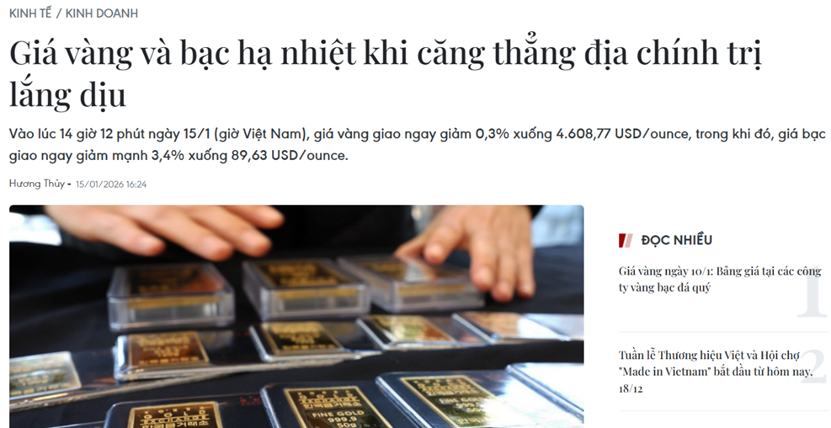
在连续三天的大幅上涨后,黄金投资人获利抛售锁定利润
Huan Qiu Wang· 2026-01-16 00:55
Group 1 - International precious metals futures closed mixed, with COMEX gold futures down 0.33% at $4620.50 per ounce and COMEX silver futures up 0.90% at $92.21 per ounce [1] - Analysts believe that hawkish signals from Federal Reserve officials and better-than-expected U.S. economic data have increased rate hike expectations, putting pressure on gold prices [1] - On January 15, Asian gold and silver prices fell as investors took profits after both metals reached historical highs in the previous trading session [1] Group 2 - Spot silver prices touched a historical high of $93.57 per ounce before dropping 3.4% to $89.63 per ounce, following signals of easing geopolitical tensions [1] - Investors engaged in profit-taking after three consecutive days of significant price increases, leading to a decline in gold prices [5] - The market is awaiting U.S. weekly initial jobless claims data to gain further insights into the Federal Reserve's monetary policy direction, with traders expecting two rate cuts this year [5] Group 3 - As of January 14, the Huaan Gold ETF's circulation scale reached 100.762 billion yuan, becoming the first gold ETF in China to surpass 100 billion yuan and maintaining its position as the largest gold ETF in Asia [5]
Vatee万腾外汇:美元兑加元连续三个交易日于1.3890附近横盘
Sou Hu Cai Jing· 2026-01-15 04:14
Core Viewpoint - The USD/CAD exchange rate remains stable around 1.3890, supported by recent US economic data indicating resilience in the economy, while the CAD is influenced by energy market performance [1][3][4] Group 1: US Economic Data - Recent US retail sales for November reached $735.9 billion, with a month-on-month increase of 0.6%, surpassing market expectations [1] - The Producer Price Index (PPI) growth rate remains stable year-on-year, contributing to a positive outlook on the US economic fundamentals [1] Group 2: Market Expectations and Monetary Policy - Market expectations suggest a low likelihood of the Federal Reserve adjusting interest rates in the near term, providing temporary support for the USD [3] - Financial institutions have adjusted their forecasts for future policy, shifting focus to mid-next year [3] Group 3: CAD and Energy Market Influence - The CAD's performance is closely tied to the energy market, particularly as Canada is a major crude oil exporter [3] - Current West Texas Intermediate crude oil prices are stable above $60 per barrel, supported by geopolitical factors and supply-demand dynamics, which helps limit the USD/CAD exchange rate's upward movement [3] Group 4: Technical Analysis and Future Outlook - The USD/CAD exchange rate is expected to continue in a range-bound pattern in the short term, with significant economic data releases potentially causing temporary fluctuations [4] - Long-term exchange rate direction will depend on economic growth differences between the US and Canada, the degree of monetary policy divergence, and changes in global risk sentiment [4] - Market participants are advised to adopt a flexible allocation strategy to respond to potential changes amid ongoing uncertainties [4]
期货日报:鲍威尔“遭查”引爆金属市场 贵金属价格再创历史新高
Qi Huo Ri Bao· 2026-01-13 01:38
Core Viewpoint - The potential criminal investigation of Powell has led to a significant rise in precious metals, with both gold and silver reaching historical highs, driven by concerns over the Federal Reserve's independence and uncertainty in monetary policy [1] Group 1: Impact of Powell's Investigation - Powell's investigation is unprecedented and threatens the traditional independence of the Federal Reserve, which could undermine confidence in the dollar and indirectly boost precious metal prices [1] - The investigation creates decision-making pressure for Powell, as lowering interest rates may confirm political pressure, while maintaining high rates could escalate the investigation [1] - The upcoming end of Powell's term in May and the selection of a new chair could influence the future independence of the Federal Reserve's monetary policy [1] Group 2: Market Reactions and Expectations - Expectations of monetary easing are expected to lower U.S. Treasury yields and market interest rates, reducing the opportunity cost of holding gold and increasing its investment demand [2] - The weakening of the dollar due to reduced confidence and the potential for inflation driven by loose monetary policy could further enhance gold's appeal as an inflation hedge [2] - Regardless of who becomes the next Federal Reserve chair, the market anticipates multiple rate cuts and balance sheet expansion to ensure liquidity, with expectations of 2-3 rate cuts by 2026 unless economic data improves significantly [2] Group 3: Long-term Considerations for Precious Metals - The erosion of the Federal Reserve's independence is linked to broader issues such as U.S. debt sustainability and increasing political divisions, suggesting a strong and lasting support for precious metal prices [3] - Key signals to monitor include the new Federal Reserve chair's stance, the progress of the 2026 midterm elections, and policy statements from Federal Reserve meetings [3] - A potential decline in the "political premium" for precious metals could occur if the investigation concludes without substantial evidence, or if the new chair signals a commitment to policy independence [3] Group 4: Technical Analysis - Rapid price increases may lead to overbought conditions, prompting either side to exit positions, which could result in significant price adjustments [4]
通胀与就业的两难选择:今夜,美联储会降息多少?
Sou Hu Cai Jing· 2025-12-10 11:54
Core Viewpoint - The Federal Reserve is expected to announce a rate cut in December, but the focus of the upcoming meeting will be on future policy guidance and how Chairman Powell balances conflicting signals between hawkish and dovish stances [1][2]. Group 1: Market Expectations - The market anticipates a nearly 90% probability of a 25 basis point rate cut in December, driven by unexpected negative ADP employment data and weaker-than-expected PCE price index [2]. - The internal division within the Federal Reserve is significant, with some officials skeptical about continuing rate cuts while inflation remains above the 2% target, potentially leading to an increase in dissenting votes during the meeting [2][4]. Group 2: Economic Forecasts - The quarterly economic forecasts and the dot plot will be crucial, as they will provide insights into the Fed's projections for economic growth, inflation, and unemployment rates through 2026 [2]. - The market currently prices in approximately 52 basis points of rate cuts (around two cuts) by 2026, indicating a cautious outlook on future monetary policy [2][8]. Group 3: Balance Sheet Management - Future asset and liability management is becoming equally important as the rate decision, with potential plans for the Fed to start purchasing short-term Treasury bills in January 2026 to manage liquidity [3]. Group 4: Policy Dilemmas - The Fed faces a classic policy dilemma with persistent inflation pressures and a cooling job market, leading to increased internal disagreements [4][5]. - Powell's statements during the meeting are expected to convey how the Fed will navigate these conflicting goals, with a possibility of a hawkish tone despite the rate cut [4][6]. Group 5: Future Rate Cuts - Analysts suggest that the pace of rate cuts may slow in the first half of next year, with significant monetary easing potentially not occurring until after June 2026 [7][8]. - The upcoming leadership change at the Fed adds another layer of uncertainty, with speculation about whether the new chair will adopt a more dovish stance [9].
12月鹰派降息或在预期之内,未来货币政策路径或在会议之外
Orient Securities· 2025-12-09 14:31
Group 1: Monetary Policy Outlook - The Federal Reserve is likely to cut interest rates in December, but this has already been priced in by the market, with the probability of a rate cut rising from 30% to 95% after comments from New York Fed President Williams[6] - The key focus of the December meeting will be on policy communication and forward guidance rather than the rate cut itself, which is seen as a dovish move[6] - A hawkish forward guidance is expected to accompany the rate cut to manage market expectations and avoid excessive optimism that could lead to asset bubbles and inflation rebounds[6] Group 2: Employment Data and Economic Risks - The U.S. labor market is showing signs of weakness, with the three-month average of non-farm payrolls indicating a decline, with October showing a loss of 54,000 jobs and November showing a loss of 2,000 jobs[6] - The unemployment rate is projected to rise above 4.5% if demand continues to weaken, which could significantly increase recession risks[6] - The Challenger company reported a significant rise in layoff announcements in October, indicating potential future increases in unemployment[6] Group 3: Market Reactions and Risks - There is a risk of profit-taking in the market following the Fed's meeting, particularly in the dollar index and U.S. Treasury yields, as stocks, bonds, commodities, and gold may face short-term pressure[6] - The upcoming employment data release on December 16 will be crucial in shaping market expectations and could influence the Fed's future policy decisions[6]
美联储影子主席的预期与现实
Guo Lian Qi Huo· 2025-12-05 03:39
Report Industry Investment Rating No information provided in the content. Core Viewpoints of the Report - The market will be divided into a "buy the expectation" phase before the official appointment of the next Fed Chair in May 2026 and a "sell the reality" phase after the appointment. In the "buy the expectation" phase, the "shadow chair" will guide market expectations towards aggressive rate cuts, leading to specific price movements in major asset classes. In the "sell the reality" phase, the Fed's monetary policy path is likely to be cautious due to various constraints, and the market will shift its focus and face increased volatility. Additionally, the possibility of the Fed expanding its balance sheet in 2026 and its potential impact on the market should also be closely monitored [22][27][29]. Summaries by Relevant Catalogs I. Key Events for Focus on Fed Independence - The independence of the Fed is the cornerstone of the US dollar's credit, influencing global capital flows and commodity pricing. Trump has tried to influence the Fed through various means, such as frequent calls for rate cuts, attempts to dismiss Cook, and appointing new理事. The next key points of focus are the selection of the next Fed Chair and the progress of the dismissal case of Cook, which will affect the market's re - evaluation of the Fed's rate - cut path in 2026 [5][8][11]. II. "Advanced Tests" for Fed Chair Candidates 2.1 Selection and Appointment Process of the Fed Chair - The process includes candidate selection and evaluation (July - December 2025), where the candidates have been reduced from 11 to 5; the President's official nomination (January 2026), which signals the President's expectation for future monetary policy; the Senate confirmation process (average 4 months), including hearings, committee voting, and full - Senate voting; and the oath - taking ceremony (May 2026) [13][15][16]. 2.2 "Advanced Tests" for Fed Chair Candidates - Test 1: Candidates must have Fed理事 qualifications. If non -理事 candidates are considered, they may need to fill a即将出现的理事 vacancy first. Key time points to watch are January 21, 2026 (Supreme Court oral debate on Trump's attempt to dismiss Cook) and January 31, 2026 (Miran's理事 term expiration) [18][19]. - Test 2: Senate confirmation faces challenges related to partisan differences and Fed independence. If Hassett is nominated, concerns about his close association with Trump and his past controversial remarks may lead to opposition in the Senate, and the final result depends on the Senate's review and game [20]. III. Market Impact: Expectations and Reality of the Fed's "Shadow Chair" 3.1 "Buy the Expectation" Phase: Before the May 2026 Official Appointment - The "shadow chair" will publicly state an aggressive dovish stance, guiding the market to expect rate cuts. As a result, the US dollar index tends to weaken, US Treasury yields decline, and commodity prices rise, with precious metals being the core target of loose trading. However, conflicts between the "shadow chair" and Powell or setbacks in market expectations may increase asset volatility [27][28]. 3.2 "Sell the Reality" Phase: After the May 2026 Official Appointment - After the new Fed Chair is appointed, the Fed's monetary policy is likely to be "hesitant in decision - making and cautious in implementation" due to economic dual - differentiation, FOMC internal differences, and concerns about Fed independence. The market will shift its focus, and volatility will increase. The US dollar remains weak, and commodities will be more influenced by their own supply - demand [29][30][31]. - In 2026, the possibility of the Fed expanding its balance sheet should be closely monitored. If it occurs, it is more of a technical operation for liquidity management, with a scale much smaller than previous QE, and its impact on assets is mainly "liquidity repair" [34][35].