
军工

Search documents
刚刚!日本突发,直线涨停!
Zhong Guo Ji Jin Bao· 2025-11-19 08:01
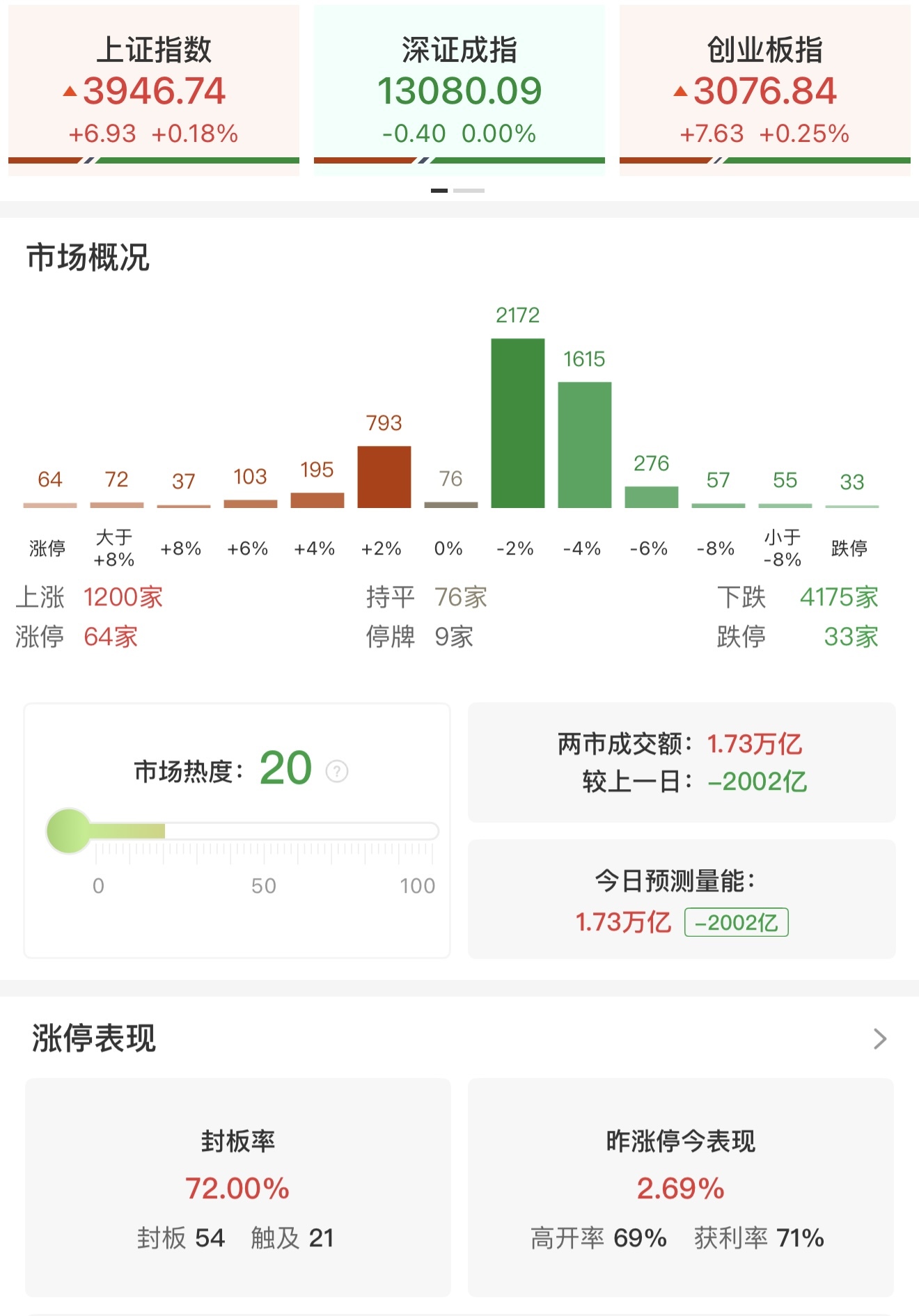
Market Overview - The A-share market experienced fluctuations, with the Shanghai Composite Index rising by 0.18% and the ChiNext Index increasing by 0.25% on November 19 [3] - A total of 1,200 stocks rose, with 64 hitting the daily limit, while 4,175 stocks declined [3] Sector Performance - Gold stocks showed strong performance, with several companies like Zhongjin Gold hitting the daily limit and others such as Xiaocheng Technology and Shandong Gold rising over 5% [4] - The military industry sector was active, with stocks like Jianglong Shipbuilding and China Shipbuilding Defense reaching the daily limit [5] - Storage chip stocks saw localized movements, with Langke Technology rising over 10% due to significant price increases in Flash memory, with prices up by as much as 38.46% [5] Water Product Sector - Water product stocks surged, with companies like Zhangzidao and Guolian Aquatic Products hitting the daily limit following China's announcement to suspend imports of Japanese seafood [8] - The Chinese government cited Japan's failure to provide promised technical materials regarding product quality as a reason for the import suspension [8] - The tourism sector in Japan, which accounts for approximately 7% of its GDP, is significantly impacted, with Chinese tourists making up about 20% of total visitors to Japan [8] Airline Industry Impact - Over 10 Chinese airlines have begun offering ticket refunds for flights to Japan, with an estimated 500,000 tickets canceled [9]

军工、水产概念股大爆发
财联社· 2025-11-19 07:16
| 上证指数 | | | | 深证成指 | | | | 创业板指 | | | | | --- | --- | --- | --- | --- | --- | --- | --- | --- | --- | --- | --- | | -3946.74 | | | | 13080.09 | | | | -3076.84 | | | | | +6.93 +0.18% | | | | -0.40 0.00% | | | | +7.63 +0.25% | | | | | 市场概况 | | | | | | | | | | | | | | | | | 2172 | | | | | | | | | | | | | | | 1615 | | | | | | | | | | | 793 | | | | | | | | | 64 72 | 37 | 103 | 195 | | 76 | | 276 | 55 | 57 | | 33 | | 大于 | | | | | | | | | | 小于 | | | 涨停 +8% | +8% | +6% | +4% | +2% | 0% | -2% -4% | -6% | | -8% | -8 ...

开盘超60万手抢筹 太沸了!
Guo Ji Jin Rong Bao· 2025-11-19 07:14
Core Viewpoint - The market shows signs of volatility with a shift in investment styles, moving from previously popular sectors like AI and robotics to price increase concepts in chemical materials, storage chips, and energy metals like lithium [2][4]. Market Performance - On November 17, the market opened lower, with all three indices experiencing a slight decline by the close, breaking below the 5-day moving average [2]. - The trading volume decreased by approximately 501 billion yuan, with a net outflow of 490 billion yuan, indicating a cautious market sentiment despite a high number of stocks hitting the daily limit [3][2]. Sector Analysis - The most active sector is the "national reunification" sector, driven by patriotic sentiments following remarks from Japan's Prime Minister regarding the Taiwan Strait situation, leading to significant interest in related stocks [4]. - Notable stocks in this sector include 合富中国 (HeFu China), 平潭发展 (Pingtan Development), and 孚日股份 (FuRi Shares), which have seen substantial price increases [4]. - The military industry sector also performed well, with stocks like 红相股份 (Hongxiang Shares) and 江龙船艇 (Jianglong Shipbuilding) experiencing price surges [5]. Investment Strategy - Investors are advised to be cautious as many stocks have detached from their fundamentals, driven by emotional speculation rather than solid financial performance [6]. - It is crucial to manage positions carefully and be prepared to take profits or cut losses quickly in response to market sentiment changes [7].


市场震荡回升,沪指缩量微涨0.18%,全市场超4100只个股下跌
Feng Huang Wang Cai Jing· 2025-11-19 07:13
Market Overview - The market experienced a rebound with both the Shanghai Composite Index and the ChiNext Index closing in the green [1] - The total trading volume in the Shanghai and Shenzhen markets was 1.73 trillion, a decrease of 200.2 billion compared to the previous trading day [1] - Despite the overall market recovery, over 4,100 stocks declined [1] Sector Performance - The aquaculture sector saw a collective surge, with stocks like Zhongshui Fishery and Guolian Aquatic reaching their daily limit [1] - The military industry sector was active, with Jianglong Shipbuilding achieving two limit-ups in three days [1] - The banking sector strengthened, with China Bank rising over 3% to reach a historical high [1] - The lithium battery sector showed repeated activity, with Jinyuan Co. achieving three consecutive limit-ups [1] - In contrast, high-priced stocks showed significant divergence, with Dongbai Group, Sanmu Group, Shengli Co., and Hainan Haiyao hitting their daily limit down [1] Closing Statistics - By the end of the trading session, the Shanghai Composite Index rose by 0.18%, while the ChiNext Index increased by 0.25% [1]
开盘超60万手抢筹,太沸了!
Guo Ji Jin Rong Bao· 2025-11-19 06:54
Market Overview - On November 17, the three major indices opened lower but showed some recovery during the day, ultimately closing with slight declines, indicating a potential downward trend as all indices fell below the 5-day moving average [1] - The market experienced a significant shift in investment style, moving away from previously hot sectors like artificial intelligence and robotics to price increase concepts, such as rising prices in chemical materials, storage chips, and energy metals like lithium [1] Sector Performance - The most prominent sector currently is the "Motherland Unification" sector, driven by patriotic sentiments following inappropriate remarks by the Japanese Prime Minister regarding the Taiwan Strait situation, leading to a surge in related stocks [3] - Notable stocks in this sector include 合富中国 (HeFu China), which has been a market leader but faced regulatory scrutiny, and 平潭发展 (PingTan Development), which saw significant trading volume and price support [3] - The military industry sector also performed well, with stocks like 红相股份 (Hongxiang Co.), 江龙船艇 (Jianglong Shipbuilding), and 长城军工 (Great Wall Military Industry) experiencing price surges [4] Market Dynamics - The market saw a total of 2,584 stocks rise and 2,726 stocks fall, with a trading volume of 19,303 billion yuan, reflecting a decrease of approximately 501 billion yuan from previous levels [2] - Despite a high number of stocks hitting the daily limit up, there was a notable net outflow of funds amounting to 490 billion yuan by the end of the trading day [1][2] Investment Strategy - Investors are advised to be cautious as many stocks, including 平潭发展 (PingTan Development) and 孚日股份 (Furui Co.), are currently trading far above their fundamental values, driven primarily by emotional speculation [5] - It is crucial for investors to manage their positions carefully, especially in high-volatility environments, and to be prepared for quick exits to maximize gains or minimize losses [5]
沙特王储访美与特朗普敲定多项协议,沙特对美投资追加至1万亿美元!重申沙特与以色列建立外交关系的前提是有“明确路径”确保巴勒斯坦建国
Ge Long Hui· 2025-11-19 06:31
Core Points - Saudi Crown Prince Mohammed reaffirmed that establishing diplomatic relations with Israel depends on a "clear path" to Palestinian statehood [1] - The U.S. and Saudi Arabia reached a defense cooperation agreement, with Saudi Arabia set to purchase F-35 stealth fighters similar to those used by Israel [1] - Saudi Arabia plans to increase its investment in the U.S. to $1 trillion and aims to invest approximately $50 billion in the semiconductor sector [1] - An investment summit is scheduled in Washington, where both countries may sign cooperation agreements in various sectors including AI, healthcare, infrastructure, energy, and financial services [1]

A股军工股午后进一步拉升,江龙船艇20CM涨停
Ge Long Hui· 2025-11-19 05:28
Core Viewpoint - The A-share market saw a significant rise in military stocks during the afternoon session, indicating strong investor interest and potential growth in the defense sector [1] Group 1: Stock Performance - Jianglong Shipbuilding reached a 20% limit up [1] - Yaguang Technology previously hit a 20% limit up [1] - Tianhai Defense increased by over 19% [1] - Hongxiang Co. rose by over 16% [1] - Beifang Changlong gained nearly 14% [1] - Zhongke Haixun and Guorui Technology both increased by over 12% [1] - China Shipbuilding Defense and Aerospace Development reached a 10% limit up [1]



午评:资金悄然调仓!这两大主线获重点布局
Sou Hu Cai Jing· 2025-11-19 04:43
今日A股市场呈现典型的结构性分化,三大指数涨跌互现,上证指数微跌0.04%,创业板指微涨0.12%, 市场整体情绪偏于谨慎。值得关注的是,两市成交额维持在1.44万亿元的高位,这清晰地表明,市场的 博弈焦点并非在于"离场"还是"进场",而在于"结构"与"方向"。 本次市场分化的核心特征,是资金从高估值成长板块向低估值资源及防御板块的迁移。从申万一级行业 看,石油石化(+1.22%)、银行(+0.82%)等板块领涨,而医药生物、计算机等则跌幅居前。这一现 象的背后,是三重驱动逻辑在发挥作用: 此外,水产、中船系等主题板块的活跃,揭示了资金在寻找主线之外的α机会。中船系的走强,尤其值 得关注,它可能预示着市场对军工行业的认知,正从早期的主题炒作,转向对"十五五"规划订单实质落 地的预期。 中长期视角下,决定市场走向的仍是经济复苏的强度与产业升级的进程。当前的价值风格占优,是对宏 观环境的阶段性适应。待政策效果进一步显现,经济增长路径更加明确后,符合国家战略方向的科技成 长板块,在经过充分的估值消化后,有望重新引领市场。 投资寄语:市场的短期波动是群体情绪的映射,而长期价值则取决于企业内在的盈利能力。作为一名理 性 ...
市场早间冲高回落,中证A500指数下跌0.01%,3只中证A500相关ETF成交额超31亿元
Sou Hu Cai Jing· 2025-11-19 04:03
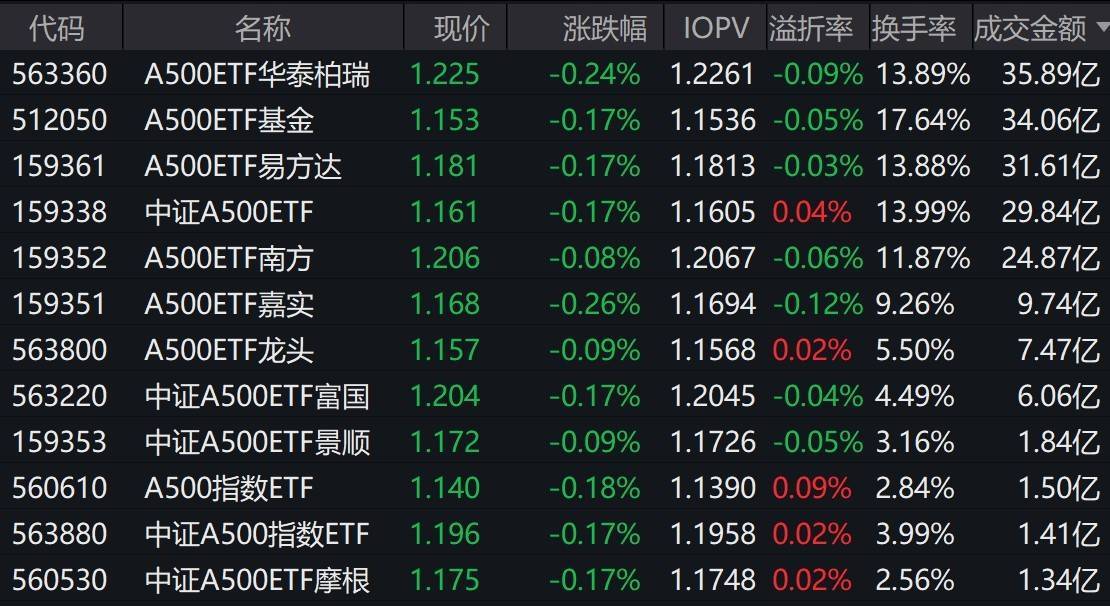
Market Overview - The market experienced a morning surge followed by a decline, with the Shenzhen Composite Index and Shanghai Composite Index turning negative, while the CSI A500 Index fell by 0.01% [1] - The military industry sector showed active performance, while the banking sector strengthened, and the chemical sector saw a mid-session rally. Conversely, the film and media sectors weakened [1] ETF Performance - As of the morning close, ETFs tracking the CSI A500 Index saw a slight decline, with 12 related ETFs having transaction volumes exceeding 100 million yuan, and 3 surpassing 3.1 billion yuan [1] - The transaction volumes for the top three A500 ETFs were as follows: Huatai-PB A500 ETF at 3.589 billion yuan, A500 ETF Fund at 3.406 billion yuan, and E Fund A500 ETF at 3.161 billion yuan [1] Analyst Insights - Some brokerages indicated that the fundamental logic of the A-share market has not changed significantly in the short term, suggesting that the impact of overseas markets on the main index is relatively limited. The Shanghai Composite Index has been oscillating around the 4000-point mark for some time, indicating limited downside potential [2] - Following a period of continuous adjustment, the market may present opportunities for low-cost positioning [2]
午评:震荡分化中,资金悄然调仓!这两大主线获重点布局
Sou Hu Cai Jing· 2025-11-19 04:03
Core Viewpoint - The A-share market is experiencing a weak overall performance with structural differentiation, as major indices show mixed results and cautious market sentiment prevails [1] Market Performance - The Shanghai Composite Index fell by 0.04% to 3938.29 points, remaining below 4000 for two consecutive days, while the Shenzhen Component Index decreased by 0.32%, and the ChiNext Index slightly rose by 0.12% [1] - The total trading volume reached 1.44 trillion yuan, maintaining high levels, but northbound capital experienced a net outflow, indicating a cautious market mood [1] Sector Analysis - The leading sectors are focused on "resource moats" and "defensive attributes," with the oil and petrochemical sector leading gains at 1.22%, followed by coal, banking, and non-bank financials, which rose by 0.16%, 0.82%, and 0.32% respectively [1] - The strength in these sectors is attributed to stabilizing macroeconomic expectations, fluctuating high oil prices, and long-term capital demand for high-dividend assets [1] - Funds are shifting from overvalued sectors such as pharmaceuticals, computers, media, and real estate to more certain cyclical and financial sectors, indicating a subtle market style transition [1] Driving Logic of Leading Sectors - The robust performance of the oil and petrochemical sector is driven by high oil price fluctuations and changes in the global energy supply-demand landscape, supported by domestic growth policies and industrial optimization [2] - The water product index surged by 3.89%, and the shipbuilding index rose by 3.1%, reflecting diverse market opportunities linked to seasonal factors and strong quarterly earnings [2] - The shipbuilding sector's rise is influenced by the "14th Five-Year Plan" emphasis on high-end equipment manufacturing and rumors regarding naval equipment deployment, indicating a shift from policy expectations to actual order fulfillment [2] Market Outlook - In the short term, the market lacks a clear single main line, with funds rapidly rotating among high-dividend defensive, cyclical resources, and thematic growth sectors [2] - The index is expected to continue fluctuating, with investors advised to focus on sectors with performance support and reasonable valuations, avoiding speculative plays [2] - From a mid to long-term perspective, the recovery of the Chinese economy and trends in industrial upgrading remain core market drivers, with structural differentiation setting the stage for the next market cycle [3]