航空航天

Search documents
ETF午评 | 商业航天板块领涨,卫星ETF、航空航天ETF涨超4%
Xin Lang Cai Jing· 2025-12-25 04:05
Market Performance - The Shanghai Composite Index rose by 0.29% while the ChiNext Index fell by 0.37% [1] - Insurance stocks showed strength, while the paper and packaging industries also experienced gains [1] - The commercial aerospace sector remained active, with strong performances in stablecoins and robotics themes [1] ETF Performance - Mini-sized Hong Kong stock ETFs increased for the second consecutive day, with GF Fund's Hang Seng ETF and Cathay Fund's Hong Kong Stock Connect 50 ETF rising by 7.31% and 4% respectively, with latest premium/discount rates of 11.72% and 15.11% [1] - The commercial aerospace sector continued its upward trend, with Yongying Fund's Satellite ETF, Huatai-PB Fund's Aerospace ETF, and GF's Satellite ETF increasing by 4.5%, 4.23%, and 3.94% respectively [1] Sector Performance - The energy metals industry chain experienced a pullback, with lithium mining leading the decline [1] - The semiconductor sector showed weakness [1] - Precious metals sector saw a decline, with mining ETFs and non-ferrous metal ETFs falling by 2% and 1.98% respectively, while gold stocks and gold stock ETFs dropped by 1.9% [1]
盘中交易价格创上市以来新高!航空航天ETF天弘(159241)跟踪指数涨近4%,近10日净流入超3100万元,文昌国际航空航天论坛启幕商业航天新篇
Sou Hu Cai Jing· 2025-12-25 03:42
Core Viewpoint - The aerospace ETF Tianhong (159241) has reached a record high since its listing, indicating strong market activity and investor interest in the aerospace sector [1] Group 1: Market Performance - As of December 25, 2025, the aerospace ETF Tianhong (159241) recorded a trading price that set a new high, with a turnover rate of 12.73% and a transaction volume of 75.2243 million yuan [1] - The CN5082 index, which tracks the aerospace industry, rose nearly 4%, with significant gains in constituent stocks such as Guanglian Aviation (300900) up 19.99%, Tian'ao Electronics (002935) up 10.01%, and Hangfa Technology (600391) up 10.00% [1] - Over the two weeks leading up to December 24, the aerospace ETF Tianhong (159241) saw an increase in scale by 5.8472 million yuan, reflecting substantial growth [1] - In the last ten trading days, the aerospace ETF Tianhong (159241) attracted a total of 31.6645 million yuan in inflows [1] Group 2: Product Highlights - The aerospace ETF Tianhong (159241) closely tracks the CN5082 index, which encompasses sectors such as aerospace equipment, military electronics, and satellite internet, indicating a focus on high-tech and R&D-intensive industries [2] Group 3: Industry Events - The 2025 Wenchang International Aerospace Forum was held in Wenchang, Hainan, gathering around 500 participants from the global aerospace sector to discuss opportunities in commercial aerospace amid significant industry changes [2] - Following the successful launch of the commercial aerospace launch site in Hainan, the industry is entering a new phase of scale and industrialization, supported by the construction of the Hainan Free Trade Port [2] Group 4: Institutional Insights - CITIC Securities noted that by December 2025, SpaceX had successfully launched 3,095 Starlink satellites, and domestic developments are expected to produce a recoverable medium-sized launch vehicle comparable to Falcon 9, indicating a breakthrough in launch capacity [2] - The reduction in launch costs is anticipated to accelerate market realization in satellites, terminals, and computing power, confirming the investment thesis in commercial aerospace [2] - The entry of China Star Network and G60 Qianfan Constellation into mass launch phases, along with the operationalization of the Hainan commercial launch site, is expected to lead to a new era in commercial aerospace characterized by high capacity and low costs [2]






从“融资”向“融智”跨越 一家县域农商银行的科技金融蝶变之路
Jin Rong Shi Bao· 2025-12-25 03:20
Core Insights - The article highlights the proactive role of Hai'an Rural Commercial Bank in supporting technology-driven enterprises, showcasing its innovative financial services tailored to the needs of high-tech companies [1][2][3]. Group 1: Financial Support and Growth - Hai'an Rural Commercial Bank provided a loan of 10 million yuan to Nantong Sifang New Materials Co., Ltd., which has grown from a 30 million yuan output to 280 million yuan, demonstrating the bank's commitment to nurturing local tech enterprises [1]. - The bank has supported 547 technology-based enterprises, with a total credit loan balance of 9.566 billion yuan, reflecting its significant impact on the local tech ecosystem [2]. Group 2: Innovative Credit Assessment - The bank has established a new evaluation system that shifts focus from traditional asset-based assessments to evaluating future value and core capabilities of enterprises, allowing for more flexible credit support [2]. - This new model emphasizes the importance of intellectual property and cash flow over fixed assets, enabling tech companies to secure funding based on their innovation potential [2][3]. Group 3: Specialized Service Mechanisms - Hai'an Rural Commercial Bank has implemented a "six-special" mechanism to create a specialized service team for tech enterprises, ensuring tailored financial solutions [4]. - The bank launched Jiangsu's first financial service standard for tech enterprises, which aims to standardize and enhance service quality and efficiency [5]. Group 4: Comprehensive Product Offerings - The bank has developed a diverse product matrix that addresses the financial needs of tech enterprises at different growth stages, from startup loans to specialized financing for mature companies [6]. - Specific products include "Tech Innovation Loans" and "Talent Loans," designed to support various aspects of enterprise development [6]. Group 5: Ecosystem Building and Collaboration - Hai'an Rural Commercial Bank positions itself as a resource connector, collaborating with government and industry bodies to enhance support for tech enterprises [7]. - The bank has implemented differentiated interest rates for tech companies, resulting in a 70 basis point reduction in average loan rates compared to the previous year, thereby reducing financing costs for businesses [7].
广联航空签约文昌布局火箭链,商业航天无人机燃气轮机三线并进
Sou Hu Cai Jing· 2025-12-25 02:44
Group 1 - The company presented its business progress to over 20 institutional investors during a roadshow on December 24, highlighting its developments in commercial aerospace, gas turbines, and drones [1] - In the commercial aerospace sector, the company signed agreements with the Wenchang International Aerospace City Management Bureau and several industry enterprises during the 2025 Wenchang International Aerospace Forum, aiming to deepen industrial collaboration and resource integration [3] - The company plans to leverage the policy and geographical advantages of Wenchang Aerospace City to enhance cooperation with industry partners, supporting the goal of achieving high-density, scheduled launches in commercial aerospace [3] Group 2 - In the gas turbine sector, the company has achieved large-scale delivery of core components, covering various products and forming a complete supply chain capability [3] - The company has become a core supplier for key industry clients and is actively expanding its customer base and diverse application scenarios, showing strong business growth momentum [3] - Regarding the drone business, the company has established a comprehensive layout system, focusing on both military and civilian applications, with military drones targeting high-end models and civilian drones addressing low-altitude economic opportunities [4] Group 3 - The company aims to build a core customer matrix covering mainstream rocket models in the commercial aerospace sector, adhering to a principle of diversified and in-depth customer layout [4] - The company emphasizes a threefold binding of technology, service, and ecosystem to strengthen cooperation and customer loyalty [4]

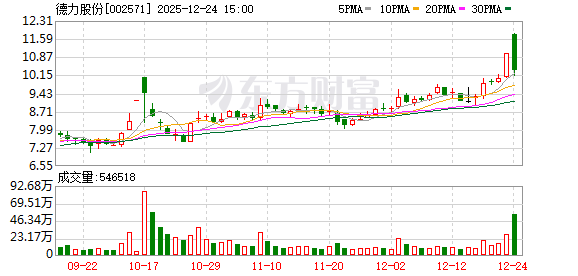
德力股份新主生变:净利连亏多年 股价提前异动
Bei Jing Shang Bao· 2025-12-25 02:35
Core Viewpoint - The ownership change of Delixi Co., Ltd. to Yiyuan Aviation Technology Co., Ltd. is significant, as it reflects a strategic shift aimed at revitalizing the company amidst ongoing financial losses and a high debt ratio [1][4][8]. Group 1: Ownership Change - Delixi Co., Ltd. has announced a change in its controlling shareholder from Xinjiang Bingxin Jian High-tech Industry Investment Operation Partnership to Yiyuan Aviation Technology Co., Ltd. [1][2] - The new controlling shareholders will be Wang Tianzhong and Xu Qinghua, who are associated with the aerospace and deep-sea equipment sectors [1][5]. - Following the announcement, Delixi's stock price experienced a decline of 6.08%, closing at 10.35 yuan per share [1][2]. Group 2: Financial Performance - Delixi has reported a net loss for three consecutive years, with a loss of 89.80 million yuan in the first three quarters of this year [1][9]. - The company's revenue for the first three quarters of this year was approximately 1.187 billion yuan, reflecting a year-on-year decrease of 11.07% [9]. - The financial difficulties are attributed to a supply-demand imbalance in the global photovoltaic industry and a temporary shutdown of a production facility [9]. Group 3: Capital Raising and Use of Funds - The revised private placement plan aims to raise up to 885 million yuan, with the funds intended for enhancing liquidity and repaying bank loans [2][8]. - The previous fundraising target was 720 million yuan, indicating an increase in the scale of capital raising [3][8]. - The new shareholders have committed to using their own funds and dividends from their controlled company, Huatiansheng, to support Delixi's financial needs [5][6]. Group 4: Strategic Direction - The new management plans to leverage high-end manufacturing capabilities and resources from Huatiansheng to expand Delixi's business and improve its financial health [6][8]. - Despite the ownership change, Delixi has stated that there will be no immediate changes to its existing business operations [6][8]. - The new shareholders have signed an agreement to act in concert, holding a combined 75% stake in Yiyuan Aviation [6][7].

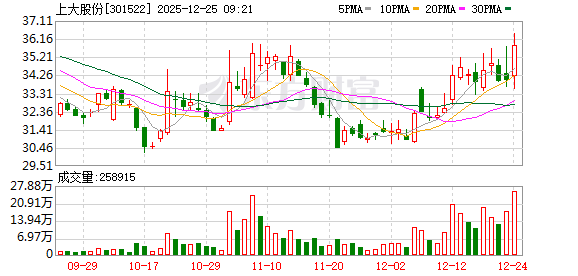
上大股份:已与航天科技/航天科工集团下属院所开展合作,已成为其高温合金等材料的合格供应商
Mei Ri Jing Ji Xin Wen· 2025-12-25 01:20
Group 1 - The company has established cooperation with the China Aerospace Science and Technology Corporation's Eighth Academy, becoming a qualified supplier of high-temperature alloys and other materials [2] - The products supplied by the company are primarily used in the manufacturing of solid rocket motor casings, liquid rocket engine hot-end components, rocket balance rudder shafts, and other critical high-temperature, high-strength components for spacecraft [2] - The company has participated in the trial production verification and mass production delivery of special alloy products used in various models of aerospace engines and related equipment [2]

平房 13个产品入选省重点新产品
Xin Lang Cai Jing· 2025-12-24 22:54
Group 1 - The core viewpoint of the article highlights the recognition of 13 new products from 12 enterprises in Pingfang District as provincial key new products, accounting for one-quarter of the total in the city [1] - The recognized products span key industries in Pingfang District, including aerospace, high-end equipment, new materials, electronic information, smart agriculture machinery, and digital economy, showcasing advanced technology and clear intellectual property rights [1] - The provincial industry and information technology department will provide a financial reward of 5% of the actual transaction amount to the recognized enterprises, with an estimated total subsidy of 4.6 million yuan for the products recognized [1] Group 2 - The Pingfang District Industry and Information Technology Bureau emphasizes technology innovation as a core driver for high-quality development and is committed to enhancing the innovation capabilities of enterprises [1] - The district aims to cultivate more core competitive new products and technologies, continuously generating new productive forces to empower the sustainable and healthy development of the regional industrial economy [1]
江苏新增13家省创新联合体
Xin Hua Ri Bao· 2025-12-24 22:26
Group 1 - Jiangsu Province has identified 13 innovation consortiums for 2025, involving approximately 160 innovative entities across various emerging industries such as artificial intelligence, brain-like intelligence, high-end equipment, aerospace, and biomedicine [1][2] - The 13 innovation consortiums are distributed across five cities: Nanjing, Suzhou, Wuxi, Changzhou, and Xuzhou, with 10 led by industry leaders and 3 by national innovation platforms and research institutes [1] - Notable leading units include Nanjing Lais Information Technology Co., Ltd., a pioneer in aviation transportation informatization, and Xuzhou Heavy Machinery Co., Ltd., a leader in the wheeled crane industry [1] Group 2 - The innovation consortiums focus on addressing "bottleneck" technologies that restrict industrial development, key technologies with first-mover advantages, and foundational frontier technologies, setting medium- to long-term strategic goals [2] - Since the launch of the provincial innovation consortium construction in 2022, a total of 38 provincial innovation consortiums have aggregated over 440 innovative entities, including renowned universities and leading enterprises [2]
国务院国资委部署2026年央企重点工作
Shang Hai Zheng Quan Bao· 2025-12-24 19:15
2025年1至11月,中央企业研发投入8901.6亿元,研发投入强度达到2.62%。23个创新联合体新吸纳超过 100家创新主体参与攻关,1000多个合作项目高质量推进。对于2026年的科技创新工作,张玉卓表示, 2026年,将坚持科技创新和产业创新融合发展,统筹推进技术攻关、成果转化和人才生态建设,更好催 生新质生产力。 在加强原始创新和关键核心技术攻关方面,要建好全国重点实验室,承担一批新的国家科技重大项目, 更好牵引全周期有组织创新和全链条超常规突破。深化原创技术策源地建设,高标准抓好行业共性技术 研究院建设,努力产出更多标志性成果。健全市场导向的科研组织管理体系,提升创新资源统筹配置效 率,培育壮大科技领军企业。 加快重大科技成果转化应用方面,要推动创新联合体进一步升级提质,建设好中试验证平台,带头开放 场景、释放需求、共享数据、统一标准。深入推进科技成果应用拓展工程二批项目建设,用好科技创新 成果推荐目录,加强产业链共链行动供需对接和成果转化。 要坚持传统产业转型和新兴产业发展并举。深入实施焕新、启航行动,突出工程和场景牵引,接续发力 新能源、新能源汽车、新材料、航空航天、低空经济、量子科技、6G等 ...
股价提前异动!德力股份新主火速生变 翼元航空将入主
Bei Jing Shang Bao· 2025-12-24 14:42
Core Viewpoint - The ownership change of Delixi Co., Ltd. (德力股份) has been announced, with the new controlling shareholder being Liao Ning Yi Yuan Aviation Technology Co., Ltd. (翼元航空), leading to significant market reactions and concerns regarding the company's future direction and financial health [2][3][4]. Group 1: Ownership Change Details - The new share issuance plan involves a change in the controlling shareholder from Xinjiang Bingxin Jian High-tech Industry Investment Operation Partnership to Yi Yuan Aviation, with the actual controllers being Wang Tianzhong and Xu Qinghua [2][3]. - The share issuance is priced at 7.53 yuan per share, with a total of up to 1.18 billion shares to be issued, aiming to raise no more than 8.85 billion yuan for liquidity and debt repayment [3][4]. - Following the announcement, Delixi's stock price experienced volatility, opening at 11.78 yuan but closing down 6.08% at 10.35 yuan, reflecting market uncertainty [3][4]. Group 2: Financial Performance and Challenges - Delixi has reported net losses for three consecutive years, with a loss of approximately 89.8 million yuan in the first three quarters of the current year [2][11]. - The company's asset-liability ratio has been increasing, reaching 68.08% by the end of 2024, indicating growing financial pressure [10][11]. - Revenue for Delixi has been declining, with a reported revenue of approximately 1.187 billion yuan in the first three quarters of the current year, a year-on-year decrease of 11.07% [11]. Group 3: New Shareholder Background - Wang Tianzhong and Xu Qinghua, the new controllers, are associated with Huatiansheng Aviation Technology Co., Ltd., which specializes in aerospace and deep-sea equipment, indicating a strategic shift towards high-end manufacturing [6][7]. - Huatiansheng reported revenues of approximately 190 million yuan and 77.9 million yuan for 2024 and the first nine months of 2025, respectively, with net profits of 62 million yuan and 14.6 million yuan [6]. - The new shareholders plan to leverage their expertise and resources to enhance Delixi's business structure and value, focusing on high-end manufacturing [7].