投资银行

Search documents
高盛对冲基金主管:在“闭眼买就能赚钱”的市场里,不要对抗牛市,“美股还有油”
Hua Er Jie Jian Wen· 2025-09-21 02:48
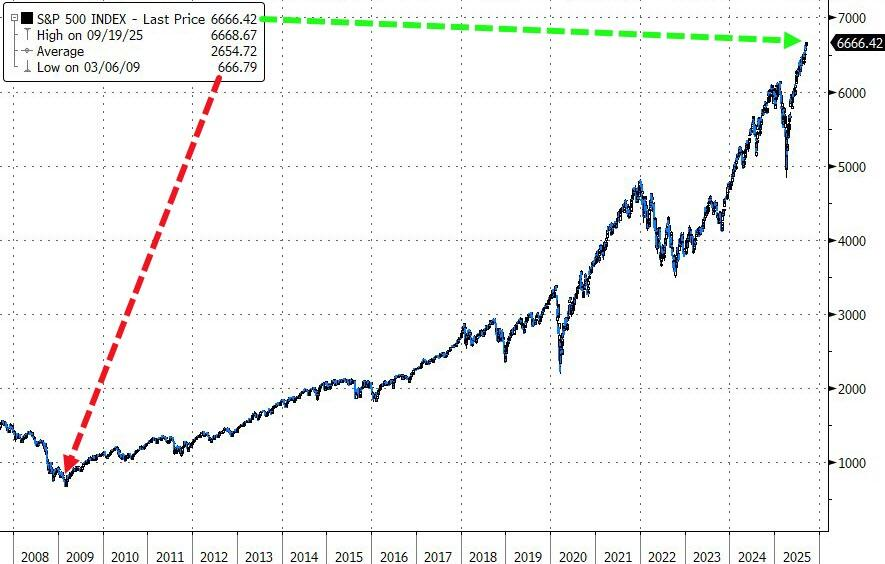
Core Insights - Goldman Sachs' hedge fund head Tony Pasquariello indicates that despite signs of overheating in some market sectors, investors should not fight the current bull market trend [1] - The report highlights a strong bullish sentiment supported by the Federal Reserve's intention to lower interest rates amid economic acceleration [1][4] - The overall conclusion suggests a balanced approach of neither fighting the trend nor blindly chasing highs, advocating for a "responsible bullish" strategy [2] Market Indicators - Certain market indicators are approaching "red line" territory, with some high-growth sectors experiencing vertical price increases and a surge in demand for call options [1] - The AAII bull-bear indicator is near zero, indicating that investor sentiment has not reached extreme optimism, suggesting room for new capital inflows [4] - The NAAIM trader exposure survey has remained flat since summer, and the CNN Fear & Greed Index stands at 61, not indicating "extreme prosperity" [4] Economic Support - The resilience of American consumers is noted as a solid foundation for the economy, with CEOs from retail and tech sectors expressing confidence in ongoing healthy business activity [5] - Historical data suggests that when the Federal Reserve lowers rates in a recovering economy, it is highly beneficial for the stock market [4] Market Dynamics - Concerns regarding market breadth are deemed premature, as all 11 sectors under the Global Industry Classification Standard (GICS) have shown positive total returns this year [6] - The active capital markets are closely tied to technological innovations, with significant advancements in robotics, autonomous driving, drones, quantum computing, and satellites [6] - The growth of systematic trading options ETFs has surged from $12 billion to $170 billion in five years, indicating a positive dynamic for the trading ecosystem [6] Alternative Assets - A trend is emerging where declining "insurance value" of global government bonds may drive more capital into gold [7] - The integration of decentralized finance (DeFi) with traditional finance is accelerating, with Bitcoin's price movements increasingly discussed alongside stocks, bonds, currencies, and commodities [7]


诚邀体验 | 中金点睛数字化投研平台
中金点睛· 2025-09-21 01:05
Core Viewpoint - The article emphasizes the establishment of a digital investment research platform by CICC, aiming to provide efficient, professional, and accurate research services through the integration of insights from over 30 specialized teams and a comprehensive coverage of more than 1800 stocks [1]. Group 1: Research Services - CICC's digital investment research platform, "CICC Insight," offers a one-stop service that includes research reports, conference activities, fundamental databases, and research frameworks [1]. - The platform features daily updates on investment research focuses and timely article selections, enhancing the accessibility of market insights [4]. - CICC provides over 3,000 complete research reports covering macroeconomics, industry research, and commodities [9]. Group 2: Data and Frameworks - The platform includes more than 160 industry research frameworks and over 40 premium databases, facilitating in-depth industry analysis [10]. - CICC Insight incorporates advanced AI search capabilities, allowing users to filter key points and engage in intelligent Q&A [10].

关于中国股市,高盛最新发声
Zhong Guo Zheng Quan Bao· 2025-09-21 00:31
Group 1: Market Outlook - The current rally in the Chinese stock market is deemed sustainable and not a speculative bubble, supported by a healthier market participant structure [2] - The market participant structure has become more balanced, with increased participation from institutional investors such as domestic insurance, pension funds, mutual funds, and overseas emerging market funds [2] - Valuation levels have not been excessively inflated, with the MSCI China Index trading at approximately 17 times earnings, slightly above historical averages, and the CSI 300 Index median stock PE ratio around 18 times, close to historical mean [2] Group 2: Growth Drivers - The "anti-involution" policy and AI-related investment opportunities are expected to provide ongoing growth momentum for the Chinese stock market [3] - The AI wave is improving fundamentals in the Chinese stock market, with Chinese companies planning to increase R&D and capital expenditure in AI-related hardware over the next five years [3] - The "anti-involution" policy is projected to enhance corporate profitability by approximately 2% annually in the coming years, particularly benefiting leading companies in various industries [4] Group 3: Global Capital Trends - The macro environment, including potential interest rate cuts by the Federal Reserve and a weaker dollar, is creating favorable conditions for Asian stock markets [5] - There is a subtle shift in overseas investors' attitudes towards China, with more funds willing to consider investments in the Chinese market [5] - European investors are showing a more positive attitude towards China, while Middle Eastern sovereign wealth funds are expressing stronger interest in Asian markets, including China [5]
美联储降息光速"变脸"!降息利好为何成了利空?全球央行各走各
Sou Hu Cai Jing· 2025-09-20 15:25
Group 1 - The Federal Reserve's decision to cut interest rates by 25 basis points has led to unexpected market reactions, with the dollar index rising and gold prices falling, indicating a shift from "trading expectations" to "verifying facts" in asset pricing [1][3][10] - The Federal Open Market Committee (FOMC) signaled a less dovish stance, suggesting only one additional rate cut next year instead of the previously expected two to three, which has influenced market dynamics [3][19] - The yield curve has steepened, reflecting market concerns about "stagflation" risks, as short-term rates have decreased while long-term rates remain stable [5][19] Group 2 - The U.S. stock market exhibited divergent trends post-rate cut, with the Dow Jones Industrial Average rising while the Nasdaq and S&P 500 indices fell, highlighting a significant shift in capital flows [7][8] - Technology stocks faced selling pressure, particularly Nvidia, which dropped over 2.6% due to concerns about demand for its chips, while Chinese tech firms like Alibaba and Baidu saw substantial gains driven by their self-developed chips [8][13] - The Chinese concept stocks outperformed, with the Nasdaq Golden Dragon China Index rising 2.85%, led by Alibaba and Baidu, as investors focused on the narrative of self-research capabilities amid challenges faced by U.S. chip giants [13][15] Group 3 - Global central banks are responding differently to the Fed's rate cut, with Canada following suit while the European Central Bank and others maintain their rates, indicating a divergence in monetary policy based on regional economic challenges [5][17] - The Fed's chairman's remarks about a "slower, longer" rate-cutting path reflect a complex economic outlook, balancing employment support against inflation risks, which is influencing capital flows [19][21] - The current market environment necessitates a shift from sentiment-driven to performance-driven investment strategies, emphasizing the importance of understanding the underlying logic of different markets [21][23]



高盛宣布:超配A股、H股! 外资机构对A股后市展望仍较为乐观
Zheng Quan Shi Bao Wang· 2025-09-20 15:19
Core Viewpoint - Foreign capital is gradually increasing its allocation to Chinese assets, reflecting optimism about the Chinese market despite recent fluctuations in A-shares and H-shares [1][2][3] Group 1: Market Performance and Outlook - A-shares and H-shares are expected to see an 8% and 3% increase respectively over the next 12 months according to Goldman Sachs [1][6] - The current market is characterized by a "slow bull" trend, supported by market reforms and the introduction of long-term capital [5][6] - The active participation of foreign investors in A-shares has reached a cyclical high, with significant inflows recorded in August [2][3] Group 2: Institutional Investment Trends - Domestic public funds have reduced cash ratios to a five-year low, indicating increased stock exposure [2] - Insurance companies have increased their stock holdings by 26% this year, while private equity fund management scales have risen from 5 trillion RMB to 5.9 trillion RMB [2][3] - The proportion of institutional investors in A-shares is currently at 14%, significantly lower than the averages of 50% for emerging markets and 59% for developed markets [6] Group 3: Potential for Incremental Capital - There is a substantial potential for incremental capital in the Chinese stock market, with household asset allocation heavily skewed towards real estate (55%) and cash deposits (27%), while stocks account for only 11% [6] - The ongoing adjustment in the real estate market is expected to redirect trillions of RMB from deposits and real estate into the stock market [6] - If institutional ownership in A-shares were to rise to the average levels of emerging or developed markets, it could lead to an influx of 14 trillion RMB or 30 trillion RMB respectively [6] Group 4: Economic and Policy Factors - The current bull market is driven by liquidity and valuation improvements, with a global phenomenon observed in stock market performance [3][4] - The normalization of corporate profits is projected to achieve mid-to-high single-digit growth from 2025 to 2027, supporting the market's upward trajectory [3][4]
估值与流动性双轮驱动 高盛维持A股H股增持评级
Huan Qiu Wang· 2025-09-20 02:06
Core Viewpoint - Goldman Sachs predicts further prosperity in the Chinese stock market driven by valuation and liquidity, maintaining "overweight" ratings for A-shares and H-shares, with an expected 8% upside for A-shares and 3% for H-shares over the next 12 months, recommending investors to increase positions during market corrections [1][3]. Group 1: Market Drivers - The strong performance of the Chinese stock market this year is attributed to "re-inflation" expectations and advancements in artificial intelligence technology, with ongoing valuation recovery and liquidity improvement expected to provide upward momentum [3]. - Goldman Sachs emphasizes that corporate earnings are fundamental for sustained market growth, while liquidity is essential for bull market formation, noting that the current "slow bull" pattern in the A-share market is more stable compared to historical trends [3]. Group 2: Valuation and Liquidity - Current valuation levels indicate that most metrics show large-cap stock valuations are still within a reasonable range, with the index price-to-earnings ratio at a moderate level, suggesting attractive liquidity premium space for both A-shares and H-shares [3]. - The adjusted "A-share investor sentiment index" indicates a current market risk preference composite index of 1.3, suggesting consolidation risks but no trend reversal yet [3]. Group 3: Institutional Investment Potential - If the domestic institutional holding ratio increases from the current 14% to the emerging market average of 50% or the developed market average of 59%, the potential increase in domestic stock holdings could reach between 32 trillion to 40 trillion RMB [4]. - The investable funds available to Chinese households, including 160 trillion RMB in savings and 330 trillion RMB in real estate investments, present significant potential for future capital allocation adjustments, although this process is expected to be gradual [4]. Group 4: Investment Themes - Goldman Sachs is optimistic about investment themes such as the "Prominent 10" private enterprises, artificial intelligence, anti-cyclical sectors, and shareholder returns [4].

中金:特朗普“大重置”下,看汇探股
中金点睛· 2025-09-20 00:07
Core Viewpoint - Recent positive factors have collectively strengthened the RMB, with the exchange rate rising since mid-August and aligning closer to the central parity. Weak US labor market data and expectations of interest rate cuts have contributed to this trend. The RMB's appreciation is expected to continue in the context of a potential new round of US dollar depreciation driven by fiscal and monetary policies under the "Trump Reset" initiative [2][10]. Group 1: RMB Strengthening Factors - The RMB exchange rate has strengthened since mid-August, with the onshore rate approaching 7.10 and the offshore rate surpassing 7.10, marking new highs since November 2024 [4]. - Weak US labor market data, including significant downward revisions to non-farm employment and lower-than-expected job openings, have led to increased market expectations for interest rate cuts [4][5]. - China's exports have shown resilience, with a cumulative year-on-year growth of 5.9% from January to August 2025, exceeding market expectations [4]. Group 2: Impact of Weak Dollar on Emerging Markets - A weak dollar typically boosts global investment demand and economic growth in emerging markets, benefiting the profitability of export-oriented companies [3]. - The weak dollar enhances capital flows into emerging markets, improving their balance sheets and encouraging capital expenditures, which in turn supports economic recovery [12][21]. - Historical data indicates that a one standard deviation depreciation of the dollar index leads to a 0.16% increase in monthly capital inflows to emerging market equities [21]. Group 3: A/H Share Market Dynamics - The weak dollar and loose monetary conditions are expected to improve the profitability, valuation, and liquidity of A/H shares [26]. - A weak dollar typically leads to increased foreign capital inflows into the A/H market, with significant inflows observed in 2025, contrasting with net outflows in the previous year [35]. - The Hang Seng Index has shown greater elasticity to the dollar index compared to the CSI 300, with respective elasticities of -2.5 and -1.2, indicating a stronger response to dollar depreciation [40]. Group 4: Sector Performance under Currency Fluctuations - The appreciation of the RMB is expected to favor growth sectors in the A/H market, particularly in information technology and materials [50]. - Under a weak dollar scenario, A-share growth and value styles have shown average monthly returns of 3.6% and 2.6%, respectively, while the corresponding figures for Hong Kong stocks are 3.4% and 2.2% [51]. - Specific sectors such as consumer staples, materials, finance, and information technology are anticipated to perform well during periods of RMB appreciation [28][50].

诚邀体验 | 中金点睛数字化投研平台
中金点睛· 2025-09-20 00:07
Core Viewpoint - The article emphasizes the establishment of a digital investment research platform by CICC, aiming to provide efficient, professional, and accurate research services through the integration of various research teams and advanced technology [1]. Group 1: Platform Features - CICC's digital investment research platform integrates insights from over 30 professional teams and covers more than 1,800 individual stocks [1]. - The platform offers a variety of research outputs, including research reports, conference activities, fundamental databases, and research frameworks [1]. - It utilizes large model technology to enhance the efficiency and accuracy of research services provided to clients [1]. Group 2: Research Offerings - The platform features daily updates on investment research focuses and timely article selections [4]. - It includes access to over 3,000 complete research reports covering macroeconomics, industry research, and commodities [9]. - The platform provides more than 160 industry research frameworks and 40 premium databases, along with a data dashboard for enhanced data visualization [10]. Group 3: User Engagement - Users can experience live interpretations of market hotspots by senior analysts through public live broadcasts [4]. - The platform encourages user engagement through features like email verification to unlock upgraded functionalities [8]. - It offers intelligent search capabilities, allowing users to ask questions and receive tailored responses [10].

超配中国股市!高盛:本轮上涨驱动结构更健康,估值未过高
券商中国· 2025-09-19 23:31
9月19日,在高盛举办的媒体交流会上,高盛亚太区首席股票策略师慕天辉 (Timothy Moe)及首席中国股票策略师刘 劲津(Kinger Lau)阐述最新观点。 慕天辉认为,美联储降息及美元贬值的环境总体上对股市有利,尤其将支持亚洲市场表现。高盛超配中、韩、日三大市 场,侧重科技及周期性板块。 刘劲津则认为,从流动性驱动结构而言,本轮中国股票市场上涨的健康度优于历史水平,估值也仍未过高。当前市场情 绪虽改善,但远未达到2021年及2015年的投机水平。若经济增长及其他基本面因素持续改善,市场情绪仍有提升空间。 刘劲津还表示,当前,海外中长期投资者对非美市场兴趣浓厚,而中国凭借流动性优势和主题投资机会,在全球各市场 中排名靠前,尤其是机器人等领域国内生态体系全面完整,在欧美市场难以找到细分领域的优质标的。 全球资金有望进一步流入亚洲市场,超配中国股市 慕天辉表示,美联储近日降息25个基点符合预期,预计美联储将在今年十月和十二月会议上再各降息一次,并于明年三 月和六月分别进一步降息,最终使利率水平降至3%至3.25%。 "这一预期与市场共识基本一致。美联储降息及美元贬值的环境总体上对股市有利,尤其将支持亚洲市场 ...

解读中国统计指标:概念、方法和含义-中金公司
Sou Hu Cai Jing· 2025-09-19 14:34
Core Viewpoint - The report "Interpretation of China's Statistical Indicators: Concepts, Methods, and Implications" by CICC systematically organizes key macroeconomic statistical indicators in China, covering six major areas: economic activities, income, foreign economy, monetary finance, prices, and population and employment [1][10]. Economic Activities - Key indicators include GDP calculated by production, income, and expenditure methods, with the income method being predominant annually. There is a noted underestimation of self-owned housing value [1][11]. - The industrial added value above designated size includes enterprises with annual main business income exceeding 20 million yuan, calculated monthly using PPI [1][11]. - PMI is divided into official and Caixin PMI, with the former being more representative due to a larger sample size [1][11]. - Fixed asset investment is subject to overestimation, as seen in 2016 when some provinces reported investments exceeding GDP [1][11]. - Retail sales of consumer goods include online retail and differentiate between surveyed units above and below a certain threshold [1][11]. Income - Income indicators encompass corporate profits (operating surplus, industrial enterprise profits) and resident income (average wages in urban units, average monthly income of migrant workers, per capita disposable income), with the latter facing issues of underreporting high-income groups [1][11]. - Fiscal revenue and expenditure are categorized into narrow (general public budget) and broad (including four types of revenue and expenditure) [1][11]. Foreign Economy - Foreign economic indicators include customs trade in goods (exports calculated on FOB, imports on CIF), FDI and ODI, balance of payments, and foreign exchange reserves controlled by the central bank [1][11]. Monetary Finance - Monetary indicators consist of money supply (M0, M1, M2), new loans, total social financing, and various monetary policy tools such as benchmark interest rates and reserve requirements [1][11]. - Interest rate indicators include repo rates, Shibor, and government bond yields, along with onshore and offshore RMB exchange rates [1][11]. Prices - Price indicators include CPI (covering 262 basic categories with a high weight on food), PPI (covering over 50,000 industrial enterprises), GDP deflator, and housing prices in 70 large and medium-sized cities [1][11]. Population and Employment - Population indicators include total population, age structure (reflected by dependency ratios), employment numbers, urban new employment, and survey unemployment rates, which have been published monthly since 2013 for more accuracy [1][11].