投资银行

Search documents
诚邀体验 | 中金点睛数字化投研平台
中金点睛· 2025-09-20 00:07
Core Viewpoint - The article emphasizes the establishment of a digital investment research platform by CICC, aiming to provide efficient, professional, and accurate research services through the integration of various research teams and advanced technology [1]. Group 1: Platform Features - CICC's digital investment research platform integrates insights from over 30 professional teams and covers more than 1,800 individual stocks [1]. - The platform offers a variety of research outputs, including research reports, conference activities, fundamental databases, and research frameworks [1]. - It utilizes large model technology to enhance the efficiency and accuracy of research services provided to clients [1]. Group 2: Research Offerings - The platform features daily updates on investment research focuses and timely article selections [4]. - It includes access to over 3,000 complete research reports covering macroeconomics, industry research, and commodities [9]. - The platform provides more than 160 industry research frameworks and 40 premium databases, along with a data dashboard for enhanced data visualization [10]. Group 3: User Engagement - Users can experience live interpretations of market hotspots by senior analysts through public live broadcasts [4]. - The platform encourages user engagement through features like email verification to unlock upgraded functionalities [8]. - It offers intelligent search capabilities, allowing users to ask questions and receive tailored responses [10].


超配中国股市!高盛:本轮上涨驱动结构更健康,估值未过高
券商中国· 2025-09-19 23:31
9月19日,在高盛举办的媒体交流会上,高盛亚太区首席股票策略师慕天辉 (Timothy Moe)及首席中国股票策略师刘 劲津(Kinger Lau)阐述最新观点。 慕天辉认为,美联储降息及美元贬值的环境总体上对股市有利,尤其将支持亚洲市场表现。高盛超配中、韩、日三大市 场,侧重科技及周期性板块。 刘劲津则认为,从流动性驱动结构而言,本轮中国股票市场上涨的健康度优于历史水平,估值也仍未过高。当前市场情 绪虽改善,但远未达到2021年及2015年的投机水平。若经济增长及其他基本面因素持续改善,市场情绪仍有提升空间。 刘劲津还表示,当前,海外中长期投资者对非美市场兴趣浓厚,而中国凭借流动性优势和主题投资机会,在全球各市场 中排名靠前,尤其是机器人等领域国内生态体系全面完整,在欧美市场难以找到细分领域的优质标的。 全球资金有望进一步流入亚洲市场,超配中国股市 慕天辉表示,美联储近日降息25个基点符合预期,预计美联储将在今年十月和十二月会议上再各降息一次,并于明年三 月和六月分别进一步降息,最终使利率水平降至3%至3.25%。 "这一预期与市场共识基本一致。美联储降息及美元贬值的环境总体上对股市有利,尤其将支持亚洲市场 ...

解读中国统计指标:概念、方法和含义-中金公司
Sou Hu Cai Jing· 2025-09-19 14:34
Core Viewpoint - The report "Interpretation of China's Statistical Indicators: Concepts, Methods, and Implications" by CICC systematically organizes key macroeconomic statistical indicators in China, covering six major areas: economic activities, income, foreign economy, monetary finance, prices, and population and employment [1][10]. Economic Activities - Key indicators include GDP calculated by production, income, and expenditure methods, with the income method being predominant annually. There is a noted underestimation of self-owned housing value [1][11]. - The industrial added value above designated size includes enterprises with annual main business income exceeding 20 million yuan, calculated monthly using PPI [1][11]. - PMI is divided into official and Caixin PMI, with the former being more representative due to a larger sample size [1][11]. - Fixed asset investment is subject to overestimation, as seen in 2016 when some provinces reported investments exceeding GDP [1][11]. - Retail sales of consumer goods include online retail and differentiate between surveyed units above and below a certain threshold [1][11]. Income - Income indicators encompass corporate profits (operating surplus, industrial enterprise profits) and resident income (average wages in urban units, average monthly income of migrant workers, per capita disposable income), with the latter facing issues of underreporting high-income groups [1][11]. - Fiscal revenue and expenditure are categorized into narrow (general public budget) and broad (including four types of revenue and expenditure) [1][11]. Foreign Economy - Foreign economic indicators include customs trade in goods (exports calculated on FOB, imports on CIF), FDI and ODI, balance of payments, and foreign exchange reserves controlled by the central bank [1][11]. Monetary Finance - Monetary indicators consist of money supply (M0, M1, M2), new loans, total social financing, and various monetary policy tools such as benchmark interest rates and reserve requirements [1][11]. - Interest rate indicators include repo rates, Shibor, and government bond yields, along with onshore and offshore RMB exchange rates [1][11]. Prices - Price indicators include CPI (covering 262 basic categories with a high weight on food), PPI (covering over 50,000 industrial enterprises), GDP deflator, and housing prices in 70 large and medium-sized cities [1][11]. Population and Employment - Population indicators include total population, age structure (reflected by dependency ratios), employment numbers, urban new employment, and survey unemployment rates, which have been published monthly since 2013 for more accuracy [1][11].


宽松“潮起”股市新高又新高,亚太市场谁主沉浮?|东盟观察
2 1 Shi Ji Jing Ji Bao Dao· 2025-09-19 13:25
Core Viewpoint - The Federal Reserve unexpectedly cut interest rates by 50 basis points, initiating a new easing cycle, with a total of three consecutive cuts. However, in 2025, the Fed maintained its stance for five consecutive meetings due to inflation concerns, before restarting rate cuts on September 17, 2025, which boosted market risk appetite and led to record highs in stock markets across China, the US, Japan, and South Korea [1]. Group 1: Impact of Federal Reserve Actions - The recent rate cuts by the Federal Reserve are expected to influence other Asian central banks, with predictions of rate reductions between 25 to 75 basis points for most Asian central banks next year, excluding the Bank of Japan [2]. - In a low interest rate and dollar environment, Asian stock markets typically perform well, with Goldman Sachs maintaining an optimistic outlook on markets in China, South Korea, and Japan [3]. Group 2: Focus on Chinese Market - Goldman Sachs has a positive view on the Chinese stock market, emphasizing themes such as leading private enterprises and the ongoing industry consolidation under the "anti-involution" theme, which could benefit these companies [3]. - Strong Chinese companies expanding into emerging markets and focusing on artificial intelligence, particularly robotics, are also highlighted as attractive investment opportunities. Additionally, there is a trend of higher shareholder returns, with companies increasing dividends and cash returns to shareholders [3]. Group 3: ASEAN Market Analysis - The ASEAN markets are lagging behind in the current easing cycle, with low valuations in markets like Indonesia and the Philippines, where expected P/E ratios are around 10 to 11, significantly below their long-term averages [4]. - Despite low liquidity challenges, particularly in the Philippines, the market is considered one of the cheapest in Asia, with a P/E ratio of 10, and potential for double-digit earnings growth. The domestic-driven sectors such as banking, real estate, and consumption are less sensitive to global risks, making the Philippines market attractive for investors willing to take on liquidity risks [4]. - Overall, Goldman Sachs holds an overweight view on the Philippines market, suggesting it offers good value and opportunities for investors who can manage liquidity risks [4].
宽松“潮起”股市新高又新高,亚太市场谁主沉浮?
2 1 Shi Ji Jing Ji Bao Dao· 2025-09-19 13:20
南方财经21世纪经济报道记者吴斌 2024年9月18日,美联储意外"暴力降息"50个基点,拉开宽松周期大幕,连续3次降息。然而,迈进2025 年,在通胀阴霾笼罩下,美联储观望时间比预期更长,连续5次会议"按兵不动"。 时隔一年,2025年9月17日,美联储"重启"降息,助推市场风险偏好升温,全球投资者普遍陷入狂欢, 中国、美国、日本、韩国等地股市屡创新高或阶段新高。 本轮降息周期未完待续,美联储或仍有100个基点左右的降息空间,这会如何影响亚太市场?近期相对 落后的东盟市场如何迎头赶上?哪些东盟国家的基本面更强?中国资产近期表现强势,未来还可以挖掘 哪些机遇?9月19日,高盛亚太区首席股票策略分析师慕天辉(Timothy Moe)就一系列焦点问题接受了21 世纪经济报道记者采访。超配中日韩市场 随着美联储重启降息,慕天辉认为,其他亚洲央行也有空间降息。根据高盛的预测,除日本央行外,大 多数其他亚洲央行明年都可能将利率下调25至75个基点,货币政策趋于宽松。 在美国利率和美元走低的环境下,慕天辉表示,亚洲股市往往表现良好。高盛对亚洲市场保持乐观,持 高配观点的市场包括中国、韩国和日本。 另一方面,虽然菲律宾市场 ...

高盛:继续超配中国股票市场
Sou Hu Cai Jing· 2025-09-19 12:55
Group 1 - Goldman Sachs expects the Federal Reserve to continue cutting interest rates, with anticipated cuts in October and December, ultimately reaching a level of 3.0%-3.25% by mid-2026, aligning with market consensus [1] - A weaker US dollar is projected to create a favorable environment for Asian stock markets, leading Goldman Sachs to maintain an overweight position in Chinese stocks [1] Group 2 - Goldman Sachs views the current valuation of the A-share market as supportive, with improved retail investor sentiment and an expected annual profit increase of approximately 2% for companies due to ongoing "anti-involution" policies [2] - The firm has not changed its industry allocation in the past two months, remaining optimistic about the internet sector and has overweighted the insurance and materials sectors since July [2] - Recent liquidity in the A-share market is supported by domestic institutions such as insurance, pension funds, and public funds, as well as participation from emerging markets and Asia-Pacific mutual funds, indicating a more resilient liquidity environment [2]
高盛:全球股市回报率将趋温和 科技板块之外投资机遇涌现
Zhi Tong Cai Jing· 2025-09-19 07:28
Group 1: Market Outlook - High valuations, rising interest rates, inflation, and slowing global trade expansion are contributing to potentially lower absolute returns in the stock market compared to past structural bull markets [1][2] - The U.S. stock market is particularly concentrated in a few large tech companies, which may pose risks for investors due to limited diversification opportunities [2][3] Group 2: Interest Rates Impact - Rising long-term bond yields, driven by higher inflation expectations and increased government debt levels, suggest that future stock market returns may be lower compared to previous bull markets characterized by declining interest rates [3] Group 3: Global Trade Dynamics - The trend of globalization is reversing, with increased tariffs and weakened economic integration slowing global trade growth, making specialization more important for competitiveness [4] - Investors should focus on countries and companies that can dominate in export markets, particularly in the service sector, to mitigate competition from China's manufacturing [4] Group 4: Artificial Intelligence Influence - The development of artificial intelligence (AI) is expected to disrupt existing business models while enhancing productivity and creating new products and services [5] - Investment opportunities are likely to expand beyond the tech sector, with potential growth in areas such as software as a service (SaaS) and AI infrastructure [5][6] Group 5: Infrastructure and Capital Expenditure - There is a growing importance of physical assets and infrastructure, with a shift towards investing in sectors that require significant capital investment, alongside strong growth opportunities in technology [6] - The integration of virtual and physical worlds is leading to a new cycle of capital expenditure, driven by trends such as increased defense spending and decarbonization [6]
史上最大规模9月“三巫日”,超5万亿美元“期权到期”!今晚,美股开启“动荡窗口期”?
Hua Er Jie Jian Wen· 2025-09-19 01:44
Core Insights - The upcoming "Triple Witching Day" on Friday is set to be the largest in history, with over $5 trillion in U.S. stock options and futures contracts expiring on the same day, introducing significant uncertainty to market trends [1] - Goldman Sachs estimates that more than $5.3 trillion in nominal value of options will expire, including $3 trillion in S&P 500 index options and $935 billion in individual stock options [1] - This expiration represents 8% of the total market capitalization of the Russell 3000 index, marking the highest scale for a September "Triple Witching Day" [1] Market Dynamics - According to options analysis firm SpotGamma, nearly 90% of the expiring positions are call options, indicating a strong bullish sentiment [1] - As these positions expire, the long stock positions held by traders for hedging will be unwound, suggesting a significant loss of market buying support [1] - Goldman Sachs predicts that the market's rebound momentum is likely to continue until the options expiration event is completed, typically associated with a "gamma squeeze" effect before the expiration, followed by a potential pullback the following week [1]
诚邀体验 | 中金点睛数字化投研平台
中金点睛· 2025-09-18 23:37
Core Viewpoint - The article emphasizes the establishment of a digital research platform by CICC, aimed at providing efficient, professional, and accurate research services through the integration of insights from over 30 specialized teams and extensive market coverage [1]. Research Insights - Daily updates on research focus and timely article selections are provided through CICC Morning Report [4]. - Senior analysts offer real-time interpretations of market hotspots via public live broadcasts [4]. Research Reports - The platform offers over 30,000 complete research reports covering macroeconomics, industry research, and commodities [9]. - It features more than 160 industry research frameworks and over 40 premium databases, enhancing the depth of analysis available [10]. Data and Research Framework - The platform includes advanced AI search capabilities, allowing users to filter key points and engage in intelligent Q&A [10].

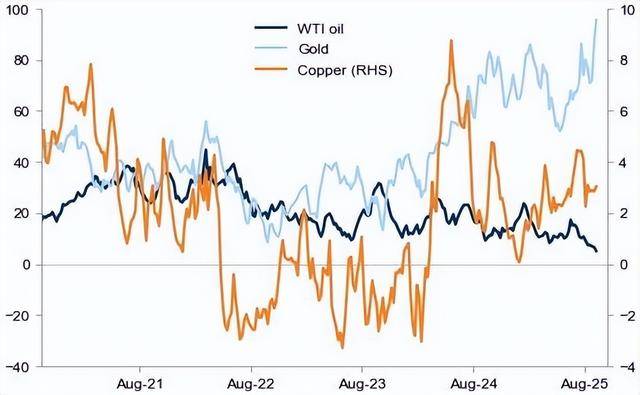
股市热得发烫,外国央行却囤黄金抛美债!30年头一遭,藏着啥雷?
Sou Hu Cai Jing· 2025-09-18 12:47
Group 1 - The core market sentiment is positive, with rising stock prices, increasing gold prices, and profitable cryptocurrency investments [1][3] - Foreign central banks are shifting their reserves, now holding more gold than US Treasury bonds for the first time in 30 years, indicating a loss of trust in US government debt [3][5] - The current situation mirrors the late 1960s when central banks began to doubt the reliability of the US dollar, leading to a shift towards gold [3][5] Group 2 - There is a growing concern about the "hidden devaluation" of the dollar, where its purchasing power is diminishing despite stable exchange rates against other currencies [5][10] - The Federal Reserve's potential interest rate cuts are seen as a double-edged sword, historically leading to stock market gains but raising questions about long-term economic stability [8][10] - The current market dynamics are characterized by a focus on liquidity rather than fundamentals, with investors ignoring corporate earnings and fiscal realities [12][15] Group 3 - The rise in gold and cryptocurrency investments reflects a broader fear of inflation and distrust in monetary policy, similar to trends observed in the 1970s [12][14] - The real estate market is facing challenges due to a disparity in mortgage rates, which could hinder the effectiveness of monetary policy [17] - The overall market environment resembles a festive atmosphere, but the sustainability of this situation depends on the stability of long-term bond yields [19]