证券

Search documents
研报掘金丨广发证券:首予国信证券“买入”评级,公司财富及泛自营构筑高ROE优势
Ge Long Hui A P P· 2026-02-12 07:36
广发证券研报指出,国信证券是老牌综合性券商,盈利韧性凸显,ROE步入提升通道。以自营投资交易 与财富管理为核心驱动、投行与资管为增长点的业务结构,是其高ROA优势的核心支撑。卡位海南政 策高地,深耕大湾区多维协同,奠定长期发展根基。增量资金入市持续,公司财富及泛自营构筑高ROE 优势,叠加政策红利释放,预计公司2026-2027年归母净利润同比+34%、+20%。考虑可比公司估值及 历史估值中枢,给予2026年1.3倍PB,对应合理价值14.47元/股,首次覆盖给以"买入"评级。 ...


春节长假前,两家券商拟上调信用或两融业务规模上限,什么信号?
Mei Ri Jing Ji Xin Wen· 2026-02-12 07:30
融资融券作为A股市场重要资金来源,近年来备受市场关注。在融资余额运行于历史高位之际,"后续 还有多少活水"是投资者关注的话题。 近期,两家券商发布拟上调相关业务规模上限的公告,引发市场关注。 2月11日晚间,财达证券发布公告,拟调增信用交易业务授权规模,由不超过2024年度经审计的净资本 比例的100%,调增至不超过2024年度经审计的净资本比例的140%。而东海证券日前也发布公告,董事 会同意将融资融券业务总规模上限从"不超过102亿元"上调到"不超过110亿元"。财达证券:信用交易规 模上限拟提升40% 东海证券融资融券业务总规模上限从"不超过102亿元"上调到"不超过110亿元",尽管只增加了8亿元, 但也明确传递出增加两融业务投入的信号。 近年来,券商一直在加码两融方面的投入。2025年,多家券商上调两融业务规模上限。当年9月,浙商 证券、华林证券就宣布上调信用业务额度。其中,浙商证券表示将融资类业务规模由400亿元提高至500 亿元;华林证券则计划将信用业务(含两融)总规模上限从3月的62亿元调整为80亿元。 2025年国庆节后,招商证券宣布计划将融资融券业务规模上限由1500亿元提高至2500亿元 ...

“学海拾珠”系列之二百六十六:基金持股的偏态特征
Huaan Securities· 2026-02-12 07:20
Investment Rating - The report does not explicitly provide an investment rating for the industry or funds analyzed Core Insights - The report introduces a new metric, portfolio skewness, to measure fund manager skill by analyzing the return distribution of U.S. mutual fund holdings, suggesting that higher skewness indicates better future performance [2][5] - The study finds that high-skewness funds significantly outperform low-skewness funds, with an annualized Fama-French-Carhart alpha difference of 2.88% before fees, translating to approximately $7.35 million annually [5][18] - The research indicates that portfolio skewness is a distinct predictor of fund performance, independent of existing skill metrics like active share and R² [5][39] Summary by Sections Introduction - The report discusses the importance of understanding mutual fund portfolio characteristics as they reflect fund manager skills and behaviors [15][21] Portfolio Skewness - Two skewness metrics are constructed: standard skewness (Pskew) and Pearson's second skewness coefficient (Pskew2), with the latter being more robust against extreme values [4][23] - The average portfolio skewness across the sample is positive, indicating a tendency for funds to hold more winning stocks [29][31] Sample Selection and Data Sources - The sample includes all U.S. actively managed equity funds from March 1980 to December 2023, with a total of 895,487 fund-month observations [27][28] Empirical Results Descriptive Statistics and Persistence of Skewness - The average Pskew is 0.265, with significant variability among funds, indicating that portfolio skewness is not randomly generated but reflects managerial behavior [29][32] Skewness and Future Fund Performance - High-skewness funds show a consistent performance advantage, with annualized alpha increasing by 0.444% for each quartile increase in skewness [40][43] - The report confirms a positive correlation between portfolio skewness and future fund performance, independent of common fund characteristics [42][44] Skewness and Other Skill Metrics - Portfolio skewness shows limited overlap with existing skill measures, suggesting it captures unique information about fund managers [46][48]

固收专题:跨越化债边界,长久期城投债怎么看?
China Post Securities· 2026-02-12 07:12
1. Report Industry Investment Rating No information provided in the report. 2. Core Viewpoints of the Report - The market has a consensus on the ability of high - grade credit entities to cross the debt - resolution cycle, and AAA urban investment bonds may be the most defensive when emphasizing safety while extending duration [3][20][30] - The AA(2) urban investment bonds around 1 - year in Xi'an and AA urban investment bonds around 2 - year in Tianjin have obvious inflection points, indicating that the market has priced certain risks for relevant entities or regions outside the debt - resolution boundary [3][30][32] - In the context of narrowing debt - resolution policy windows and increasing debt continuation difficulties, some weak - quality regional entities may show a similar steepening pattern, and regions like Henan should be noted [3][32] 3. Summary According to the Directory 3.1 Duration Selection Dilemma: To Continue Earning Returns, One Needs to Cross the Debt - Resolution Time Point - Before 2026, institutional allocation of urban investment bonds showed obvious regional sinking, and duration allocation was concentrated around the 2028 debt - resolution time window. Since 2026, the allocation has extended to 3 - 4 - year medium - and long - term urban investment bonds [9] - Comparing the top ten holdings of public funds at the end of Q4 2025 and Q2 2023, the holdings of Yunnan, Guizhou, Jilin, Tianjin, Shanxi, Guangxi, Gansu, and Ningxia increased by more than double, while those of Guangdong, Fujian, Jiangsu, Anhui, Shanghai, and Beijing decreased by 20% - 30% [9][10] - From the perspective of public funds' top ten holdings, the scale of urban investment bonds held by funds reached the highest in Q1 2024 and then declined. The term structure also adjusted, with a tendency to reduce short - duration and increase long - duration bonds [11] - In 2026, the 4 - year term, which is the most popular, has crossed the debt - resolution time point. In terms of yield, credit spread, and term spread, the 4 - year term shows better performance, but one should be vigilant against valuation deviation [15][16][19] 3.2 Valuation Thinking at the Debt - Resolution Boundary: Whether Curve Steepening Occurs - **AAA Urban Investment Bonds**: The yields of urban investment bonds in each province are basically stable around the yield curve, with small differences between provinces, indicating consistent pricing and no "steepening at the debt - resolution time point". They are defensive, but attention should be paid to the differentiation between entities [20] - **AA + Urban Investment Bonds**: Some debt items in Jiangsu, Zhejiang, Fujian, Shandong, Hubei and other places deviate from the valuation yield curve, with deviations concentrated in specific entities or regions. There is no "steepening at the debt - resolution time point" but obvious entity and regional differentiation [23] - **AA Urban Investment Bonds**: The market does not conduct systematic sinking but gives credit premiums through yield curve deviation and term inflection points, showing "steepening at the debt - resolution time point" characteristics. For example, Tianjin's 2 - year bonds have obvious inflection points [26][30] - **AA(2) Urban Investment Bonds**: With more samples, yield curve deviation and term inflection points are more obvious, showing "steepening at the debt - resolution time point". The market is more worried about weak - quality regions with frequent negative public opinions, and the yield shows an inflection point around 1 - year [29][30]
广道退终止上市后转入退市板块,先行赔付基金已设立
Jing Ji Guan Cha Wang· 2026-02-12 07:07
经济观察网广道退(920680)股票已于2026年1月5日被北京证券交易所终止上市并摘牌,不再于二级市场 交易。退市后,以下事项值得关注: 近期事件 公司股票将转入全国股转系统退市板块挂牌转让。主办券商五矿证券需在摘牌日起45个交易日内完成挂 牌转让的具体安排(如股份确权、登记等),投资者需关注后续公告。截至当前,挂牌时间尚未明确公 告。 五矿证券已设立规模2.1亿元的先行赔付专项基金,用于赔偿适格投资者因公司财务造假遭受的损失。 赔付细则及申请流程需以券商后续通知为准。 事件影响 公司退市前因财务造假(2018-2024年虚增营收占比超85%)被监管处罚,且无资产重组计划。退市板块流 动性较低,投资者需谨慎评估风险。 以上内容基于公开资料整理,不构成投资建议。 公司状况 ...
高市早苗狂胜后或开启“豪赌模式”,交易员警惕崩盘可能
Jin Shi Shu Ju· 2026-02-12 06:25
她的赌注是,持续的通胀和经济名义增长的加快,将填补未来几年国家财政的任何漏洞。但投资者希望 看到具体的细节。 Ebury市场策略主管Matthew Ryan表示:"在公共财政已经极度紧张的情况下,进一步扩大支出和增加债 务发行的威胁将增加风险溢价,并可能引发债券的新一轮抛售和收益率飙升。" 1月份的动荡见证了投资者疯狂抛售债券,导致最长期限的日本国债收益率被推高至4%以上,随着影响 波及全球金融市场,美国财政部长贝森特也发表了令人担忧的评论。 高市早苗本周坚持表示,政府不会通过出售新债券来填补支出缺口,而是称她的政府将审查补贴、特别 税收措施和非税收收入,以寻找"可持续"的资金来源。 三菱日联摩根士丹利证券的首席债券策略师Naomi Muguruma表示:"人们对此类措施将如何获得资金, 以及最终是否会诉诸发行赤字弥补债券的担忧正在升温。一个根本性的担忧是减税持续时间超过两年的 风险。" 历史表明这些担忧是有道理的。消费税的引入花费了大约十年的时间,随后的每次上调都导致经济按年 率计算萎缩高达11%。最后两次上调被推迟,表明了提高税收在政治上的困难,这加剧了人们对暂时降 低税收后能否轻松恢复的怀疑。 为政府的 ...
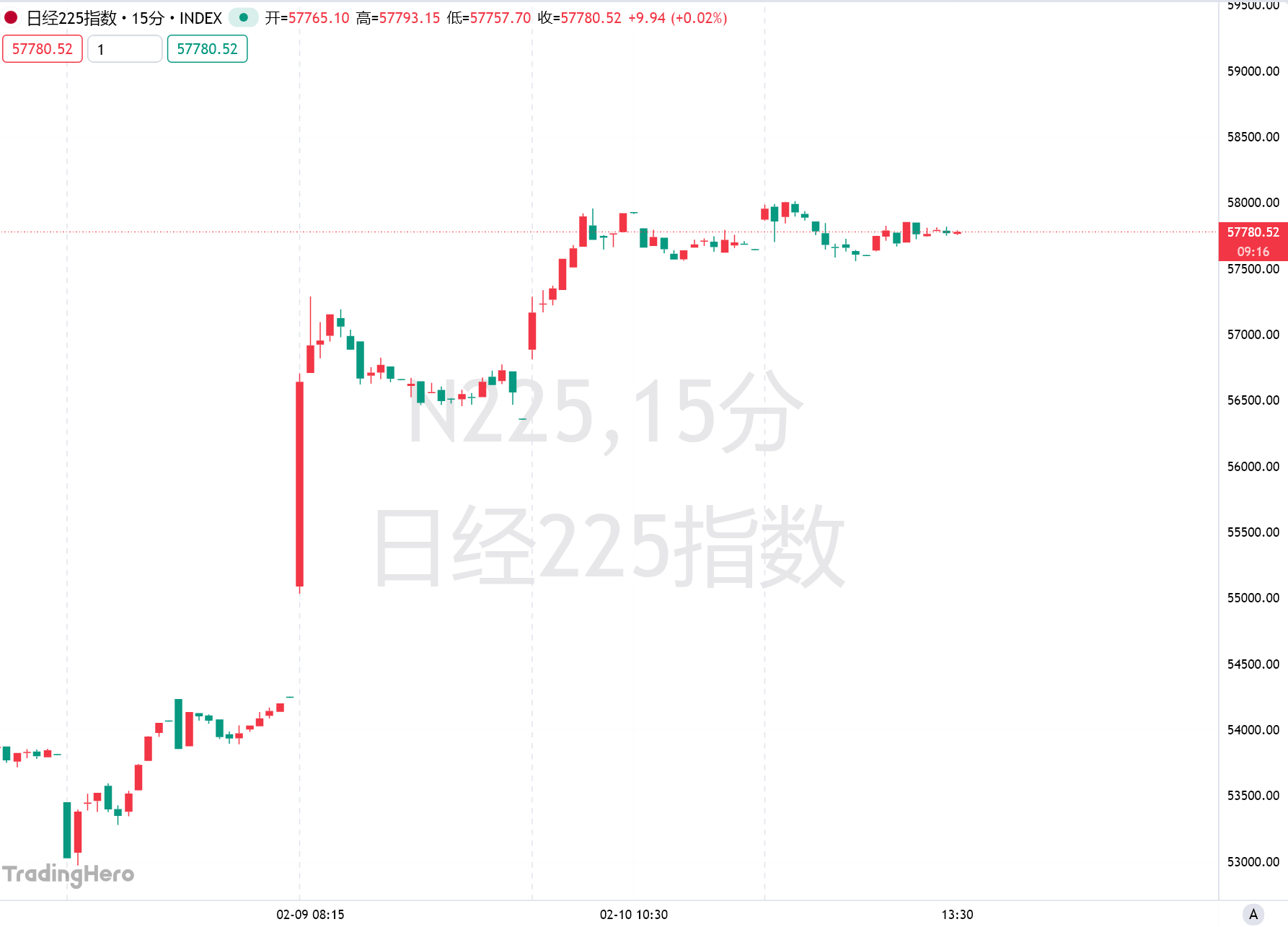
日经指数盘中突破58000点,专家警告涨势与基本面严重脱节
Jin Shi Shu Ju· 2026-02-12 06:10
Market Performance - The Japanese stock market continues to rise, reaching a historical high, driven by renewed confidence in domestic politics and the government's economic agenda [1][3] - The Nikkei 225 index surpassed 58,000 points for the first time, with a year-to-date increase of 15% [1][3] Political Influence - The market rally is largely attributed to the political optimism following Prime Minister Sanae Takaichi's overwhelming victory in the House of Representatives elections [3] - Investors are anticipating larger fiscal spending, tax cuts, and a more aggressive economic agenda as a result of this political support [3] Economic Discrepancies - Analysts warn that the stock market's enthusiasm may be ahead of the clarity regarding policy funding sources, indicating a growing disconnect between stock prices and economic fundamentals [3][4] - Japan's economy contracted by 0.4% quarter-on-quarter for the three months ending in September, marking the first contraction in six quarters, with an annualized decline of 1.8% [4] Debt Concerns - Japan is noted to have the highest debt levels globally, with a projected debt-to-GDP ratio nearing 230% by 2025, raising concerns about the sustainability of increased fiscal spending [5] Market Drivers - The current market dynamics are driven by sentiment, liquidity, and narrative rather than fundamental economic strength [6] - The global AI investment wave has also positively impacted the Japanese stock market, although this connection makes it sensitive to fluctuations in global tech enthusiasm and exchange rate volatility [7][8] Currency Impact - The depreciation of the yen has historically benefited export-oriented manufacturing companies, but this effect may diminish as the yen's value is perceived to be excessively low [9][10] - The yen has depreciated approximately 3.67% against the dollar over the past six months [11] Government Intervention - Japan has indicated potential market intervention if the yen continues to depreciate, with concerns raised by the Finance Minister regarding unilateral yen depreciation [12] Future Outlook - Despite current vulnerabilities, structural reforms in corporate governance, capital efficiency, and shareholder returns are expected to provide sustainable growth momentum [15] - Some asset management firms believe that the overall fundamentals of Japanese companies still have support, contingent on the realization of reform expectations [15][16] - There is a warning that if the pace of improvements slows, there could be downside risks to the market [17]

连涨3日的红利低波,要调整了吗?
Mei Ri Jing Ji Xin Wen· 2026-02-12 06:07
Group 1 - The core viewpoint of the news indicates a shift in market sentiment towards dividend stocks, as evidenced by the positive signal from the dividend style timing model released by Guotai Haitong, which shows a factor value of 0.09, up from -0.08 the previous week [1][2] - The CSI Dividend Low Volatility Index (H30269) has shown a recent decline of 0.86% as of February 12, 2026, despite a cumulative increase of 0.95% over the previous three days [1] - The market is currently in a phase of stock game, with institutional funds showing caution and a lack of consensus, while retail investors are driving localized activity, leading to increased market volatility [1][2] Group 2 - Institutional funds are experiencing net outflows from technology and cyclical manufacturing sectors, while there is a concentrated inflow into the consumer sector, indicating a structural divergence in capital flows [2] - The CSI Dividend Low Volatility Index, which includes 50 securities with good liquidity and consistent dividend payments, has a one-year dividend yield of 4.50% as of February 11, 2026 [2] - The Huaxia Dividend Low Volatility ETF (159547) is noted for having the lowest comprehensive fee rate among ETFs tracking this index, with quarterly assessments for potential dividends [2]

精彩回顾 | 2026彭博全球大类资产配置论坛(视频回放)
彭博Bloomberg· 2026-02-12 06:05
Core Insights - The 2026 Global Asset Allocation Forum highlighted the dual nature of global markets, with AI driving tech stocks and gold/silver gaining attention, while the Federal Reserve's interest rate decisions remain a key variable for market liquidity [5][6]. Economic Outlook - The Chinese economy is expected to grow similarly to last year, with a focus on boosting consumption and a structural shift in the stock market driven by technology stocks and industrial profits, particularly in non-ferrous metals and IT sectors [8]. - The new economy is projected to contribute more to GDP growth than the declining real estate sector by 2027, indicating a significant phase in China's industrial transformation [8]. Offshore Credit Market - The global offshore credit market is showing significant divergence, with the U.S. growth outlook improving while Japan and Europe face lower expectations. The Federal Reserve is expected to maintain a loose monetary policy, contrasting with Japan's rate hikes [10]. Bond Market Insights - The bond market is experiencing structural changes due to macroeconomic volatility, inflation fluctuations, and geopolitical tensions. Key uncertainties include the impact of AI on the economy, U.S. unemployment rates, and inventory cycles [13]. - Investment strategies should focus on multi-asset and multi-strategy approaches to balance risk and achieve stable returns, leveraging AI for enhanced research and execution [13]. Currency and Gold Trends - The relationship between the U.S. dollar and gold is highlighted, with a long-term trend of dollar depreciation and gold appreciation expected to continue unless there are fundamental changes in U.S. fiscal policies [16][17]. - Short-term dollar stability is anticipated due to high real yields, market positioning, and seasonal trends [17]. Gold Market Dynamics - The gold market is experiencing heightened volatility due to increased participation and rapid information dissemination. However, the long-term bullish fundamentals for gold remain intact [21]. - Different gold investment products have unique characteristics, and the changing nature of gold's safe-haven status necessitates clear investment objectives [22]. - The precious metals sector is influenced by financial and safe-haven attributes, while industrial metals and rare earths are driven by supply-demand dynamics [22].

中信里昂:提升港股权重至超配20% 首选万洲国际(00288)等
智通财经网· 2026-02-12 06:03
Core Viewpoint - Citic Lyon has upgraded the weighting of the Hong Kong market to overweight by 20%, citing reduced correlation with the Chinese market and allowing for differentiated allocation [1] Group 1: Market Performance - The Hong Kong IPO market is expected to surpass its performance in 2025, with total IPO and placement fundraising amounting to $82.3 billion last year [1] - The Hong Kong property market has recorded its first annual increase since 2021, which is anticipated to boost the stock market [1] Group 2: Earnings and Valuation - Earnings forecasts for Hong Kong companies are projected to turn positive starting July 2025, ranking second in the Asia-Pacific region after Japan, South Korea, and Taiwan [1] - The valuation of the Hong Kong stock market is attractive relative to regional peers, with a price-to-earnings ratio of 16.7 times, slightly below the 35-year average of 17.2 times [1] - The Hong Kong market is the furthest from its historical highs, indicating potential for catch-up [1] Group 3: Stock Recommendations - Preferred stocks include WH Group (00288), AIA (01299), Hong Kong Exchanges and Clearing (00388), Sun Hung Kai Properties (00016), CK Hutchison Holdings (00001), Techtronic Industries (00669), and Galaxy Entertainment Group (00027), all rated as "outperform" [1] - WH Group is highlighted as a stock with "high confidence" by the firm [1]