加密资产

Search documents
稳定币:锚定未来?
Hu Xiu· 2025-07-12 13:14
Group 1: Core Insights - The U.S. Senate passed the "GENIUS Act" establishing the first federal regulatory framework for stablecoins, reflecting a global consensus on recognizing stablecoins' legitimacy [1][2] - Major companies like Mastercard and Morgan Stanley are actively exploring stablecoin integration into their payment systems, indicating a growing recognition of stablecoins' commercial value [2][3] - Stablecoins are categorized into three main types: fiat-collateralized, crypto-collateralized, and algorithmic stablecoins, each with distinct mechanisms and risks [3][4][5] Group 2: Market Dynamics - Fiat-collateralized stablecoins dominate the market, accounting for approximately 90% of the total stablecoin market capitalization, with USDT and USDC being the most prominent [8][9] - The use of stablecoins has expanded beyond the crypto industry, finding applications in cross-border payments, daily transactions, and as a hedge against inflation in emerging markets [10][11][15] Group 3: Regulatory Landscape - Various countries are implementing regulations to address the risks associated with stablecoins, including limitations on non-local stablecoins to protect monetary sovereignty [30][31] - The European Union's MiCA regulation categorizes stablecoins and imposes strict requirements on their issuance and operation, aiming to mitigate financial risks and enhance compliance [31][36] Group 4: Strategic Recommendations for China - China should adopt a cautious approach towards stablecoins, focusing on research and regulatory frameworks while considering the unique national context and the existing digital yuan [38][39] - Promoting offshore RMB stablecoins could enhance the internationalization of the yuan and expand its use in emerging digital scenarios [41] - Strengthening the collaboration between stablecoins and the digital yuan can leverage their complementary advantages in cross-border payments and digital asset exchanges [42]
全球另类投资热度不减 比特币价格再创新高
Zhong Guo Jing Ying Bao· 2025-07-12 09:54
Core Viewpoint - Bitcoin's price has surged to a new historical high of $118,804.6, reflecting a significant increase in market interest and investment in cryptocurrencies, driven by various macroeconomic factors and institutional participation [1][2]. Group 1: Market Performance - Bitcoin's price increased by over 6.83% in a single day, reaching $118,804.6, and has shown a cumulative rise of over 20% since the beginning of 2025 [1]. - As of July 12, 2025, Bitcoin's price was $117,293.96, indicating a slight correction after the peak [1]. Group 2: Macroeconomic Influences - The rise in Bitcoin's price is attributed to changes in the global macroeconomic environment, including increased political uncertainty and concerns over traditional assets [2]. - The digital currency sector has become a significant source of funding in the 2024 U.S. presidential election, with contributions from the cryptocurrency industry nearing 43% of corporate donations [2]. Group 3: Institutional Investment - Institutional investors have significantly increased their participation in Bitcoin, with over $50 billion flowing into Bitcoin ETFs since the approval of the first U.S. spot Bitcoin ETF in early 2024 [4][5]. - More than 260 companies and institutions globally hold Bitcoin, with a total holding of nearly 3.5 million BTC, indicating a broad acceptance of Bitcoin as an investment asset [4]. Group 4: Regulatory Developments - The introduction of the GENIUS Act is expected to provide a clearer regulatory framework for the cryptocurrency market in the U.S., enhancing market confidence [3][6]. - Ongoing global regulatory policies, such as MiCA and licensing systems in Hong Kong, may further solidify Bitcoin's status as a digital reserve asset [6]. Group 5: Investment Risks - The cryptocurrency market is highly influenced by market sentiment and can experience significant volatility, necessitating caution among investors [6][7]. - Investors are advised to be aware of the differences in risk attributes and management between Bitcoin and traditional financial products, emphasizing the need for thorough understanding before investing [7].
全球加密资产监管实践及潜在影响
Sou Hu Cai Jing· 2025-07-11 02:36
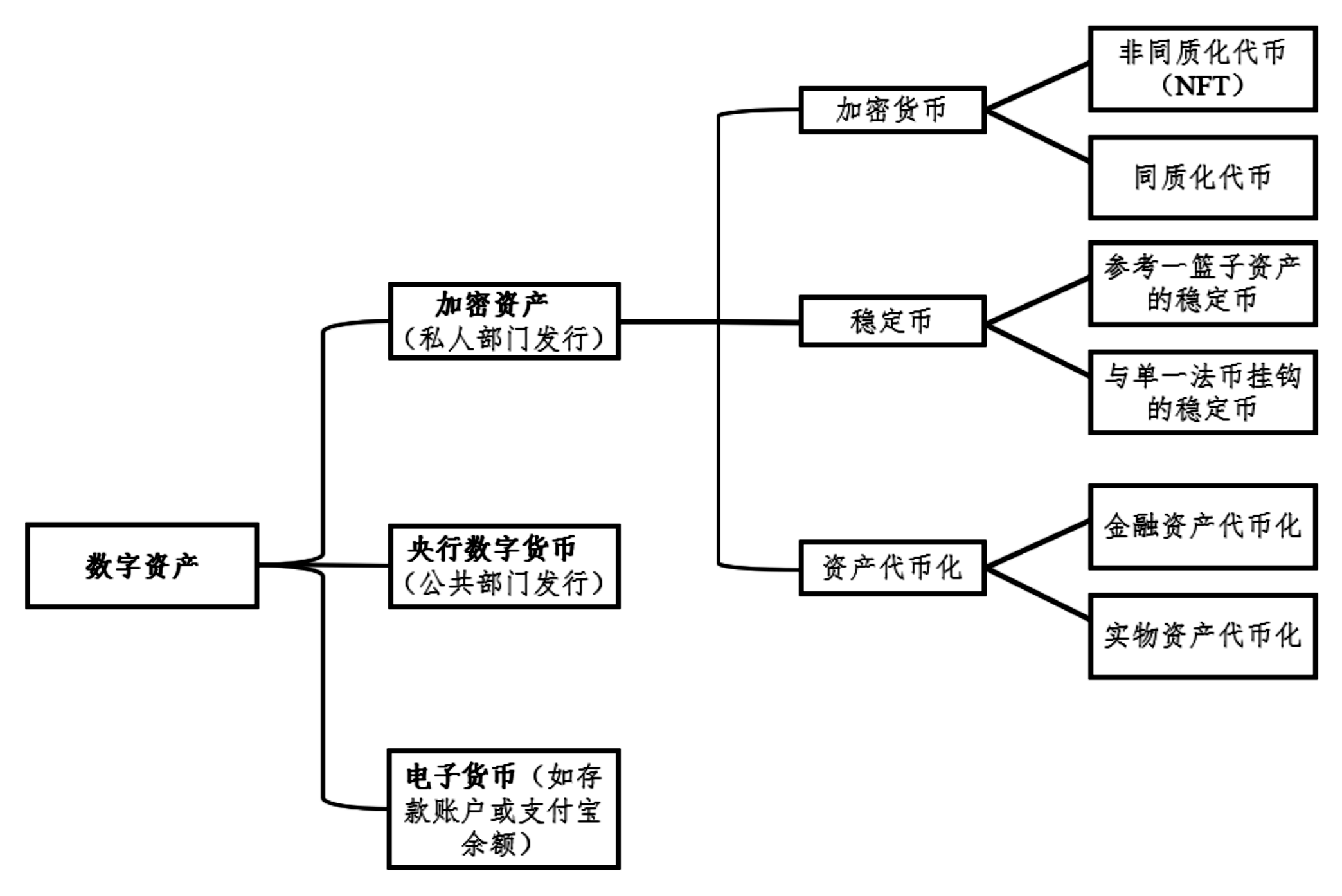
Core Viewpoint - The article discusses the evolving regulatory landscape for cryptocurrency assets globally, highlighting a trend towards more lenient regulations, particularly in the United States under Trump's administration, which is expected to influence other economies [1][18][22]. Group 1: Definition and Classification of Cryptocurrency Assets - There is no unified definition of cryptocurrency assets globally; terms like "cryptocurrency," "crypto assets," "virtual assets," and "digital assets" are often used interchangeably. The Financial Stability Board (FSB) defines crypto assets as private sector digital assets primarily relying on cryptography and distributed ledger technology (DLT) [2][6]. - Cryptocurrency assets are categorized into three main types: cryptocurrencies (e.g., Bitcoin, Ethereum), stablecoins (which have value stabilization mechanisms), and asset tokenization (where off-chain assets are represented on the blockchain) [5][6]. Group 2: Regulatory Positions of Major Economies - Regulatory stances on cryptocurrency assets can be classified into three categories: prohibition (e.g., China, Bangladesh), open attitude with minimal regulation (e.g., Switzerland, UAE), and regulated environments (e.g., the US, EU, Japan, UK) [7][8]. - The US lacks a unified federal regulatory framework, with 32 states being friendly towards crypto assets and 18 states imposing strict regulations. The EU's MiCA regulation, effective from June 30, 2023, is the most comprehensive framework to date [8][9]. Group 3: Specific Regulatory Developments - The US is moving towards a more supportive regulatory framework for cryptocurrency assets, with Trump signing an executive order to establish a digital asset market working group and develop a federal regulatory framework within 180 days [11][12]. - The EU's MiCA requires crypto asset issuers to disclose project information, maintain sufficient reserve assets, and meet minimum capital requirements, while also mandating licensing for service providers [12][13]. - Japan is considering easing tax requirements on crypto assets and aligning them with existing financial product regulations, while the UK plans to introduce a comprehensive regulatory framework by 2026 [14]. Group 4: International Regulatory Standards - International standard-setting bodies are working to create global regulatory benchmarks to avoid fragmentation and regulatory gaps in cryptocurrency asset oversight. The FSB has issued high-level recommendations for regulating crypto assets and global stablecoins [15][17]. Group 5: Dynamic Regulatory Landscape - The global regulatory environment for cryptocurrency assets is shifting towards leniency, influenced by the US government's supportive stance, which may encourage other countries to follow suit. This trend is evident as countries like Russia and several Middle Eastern nations are relaxing their regulations [18][21][23].

多空“火力”大比拼!比特币只是短暂回测历史高位?
Jin Shi Shu Ju· 2025-07-10 09:23
Group 1 - The recent stock market rebound led by Nvidia has driven Bitcoin prices to briefly surpass $112,000, marking a historical high before a slight retreat [2] - Nvidia became the first company to briefly exceed a market capitalization of $4 trillion, contributing to the rise in tech stocks and the Nasdaq index reaching a new all-time high [2] - Despite the influx of billions into Bitcoin exchange-traded funds (ETFs), Bitcoin has only increased by 2% over the past month, indicating a period of narrow fluctuations [2] Group 2 - The sustainability of Bitcoin's price increase largely depends on macroeconomic conditions and developments in trade, particularly in light of the upcoming August 1 trade agreement deadline [3] - A potential trade agreement progress and lower inflation data could support a continued rise in Bitcoin prices, as indicated by the recent Federal Reserve meeting minutes suggesting a favorable environment for interest rate cuts [3] - A weaker dollar has also provided support for Bitcoin, as it is primarily priced in dollars [4]
SEC新规ETF引爆加密市场:DOGE会是第一批吗?狗狗币黄金交叉,将拉升30%!
Sou Hu Cai Jing· 2025-07-09 23:52
Group 1 - The SEC has released a new disclosure guideline for digital asset-related exchange-traded products, indicating a potential shift in approval for crypto ETFs [2] - The guideline opens the door for ETF applications related to assets like SOL, XRP, DOGE, and even Trump-themed memecoins, suggesting that the era of altcoin ETFs may arrive sooner than expected [2] Group 2 - Dogecoin (DOGE) price has been on the rise, following the upward trends of Bitcoin and Ethereum, breaking through resistance levels of $0.1665 and $0.1680, and even surpassing the $0.170 mark [3] - Currently, DOGE is stabilizing above $0.1680 and the 100-hour simple moving average, with a bullish trend line forming on the hourly chart [5] - Short-term resistance levels for DOGE are at $0.1720 and $0.1730, with a potential to rise further to $0.180 or even $0.200 if it breaks the $0.1750 resistance [5]

美元稳定币:市场叙事背后的真相
Guan Cha Zhe Wang· 2025-07-03 03:25
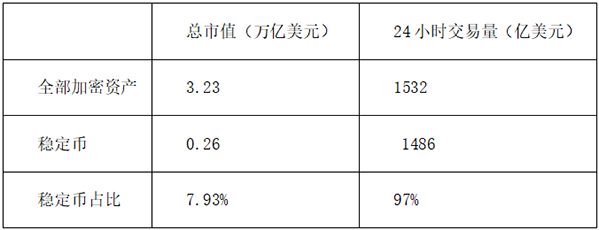
Core Insights - The seminar highlighted the transformative role of USD stablecoins in reshaping the global monetary landscape, emphasizing the need to address challenges from multiple dimensions including technology, market impact, and regulatory responses [1][2][3] Group 1: Market Dynamics of Stablecoins - The current market capitalization of stablecoins is nearly $260 billion, accounting for approximately 8% of the total cryptocurrency market, with stablecoin trading volume representing 97% of total cryptocurrency trading volume [4][5] - 99% of stablecoins are pegged to the US dollar, and over 99% of stablecoin trading volume is derived from cryptocurrency transactions, indicating their primary use case in the crypto market [7][8] - The largest stablecoin, USDT, holds a market share of 62%, followed by USDC, which has recently gained traction [8] Group 2: Regulatory and Economic Implications - The US has adopted a "let it be" approach towards stablecoin regulation, allowing commercial entities to lead the way in promoting dollarization through stablecoins before tightening compliance frameworks [2][32] - The rapid growth of USD stablecoins poses risks for China, including capital flight and challenges to existing foreign exchange management and anti-money laundering systems [2][37] - The issuance of stablecoins is heavily reliant on US Treasury securities, with significant investments in these assets, which raises questions about the sustainability of this model [34][36] Group 3: Global Dollarization and Financial Sovereignty - USD stablecoins are driving a digital form of dollarization globally, which could undermine the monetary sovereignty of other nations and exacerbate economic imbalances [30][31] - The use of stablecoins in regions with economic instability, such as Latin America and Africa, highlights their role in providing financial services but also raises concerns for local governments [31] Group 4: Future Outlook and Strategic Recommendations - The potential for USD stablecoins to enhance financial accessibility in underdeveloped regions must be balanced against the risks posed to national monetary policies [31] - China is advised to monitor the circulation of USD stablecoins and regulate them as foreign currency payment instruments to safeguard its monetary sovereignty [37]
FATF警告:全球监管漏洞正让加密货币成犯罪温床
Guo Ji Jin Rong Bao· 2025-06-27 12:47
Core Insights - The Financial Action Task Force (FATF) issued a stern warning regarding the regulatory gaps in cryptocurrency, particularly stablecoins, which could become a primary channel for cross-border illicit funds, threatening global financial stability [1][4] - As of June 27, the global cryptocurrency market capitalization reached approximately $3.28 trillion, highlighting the urgency of addressing regulatory weaknesses [2] Stablecoin Misuse - Stablecoins are rapidly replacing other cryptocurrencies as the main payment and money laundering methods for criminal organizations, terrorist financing networks, and drug trafficking [4] - In 2024, illegal cryptocurrency wallet addresses received about $51 billion, marking a historical high, indicating a significant influx of illicit funds into the crypto ecosystem [4] - Criminals utilize techniques such as mixing services, cross-chain bridges, and anonymous wallets to obscure their identities, complicating law enforcement tracking efforts [4] - The Bank for International Settlements (BIS) identified three systemic flaws in stablecoins: erosion of monetary sovereignty, transparency issues regarding asset reserves, and lack of settlement functionality [4] Global Regulatory Progress - Despite the imminent risks, global regulatory responses are severely imbalanced, with only 40 out of 138 jurisdictions achieving "basic compliance" as of April this year, which is less than 30% [6] - FATF emphasized that the borderless nature of virtual assets means that regulatory failures in one jurisdiction can have global repercussions [6] - FATF encourages countries to implement Know Your Customer (KYC) measures for virtual asset platforms, establish registration systems for Virtual Asset Service Providers (VASP), and enhance regulation of decentralized finance (DeFi) [6] - Countries like Turkey and the EU are taking swift actions to address compliance gaps, with Turkey mandating identity verification and transaction disclosure for VASP and the EU advancing regulatory frameworks like the Markets in Crypto-Assets Regulation (MiCA) [6][7] Regional Developments - Asian countries such as Singapore and South Korea are strengthening compliance regulations for VASP registration, KYC obligations, and DeFi platforms, aiming to balance fintech innovation and security [7] - According to PwC, 2025 is projected to be a pivotal year for global cryptocurrency regulation, transitioning from principle-based frameworks to enforceable regulations, with comprehensive cross-border law enforcement collaboration expected to commence [7]
「改革创新」王永利:美元稳定币加快发展带来深刻警示
Sou Hu Cai Jing· 2025-06-25 16:42
Core Viewpoint - The emergence and rapid development of stablecoins, particularly USD-pegged stablecoins, have created a bridge between cryptocurrency and fiat currency, facilitating 24/7 global transactions and reshaping the financial landscape [3][5][9]. Group 1: Development of Stablecoins - The introduction of Bitcoin in 2009 and Ethereum in 2013 laid the groundwork for the rise of stablecoins, with USDT being the first significant stablecoin launched in 2015 [1][3]. - USDT is backed by reserves of USD and other liquid assets, allowing it to maintain its value against the dollar, but it has faced scrutiny regarding its reserve transparency and potential over-issuance [4][5]. - The launch of USDC in 2018 aimed to provide a more transparent alternative to USDT, addressing concerns about reserve adequacy [4][5]. Group 2: Regulatory Landscape - The recent legislative actions in the US and Hong Kong signify a shift towards regulating stablecoins, which is expected to prevent over-issuance and ensure adequate reserves [6][7]. - The US Senate's passage of the Stablecoin Innovation Act and Hong Kong's Stablecoin Ordinance reflect a growing consensus on the need for regulatory frameworks to govern stablecoins [6][7]. - Regulated stablecoins are anticipated to enhance their payment functionalities while diminishing their investment appeal, as they will be required to maintain strict reserve requirements [7][8]. Group 3: Market Impact and Future Outlook - The rapid growth of USD stablecoins has led to increased demand for US Treasury securities and has positioned the dollar as a dominant force in the stablecoin market, accounting for over 99% of the global stablecoin market cap by April 2025 [8][9]. - The transaction volume of stablecoins is projected to surpass $27.6 trillion in 2024, exceeding the combined volume of major card organizations [8]. - The development of stablecoins poses challenges for traditional currencies, particularly the RMB, which must enhance its cross-border payment efficiency to remain competitive [11][12].
动物精神被金融点燃
Hu Xiu· 2025-06-25 12:06
Group 1 - The market is showing positive performance, with signs of declining investment enthusiasm, a slowdown in capacity expansion, and a recovery in profits across multiple industries, which is beneficial for enterprises [1] - The current economic environment may lead to a prolonged period of clearing, which primarily benefits downstream companies, while many midstream and upstream companies that rely on investment support may not benefit [2] - The persistent issue of price deflation remains a significant concern, with the loss of "animal spirits" being a critical problem that needs addressing [2] Group 2 - Financial stimulation is seen as a key method to revive "animal spirits," with the potential for financial innovation to accelerate processes and enhance price imagination [3][5] - The traditional financial sector is showing excitement over new financial models, indicating a shift in perception and potential opportunities for growth [6][7] - The approval of virtual asset trading services by Guotai Junan International signifies a transition from marginalization to mainstream acceptance, which could lead to significant growth in the financial sector [7] Group 3 - The article outlines a tiered approach to emerging technologies, with the first tier including robotaxi, stablecoins, and RWA, which are expected to see practical implementation soon [8] - AI hardware and applications are categorized in the second tier, while solid-state batteries and perovskite technology are in the third tier, indicating they are still in early development stages [8] - The fourth tier includes XRAI glasses, which have high expectations but may fall short depending on the maturity of battery technology from the third tier [8]
特稿 | 邹传伟:正视和应对美元稳定币的挑战
Di Yi Cai Jing· 2025-06-18 01:35
Group 1 - The core viewpoint is that stablecoins are gaining significant attention both domestically and internationally, with the U.S. Senate passing the GENIUS Act to establish a federal regulatory framework for stablecoins, while Hong Kong has enacted its own stablecoin regulations [1][2] - Stablecoins have seen rapid growth, with their total market size reaching $247.7 billion by June 2025, a 190-fold increase from $1.3 billion in June 2019, with 99% of stablecoins pegged to the U.S. dollar [2][3] - The main function of stablecoins is to tokenize existing money within the banking system, allowing for a new method of currency circulation without creating new money [3][4] Group 2 - Stablecoins differ from non-bank payment systems in that they are based on distributed ledgers, allowing for open and anonymous transactions, while non-bank systems use centralized ledgers and require real-name registration [4][5] - A significant portion of U.S. dollar stablecoins (over 70%) is issued offshore, which raises concerns regarding regulatory compliance, particularly in areas like KYC and AML [4][5] - The trading volume of U.S. dollar stablecoins reached $100.7 billion by June 2025, surpassing the combined trading volume of Bitcoin and Ethereum, primarily serving as a medium for transactions in the cryptocurrency market [7][8] Group 3 - U.S. dollar stablecoins are rapidly penetrating various applications beyond cryptocurrency trading, including cross-border payments and corporate financing, driven by their efficiency and low costs [8][9] - The U.S. strategy regarding stablecoins involves a regulatory approach that allows commercial entities to promote the digitalization of the dollar while maintaining oversight as the market matures [8][9] - The relationship between U.S. dollar stablecoins and traditional payment systems like SWIFT and Visa is fundamentally different, with stablecoins not intended to replace these systems [9][10] Group 4 - There is a growing concern regarding the use of U.S. dollar stablecoins by residents and businesses in mainland China, necessitating monitoring and regulatory measures to protect monetary sovereignty [10][11] - The potential for issuing offshore renminbi stablecoins is discussed, which could be managed by Chinese financial institutions to mitigate risks associated with capital outflow [11][12] - The technology underlying stablecoins presents both opportunities for financial inclusion and challenges related to compliance with existing financial regulations [10][11]