
核能

Search documents
中广核矿业(1164.HK):看好贸易修复及价格弹性兑现
Ge Long Hui· 2026-01-17 06:29
Core Viewpoint - The company reported a production of 2,699.0tU of natural uranium in 2025, with a slight year-on-year decrease of 2%, while international trade prices for natural uranium are expected to recover, leading to improved profitability in 2025 [1][2][3] Group 1: Production and Trade Performance - In Q4 2025, the company produced 702.5tU of natural uranium and received 1,592tU at a price of $76.26/lbs, while delivering 2,117tU at $79.90/lbs [1] - The annual production of 2,699.0tU was achieved at an average receiving price of $73.95/lbs and an average delivery price of $73.92/lbs, indicating a balanced pricing structure [1][2] - The company expects production to increase in 2026 and 2027, with projected production of 2,935tU and 3,300tU respectively, reflecting a year-on-year growth of 9% and 12% [2] Group 2: Price Recovery and Profitability - The trade delivery prices for natural uranium showed a significant recovery throughout 2025, with prices increasing from $56.44/lbs in Q1 to $79.90/lbs in Q4 [2] - The overall average receiving and delivery prices for the year were similar, which is expected to support profit recovery in the international trade business [2] - The company is positioned as one of the most elastic natural uranium producers in terms of performance against spot prices, with 70% of the pricing mechanism in the sales framework for 2026-2028 linked to spot prices [1] Group 3: Strategic Developments and Future Outlook - The U.S. has classified natural uranium as a critical mineral under Section 232, which may lead to an accelerated inventory replenishment cycle [3] - The U.S. government's actions to ensure sufficient natural uranium supply are expected to tighten supply and demand dynamics, potentially driving prices higher [3] - The company's net profit forecast for 2025 has been adjusted down by 34% to HKD 231 million, while projections for 2026 and 2027 have been revised upwards to HKD 1.039 billion and HKD 1.363 billion respectively [3]

“可控核聚变”热潮背后
经济观察报· 2026-01-17 06:13
Core Viewpoint - The A-share "nuclear fusion" concept companies may face a long performance gap before commercial power generation is realized, despite recent funding and technological breakthroughs in the sector [4]. Group 1: Market Dynamics - On January 15, 2026, the implementation of the "Atomic Energy Law" encouraging controlled nuclear fusion coincided with a market style shift, leading investors to focus on the "controlled nuclear fusion" sector as a potential new market leader [2]. - Recent funding activities, such as Shanghai Xinghuan Fusion Technology's completion of a 1 billion yuan Series A financing, have set records for domestic private fusion companies, indicating strong investor interest [2][16]. - Several listed companies in the "nuclear fusion concept" category, including China First Heavy Industries and China Nuclear Engineering, experienced significant stock price increases, but many issued announcements clarifying that they currently have minimal related revenue [3][25]. Group 2: Technological Advancements - The nuclear fusion industry is seeing advancements in technology, with breakthroughs in high-temperature superconducting magnets, which are crucial for achieving the necessary magnetic field strength for fusion [11][18]. - The energy density of nuclear fusion is significantly higher than that of nuclear fission, with 1 gram of deuterium-tritium fusion fuel releasing energy equivalent to 11.2 tons of standard coal, making it a promising solution for future energy needs [9]. - The development of compact fusion reactors is being facilitated by high-temperature superconductors, which allow for smaller and more cost-effective designs compared to traditional fusion reactors [11]. Group 3: Challenges and Future Outlook - Despite optimism in the investment community, significant challenges remain, including material durability under extreme conditions, tritium supply issues, and the need for high-throughput neutron sources for testing new materials [20][21]. - The timeline for commercial nuclear fusion is projected to extend to around 2050, with various milestones set for experimental and demonstration reactors in the coming decades [24][28]. - The current market for nuclear fusion equipment is expected to grow significantly, with estimates suggesting an annual scale of 266 billion yuan by 2035, but achieving this will require overcoming substantial technical and operational hurdles [27].



“可控核聚变”热潮背后
Jing Ji Guan Cha Wang· 2026-01-17 05:08
Core Viewpoint - The implementation of the "Encouragement and Support for Controlled Nuclear Fusion" in the Atomic Energy Law of China is expected to drive investment and interest in the nuclear fusion sector, marking a potential shift in market focus from commercial aerospace and AI applications to nuclear fusion technology [2][3]. Investment and Market Dynamics - The A-share market experienced a style switch, with funds moving away from previously favored sectors like commercial aerospace and AI applications towards the "controlled nuclear fusion" sector, driven by recent positive industry news [2]. - Significant investments have been made in the nuclear fusion sector, including a record A-round financing of 1 billion yuan by Shanghai Xinghuan Fusion Technology Co., which indicates strong investor interest [2][14]. - Companies like China First Heavy Industries and China Nuclear Engineering have seen their stock prices surge, reflecting market enthusiasm for nuclear fusion concepts, despite these companies warning of limited current revenue from related projects [3][21]. Technological Advancements - The nuclear fusion industry is witnessing breakthroughs in technology, such as the successful excitation of high-temperature superconducting magnets to 20.8 Tesla, which is crucial for enhancing fusion power density [2][16]. - The development of high-temperature superconductors is making commercial nuclear fusion more feasible by allowing for smaller and more cost-effective fusion devices [9][10]. Energy Demand and Supply - The increasing demand for energy, particularly driven by AI and data centers, is creating a sense of urgency for alternative energy sources like nuclear fusion, which is seen as a potential solution to the looming energy supply challenges [4][5]. - The energy density of nuclear fusion is significantly higher than that of traditional fossil fuels and nuclear fission, making it an attractive option for future energy needs [6][12]. Market Projections - The global nuclear fusion equipment market is projected to reach an annual scale of 266 billion yuan by 2035, indicating substantial future market potential despite current challenges in achieving commercial viability [23]. - The timeline for achieving commercial nuclear fusion is optimistic, with expectations for experimental reactors by 2030 and commercial reactors by 2050 [25]. Challenges and Risks - Despite the optimism, significant challenges remain, including material durability under extreme conditions, tritium supply issues, and the need for advanced testing facilities to validate new materials [17][18][19]. - The current state of nuclear fusion technology is still in the experimental phase, and companies are facing a long path to commercial viability, with many listed companies clarifying that their current revenues from fusion-related activities are minimal [21][22].


1.16犀牛财经晚报:小米等四家手机厂商下调全年出货预期
Xi Niu Cai Jing· 2026-01-16 10:32
Group 1: Gold Jewelry Prices - Several gold jewelry brands in China have shown price discrepancies, with some maintaining prices while others have adjusted them down to around 1435 CNY per gram [1] - Specific prices include: Liufu Jewelry at 1434 CNY/gram, Chow Tai Fook and Xie Rui Lin at 1436 CNY/gram, and Chow Sang Sang at 1431 CNY/gram, which decreased by 5 CNY from the previous day [1] Group 2: Battery Industry Growth - In 2025, China's cumulative sales of power and energy storage batteries are projected to reach 1700.5 GWh, marking a year-on-year increase of 63.6% [1] - Power batteries account for 1200.9 GWh, representing 70.6% of total sales, with a year-on-year growth of 51.8%, while energy storage batteries are at 499.6 GWh, showing a 101.3% increase [1] Group 3: Passive Components Price Increase - Yageo Corporation announced a price increase of 15%-20% on certain resistor products due to significant cost rises in chip product lines, particularly for precious metals [2] Group 4: Smartphone Manufacturers Adjusting Forecasts - Major smartphone manufacturers including Xiaomi and OPPO have reduced their annual shipment forecasts by over 20% due to rising storage costs in the supply chain [2] - Vivo has lowered its forecast by nearly 15%, while Transsion has adjusted its target to below 70 million units [2] Group 5: Semiconductor Industry Performance - The semiconductor industry showed resilience with significant stock price increases, particularly in companies like Longji Technology, which reached a five-year high [20] - The storage chip sector also saw historical highs for companies like Baiwei Storage and Jiangbo Long [20] Group 6: New Product Developments - Samsung Display has commenced mass production of its 8.6-generation OLED panel line, indicating advancements in display technology [2] - Apple is expected to launch its AI glasses in the second quarter of this year, with design advantages over existing products [3] Group 7: Regulatory Actions - The China Securities Regulatory Commission has approved the IPO registration of Fuen Co., Ltd. on the Shenzhen Stock Exchange [7] - Several companies, including Haizheng Pharmaceutical and Mengguli, received warnings from regulatory bodies for financial discrepancies in their disclosures [8][9][10]
市场,在经历一轮调整期
大胡子说房· 2026-01-16 09:39
Core Viewpoint - The current market environment is characterized by both risks and opportunities, driven by the decline of U.S. hegemony and the potential for technological advancements, particularly in AI [1][8][36]. Group 1: Risks - The U.S. debt crisis is accelerating, leading to global resource distribution issues and potential conflicts as countries compete for their interests [1][37]. - The U.S. is experiencing a "tired hegemony," struggling to maintain its global leadership while facing internal economic challenges and rising military expenditures [1][5][37]. - The world is in a transitional phase where the old order is collapsing, but a new order has yet to be established, creating a vacuum of unpredictability [1][37]. Group 2: Opportunities - The ongoing AI revolution presents significant economic growth opportunities, with advancements in technology expected to drive market changes [8][36]. - Recent breakthroughs in various fields, such as AI, quantum computing, and energy, indicate a potential for rapid technological advancement and economic explosion [9][12][19][20]. - The government's increased support for technological innovation, including raising loan limits for R&D, suggests a favorable environment for tech sector growth [27][28]. Group 3: Market Dynamics - The market is currently experiencing sector rotations, with technology-related stocks showing significant movement, indicating investor interest in AI and related fields [29][30]. - The competition between the U.S. and China in the tech sector, particularly in AI, is expected to shape future market dynamics and economic leadership [32][33]. - The investment landscape is shifting, requiring a new approach to investment strategies that account for both risks and opportunities in a changing environment [40][41].

中加联合声明:对双边民用核能进行负责任管理,加强天然铀贸易合作
Xin Lang Cai Jing· 2026-01-16 08:48
Core Viewpoint - The joint statement from the meeting between Chinese and Canadian leaders emphasizes cooperation in clean energy and traditional energy sectors, highlighting a commitment to mutual investment and trade in these areas [1] Group 1: Clean Energy Cooperation - Both countries agree to support exchanges and cooperation in the clean energy sector [1] - A ministerial energy dialogue will be initiated to identify key areas for collaboration [1] Group 2: Traditional Energy Collaboration - There will be an enhancement of cooperation in the development of traditional energy resources such as oil and natural gas [1] - The dialogue aims to facilitate bilateral investment and trade in both clean and traditional energy [1] Group 3: Nuclear Energy Management - Both parties commit to responsible management of bilateral civil nuclear energy based on the highest international standards [1] - There will be an emphasis on strengthening cooperation in natural uranium trade [1]
战略性矿产系列报告:铀,天然铀价值重估,长牛征程进行时
Minmetals Securities· 2026-01-16 08:43
Investment Rating - The investment rating for the uranium industry is "Positive" [3] Core Insights - The report emphasizes the long-term bullish trend for uranium, driven by geopolitical factors and the global push for clean energy solutions, particularly nuclear power [28] - Uranium is recognized as a strategic mineral, with its importance highlighted in various national critical mineral lists, including those of the US, China, and Canada [28] - The report outlines the nuclear fuel cycle, indicating that uranium constitutes 51% of nuclear fuel costs, which translates to approximately 9% of the overall cost of nuclear power generation [29] Summary by Sections 1. Nuclear Fuel Cycle Overview - The nuclear fuel cycle includes the preparation of nuclear fuel before it enters the reactor, its combustion within the reactor, and the subsequent processing of spent fuel [34] - The cycle can be categorized into front-end and back-end processes, with the front-end involving uranium mining, conversion, and enrichment, while the back-end includes spent fuel management and waste disposal [34] 2. Natural Uranium Price Review and Forecast - The report does not provide specific details in this section, indicating a focus on supply-demand dynamics instead [7] 3. Natural Uranium Supply and Demand Patterns - Natural uranium is widely distributed in the Earth's crust, with an average abundance of approximately 2.5 parts per million (ppm) [37] - The report identifies that the highest economic value uranium deposits are sandstone/sedimentary types, which account for about 18% of global resources [37] - Kazakhstan, Canada, and Australia together account for over 50% of the world's uranium resources, with Kazakhstan being the largest producer [44][49] 4. Nuclear Fuel Cycle Technology Chain Overview - The report details the entire nuclear fuel cycle, emphasizing the importance of uranium as a critical resource for nuclear energy [28] - It highlights that uranium's cost constitutes a significant portion of nuclear fuel expenses, with the front-end costs being crucial for the overall economics of nuclear power [29] 5. Upstream - Uranium Resource Distribution - The report notes that the global uranium resource distribution is concentrated, with Australia, Kazakhstan, and Canada holding the majority of the resources [44] - It mentions that the global uranium production is expected to meet 90% of the demand, with Kazakhstan, Canada, and Namibia being the top producers [49] 6. Midstream - Conversion and Enrichment - The report states that only a few countries, including Russia, the US, France, and China, possess large-scale uranium conversion and enrichment capabilities [59][65] - It highlights the strategic sensitivity of the enrichment process, which is tightly regulated and dominated by a few key players [65] 7. Downstream - Nuclear Fuel Component Manufacturing - The manufacturing of nuclear fuel components is the final step in the nuclear fuel cycle, primarily involving the production of uranium oxide ceramic fuel pellets [74] - The report indicates that the global capacity for fuel component manufacturing is currently in surplus, with countries like China, India, and South Korea striving for self-sufficiency [74]



全球首个“华龙一号”与高温气冷堆核能综合利用项目在连云港开工
Yang Shi Xin Wen Ke Hu Duan· 2026-01-16 04:45
Group 1 - The core viewpoint of the news is that the Jiangsu Xuwei Nuclear Energy Heating Power Plant's Unit 1 has begun concrete pouring, marking the transition of China's nuclear energy from primarily electricity generation to diversified supply [1] - The Jiangsu Xuwei Nuclear Energy Heating Power Plant's Unit 1 is the world's first project integrating the "Hualong One" pressurized water reactor with a high-temperature gas-cooled reactor, and it is also the first commercial promotion project for high-temperature gas-cooled reactors globally [3] - The "Hualong One" technology is a third-generation pressurized water reactor with independent intellectual property rights, while the high-temperature gas-cooled reactor represents a fourth-generation nuclear technology [5] Group 2 - Upon completion of the first phase of the project, it is expected to supply 32.5 million tons of industrial steam annually, with a maximum power generation capacity exceeding 11.5 billion kilowatt-hours, reducing standard coal consumption by 7.26 million tons and cutting carbon dioxide emissions by 19.6 million tons [7] - The project plans to construct two "Hualong One" pressurized water reactor units and one high-temperature gas-cooled reactor unit, along with a steam heat exchange station, providing a comprehensive energy solution that supports China's climate change response and the achievement of carbon neutrality goals [7]

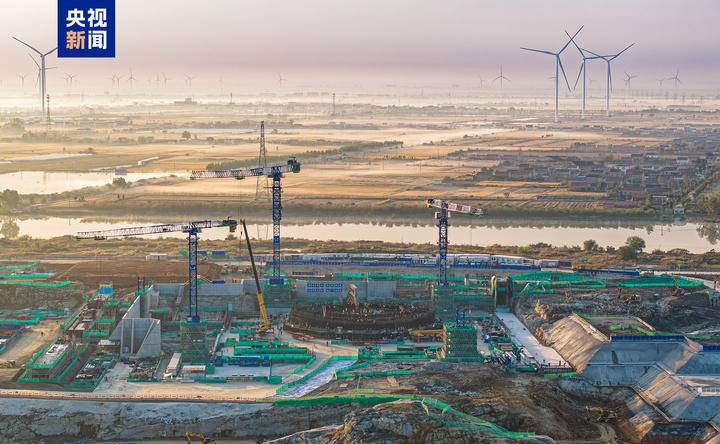
全球首个双堆耦合核能综合利用项目开工
Ge Long Hui· 2026-01-16 03:39
Core Viewpoint - The construction of the world's first nuclear energy comprehensive utilization project, combining the "Hualong One" pressurized water reactor and high-temperature gas-cooled reactor, has officially begun with the concrete pouring of the nuclear island for Unit 1 at the Jiangsu Xuwei Nuclear Heating Power Plant, marking a significant shift in China's nuclear energy strategy from primarily electricity generation to diversified supply [1] Group 1 - The project represents a milestone in nuclear energy development, indicating a transition towards multi-functional utilization of nuclear power [1] - The combination of two different reactor types aims to enhance the efficiency and versatility of nuclear energy applications [1] - This initiative is part of China's broader strategy to diversify energy sources and improve energy security [1]
港股异动 | 中广核矿业(01164)再涨超4% 第四季度共生产天然铀702.5tU 铀长协价有望持续上行
智通财经网· 2026-01-16 02:06
Group 1 - The core viewpoint of the article highlights the significant increase in the stock price of China General Nuclear Power Corporation Mining (CGN Mining), which rose by 4.12% to HKD 3.79, with a trading volume of HKD 87.39 million [1] - CGN Mining announced that its 49% owned Xie Company produced 862.2 tons of natural uranium in 2025, while its other 49% owned Ao Company produced 1,836.8 tons, achieving completion rates of 100.1% and 102.0% respectively [1] - In the fourth quarter of 2025, the total production of natural uranium from the group's invested mines was 702.5 tons, with a completion rate of 94.6% for the quarter [1] Group 2 - According to Guojin Securities, the supply side of uranium is expected to recover in the short term due to the resumption of mining operations, but the long-term supply capacity is facing continuous decline [1] - On the demand side, the growth of nuclear power installations is driven by energy security, the transition to clean energy, and the demand for AI-powered electricity, leading to a persistent global supply-demand gap for natural uranium [1] - The expectation of tight supply is likely to push up the long-term contract prices of uranium [1]