电动车

Search documents
近6万亿元!江苏外贸交出“韧性答卷”
Xin Hua Ri Bao· 2026-01-21 06:09
Core Insights - Jiangsu's foreign trade achieved a total import and export value of 5.95 trillion yuan in 2025, marking a 6% increase from the previous year, which is 2.2 percentage points higher than the national average, accounting for 13.1% of China's total foreign trade value during the same period [1] Structural Changes - Trade with countries involved in the "Belt and Road" initiative accounted for half of Jiangsu's total trade, with an 11.3% year-on-year increase, becoming a core growth engine for foreign trade [2] - Traditional markets continue to provide stability, while emerging markets are contributing significantly to growth, indicating a profound structural transformation in Jiangsu's foreign trade [2][3] - Notable examples include Wuxi's electric vehicle exports reaching 4.03 billion yuan, with a 27.4% increase in exports to "Belt and Road" countries [2] Upgrading Dynamics - Jiangsu's foreign trade is transitioning from "single-point breakthroughs" to "cluster advancements," with enterprises as innovation leaders and industrial clusters forming competitive barriers [4][6] - The establishment of a robust aerospace industry ecosystem in Suzhou, supported by multinational companies, enhances the local supply chain and innovation capabilities [5] Business Model Expansion - Cross-border e-commerce is emerging as a new growth avenue, allowing companies to meet personalized overseas demands and bypass traditional trade competition [7][8] - Companies like Huai'an Meimiao Electronic Technology are leveraging cross-border e-commerce, with over 20% of their products sold through online platforms, achieving an export value of over 30 million yuan [7][8]
美股三大指数集体收跌,英特尔逆涨3.41%、网飞盘后跌超5%
Guan Cha Zhe Wang· 2026-01-21 01:25
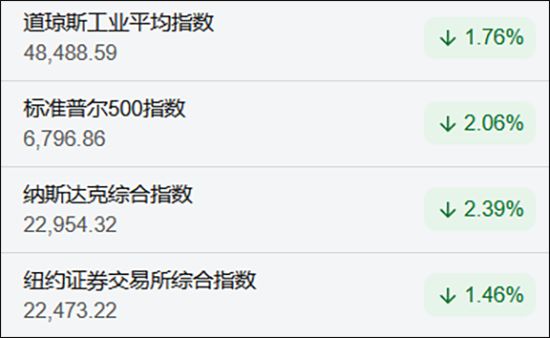
受美国总统特朗普就格陵兰岛问题向欧洲多国发出关税威胁影响,当地时间1月20日,美股市场全线重 挫,三大股指集体深度回调。截至收盘,纳斯达克综合指数领跌全场,跌幅达2.39%,报22954.32点; 标准普尔500指数收跌2.06%,报6796.86点;道琼斯工业平均指数亦下跌1.76%,报48488.59点。此外, 纽约证券交易所综合指数同步承压,收报22473.22点,跌幅1.46%。 | 道琼斯工业平均指数 | ↓ 1.76% | | --- | --- | | 48,488.59 | | | 标准普尔500指数 | J 2.06% | | 6.796.86 | | | 纳斯达克综合指数 | ↓ 2.39% | | 22,954.32 | | | 纽约证券交易所综合指数 | J 1.46% | | 22.473.22 | | 美股三大指数集体下跌谷歌财经 相比之下,存储与传统芯片板块展现出较强韧性,英特尔逆市上扬3.41%,报收48.56点,美光科技也在 此次调整中维持了微弱涨势。 英特尔涨幅3.41%谷歌财经 中概股方面,纳斯达克中国金龙指数跌1.45%,哔哩哔哩跌超6%,小鹏汽车、蔚来跌超3%,拼多多 ...


去年进出口总值较上年增长6%近6万亿元 江苏外贸交出“韧性答卷”
Xin Hua Ri Bao· 2026-01-21 00:00
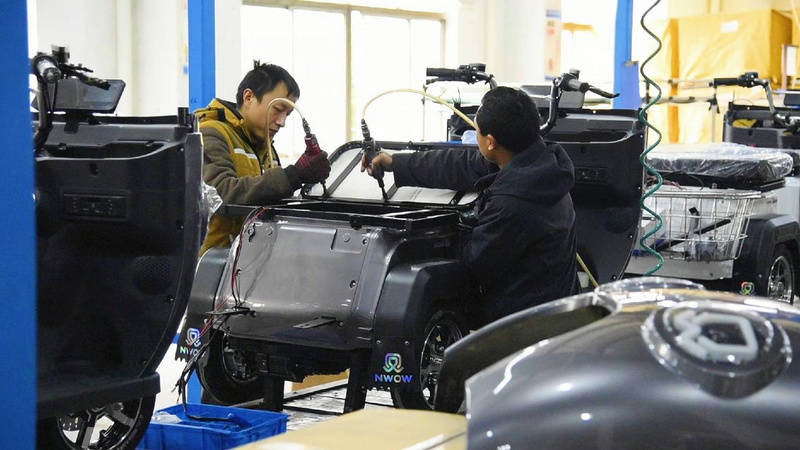
最新出炉的2025年江苏外贸"成绩单"显示,2025年江苏外贸进出口总值5.95万亿元,较上年增长 6%,增幅较全国高2.2个百分点,占同期我国进出口总值的13.1%。 "像这款四轮电动车,顶棚遮阳遮雨,两排座位既能载人也能储物,很受多人口家庭欢迎。"康定武 说,"根据中国—东盟自贸区原产地证书,大部分产品出口零关税,这进一步提升了我们产品的竞争 力,海关原产地证书的快速办理更是保障了订单及时交付。" "去年我们成功推出10余款中高端产品,同步上线MES精密制造系统,去年进出口总额首次攀升至 6.8亿元,同比增幅超30%。在深耕中东传统优势市场的同时,我们大力开拓东欧、中亚等市场,2025 年全年对共建'一带一路'国家出口达4.1亿元,同比增长约27%。"如皋伟越电器有限公司销售负责人王 松柏说。 在业内人士看来,"一带一路"是"稳存量+扩增量"的双重引擎。其中东盟、中东欧等地区国家是江 苏外贸传统优势市场,提供稳定存量;而中亚、非洲、拉美等地区国家是典型新兴市场,贡献核心增 量。例如中吉乌班列辐射的中亚国家、无锡电动车深耕的非洲市场、装备制造拓展的拉美市场,都是近 年来江苏外贸"解锁新地图"的重点区域,是新 ...
视频|对话品牌金融董事长大卫·海格:中国软实力继续增强 全球品牌价值500强中国占68席
Xin Lang Cai Jing· 2026-01-20 15:12
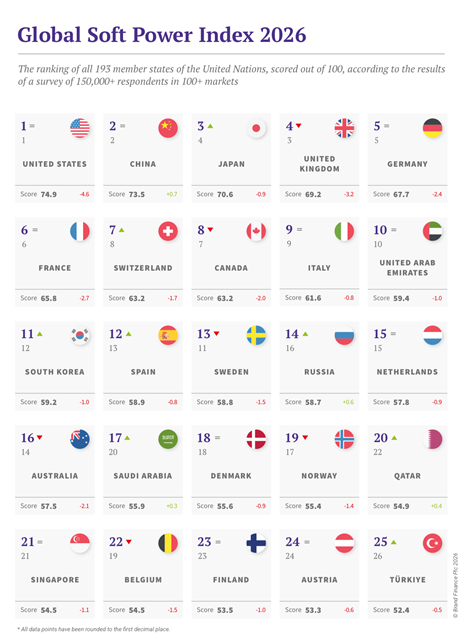
Core Insights - The latest Brand Finance Global Soft Power Index for 2026 indicates that China is the only country among the top ten to have improved its ranking, reflecting a rise in its soft power [1][6] - The gap in soft power between the United States and China has narrowed, with China's total score rapidly approaching that of the U.S., which has seen a significant decline in its score over the past year [4][7] - Brand Finance's 2026 Global Brand Value 500 report reveals that the U.S. has 192 brands contributing 53.4% of the total brand value, while China ranks second with 68 brands, accounting for 15.1% of the total, with TikTok having the highest brand value among Chinese brands [8][10] Brand Performance - Among the 68 Chinese brands listed in the Global Brand Value 500, notable mentions include Bosideng (outerwear), TikTok (social media), Huawei (smartphones), and BYD (electric vehicles), which are recognized for their excellent product quality [6][10] - The report highlights that the U.S. brands continue to dominate the list, but the increasing presence of Chinese brands indicates a shift in global brand dynamics [8][10]
再创新高:国际银价突破95美元!白银为何突然狂飙?普通人该不该跟风入场?
Sou Hu Cai Jing· 2026-01-20 14:02
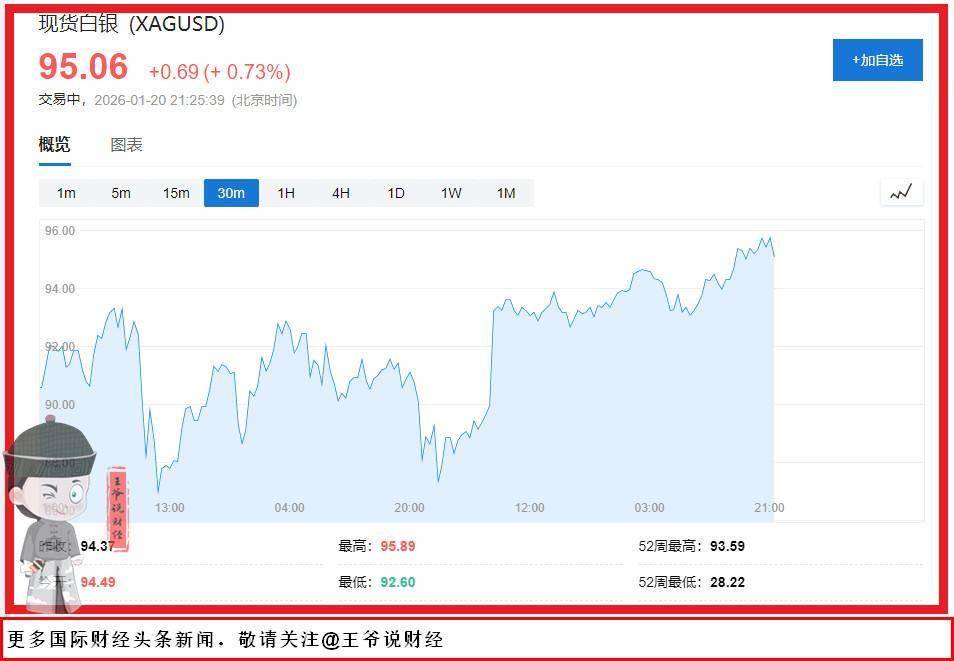
Core Viewpoint - The recent surge in silver prices, reaching a historic high of over $95 per ounce with a single-day increase of nearly 7%, is attributed to multiple converging factors, including trade tensions, monetary policy expectations, and supply-demand imbalances [1][10]. Market Background - Global silver inventories are critically low, with London vaults only sufficient for 1.2 months of global usage, indicating a severe supply crunch [3]. - The largest silver ETF, iShares Silver Trust, has been aggressively accumulating silver, increasing its holdings by 11.28 tons on January 16, raising total holdings to 16,073.06 tons, signaling strong demand [3]. Factors Driving Price Surge - **Trade Risk Aversion**: Heightened trade tensions, particularly due to U.S. tariffs on European countries and geopolitical statements from the U.S., have led to increased demand for silver as a safe-haven asset [3]. - **Federal Reserve Rate Cut Expectations**: Recent dovish signals from Federal Reserve officials suggest potential rate cuts in 2026, weakening the U.S. dollar and making silver more expensive in dollar terms [5]. - **Industrial Demand Growth**: Silver's role has expanded beyond jewelry to critical applications in the renewable energy sector, particularly in solar energy, where demand is projected to exceed 5,000 tons in 2026, representing over 55% of total global demand [6]. Market Reactions and Future Outlook - The surge in silver prices has prompted some industries to explore alternatives to silver, such as copper and aluminum, potentially reducing industrial demand [8]. - While short-term gains are significant, there are warnings of a potential 20%-30% price correction due to speculative trading and overbought conditions in the market [8]. - Long-term prospects remain positive, with expected annual price increases of 10%-15% driven by ongoing demand from the solar and electric vehicle sectors, alongside supportive monetary policies [8][10].
近6万亿背后:江苏外贸的增长密码与转型之路
Sou Hu Cai Jing· 2026-01-20 13:15
Core Viewpoint - Jiangsu Province's foreign trade achieved a total import and export value of 5.95 trillion yuan in 2025, marking a 6% increase from the previous year, which is 2.2 percentage points higher than the national average, accounting for 13.1% of China's total foreign trade value during the same period [1] Group 1: Structural Changes - Trade with countries involved in the Belt and Road Initiative accounted for half of Jiangsu's total trade for the first time, with a year-on-year growth of 11.3%, becoming the core engine of foreign trade growth [2] - Traditional markets continue to play a stabilizing role, while emerging markets are becoming significant growth drivers, indicating a profound structural transformation in Jiangsu's foreign trade [2][5] Group 2: Industry Clusters and Upgrades - Jiangsu's foreign trade is undergoing a transformation from "single-point breakthroughs" to "cluster advancements," with enterprises as innovation leaders and industry clusters providing competitive advantages [6][9] - The aerospace industry in Suzhou has developed a complete ecosystem, integrating core manufacturing, parts maintenance, and technology research and development, attracting multinational companies [9] Group 3: Emerging Business Models - Cross-border e-commerce is emerging as a new growth engine for Jiangsu's foreign trade, leveraging its unique advantages to break traditional trade limitations [10] - Many small and medium-sized enterprises are successfully utilizing cross-border e-commerce platforms to meet niche overseas demands, thus avoiding intense competition in traditional foreign trade [11][12] Group 4: Policy Support - Comprehensive and multi-layered policy support from the provincial government, including the "22 measures for stabilizing foreign trade," has been crucial for enterprises [12] - Initiatives like the "Jiangsu Quality Products Global Action" and specialized platforms for technical trade measures have provided targeted support for industries such as new energy [12]
英德补贴回归、加拿大关税松口:电动车出海压力缓释
高工锂电· 2026-01-20 10:42
Core Viewpoint - The narrative of a decline in electrification in Europe and North America has been interrupted, with Europe signaling a stronger stance on trade and industrial policy amidst rising tensions over Greenland issues [2]. Group 1: Europe’s Policy Developments - The European Union is responding to U.S. tariff threats by discussing countermeasures and accelerating the diversification of external risks [3]. - The EU Commission released guidelines for the pricing commitments on electric vehicle exports from China, establishing minimum import prices and sales channels [5]. - These guidelines reflect the EU's hard conditions for replacing tariffs with a minimum price mechanism, providing a compliant pathway for certain models to enter the market, thus reducing policy uncertainty for companies [6]. - Germany announced a new €3 billion electric vehicle support plan, with subsidies ranging from €1,500 to €6,000 per vehicle, aiming to support around 800,000 new car purchases or leases by 2029 [8][9]. - The UK is extending subsidies for electric trucks, offering discounts of up to £120,000 for businesses purchasing electric trucks, with the policy lasting until March 2026 [10]. - Both countries' policies indicate a recovery in the passenger vehicle market and a push for electrification in commercial vehicles, reinforcing the view that Europe is not experiencing a systematic decline in electrification by 2026 [11]. Group 2: North America’s Market Changes - Canada has reached a new arrangement with China, allowing up to 49,000 Chinese electric vehicles to enter the market at a reduced tariff rate of 6.1%, effectively reversing the 100% additional tariff for this quota [12]. - In exchange, China has lowered tariffs on Canadian canola and other agricultural products, transforming the Canadian market from being nearly closed to a limited opening, creating a measurable opportunity for companies with cost advantages [13]. - However, there are concerns that the quota and political negotiations may limit the growth potential, making the certainty of this arrangement less favorable compared to Europe’s institutional signals [14]. Group 3: Implications for Chinese Battery Companies - For Chinese battery companies worried about a decline in overseas electric vehicle markets by 2026, the signals from Europe and Canada suggest two key changes: - The narrative of export challenges should not simply extrapolate the U.S. slowdown to a global decline, as Europe is shifting towards calculable access mechanisms, with Germany's subsidies and the UK's electric truck incentives potentially pulling demand back into a defined fiscal framework [15]. - Canada's quota-based tariff reduction provides a "non-U.S. pathway" for the North American market, but this opportunity heavily relies on diplomatic and industrial exchanges, necessitating local cooperation and compliance to mitigate risks [15].

韩国本土电动车企份额萎缩,比亚迪、特斯拉异军突起
Guan Cha Zhe Wang· 2026-01-20 07:16
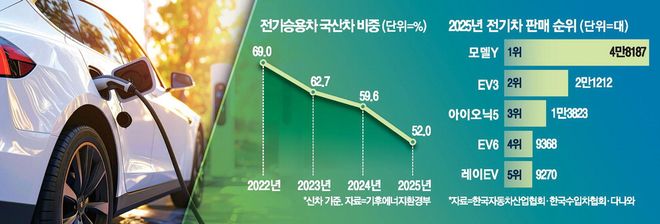
Core Insights - The market share of South Korean domestic electric vehicle manufacturers is declining, with a significant shift towards imported models like Tesla and BYD, raising concerns about the competitiveness of the local automotive industry [1][3][5] Market Trends - By 2025, the market share of South Korean domestic electric vehicle companies is projected to be 52%, down from 69% in 2022, with a gradual decline to 62.7% in 2023 and 59.6% in 2024 [1][3] - The younger consumer demographic shows a strong preference for imported models, particularly the Tesla Model Y and BYD Atto 3 [3][4] Sales Data - In 2025, Tesla and BYD are expected to be the top two electric vehicle brands in South Korea, with Tesla selling 59,916 units and BYD selling 6,107 units [3] - The Tesla Model Y is projected to be the best-selling imported vehicle in South Korea in 2025, with sales reaching 48,187 units [3] Competitive Landscape - Tesla's success in South Korea is attributed to cost advantages from its Shanghai Gigafactory, allowing for significant price reductions, including a decrease of approximately 20 million KRW (around 94,600 RMB) for a lower-priced Model Y version [3][4] - BYD is also making strides in the South Korean market with competitive pricing for models like the Atto 3, which has an official price around 30 million KRW (approximately 141,900 RMB) and can drop to just over 20 million KRW (around 94,600 RMB) after government subsidies [4] Government Policies and Industry Response - The South Korean government aims for half of new car sales to be zero-emission vehicles by 2030, but there are concerns that the market share of imported electric vehicles will continue to grow under current trends [4][5] - Experts suggest that existing subsidy policies are insufficient to boost the adoption of domestic electric vehicles, despite higher subsidies for local brands compared to Tesla and BYD [5] - Recommendations include increasing budget support for future vehicle development and introducing a "domestic production incentive tax" to protect and nurture local manufacturing [5]


中加电动车贸易“破冰”!特斯拉(TSLA.US)或靠上海工厂抢占先机 中国车企迎北美新战场
Zhi Tong Cai Jing· 2026-01-20 06:53
Group 1 - Tesla is expected to benefit from Canada's new policy allowing the import of up to 49,000 vehicles annually from China, with a 6.1% tariff, potentially increasing to 70,000 vehicles in five years [1] - The agreement reserves half of the quota for vehicles priced below CAD 35,000 (approximately USD 25,189), which excludes all Tesla models [2] - Tesla has already established a strong presence in Canada with 39 stores and has adapted its production to supply the Canadian market from its Shanghai factory, which saw a 460% year-on-year increase in imported vehicles in 2023 [2][4] Group 2 - The new agreement may allow Tesla to resume exports from its Shanghai factory, leveraging its production capacity and established sales channels in Canada [4] - Competitors from China are eager to enter the Canadian market, particularly those focusing on entry-level models, which could benefit from the new import quota [6][7] - The Canadian government is interested in potential joint ventures with Chinese companies to establish local electric vehicle production lines, indicating a shift towards collaboration [7][8]
美国已经放弃了,因为面对中国,已经毫无胜算了
Sou Hu Cai Jing· 2026-01-19 08:05
Group 1 - The core viewpoint of the articles highlights the significant shifts in US-China relations over the years, particularly in trade and military dynamics, indicating a move from confrontation to negotiation [1][4][6] - Since 2018, the US initiated a trade war against China, believing it could pressure China into concessions through tariffs, but this strategy has led to economic slowdowns in the US while China has maintained export growth by diversifying its markets [1][4] - The US has increased restrictions on China's technology sector, particularly in semiconductors, investing over $50 billion to develop domestic industries while China accelerates its own semiconductor self-sufficiency [1][4] Group 2 - In military terms, the US maintains a significant naval advantage with 11 aircraft carriers, but China's naval capabilities are rapidly expanding, with a fleet nearing 300,000 tons and the construction of four aircraft carrier groups [1][2] - Reports indicate that China's nuclear arsenal has surpassed 500 warheads, and it leads in several high-tech areas, putting pressure on US military strategy, especially in the Asia-Pacific region [2][4] - By the end of 2025, the US is expected to prioritize its national security strategy towards the Western Hemisphere, reducing military investments in the Asia-Pacific, reflecting a shift towards dialogue and negotiation rather than confrontation [4][6] Group 3 - The ongoing competition has revealed a diminishing initial advantage for the US, with China making significant advancements across various sectors, prompting the US to adjust its strategies to focus on stabilizing relations and avoiding conflict [6] - The US has acknowledged the unsustainable nature of a prolonged confrontation with China, leading to a more cautious approach that emphasizes diplomatic engagement over military solutions [4][6] - The trade relationship between the two countries is stabilizing, with a reduction in bilateral trade volume but persistent US reliance on Chinese manufacturing, indicating a complex interdependence [4][6]