工业需求增长

Search documents
2026年白银价格走势分析
Sou Hu Cai Jing· 2026-02-06 12:02
Core Viewpoint - The silver price in 2026 is expected to show a "volatile upward trend," with an annual core operating range projected between $55 and $100 per ounce, potentially reaching $150 per ounce under extreme conditions, driven by structural supply-demand gaps, the Federal Reserve's easing monetary policy, and explosive industrial demand [1][20]. Group 1: Price Trend and Key Phases - The overall trend for silver prices in 2026 is characterized by independent and strong upward movement, breaking away from the previous passive trend of following gold, primarily due to surging industrial demand [2]. - The price movement can be divided into three phases: 1. Phase 1 (Jan-Apr): Consolidation around $55-$75 per ounce, awaiting the Federal Reserve's first rate cut [6]. 2. Phase 2 (May-Sep): Accelerated rise to $75-$100 per ounce, driven by peak solar installations and AI data center construction [6]. 3. Phase 3 (Oct-Dec): High-level consolidation between $85-$100 per ounce, with potential for extreme highs [6]. Group 2: Supply and Demand Dynamics - The supply-demand gap for silver is expected to widen to 5,000 tons, with a conservative estimate of 3,000 tons, and could exceed 8,000 tons if demand from solar and AI sectors surpasses expectations [4]. - Industrial demand for silver has surpassed 60% of total demand, with significant contributions from solar energy, AI data centers, and electric vehicles [5]. - The solar industry alone is projected to consume 1.2 million tons of silver in 2026, accounting for over 40% of global annual silver production [5]. Group 3: Macroeconomic Factors - The Federal Reserve's monetary policy is a key macroeconomic variable influencing silver prices, with expectations of 2-3 rate cuts totaling 50-75 basis points in 2026 [9]. - The U.S. dollar index is expected to weaken, providing additional support for silver prices as the Federal Reserve implements rate cuts [10]. Group 4: Geopolitical and Policy Influences - Geopolitical factors and policy adjustments can trigger short-term price fluctuations, such as China's export control policies and global geopolitical tensions [11]. - China's new export control policy, effective January 1, 2026, is expected to reduce global silver supply by 4,500-5,000 tons, significantly impacting market dynamics [11]. Group 5: Technical Analysis - The long-term technical outlook indicates that silver prices have broken out of a previous range (40-60 USD/oz) and are in an upward channel for 2026 [13]. - Short-term technical indicators show a neutral to bullish sentiment, with key support levels around $63-$65 per ounce [14]. Group 6: Practical Investment Strategies - Investors are advised to focus on the long-term upward logic of silver prices while managing short-term volatility [15]. - For industry players, strategies include locking in silver costs through long-term contracts and optimizing silver usage to mitigate price fluctuations [15][17].
7连板续航+银价暴涨 白银有色(601212)再封涨停:风口与资金共振
Jin Rong Jie· 2026-01-28 12:01
Core Viewpoint - The silver sector continues to show strong performance, with Silver (core stock) YS (601212) hitting the limit up for the seventh consecutive time, reflecting a combination of industry momentum, sustained capital inflow, and market sentiment [1][2]. Group 1: Company Performance - On January 28, Silver (core stock) YS achieved a 10.04% increase, closing at 13.81 yuan, which is a rise of 1.26 yuan from the previous trading day [1]. - The trading volume reached 5.409 billion yuan, with a turnover rate of 5.42%, indicating high trading activity and interest in the stock [1]. Group 2: Industry Dynamics - The strong performance of the silver sector is supported by a significant rise in international silver prices, driven by expectations of interest rate cuts by the Federal Reserve and ongoing global geopolitical tensions that have heightened risk aversion [1][2]. - Industrial demand for silver has surged due to growth in sectors such as AI and renewable energy, contributing to the overall recovery of the precious metals sector [1][2]. Group 3: Market Sentiment and Capital Flow - The seven consecutive limit-up days for Silver (core stock) YS are attributed to three main factors: industry momentum, continuous capital inflow from both northbound and main funds, and speculative trading by retail investors [2]. - The previous limit-up days have created a clear upward momentum in the market, leading to increased bullish sentiment and further driving the stock price [2].

“银色狂想曲”停不下来! 散户们掀起“抢银狂热” 2025年疯涨150%的白银仍在翱翔
智通财经网· 2026-01-21 07:51
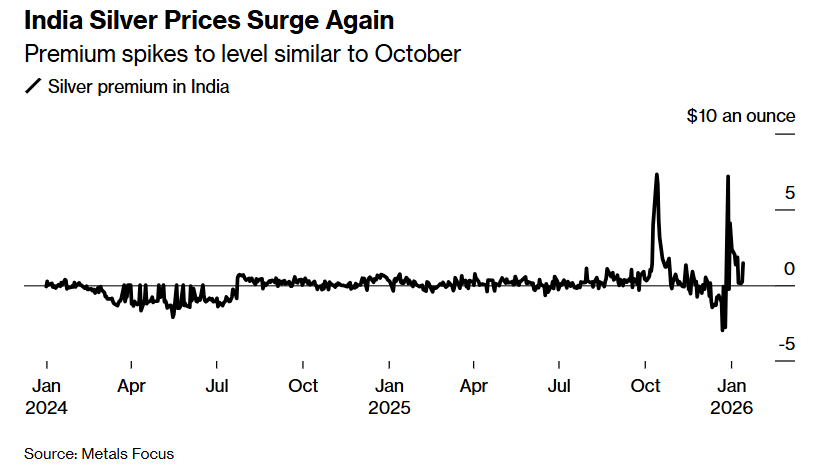
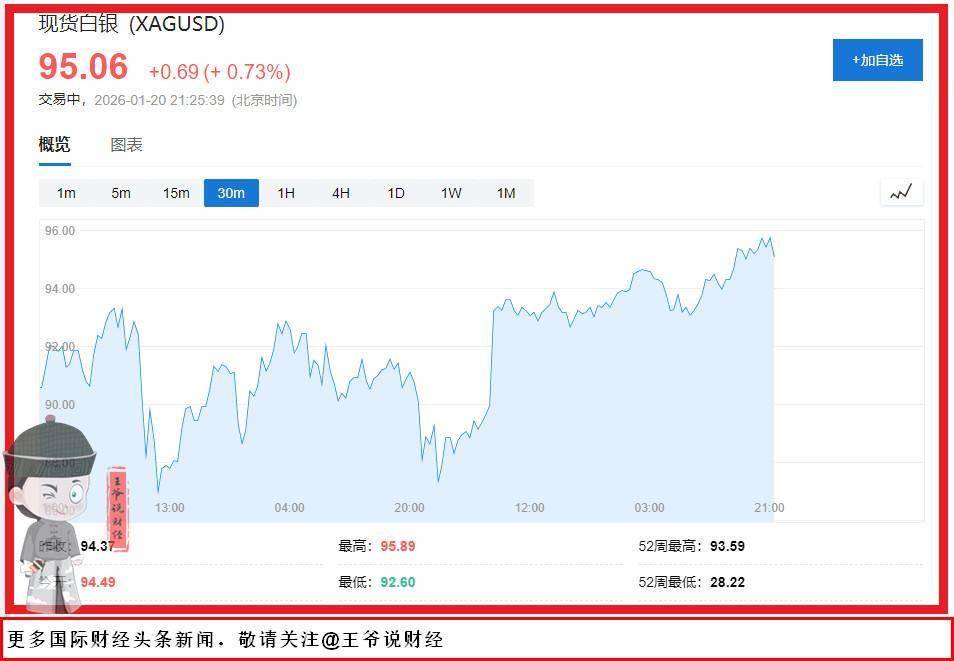
Core Viewpoint - The resurgence of geopolitical tensions and the "sell-off of American assets" has led to a significant influx of safe-haven funds into gold and silver, driving both metals to record highs since 2025 [1][3]. Group 1: Market Trends - Gold and silver prices have continued to rise, with silver futures hovering around $94.6, following a peak of $95.77 [1]. - The demand for silver has surged, with retail investors in countries like Turkey and India willing to pay high premiums for the metal, leading to shortages of silver coins and small bars [2][4]. - Citigroup has made aggressive bullish predictions for precious metals, forecasting silver prices to reach $100 per ounce and gold to potentially exceed $5,000 in the next three months [3][13]. Group 2: Demand Drivers - The primary driver for the current rise in precious metals is demand, particularly from central banks for gold and industrial expansion for silver [2]. - Industrial applications, such as data center infrastructure and innovative silver-based batteries, are significantly boosting silver demand, while supply growth struggles to keep pace [2][12]. - The World Silver Association highlights that the growth in sectors like AI data centers, electric vehicles, and renewable energy will continue to drive silver demand through 2030 [12]. Group 3: Retail Investor Behavior - Retail investors are exhibiting unprecedented demand for silver, leading to supply shortages and high premiums in various markets [4][10]. - The phenomenon of retail buying is not limited to large consumer countries; it is spreading globally, with reports of rapid sell-outs in markets like South Korea and Singapore [10][11]. - Misleading market information has also fueled retail buying, as investors react to perceived shortages and policy changes [10]. Group 4: Supply Constraints - Precious metal refiners are struggling to meet the soaring demand for small-sized silver bars and coins, leading to significant supply constraints [8][9]. - The focus of refiners on larger silver bars has exacerbated the shortage in the retail market, where demand for smaller denominations is highest [9][10]. - The supply chain has been affected by geopolitical tensions and trade policies, further complicating the availability of silver in key markets [7][11].

再创新高:国际银价突破95美元!白银为何突然狂飙?普通人该不该跟风入场?
Sou Hu Cai Jing· 2026-01-20 14:02
Core Viewpoint - The recent surge in silver prices, reaching a historic high of over $95 per ounce with a single-day increase of nearly 7%, is attributed to multiple converging factors, including trade tensions, monetary policy expectations, and supply-demand imbalances [1][10]. Market Background - Global silver inventories are critically low, with London vaults only sufficient for 1.2 months of global usage, indicating a severe supply crunch [3]. - The largest silver ETF, iShares Silver Trust, has been aggressively accumulating silver, increasing its holdings by 11.28 tons on January 16, raising total holdings to 16,073.06 tons, signaling strong demand [3]. Factors Driving Price Surge - **Trade Risk Aversion**: Heightened trade tensions, particularly due to U.S. tariffs on European countries and geopolitical statements from the U.S., have led to increased demand for silver as a safe-haven asset [3]. - **Federal Reserve Rate Cut Expectations**: Recent dovish signals from Federal Reserve officials suggest potential rate cuts in 2026, weakening the U.S. dollar and making silver more expensive in dollar terms [5]. - **Industrial Demand Growth**: Silver's role has expanded beyond jewelry to critical applications in the renewable energy sector, particularly in solar energy, where demand is projected to exceed 5,000 tons in 2026, representing over 55% of total global demand [6]. Market Reactions and Future Outlook - The surge in silver prices has prompted some industries to explore alternatives to silver, such as copper and aluminum, potentially reducing industrial demand [8]. - While short-term gains are significant, there are warnings of a potential 20%-30% price correction due to speculative trading and overbought conditions in the market [8]. - Long-term prospects remain positive, with expected annual price increases of 10%-15% driven by ongoing demand from the solar and electric vehicle sectors, alongside supportive monetary policies [8][10].
突然猛拉!黄金、白银,又大涨
Zhong Guo Ji Jin Bao· 2026-01-02 06:55
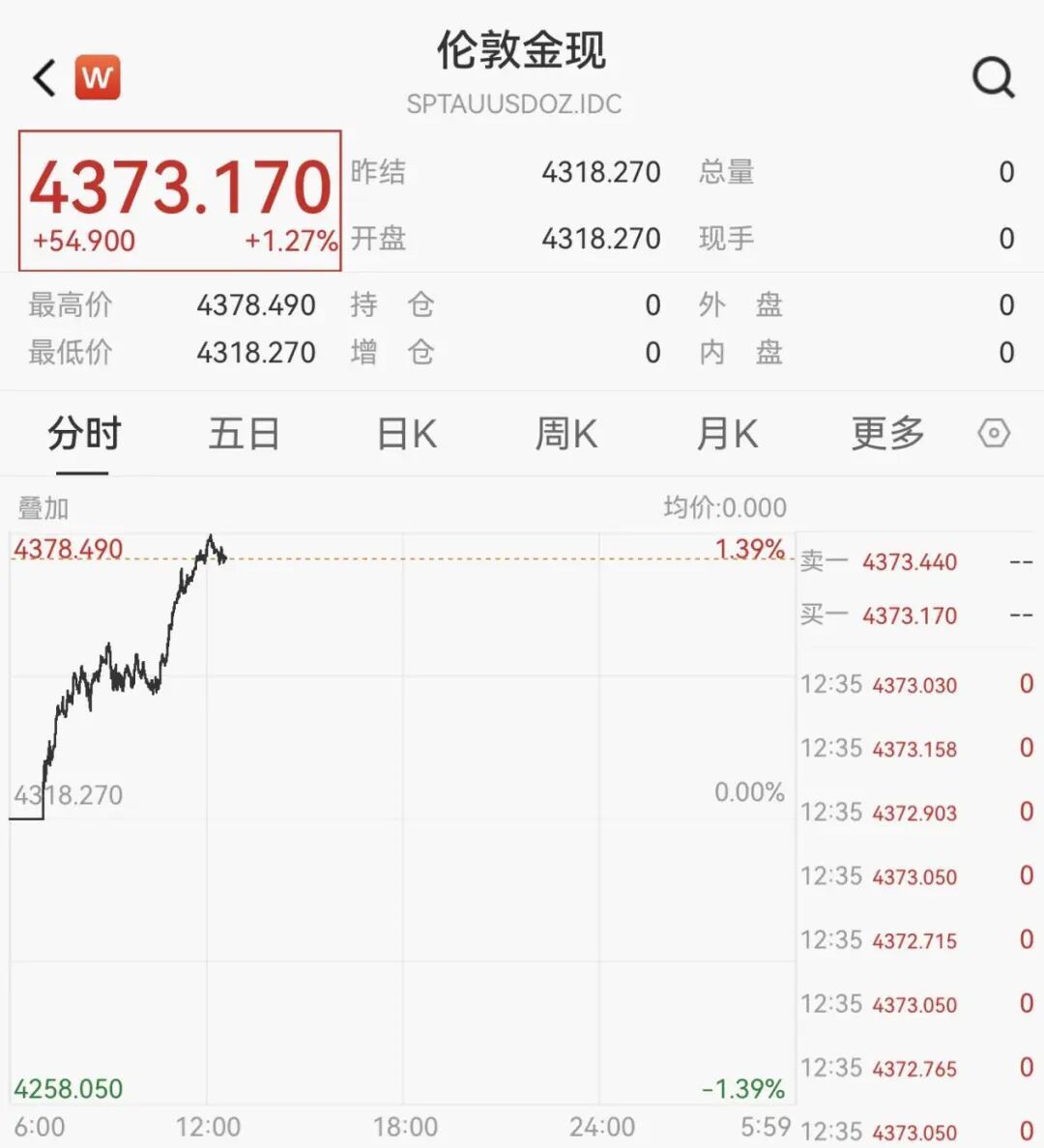
Core Viewpoint - The recent surge in silver prices, reaching up to $73 per ounce, is attributed to strong industrial demand, low domestic inventory levels in China, and the upcoming December futures delivery month, which has attracted significant capital inflow [2][4]. Group 1: Silver Market Dynamics - Spot silver prices increased by 3% during the day, touching $73 per ounce, with a closing price of $73.330, reflecting a 2.45% rise from the previous day [2][3]. - The price of silver on COMEX rose by 3.13%, while London silver saw a 2.59% increase [4]. - The surge in silver prices is supported by a tightening inventory structure and expanding demand, particularly from the photovoltaic and electronics sectors [5]. Group 2: Economic and Market Factors - The bullish sentiment in the silver market is driven by improved economic expectations and the industrial properties of silver, which are becoming more prominent [4]. - The low inventory levels in China, a major manufacturing country, contribute to the upward pressure on silver prices [4]. - The inclusion of silver in the U.S. critical minerals list has heightened speculation about future strategic reserve needs, further strengthening market sentiment [5]. Group 3: Long-term Outlook - The long-term outlook for silver remains positive due to the ongoing development in global technology and green industries, which are expected to sustain demand [5]. - There is a divergence in market opinions regarding the sustainability of silver's recent performance, with some analysts suggesting it may be nearing the end of its upward trend, while others believe it is leading a new market cycle [5].
一日狂飙10%!白银今年暴涨超170%的背后:散户狂热正在把行情推向极端
美股IPO· 2025-12-27 03:11
Core Viewpoint - The silver market is experiencing significant price increases driven by strong industrial demand, tightening supply, and a surge of retail investor participation, leading to heightened market volatility [1][5][11]. Group 1: Price Movements - Silver prices have surged nearly 8% on Friday, marking the largest increase in over three years, with post-market and spot silver prices rising over 10% [1]. - The spot silver price reached approximately $79.31, with a daily increase of about 10.3%, and a year-to-date increase exceeding 170%, more than double the over 70% increase in gold during the same period [5][11]. - The COMEX December silver futures contract closed up 7.68% at $76.486, achieving the highest record and the largest daily increase since October 2022 [5]. Group 2: Market Drivers - Geopolitical tensions, a weakening dollar, and low market liquidity post-Christmas contributed to the historical highs in both gold and silver prices, with silver nearing $80 per ounce [3][5]. - The supply of independently mined silver is becoming increasingly scarce, while industrial demand, particularly from green industries like solar energy, continues to rise, putting pressure on market inventories [8][11]. Group 3: Retail Investor Participation - Retail investors are significantly driving the silver market, engaging in various forms of investment including physical silver, silver ETFs, and derivatives, with a notable increase in speculative trading [8][12]. - The trading volume of options for the largest silver ETF, iShares Silver Trust, has surged, nearing levels seen during the 2021 Reddit-fueled trading frenzy [12]. Group 4: Market Risks - The current market exuberance raises concerns about overheating, as rapid price increases often lead to sharp corrections [6][12]. - Analysts warn that silver prices are prone to extreme volatility, characterized by rapid surges followed by significant pullbacks, necessitating cautious risk management strategies for investors [12].
2026年,见证三位数的银价!
Jin Shi Shu Ju· 2025-12-25 11:44
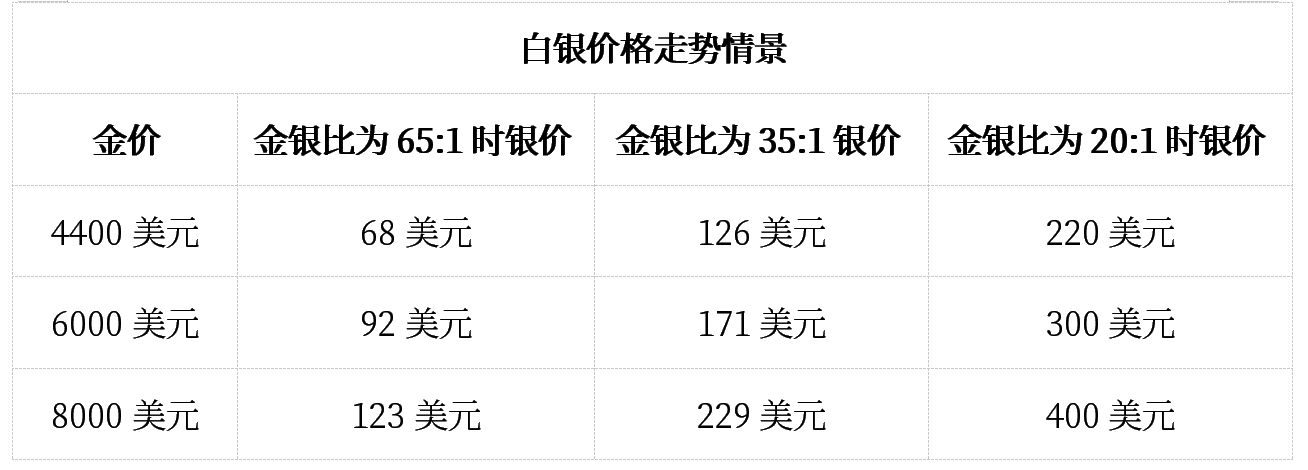
Core Insights - The potential for silver prices to exceed $100 per ounce by 2026 has become a focal point for precious metal market strategists, driven by structural monetary dynamics rather than traditional technical indicators [1] - The combination of supply constraints, accelerating technological demand, and currency devaluation creates a scenario that far exceeds traditional precious metal cycles [1] Group 1: Price Threshold and Market Dynamics - A three-digit silver price refers to levels above $100 per ounce, significantly impacting portfolio allocation and wealth preservation strategies [2] - Historical analysis shows that since silver peaked at approximately $49.45 per ounce in 1980, its purchasing power relative to money creation has significantly declined, indicating that achieving true inflation-adjusted parity requires much higher nominal prices [2] - Current market positioning indicates that to reach $100 per ounce, silver would need to increase by at least 43% from its benchmark of $70 per ounce [3] Group 2: Supply Constraints and Industrial Demand - Global strategic silver inventory is a critical factor supporting rising silver prices, with major countries having depleted their reserves through technological advancements and strategic sales [11] - The transition of silver from a monetary metal to an industrial necessity is driven by the expansion of solar energy, electric vehicles, and advanced electronics, creating structural demand growth that exceeds traditional mining supply responses [12] - The mining industry faces structural challenges that limit its ability to respond to rising prices, including declining ore grades and lengthy development cycles for new mines [15][16] Group 3: Economic and Geopolitical Influences - The Federal Reserve's policy trajectory suggests a potential interest rate cut cycle in 2026, which historically correlates with conditions favorable for precious metal price breakthroughs [6] - Geopolitical tensions and trade wars may exacerbate supply shortages, particularly with major producing countries implementing export restrictions [26] - The anticipated economic downturn in 2026 could lead to increased demand for silver as a safe-haven asset, especially if stock market valuations decline significantly [24] Group 4: Mathematical Models and Predictions - Mathematical models suggest that if gold prices reach $6,000 to $8,000 per ounce, silver could achieve three-digit prices based on historical gold-silver ratios [30] - Industry analysis predicts a continuous annual silver supply gap of 150 to 200 million ounces by 2030, indicating that physical shortages could lead to exponential price increases [28] - The potential for a currency reset involving central bank digital currencies could further drive demand for silver, as historical precedents show that monetary system changes can lead to significant increases in precious metal prices [30]
全球都在抢贵金属?黄金4500,铂金2300,白银72,普通人要跟风吗
Sou Hu Cai Jing· 2025-12-25 05:37
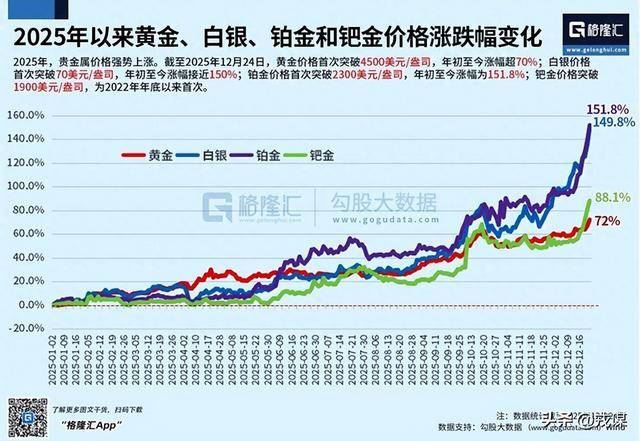
Group 1 - The core viewpoint of the article highlights the unprecedented surge in precious metal prices, including gold, silver, and platinum, driven by multiple factors such as geopolitical tensions and increased demand from central banks [3][5][16] - Gold prices have reached a new high of $4,500 per ounce, marking a more than 66% increase this year, potentially leading to the best annual performance since 1979 [3][5] - Platinum has seen a remarkable rise to $2,300 per ounce, with a cumulative increase of over 150% this year, attributed to supply shortages from South Africa and high borrowing costs [7][9] Group 2 - Silver has also experienced significant gains, surpassing the $70 mark, driven by strong investment demand and industrial usage, with global demand exceeding supply for five consecutive years [11][12] - The surge in precious metals has extended to domestic markets, with platinum futures hitting the limit up, and both silver and palladium prices increasing by over 6% [14] - The current market dynamics reflect a global search for reliable assets amid economic uncertainty, with precious metals serving as a safe haven for investors [16]
白银价格首破60美元创历史新高
Sou Hu Cai Jing· 2025-12-14 00:41
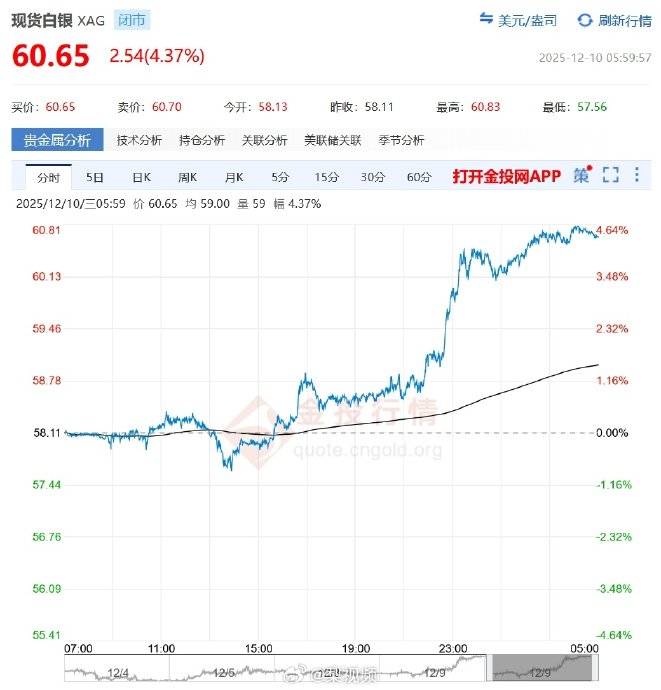
Core Drivers - Silver prices surpassed $60 per ounce for the first time in December 2025, with an annual increase of over 110%, driven by a surge in industrial demand, inventory squeeze, and a shift in financial policy [1] - Market expectations indicate an 87.4% probability of a 25 basis point rate cut by the Federal Reserve in December, which lowers the opportunity cost of holding silver and attracts investment into precious metals as a safe haven [3] - The global photovoltaic installation capacity is expected to exceed 655 GW in 2025, with silver consumption in this sector accounting for 55% of total silver demand, doubling from 2022 levels [4] - The demand for silver in electric vehicles is significantly higher, with each vehicle using 25-50 grams of silver, and AI server chips consuming 30% more silver than traditional devices [5] - A global silver supply shortage has persisted for five consecutive years, with a projected shortfall of 2,700 tons in 2025 due to production cuts from major silver-producing countries and slow growth in recycled silver [5] Inventory Squeeze and Capital Dynamics - Global silver inventories are critically low, with London deliverable stocks at a ten-year low of 233 tons and Shanghai Futures Exchange stocks nearing a critical threshold of 519 tons, leading to urgent silver transport [6] - A "vortex squeeze" effect is observed as inventory shortages rotate between New York, London, and Shanghai, causing Shanghai silver premiums to rise by 3%-4% [6] - The silver market is relatively small, with a market size only one-tenth that of gold, allowing speculative trading to significantly amplify price volatility [6] Market Dynamics and Policy Catalysts - The gold-silver ratio has decreased from over 100:1 to 70:1, indicating a 45% potential for correction, with strong demand for silver as a catch-up asset [7] - The U.S. has classified silver as a "critical mineral," intensifying stockpiling behavior among traders and exacerbating supply constraints [7] Industry Impact - Mining companies like Shengda Resources have seen stock prices increase by 150%, benefiting from higher margins due to rising silver prices [13] - Silver price increases have pressured photovoltaic companies, which see silver costs constituting 15% of component costs, leading some to pause procurement and explore copper paste alternatives [13] - Silver bar manufacturers are experiencing a doubling in sales, while jewelry processing factories have reduced semi-finished product orders by 50% [13] Investment Recommendations - Investors are advised to prioritize bank investment in silver bars (with premiums ≤5%) or silver ETFs (e.g., AGQ), while avoiding silver jewelry with high labor costs and leveraged trading [12]
史诗级狂飙!银价创历史,为什么涨的这么猛?
Wind万得· 2025-12-12 06:31
Core Viewpoint - Silver has once again become a market focus, with significant price increases driven by multiple factors including macroeconomic shifts, industrial demand, supply shortages, capital inflows, and value reassessment [1][4]. Group 1: Price Performance - As of December 12, COMEX silver is priced at $64.25 [2]. - Year-to-date, both London spot silver and COMEX silver futures have seen price increases exceeding 110% [3]. Group 2: Key Drivers - **Monetary Policy**: The Federal Reserve's interest rate cuts have weakened the dollar and reduced holding costs, directly igniting precious metal pricing [5]. - **Industrial Demand**: Silver consumption in photovoltaic applications accounts for 55%, while demand from AI servers has increased by 30%, and electric vehicles are consuming several times more silver [6]. - **Supply-Demand Gap**: Global exchange inventories are at a ten-year low, sufficient for only 1.2 months of consumption, leading to heightened demand for silver [7]. - **Capital Inflows**: ETFs have increased their holdings by 500 tons over six months, with silver's market capitalization being only one-tenth that of gold, resulting in amplified volatility due to short covering [8]. - **Value Reassessment**: The gold price has reached new highs, the gold-silver ratio is returning to normal, and demand from Indian festivals is quickly realizing the potential for price increases [9]. Group 3: Market Analysis - The interplay of monetary easing, industrial revolution, mine production cuts, ETF-driven supply constraints, and emotional responses to the gold-silver ratio has led to a doubling of silver prices this year [9].